Presentation On Management Change
Presented By
Zubair Afzal
REG#: 52-FMS/BSAF/S16
and
Ibrahim Naeem
REG#: 51-FMS/BSAF/S16
TABLE OF CONTENTS
What is Management
What is Change Management
Forces of Change Management
Principles of Change Management
Five Activities Contributing to Effective Change Management
Elements of Change Enablement
Change Management
What Is Management?
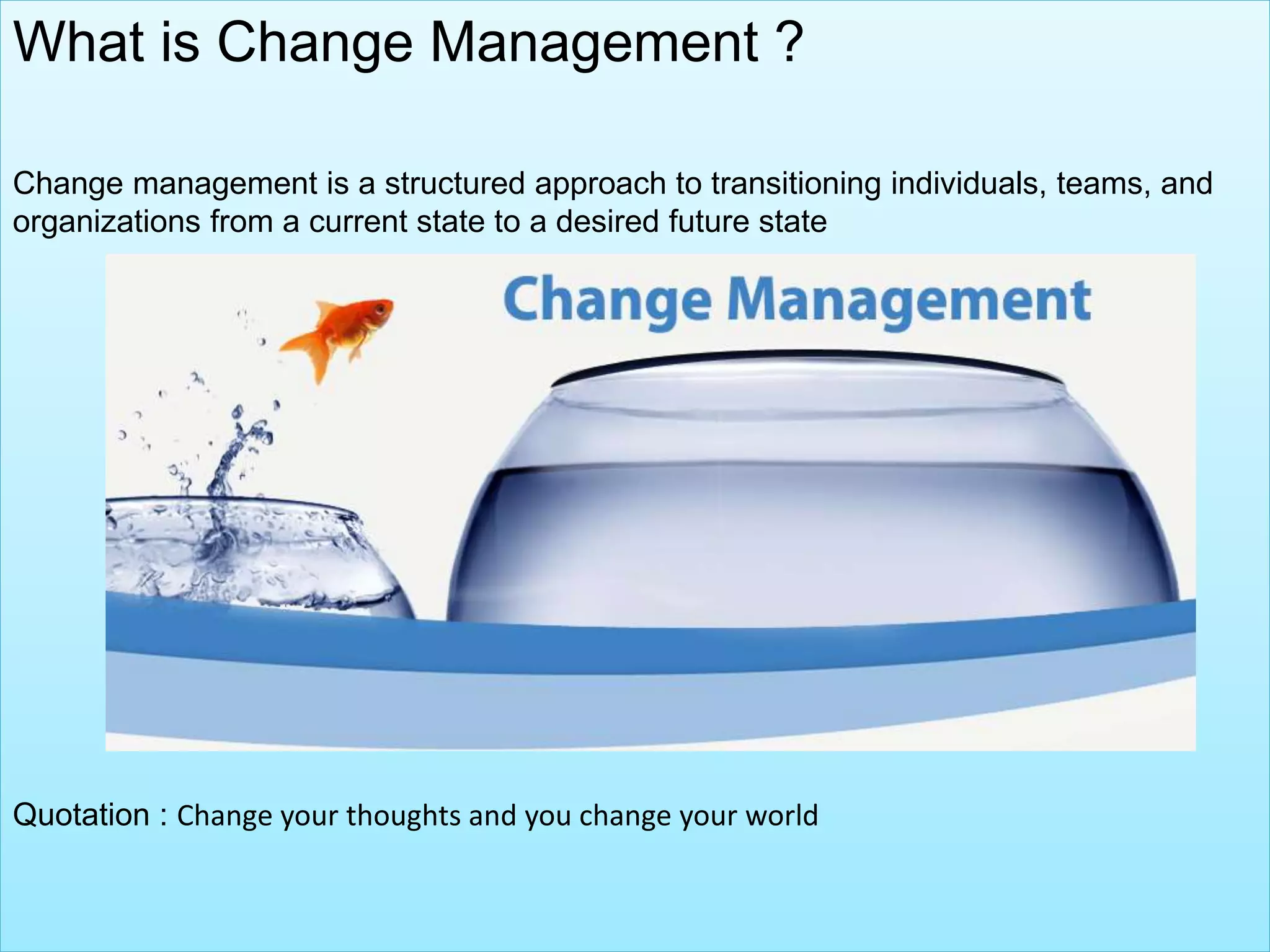
Change ManagementWhat is Change Management ?
Change management is a structured approach to transitioning individuals, teams, and
organizations from a current state to a desired future state
Quotation : Change your thoughts and you change your world
_________________________________Why Change ?
No Change is without a purpose .
Environment internal or Competition
external factors innovation.
Systems Upgrades
Processes New strategy
Culture Outsourcing
Continuous improvement New technology
--------------------------------------------------------Few changes over the World
Nobody can go back and start a new beginning, but
anyone can start today and make a new ending
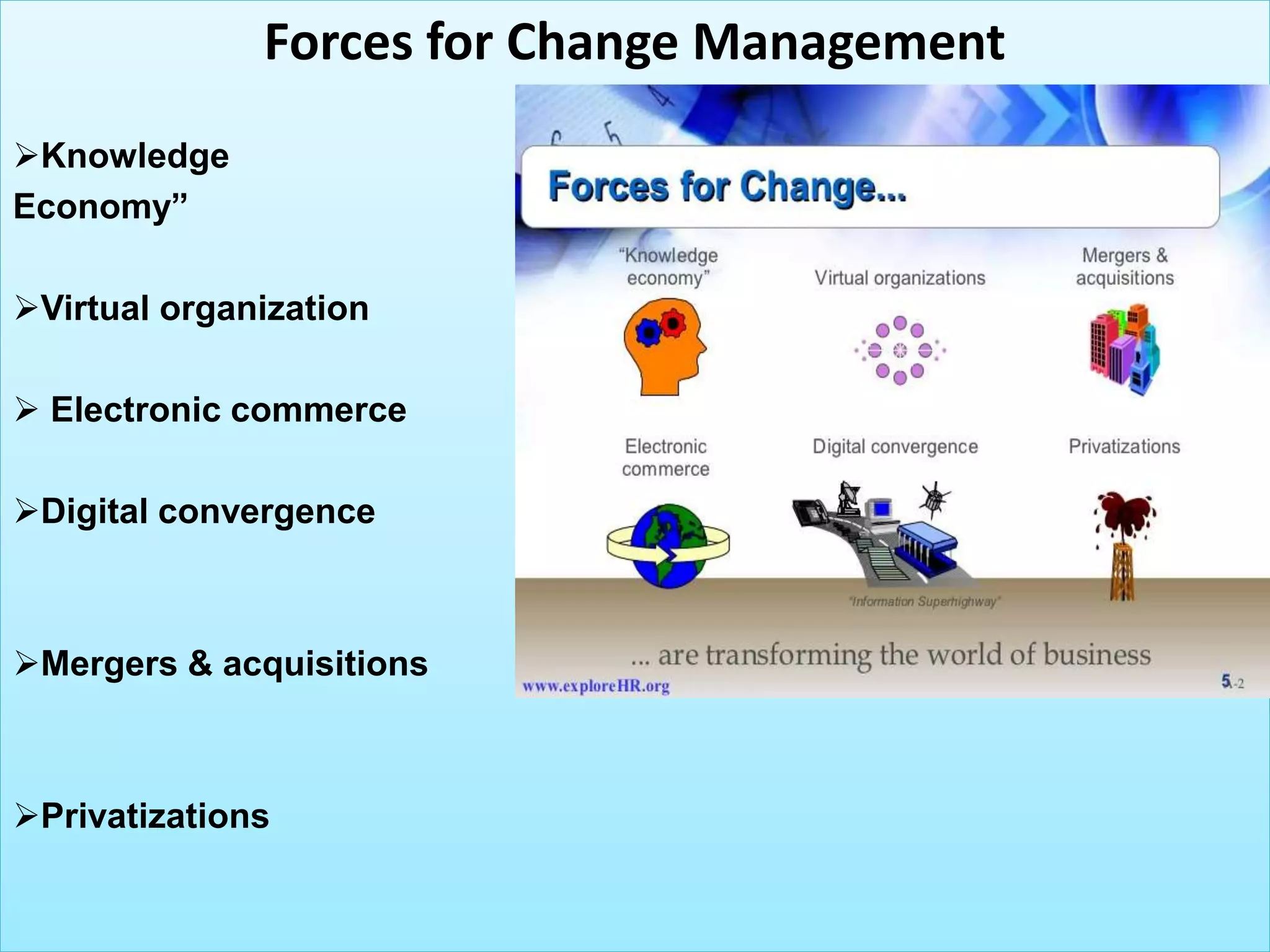
---------------------------------------------------Forces for Change Management
Knowledge
Economy”
Virtual organization
 Electronic commerce
Digital convergence
Mergers & acquisitions
Privatizations
Forces For Change Management
External Forces
.Technology
. Marketing Condition
. Social changes
. Political Forces
Internal Forces
. Nature Of Work Force
. Change in Managerial Personnel
. Deficiencies in Existing Management Structure
. To avoid Developing inertia
------------------------Two Side of Change
Technical Side of Change Human side of change
--------------------------------
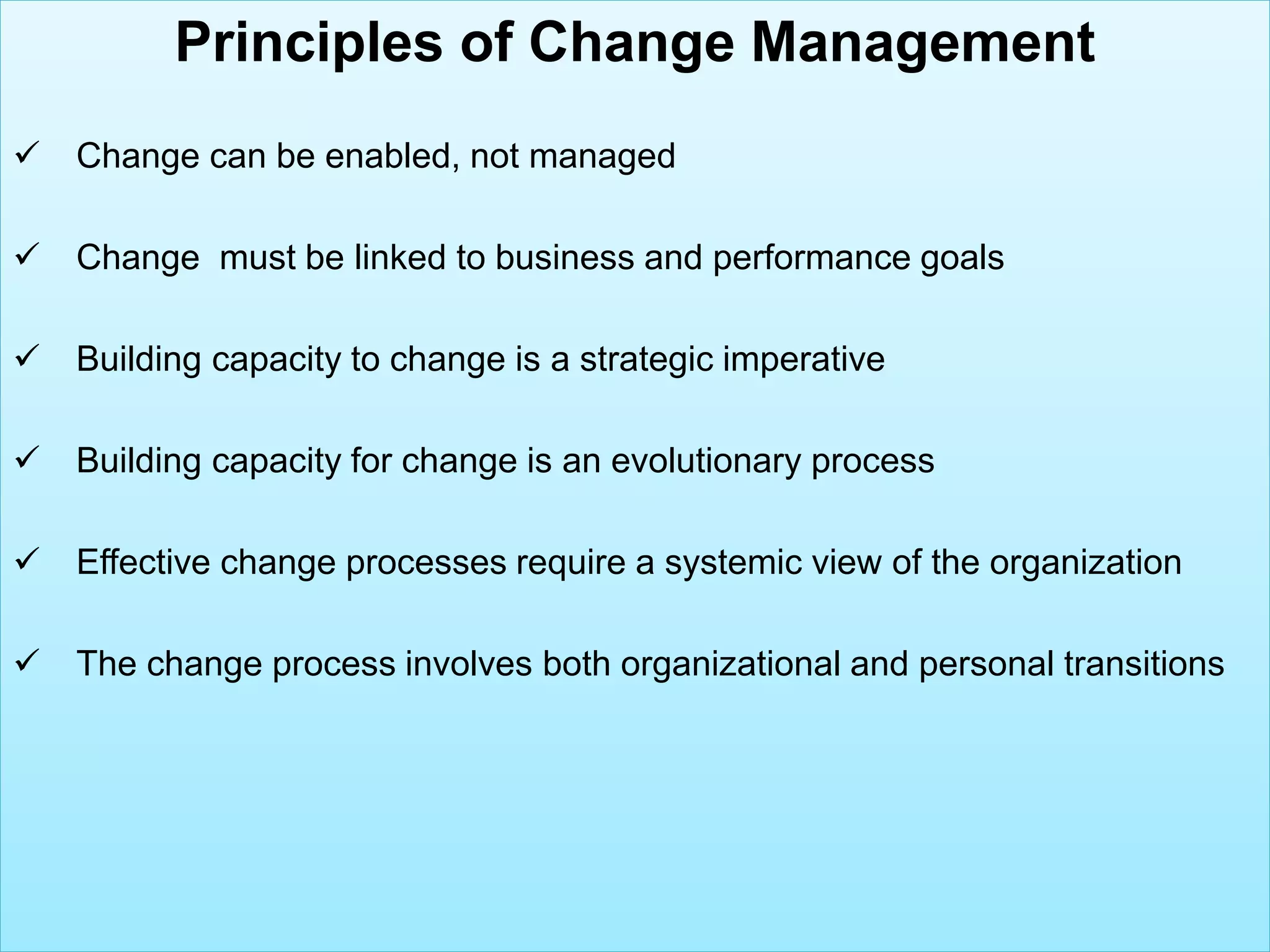
Principles of Change Management
 Change can be enabled, not managed
 Change must be linked to business and performance goals
 Building capacity to change is a strategic imperative
 Building capacity for change is an evolutionary process
 Effective change processes require a systemic view of the organization
 The change process involves both organizational and personal transitions
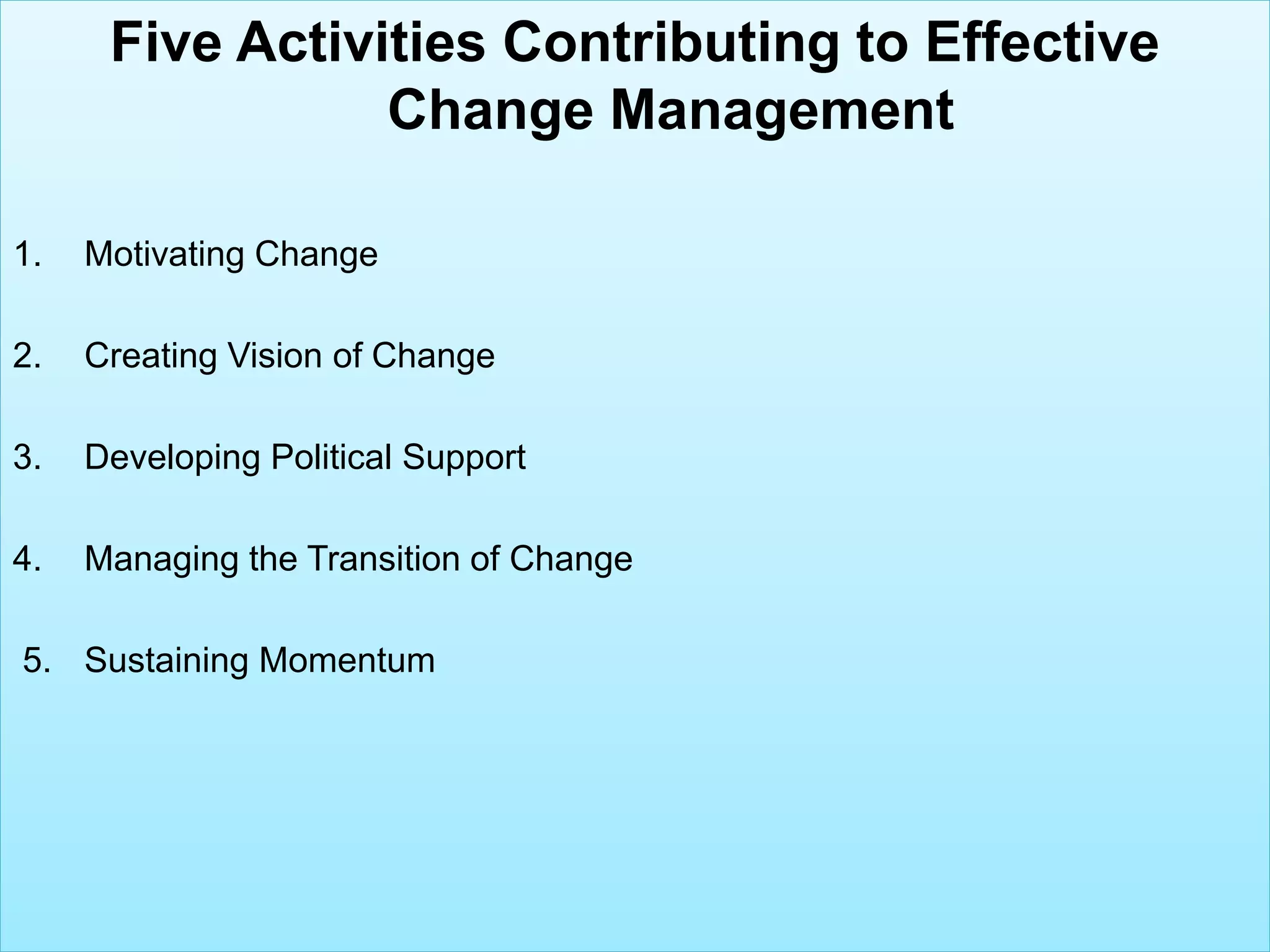
-------------Five Activities Contributing to Effective
Change Management
1. Motivating Change
2. Creating Vision of Change
3. Developing Political Support
4. Managing the Transition of Change
5. Sustaining Momentum
-------------------------------------------
Motivating Change
General guidelines for managing this phase include enlightening members of the
organization about the need for change, expressing the current status of the
organization and where it needs to be in the future
Creating Vision of Change
Leaders in the organization must articulate a clear vision that describes what the change
effort is striving to accomplish. Ideally, people in the organization have strong input to the
creation of the vision and how it can be achieved.
Developing Political Support
Politics in organizations is about power Power usually comes from credibility, whether
from strong expertise or integrity.
Managing the Transition of Change
when the organization works to make the actual transition from the current state to the
future state. In consultations, this phase usually is called implementation of the action
plans
Sustaining Momentum
Sustain Momentum are positioned to assist organizations reach their business
goals through a vision shared to achieve sustainable goals through teamwork,
----------------
Elements of Change Management
ADKAR Model of Change Management
(Henkaten Kanrl)
oAwareness
oDesire
oKnowledge
oAbility
oReinforcement
----------------------------------
Tools or components of change management
include:
. Readiness assessments
. Communication and communication planning
. Sponsor activities and sponsor roadmaps
. Coaching and manager training for change management
. Training and employee training development
. Resistance management
. Data collection, feedback analysis and corrective action
. Celebrating and recognizing success
----------------------------
8 Steps to a successful change
1. Establish a sense of urgency
2. Build a guiding Team
3. Develop a vision and strategy
4. Communicate the change vision
5. Empower broad-based action
6. Generate short-term wins
7. Consolidate gains and produce more change
8. Anchor new approaches in the culture
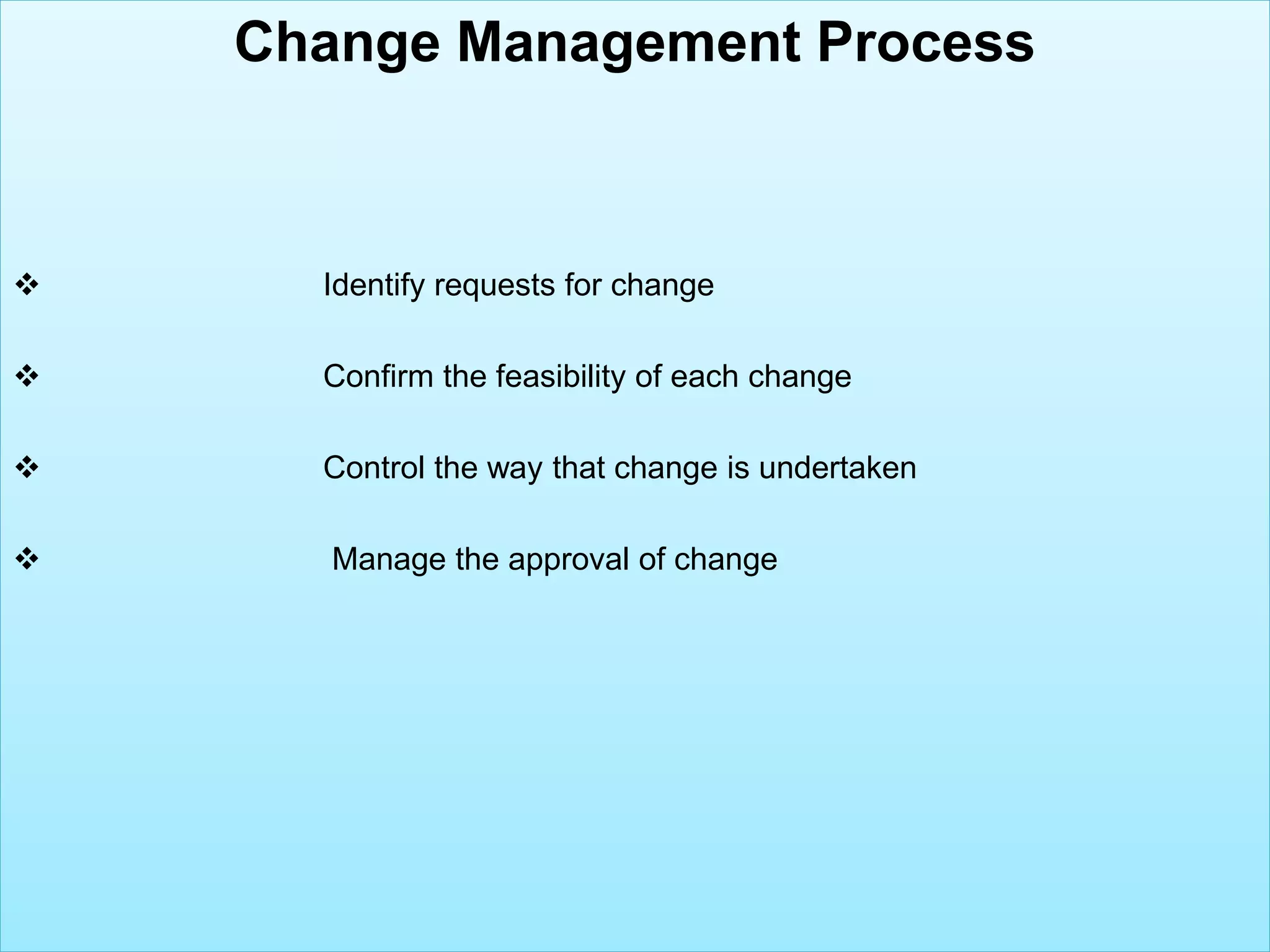
--------------------------------------Change Management Process
 Identify requests for change
 Confirm the feasibility of each change
 Control the way that change is undertaken
 Manage the approval of change
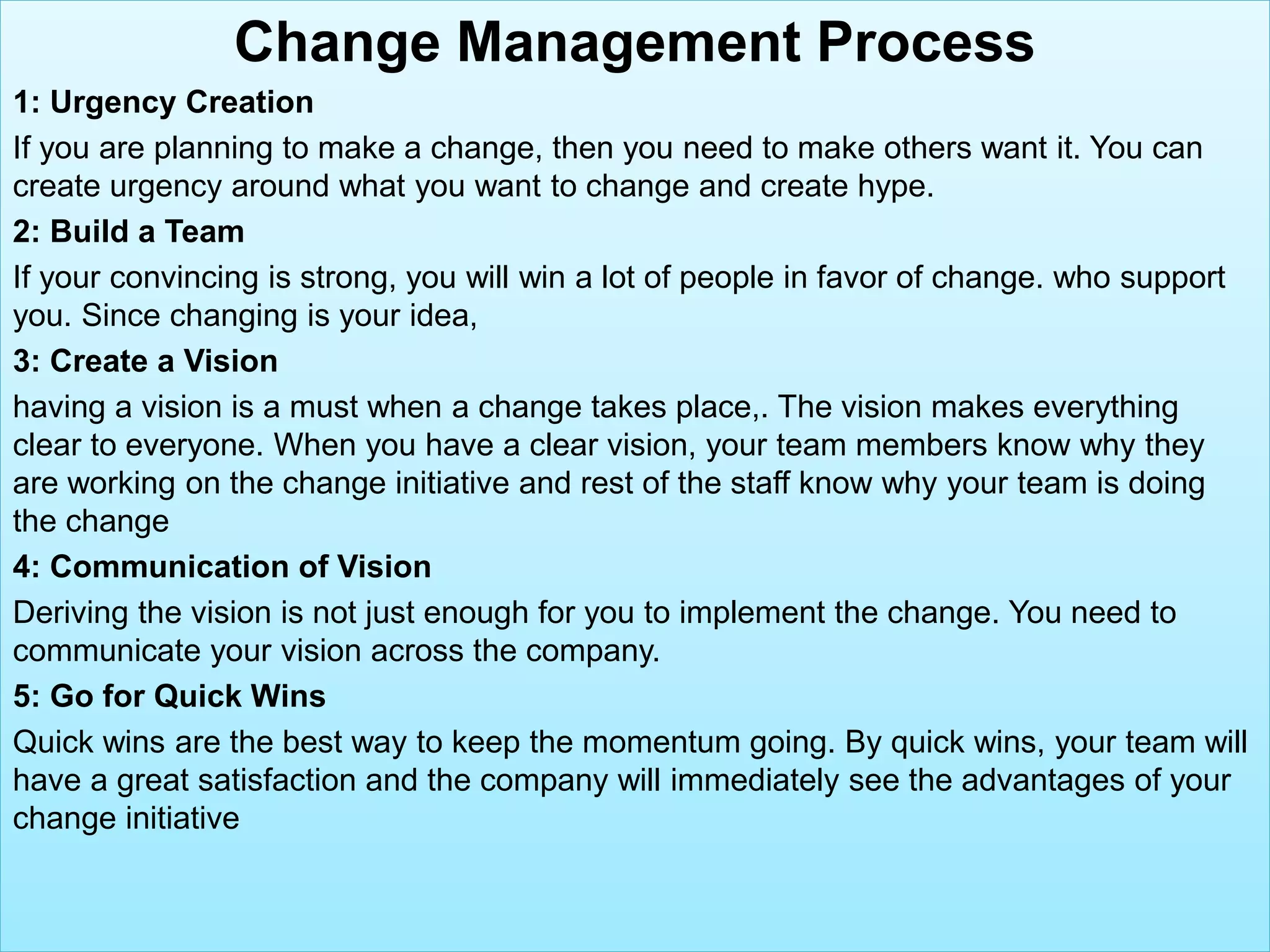
-------------------------------------Change Management Process
1: Urgency Creation
If you are planning to make a change, then you need to make others want it. You can
create urgency around what you want to change and create hype.
2: Build a Team
If your convincing is strong, you will win a lot of people in favor of change. who support
you. Since changing is your idea,
3: Create a Vision
having a vision is a must when a change takes place,. The vision makes everything
clear to everyone. When you have a clear vision, your team members know why they
are working on the change initiative and rest of the staff know why your team is doing
the change
4: Communication of Vision
Deriving the vision is not just enough for you to implement the change. You need to
communicate your vision across the company.
5: Go for Quick Wins
Quick wins are the best way to keep the momentum going. By quick wins, your team will
have a great satisfaction and the company will immediately see the advantages of your
change initiative
-----------------------------------------Conclusion
In the constantly changing corporate world, the one who welcomes the changes
stays ahead of the competition.
If you are not much comfortable with changes happening around you, reserve
some of your time to read 'Who Moved My Cheese?
This will tell you the whole story about why the change is required and how you
can make use of the change to excel in what you do.
QUESTIONS ?
------------------------------

Change management

  • 2.
    Presentation On ManagementChange Presented By Zubair Afzal REG#: 52-FMS/BSAF/S16 and Ibrahim Naeem REG#: 51-FMS/BSAF/S16
  • 3.
    TABLE OF CONTENTS Whatis Management What is Change Management Forces of Change Management Principles of Change Management Five Activities Contributing to Effective Change Management Elements of Change Enablement
  • 4.
  • 5.
    Change ManagementWhat isChange Management ? Change management is a structured approach to transitioning individuals, teams, and organizations from a current state to a desired future state Quotation : Change your thoughts and you change your world
  • 6.
    _________________________________Why Change ? NoChange is without a purpose . Environment internal or Competition external factors innovation. Systems Upgrades Processes New strategy Culture Outsourcing Continuous improvement New technology
  • 7.
    --------------------------------------------------------Few changes overthe World Nobody can go back and start a new beginning, but anyone can start today and make a new ending
  • 8.
    ---------------------------------------------------Forces for ChangeManagement Knowledge Economy” Virtual organization  Electronic commerce Digital convergence Mergers & acquisitions Privatizations
  • 9.
    Forces For ChangeManagement External Forces .Technology . Marketing Condition . Social changes . Political Forces Internal Forces . Nature Of Work Force . Change in Managerial Personnel . Deficiencies in Existing Management Structure . To avoid Developing inertia
  • 12.
    ------------------------Two Side ofChange Technical Side of Change Human side of change
  • 13.
    -------------------------------- Principles of ChangeManagement  Change can be enabled, not managed  Change must be linked to business and performance goals  Building capacity to change is a strategic imperative  Building capacity for change is an evolutionary process  Effective change processes require a systemic view of the organization  The change process involves both organizational and personal transitions
  • 14.
    -------------Five Activities Contributingto Effective Change Management 1. Motivating Change 2. Creating Vision of Change 3. Developing Political Support 4. Managing the Transition of Change 5. Sustaining Momentum
  • 15.
    ------------------------------------------- Motivating Change General guidelinesfor managing this phase include enlightening members of the organization about the need for change, expressing the current status of the organization and where it needs to be in the future Creating Vision of Change Leaders in the organization must articulate a clear vision that describes what the change effort is striving to accomplish. Ideally, people in the organization have strong input to the creation of the vision and how it can be achieved. Developing Political Support Politics in organizations is about power Power usually comes from credibility, whether from strong expertise or integrity. Managing the Transition of Change when the organization works to make the actual transition from the current state to the future state. In consultations, this phase usually is called implementation of the action plans Sustaining Momentum Sustain Momentum are positioned to assist organizations reach their business goals through a vision shared to achieve sustainable goals through teamwork,
  • 16.
    ---------------- Elements of ChangeManagement ADKAR Model of Change Management (Henkaten Kanrl) oAwareness oDesire oKnowledge oAbility oReinforcement
  • 17.
    ---------------------------------- Tools or componentsof change management include: . Readiness assessments . Communication and communication planning . Sponsor activities and sponsor roadmaps . Coaching and manager training for change management . Training and employee training development . Resistance management . Data collection, feedback analysis and corrective action . Celebrating and recognizing success
  • 18.
    ---------------------------- 8 Steps toa successful change 1. Establish a sense of urgency 2. Build a guiding Team 3. Develop a vision and strategy 4. Communicate the change vision 5. Empower broad-based action 6. Generate short-term wins 7. Consolidate gains and produce more change 8. Anchor new approaches in the culture
  • 19.
    --------------------------------------Change Management Process Identify requests for change  Confirm the feasibility of each change  Control the way that change is undertaken  Manage the approval of change
  • 20.
    -------------------------------------Change Management Process 1:Urgency Creation If you are planning to make a change, then you need to make others want it. You can create urgency around what you want to change and create hype. 2: Build a Team If your convincing is strong, you will win a lot of people in favor of change. who support you. Since changing is your idea, 3: Create a Vision having a vision is a must when a change takes place,. The vision makes everything clear to everyone. When you have a clear vision, your team members know why they are working on the change initiative and rest of the staff know why your team is doing the change 4: Communication of Vision Deriving the vision is not just enough for you to implement the change. You need to communicate your vision across the company. 5: Go for Quick Wins Quick wins are the best way to keep the momentum going. By quick wins, your team will have a great satisfaction and the company will immediately see the advantages of your change initiative
  • 21.
    -----------------------------------------Conclusion In the constantlychanging corporate world, the one who welcomes the changes stays ahead of the competition. If you are not much comfortable with changes happening around you, reserve some of your time to read 'Who Moved My Cheese? This will tell you the whole story about why the change is required and how you can make use of the change to excel in what you do.
  • 22.
  • 23.