Immunoregulation
done by :-
Karrar abdo al kareem
Ayman hameed
Abdo al salam
Teaching objectives
• To discuss regulation of immune responses
including regulation by antibody, Tregs, and
cytokines
• To discuss some genetic factors influencing
immunoregulation
What is immunoregulation?
• The ability of the immune system to control
and regulate its own responses is called
immunoregulation.
• Magnitude of immune response determined
by:
– Ag-driven activation of lymphocytes
– Negative regulatory influences that prevent or
dampen response
• Regulatory mechanisms act at all phases of
immune response
– Recognition
– Activation
– Effector function
• Once the foreign body enter the body is
recognized as non self .
Activation
• The activation of the immune response
typically begins when the pathogen enters the
body
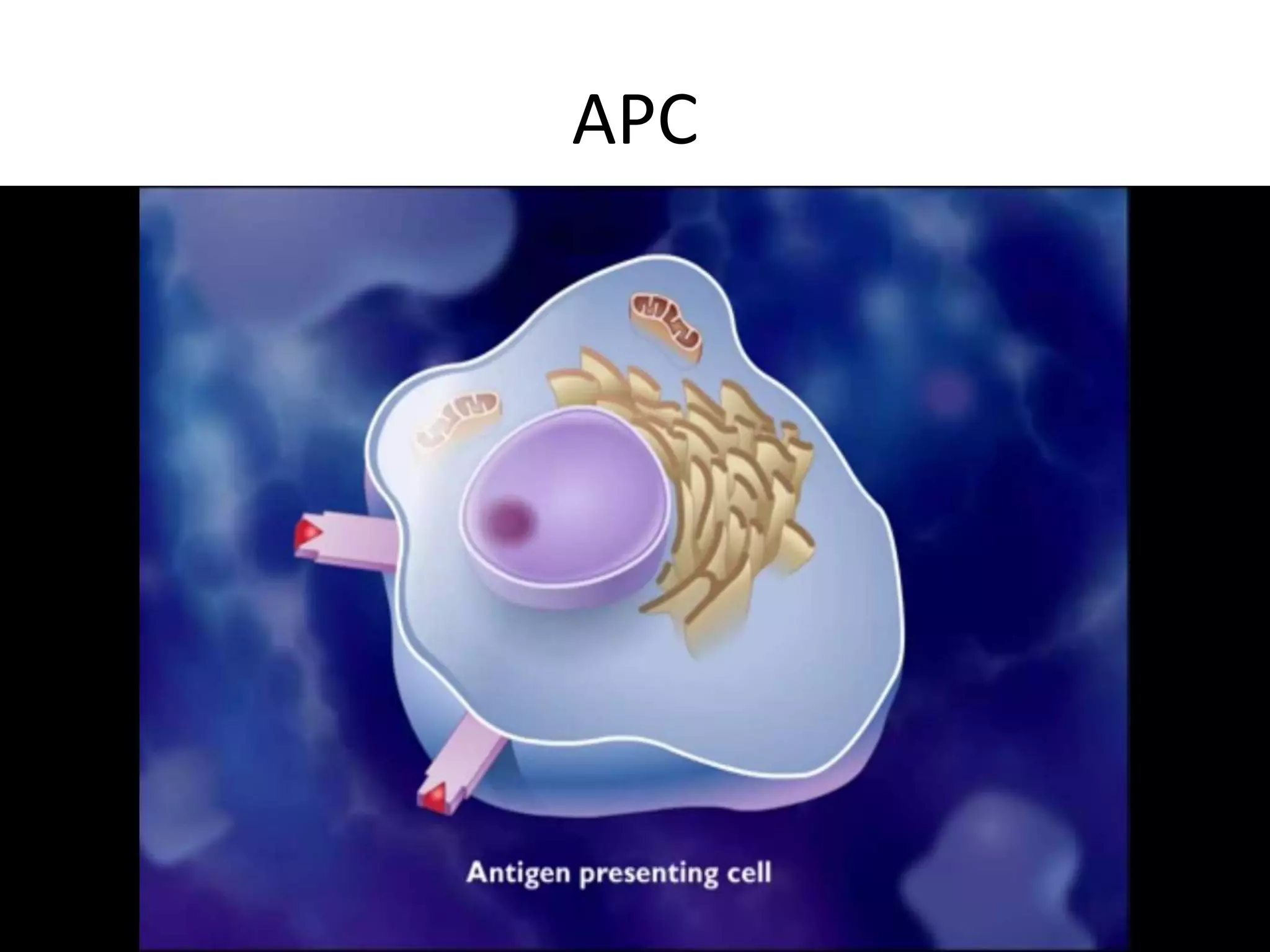
• Macrophages ingest ,process and display the
Ag fragments on their surface
• Macrophages with the Ags on their surfaces
are called APCs.
APC
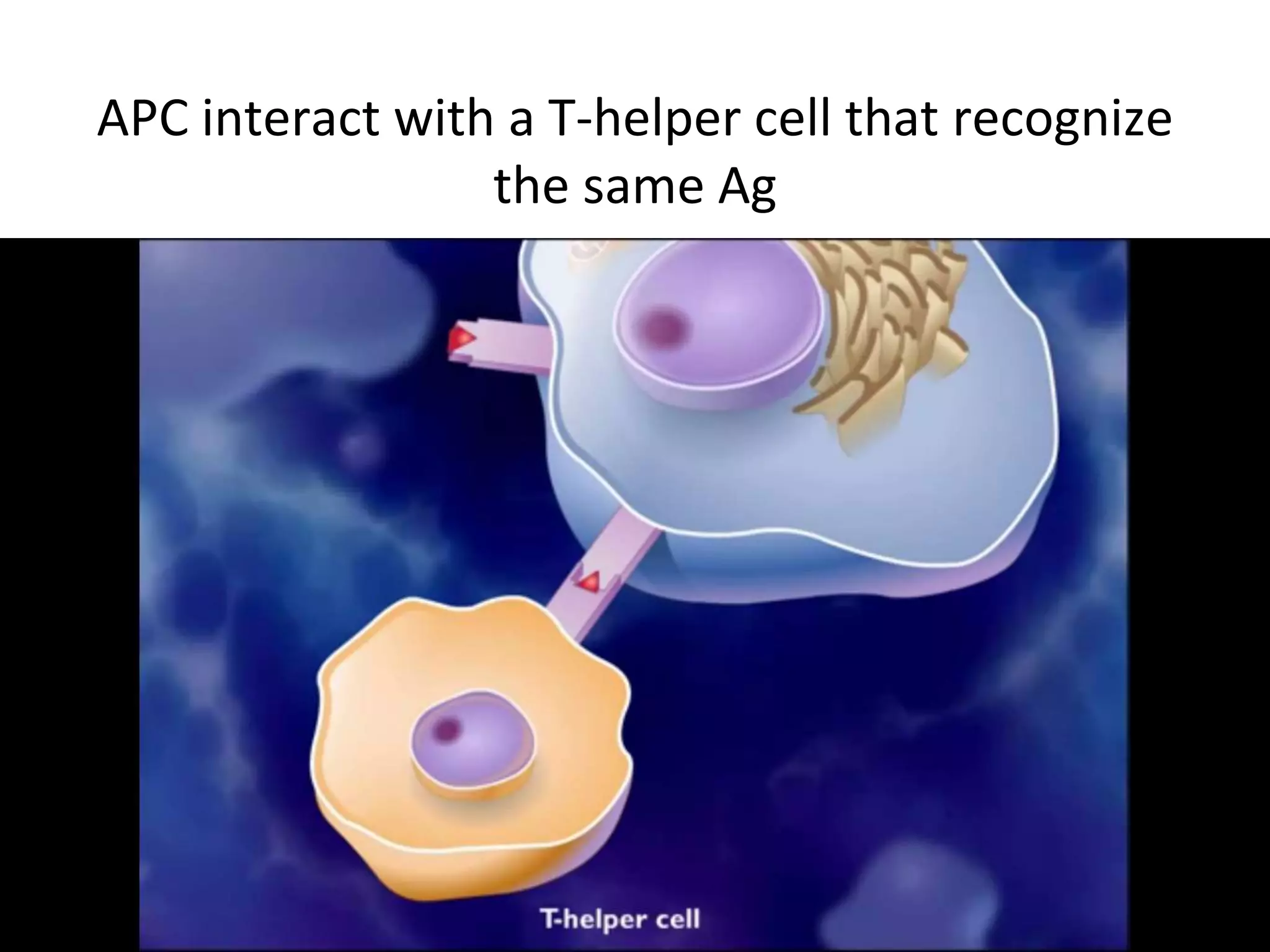
APC interact with a T-helper cell that recognize
the same Ag
• During interaction the microphage releases a
chemical alarm signals called IL-1 which
stimulate the T-helper cell to release IL-2.
• IL-2 causes the proliferation of certain
cytotoxic T-cells & B-cells
10
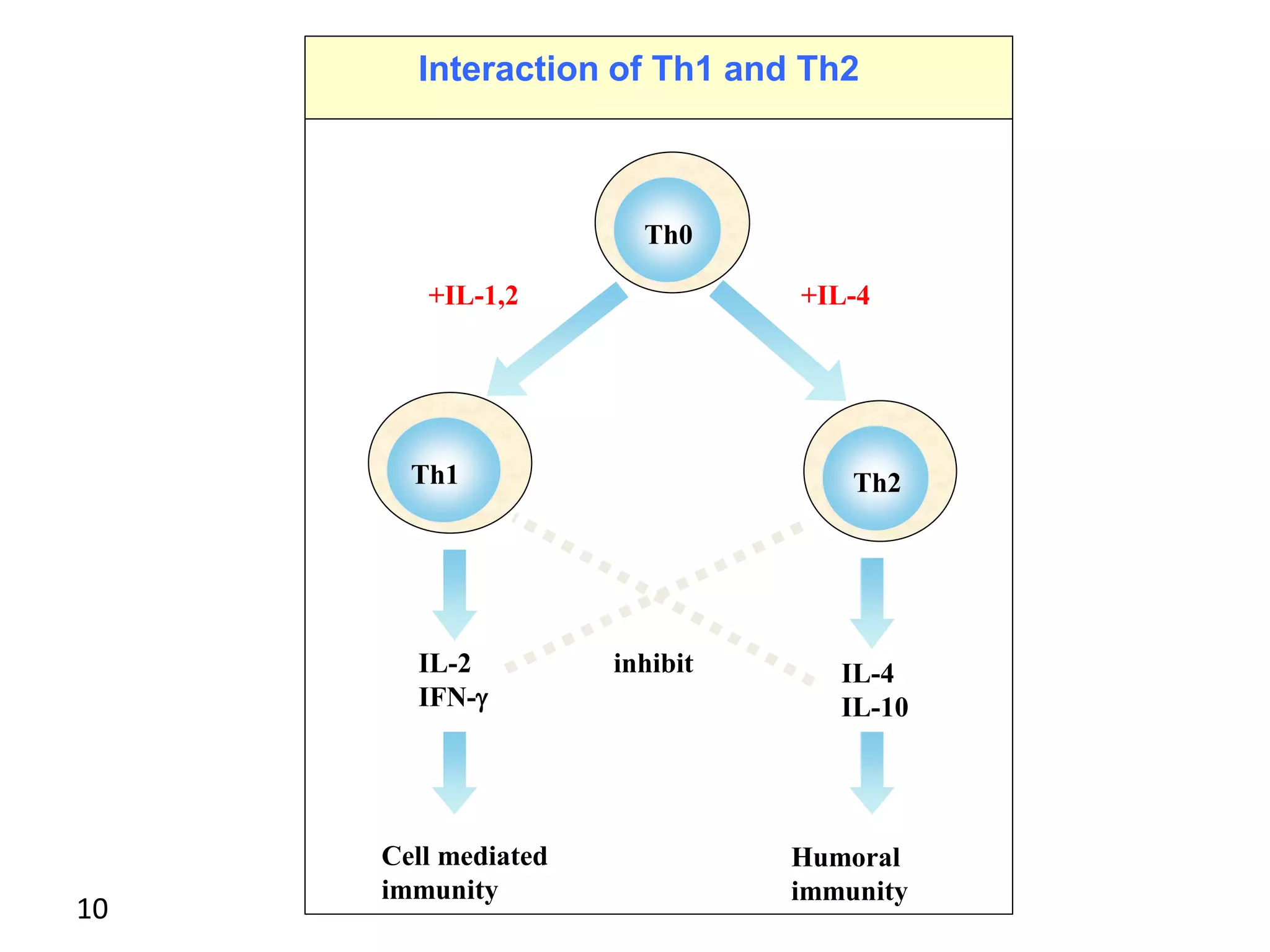
Th1
+IL-1,2 +IL-4
IL-2
IFN-g
IL-4
IL-10
inhibit
Cell mediated
immunity
Humoral
immunity
Th0
Th2
Interaction of Th1 and Th2
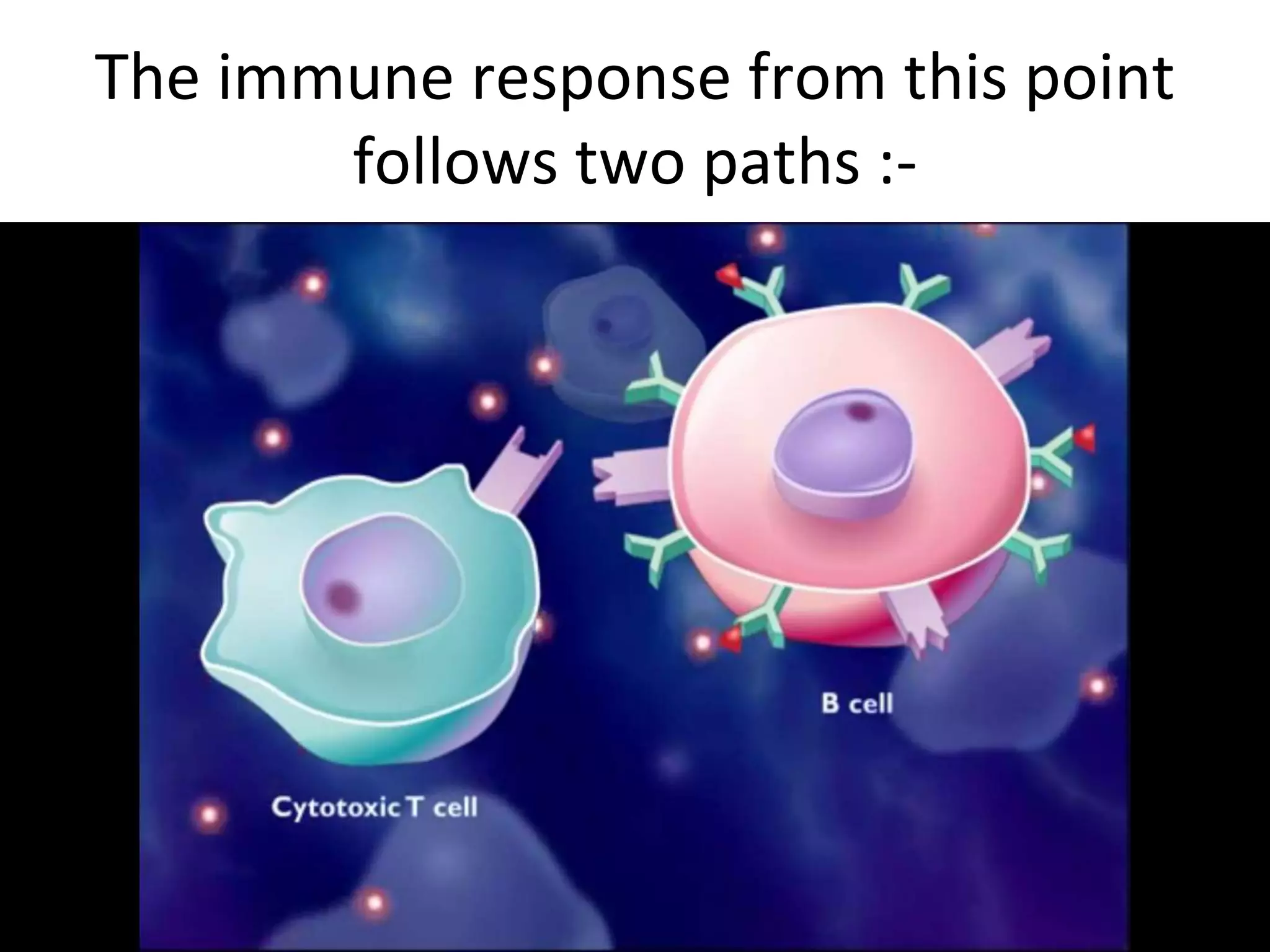
The immune response from this point
follows two paths :-
Action of T cells
• Normal cells of the body can also be infected
by ingesting the pathogen & display Ag
fragments on their cell surfaces
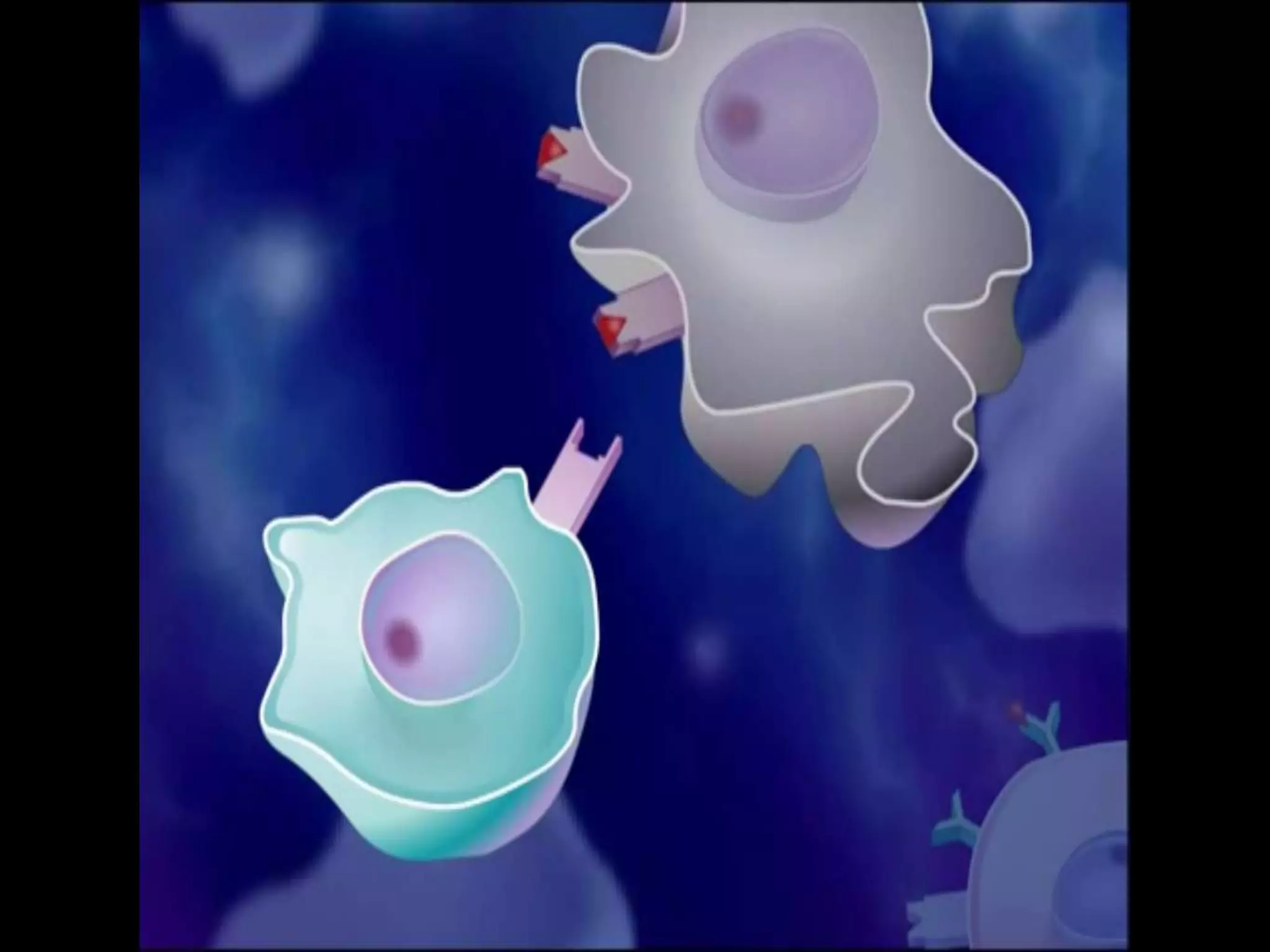
• The body makes millions of cytotoxic T cells
each type is able to recognize aparticular type
of Ag
• The cytotoxic T cell that are capable to
recognizing the Ag displayed on the surfaces
of infected cells bind to the infected cell and
produce chemicals that kill the infected cell
• Death of the infected cells result in the
destruction of the pathogen .
16
Th1
+IL-12 +IL-4
IL-2
IFN-g
IL-4
IL-10
inhibit
Cell mediated
immunity
Humoral
immunity
Th0
Th2
Interaction of Th1 and Th2
Action of B cell
• B cell also contain millions of types each able
to recognize a particular Ag
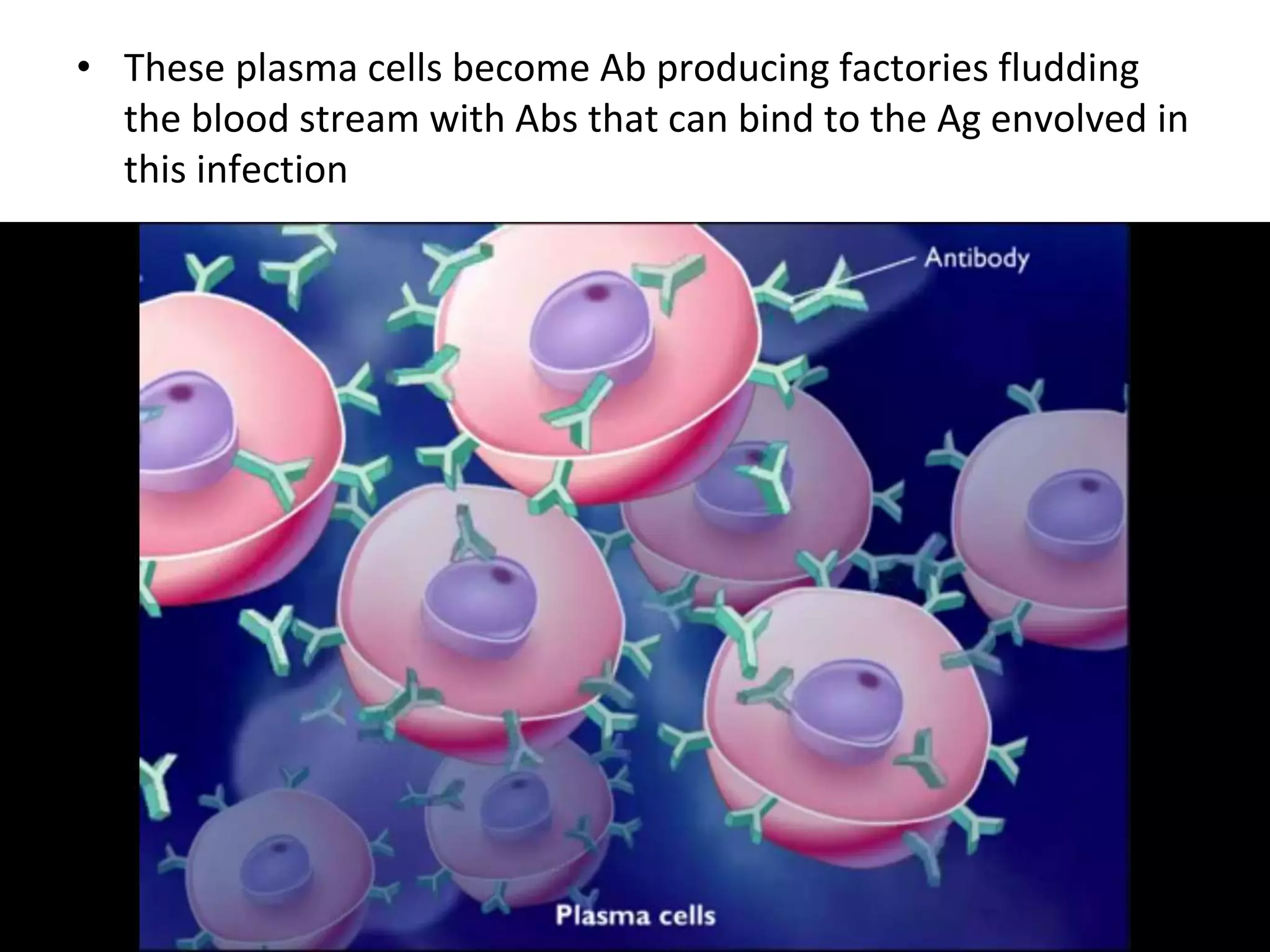
• When B cells become activated by T helper
cells they differentiate into plasma cells
• These plasma cells become Ab producing factories fludding
the blood stream with Abs that can bind to the Ag envolved in
this infection
• Abs bind to the Ag on the surfaces of the
pathogens marking the for destruction by
macrophages
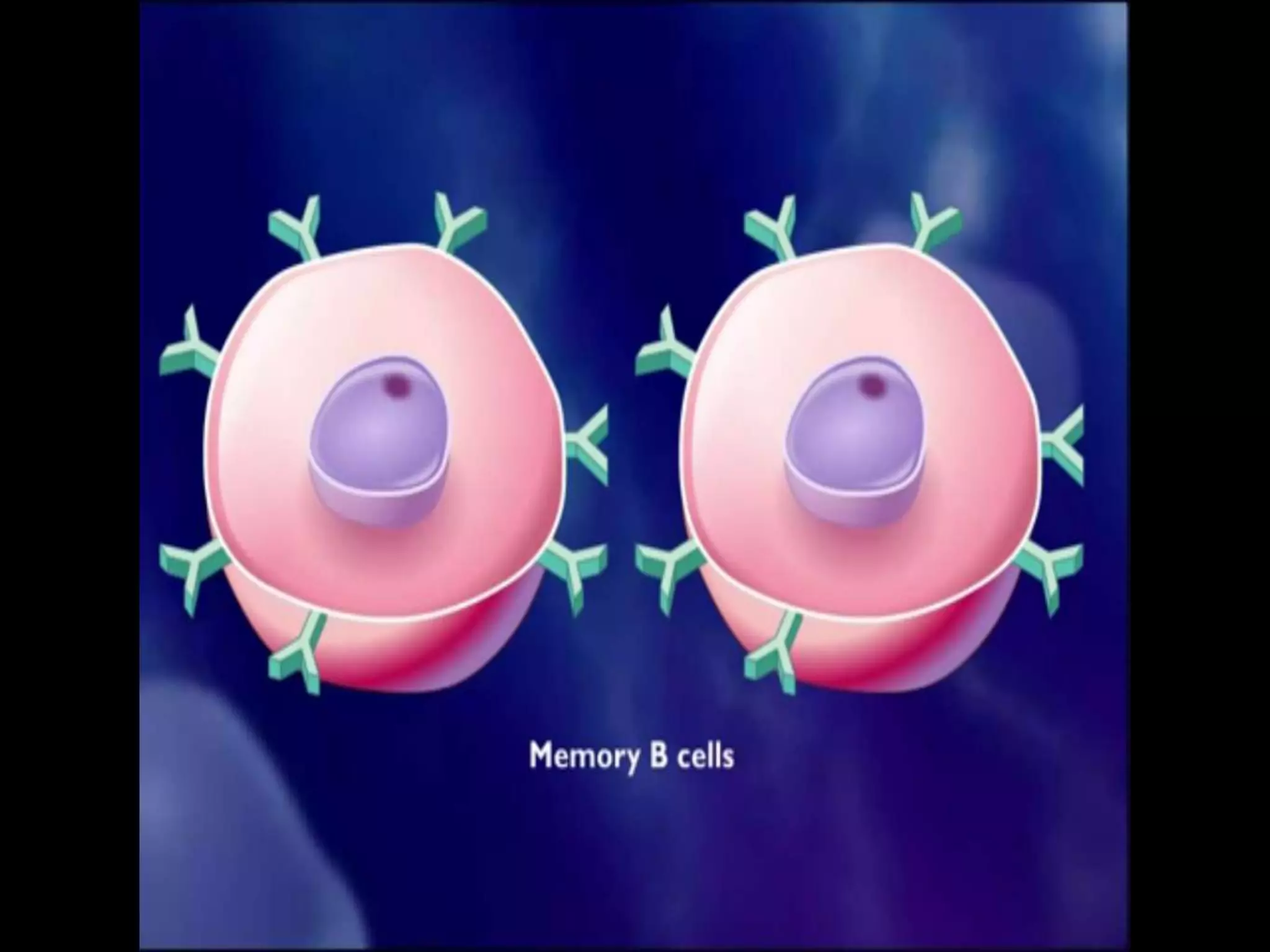
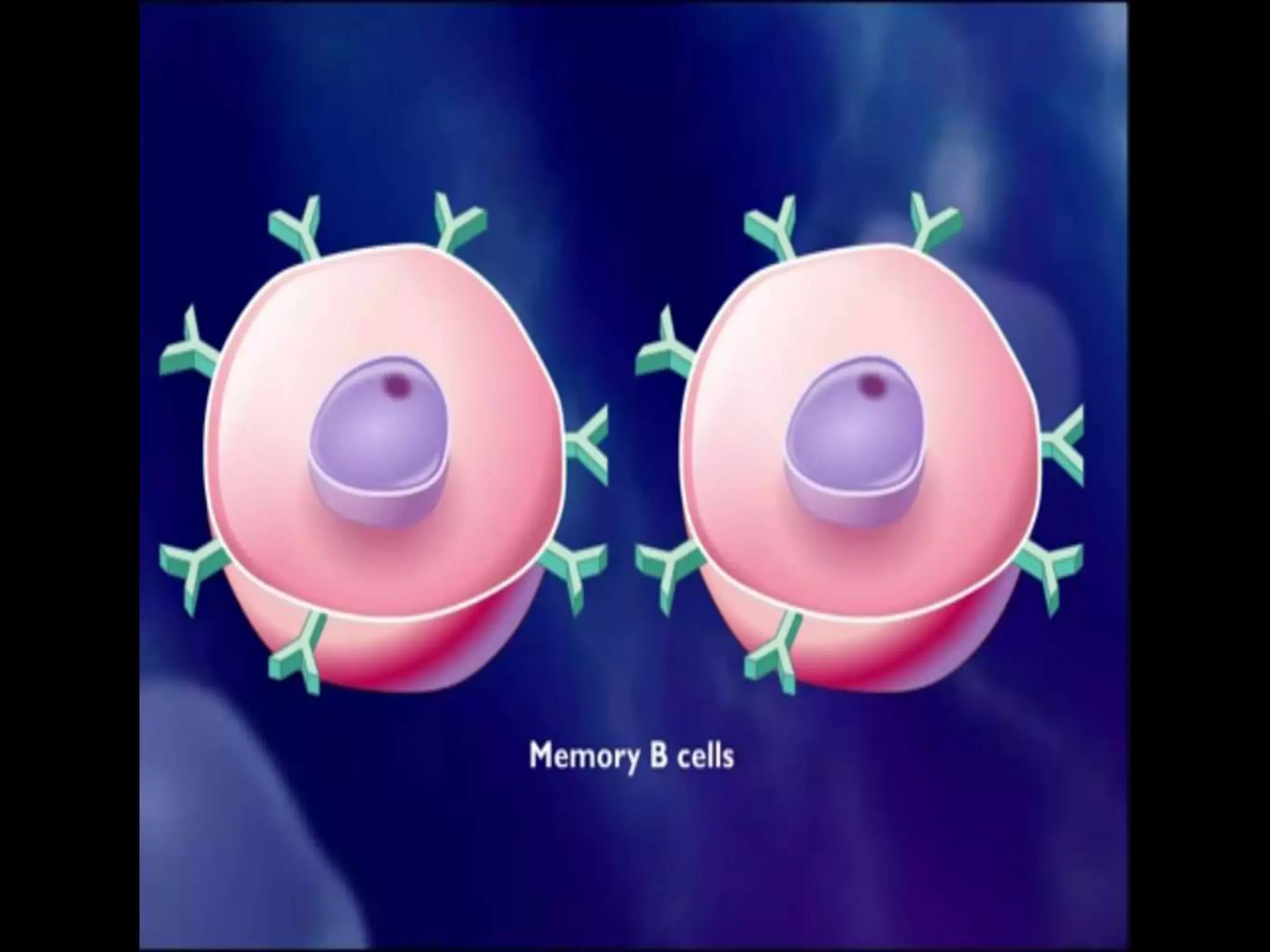
• Some of the B cells do not turn
to Ab factories but instead
become memory B cells that
may survive for several decades
.
• Because of these memory B cells , the
secondary immune response to a future
infection by the same pathogen is stronger.
• This act of immune response is what gives
immunity to some diseases after you had
them once or after you have bean vaccinated.
Regulation by cytokines
a) Cytokines are positive or negative regulators.
They act at many stages of the immune
response, but their activity is dependent upon
the other cytokines present in the
microenvironment as well as receptor
expression on effector cells. Cytokines regulate
the type and extent of the immune response
generated.
IMMUNE RESPONSE:
STIMULATORY AND INHIBITORY
CYTOKINES
• Interleukin-2 (IL-2)
• IL-1
• IL-4
• IL-5
• IL-6
• IL-12
• IL-18
• Interferon gamma
(IFN- g)
• IL-4
• IL-10
• IL-11
• IL-13
• Transforming growth
factor beta (TGF-)
• IFN-/
• IFN-g
Regulation by regulatory T cells (Tregs)
formerly known as suppressor T cells, are a
subpopulation of T cells which modulate the
immune system, maintain tolerance to self-
antigens, and abrogate autoimmune disease.
These cells generally suppress or downregulate
induction and proliferation of effector T cells.
Additional regulatory T cells known as Treg17
cells have recently been identified.
• Regulatory T cells (Tregs) are recently described
populations of cells that can regulate immune
responses. They do not prevent initial T cell
activation; rather, they inhibit a sustained response
and prevent chronic and potentially damaging
responses. They do not have characteristics of Th1,
Th2 cells but they can suppress both Th1 and Th2
responses.
• a) Naturally occurring Tregs – The thymus gives rise
to CD4+/CD25+/Foxp3+ cells that function as Tregs.
These Tregs suppress immune responses in a cell
contact-dependent manner but the mechanism of
suppression has not been established.
• b) Induced Tregs – In the periphery some T cells are
induced to become Tregs by antigen and either IL-10
or TGF-β. Tregs induced by IL-10 are
CD4+/CD25+/Foxp3- and are referred to as Tr1 cells.
These cells suppress immune responses by secretion
of IL10. Tregs induced by TGF-β are
CD4+/CD25+/Foxp3+ and are referred to as induced
Tregs. These cells suppress by secretion of TGF-β.
c) CD8+ Tregs – Some CD8+ cells can
also be induced by antigen and IL-10
to become a Treg cell. These cells are
CD8+/Foxp3+ and they suppress by a
cell contact-dependent mechanism or
by secretion of cytokines. These cells
have been demonstrated in vitro but it
is not known whether they exist in
vivo.
Genetic factors influencing
immunoregulation
• Certain individuals are genetically susceptible
to developing autoimmune diseases. This
susceptibility is associated with multiple genes
plus other risk factors. Genetically
predisposed individuals do not always develop
autoimmune diseases.
Three main sets of genes are suspected in many
autoimmune diseases. These genes are related to:
1 ) Immunoglobulins
2 ) T-cell receptors
3 ) The major histocompatibility complexes (MHC).
• The first two, which are involved in the recognition
of antigens, are inherently variable and susceptible
to recombination. These variations enable the
immune system to respond to a very wide variety
of invaders, but may also give rise to lymphocytes
capable of self-reactivity
Also devided into :-
• a) MHC-linked genes help control response to
infection. Certain HLA haplotypes are associated with
individuals who are responders or nonresponder,
those who are susceptible or resistant.
• b) Non-MHC genes are also involved in
immunoregulation. An example is a gene related to
macrophage activity encoding a transporter protein
involved in transport of nitrite (NO2-) into the
phagolysosome, natural resistance-associated
macrophage protein-1 (Nramp1). Polymorphisms in
this gene could change the activity of macrophages.
• c) Cytokine, chemokine, and their receptors
are involved in immunoregulation .
Polymorphisms in the genes encoding these,
in particular the receptors, have been shown
to correlate to susceptibility to infection or
generation of autoimmune disease.
Presentation of-immunoregulation-full-research

Presentation of-immunoregulation-full-research

  • 1.
    Immunoregulation done by :- Karrarabdo al kareem Ayman hameed Abdo al salam
  • 3.
    Teaching objectives • Todiscuss regulation of immune responses including regulation by antibody, Tregs, and cytokines • To discuss some genetic factors influencing immunoregulation
  • 4.
    What is immunoregulation? •The ability of the immune system to control and regulate its own responses is called immunoregulation. • Magnitude of immune response determined by: – Ag-driven activation of lymphocytes – Negative regulatory influences that prevent or dampen response
  • 5.
    • Regulatory mechanismsact at all phases of immune response – Recognition – Activation – Effector function • Once the foreign body enter the body is recognized as non self .
  • 6.
    Activation • The activationof the immune response typically begins when the pathogen enters the body • Macrophages ingest ,process and display the Ag fragments on their surface • Macrophages with the Ags on their surfaces are called APCs.
  • 7.
  • 8.
    APC interact witha T-helper cell that recognize the same Ag
  • 9.
    • During interactionthe microphage releases a chemical alarm signals called IL-1 which stimulate the T-helper cell to release IL-2. • IL-2 causes the proliferation of certain cytotoxic T-cells & B-cells
  • 10.
  • 11.
    The immune responsefrom this point follows two paths :-
  • 12.
    Action of Tcells • Normal cells of the body can also be infected by ingesting the pathogen & display Ag fragments on their cell surfaces • The body makes millions of cytotoxic T cells each type is able to recognize aparticular type of Ag
  • 14.
    • The cytotoxicT cell that are capable to recognizing the Ag displayed on the surfaces of infected cells bind to the infected cell and produce chemicals that kill the infected cell • Death of the infected cells result in the destruction of the pathogen .
  • 16.
  • 17.
    Action of Bcell • B cell also contain millions of types each able to recognize a particular Ag • When B cells become activated by T helper cells they differentiate into plasma cells
  • 18.
    • These plasmacells become Ab producing factories fludding the blood stream with Abs that can bind to the Ag envolved in this infection
  • 19.
    • Abs bindto the Ag on the surfaces of the pathogens marking the for destruction by macrophages
  • 21.
    • Some ofthe B cells do not turn to Ab factories but instead become memory B cells that may survive for several decades .
  • 23.
    • Because ofthese memory B cells , the secondary immune response to a future infection by the same pathogen is stronger. • This act of immune response is what gives immunity to some diseases after you had them once or after you have bean vaccinated.
  • 25.
    Regulation by cytokines a)Cytokines are positive or negative regulators. They act at many stages of the immune response, but their activity is dependent upon the other cytokines present in the microenvironment as well as receptor expression on effector cells. Cytokines regulate the type and extent of the immune response generated.
  • 26.
    IMMUNE RESPONSE: STIMULATORY ANDINHIBITORY CYTOKINES • Interleukin-2 (IL-2) • IL-1 • IL-4 • IL-5 • IL-6 • IL-12 • IL-18 • Interferon gamma (IFN- g) • IL-4 • IL-10 • IL-11 • IL-13 • Transforming growth factor beta (TGF-) • IFN-/ • IFN-g
  • 27.
    Regulation by regulatoryT cells (Tregs) formerly known as suppressor T cells, are a subpopulation of T cells which modulate the immune system, maintain tolerance to self- antigens, and abrogate autoimmune disease. These cells generally suppress or downregulate induction and proliferation of effector T cells. Additional regulatory T cells known as Treg17 cells have recently been identified.
  • 28.
    • Regulatory Tcells (Tregs) are recently described populations of cells that can regulate immune responses. They do not prevent initial T cell activation; rather, they inhibit a sustained response and prevent chronic and potentially damaging responses. They do not have characteristics of Th1, Th2 cells but they can suppress both Th1 and Th2 responses.
  • 29.
    • a) Naturallyoccurring Tregs – The thymus gives rise to CD4+/CD25+/Foxp3+ cells that function as Tregs. These Tregs suppress immune responses in a cell contact-dependent manner but the mechanism of suppression has not been established. • b) Induced Tregs – In the periphery some T cells are induced to become Tregs by antigen and either IL-10 or TGF-β. Tregs induced by IL-10 are CD4+/CD25+/Foxp3- and are referred to as Tr1 cells. These cells suppress immune responses by secretion of IL10. Tregs induced by TGF-β are CD4+/CD25+/Foxp3+ and are referred to as induced Tregs. These cells suppress by secretion of TGF-β.
  • 30.
    c) CD8+ Tregs– Some CD8+ cells can also be induced by antigen and IL-10 to become a Treg cell. These cells are CD8+/Foxp3+ and they suppress by a cell contact-dependent mechanism or by secretion of cytokines. These cells have been demonstrated in vitro but it is not known whether they exist in vivo.
  • 31.
    Genetic factors influencing immunoregulation •Certain individuals are genetically susceptible to developing autoimmune diseases. This susceptibility is associated with multiple genes plus other risk factors. Genetically predisposed individuals do not always develop autoimmune diseases.
  • 32.
    Three main setsof genes are suspected in many autoimmune diseases. These genes are related to: 1 ) Immunoglobulins 2 ) T-cell receptors 3 ) The major histocompatibility complexes (MHC). • The first two, which are involved in the recognition of antigens, are inherently variable and susceptible to recombination. These variations enable the immune system to respond to a very wide variety of invaders, but may also give rise to lymphocytes capable of self-reactivity
  • 33.
    Also devided into:- • a) MHC-linked genes help control response to infection. Certain HLA haplotypes are associated with individuals who are responders or nonresponder, those who are susceptible or resistant. • b) Non-MHC genes are also involved in immunoregulation. An example is a gene related to macrophage activity encoding a transporter protein involved in transport of nitrite (NO2-) into the phagolysosome, natural resistance-associated macrophage protein-1 (Nramp1). Polymorphisms in this gene could change the activity of macrophages.
  • 34.
    • c) Cytokine,chemokine, and their receptors are involved in immunoregulation . Polymorphisms in the genes encoding these, in particular the receptors, have been shown to correlate to susceptibility to infection or generation of autoimmune disease.