How to develop a
Research Protocol ?
Research methodology workshop 2015
Dr Sushma Sharma
This session ---------
By the end of this session, you will be able to:
• Understand what is Research ?
• Identify the components of a research protocol
• Explain the role of each part within the overall
process of protocol development
• Understand the importance of research protocol
• Able to write a research protocol
What is Research?
A systematic investigation, involving the
collection of information (data), to solve a
problem or contribute to knowledge about a theory or
practice.
Research is critical in medicine because it
leads to new discoveries and can change
peoples’ lives by improving health and well being.
Research helps to provide scientific
understanding and solves practical problems.
Research (cont.)
Relies on methods and principles that will
produce credible and verifiable results.
All research starts with an idea or question
based on personal experiences.
Scientific Approach
The most sophisticated method of acquiring
knowledge is by scientific approach.
Combines important features of induction
and deduction together with other methods
to create a system of acquiring knowledge.
Generally more reliable than other methods.
Approach used most often to perform
medical research.
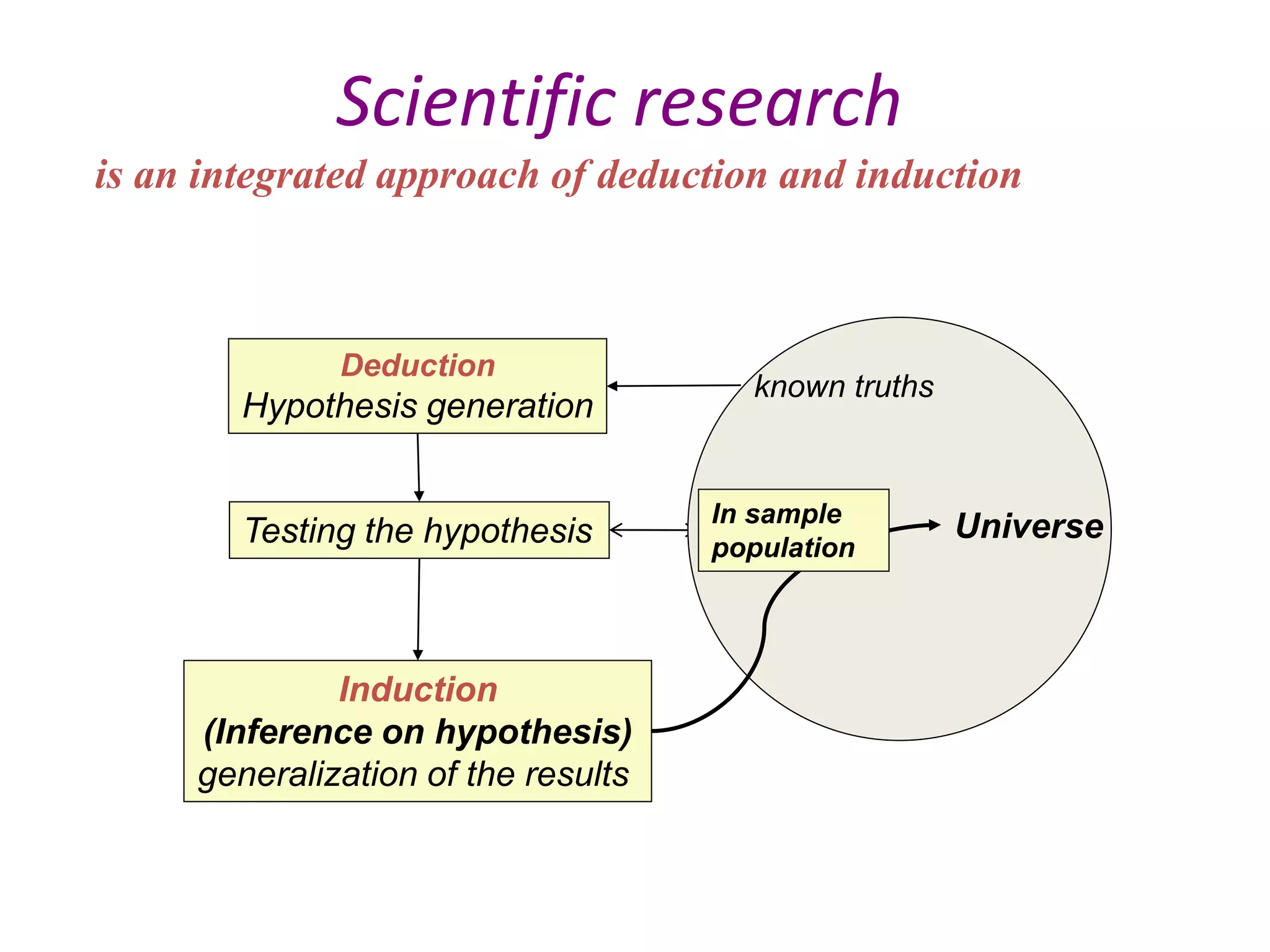
Scientific research
is an integrated approach of deduction and induction
Deduction
Hypothesis generation
Testing the hypothesis
Induction
(Inference on hypothesis)
generalization of the results
In sample
population
Universe
known truths
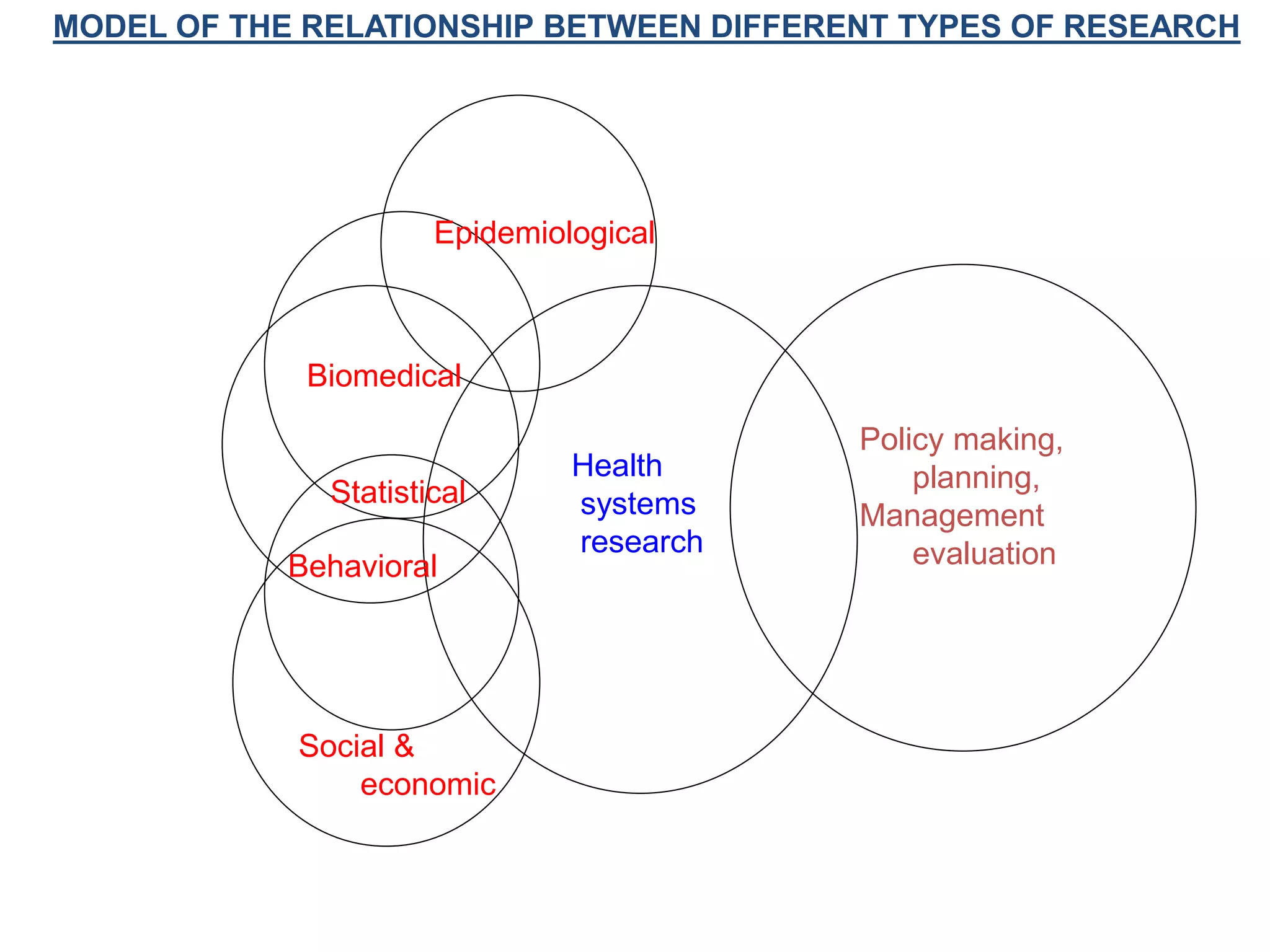
Policy making,
planning,
Management
evaluation
Health
systems
research
Epidemiological
Biomedical
Statistical
Behavioral
Social &
economic
MODEL OF THE RELATIONSHIP BETWEEN DIFFERENT TYPES OF RESEARCH
Protocol writing
Getting started:
• Title
– Clear
– Concise
– Understandable
• Introduction / Project
outline:
– What?
– Why is this research
needed?
What is the purpose of a proposal?
• Let me do the study?
• Plan, then do
• Provide a road map
• Opportunity for advice
• Check quality / rigour
/ do-ability
• Avoid costly mistakes
• Convince lecturers and
you
What is your question ?
Why is your study important ?
How are you going to do it ?
Key Points of Your Proposal
Practicalities
• When / Time lines
• Problems / issues
• Resources
– Costing
– Materials
• Outcomes / Outputs /
Significance
• References
• Writing up – include drafts
and revisions
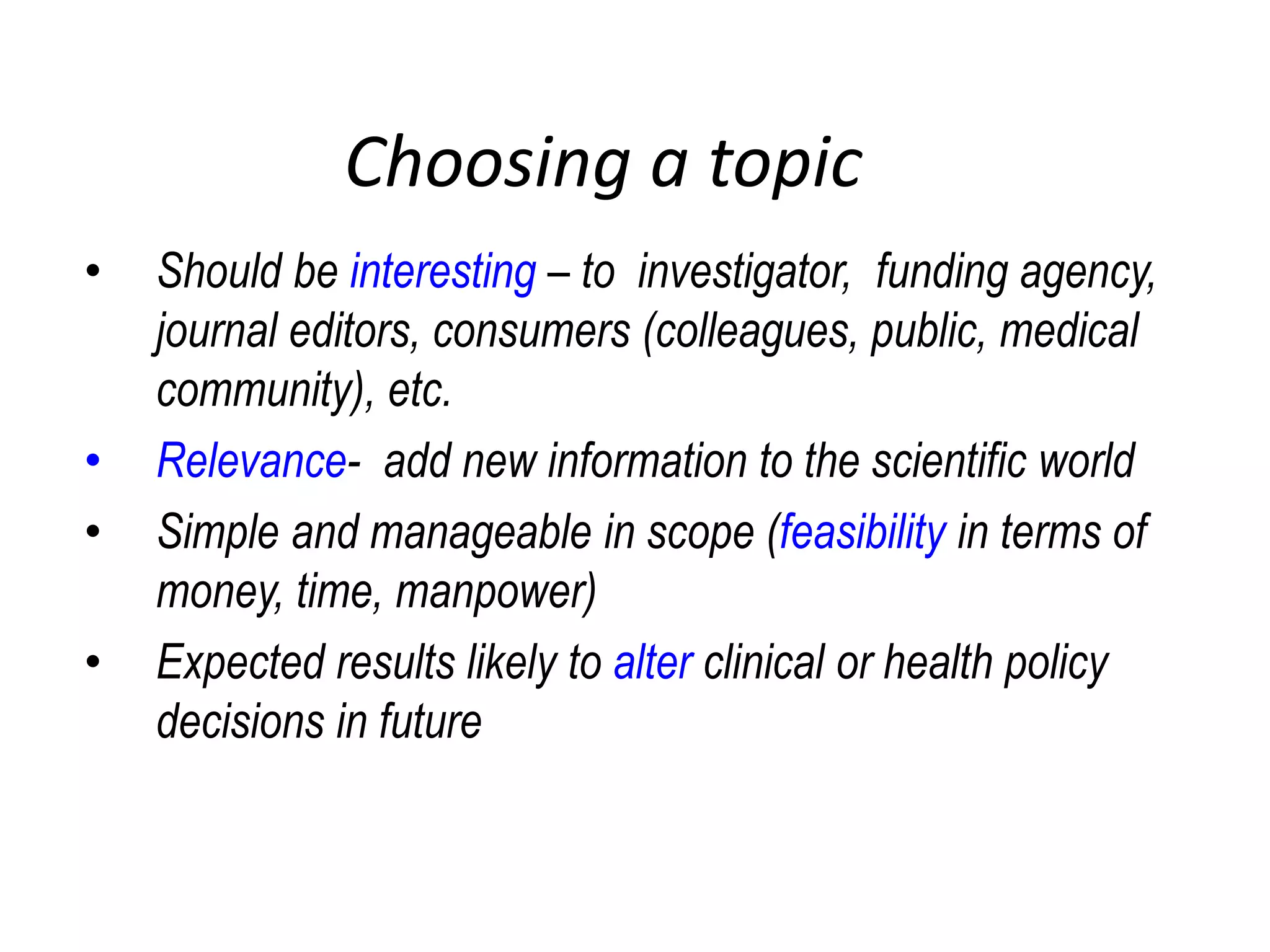
Choosing a topic
• Should be interesting – to investigator, funding agency,
journal editors, consumers (colleagues, public, medical
community), etc.
• Relevance- add new information to the scientific world
• Simple and manageable in scope (feasibility in terms of
money, time, manpower)
• Expected results likely to alter clinical or health policy
decisions in future
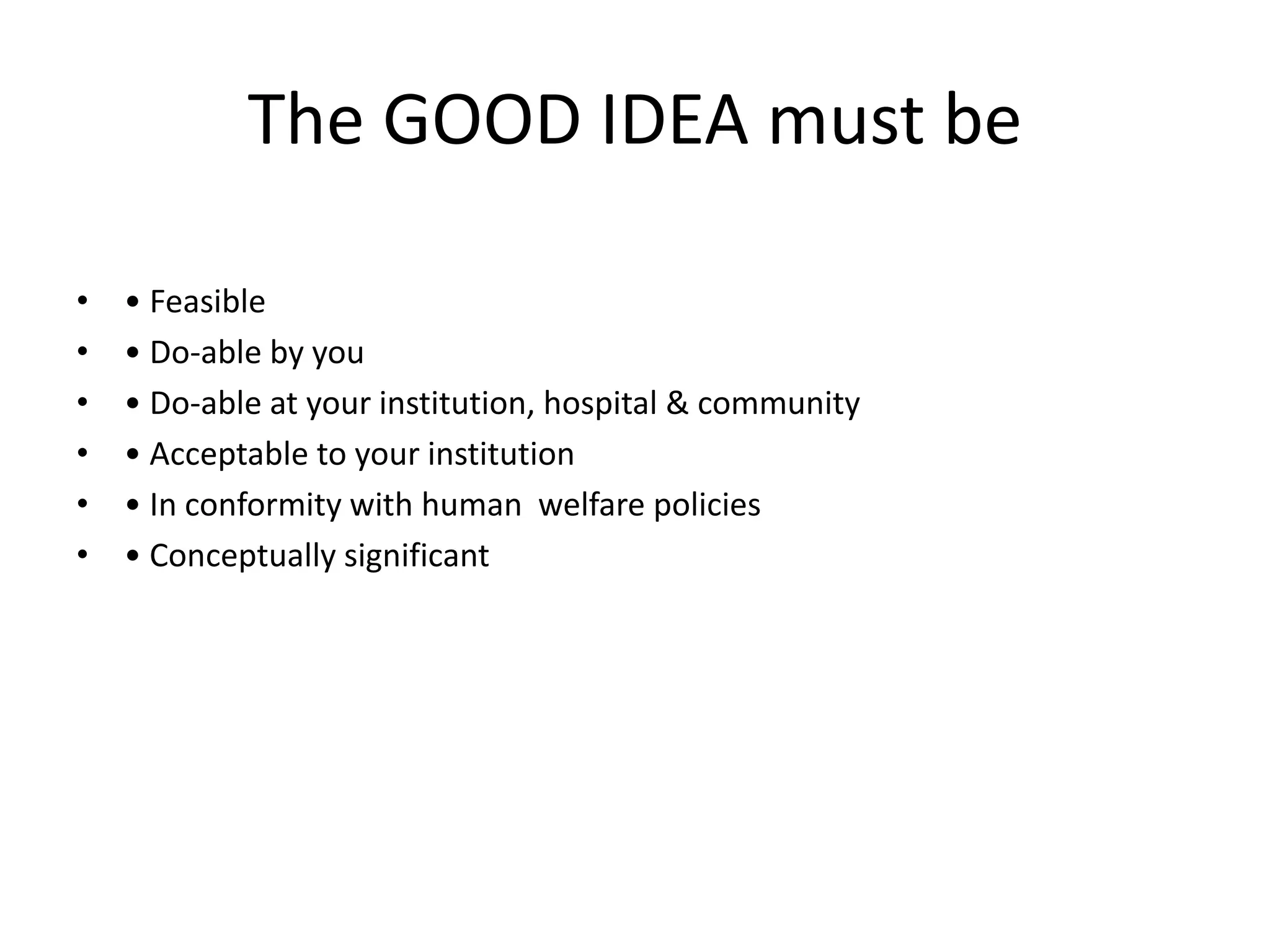
The GOOD IDEA must be
• • Feasible
• • Do-able by you
• • Do-able at your institution, hospital & community
• • Acceptable to your institution
• • In conformity with human welfare policies
• • Conceptually significant
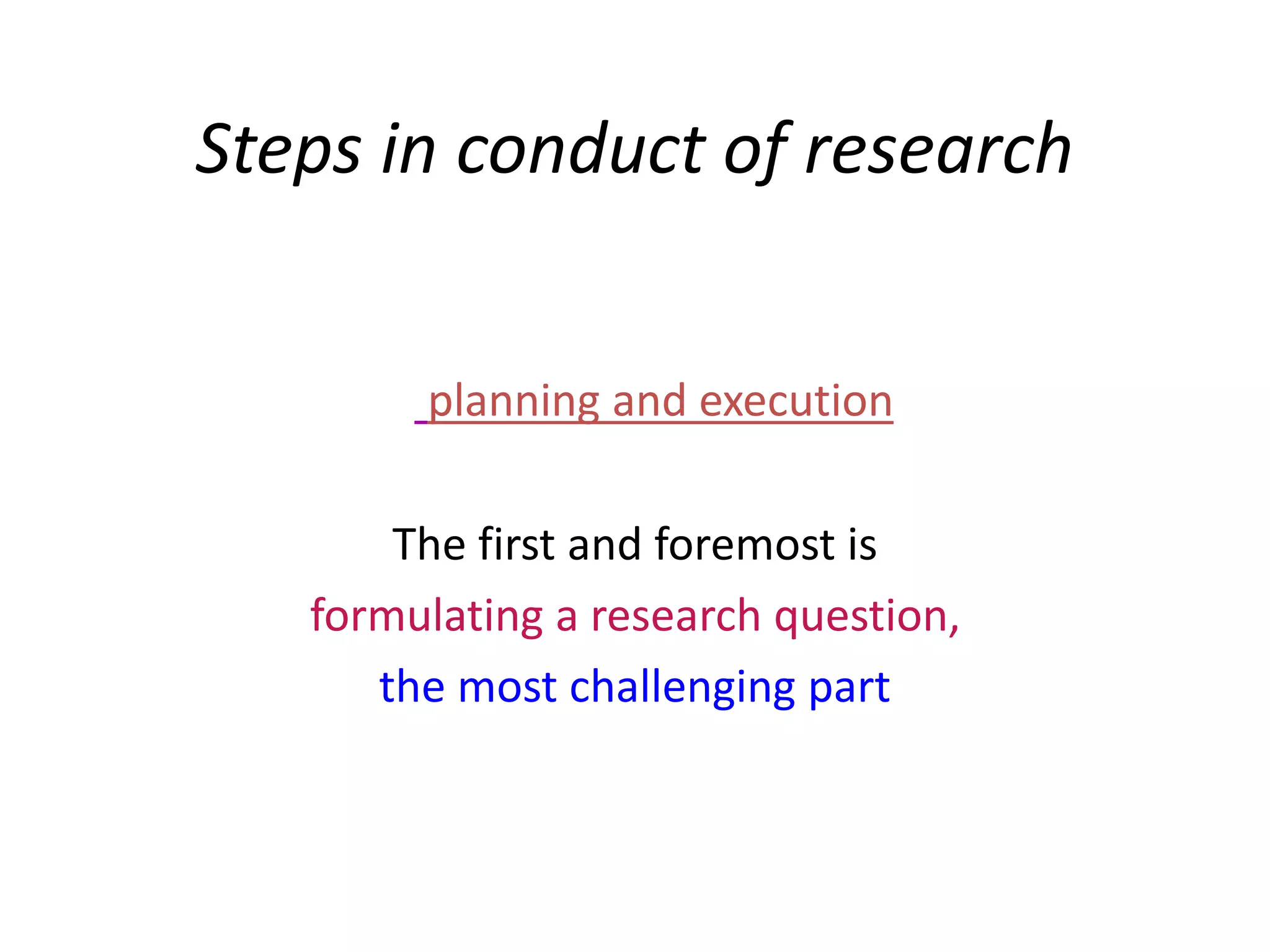
Steps in conduct of research
planning and execution
The first and foremost is
formulating a research question,
the most challenging part
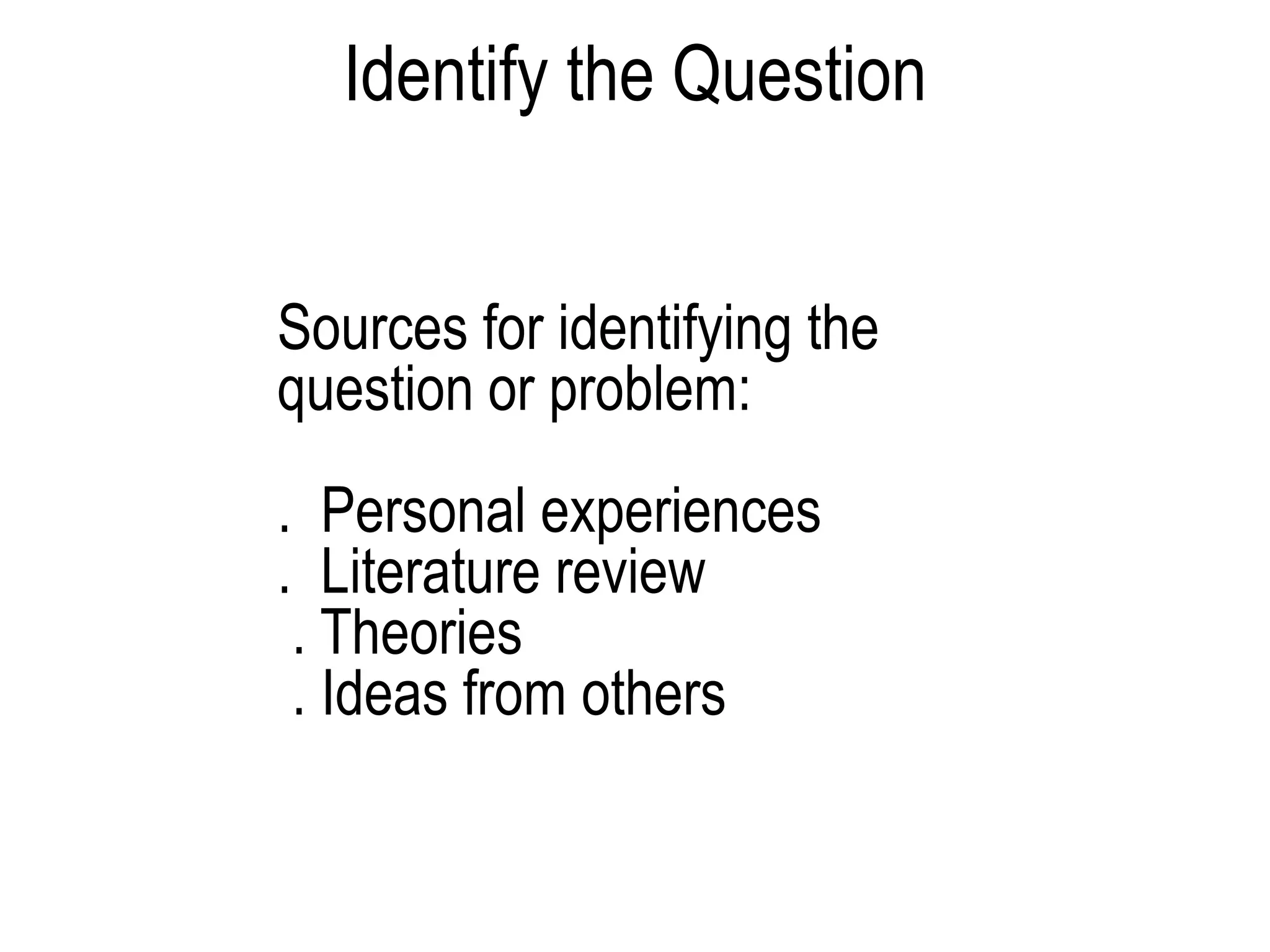
Identify the Question
Sources for identifying the
question or problem:
. Personal experiences
. Literature review
. Theories
. Ideas from others
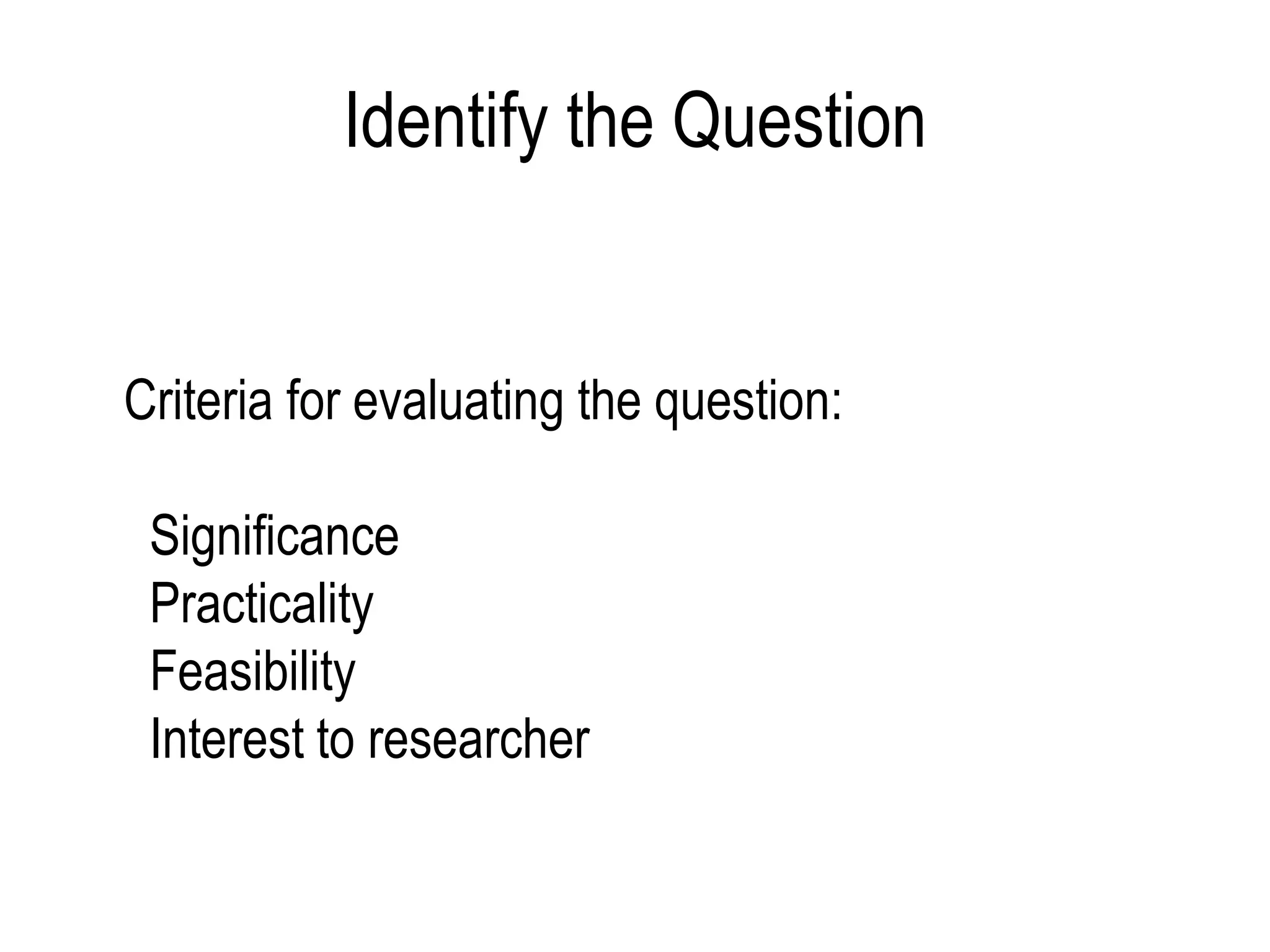
Identify the Question
Criteria for evaluating the question:
Significance
Practicality
Feasibility
Interest to researcher
RESEARCH QUESTION
IT SHOULD BE A SINGLE SENTENCE IN THE
FORM OF A QUESTION.
IT SHOULD BE CLEAR ,UNAMBIGUOUS AND
SPECIFIC
RESEARCH QUESTION
• IS DRUG “A” BETTER THAN DRUG “B” IN THE
MANAGEMENT OF HEPATIC FAILURE IN
PATIENTS WITH CIRROSIS?
• IS ALCOHOLISM RELATED TO THE
DEVELOPMENT OF CIRROSIS LIVER?
What to have in a complete study
protocol ?
• Title
• Summary
• Background (Literature Review), Preliminary Studies,
and Justification/Rationale
• Study Objectives and/or Questions
• Testable Hypotheses
• Study Design
• Study Population and Methods of Recruitment
• Variables List and Sample Size
• Methods of Data Collection
• Data Collection Tools
• Plan of Analysis
• Timeline
• Issues for Ethical Review & Approvals
• Operational Planning and Budgeting
• Plan of Dissemination/Results Reporting
• References
Title
• Title must reflect the central theme:selling point
• Attractive and easy to understand
• Concise and Informative: avoid non-informative
words like “ A study of---”
Background
• Briefly sketch the background of the proposal.
• Critically evaluate the existing knowledge
– What is the general situation and how is the
problem developing?
– Will it grow rapidly if unchecked?
– What has been done so far to address the
problem and with what effect?
• Specifically identify the gaps the proposed research is
intended to fill.
– What do you propose to do?
– Explain why it is a good idea ?
• State concisely the importance of your research
Significance
• State concisely and clearly the importance of
your study.
• Emphasize on any novelty or innovation
• Convey the significance of your research to
– 1) scientific contribution
– 2) improving in public health
– 3) change in health policies
– 4) change in patient care
– etc.,
Study Objectives
State the objectives of the proposal:
Describe concisely and realistically what the
specific research is intended to accomplish
Avoid grandiose designs- Over-ambitious
proposals that aim to do everything
– burdens, determinants, prevention and control
of….
• Objective -examples
• To study whether SNP markers are
associated with obesity and hypertension
phenotypes.
To assess the general population
knowledge & attitude towards Organ
donation
To identify the risk factors for Type-II
diabetes
• Hypotheses
Any hypotheses to be tested.
• • Have clear hypotheses
Hypothesis and Specific Aims
• List the specific aims one by one concisely
• Not too many aims; 2-4 best
• Be specific, no general and ambiguous statements
• Be realistic, no unachievable aims
• Aims should be logically linked and arranged accordingly; testing your
hypothesis
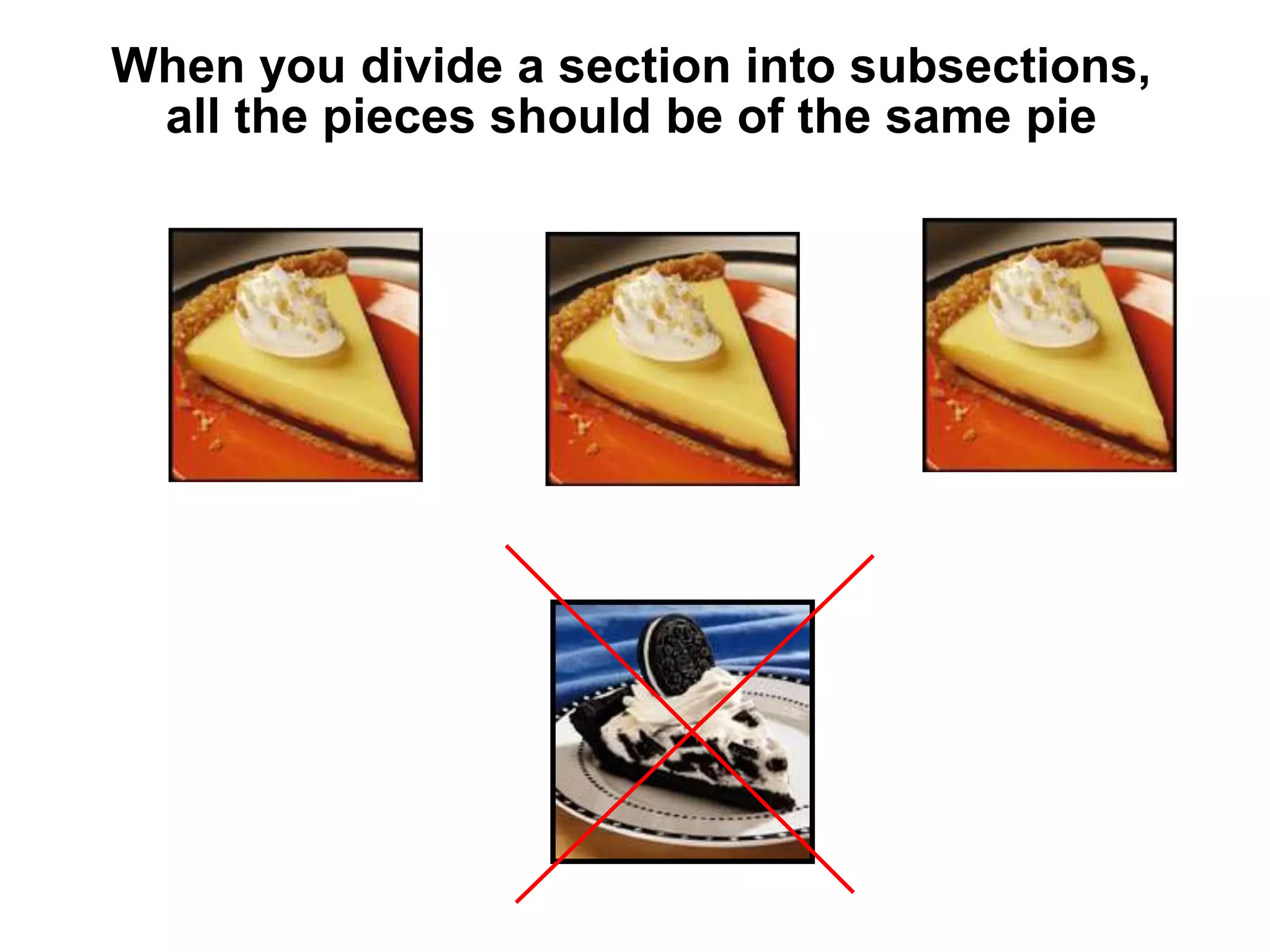
When you divide a section into subsections,
all the pieces should be of the same pie
• Hypothesis-example
• We hypothesize that standard care plus new intervention
(additional drug) will be superior to standard care alone in
reducing CVD mortality among patients with preexisting
heart disease.
• We hypothesize that prophylaxis with inhaled
drug A will be superior to oral preparation of
drug B in preventing acute exacerbation of
reactive airway disease.
• We hypothesize that low birth weight is an
independent risk factor for type II diabetes.
What is your question
Hypothesis
Why is your study important
 Significance
How are you going to do it
 Research design
Key Points of Your Proposal
Develop the Study Design
• A study design is the researcher’s
overall plan
to obtain the answer (s) to the question
being
asked and the hypothesis being tested
• It spells out strategies to develop
information
that is accurate, objective and
meaningful
• Study Design
• Describe the overall design of the study,
example:
• This is a randomized, double blind placebo
controlled trail.
• This is a cross sectional survey
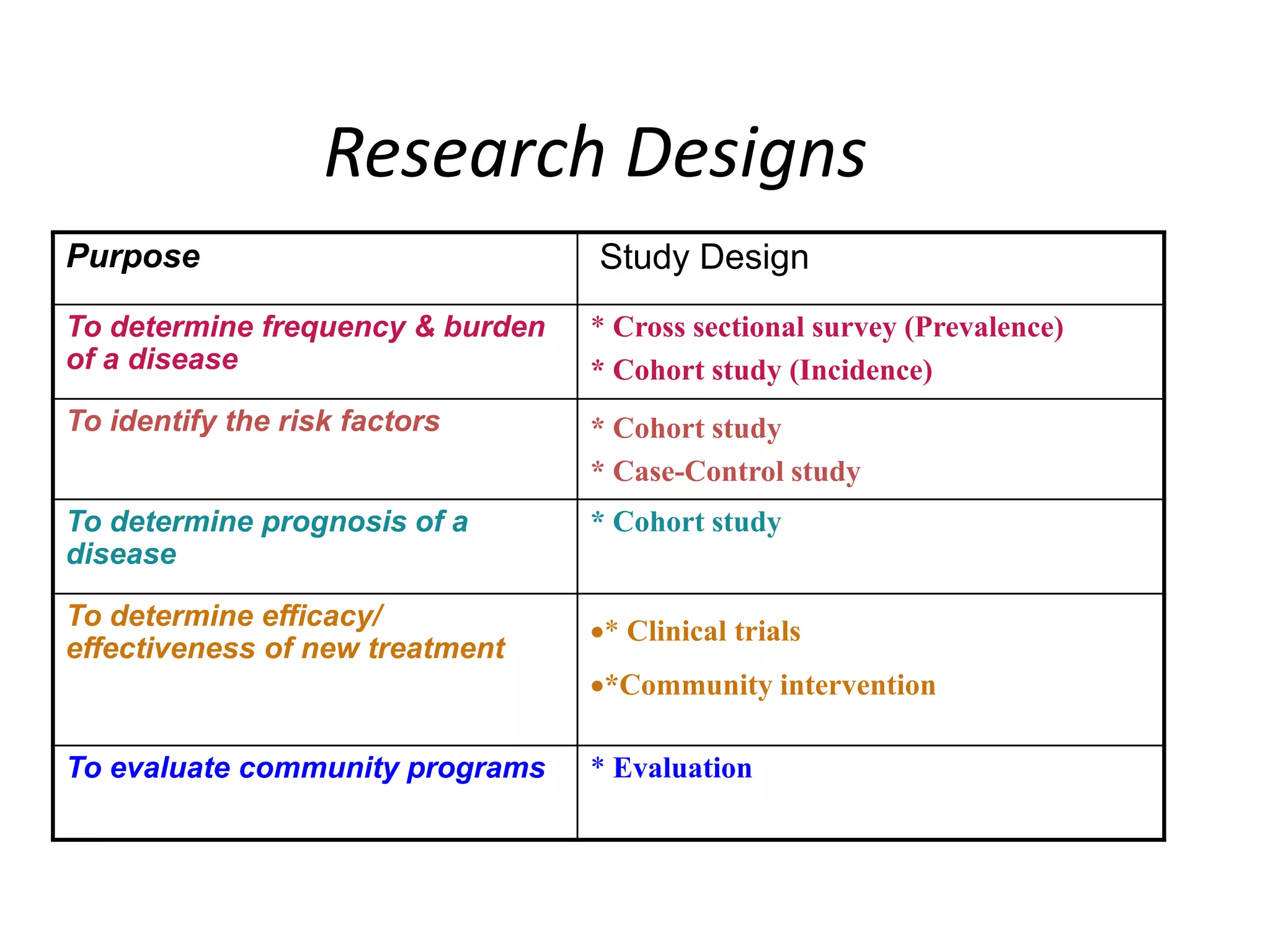
Research Designs
Purpose Study Design
To determine frequency & burden
of a disease
* Cross sectional survey (Prevalence)
* Cohort study (Incidence)
To identify the risk factors * Cohort study
* Case-Control study
To determine prognosis of a
disease
* Cohort study
To determine efficacy/
effectiveness of new treatment
* Clinical trials
*Community intervention
To evaluate community programs * Evaluation
Feasibility- Study subjects
• What is the estimated sample size?
• Who is the study subject (case definition)?
• Selection criteria (inclusion & exclusion)
• How they are sampled ? (sampling)
• Time span for meeting the sample size
Can we meet the sample size?
• Estimated sample size (based on the research
hypothesis, outcome variable)
• Estimated subjects likely to be available for
recruitment
• Estimated subjects likely to refuse
• Estimated subjects likely to be lost to follow up
Study Population and Method of
Recruitment
-- Describe clearly what type of subjects will be studied
-- How will they be identified
-- Inclusion and Exclusion criteria
-- Describe each step involved in recruitment of study subjects
-- Describe the role of research personnel in this process
-- Mention “informed consent”
Variables List
• State all the information that is to be
collected
(demographic data, clinical and lab data) in
detail.
Method of data collection
• Explain precisely when and how the data will
be collected, and measured (units).
• Explain method of ensuring quality control
Data Collection Tools
• Explain why a particular tool is being used to
collect the data. For instance, if a survey
questionnaire is being used explain reliability
and validity of the instrument.
• Pretest
Analyzing the Data
Upon completion of the study, data should be
analyzed
List out the appropriate statistical tests based
on the type of data
Plan of analysis
• List the names of variables that will be
used in the analyses.
• State the name of statistical analysis that
will be
performed to assess the outcome.
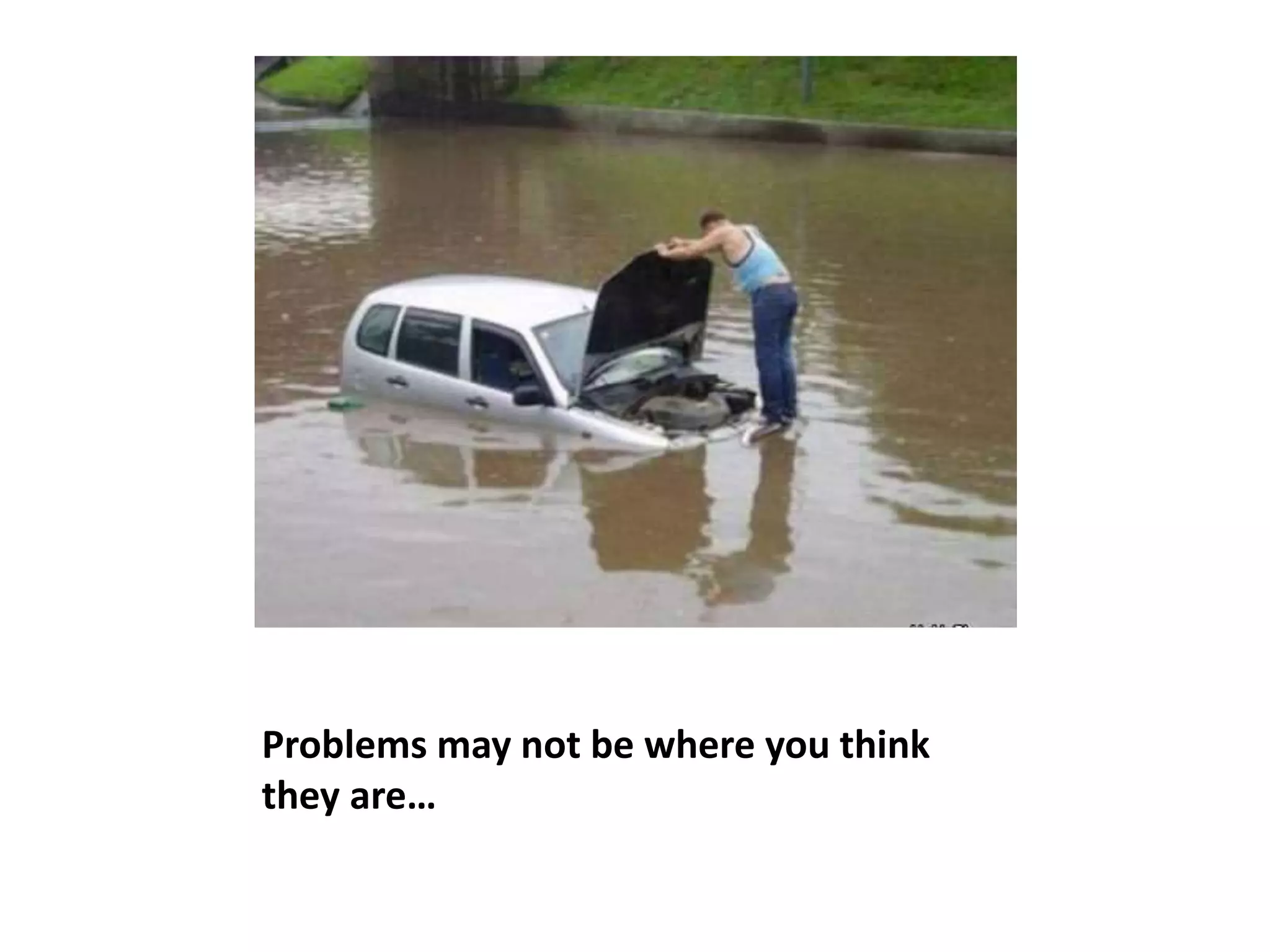
Problems may not be where you think
they are…
References
• The list of references should be at the end of
the proposal.
List names of all authors, the title of the
publication, the name of journal, year,
volume, page numbers.
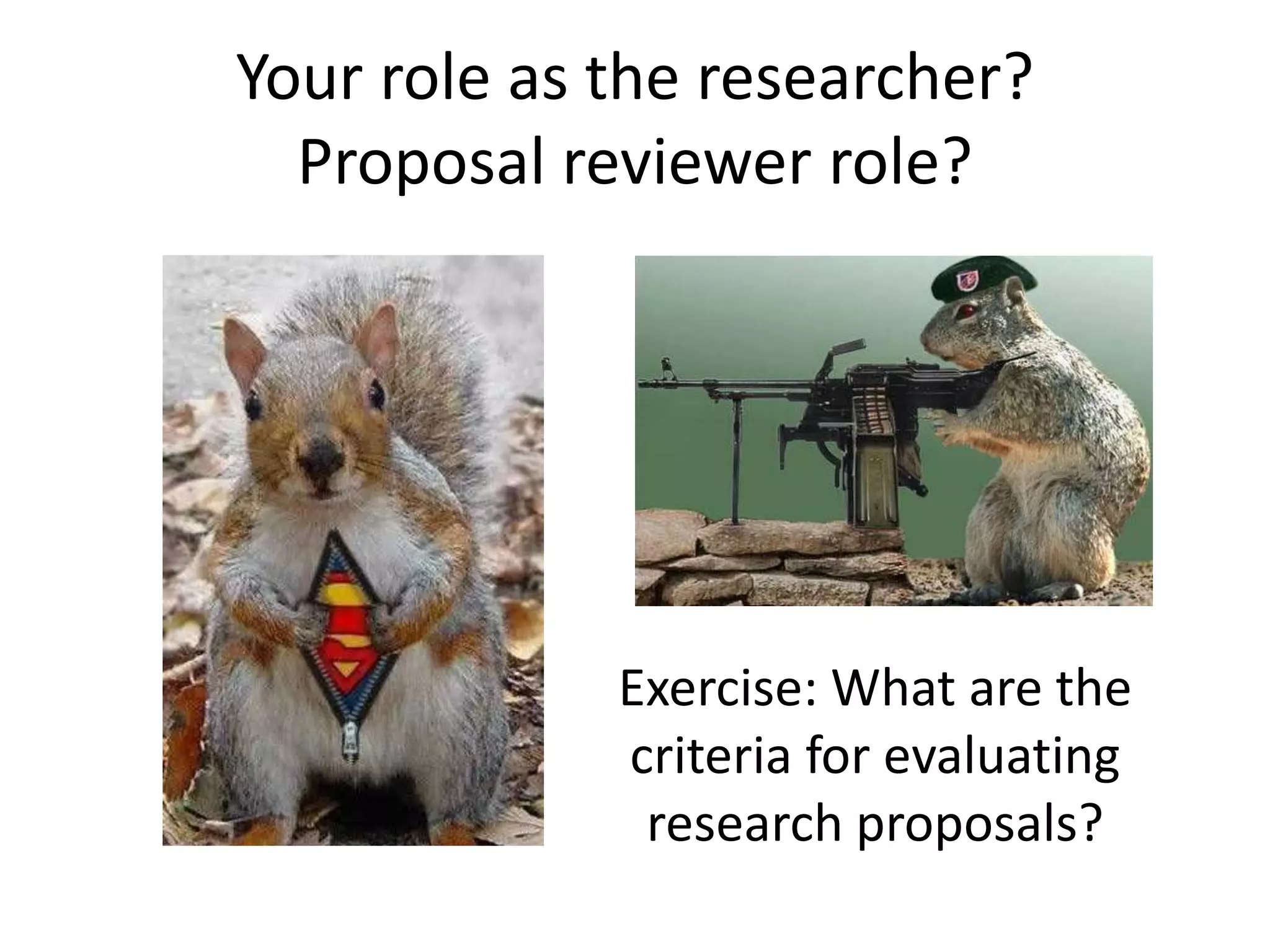
Your role as the researcher?
Proposal reviewer role?
Exercise: What are the
criteria for evaluating
research proposals?
Benefits of Writing Proposal
• Allow you to review and critically evaluate the
published literature of your interested topic.
• Develop novel ideas during writing proposal.
• Convince yourself and others that your
research is worth doing.
• Keep you focused on your research work.
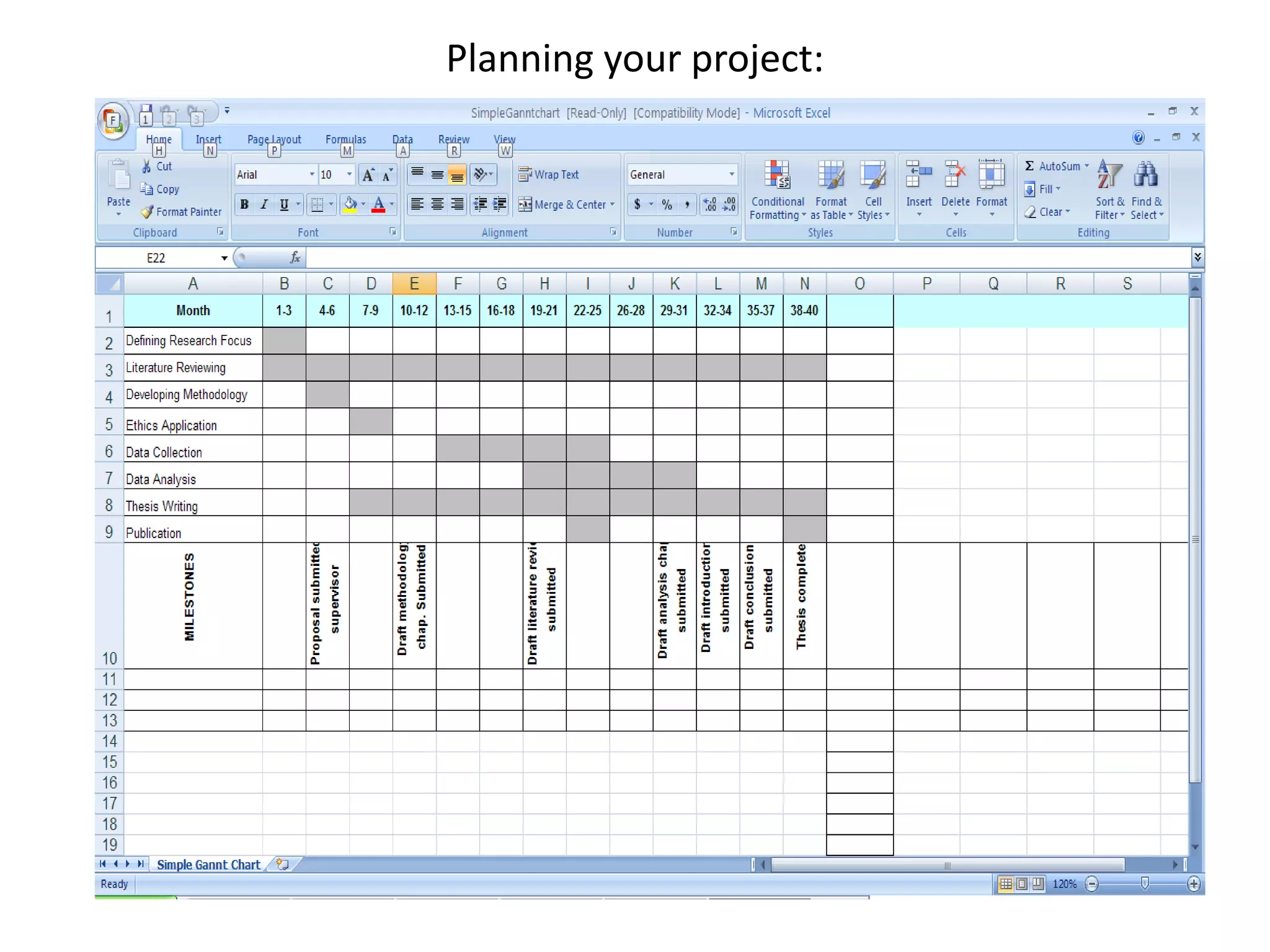
Planning your project:
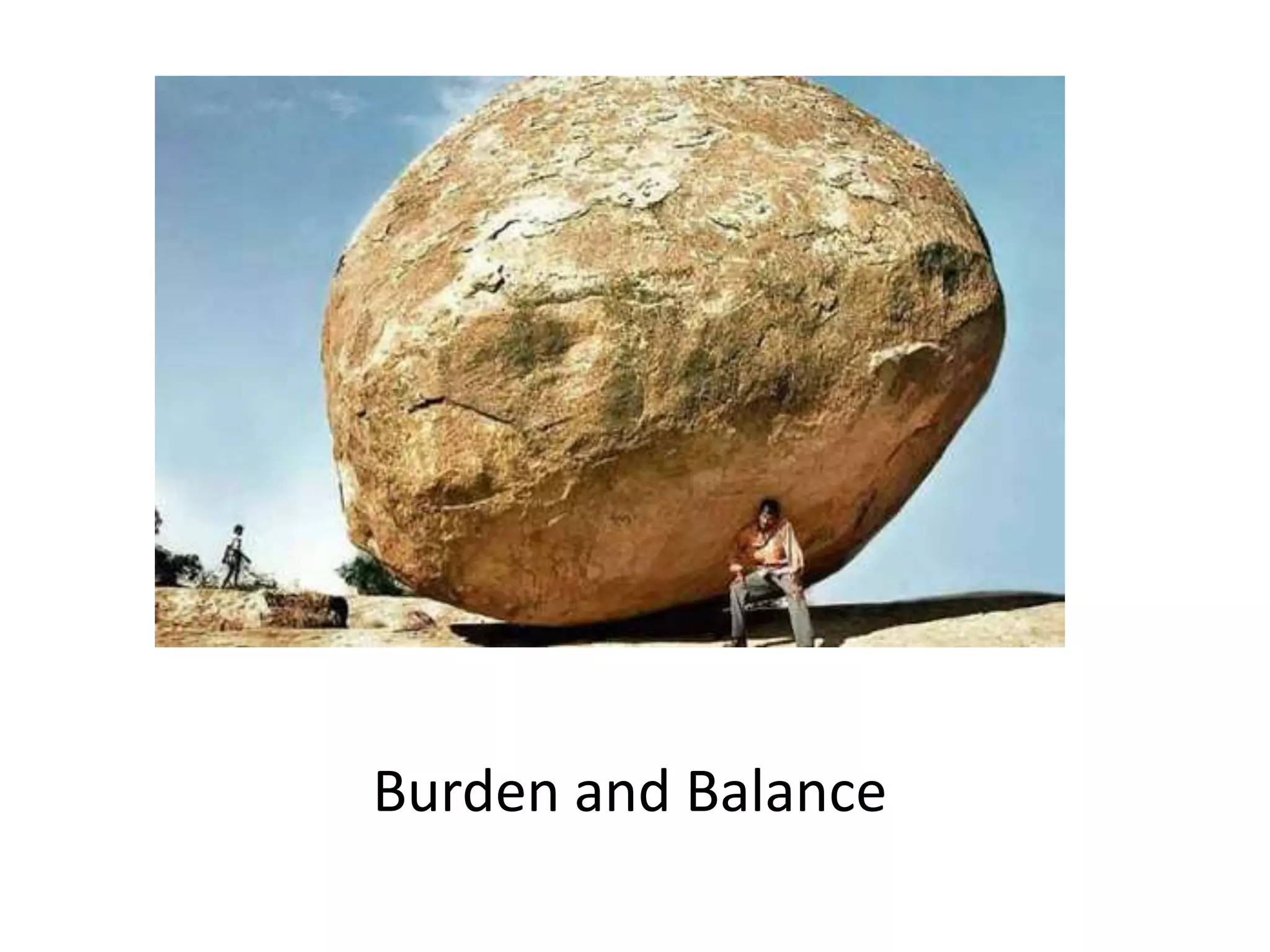
Burden and Balance
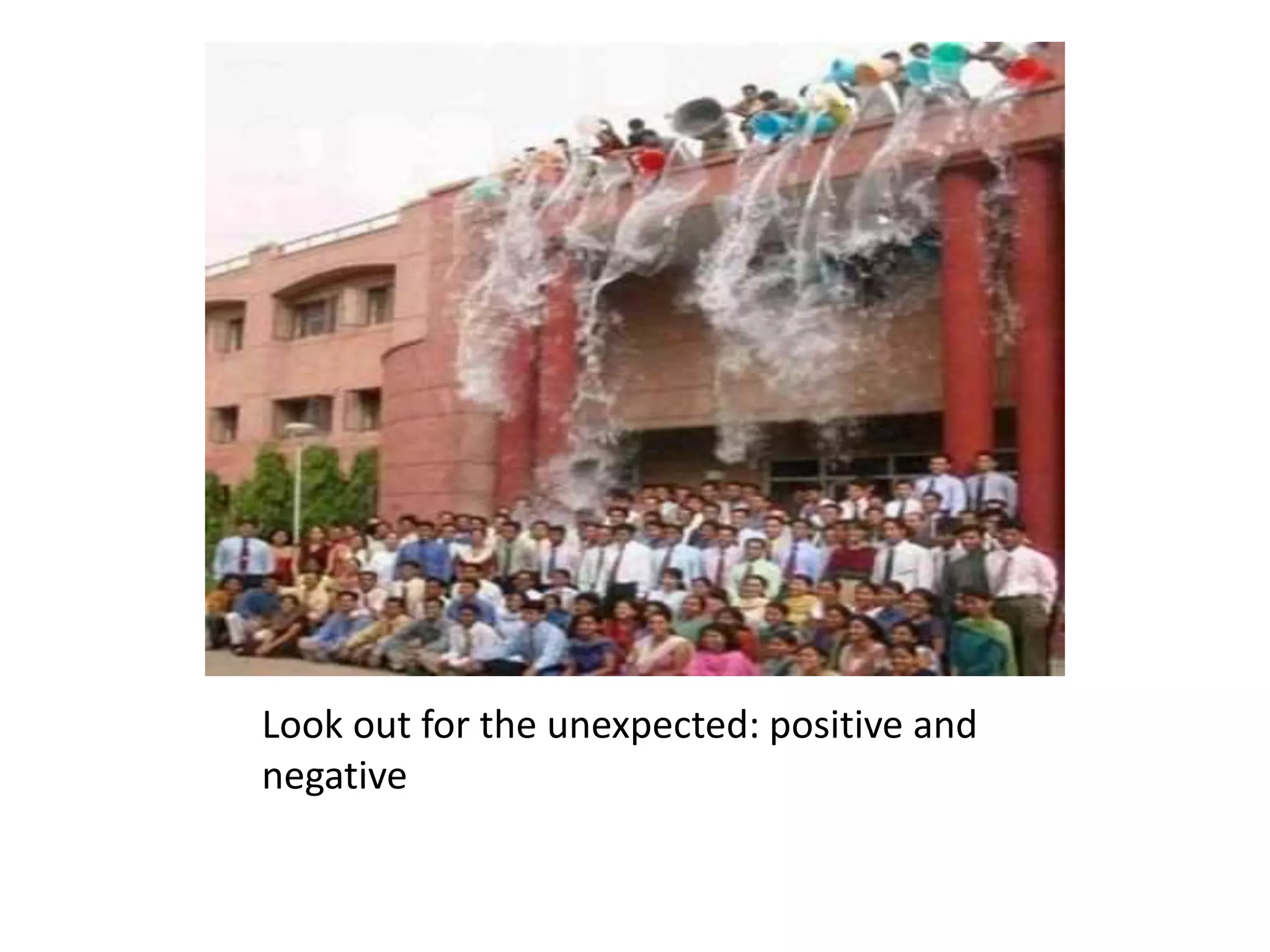
Look out for the unexpected: positive and
negative
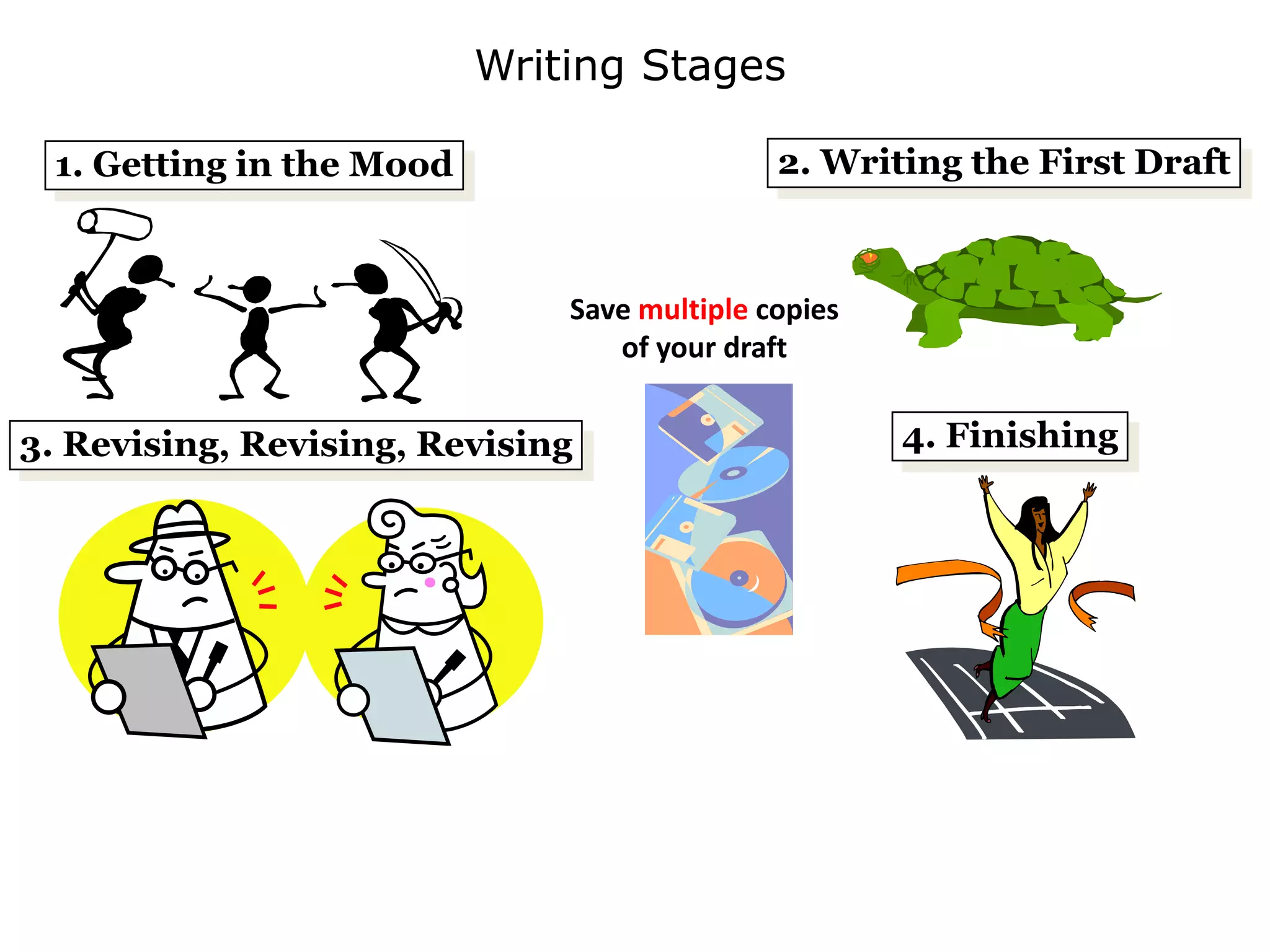
Writing Stages
2. Writing the First Draft
4. Finishing3. Revising, Revising, Revising
1. Getting in the Mood
Save multiple copies
of your draft
Conclusions
• Developing, and communicating a research protocol is a
sophisticated and time-consuming process.
It is important to understand the steps in
developing a research protocol in order to
perform an appropriate study and obtain
reliable results.
Thank You

Presentation how to write a research protocol

  • 2.
    How to developa Research Protocol ? Research methodology workshop 2015 Dr Sushma Sharma
  • 3.
    This session --------- Bythe end of this session, you will be able to: • Understand what is Research ? • Identify the components of a research protocol • Explain the role of each part within the overall process of protocol development • Understand the importance of research protocol • Able to write a research protocol
  • 4.
    What is Research? Asystematic investigation, involving the collection of information (data), to solve a problem or contribute to knowledge about a theory or practice. Research is critical in medicine because it leads to new discoveries and can change peoples’ lives by improving health and well being. Research helps to provide scientific understanding and solves practical problems.
  • 5.
    Research (cont.) Relies onmethods and principles that will produce credible and verifiable results. All research starts with an idea or question based on personal experiences.
  • 6.
    Scientific Approach The mostsophisticated method of acquiring knowledge is by scientific approach. Combines important features of induction and deduction together with other methods to create a system of acquiring knowledge. Generally more reliable than other methods. Approach used most often to perform medical research.
  • 7.
    Scientific research is anintegrated approach of deduction and induction Deduction Hypothesis generation Testing the hypothesis Induction (Inference on hypothesis) generalization of the results In sample population Universe known truths
  • 8.
  • 9.
  • 10.
    Getting started: • Title –Clear – Concise – Understandable • Introduction / Project outline: – What? – Why is this research needed?
  • 11.
    What is thepurpose of a proposal? • Let me do the study? • Plan, then do • Provide a road map • Opportunity for advice • Check quality / rigour / do-ability • Avoid costly mistakes • Convince lecturers and you
  • 12.
    What is yourquestion ? Why is your study important ? How are you going to do it ? Key Points of Your Proposal
  • 13.
    Practicalities • When /Time lines • Problems / issues • Resources – Costing – Materials • Outcomes / Outputs / Significance • References • Writing up – include drafts and revisions
  • 14.
    Choosing a topic •Should be interesting – to investigator, funding agency, journal editors, consumers (colleagues, public, medical community), etc. • Relevance- add new information to the scientific world • Simple and manageable in scope (feasibility in terms of money, time, manpower) • Expected results likely to alter clinical or health policy decisions in future
  • 15.
    The GOOD IDEAmust be • • Feasible • • Do-able by you • • Do-able at your institution, hospital & community • • Acceptable to your institution • • In conformity with human welfare policies • • Conceptually significant
  • 16.
    Steps in conductof research planning and execution The first and foremost is formulating a research question, the most challenging part
  • 17.
    Identify the Question Sourcesfor identifying the question or problem: . Personal experiences . Literature review . Theories . Ideas from others
  • 18.
    Identify the Question Criteriafor evaluating the question: Significance Practicality Feasibility Interest to researcher
  • 19.
    RESEARCH QUESTION IT SHOULDBE A SINGLE SENTENCE IN THE FORM OF A QUESTION. IT SHOULD BE CLEAR ,UNAMBIGUOUS AND SPECIFIC
  • 20.
    RESEARCH QUESTION • ISDRUG “A” BETTER THAN DRUG “B” IN THE MANAGEMENT OF HEPATIC FAILURE IN PATIENTS WITH CIRROSIS? • IS ALCOHOLISM RELATED TO THE DEVELOPMENT OF CIRROSIS LIVER?
  • 21.
    What to havein a complete study protocol ? • Title • Summary • Background (Literature Review), Preliminary Studies, and Justification/Rationale • Study Objectives and/or Questions • Testable Hypotheses • Study Design • Study Population and Methods of Recruitment • Variables List and Sample Size
  • 22.
    • Methods ofData Collection • Data Collection Tools • Plan of Analysis • Timeline • Issues for Ethical Review & Approvals • Operational Planning and Budgeting • Plan of Dissemination/Results Reporting • References
  • 23.
    Title • Title mustreflect the central theme:selling point • Attractive and easy to understand • Concise and Informative: avoid non-informative words like “ A study of---”
  • 24.
    Background • Briefly sketchthe background of the proposal. • Critically evaluate the existing knowledge – What is the general situation and how is the problem developing? – Will it grow rapidly if unchecked? – What has been done so far to address the problem and with what effect? • Specifically identify the gaps the proposed research is intended to fill. – What do you propose to do? – Explain why it is a good idea ? • State concisely the importance of your research
  • 25.
    Significance • State conciselyand clearly the importance of your study. • Emphasize on any novelty or innovation • Convey the significance of your research to – 1) scientific contribution – 2) improving in public health – 3) change in health policies – 4) change in patient care – etc.,
  • 26.
    Study Objectives State theobjectives of the proposal: Describe concisely and realistically what the specific research is intended to accomplish Avoid grandiose designs- Over-ambitious proposals that aim to do everything – burdens, determinants, prevention and control of….
  • 27.
    • Objective -examples •To study whether SNP markers are associated with obesity and hypertension phenotypes. To assess the general population knowledge & attitude towards Organ donation To identify the risk factors for Type-II diabetes • Hypotheses Any hypotheses to be tested. • • Have clear hypotheses
  • 28.
    Hypothesis and SpecificAims • List the specific aims one by one concisely • Not too many aims; 2-4 best • Be specific, no general and ambiguous statements • Be realistic, no unachievable aims • Aims should be logically linked and arranged accordingly; testing your hypothesis
  • 29.
    When you dividea section into subsections, all the pieces should be of the same pie
  • 30.
    • Hypothesis-example • Wehypothesize that standard care plus new intervention (additional drug) will be superior to standard care alone in reducing CVD mortality among patients with preexisting heart disease. • We hypothesize that prophylaxis with inhaled drug A will be superior to oral preparation of drug B in preventing acute exacerbation of reactive airway disease. • We hypothesize that low birth weight is an independent risk factor for type II diabetes.
  • 31.
    What is yourquestion Hypothesis Why is your study important  Significance How are you going to do it  Research design Key Points of Your Proposal
  • 32.
    Develop the StudyDesign • A study design is the researcher’s overall plan to obtain the answer (s) to the question being asked and the hypothesis being tested • It spells out strategies to develop information that is accurate, objective and meaningful
  • 33.
    • Study Design •Describe the overall design of the study, example: • This is a randomized, double blind placebo controlled trail. • This is a cross sectional survey
  • 34.
    Research Designs Purpose StudyDesign To determine frequency & burden of a disease * Cross sectional survey (Prevalence) * Cohort study (Incidence) To identify the risk factors * Cohort study * Case-Control study To determine prognosis of a disease * Cohort study To determine efficacy/ effectiveness of new treatment * Clinical trials *Community intervention To evaluate community programs * Evaluation
  • 35.
    Feasibility- Study subjects •What is the estimated sample size? • Who is the study subject (case definition)? • Selection criteria (inclusion & exclusion) • How they are sampled ? (sampling) • Time span for meeting the sample size
  • 36.
    Can we meetthe sample size? • Estimated sample size (based on the research hypothesis, outcome variable) • Estimated subjects likely to be available for recruitment • Estimated subjects likely to refuse • Estimated subjects likely to be lost to follow up
  • 37.
    Study Population andMethod of Recruitment -- Describe clearly what type of subjects will be studied -- How will they be identified -- Inclusion and Exclusion criteria -- Describe each step involved in recruitment of study subjects -- Describe the role of research personnel in this process -- Mention “informed consent”
  • 38.
    Variables List • Stateall the information that is to be collected (demographic data, clinical and lab data) in detail.
  • 39.
    Method of datacollection • Explain precisely when and how the data will be collected, and measured (units). • Explain method of ensuring quality control
  • 40.
    Data Collection Tools •Explain why a particular tool is being used to collect the data. For instance, if a survey questionnaire is being used explain reliability and validity of the instrument. • Pretest
  • 41.
    Analyzing the Data Uponcompletion of the study, data should be analyzed List out the appropriate statistical tests based on the type of data
  • 42.
    Plan of analysis •List the names of variables that will be used in the analyses. • State the name of statistical analysis that will be performed to assess the outcome.
  • 43.
    Problems may notbe where you think they are…
  • 44.
    References • The listof references should be at the end of the proposal. List names of all authors, the title of the publication, the name of journal, year, volume, page numbers.
  • 45.
    Your role asthe researcher? Proposal reviewer role? Exercise: What are the criteria for evaluating research proposals?
  • 46.
    Benefits of WritingProposal • Allow you to review and critically evaluate the published literature of your interested topic. • Develop novel ideas during writing proposal. • Convince yourself and others that your research is worth doing. • Keep you focused on your research work.
  • 47.
  • 48.
  • 49.
    Look out forthe unexpected: positive and negative
  • 50.
    Writing Stages 2. Writingthe First Draft 4. Finishing3. Revising, Revising, Revising 1. Getting in the Mood Save multiple copies of your draft
  • 51.
    Conclusions • Developing, andcommunicating a research protocol is a sophisticated and time-consuming process. It is important to understand the steps in developing a research protocol in order to perform an appropriate study and obtain reliable results.
  • 52.