Digital Didactical Designs
– Re-Imagining designs for
teaching and learning using
mobile technology
Isa Jahnke, Andreas Olsson,
Anders Norberg, Lars Norqvist, Eva Mårell-Olsson
1
130 students got iPads launched in 2012130 students got iPads launched in 2012
Anders Norberg
PhD Student
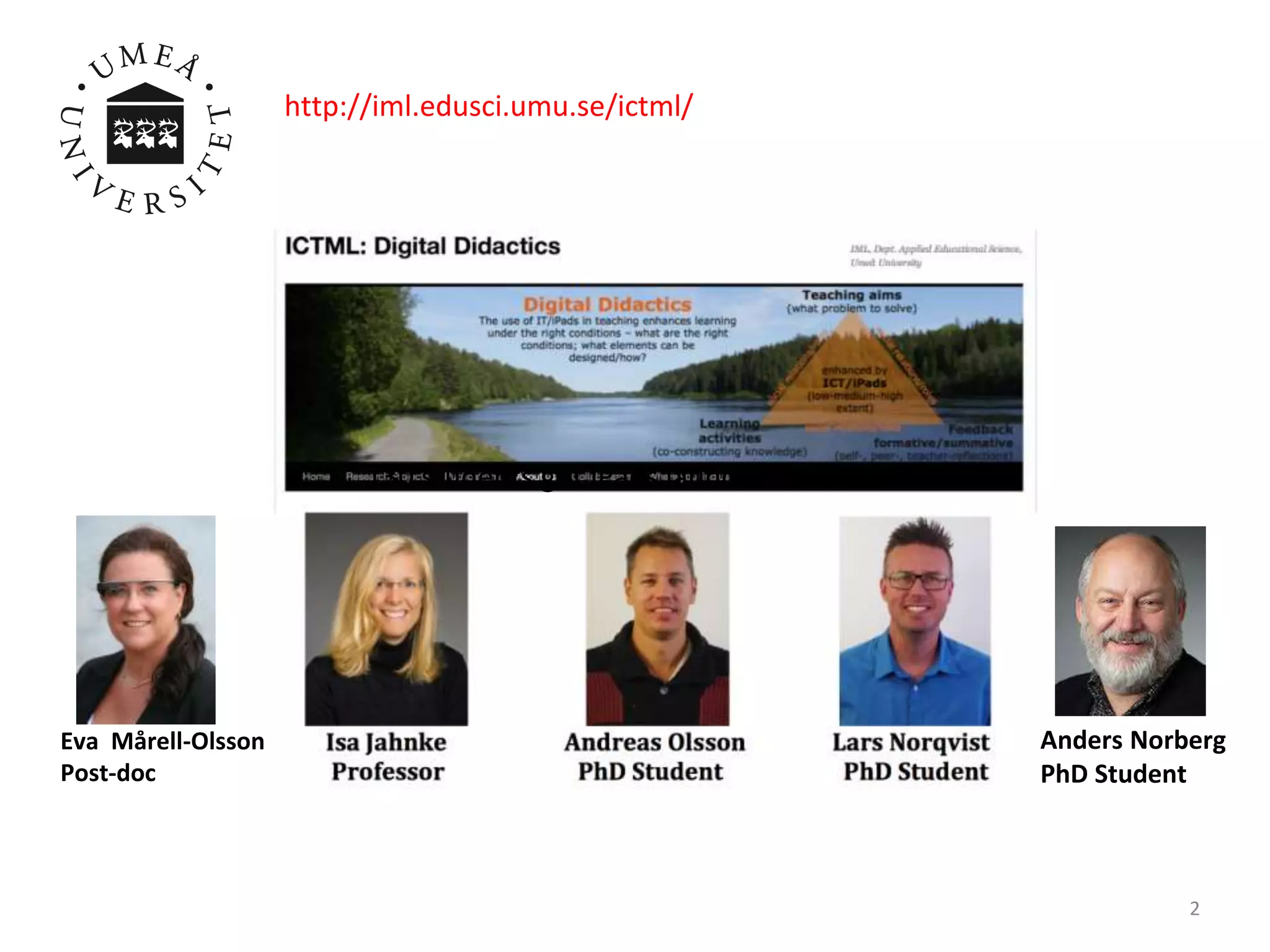
http://iml.edusci.umu.se/ictml/
2
Eva Mårell-Olsson
Post-doc
Our empirical studies
in higher education
• Media Tablets: 130 students got iPads launched in 2012 in teacher
education at Umeå university (Andreas Olsson)
• Telepresence Robots => various spaces and processes merge together
(Anders Norberg)
• GoogleGlass in dentist education at Umeå university
(Eva Mårell-Olsson)
• EU project PeTEX, Remote-controlled labs in Engineering HE (2009-2011)
• Teachers' conceptions of students' creativity (BMBF 2008-2011)
• Wiki course in teacher education (2008-2011)
• InPUD Computer Science study programme (NRW 2001-2005; 2009)
isa.jahnke@umu.se3
An alternative perspective -
ICT is more than just a tool
The physical lecture hall (seminar room) and
web-enabled mobile/wearable devices merge into
co-located multi-overlaid spaces – the
expansion of communication spaces
Co-located communication spaces
isa.jahnke@umu.se4
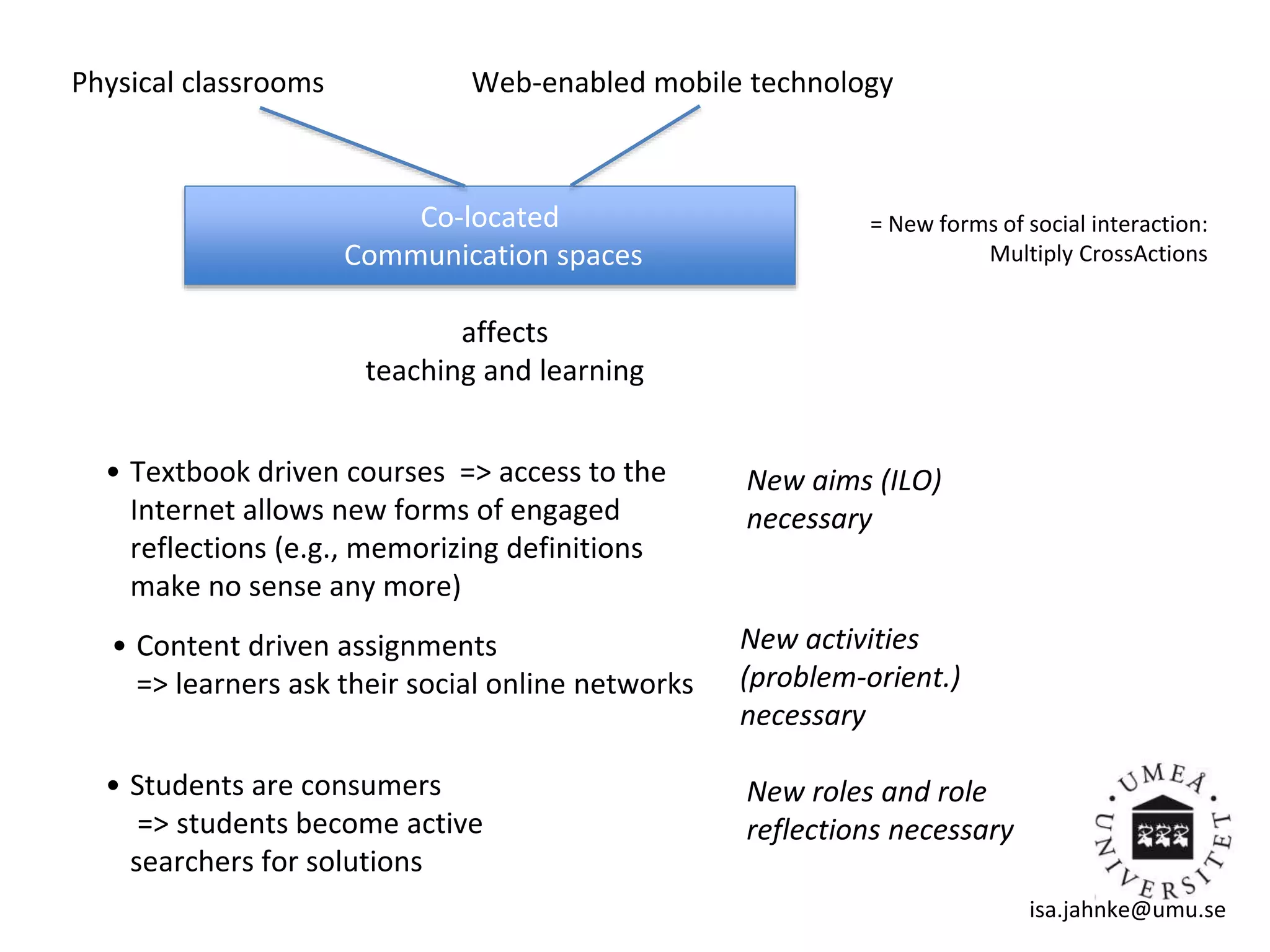
Physical classrooms Web-enabled mobile technology
Co-located
Communication spaces
affects
teaching and learning
= New forms of social interaction:
Multiply CrossActions
• Content driven assignments
=> learners ask their social online networks
New aims (ILO)
necessary
New activities
(problem-orient.)
necessary
New roles and role
reflections necessary
5
• Textbook driven courses => access to the
Internet allows new forms of engaged
reflections (e.g., memorizing definitions
make no sense any more)
• Students are consumers
=> students become active
searchers for solutions
isa.jahnke@umu.se
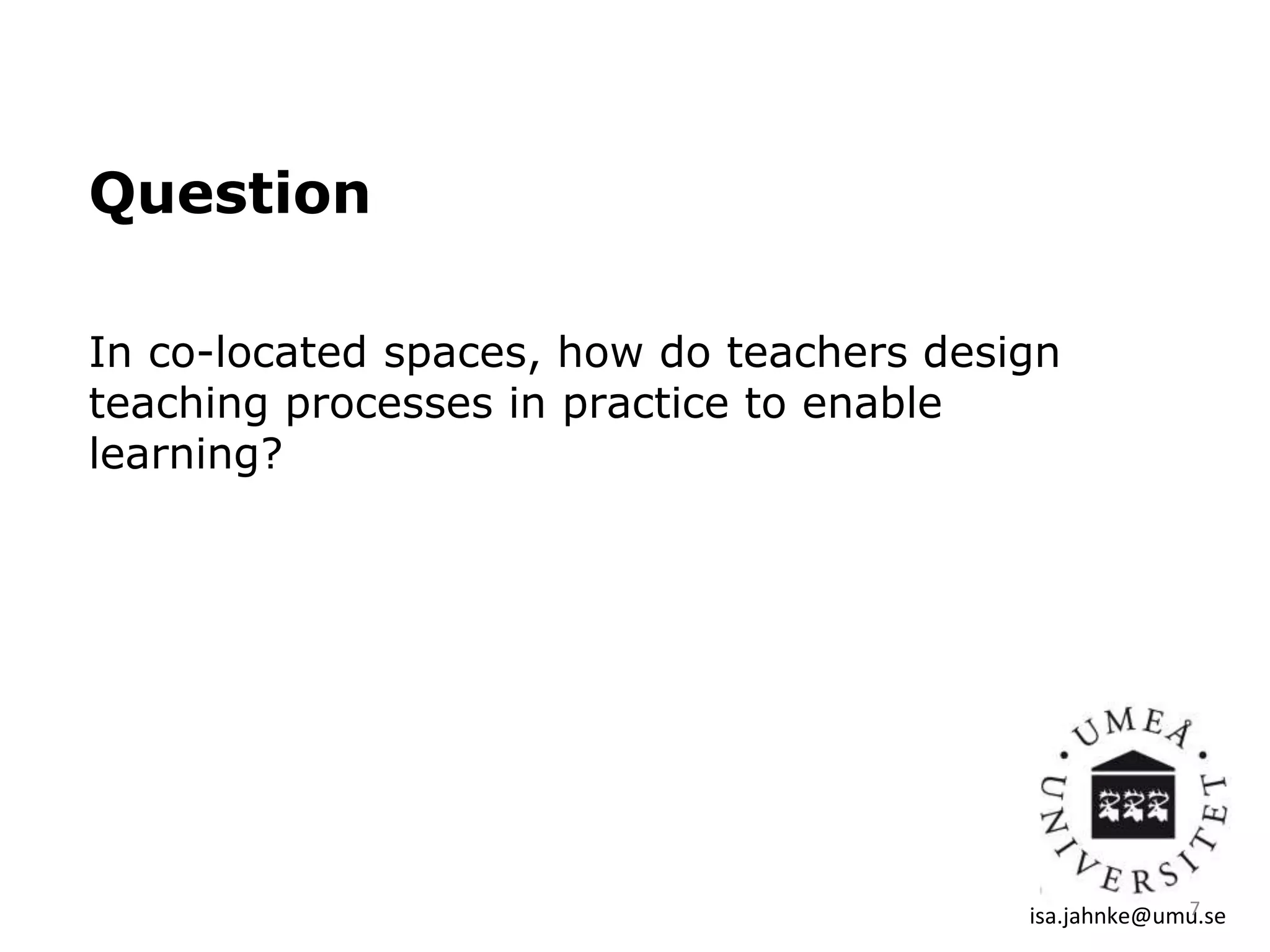
Question
In co-located spaces, how do teachers design
teaching processes in practice to enable
learning?
isa.jahnke@umu.se7
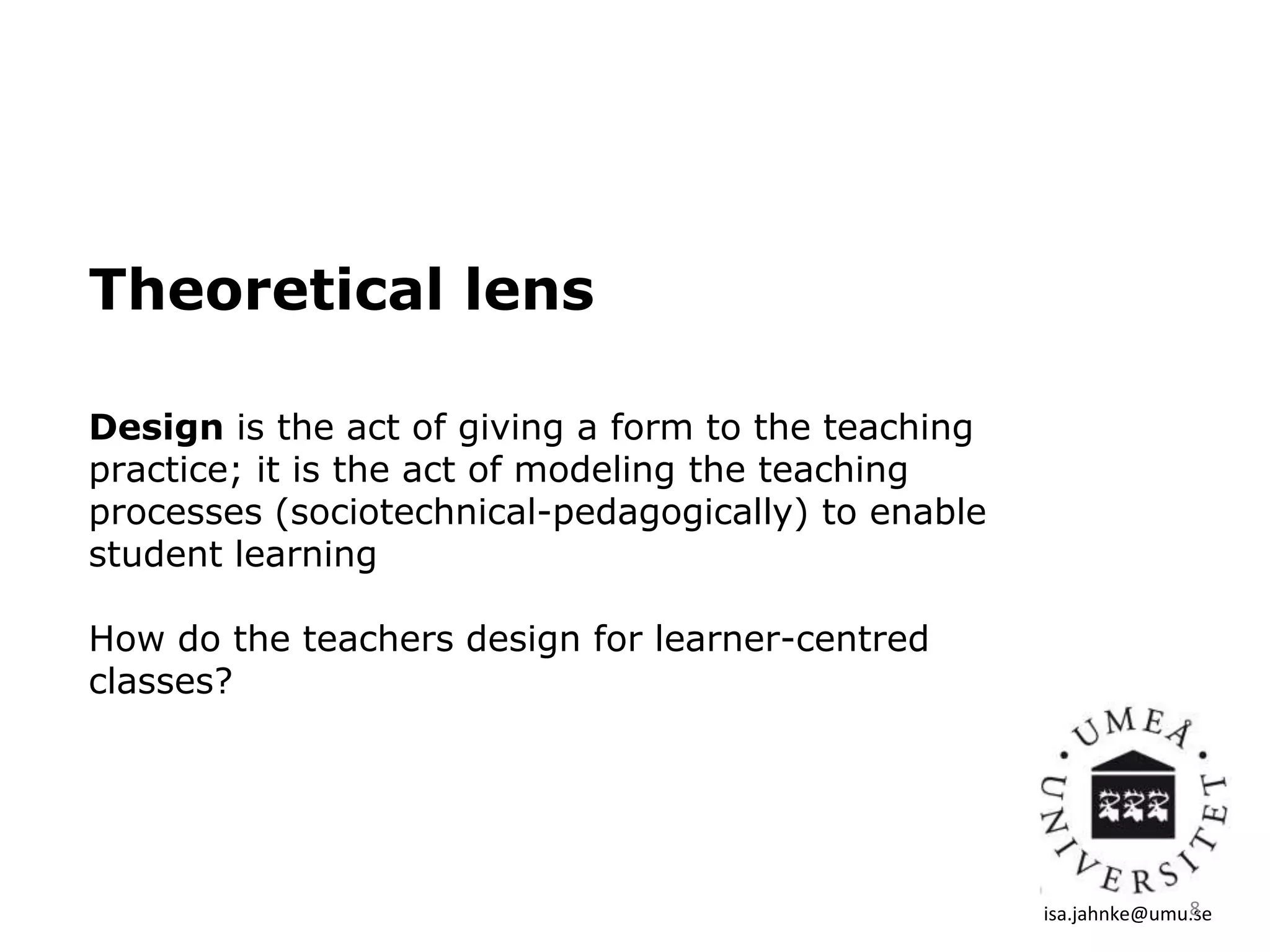
Theoretical lens
Design is the act of giving a form to the teaching
practice; it is the act of modeling the teaching
processes (sociotechnical-pedagogically) to enable
student learning
How do the teachers design for learner-centred
classes?
isa.jahnke@umu.se8
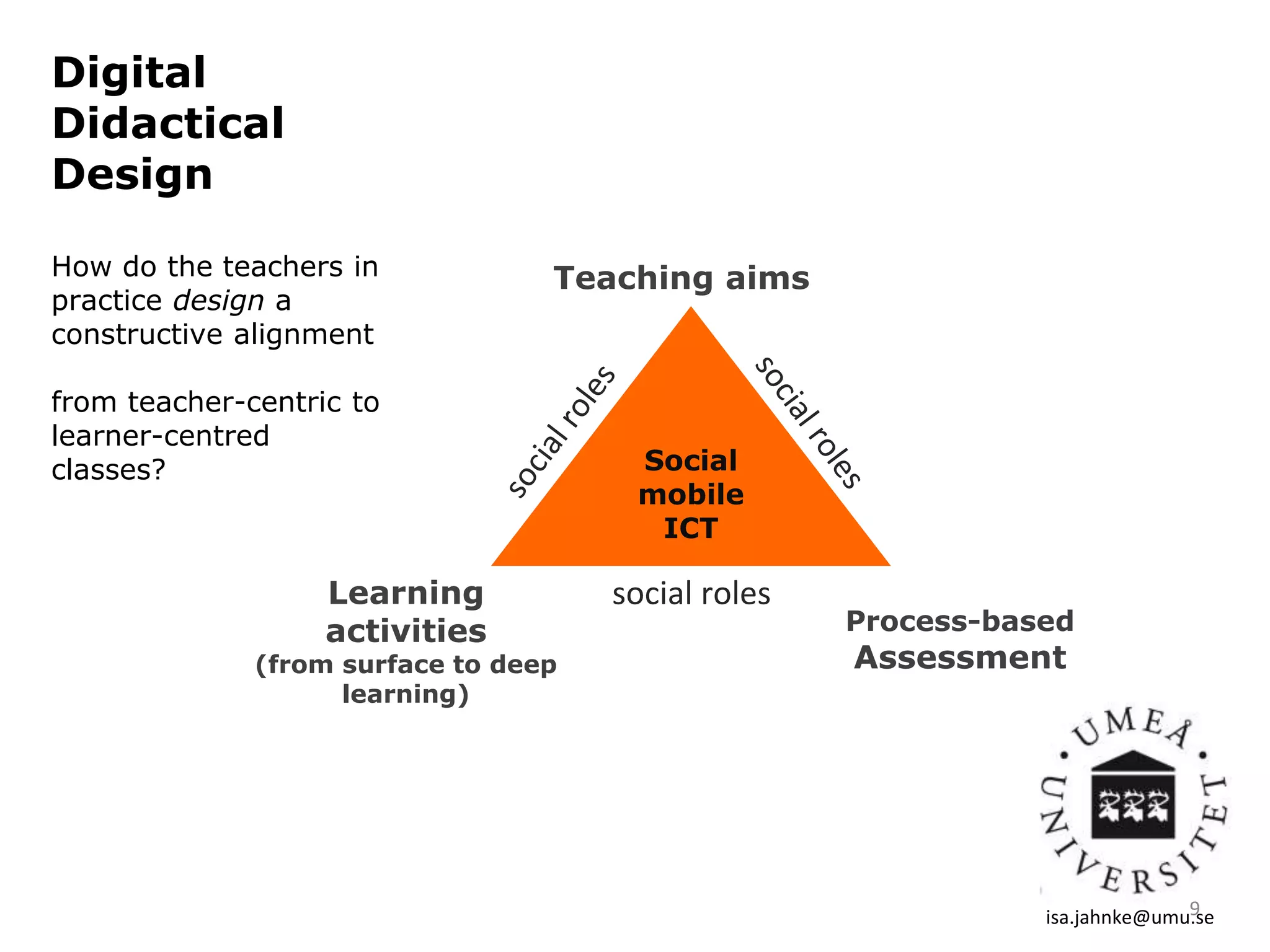
Social
mobile
ICT
Teaching aims
Learning
activities
(from surface to deep
learning)
Process-based
Assessment
social roles
Digital
Didactical
Design
How do the teachers in
practice design a
constructive alignment
from teacher-centric to
learner-centred
classes?
isa.jahnke@umu.se9
isa.jahnke@umu.se10
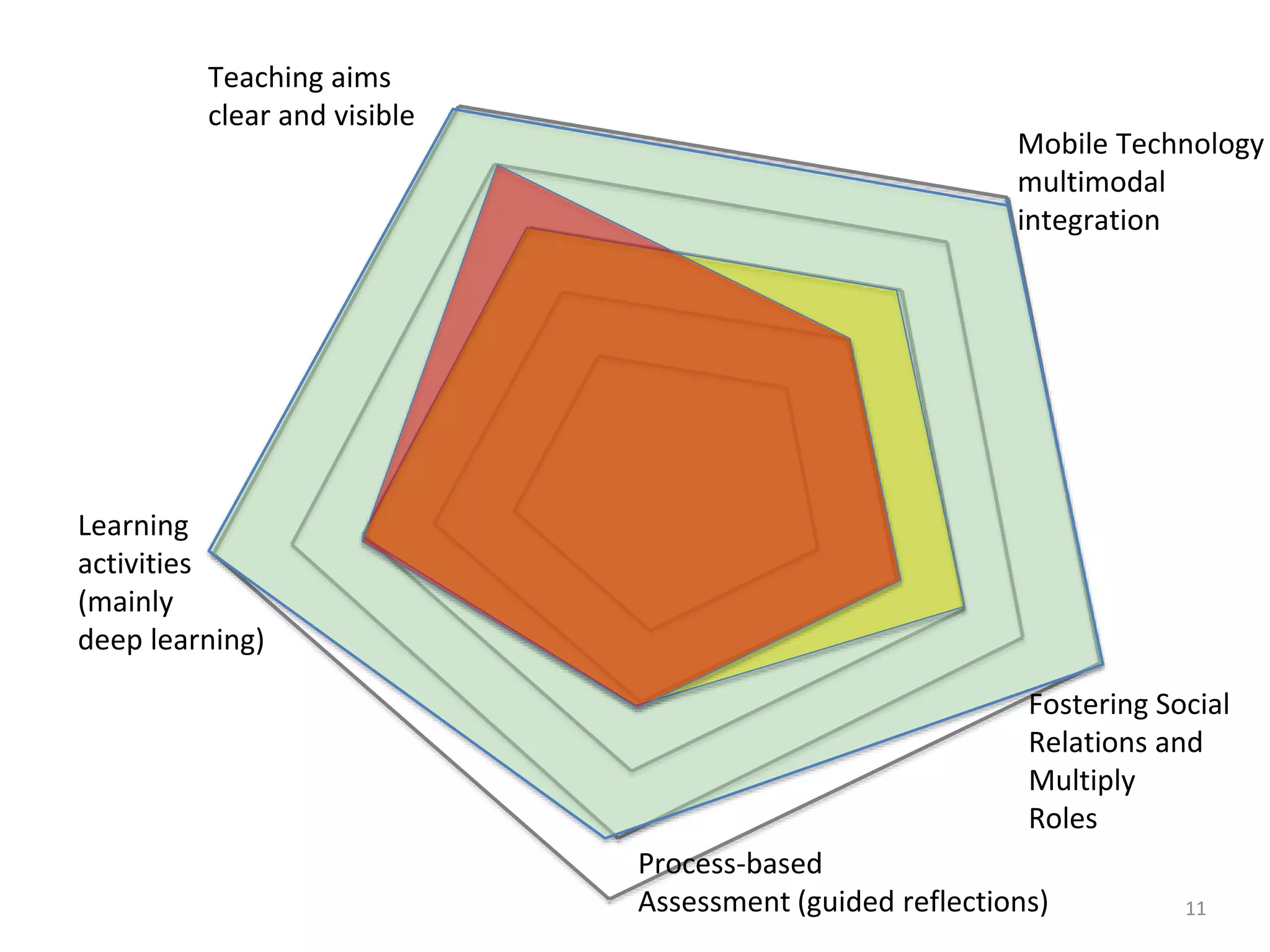
Teaching aims
clear and visible
Learning
activities
(mainly
deep learning)
Process-based
Assessment (guided reflections)
Mobile Technology
multimodal
integration
Fostering Social
Relations and
Multiply
Roles
11
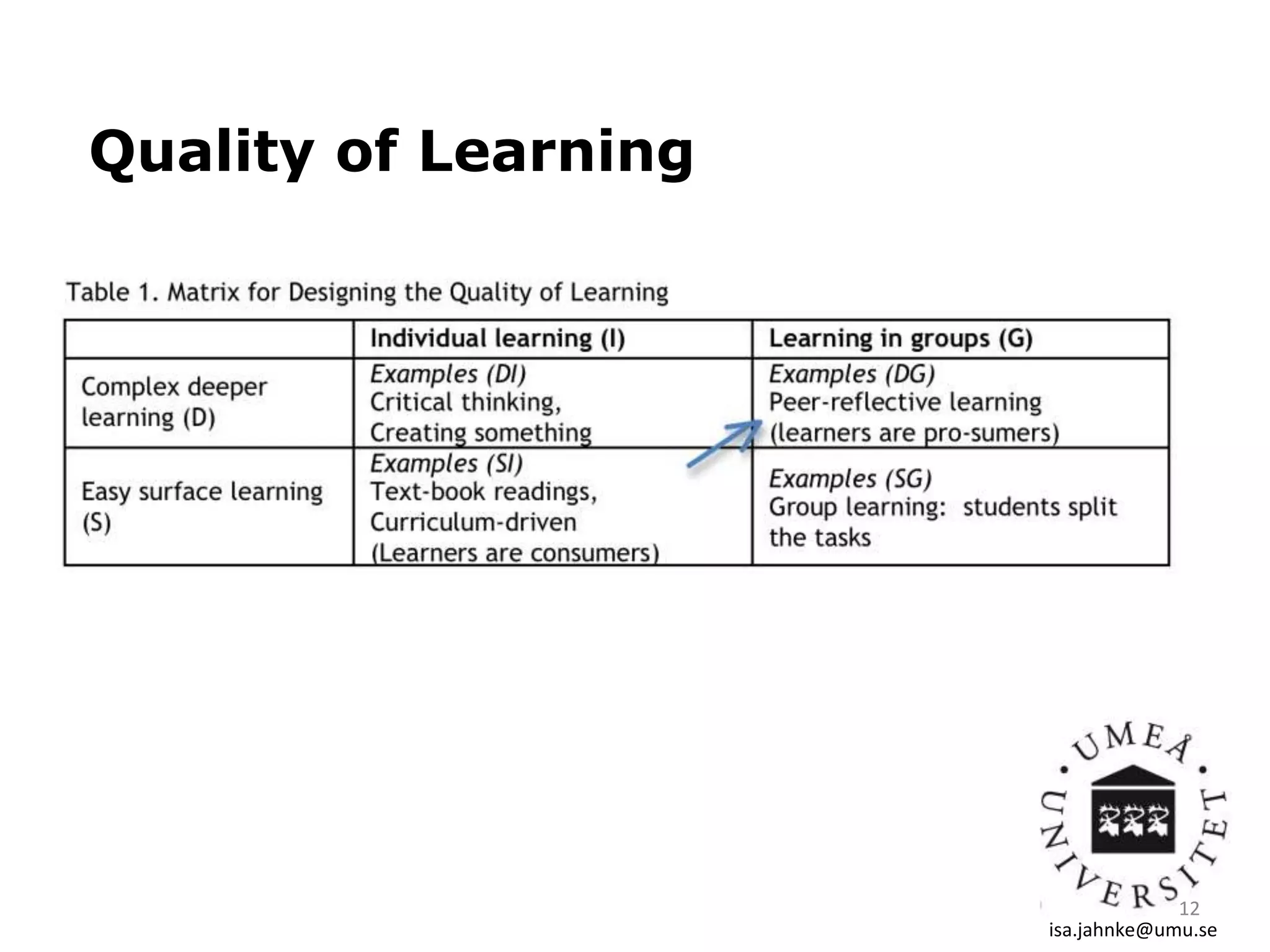
Quality of Learning
isa.jahnke@umu.se
12
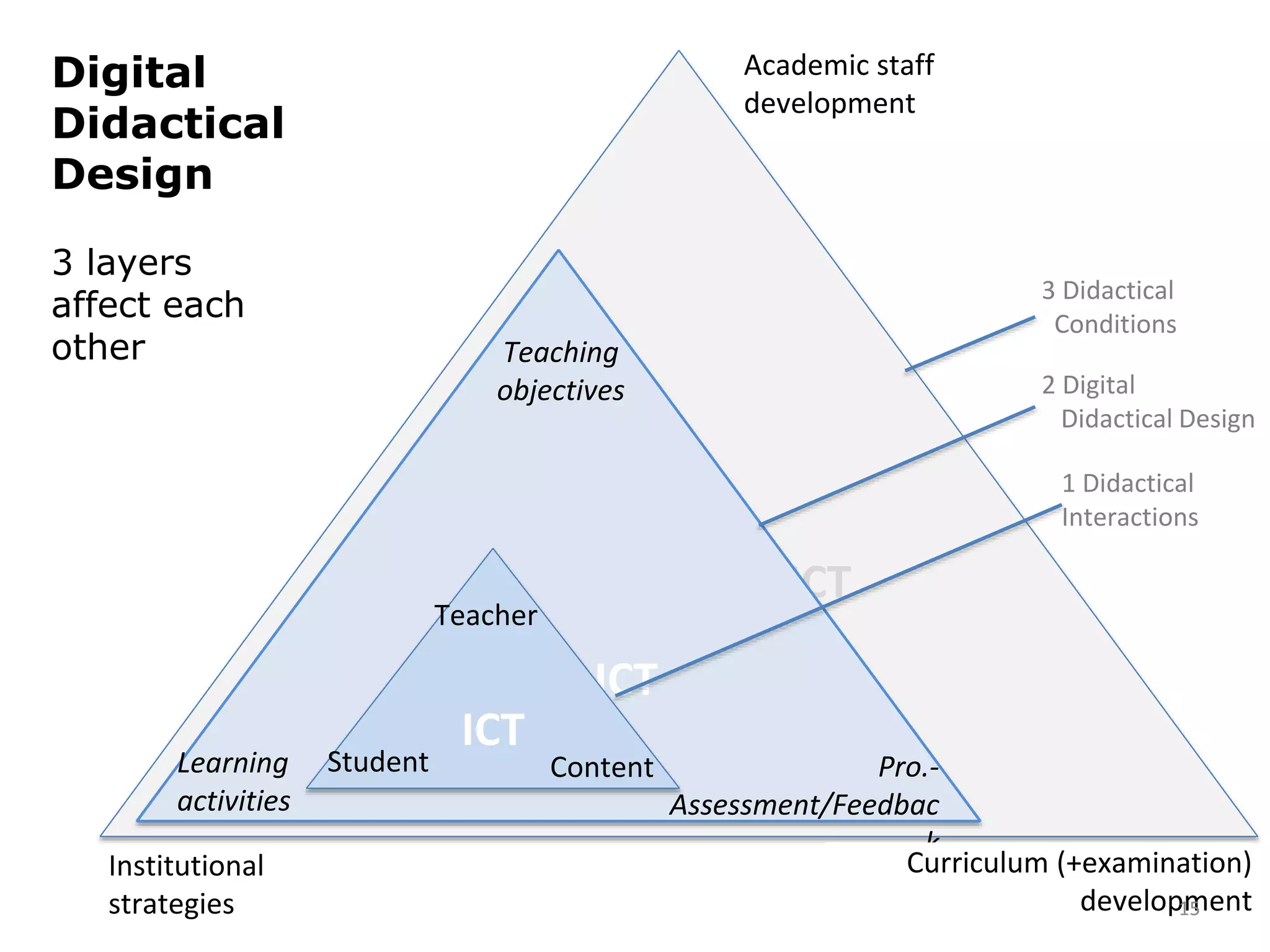
Digital
Didactical
Design
3 layers
affect each
other
ICT ICT
ICT
ICT
Student
Teacher
Content
Teaching
objectives
Pro.-
Assessment/Feedbac
k
Learning
activities
Academic staff
development
Curriculum (+examination)
development
Institutional
strategies
1 Didactical
Interactions
2 Digital
Didactical Design
3 Didactical
Conditions
15
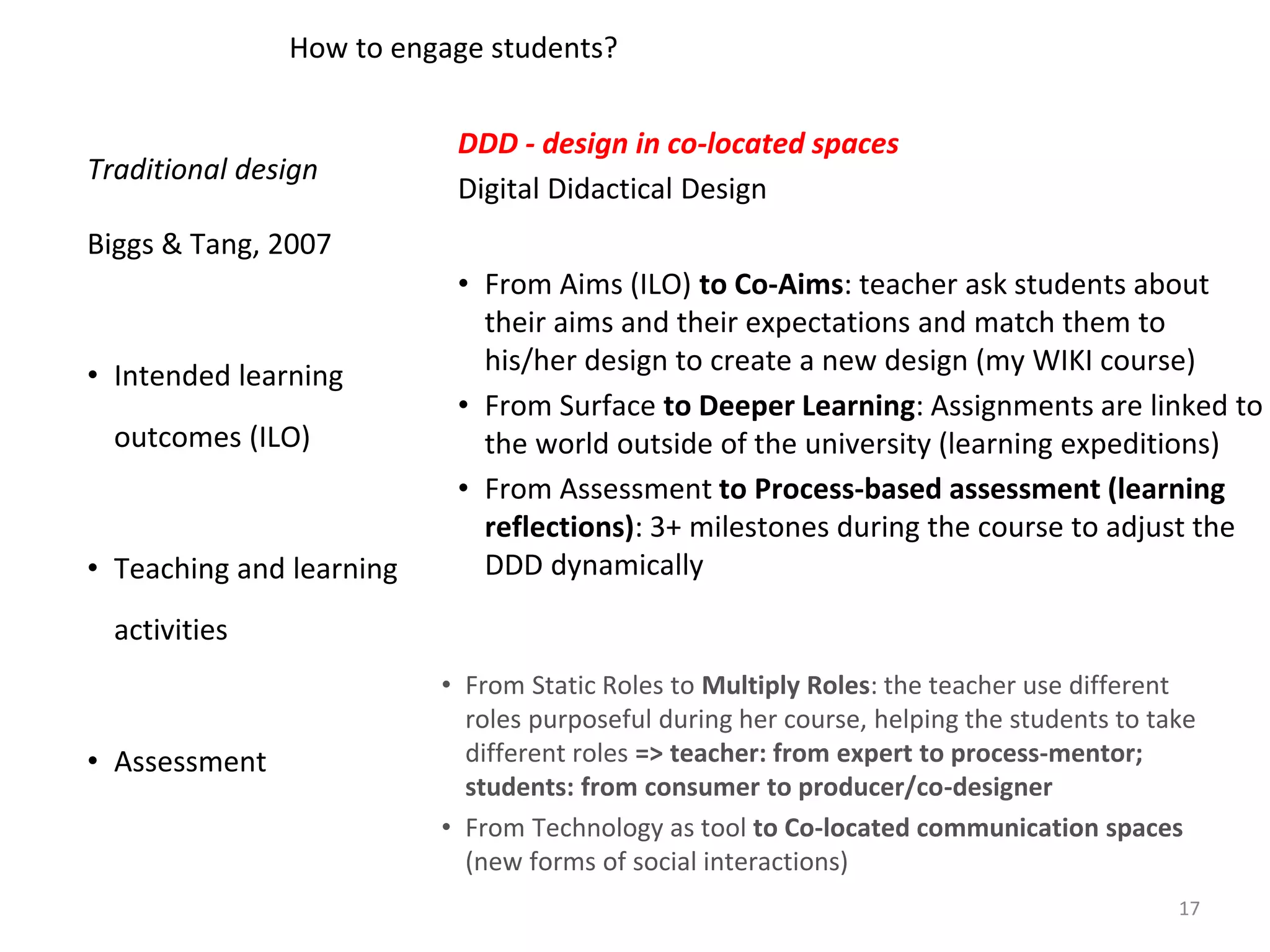
DDD - design in co-located spaces
Digital Didactical Design
• From Aims (ILO) to Co-Aims: teacher ask students about
their aims and their expectations and match them to
his/her design to create a new design (my WIKI course)
• From Surface to Deeper Learning: Assignments are linked to
the world outside of the university (learning expeditions)
• From Assessment to Process-based assessment (learning
reflections): 3+ milestones during the course to adjust the
DDD dynamically
Traditional design
Biggs & Tang, 2007
• Intended learning
outcomes (ILO)
• Teaching and learning
activities
• Assessment
How to engage students?
• From Static Roles to Multiply Roles: the teacher use different
roles purposeful during her course, helping the students to take
different roles => teacher: from expert to process-mentor;
students: from consumer to producer/co-designer
• From Technology as tool to Co-located communication spaces
(new forms of social interactions)
17
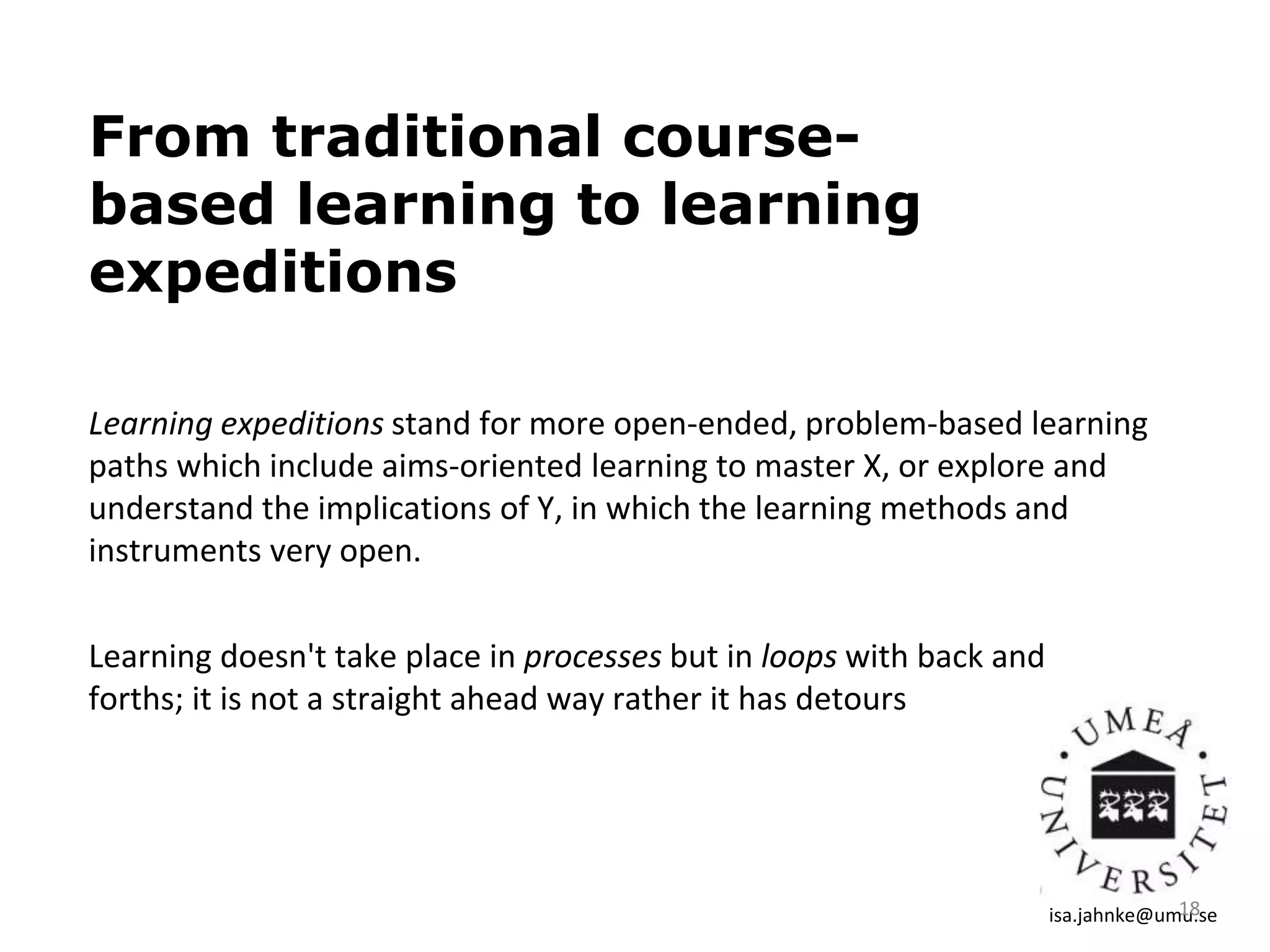
From traditional course-
based learning to learning
expeditions
Learning expeditions stand for more open-ended, problem-based learning
paths which include aims-oriented learning to master X, or explore and
understand the implications of Y, in which the learning methods and
instruments very open.
isa.jahnke@umu.se18
Learning doesn't take place in processes but in loops with back and
forths; it is not a straight ahead way rather it has detours
Further findings
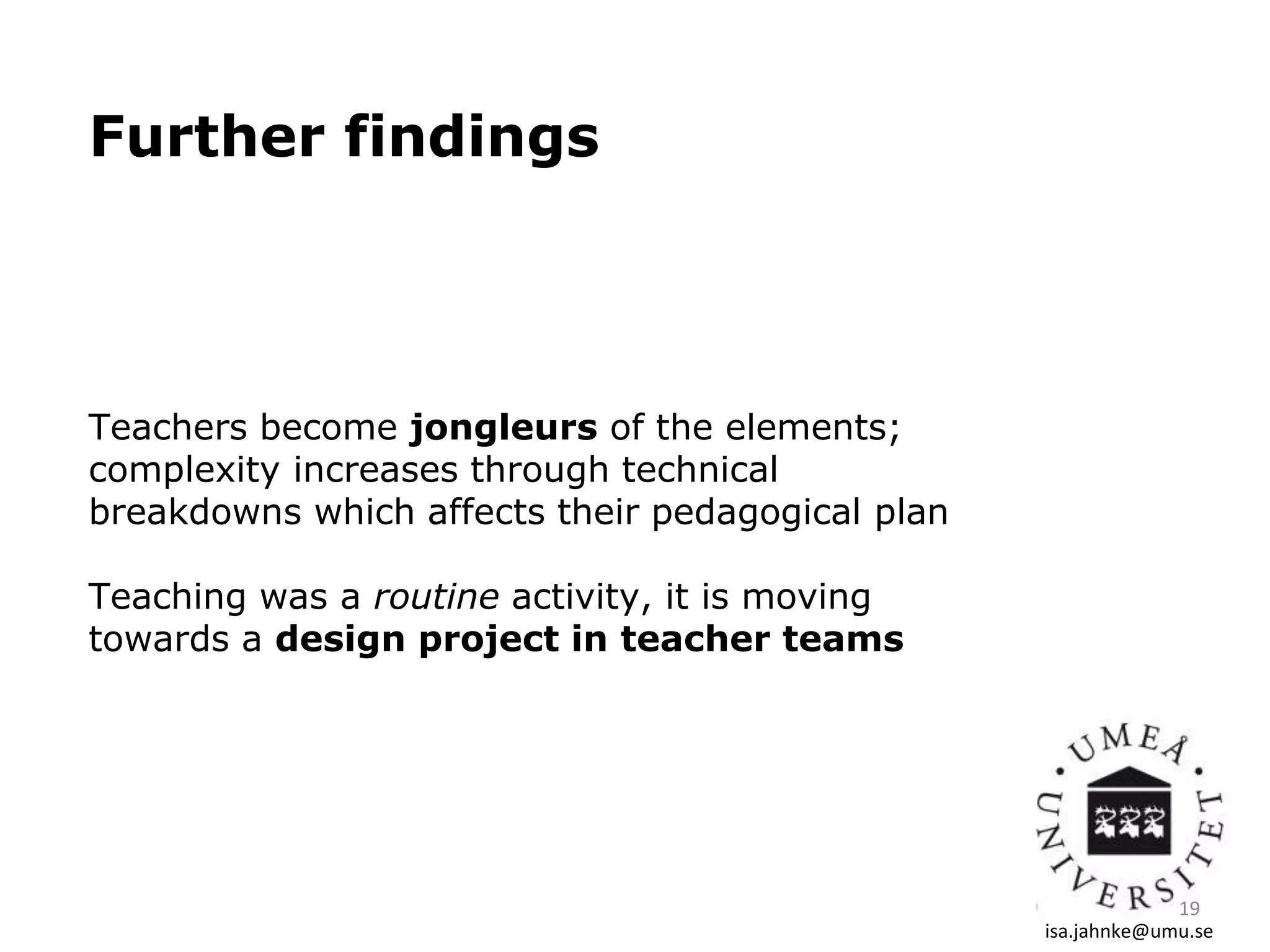
Teachers become jongleurs of the elements;
complexity increases through technical
breakdowns which affects their pedagogical plan
Teaching was a routine activity, it is moving
towards a design project in teacher teams
isa.jahnke@umu.se
19
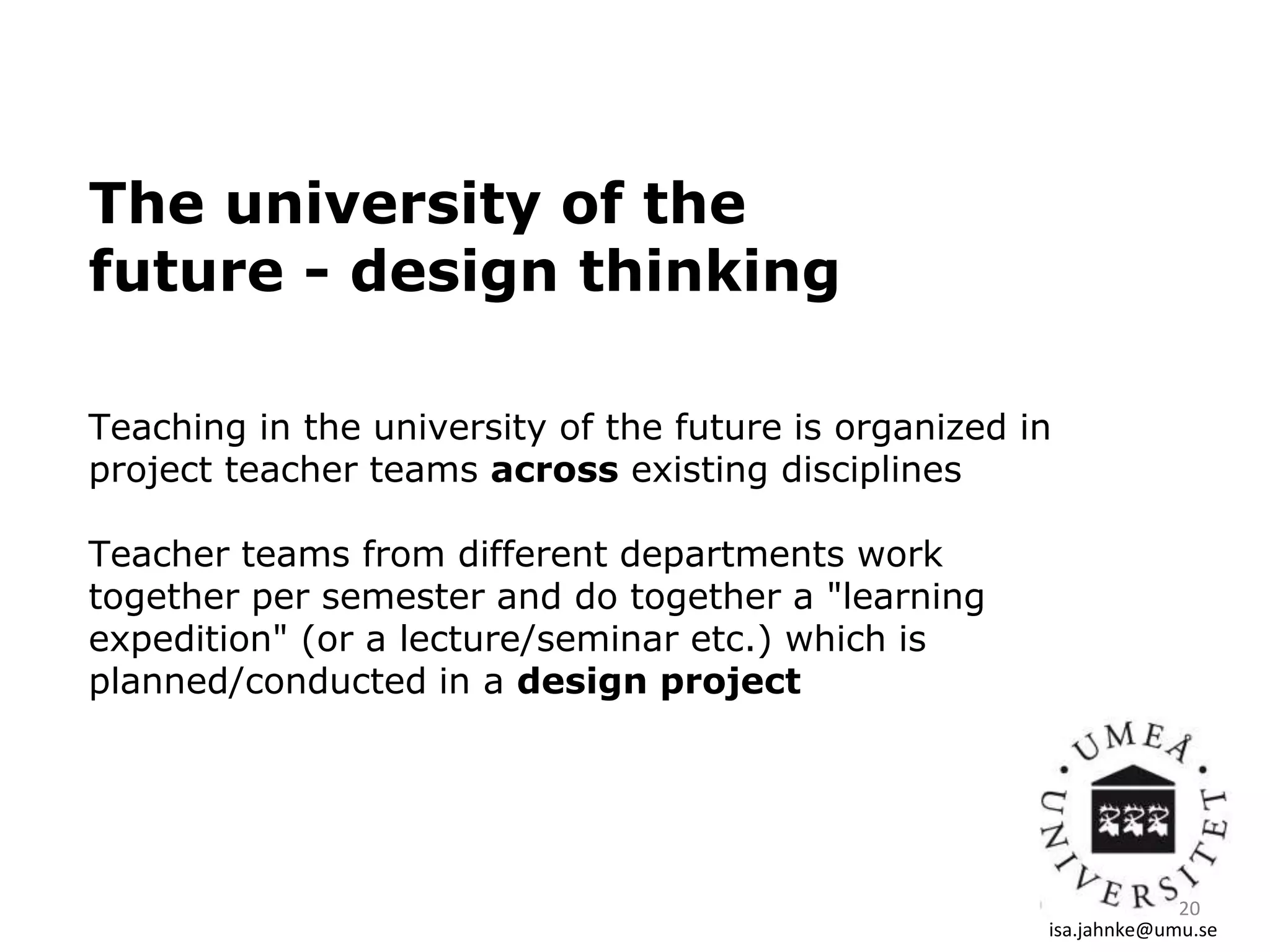
The university of the
future - design thinking
Teaching in the university of the future is organized in
project teacher teams across existing disciplines
Teacher teams from different departments work
together per semester and do together a "learning
expedition" (or a lecture/seminar etc.) which is
planned/conducted in a design project
isa.jahnke@umu.se
20

Pres2014-eunis14-v3

  • 1.
    Digital Didactical Designs –Re-Imagining designs for teaching and learning using mobile technology Isa Jahnke, Andreas Olsson, Anders Norberg, Lars Norqvist, Eva Mårell-Olsson 1
  • 2.
    130 students gotiPads launched in 2012130 students got iPads launched in 2012 Anders Norberg PhD Student http://iml.edusci.umu.se/ictml/ 2 Eva Mårell-Olsson Post-doc
  • 3.
    Our empirical studies inhigher education • Media Tablets: 130 students got iPads launched in 2012 in teacher education at Umeå university (Andreas Olsson) • Telepresence Robots => various spaces and processes merge together (Anders Norberg) • GoogleGlass in dentist education at Umeå university (Eva Mårell-Olsson) • EU project PeTEX, Remote-controlled labs in Engineering HE (2009-2011) • Teachers' conceptions of students' creativity (BMBF 2008-2011) • Wiki course in teacher education (2008-2011) • InPUD Computer Science study programme (NRW 2001-2005; 2009) isa.jahnke@umu.se3
  • 4.
    An alternative perspective- ICT is more than just a tool The physical lecture hall (seminar room) and web-enabled mobile/wearable devices merge into co-located multi-overlaid spaces – the expansion of communication spaces Co-located communication spaces isa.jahnke@umu.se4
  • 5.
    Physical classrooms Web-enabledmobile technology Co-located Communication spaces affects teaching and learning = New forms of social interaction: Multiply CrossActions • Content driven assignments => learners ask their social online networks New aims (ILO) necessary New activities (problem-orient.) necessary New roles and role reflections necessary 5 • Textbook driven courses => access to the Internet allows new forms of engaged reflections (e.g., memorizing definitions make no sense any more) • Students are consumers => students become active searchers for solutions isa.jahnke@umu.se
  • 6.
    Question In co-located spaces,how do teachers design teaching processes in practice to enable learning? isa.jahnke@umu.se7
  • 7.
    Theoretical lens Design isthe act of giving a form to the teaching practice; it is the act of modeling the teaching processes (sociotechnical-pedagogically) to enable student learning How do the teachers design for learner-centred classes? isa.jahnke@umu.se8
  • 8.
    Social mobile ICT Teaching aims Learning activities (from surfaceto deep learning) Process-based Assessment social roles Digital Didactical Design How do the teachers in practice design a constructive alignment from teacher-centric to learner-centred classes? isa.jahnke@umu.se9
  • 9.
  • 10.
    Teaching aims clear andvisible Learning activities (mainly deep learning) Process-based Assessment (guided reflections) Mobile Technology multimodal integration Fostering Social Relations and Multiply Roles 11
  • 11.
  • 12.
    Digital Didactical Design 3 layers affect each other ICTICT ICT ICT Student Teacher Content Teaching objectives Pro.- Assessment/Feedbac k Learning activities Academic staff development Curriculum (+examination) development Institutional strategies 1 Didactical Interactions 2 Digital Didactical Design 3 Didactical Conditions 15
  • 13.
    DDD - designin co-located spaces Digital Didactical Design • From Aims (ILO) to Co-Aims: teacher ask students about their aims and their expectations and match them to his/her design to create a new design (my WIKI course) • From Surface to Deeper Learning: Assignments are linked to the world outside of the university (learning expeditions) • From Assessment to Process-based assessment (learning reflections): 3+ milestones during the course to adjust the DDD dynamically Traditional design Biggs & Tang, 2007 • Intended learning outcomes (ILO) • Teaching and learning activities • Assessment How to engage students? • From Static Roles to Multiply Roles: the teacher use different roles purposeful during her course, helping the students to take different roles => teacher: from expert to process-mentor; students: from consumer to producer/co-designer • From Technology as tool to Co-located communication spaces (new forms of social interactions) 17
  • 14.
    From traditional course- basedlearning to learning expeditions Learning expeditions stand for more open-ended, problem-based learning paths which include aims-oriented learning to master X, or explore and understand the implications of Y, in which the learning methods and instruments very open. isa.jahnke@umu.se18 Learning doesn't take place in processes but in loops with back and forths; it is not a straight ahead way rather it has detours
  • 15.
    Further findings Teachers becomejongleurs of the elements; complexity increases through technical breakdowns which affects their pedagogical plan Teaching was a routine activity, it is moving towards a design project in teacher teams isa.jahnke@umu.se 19
  • 16.
    The university ofthe future - design thinking Teaching in the university of the future is organized in project teacher teams across existing disciplines Teacher teams from different departments work together per semester and do together a "learning expedition" (or a lecture/seminar etc.) which is planned/conducted in a design project isa.jahnke@umu.se 20

Editor's Notes

  • #6 Learning expeditions stand for more open-ended, problem-based learning paths which include aims-oriented learning to master X or explore and understand the implications of Y, and where the learning methods and instruments very open.
  • #7 Learning expeditions stand for more open-ended, problem-based learning paths which include aims-oriented learning to master X or explore and understand the implications of Y, and where the learning methods and instruments very open.
  • #12 Green= physics; yellow-middle east pres; red=non-fiction story
  • #16 the design layer can only be as good as the outer layer is framing the environment vice versa
  • #18 Learning expeditions stand for more open-ended, problem-based learning paths which include aims-oriented learning to master X or explore and understand the implications of Y, and where the learning methods and instruments very open. We build on Biggs and Tang and develop their framework further