Practical 06: Human Reflexes
Dr Shamshad
Majamaah University KSA
1. Classify the human reflexes and give example for each type.
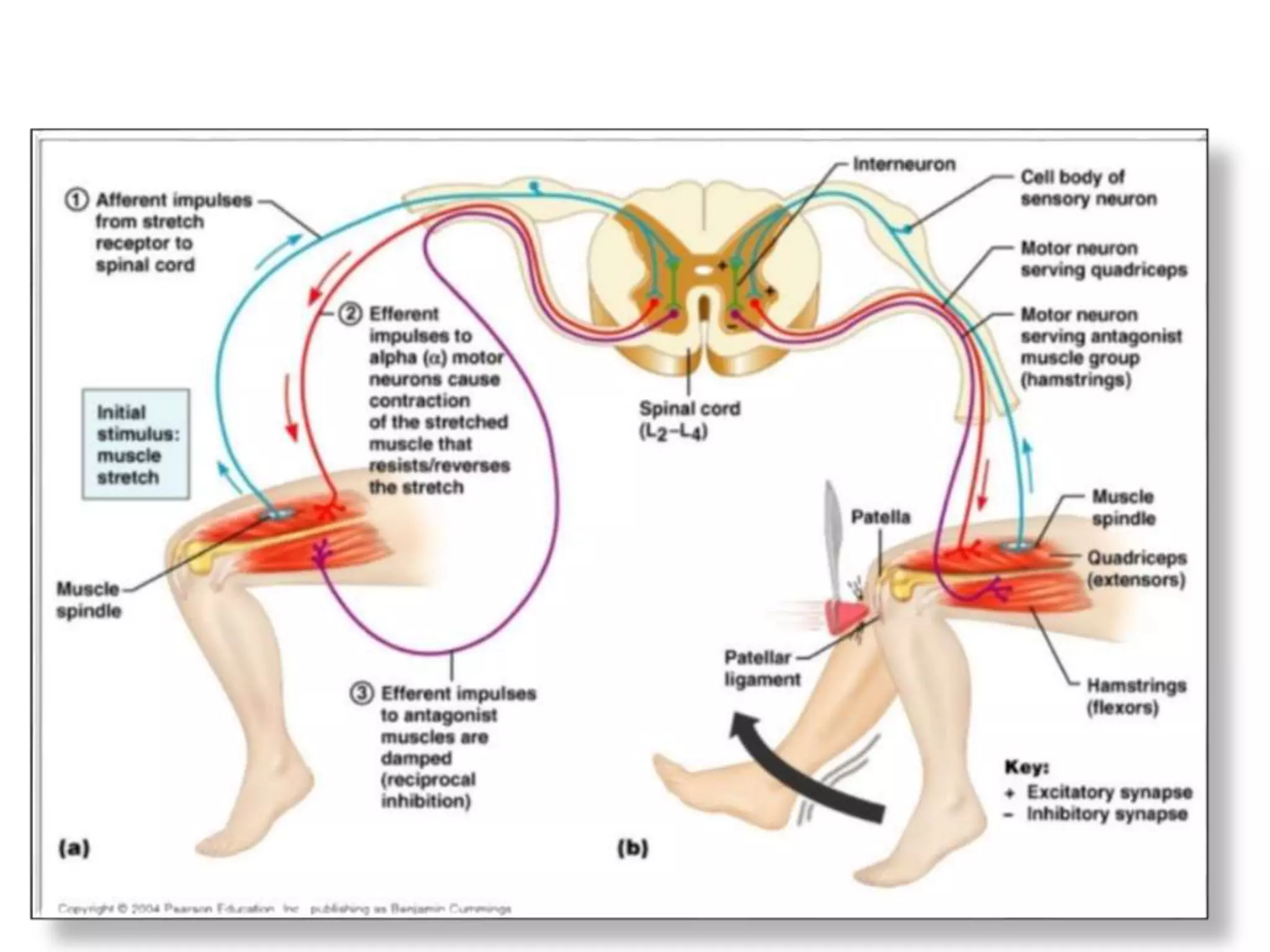
2. Describe components of stretch reflex arc.
3. Discuss the types, center and clinical significance of tendon
jerks.
4. Perform accurately various types of tendon jerk.
Objectives
Defn:
Involuntary ,quick ,protective response to a stimulus
which depends on the integrity of a particular nervous
pathway.
Components: Reflex arc:
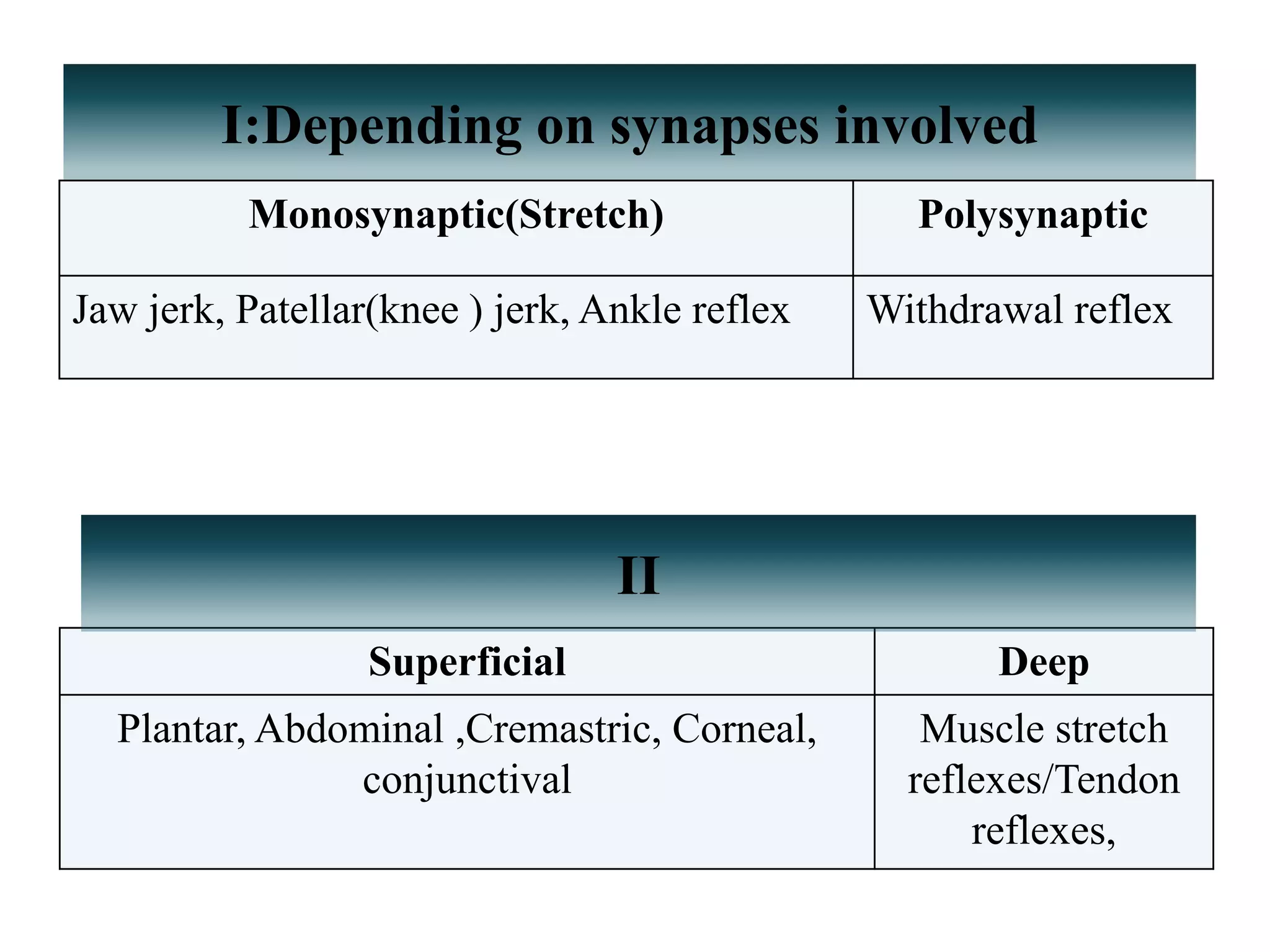
I:Depending on synapses involved
Monosynaptic(Stretch) Polysynaptic
Jaw jerk, Patellar(knee ) jerk, Ankle reflex Withdrawal reflex
Superficial Deep
Plantar, Abdominal ,Cremastric, Corneal,
conjunctival
Muscle stretch
reflexes/Tendon
reflexes,
II
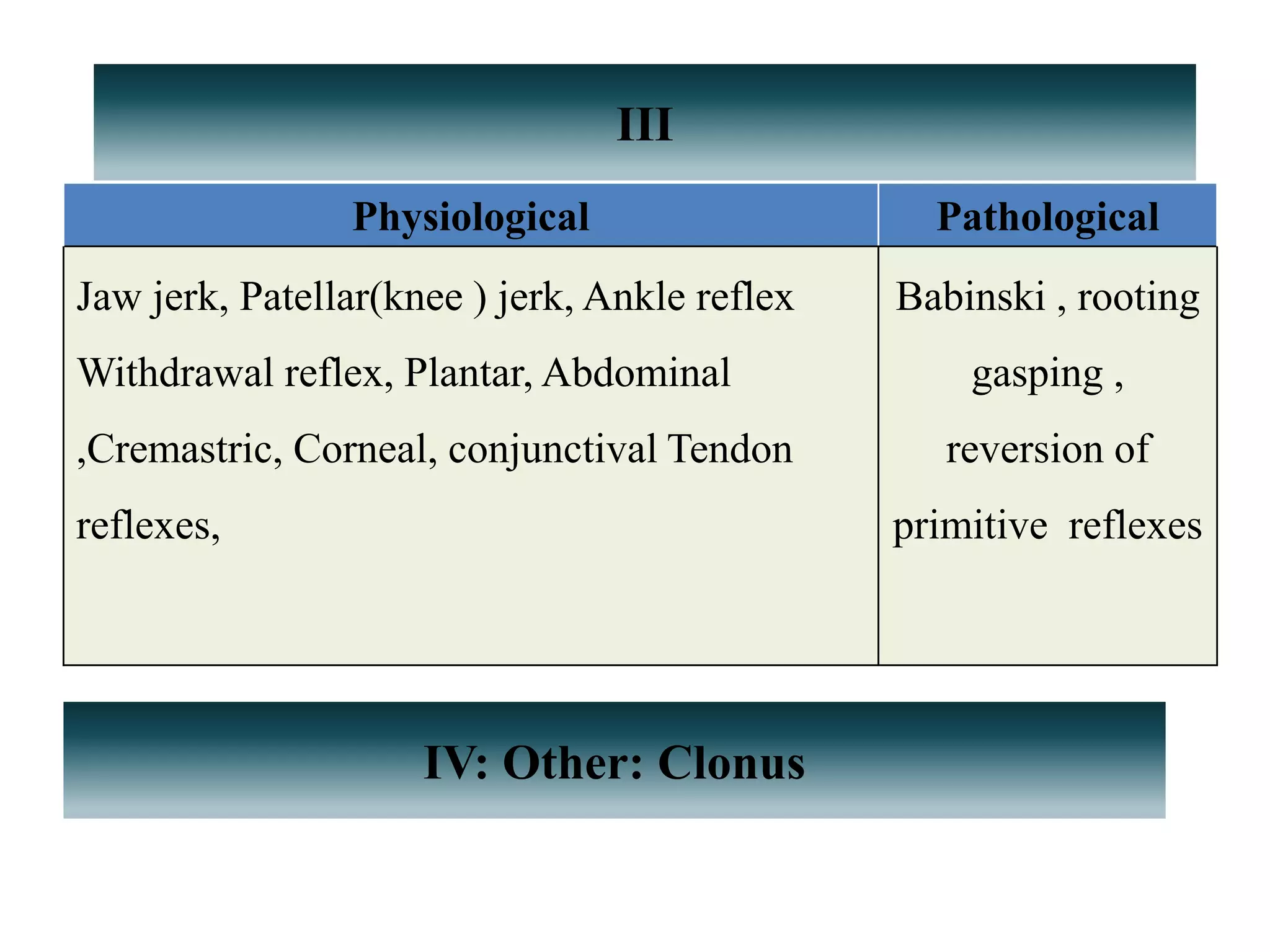
III
Physiological Pathological
Jaw jerk, Patellar(knee ) jerk, Ankle reflex
Withdrawal reflex, Plantar, Abdominal
,Cremastric, Corneal, conjunctival Tendon
reflexes,
Babinski , rooting
gasping ,
reversion of
primitive reflexes
IV: Other: Clonus
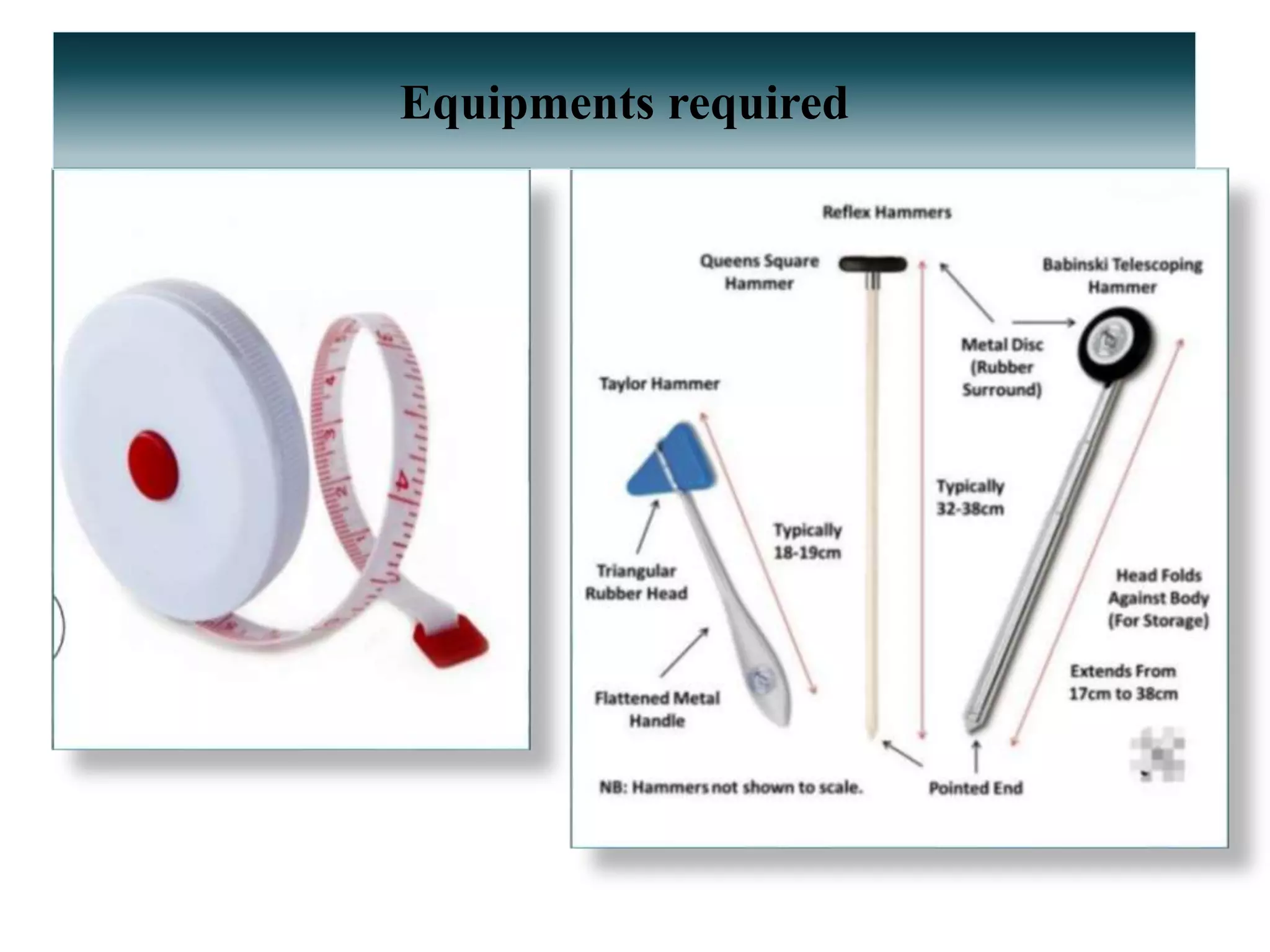
Equipments required
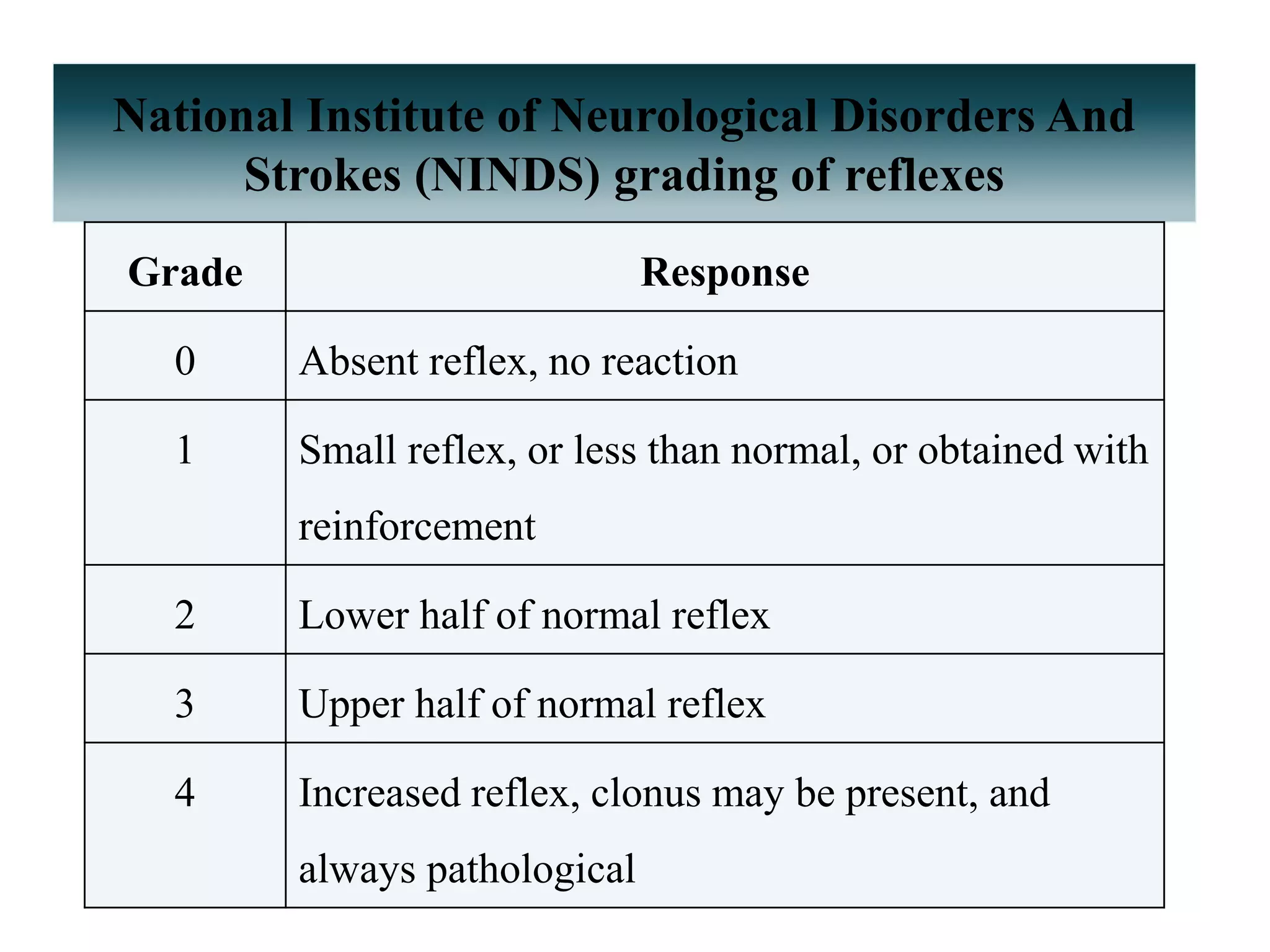
National Institute of Neurological Disorders And
Strokes (NINDS) grading of reflexes
Grade Response
0 Absent reflex, no reaction
1 Small reflex, or less than normal, or obtained with
reinforcement
2 Lower half of normal reflex
3 Upper half of normal reflex
4 Increased reflex, clonus may be present, and
always pathological
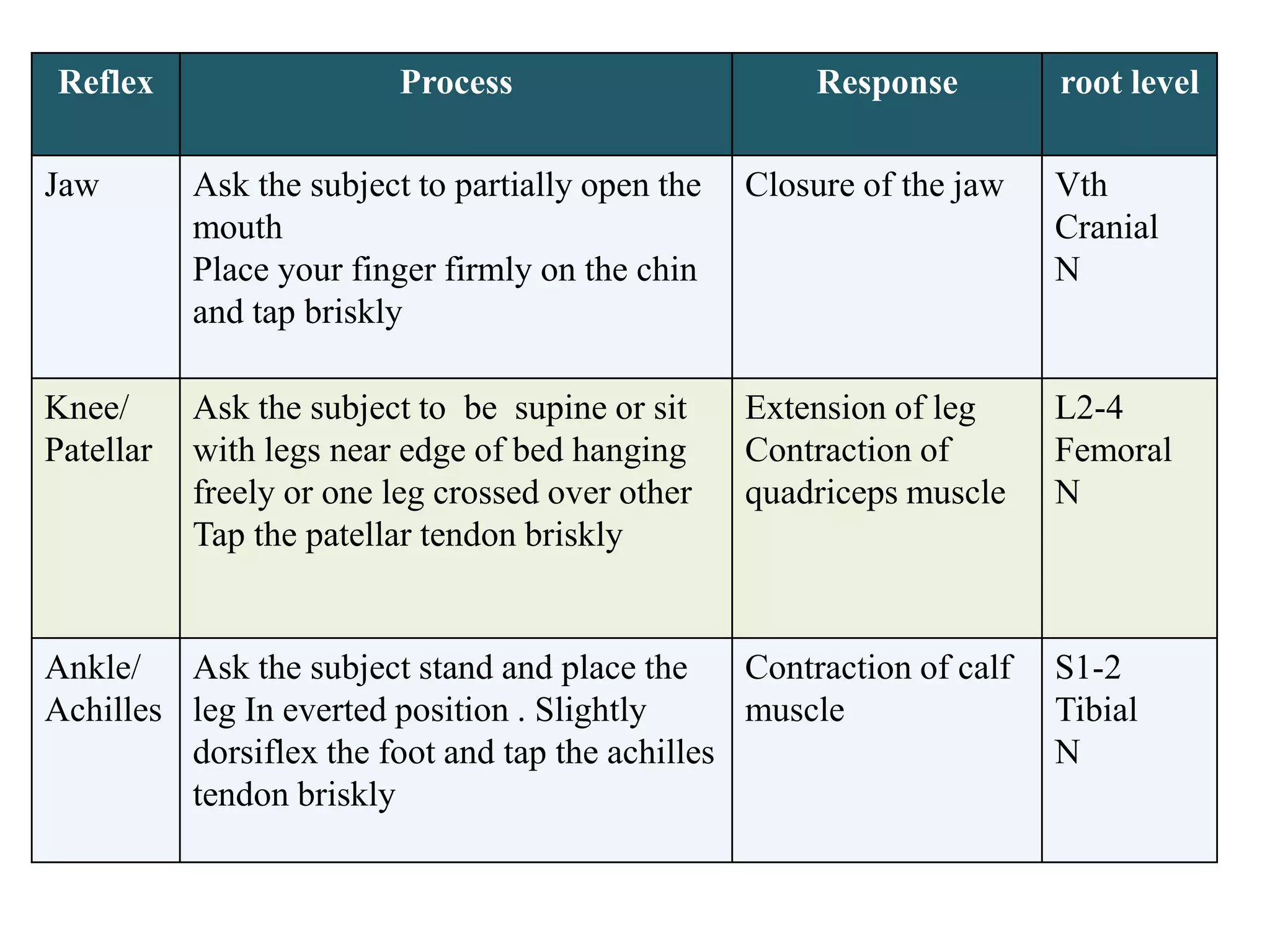
Reflex Process Response root level
Jaw Ask the subject to partially open the
mouth
Place your finger firmly on the chin
and tap briskly
Closure of the jaw Vth
Cranial
N
Knee/
Patellar
Ask the subject to be supine or sit
with legs near edge of bed hanging
freely or one leg crossed over other
Tap the patellar tendon briskly
Extension of leg
Contraction of
quadriceps muscle
L2-4
Femoral
N
Ankle/
Achilles
Ask the subject stand and place the
leg In everted position . Slightly
dorsiflex the foot and tap the achilles
tendon briskly
Contraction of calf
muscle
S1-2
Tibial
N
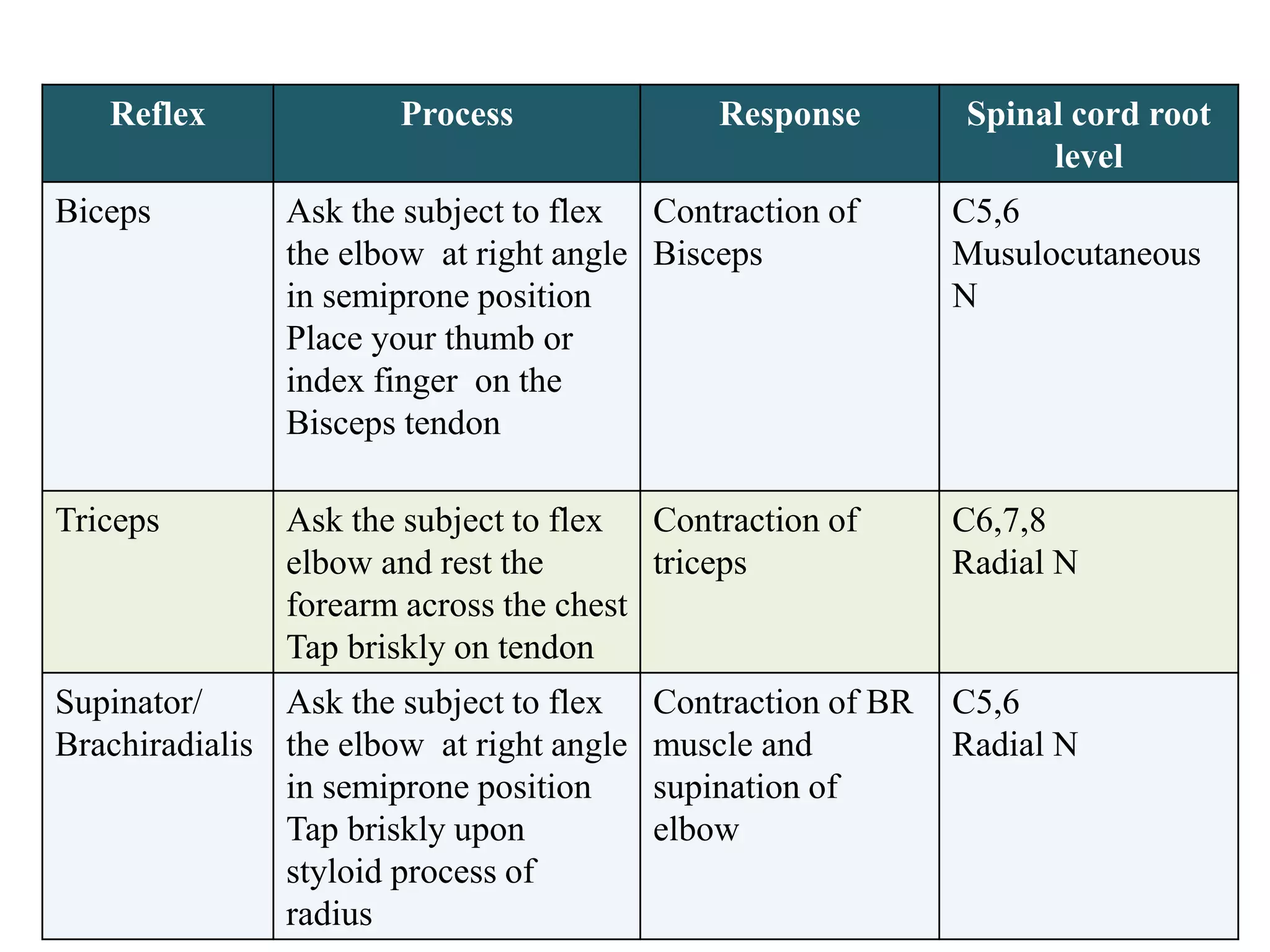
Reflex Process Response Spinal cord root
level
Biceps Ask the subject to flex
the elbow at right angle
in semiprone position
Place your thumb or
index finger on the
Bisceps tendon
Contraction of
Bisceps
C5,6
Musulocutaneous
N
Triceps Ask the subject to flex
elbow and rest the
forearm across the chest
Tap briskly on tendon
Contraction of
triceps
C6,7,8
Radial N
Supinator/
Brachiradialis
Ask the subject to flex
the elbow at right angle
in semiprone position
Tap briskly upon
styloid process of
radius
Contraction of BR
muscle and
supination of
elbow
C5,6
Radial N
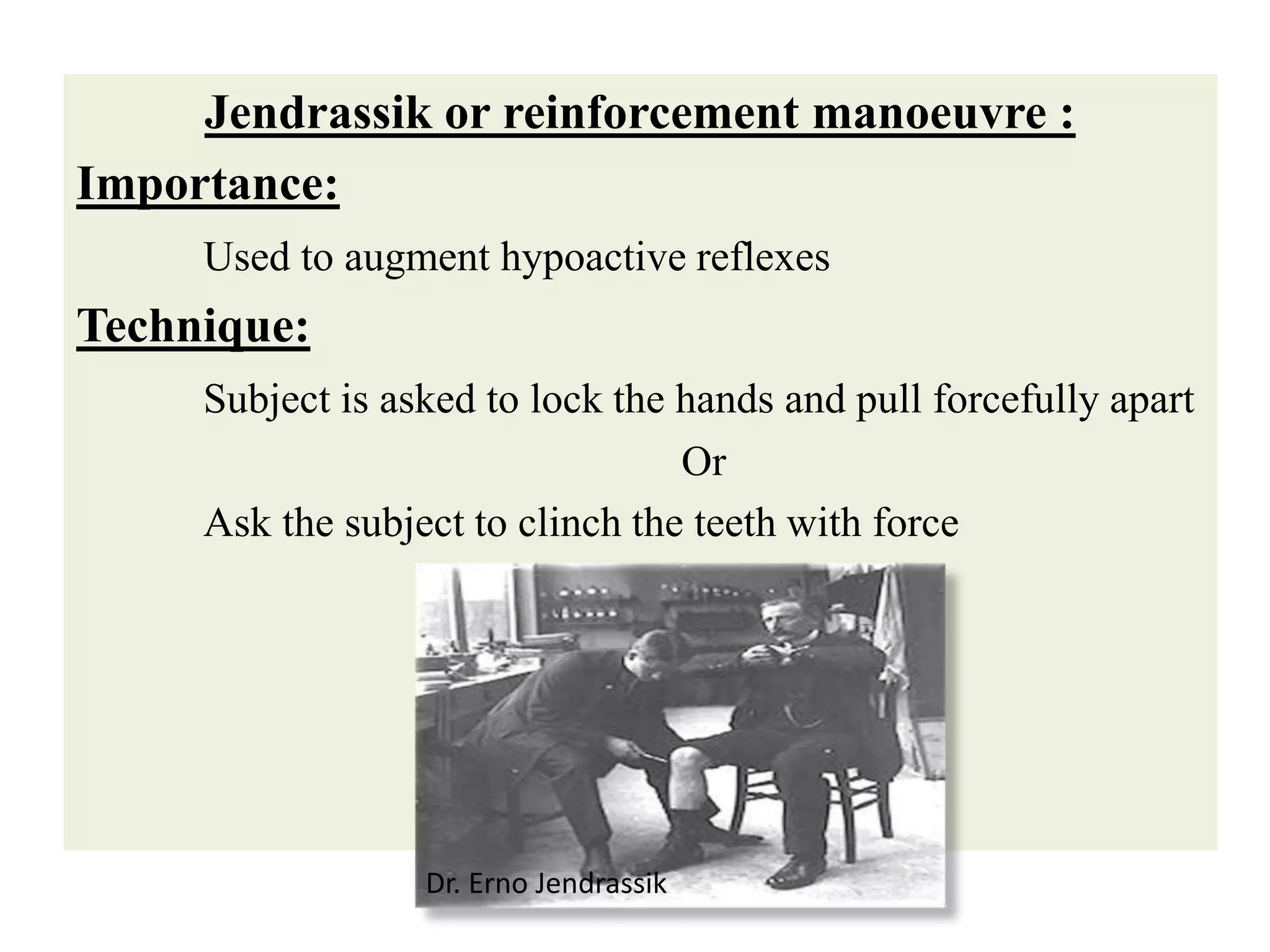
Jendrassik or reinforcement manoeuvre :
Importance:
Used to augment hypoactive reflexes
Technique:
Subject is asked to lock the hands and pull forcefully apart
Or
Ask the subject to clinch the teeth with force
Dr. Erno Jendrassik
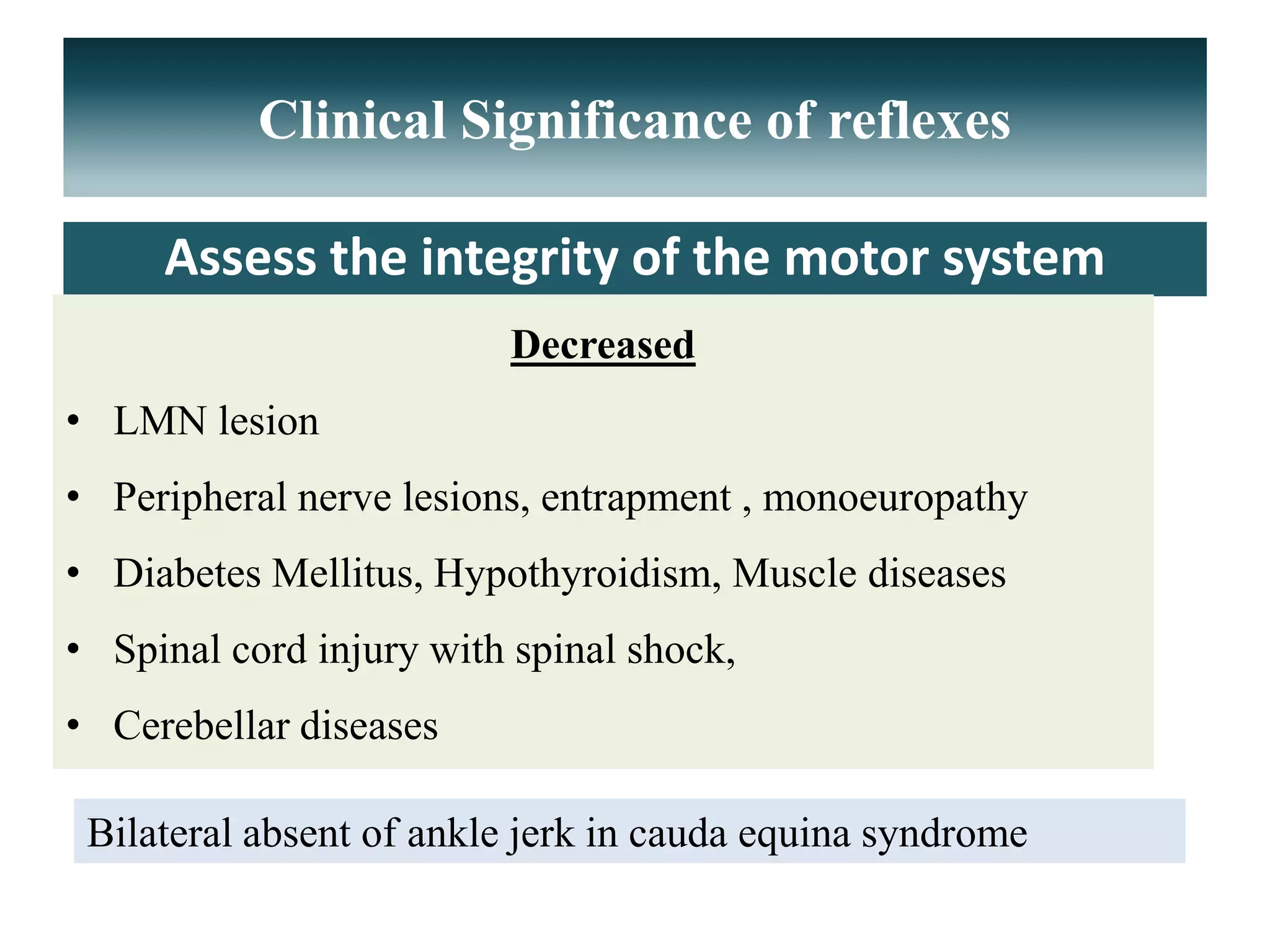
Clinical Significance of reflexes
Assess the integrity of the motor system
Decreased
• LMN lesion
• Peripheral nerve lesions, entrapment , monoeuropathy
• Diabetes Mellitus, Hypothyroidism, Muscle diseases
• Spinal cord injury with spinal shock,
• Cerebellar diseases
Bilateral absent of ankle jerk in cauda equina syndrome
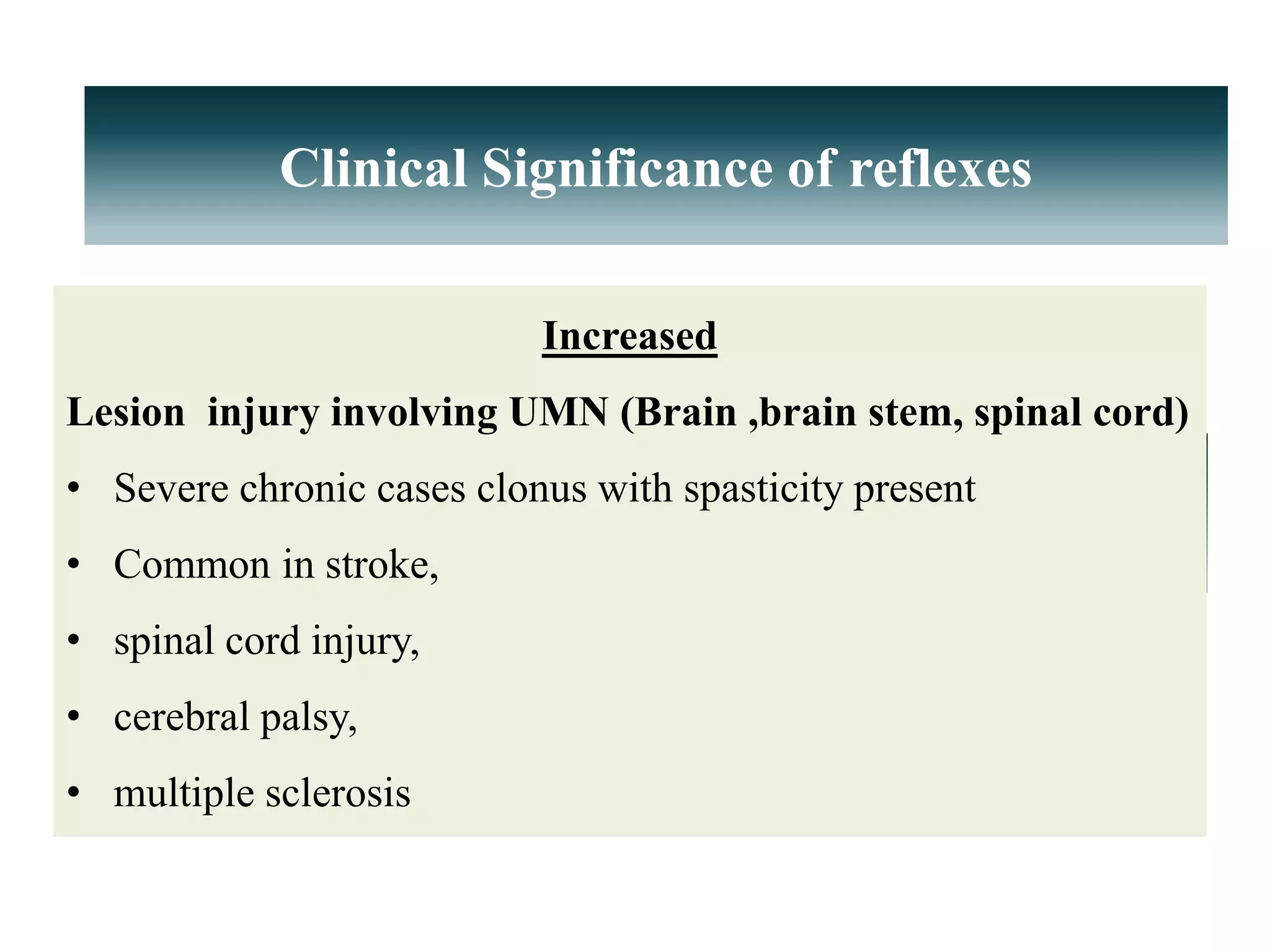
Significance
Increased
Lesion injury involving UMN (Brain ,brain stem, spinal cord)
• Severe chronic cases clonus with spasticity present
• Common in stroke,
• spinal cord injury,
• cerebral palsy,
• multiple sclerosis
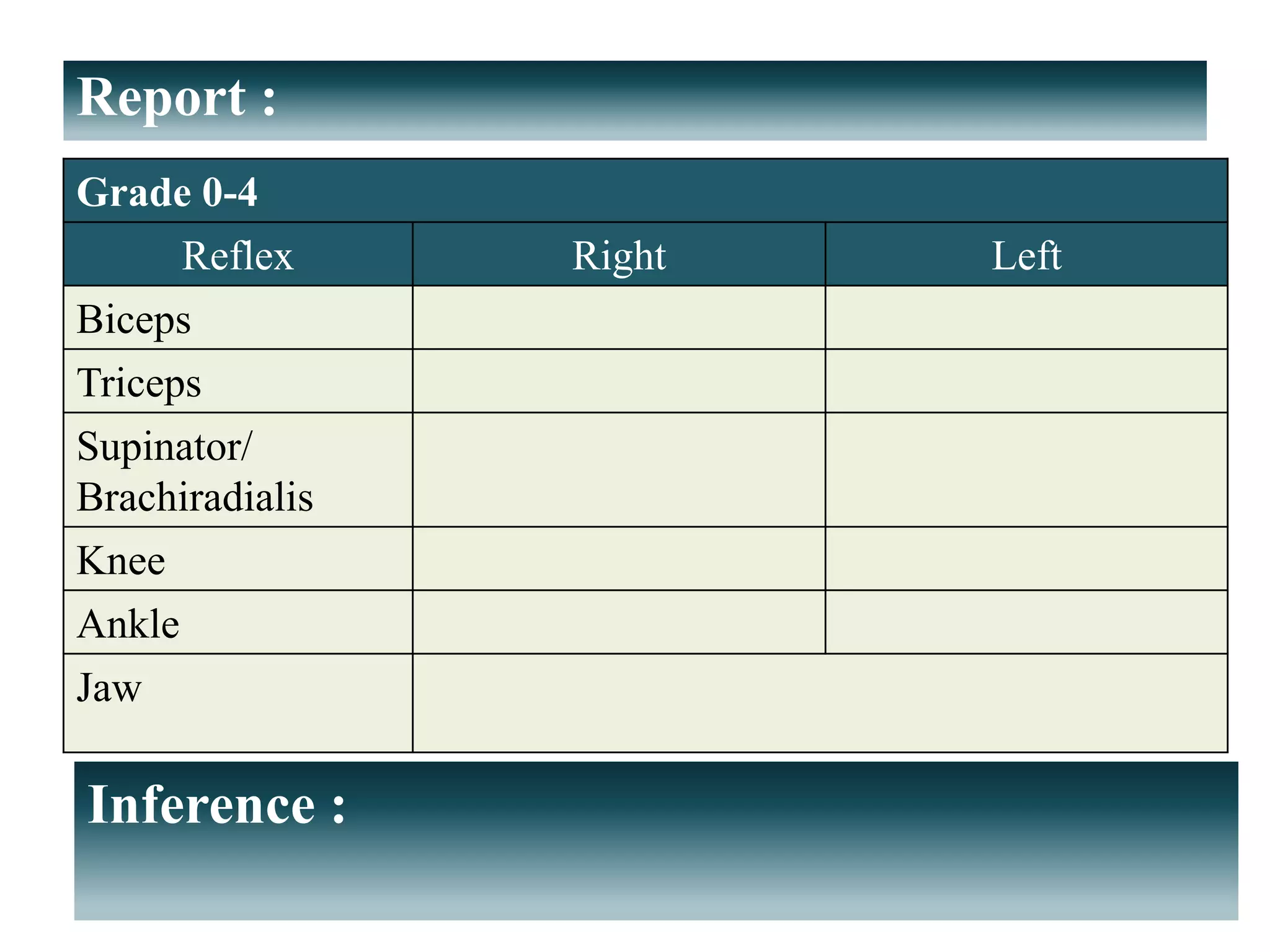
Clinical Significance of reflexes
Grade 0-4
Reflex Right Left
Biceps
Triceps
Supinator/
Brachiradialis
Knee
Ankle
Jaw
Inference :
Report :
Reference:
Pflanzer: Experimental and Applied Physiology Laboratory Manual, 7th edition
2003 chapter 10 Neuromuscular reflexes of the spinal cord and brain stem 119 –
132.
Internet: Medscape
Text book of Manual of practical physiology : Prof A.K.Jain

Practical 8 reflexes

  • 1.
    Practical 06: HumanReflexes Dr Shamshad Majamaah University KSA
  • 2.
    1. Classify thehuman reflexes and give example for each type. 2. Describe components of stretch reflex arc. 3. Discuss the types, center and clinical significance of tendon jerks. 4. Perform accurately various types of tendon jerk. Objectives
  • 3.
    Defn: Involuntary ,quick ,protectiveresponse to a stimulus which depends on the integrity of a particular nervous pathway. Components: Reflex arc:
  • 5.
    I:Depending on synapsesinvolved Monosynaptic(Stretch) Polysynaptic Jaw jerk, Patellar(knee ) jerk, Ankle reflex Withdrawal reflex Superficial Deep Plantar, Abdominal ,Cremastric, Corneal, conjunctival Muscle stretch reflexes/Tendon reflexes, II
  • 6.
    III Physiological Pathological Jaw jerk,Patellar(knee ) jerk, Ankle reflex Withdrawal reflex, Plantar, Abdominal ,Cremastric, Corneal, conjunctival Tendon reflexes, Babinski , rooting gasping , reversion of primitive reflexes IV: Other: Clonus
  • 7.
  • 8.
    National Institute ofNeurological Disorders And Strokes (NINDS) grading of reflexes Grade Response 0 Absent reflex, no reaction 1 Small reflex, or less than normal, or obtained with reinforcement 2 Lower half of normal reflex 3 Upper half of normal reflex 4 Increased reflex, clonus may be present, and always pathological
  • 9.
    Reflex Process Responseroot level Jaw Ask the subject to partially open the mouth Place your finger firmly on the chin and tap briskly Closure of the jaw Vth Cranial N Knee/ Patellar Ask the subject to be supine or sit with legs near edge of bed hanging freely or one leg crossed over other Tap the patellar tendon briskly Extension of leg Contraction of quadriceps muscle L2-4 Femoral N Ankle/ Achilles Ask the subject stand and place the leg In everted position . Slightly dorsiflex the foot and tap the achilles tendon briskly Contraction of calf muscle S1-2 Tibial N
  • 10.
    Reflex Process ResponseSpinal cord root level Biceps Ask the subject to flex the elbow at right angle in semiprone position Place your thumb or index finger on the Bisceps tendon Contraction of Bisceps C5,6 Musulocutaneous N Triceps Ask the subject to flex elbow and rest the forearm across the chest Tap briskly on tendon Contraction of triceps C6,7,8 Radial N Supinator/ Brachiradialis Ask the subject to flex the elbow at right angle in semiprone position Tap briskly upon styloid process of radius Contraction of BR muscle and supination of elbow C5,6 Radial N
  • 12.
    Jendrassik or reinforcementmanoeuvre : Importance: Used to augment hypoactive reflexes Technique: Subject is asked to lock the hands and pull forcefully apart Or Ask the subject to clinch the teeth with force Dr. Erno Jendrassik
  • 13.
    Clinical Significance ofreflexes Assess the integrity of the motor system Decreased • LMN lesion • Peripheral nerve lesions, entrapment , monoeuropathy • Diabetes Mellitus, Hypothyroidism, Muscle diseases • Spinal cord injury with spinal shock, • Cerebellar diseases Bilateral absent of ankle jerk in cauda equina syndrome
  • 14.
    Significance Increased Lesion injury involvingUMN (Brain ,brain stem, spinal cord) • Severe chronic cases clonus with spasticity present • Common in stroke, • spinal cord injury, • cerebral palsy, • multiple sclerosis Clinical Significance of reflexes
  • 15.
    Grade 0-4 Reflex RightLeft Biceps Triceps Supinator/ Brachiradialis Knee Ankle Jaw Inference : Report :
  • 16.
    Reference: Pflanzer: Experimental andApplied Physiology Laboratory Manual, 7th edition 2003 chapter 10 Neuromuscular reflexes of the spinal cord and brain stem 119 – 132. Internet: Medscape Text book of Manual of practical physiology : Prof A.K.Jain