
Dr. T.SunilKumar
MPT
Assistant Professor
SIPR
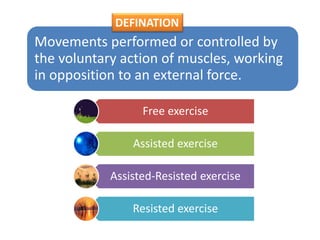
Movements performed or controlled by
the voluntary action of muscles, working
in opposition to an external force.
Free exercise
Assisted exercise
Assisted-Resisted exercise
Resisted exercise
DEFINATION
FREE EX’S:
• CLASSIFICATION
• Localised
• General
•subjective
•objective
• TECHNIQUES
• Starting position
• Co-operation
• Speed
• Duration
• EFFECTS & USES:
• Relaxation
• Joint mobility
• Muscle power &
tone
• Confidence
• Circulatory &
Respiratory
confidence
ASSISTED EX’S:
• TECHNIQUES
• Starting position
• Pattern of
movement
• Support
• Action of
antagonists
• Assisting force
• Character of
movement
• Repetitions
• Co-operation
• EFFECTS & USES:
• Production of
movement
• Memory of
pattern
• Confidence
• Joint range
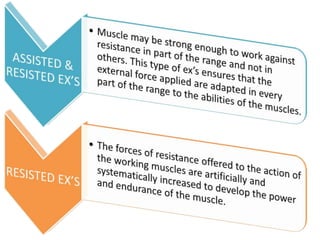
ASSISTED &
RESISTAED EX’S
• TECHNIQUES
• Starting position
• Pattern of
movement
• Support
• Action of
antagonists
• Assisting &
Resisting force
• Character of
movement
• Repetitions
• Co-operation
• EFFECTS & USES:
RESISTED EX’S
• TECHNIQUES
• Starting
position
• Pattern of
movement
• Stabilisation
• Traction
• Resisting force
• Character of
movement
• Repetitions
• Co-operation
• EFFECTS & USES:
• Muscle power
• Blood flow
• Blood pressure
• Heat
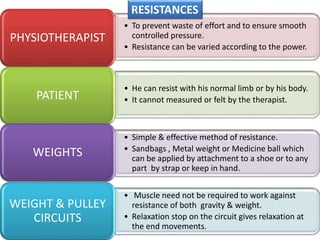
• To prevent waste of effort and to ensure smooth
controlled pressure.
• Resistance can be varied according to the power.
PHYSIOTHERAPIST
• He can resist with his normal limb or by his body.
• It cannot measured or felt by the therapist.PATIENT
• Simple & effective method of resistance.
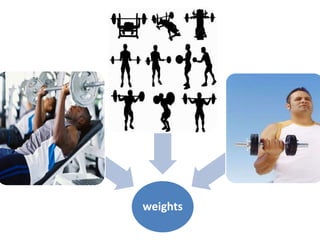
• Sandbags , Metal weight or Medicine ball which
can be applied by attachment to a shoe or to any
part by strap or keep in hand.
WEIGHTS
• Muscle need not be required to work against
resistance of both gravity & weight.
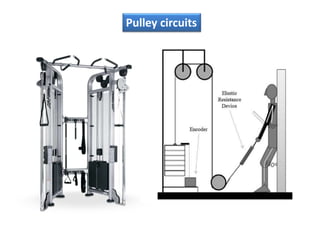
• Relaxation stop on the circuit gives relaxation at
the end movements.
WEIGHT & PULLEY
CIRCUITS
RESISTANCES
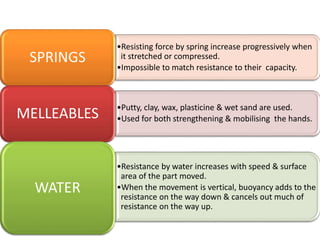
•Resisting force by spring increase progressively when
it stretched or compressed.
•Impossible to match resistance to their capacity.
SPRINGS
•Putty, clay, wax, plasticine & wet sand are used.
•Used for both strengthening & mobilising the hands.MELLEABLES
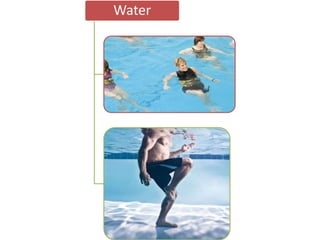
•Resistance by water increases with speed & surface
area of the part moved.
•When the movement is vertical, buoyancy adds to the
resistance on the way down & cancels out much of
resistance on the way up.
WATER
weights
Pulley circuits
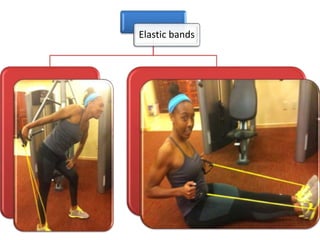
Elastic bands
Water
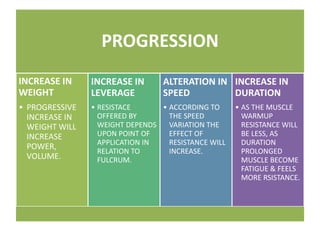
PROGRESSION
INCREASE IN
WEIGHT
• PROGRESSIVE
INCREASE IN
WEIGHT WILL
INCREASE
POWER,
VOLUME.
INCREASE IN
LEVERAGE
• RESISTACE
OFFERED BY
WEIGHT DEPENDS
UPON POINT OF
APPLICATION IN
RELATION TO
FULCRUM.
ALTERATION IN
SPEED
• ACCORDING TO
THE SPEED
VARIATION THE
EFFECT OF
RESISTANCE WILL
INCREASE.
INCREASE IN
DURATION
• AS THE MUSCLE
WARMUP
RESISTANCE WILL
BE LESS, AS
DURATION
PROLONGED
MUSCLE BECOME
FATIGUE & FEELS
MORE RSISTANCE.
• The motor response to sensory
stimulation.
• Reflex movement are protective in
character or concern with the repetition
of movement patterns which have
become automatic or habitual.
REFLEX
MOVEMENT
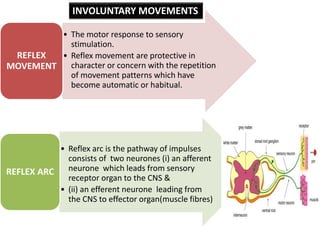
• Reflex arc is the pathway of impulses
consists of two neurones (i) an afferent
neurone which leads from sensory
receptor organ to the CNS &
• (ii) an efferent neurone leading from
the CNS to effector organ(muscle fibres)
REFLEX ARC
INVOLUNTARY MOVEMENTS
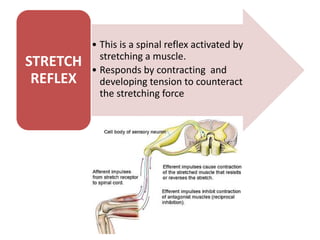
• This is a spinal reflex activated by
stretching a muscle.
• Responds by contracting and
developing tension to counteract
the stretching force
STRETCH
REFLEX
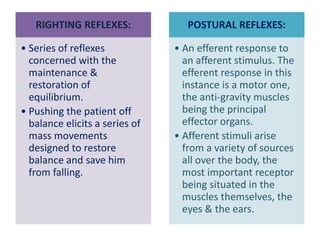
RIGHTING REFLEXES:
• Series of reflexes
concerned with the
maintenance &
restoration of
equilibrium.
• Pushing the patient off
balance elicits a series of
mass movements
designed to restore
balance and save him
from falling.
POSTURAL REFLEXES:
• An efferent response to
an afferent stimulus. The
efferent response in this
instance is a motor one,
the anti-gravity muscles
being the principal
effector organs.
• Afferent stimuli arise
from a variety of sources
all over the body, the
most important receptor
being situated in the
muscles themselves, the
eyes & the ears.
Active movements

Active movements

  • 1.
  • 2.
    Movements performed orcontrolled by the voluntary action of muscles, working in opposition to an external force. Free exercise Assisted exercise Assisted-Resisted exercise Resisted exercise DEFINATION
  • 5.
    FREE EX’S: • CLASSIFICATION •Localised • General •subjective •objective • TECHNIQUES • Starting position • Co-operation • Speed • Duration • EFFECTS & USES: • Relaxation • Joint mobility • Muscle power & tone • Confidence • Circulatory & Respiratory confidence ASSISTED EX’S: • TECHNIQUES • Starting position • Pattern of movement • Support • Action of antagonists • Assisting force • Character of movement • Repetitions • Co-operation • EFFECTS & USES: • Production of movement • Memory of pattern • Confidence • Joint range ASSISTED & RESISTAED EX’S • TECHNIQUES • Starting position • Pattern of movement • Support • Action of antagonists • Assisting & Resisting force • Character of movement • Repetitions • Co-operation • EFFECTS & USES: RESISTED EX’S • TECHNIQUES • Starting position • Pattern of movement • Stabilisation • Traction • Resisting force • Character of movement • Repetitions • Co-operation • EFFECTS & USES: • Muscle power • Blood flow • Blood pressure • Heat
  • 6.
    • To preventwaste of effort and to ensure smooth controlled pressure. • Resistance can be varied according to the power. PHYSIOTHERAPIST • He can resist with his normal limb or by his body. • It cannot measured or felt by the therapist.PATIENT • Simple & effective method of resistance. • Sandbags , Metal weight or Medicine ball which can be applied by attachment to a shoe or to any part by strap or keep in hand. WEIGHTS • Muscle need not be required to work against resistance of both gravity & weight. • Relaxation stop on the circuit gives relaxation at the end movements. WEIGHT & PULLEY CIRCUITS RESISTANCES
  • 7.
    •Resisting force byspring increase progressively when it stretched or compressed. •Impossible to match resistance to their capacity. SPRINGS •Putty, clay, wax, plasticine & wet sand are used. •Used for both strengthening & mobilising the hands.MELLEABLES •Resistance by water increases with speed & surface area of the part moved. •When the movement is vertical, buoyancy adds to the resistance on the way down & cancels out much of resistance on the way up. WATER
  • 8.
  • 9.
  • 10.
  • 11.
  • 12.
    PROGRESSION INCREASE IN WEIGHT • PROGRESSIVE INCREASEIN WEIGHT WILL INCREASE POWER, VOLUME. INCREASE IN LEVERAGE • RESISTACE OFFERED BY WEIGHT DEPENDS UPON POINT OF APPLICATION IN RELATION TO FULCRUM. ALTERATION IN SPEED • ACCORDING TO THE SPEED VARIATION THE EFFECT OF RESISTANCE WILL INCREASE. INCREASE IN DURATION • AS THE MUSCLE WARMUP RESISTANCE WILL BE LESS, AS DURATION PROLONGED MUSCLE BECOME FATIGUE & FEELS MORE RSISTANCE.
  • 13.
    • The motorresponse to sensory stimulation. • Reflex movement are protective in character or concern with the repetition of movement patterns which have become automatic or habitual. REFLEX MOVEMENT • Reflex arc is the pathway of impulses consists of two neurones (i) an afferent neurone which leads from sensory receptor organ to the CNS & • (ii) an efferent neurone leading from the CNS to effector organ(muscle fibres) REFLEX ARC INVOLUNTARY MOVEMENTS
  • 14.
    • This isa spinal reflex activated by stretching a muscle. • Responds by contracting and developing tension to counteract the stretching force STRETCH REFLEX
  • 15.
    RIGHTING REFLEXES: • Seriesof reflexes concerned with the maintenance & restoration of equilibrium. • Pushing the patient off balance elicits a series of mass movements designed to restore balance and save him from falling. POSTURAL REFLEXES: • An efferent response to an afferent stimulus. The efferent response in this instance is a motor one, the anti-gravity muscles being the principal effector organs. • Afferent stimuli arise from a variety of sources all over the body, the most important receptor being situated in the muscles themselves, the eyes & the ears.