SHORT TOPIC – REFLEXES
GUIDE- DR. RAM. KAULGUD
STUDENT- DR. RAHUL S. BELAVI
Defination: A Reflux is an involuntory response to a
sensory stimulus.
- Dejongs Neurological Examination 7th Edition.
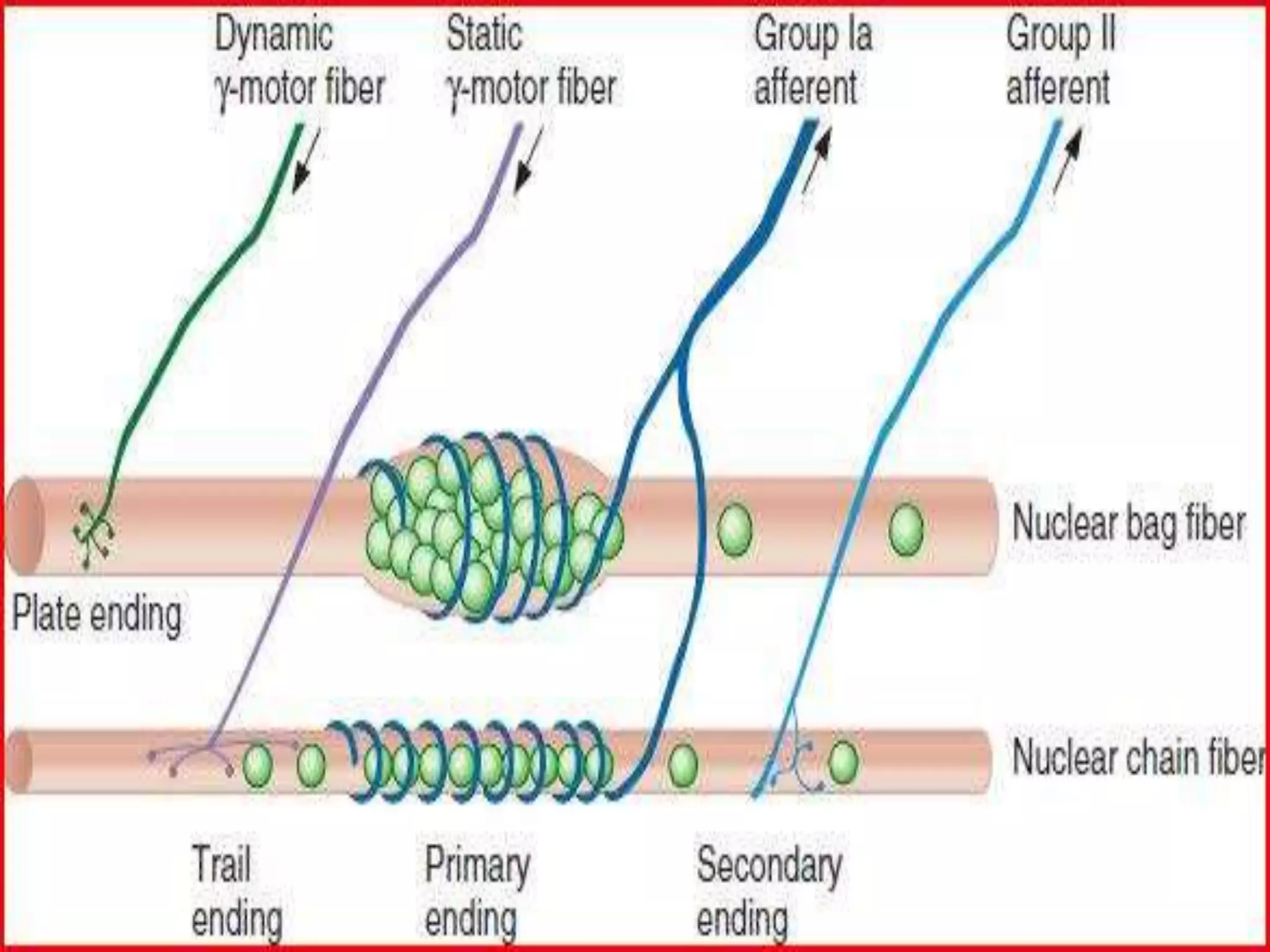
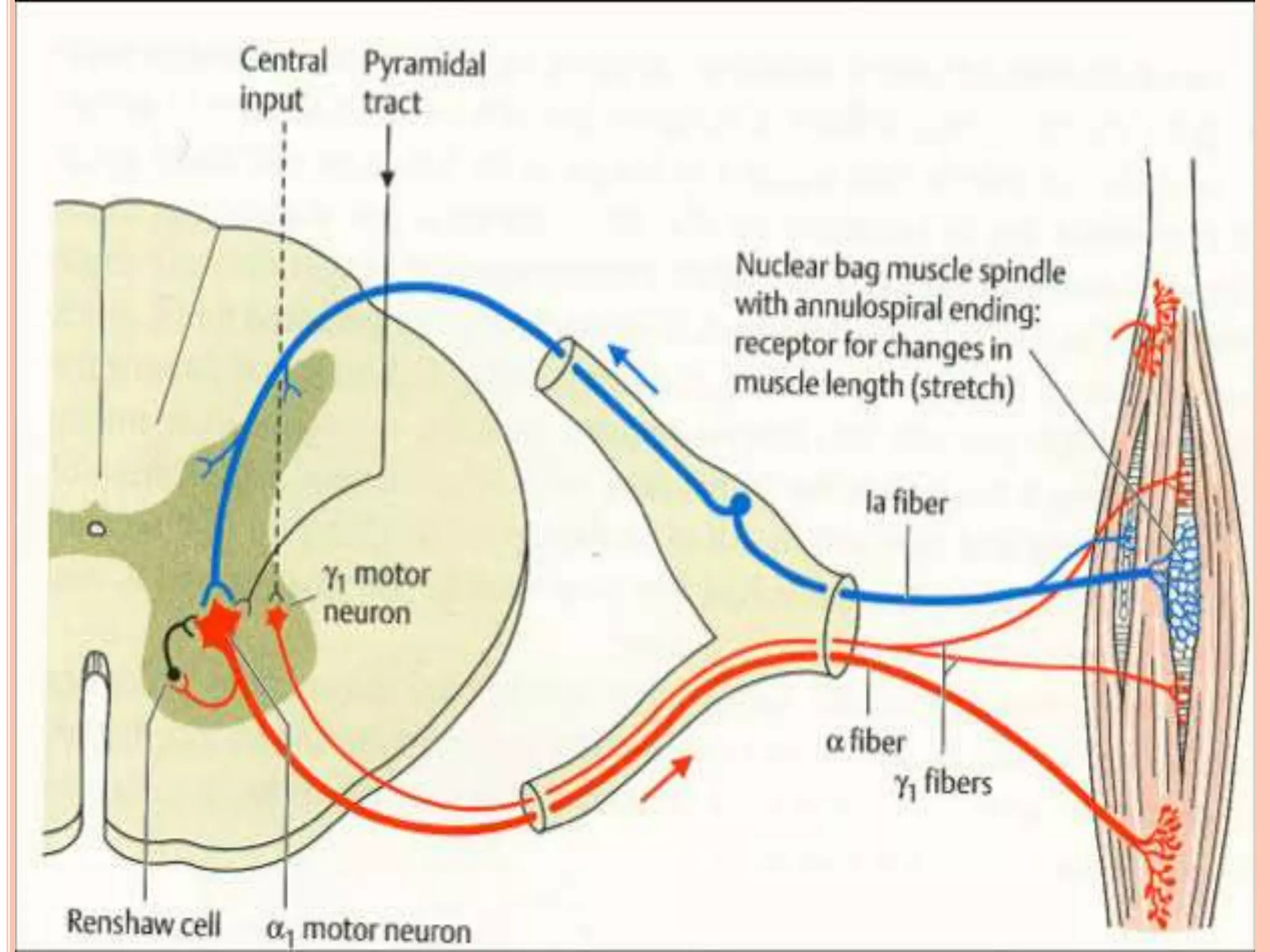
REFLEX ARC :It is a basic unit of integrated reflex
activities.
Components of Reflex arc,
 Receptor –Muscle spindle
 Affarent - Ia,II fibres
 Centre - Spinal Cord
 Effarent - Motor nerve
 Effector - Extrafusal fibre.
Classification of Reflexes:
 Clinical
 Anatomical
 Number of Synapses
 Functional
Clinical classification of Reflexes:
 Deep
 Superficial
 Pathological
 Grading of Reflexes:
0 – Absent
1 – Present but diminished
2 – Normal
3 - Exaggerated
4 – Clonus.
Prerequisite before eliciting Reflexes;
 Patient should be comfortable and relaxed.
 Optimal positioning.
 Adequate exposure of muscle to be tested.
 Clear instructions to the patient.
 Proper technique -
- A good percussion hammer.
- Examiner with a flexible wrist.
- Adequate stimulus.
 Hyperreactive Reflexes;
- Decrease in latency
- Decrease in reflex threshhold
- Exaggeration of range of motion
- Prolongation of muscular contraction
- Extension of the reflexogenic zone
Exaggeration of DTRs seen in,
- UMN lesion
- Anxiety
- Fright
- Agitation
- Psychogenic disorder.
 Hypoactive Reflexes;
- Decreased range of motion
- Increase in the stimulus intensity needed to elicit
the response.
Diminition of DTRs seen in,
- Breach in the reflex arc
- Spinal shock
- Deep coma
- Deep sleep
- Heavy sedation
- Narcosis
- Spinal anaesthesia
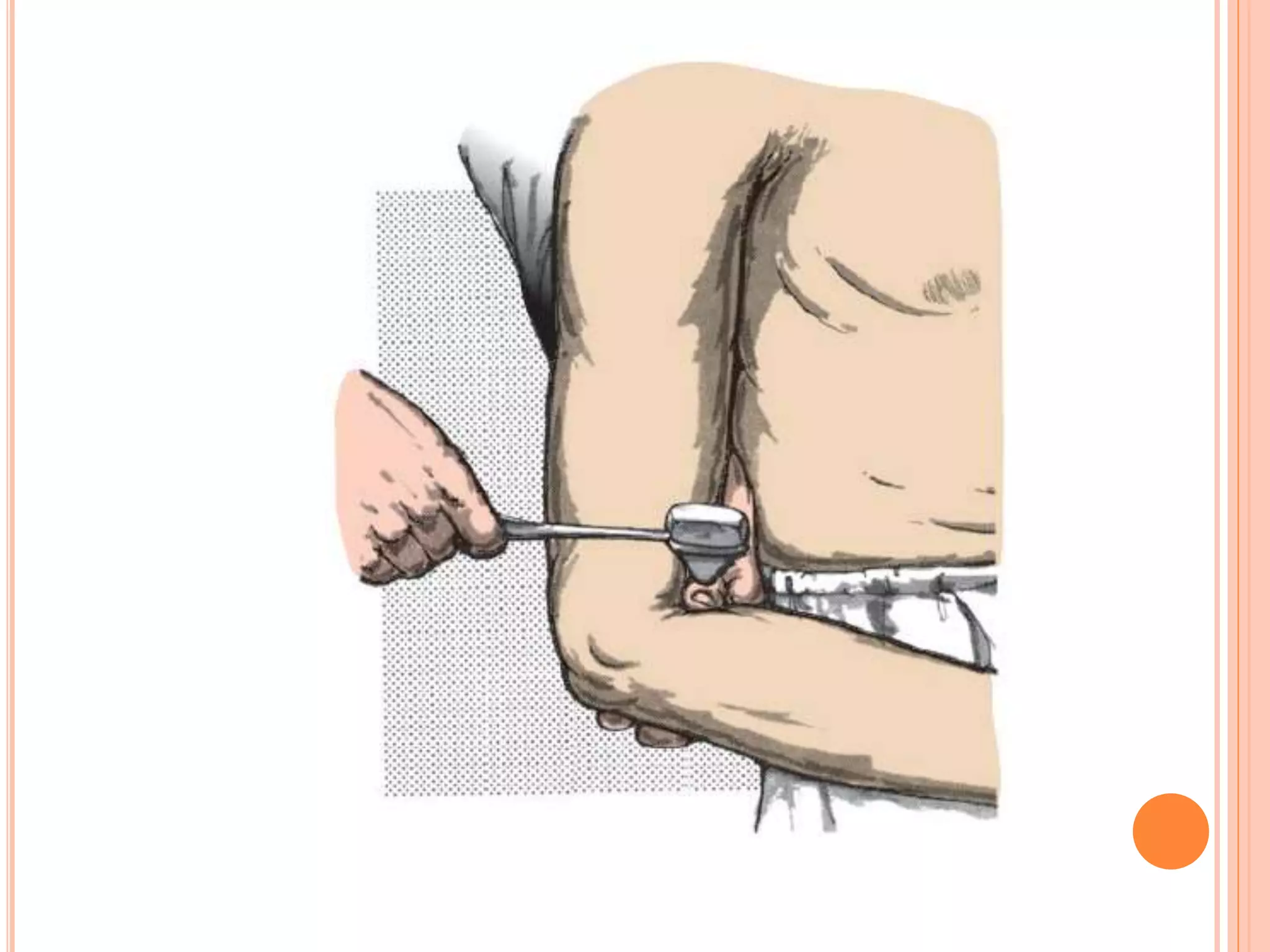
DEEP REFLEXES
1- The Biceps Jerk:
Segmental innervation – C5, C6
Peripheral nerve – Musculocutaneous nerve.
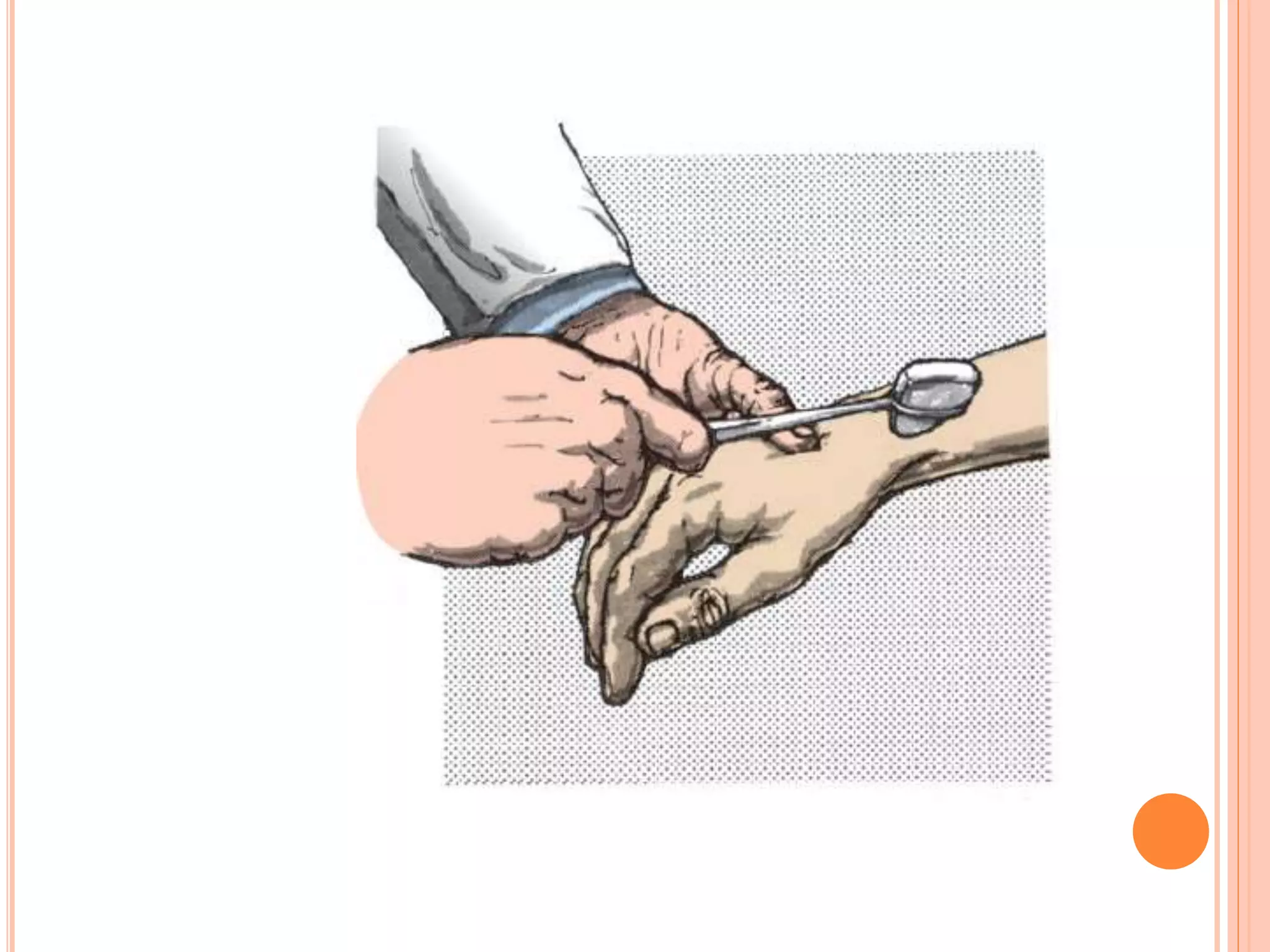
2- The Supinator Jerk:
Segmental innervation – C5, C6
Peripheral nerve – Radial nerve
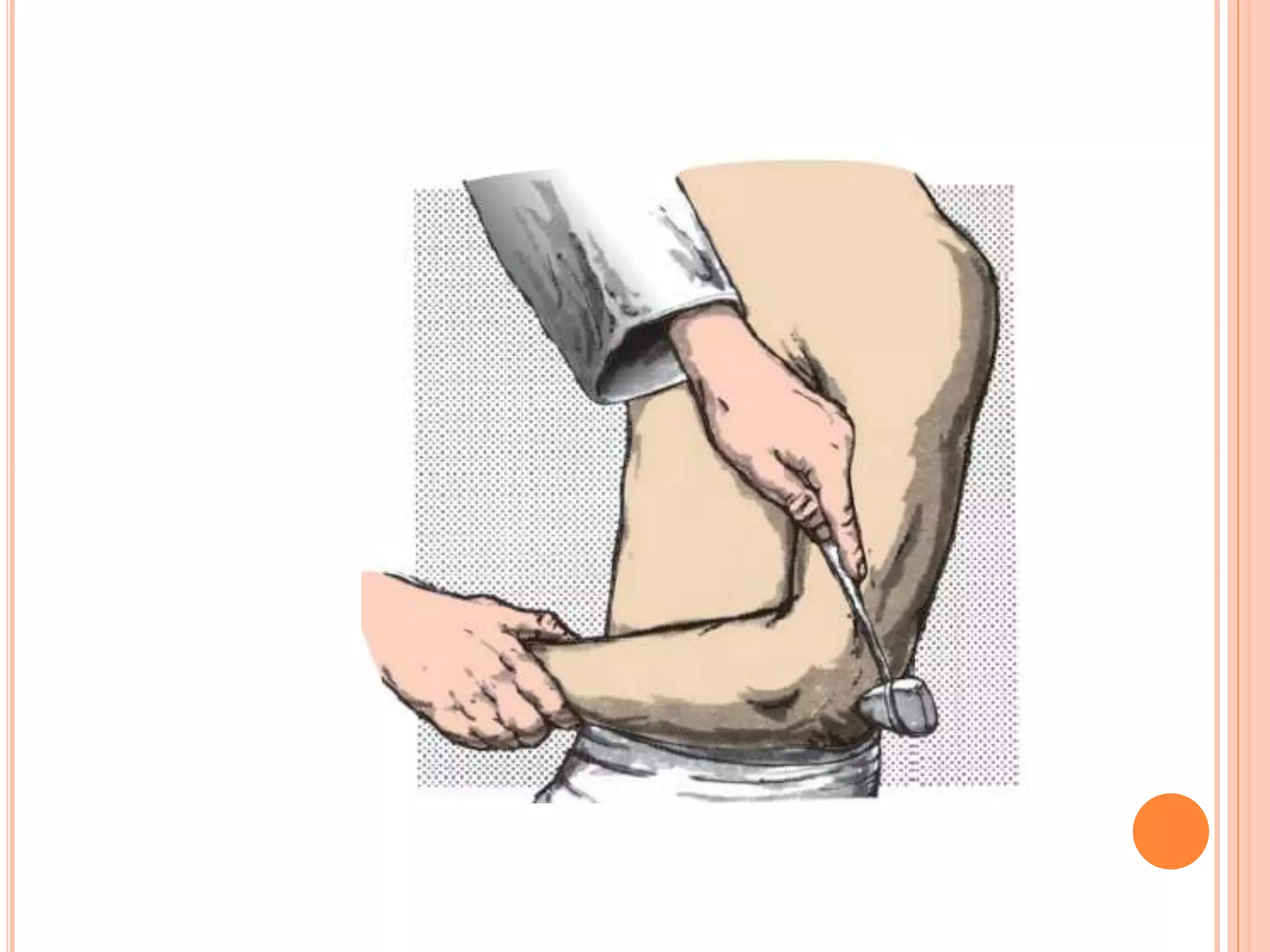
3- The Triceps Jerk:
Segmental innervation – C7, C8
Peripheral nerve – Radial nerve
4- The Pectoral Reflex:
Segmental innervation : C5-T1.
Peripheral nerve – Lateral & medial pectoral nerve.
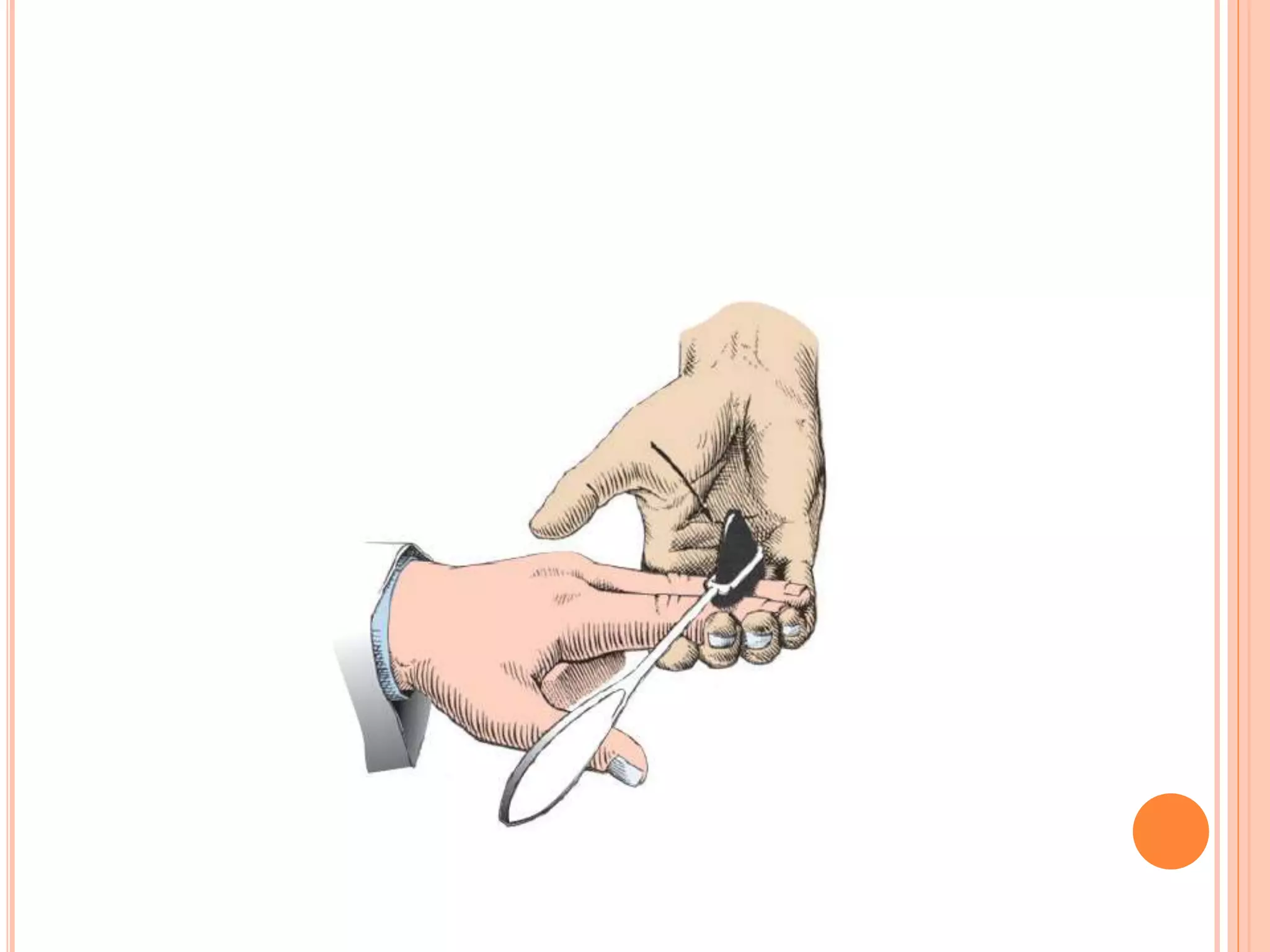
5. The Finger flexion Reflex:
Segmental innervation : C6-T1.
Peripheral nerve – Median nerve.
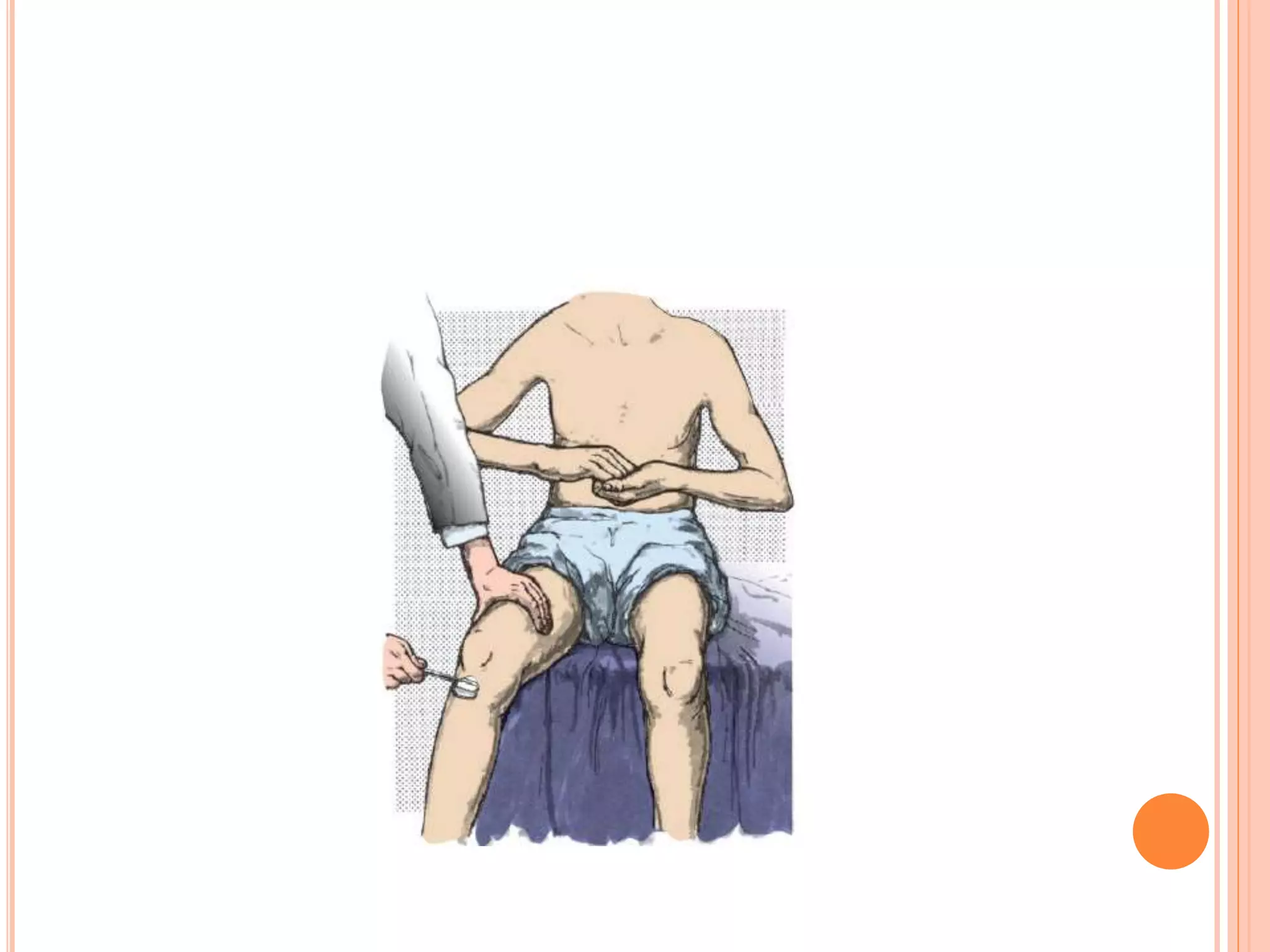
6- The Knee Jerk:
Segmental innervation – L3, L4
Peripheral nerve – Femoral nerve
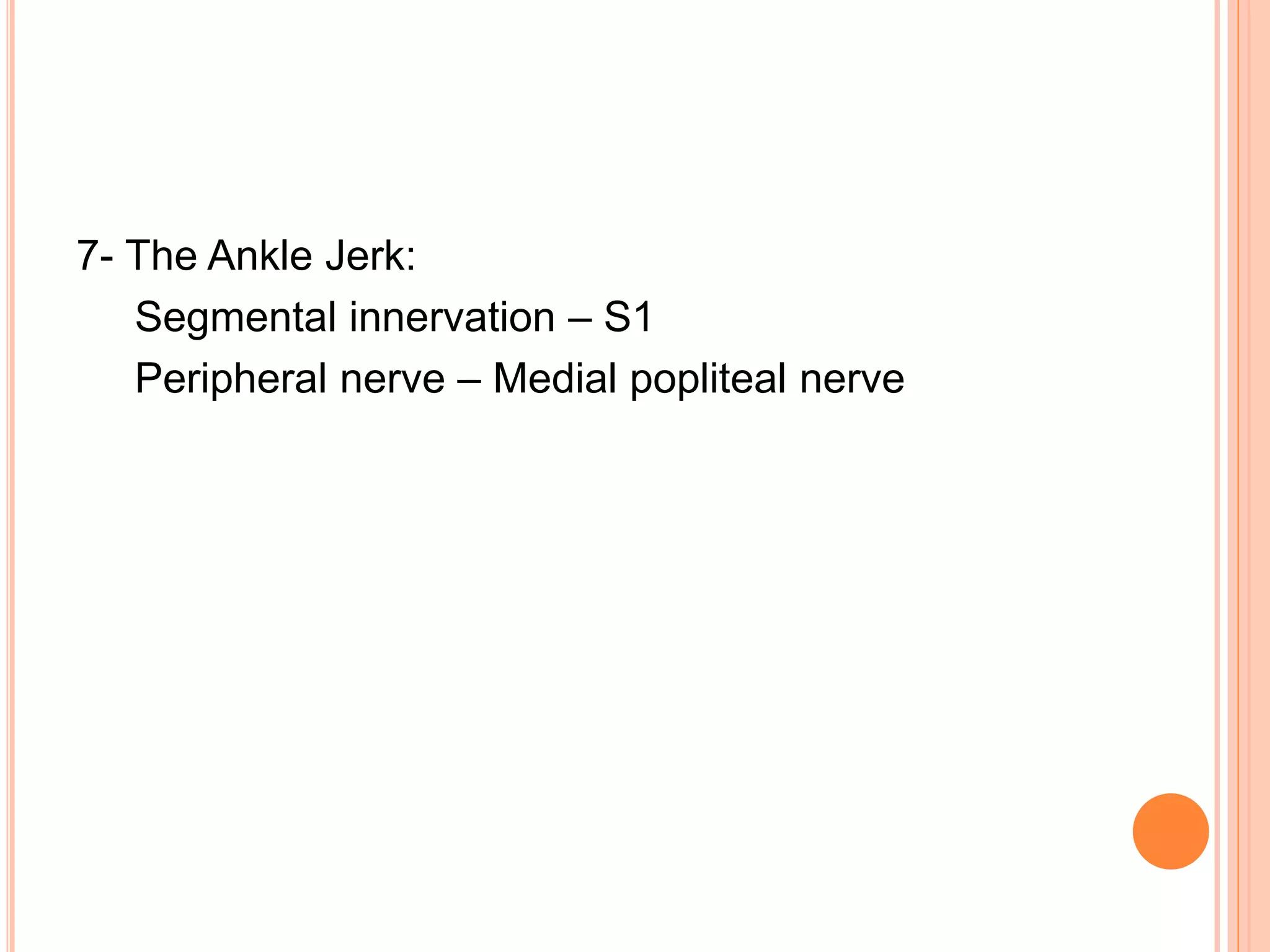
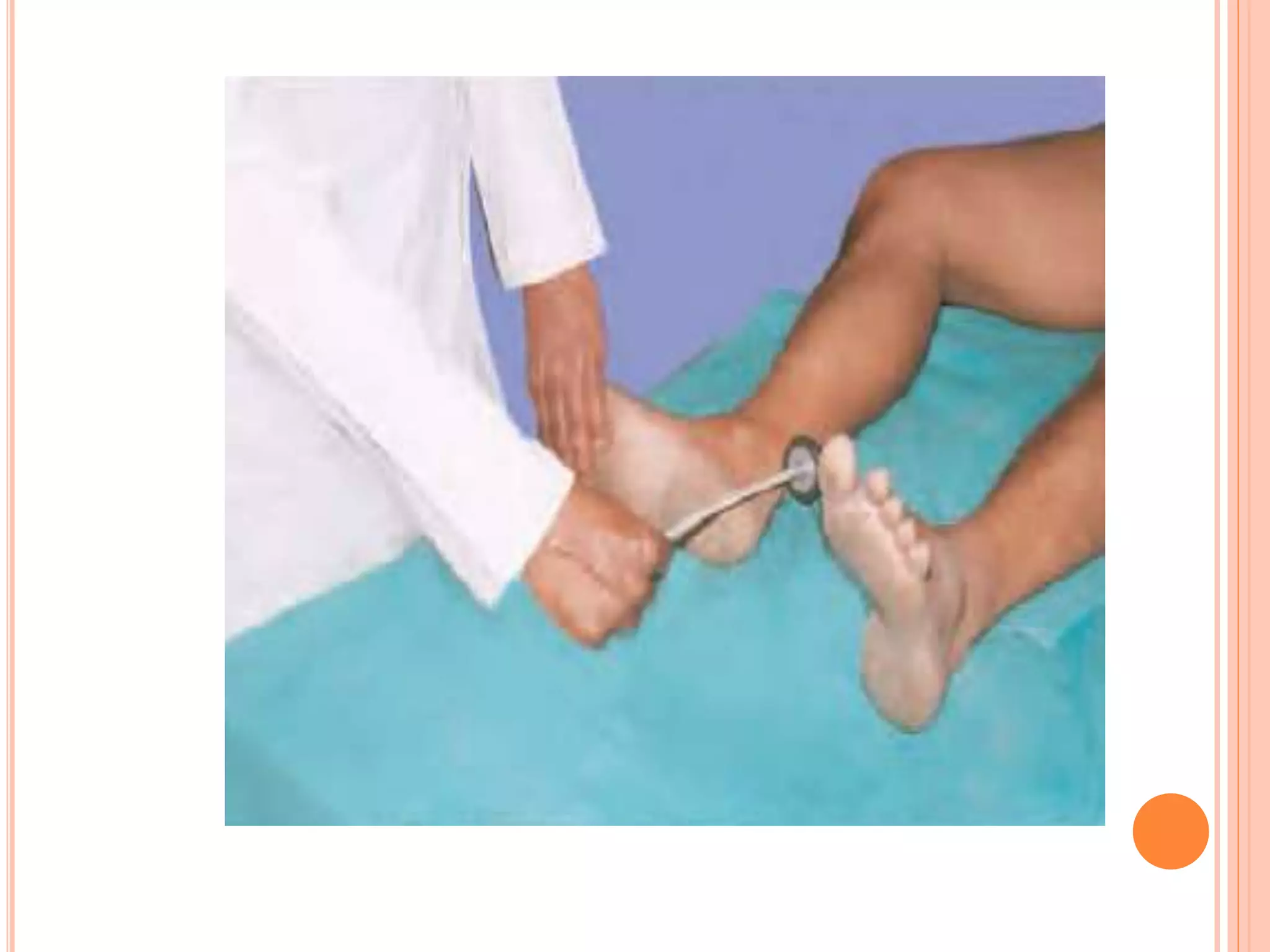
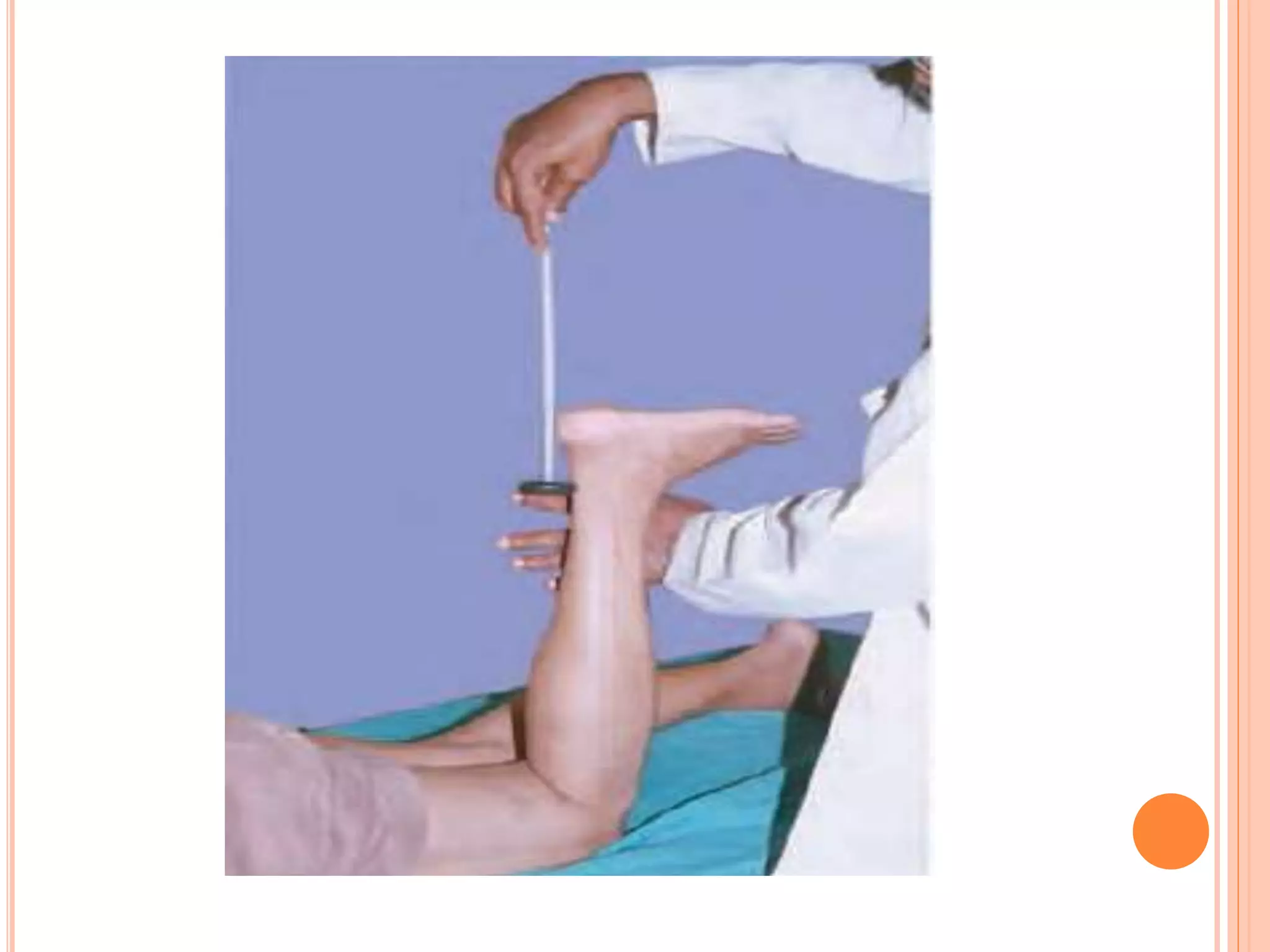
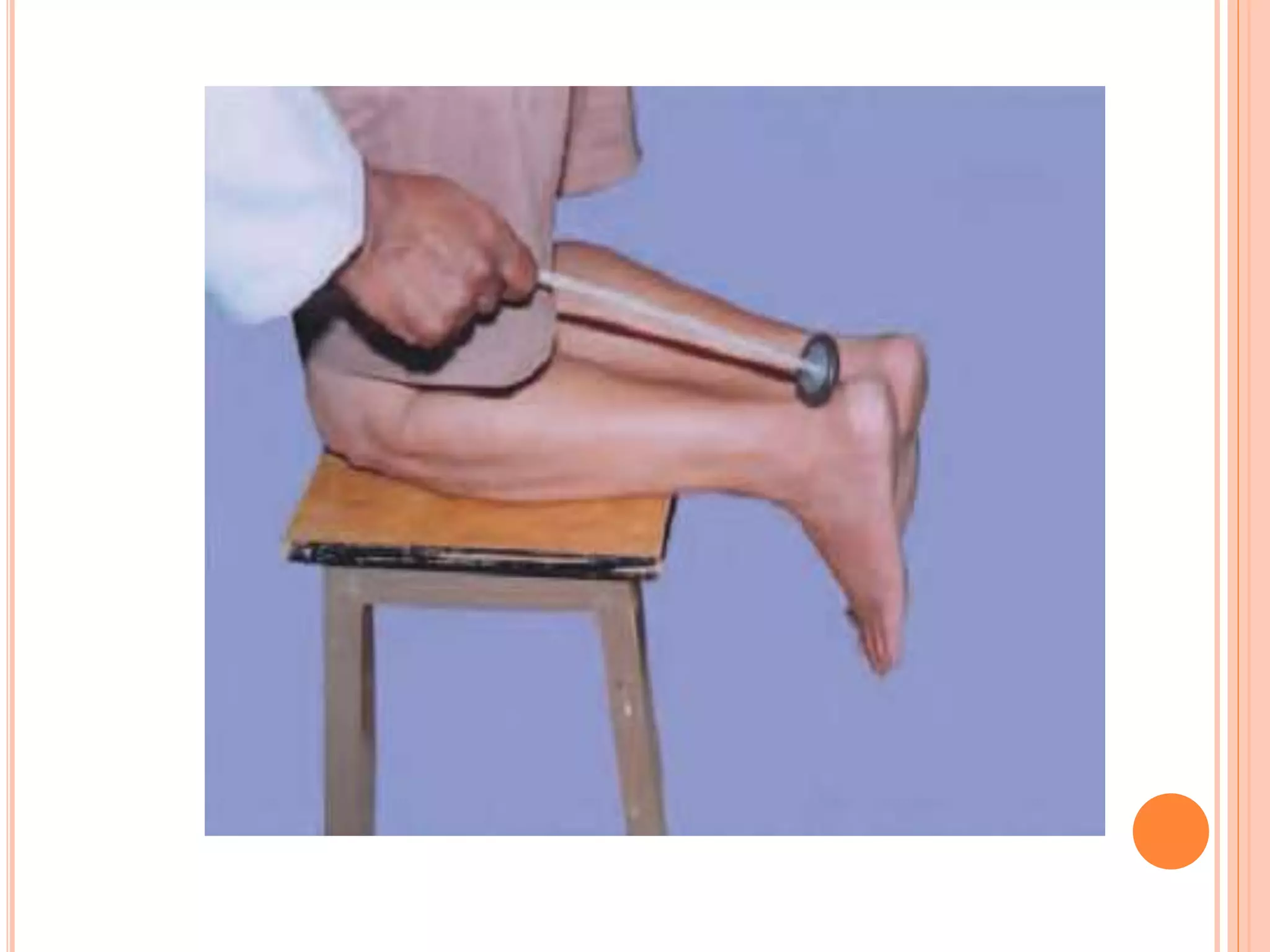
7- The Ankle Jerk:
Segmental innervation – S1
Peripheral nerve – Medial popliteal nerve
SUPERFICIAL REFLEXES
1- The Abdominal Reflexes,
Segmental innervation: T7-T12
2- The Cremasteric Reflex:
Segmental innervation: L1, L2
3- The Anal Reflex:
Segmental innervation: S4, S5
4 -The Plantar Reflex:
Segmental innervation: L4-S2
Peripheral nerve – Medial popliteal nerve
PATHOLOGICAL REFLEXES
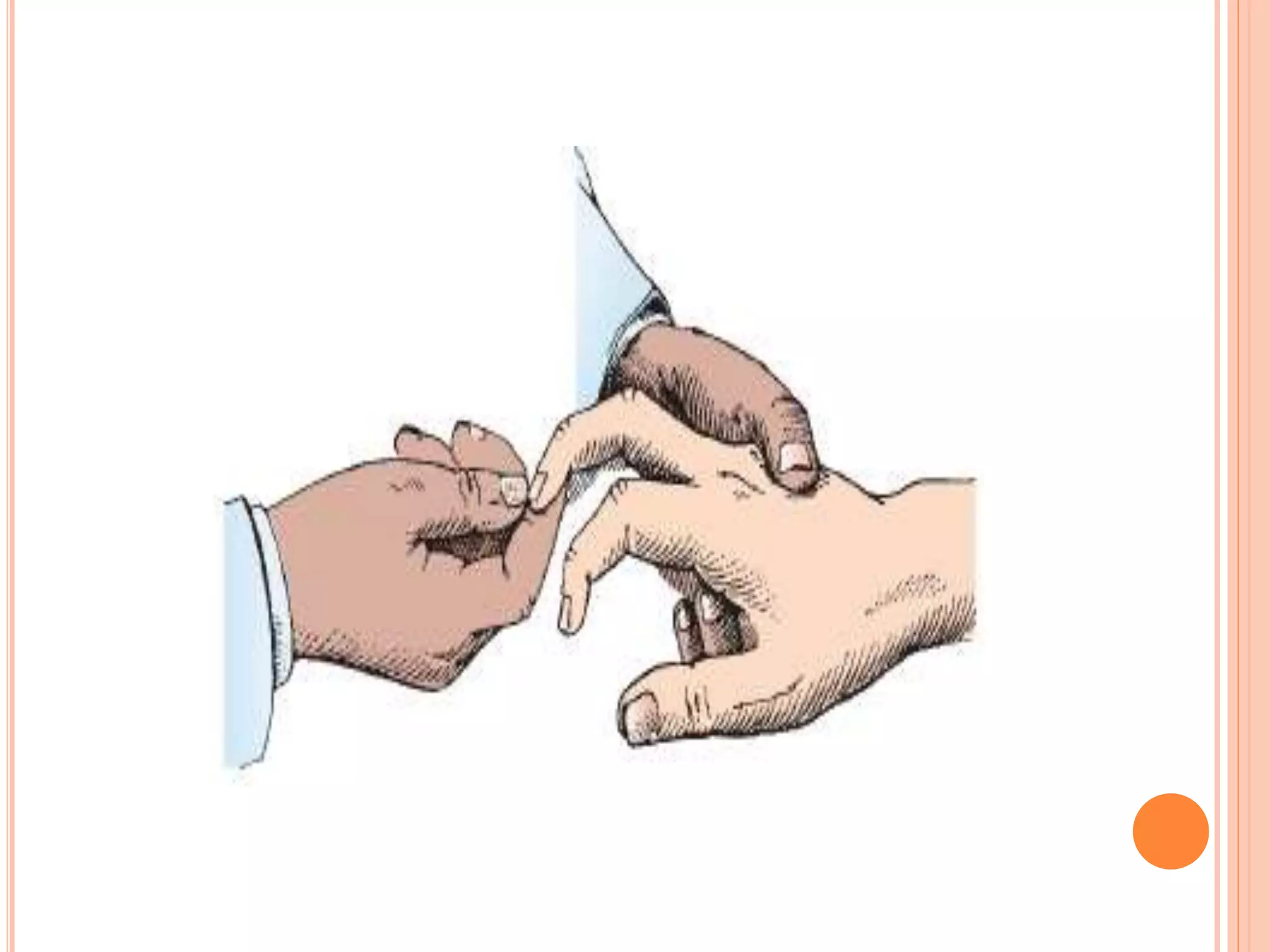
1- The Hoffman reflex:
- Upper extremity corticospinal reflex.
- Can be present in some normal individuals.
- they are of clinical significance only when
markedely active.
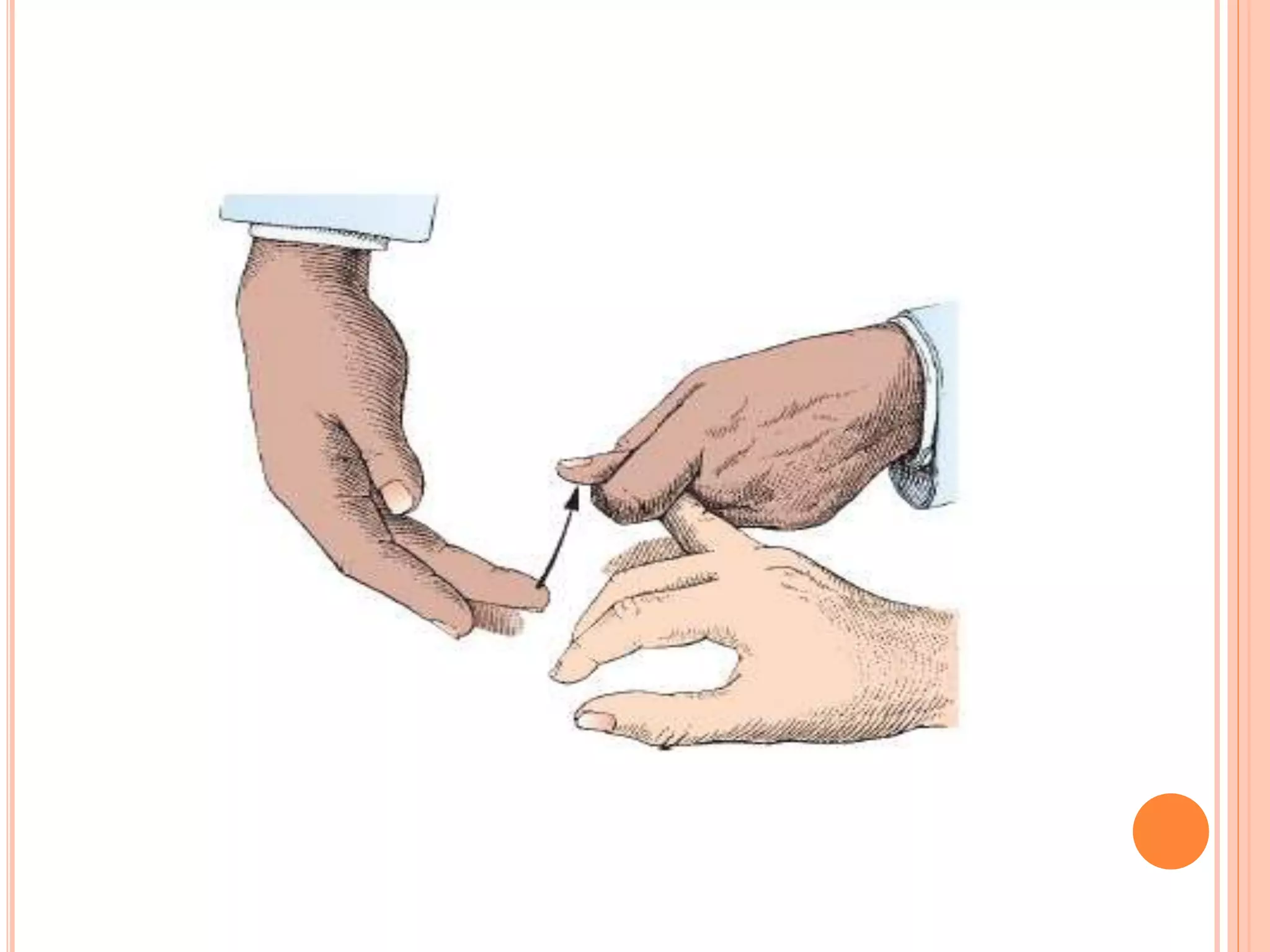
3 - Tromner Sign :
- equivalent response to Hoffmans reflex.
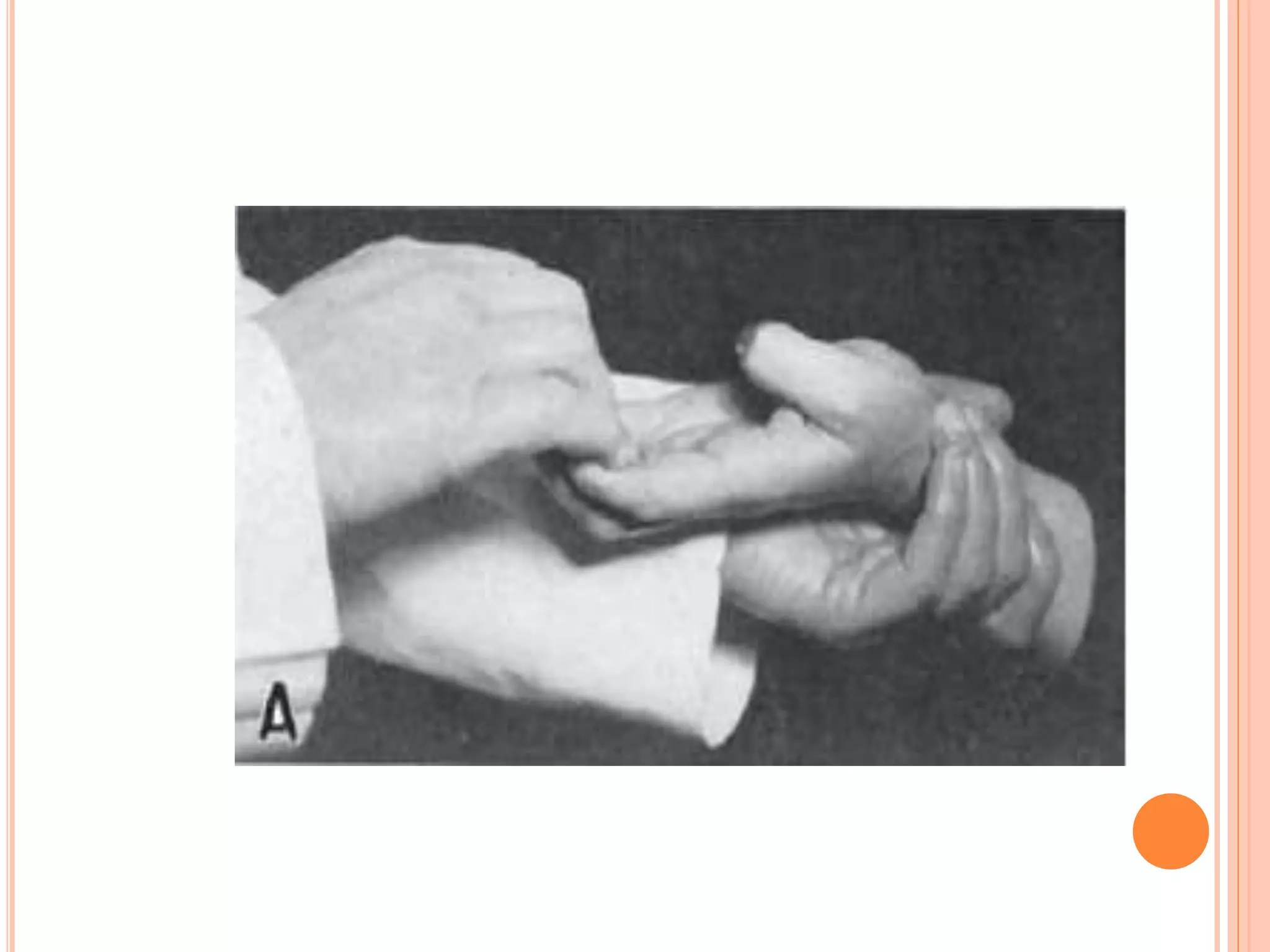
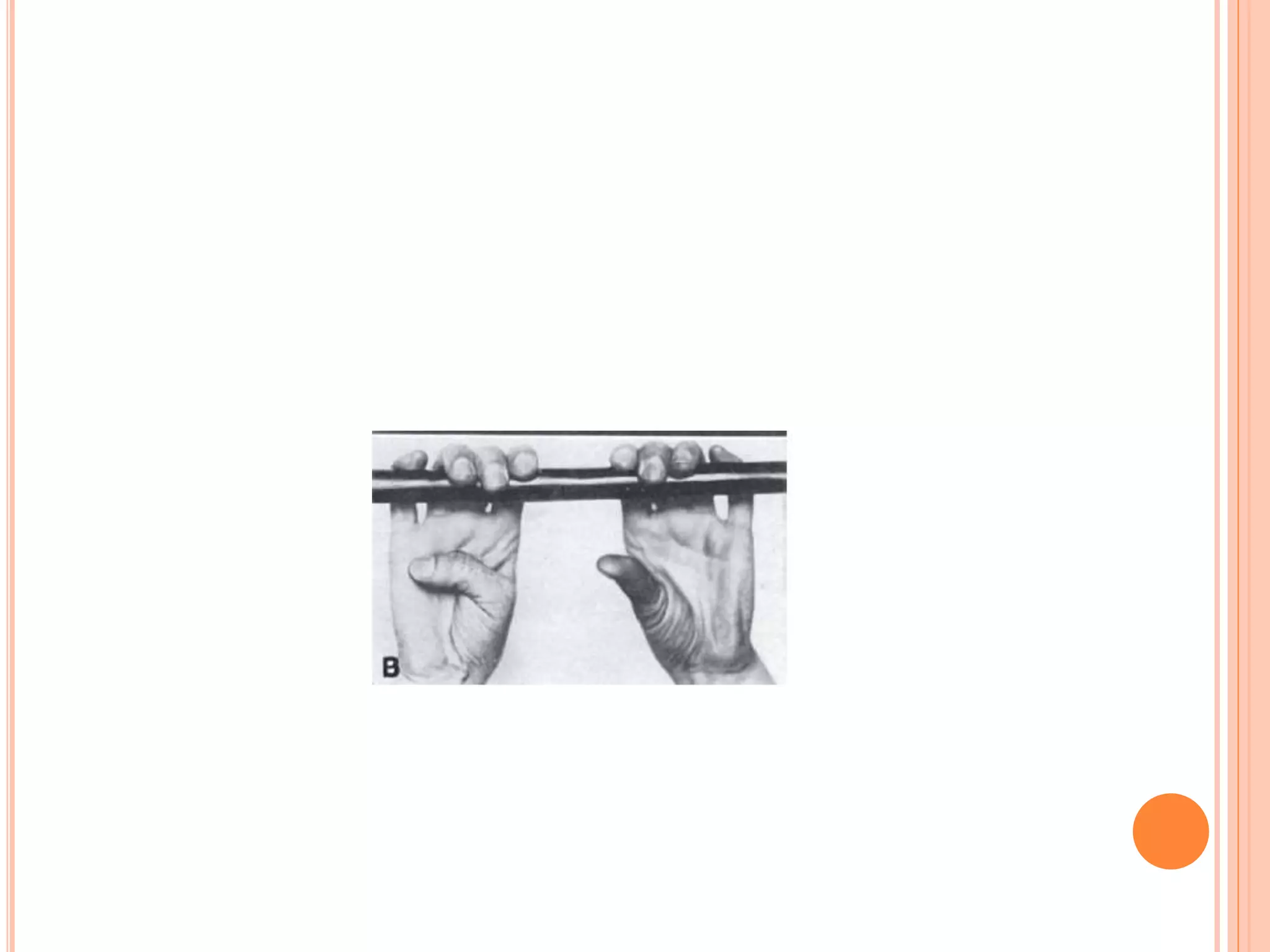
2 - Wartenberg Sign :
- Normal response is abduction and extension of
thumb.
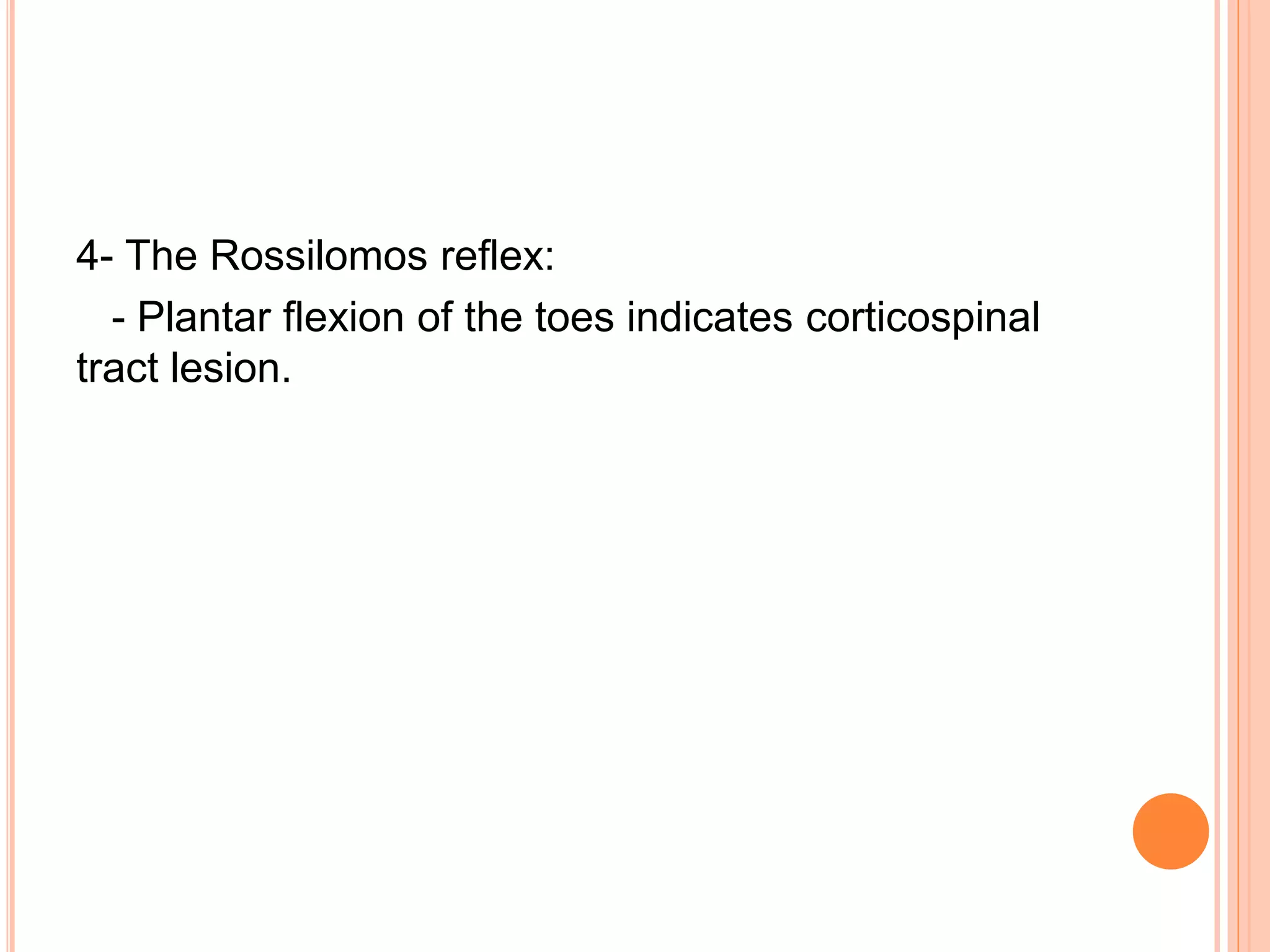
4- The Rossilomos reflex:
- Plantar flexion of the toes indicates corticospinal
tract lesion.
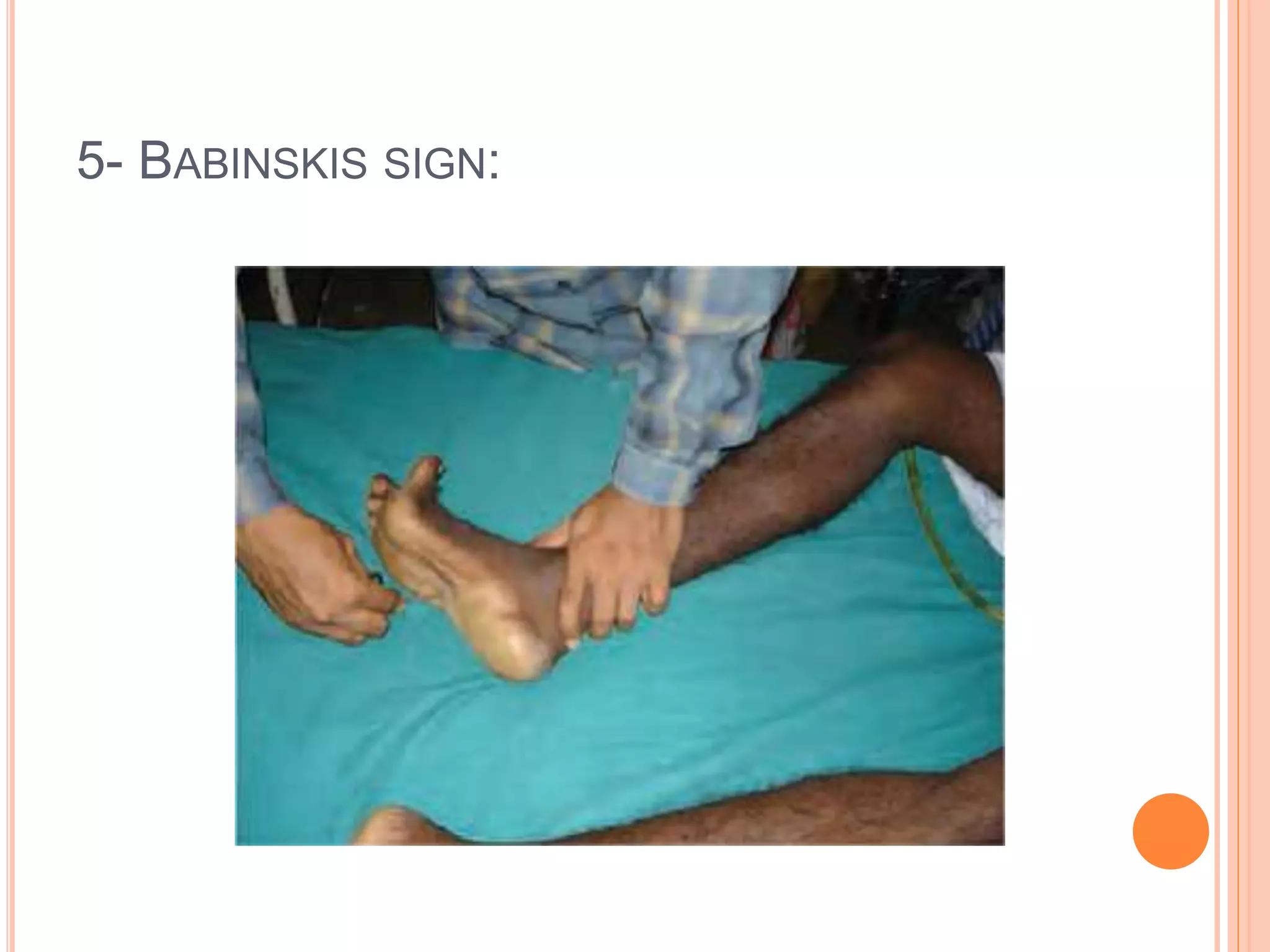
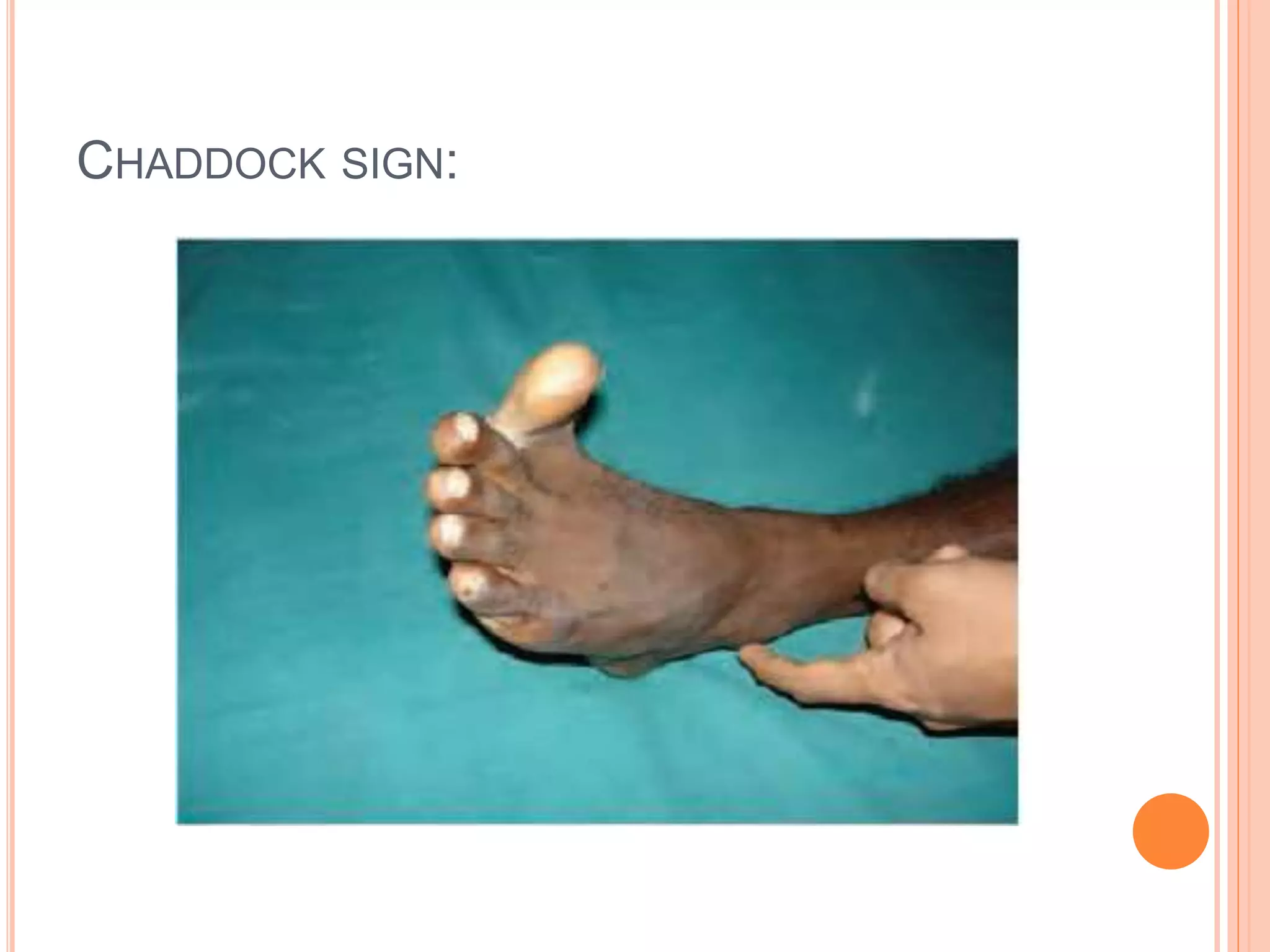
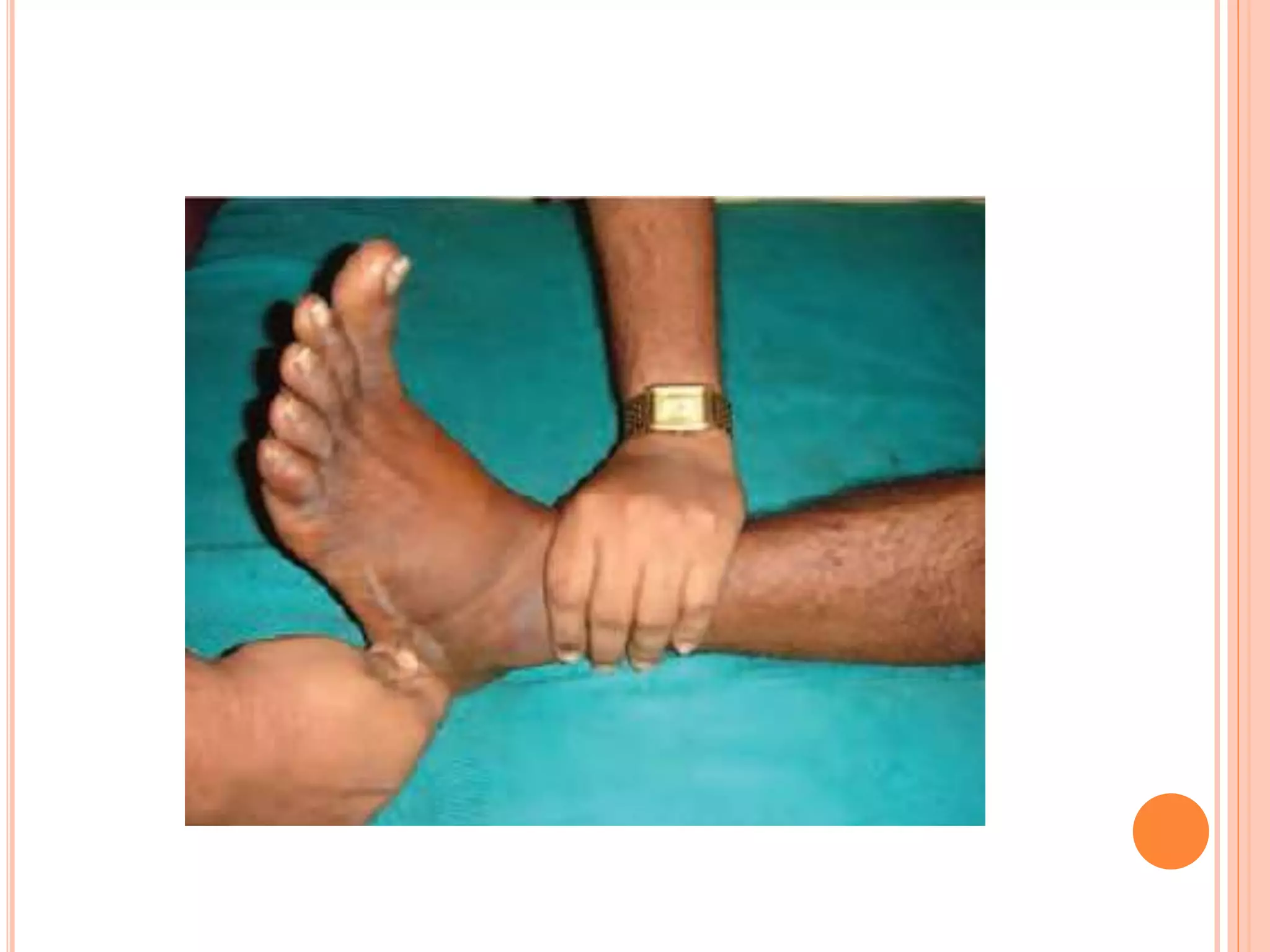
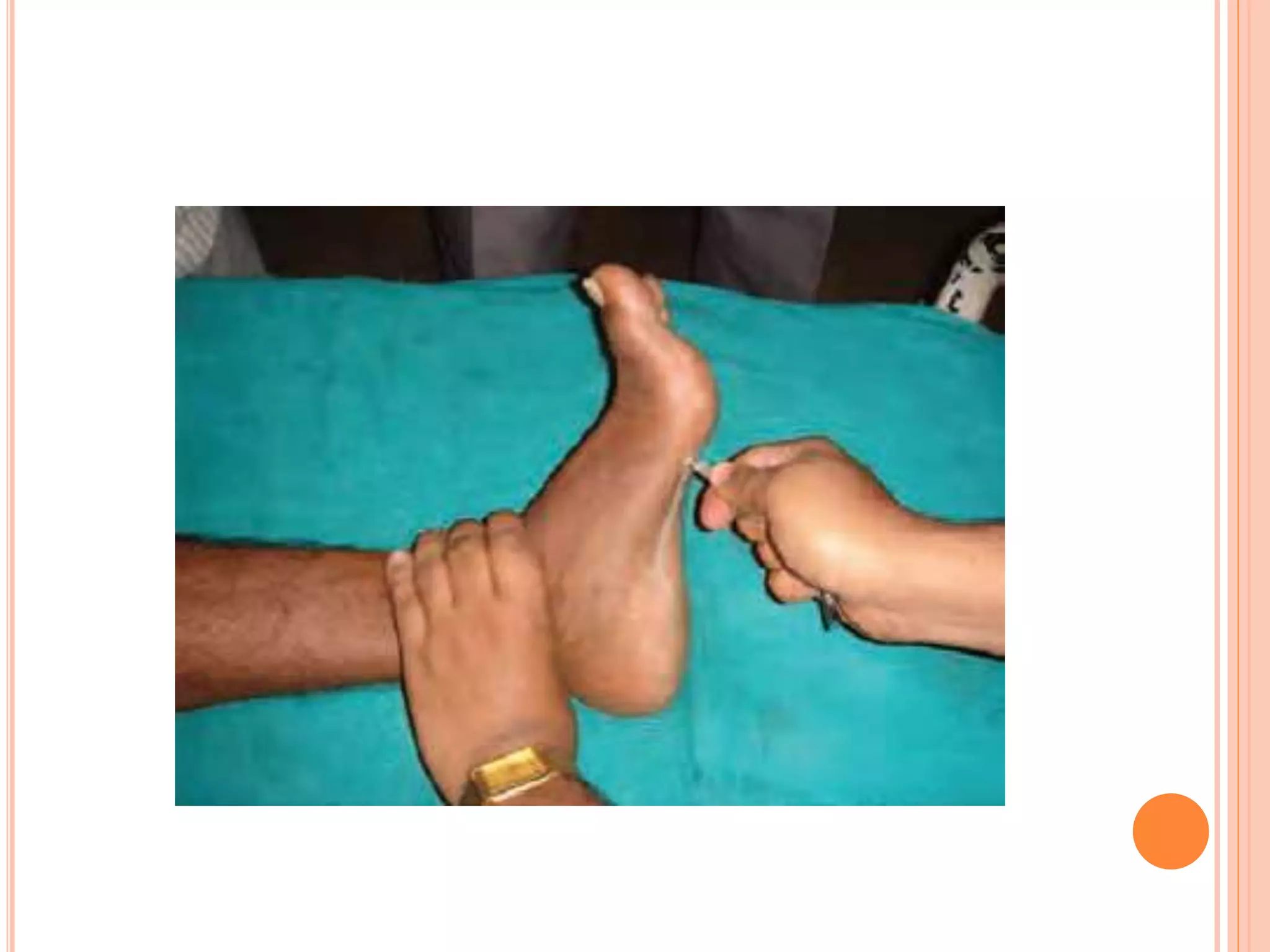
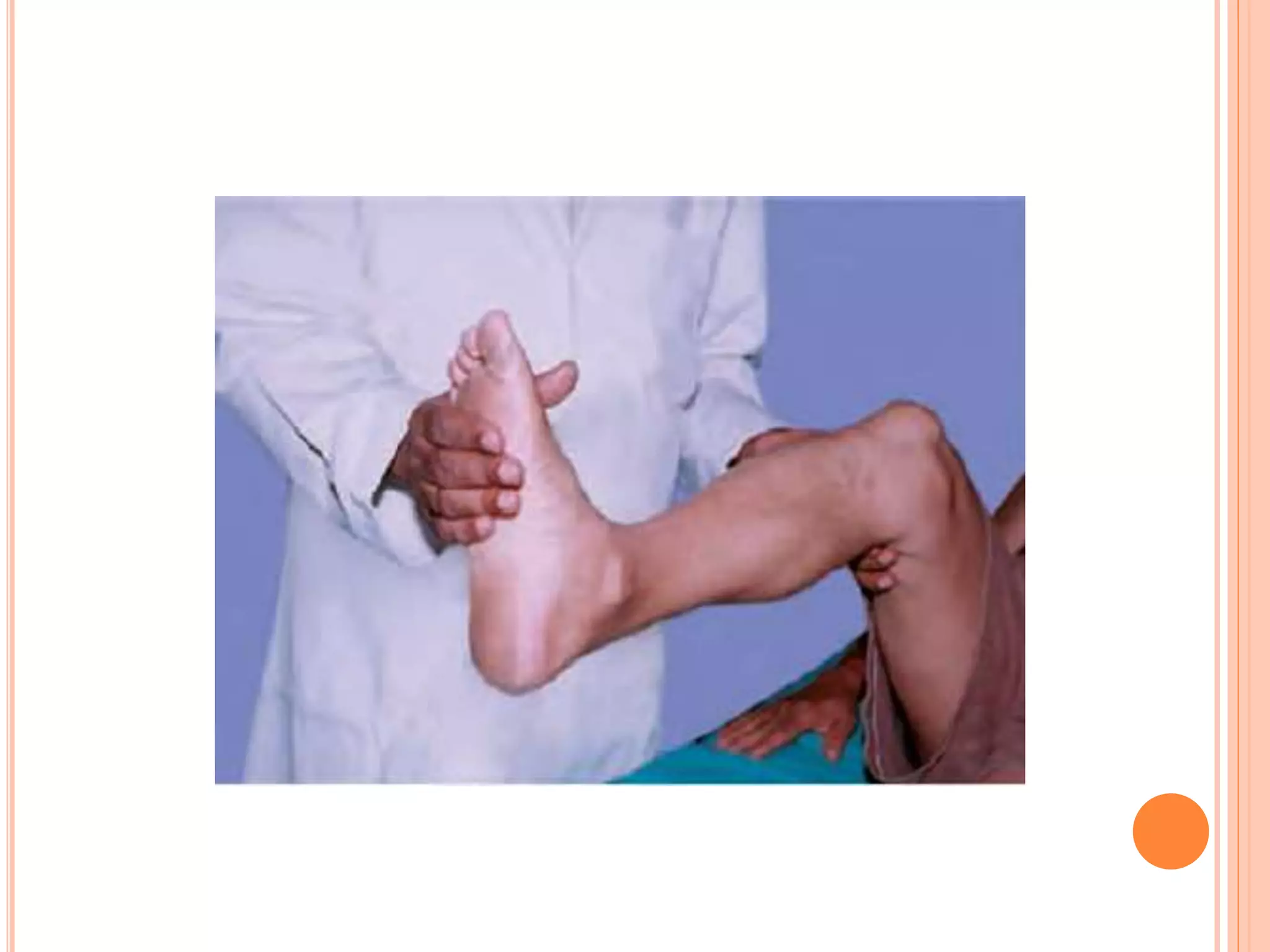
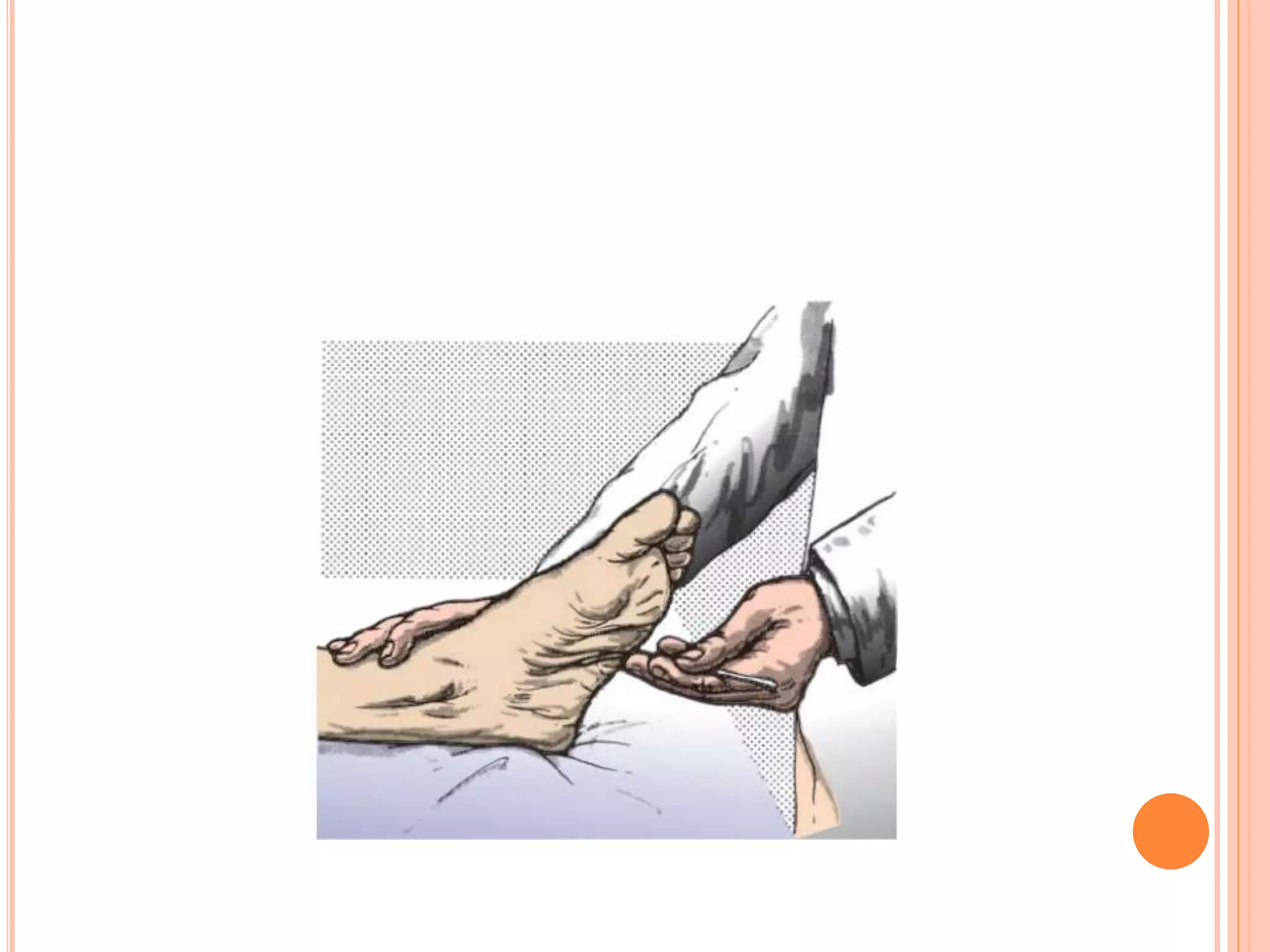
5- BABINSKIS SIGN:
SCHAEFERS SIGN:
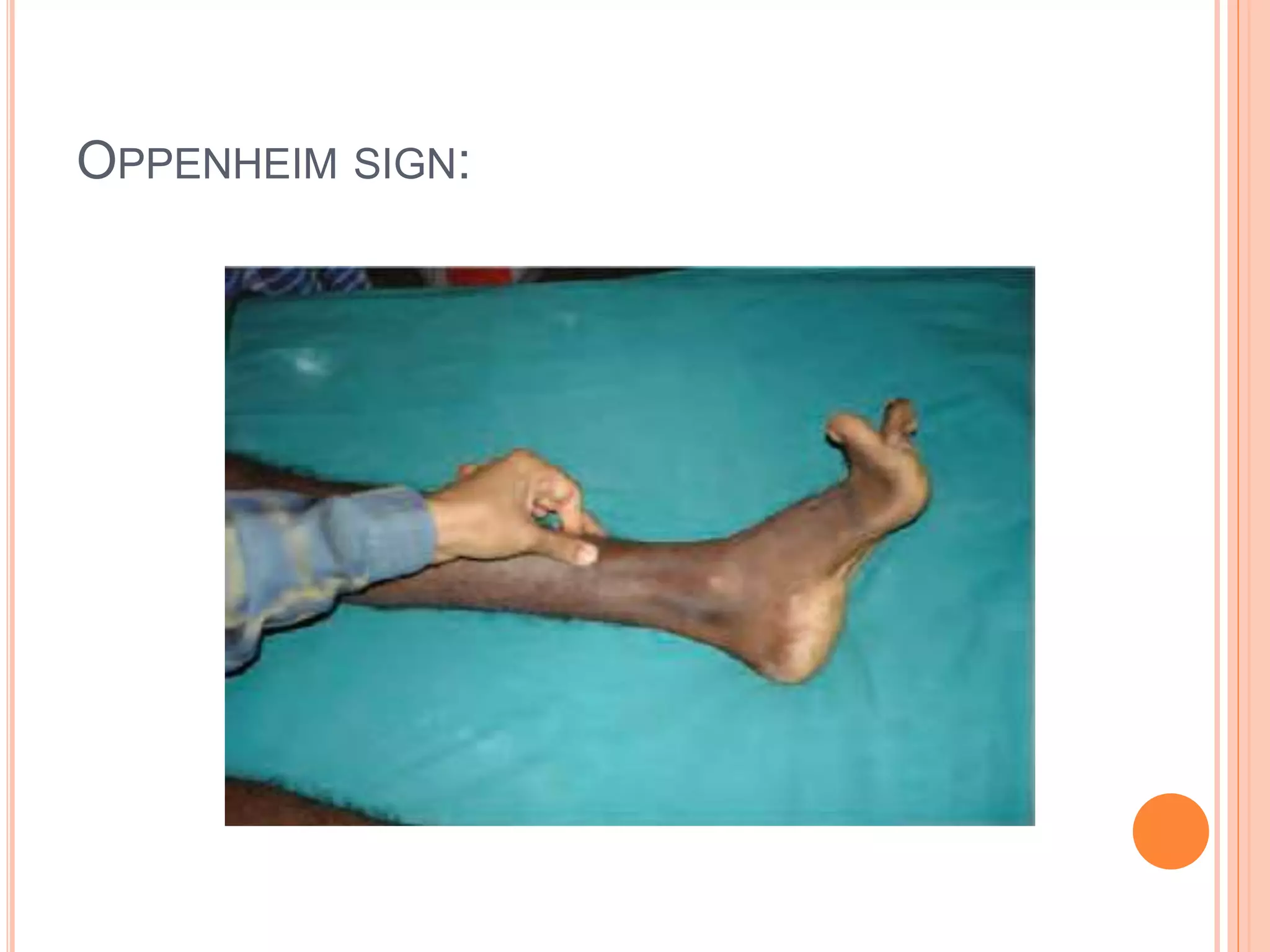
OPPENHEIM SIGN:
CHADDOCK SIGN:
CLONUS: It is a series of rhythmic involuntary
muscular contractions induced by a sudden passive
stretching of the muscle.
1- Sustained clonus
2- Ill sustained clonus
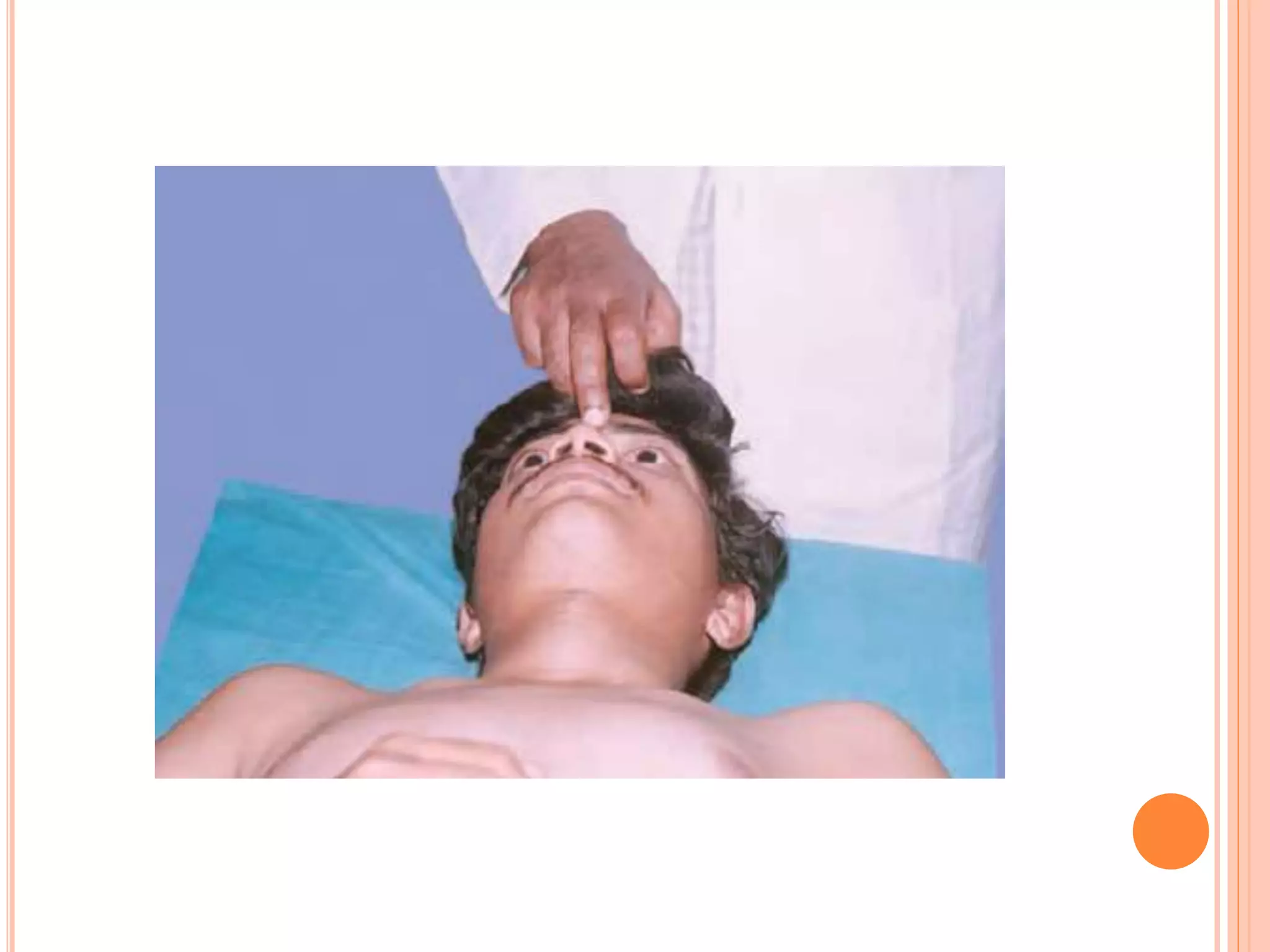
FRONTAL RELEASE SIGNS:
1- Glabellar tap
2- Palmomental reflex
3- Grasp reflex
4- Snout reflex
5- Sucking reflex.
INVERTED REFLEXES:
 It is the contraction of the muscle, opposite of
that expected.
Ex: Inverted supinator reflex
Inverted Biceps reflex
Inverted Triceps reflex
Inverted Knee reflex.
Mechanism: In pathological reflexes, the segmental reflex is
absent, but there is an underlying hyperreflexia lowering the
threshold for activation of the antagonistic muscle, perhaps
because of transmitted vibrations.
Seen in- Cervical disc disease
- Syringomyelia
- Cervical neoplasm
- Cervical trauma.
 Thank You.
 Referances
1 - Dejongs Neurological Examination 7th Edition.
2 – Bickerstaffs Neurological examination in clinical
practice 7th Edition.

Reflexes - Superficial and Deep tendon reflexes

  • 1.
    SHORT TOPIC –REFLEXES GUIDE- DR. RAM. KAULGUD STUDENT- DR. RAHUL S. BELAVI
  • 2.
    Defination: A Refluxis an involuntory response to a sensory stimulus. - Dejongs Neurological Examination 7th Edition.
  • 3.
    REFLEX ARC :Itis a basic unit of integrated reflex activities. Components of Reflex arc,  Receptor –Muscle spindle  Affarent - Ia,II fibres  Centre - Spinal Cord  Effarent - Motor nerve  Effector - Extrafusal fibre.
  • 7.
    Classification of Reflexes: Clinical  Anatomical  Number of Synapses  Functional
  • 8.
    Clinical classification ofReflexes:  Deep  Superficial  Pathological
  • 9.
     Grading ofReflexes: 0 – Absent 1 – Present but diminished 2 – Normal 3 - Exaggerated 4 – Clonus.
  • 10.
    Prerequisite before elicitingReflexes;  Patient should be comfortable and relaxed.  Optimal positioning.  Adequate exposure of muscle to be tested.  Clear instructions to the patient.  Proper technique - - A good percussion hammer. - Examiner with a flexible wrist. - Adequate stimulus.
  • 11.
     Hyperreactive Reflexes; -Decrease in latency - Decrease in reflex threshhold - Exaggeration of range of motion - Prolongation of muscular contraction - Extension of the reflexogenic zone
  • 12.
    Exaggeration of DTRsseen in, - UMN lesion - Anxiety - Fright - Agitation - Psychogenic disorder.
  • 13.
     Hypoactive Reflexes; -Decreased range of motion - Increase in the stimulus intensity needed to elicit the response.
  • 14.
    Diminition of DTRsseen in, - Breach in the reflex arc - Spinal shock - Deep coma - Deep sleep - Heavy sedation - Narcosis - Spinal anaesthesia
  • 15.
    DEEP REFLEXES 1- TheBiceps Jerk: Segmental innervation – C5, C6 Peripheral nerve – Musculocutaneous nerve.
  • 17.
    2- The SupinatorJerk: Segmental innervation – C5, C6 Peripheral nerve – Radial nerve
  • 19.
    3- The TricepsJerk: Segmental innervation – C7, C8 Peripheral nerve – Radial nerve
  • 21.
    4- The PectoralReflex: Segmental innervation : C5-T1. Peripheral nerve – Lateral & medial pectoral nerve.
  • 23.
    5. The Fingerflexion Reflex: Segmental innervation : C6-T1. Peripheral nerve – Median nerve.
  • 25.
    6- The KneeJerk: Segmental innervation – L3, L4 Peripheral nerve – Femoral nerve
  • 29.
    7- The AnkleJerk: Segmental innervation – S1 Peripheral nerve – Medial popliteal nerve
  • 33.
    SUPERFICIAL REFLEXES 1- TheAbdominal Reflexes, Segmental innervation: T7-T12
  • 35.
    2- The CremastericReflex: Segmental innervation: L1, L2 3- The Anal Reflex: Segmental innervation: S4, S5
  • 37.
    4 -The PlantarReflex: Segmental innervation: L4-S2 Peripheral nerve – Medial popliteal nerve
  • 39.
    PATHOLOGICAL REFLEXES 1- TheHoffman reflex: - Upper extremity corticospinal reflex. - Can be present in some normal individuals. - they are of clinical significance only when markedely active.
  • 41.
    3 - TromnerSign : - equivalent response to Hoffmans reflex.
  • 43.
    2 - WartenbergSign : - Normal response is abduction and extension of thumb.
  • 46.
    4- The Rossilomosreflex: - Plantar flexion of the toes indicates corticospinal tract lesion.
  • 48.
  • 49.
  • 50.
  • 51.
  • 54.
    CLONUS: It isa series of rhythmic involuntary muscular contractions induced by a sudden passive stretching of the muscle. 1- Sustained clonus 2- Ill sustained clonus
  • 57.
    FRONTAL RELEASE SIGNS: 1-Glabellar tap 2- Palmomental reflex 3- Grasp reflex 4- Snout reflex 5- Sucking reflex.
  • 59.
    INVERTED REFLEXES:  Itis the contraction of the muscle, opposite of that expected. Ex: Inverted supinator reflex Inverted Biceps reflex Inverted Triceps reflex Inverted Knee reflex.
  • 60.
    Mechanism: In pathologicalreflexes, the segmental reflex is absent, but there is an underlying hyperreflexia lowering the threshold for activation of the antagonistic muscle, perhaps because of transmitted vibrations. Seen in- Cervical disc disease - Syringomyelia - Cervical neoplasm - Cervical trauma.
  • 61.
  • 62.
     Referances 1 -Dejongs Neurological Examination 7th Edition. 2 – Bickerstaffs Neurological examination in clinical practice 7th Edition.