PHYSIOLOGICAL EFFECTS OF
AEROBIC EXERCISES
What is Energy mechanism of
Human body?
9/18/20182
 Average at rest our body consumes 0.25 ltr.
Of Oxygen.
 At exercise around 4-5 ltr of oxygen is
consumed.
 3 – stage energy peroduction.
 100 mtr race in 10 seconds – Anaerobic (CrP)
 400 mtr race in 45 sec – Anaerobic (ATP+LA)
 1 km in 5 minute – Aerobic (Glycolysis+Lipid
metabolism)
AEROBIC EXERCISES
9/18/20183
 Aerobic exercise training, or conditioning, is
augmentation of the energy utilization of the
muscle by means of an exercise program.
• Therapeutic Exercise 5thed. Kisner & Colby
 Aerobic exercise (also known as cardio)
is physical exercise of relatively low intensity
that depends primarily on the aerobic energy-
generating process.
• https://en.wikipedia.org/wiki/Aerobic_exercise
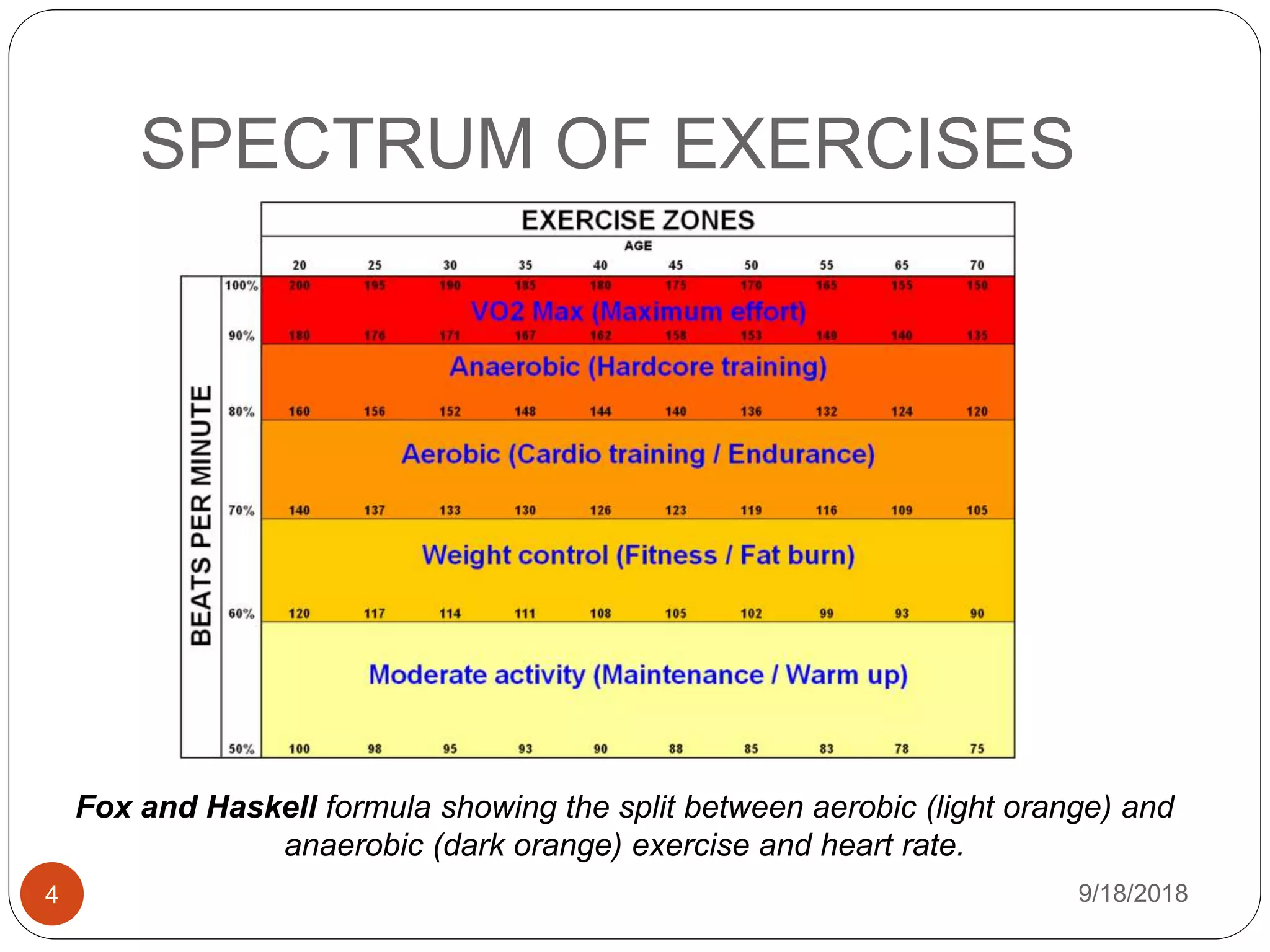
SPECTRUM OF EXERCISES
9/18/20184
Fox and Haskell formula showing the split between aerobic (light orange) and
anaerobic (dark orange) exercise and heart rate.
9/18/2018Physiological effects of aerobic exercises5
PHYSIOLOGICAL EFFECTS OF
AEROBIC EXERCISES
9/18/2018Physiological effects of aerobic exercises6
 CARDIOVASCULAR CHANGES
 Exercise pressor response
 Increased Heart Rate
 Reduced peripheral resistance to blood flow
 Increased Cardiac Output
PHYSIOLOGICAL EFFECTS OF
AEROBIC EXERCISES
9/18/2018Physiological effects of aerobic exercises7
 RESPIRATORY SYSTEM
 Increase in Minute Ventilation due to increased
respiratory frequency and Tidal volume.
 Increased Oxygen extraction and consumption
 Increased VO2max level
PHYSIOLOGICAL EFFECTS OF
AEROBIC EXERCISES
9/18/2018Physiological effects of aerobic exercises8
 METABOLIC CHANGES
 Muscle hypertrophy
 Aerobic ATP production increases due to increased
size of mitochondria
 Glycogen sparing due to increased fat metabolism
 Metabolic adaptations may occur due to changes in
energy requirement and demand.
PHYSIOLOGICAL EFFECTS OF
AEROBIC EXERCISES
9/18/2018Physiological effects of aerobic exercises9
 MUSCULOSKELETAL SYSTEM
 Decrease in body fat
 Increase in the breaking strength of bones and
ligaments and the tensile strength of tendons
 Accumulation of Lactic acid in muscle
 Increased temperature of body due to increased blood
flow and metabolism (BMR)
9/18/2018Physiological effects of aerobic exercises10
9/18/2018Physiological effects of aerobic exercises11
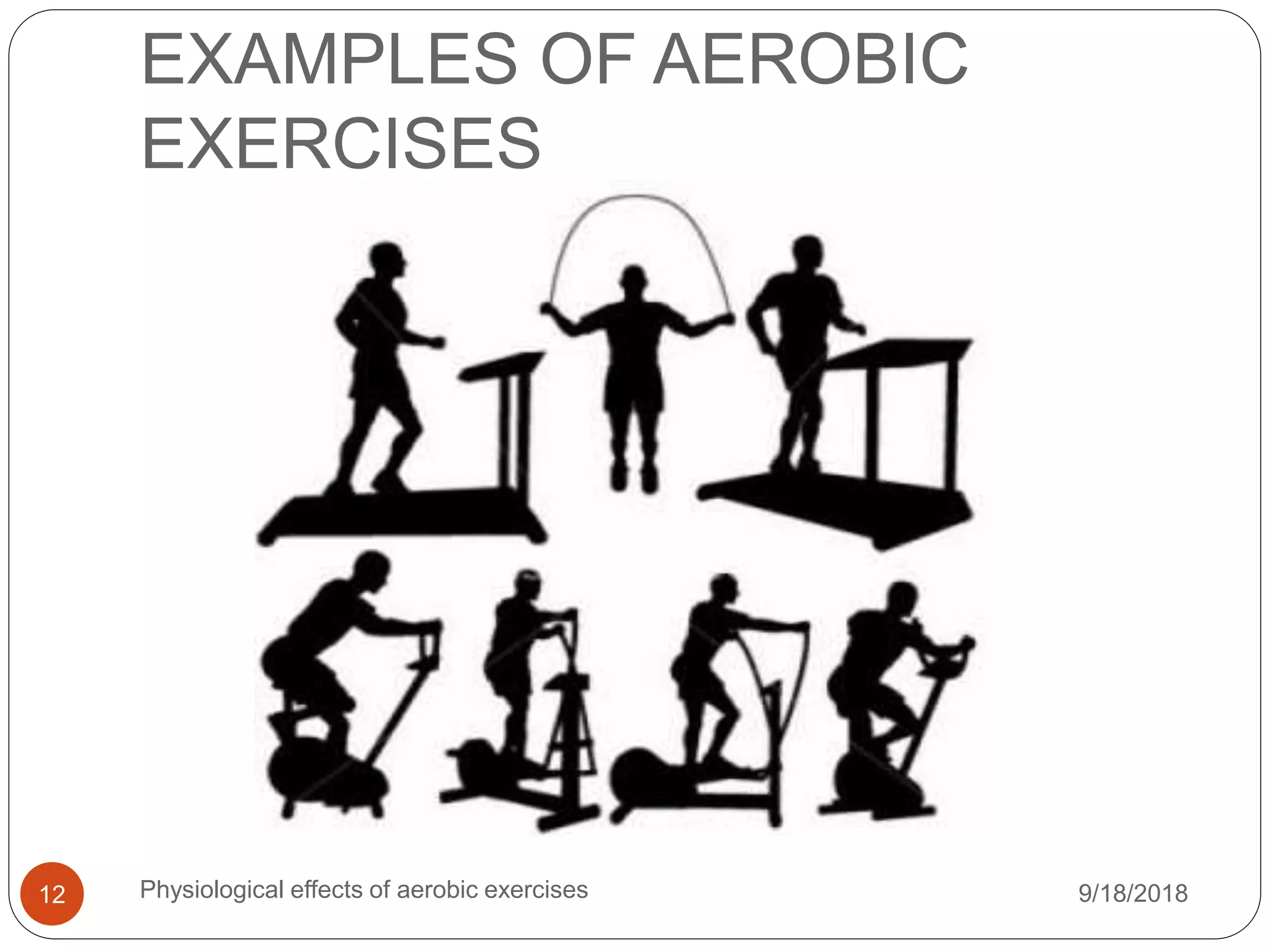
EXAMPLES OF AEROBIC
EXERCISES
9/18/2018Physiological effects of aerobic exercises12
9/18/2018Physiological effects of aerobic exercises13
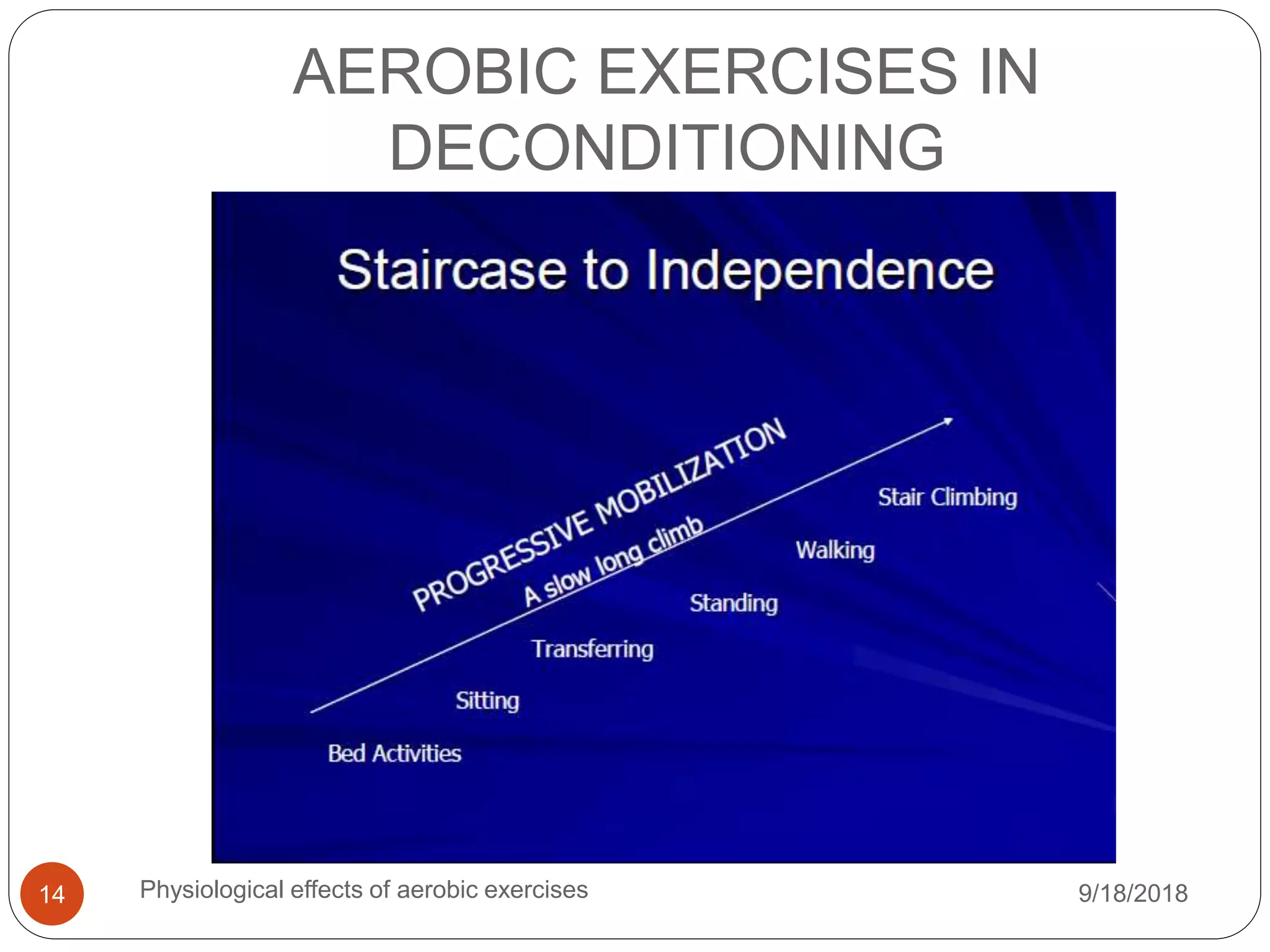
AEROBIC EXERCISES IN
DECONDITIONING
9/18/2018Physiological effects of aerobic exercises14
AEROBIC EXERCISES IN
DECONDITIONING
9/18/2018Physiological effects of aerobic exercises15
AEROBIC EXERCISES IN
DIABETES
9/18/2018Physiological effects of aerobic exercises16
AEROBIC EXERCISES IN
HYPERTENSION
9/18/2018Physiological effects of aerobic exercises17
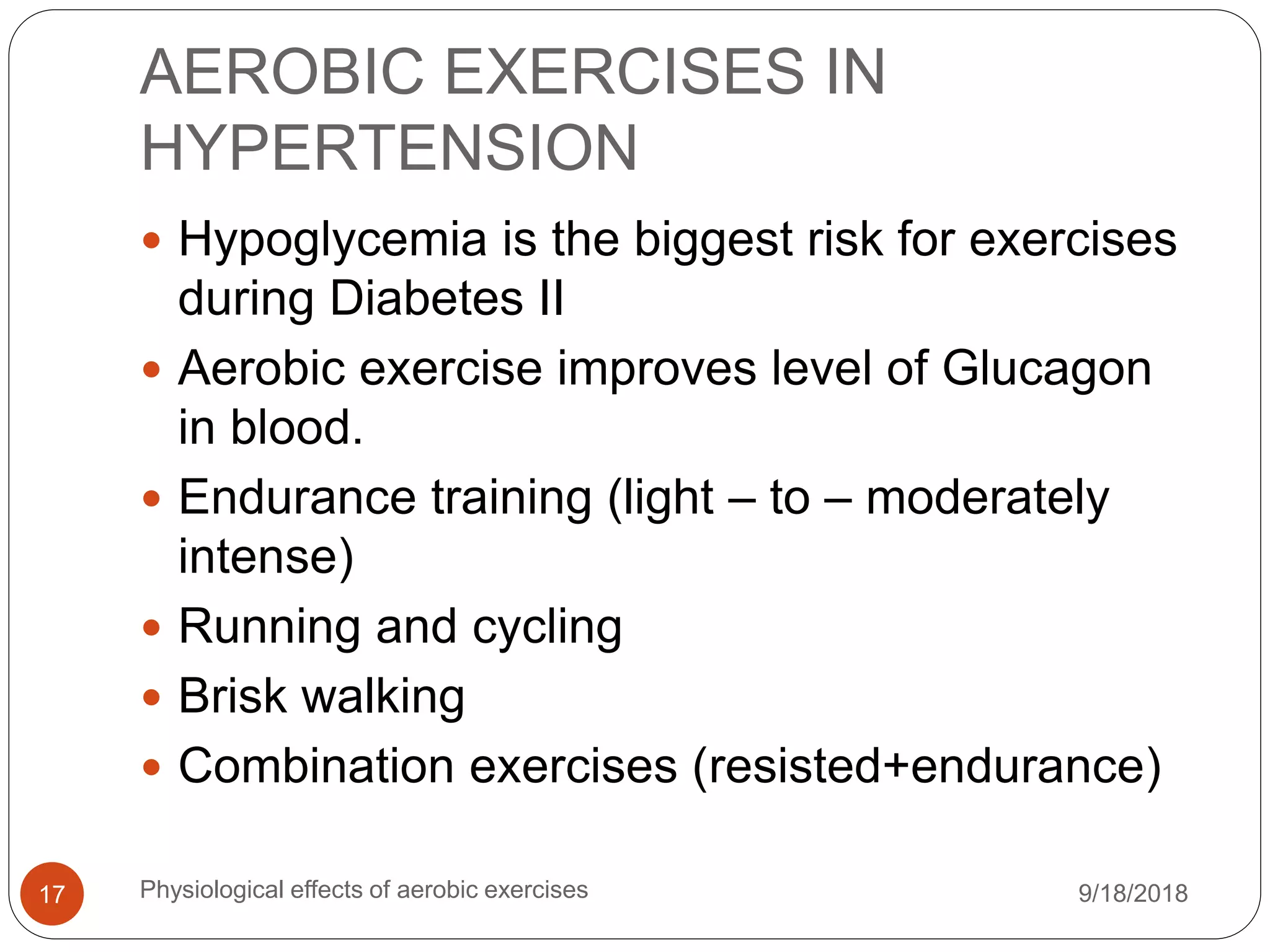
 Hypoglycemia is the biggest risk for exercises
during Diabetes II
 Aerobic exercise improves level of Glucagon
in blood.
 Endurance training (light – to – moderately
intense)
 Running and cycling
 Brisk walking
 Combination exercises (resisted+endurance)
THANK YOU!!
9/18/2018Physiological effects of aerobic exercises18

Physiological effects of aerobic exercises