TRANSPORT IN HUMANS
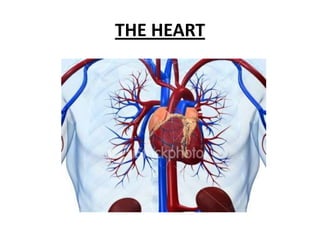
THE HEART
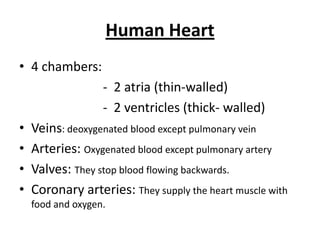
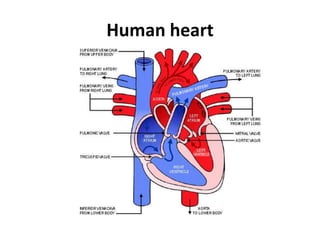
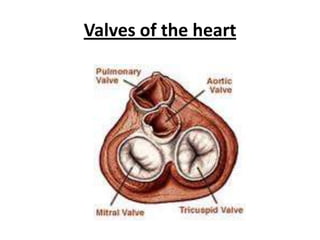
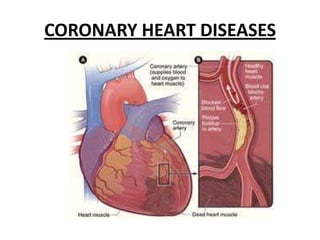
HumanHeart4 chambers:                         -  2 atria (thin-walled)                         -  2 ventricles (thick- walled)Veins: deoxygenatedbloodexceptpulmonaryveinArteries: OxygenatedbloodexceptpulmonaryarteryValves: They stop bloodflowingbackwards. Coronaryarteries: Theysupplytheheartmusclewithfood and oxygen.
Humanheart
Valves of the heart
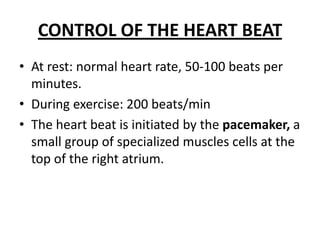
CONTROL OF THE HEART BEATAt rest: normal heartrate, 50-100 beats per minutes.Duringexercise: 200 beats/minTheheart beat isinitiatedbythepacemaker, a smallgroup of specializedmusclescells at the top of therightatrium.
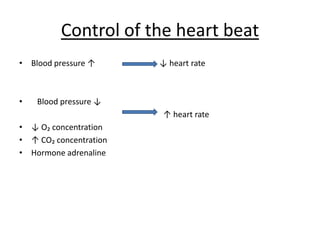
Control of theheart beatBloodpressure↑                                ↓ heartrateBloodpressure↓                                                                                                        ↑ heartrate↓ O₂ concentration↑ CO₂ concentrationHormone adrenaline
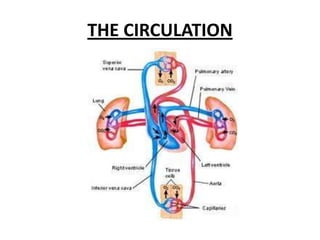
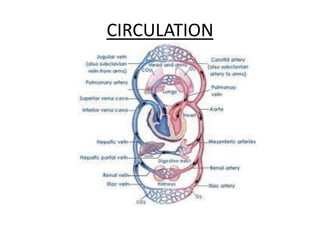
THE CIRCULATION
CIRCULATION
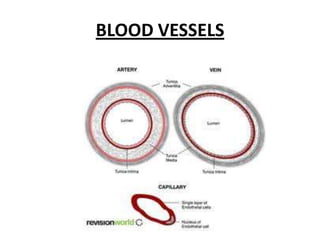
BLOOD VESSELS
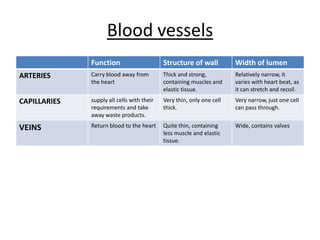
Bloodvessels
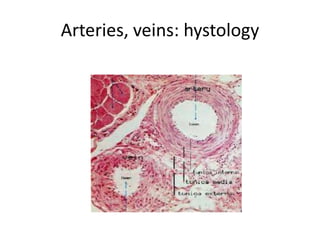
Arteries, veins: hystology
CORONARY HEART DISEASES
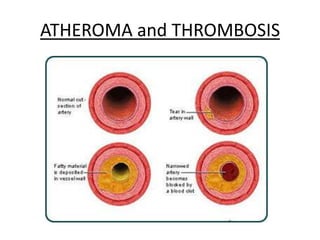
ATHEROMA and THROMBOSIS
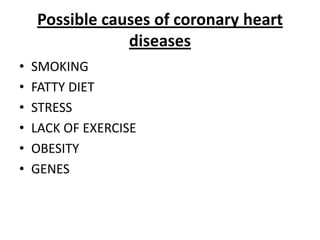
Possible causes of coronaryheartdiseasesSMOKINGFATTY DIETSTRESSLACK OF EXERCISEOBESITYGENES
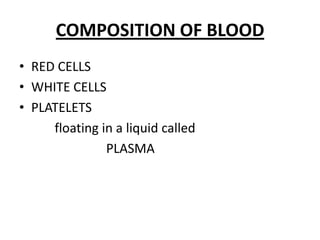
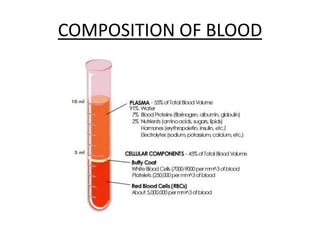
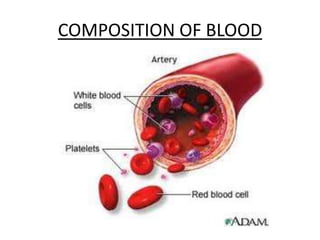
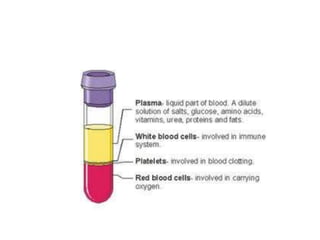
COMPOSITION OF BLOODRED CELLSWHITE CELLSPLATELETSfloating in a liquidcalled                           PLASMA
COMPOSITION OF BLOOD
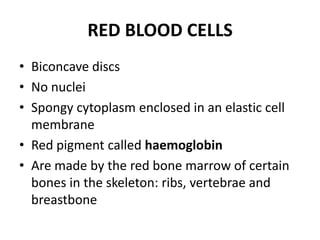
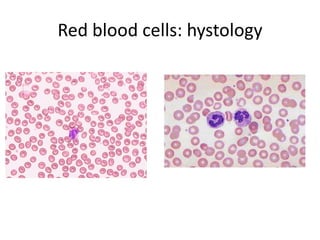
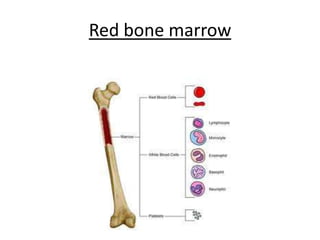
RED BLOOD CELLSBiconcave discsNo nucleiSpongycytoplasmenclosed in anelasticcellmembraneRed pigmentcalledhaemoglobinAre madebythe red bonemarrow of certainbones in theskeleton: ribs, vertebrae and breastbone
Red bloodcells: hystology
Red bonemarrow
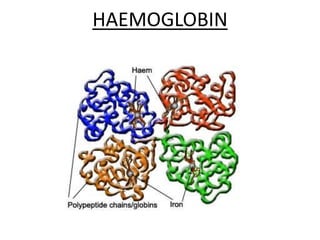
HAEMOGLOBIN
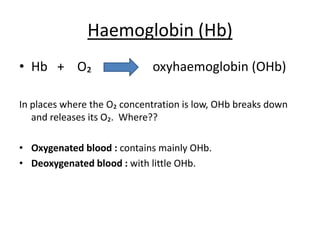
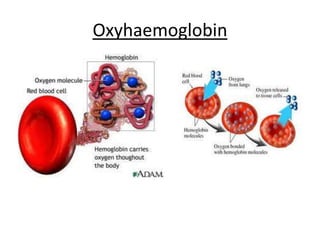
Haemoglobin (Hb)Hb   +    O₂                   oxyhaemoglobin (OHb)In places wherethe O₂ concentrationislow, OHbbreaksdown and releasesitsO₂.  Where??Oxygenatedblood : containsmainlyOHb.Deoxygenatedblood : withlittleOHb.
Oxyhaemoglobin
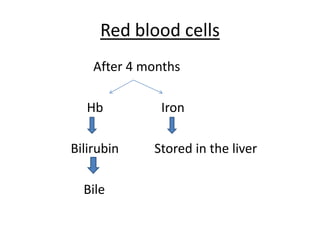
Red bloodcellsAfter 4 monthsHbIronBilirubinStored in theliverBile
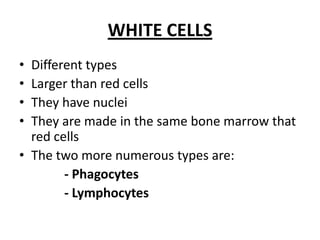
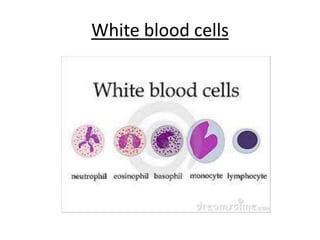
WHITE CELLSDifferenttypesLargerthan red cellsTheyhavenucleiThey are made in thesamebonemarrowthat red cellsThetwo more numeroustypes are:             - Phagocytes             - Lymphocytes
White bloodcells
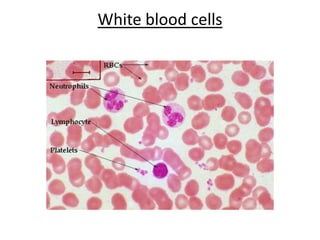
White bloodcells
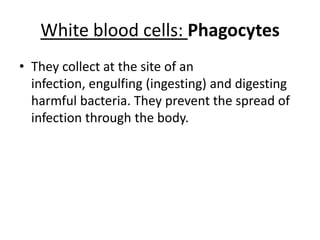
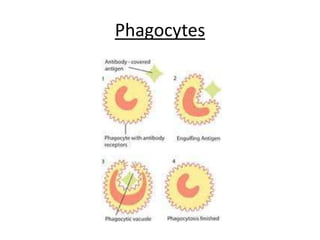
White bloodcells: PhagocytesTheycollect at thesite of aninfection, engulfing (ingesting) and digestingharmful bacteria. Theypreventthe spread of infectionthroughthebody.
Phagocytes
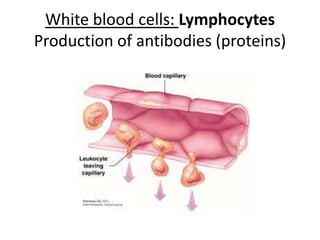
White bloodcells: LymphocytesProduction of antibodies (proteins)
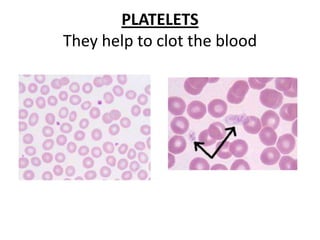
PLATELETSTheyhelptoclottheblood
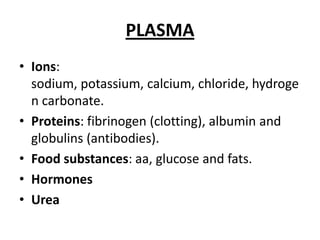
PLASMAIons: sodium, potassium, calcium, chloride, hydrogen carbonate.Proteins: fibrinogen (clotting), albuminand globulins (antibodies).Foodsubstances: aa, glucoseand fats.HormonesUrea
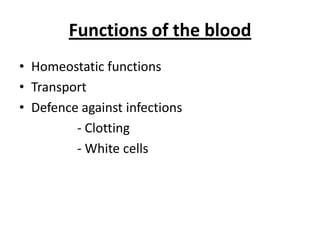
Functions of thebloodHomeostaticfunctionsTransportDefenceagainstinfections                 - Clotting                 - White cells
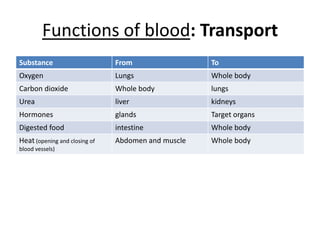
Functions of blood: Transport
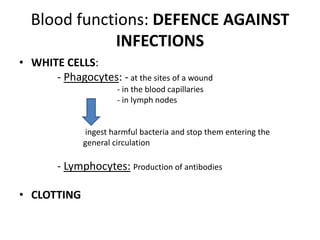
Bloodfunctions: DEFENCE AGAINST INFECTIONSWHITE CELLS:             - Phagocytes: - at thesites of a wound                                                - in thebloodcapillaries                                                - in lymphnodesingestharmful bacteria and stop thementeringthe                               general circulation              - Lymphocytes:Production of antibodiesCLOTTING
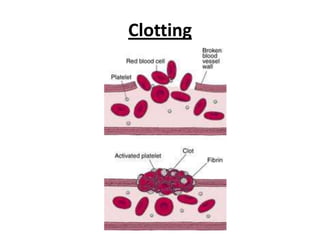
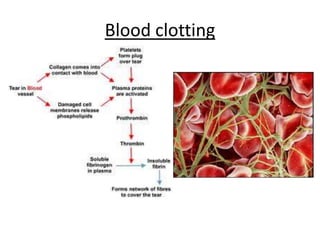
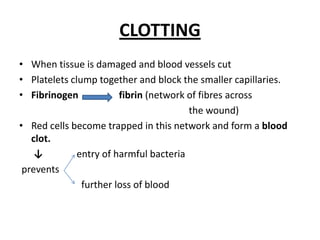
CLOTTINGWhentissueisdamaged and bloodvesselscutPlateletsclumptogether and block thesmallercapillaries.Fibrinogenfibrin(network of fibresacrossthewound)Red cellsbecometrapped in thisnetwork and form a bloodclot.↓              entry of harmful bacteriapreventsfurtherloss of blood
Clotting
Bloodclotting

Powerpoint transport in humans