Parts and Functions of the
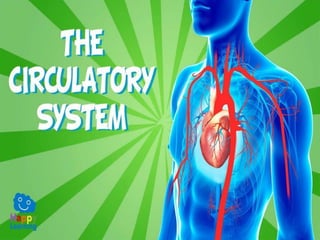
Circulatory System
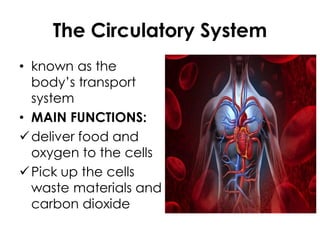
The Circulatory System
• known as the
body’s transport
system
• MAIN FUNCTIONS:
deliver food and
oxygen to the cells
Pick up the cells
waste materials and
carbon dioxide
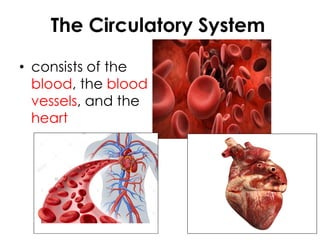
The Circulatory System
• consists of the
blood, the blood
vessels, and the
heart
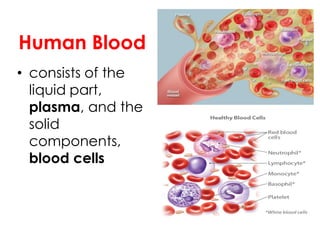
Human Blood
• consists of the
liquid part,
plasma, and the
solid
components,
blood cells
Functions of the blood:
1. Transports gases, wastes
products, and hormones.
2. Maintains water balance and pH
3. Carries platelets for clotting
4. Destroys foreign materials
5. Distributes antibodies for immunity
6. Regulates body temperature
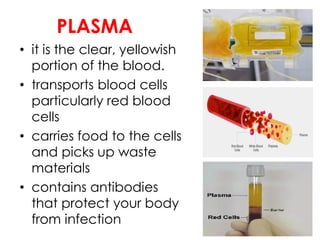
PLASMA
• it is the clear, yellowish
portion of the blood.
• transports blood cells
particularly red blood
cells
• carries food to the cells
and picks up waste
materials
• contains antibodies
that protect your body
from infection
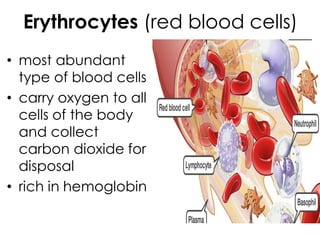
Erythrocytes (red blood cells)
• most abundant
type of blood cells
• carry oxygen to all
cells of the body
and collect
carbon dioxide for
disposal
• rich in hemoglobin
Erythrocytes (red blood cells)
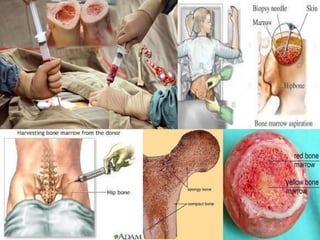
• red blood cells are produced in
the bone marrow of long bones
• Red blood cells can live for only
three (3) months, they are
degraded by the spleen and iron
is returned to the bone marrow
where new red blood cells will be
formed.
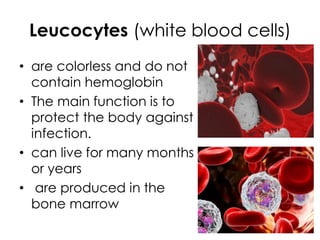
Leucocytes (white blood cells)
• are colorless and do not
contain hemoglobin
• The main function is to
protect the body against
infection.
• can live for many months
or years
• are produced in the
bone marrow
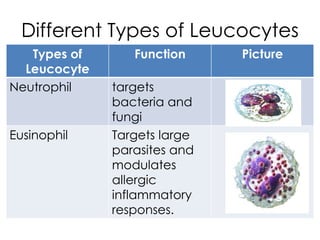
Different Types of Leucocytes
Types of
Leucocyte
Function Picture
Neutrophil targets
bacteria and
fungi
Eusinophil Targets large
parasites and
modulates
allergic
inflammatory
responses.
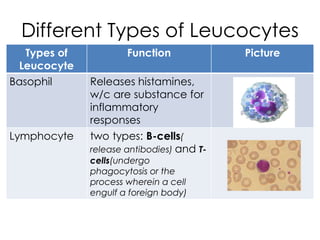
Different Types of Leucocytes
Types of
Leucocyte
Function Picture
Basophil Releases histamines,
w/c are substance for
inflammatory
responses
Lymphocyte two types: B-cells(
release antibodies) and T-
cells(undergo
phagocytosis or the
process wherein a cell
engulf a foreign body)
Different Types of Leucocytes
Types of
Leucocyte
Function Picture
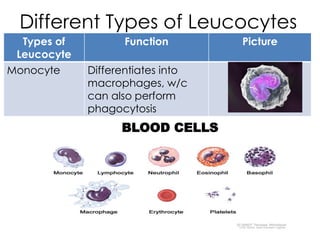
Monocyte Differentiates into
macrophages, w/c
can also perform
phagocytosis
BLOOD CELLS
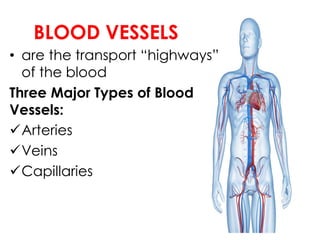
BLOOD VESSELS
• are the transport “highways”
of the blood
Three Major Types of Blood
Vessels:
Arteries
Veins
Capillaries
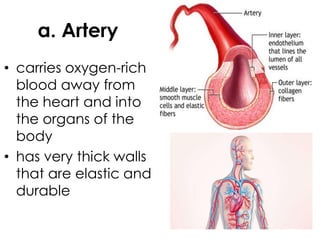
a. Artery
• carries oxygen-rich
blood away from
the heart and into
the organs of the
body
• has very thick walls
that are elastic and
durable
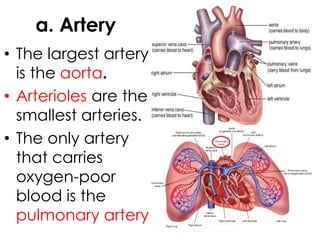
a. Artery
• The largest artery
is the aorta.
• Arterioles are the
smallest arteries.
• The only artery
that carries
oxygen-poor
blood is the
pulmonary artery..
b. Capillary
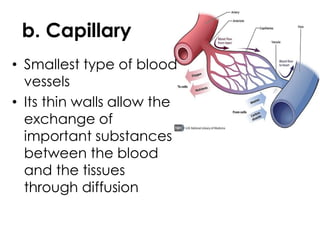
• Smallest type of blood
vessels
• Its thin walls allow the
exchange of
important substances
between the blood
and the tissues
through diffusion
b. Capillary
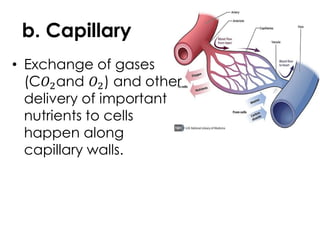
• Exchange of gases
(C𝑂2and 𝑂2) and other
delivery of important
nutrients to cells
happen along
capillary walls.
b. Vein
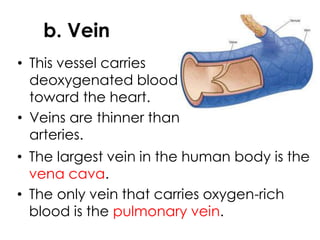
• The largest vein in the human body is the
vena cava.
• The only vein that carries oxygen-rich
blood is the pulmonary vein.
• This vessel carries
deoxygenated blood
toward the heart.
• Veins are thinner than
arteries.
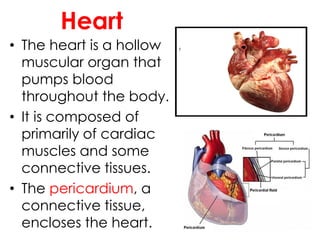
• The heart is a hollow
muscular organ that
pumps blood
throughout the body.
• It is composed of
primarily of cardiac
muscles and some
connective tissues.
• The pericardium, a
connective tissue,
encloses the heart.
Heart
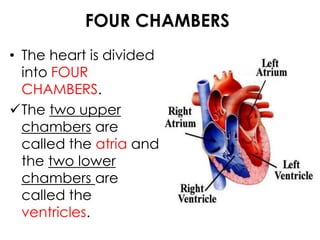
FOUR CHAMBERS
• The heart is divided
into FOUR
CHAMBERS.
The two upper
chambers are
called the atria and
the two lower
chambers are
called the
ventricles.
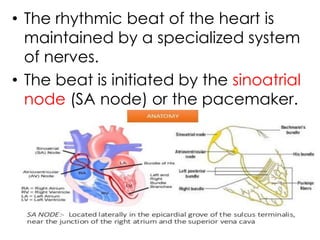
• The rhythmic beat of the heart is
maintained by a specialized system
of nerves.
• The beat is initiated by the sinoatrial
node (SA node) or the pacemaker.
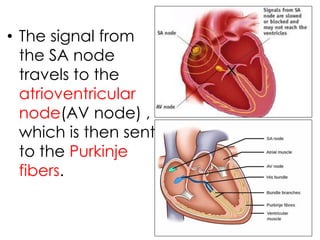
• The signal from
the SA node
travels to the
atrioventricular
node(AV node) ,
which is then sent
to the Purkinje
fibers.
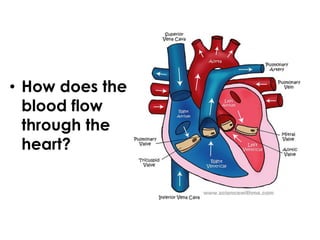
• How does the
blood flow
through the
heart?
Flow of Blood in the Heart
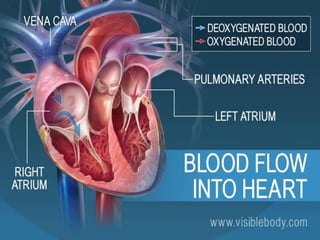
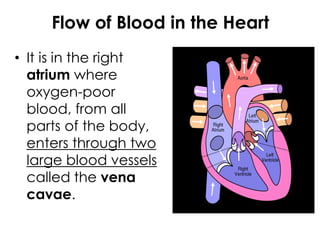
• It is in the right
atrium where
oxygen-poor
blood, from all
parts of the body,
enters through two
large blood vessels
called the vena
cavae.
Flow of Blood in the Heart
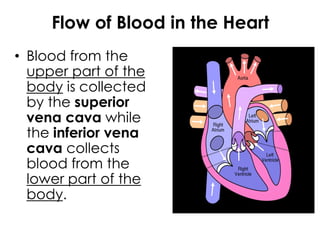
• Blood from the
upper part of the
body is collected
by the superior
vena cava while
the inferior vena
cava collects
blood from the
lower part of the
body.
Flow of Blood in the Heart
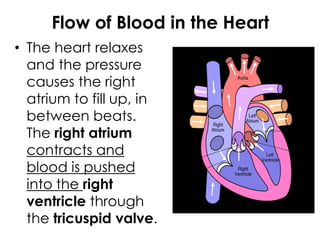
• The heart relaxes
and the pressure
causes the right
atrium to fill up, in
between beats.
The right atrium
contracts and
blood is pushed
into the right
ventricle through
the tricuspid valve.
Flow of Blood in the Heart
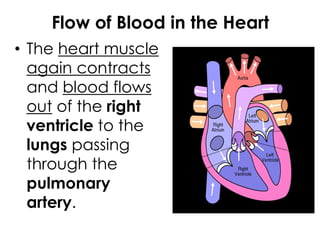
• The heart muscle
again contracts
and blood flows
out of the right
ventricle to the
lungs passing
through the
pulmonary
artery.
Flow of Blood in the Heart
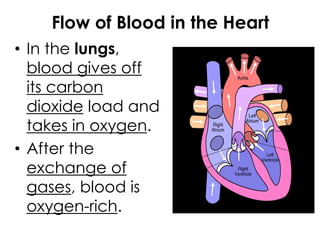
• In the lungs,
blood gives off
its carbon
dioxide load and
takes in oxygen.
• After the
exchange of
gases, blood is
oxygen-rich.
Flow of Blood in the Heart
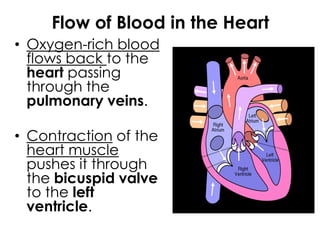
• Oxygen-rich blood
flows back to the
heart passing
through the
pulmonary veins.
• Contraction of the
heart muscle
pushes it through
the bicuspid valve
to the left
ventricle.
Flow of Blood in the Heart
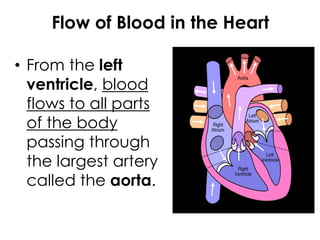
• From the left
ventricle, blood
flows to all parts
of the body
passing through
the largest artery
called the aorta.

Circulatory system

  • 1.
    Parts and Functionsof the Circulatory System
  • 2.
    The Circulatory System •known as the body’s transport system • MAIN FUNCTIONS: deliver food and oxygen to the cells Pick up the cells waste materials and carbon dioxide
  • 3.
    The Circulatory System •consists of the blood, the blood vessels, and the heart
  • 4.
    Human Blood • consistsof the liquid part, plasma, and the solid components, blood cells
  • 5.
    Functions of theblood: 1. Transports gases, wastes products, and hormones. 2. Maintains water balance and pH 3. Carries platelets for clotting 4. Destroys foreign materials 5. Distributes antibodies for immunity 6. Regulates body temperature
  • 6.
    PLASMA • it isthe clear, yellowish portion of the blood. • transports blood cells particularly red blood cells • carries food to the cells and picks up waste materials • contains antibodies that protect your body from infection
  • 7.
    Erythrocytes (red bloodcells) • most abundant type of blood cells • carry oxygen to all cells of the body and collect carbon dioxide for disposal • rich in hemoglobin
  • 8.
    Erythrocytes (red bloodcells) • red blood cells are produced in the bone marrow of long bones • Red blood cells can live for only three (3) months, they are degraded by the spleen and iron is returned to the bone marrow where new red blood cells will be formed.
  • 10.
    Leucocytes (white bloodcells) • are colorless and do not contain hemoglobin • The main function is to protect the body against infection. • can live for many months or years • are produced in the bone marrow
  • 11.
    Different Types ofLeucocytes Types of Leucocyte Function Picture Neutrophil targets bacteria and fungi Eusinophil Targets large parasites and modulates allergic inflammatory responses.
  • 12.
    Different Types ofLeucocytes Types of Leucocyte Function Picture Basophil Releases histamines, w/c are substance for inflammatory responses Lymphocyte two types: B-cells( release antibodies) and T- cells(undergo phagocytosis or the process wherein a cell engulf a foreign body)
  • 13.
    Different Types ofLeucocytes Types of Leucocyte Function Picture Monocyte Differentiates into macrophages, w/c can also perform phagocytosis BLOOD CELLS
  • 14.
    BLOOD VESSELS • arethe transport “highways” of the blood Three Major Types of Blood Vessels: Arteries Veins Capillaries
  • 15.
    a. Artery • carriesoxygen-rich blood away from the heart and into the organs of the body • has very thick walls that are elastic and durable
  • 16.
    a. Artery • Thelargest artery is the aorta. • Arterioles are the smallest arteries. • The only artery that carries oxygen-poor blood is the pulmonary artery..
  • 17.
    b. Capillary • Smallesttype of blood vessels • Its thin walls allow the exchange of important substances between the blood and the tissues through diffusion
  • 18.
    b. Capillary • Exchangeof gases (C𝑂2and 𝑂2) and other delivery of important nutrients to cells happen along capillary walls.
  • 19.
    b. Vein • Thelargest vein in the human body is the vena cava. • The only vein that carries oxygen-rich blood is the pulmonary vein. • This vessel carries deoxygenated blood toward the heart. • Veins are thinner than arteries.
  • 20.
    • The heartis a hollow muscular organ that pumps blood throughout the body. • It is composed of primarily of cardiac muscles and some connective tissues. • The pericardium, a connective tissue, encloses the heart. Heart
  • 21.
    FOUR CHAMBERS • Theheart is divided into FOUR CHAMBERS. The two upper chambers are called the atria and the two lower chambers are called the ventricles.
  • 22.
    • The rhythmicbeat of the heart is maintained by a specialized system of nerves. • The beat is initiated by the sinoatrial node (SA node) or the pacemaker.
  • 23.
    • The signalfrom the SA node travels to the atrioventricular node(AV node) , which is then sent to the Purkinje fibers.
  • 25.
    • How doesthe blood flow through the heart?
  • 26.
    Flow of Bloodin the Heart • It is in the right atrium where oxygen-poor blood, from all parts of the body, enters through two large blood vessels called the vena cavae.
  • 27.
    Flow of Bloodin the Heart • Blood from the upper part of the body is collected by the superior vena cava while the inferior vena cava collects blood from the lower part of the body.
  • 28.
    Flow of Bloodin the Heart • The heart relaxes and the pressure causes the right atrium to fill up, in between beats. The right atrium contracts and blood is pushed into the right ventricle through the tricuspid valve.
  • 29.
    Flow of Bloodin the Heart • The heart muscle again contracts and blood flows out of the right ventricle to the lungs passing through the pulmonary artery.
  • 30.
    Flow of Bloodin the Heart • In the lungs, blood gives off its carbon dioxide load and takes in oxygen. • After the exchange of gases, blood is oxygen-rich.
  • 31.
    Flow of Bloodin the Heart • Oxygen-rich blood flows back to the heart passing through the pulmonary veins. • Contraction of the heart muscle pushes it through the bicuspid valve to the left ventricle.
  • 32.
    Flow of Bloodin the Heart • From the left ventricle, blood flows to all parts of the body passing through the largest artery called the aorta.