WHY ARE THE
GRIDS FAILING
TIME AND
AGAIN?
Electric grid


The power generating stations are hooked onto an
interconnected network of transmission lines and
substations.



These generating stations supply electricity through
these transmission lines.



The companies responsible for distribution take the
power coming through these lines and forward it to
the consumers.
Power market operations – divided
into five regions
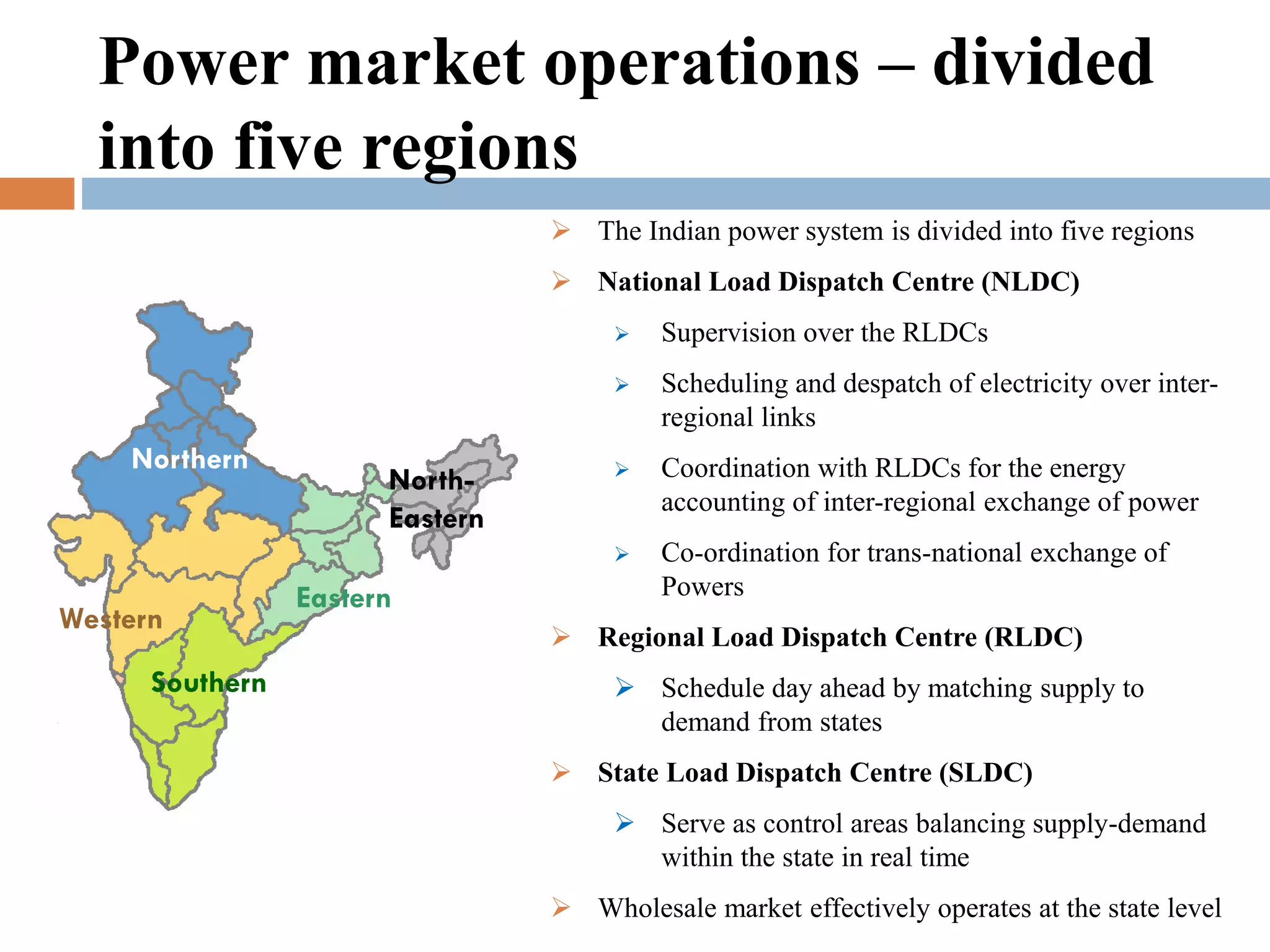
 The Indian power system is divided into five regions
 National Load Dispatch Centre (NLDC)



Western
Southern

NorthEastern
Eastern

Scheduling and despatch of electricity over interregional links



Coordination with RLDCs for the energy
accounting of inter-regional exchange of power



Northern

Supervision over the RLDCs

Co-ordination for trans-national exchange of
Powers

 Regional Load Dispatch Centre (RLDC)
 Schedule day ahead by matching supply to
demand from states
 State Load Dispatch Centre (SLDC)
 Serve as control areas balancing supply-demand
within the state in real time
 Wholesale market effectively operates at the state level
Power market – operational framework
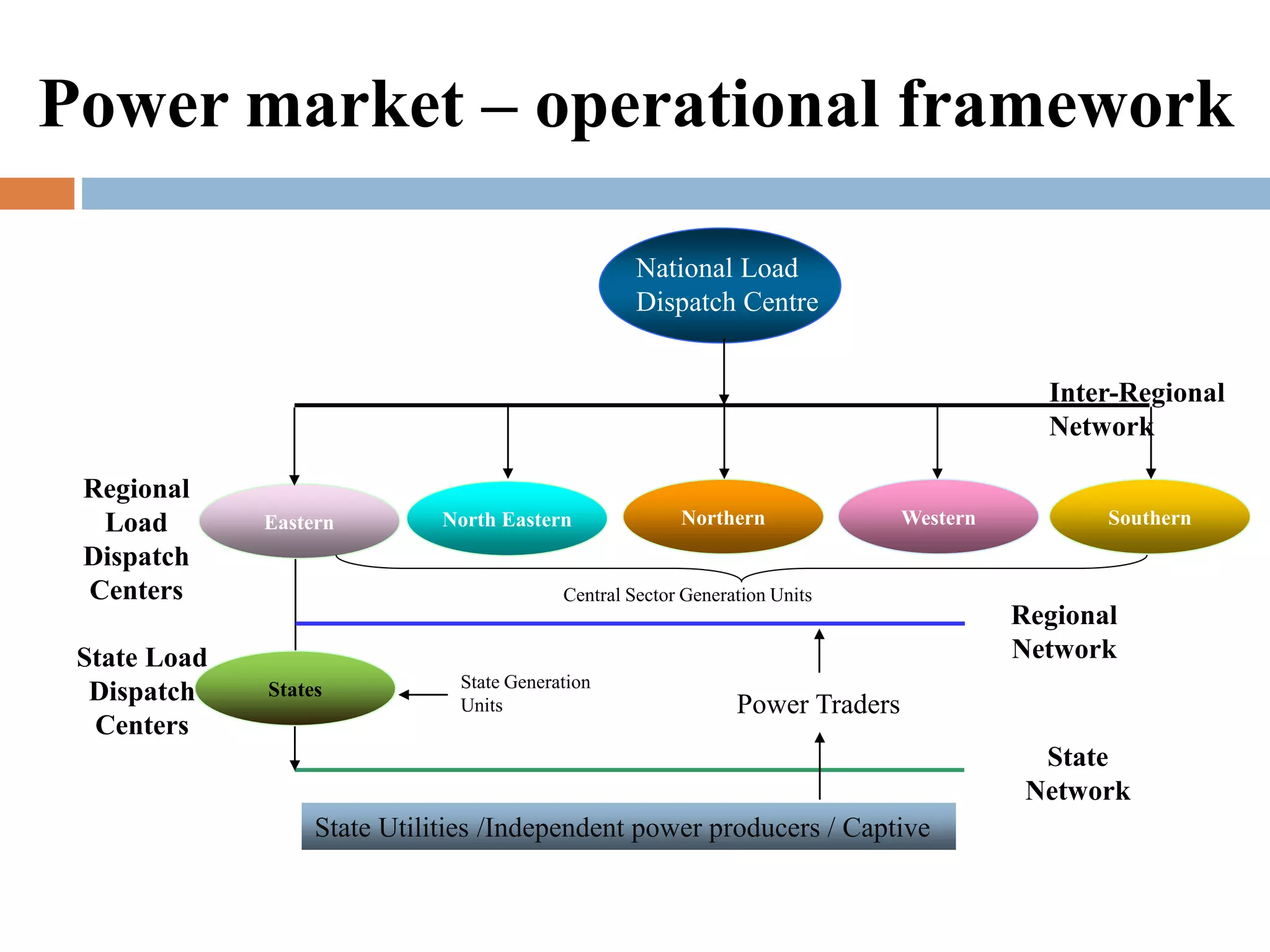
National Load
Dispatch Centre
Inter-Regional
Network
Regional
Load
Dispatch
Centers
State Load
Dispatch
Centers

Eastern

North Eastern

Northern

Western

Central Sector Generation Units

States

State Generation
Units

Southern

Regional
Network

Power Traders
State
Network

State Utilities /Independent power producers / Captive
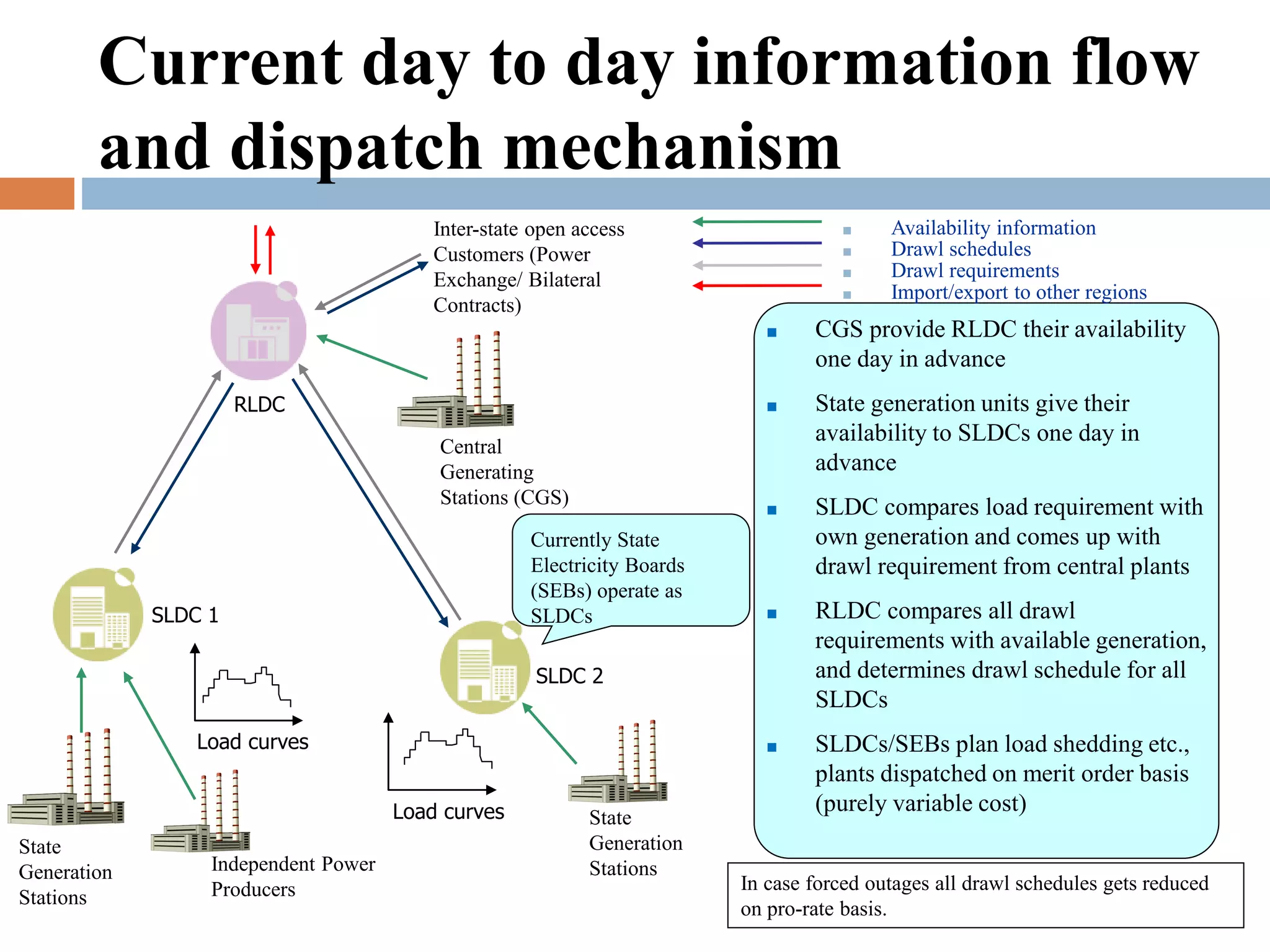
Current day to day information flow
and dispatch mechanism
■
■
■
■

Inter-state open access
Customers (Power
Exchange/ Bilateral
Contracts)

Availability information
Drawl schedules
Drawl requirements
Import/export to other regions

■

■

Currently State
Electricity Boards
(SEBs) operate as
SLDCs

SLDC 1

SLDC compares load requirement with
own generation and comes up with
drawl requirement from central plants

■

RLDC compares all drawl
requirements with available generation,
and determines drawl schedule for all
SLDCs

■

Central
Generating
Stations (CGS)

State generation units give their
availability to SLDCs one day in
advance

■

RLDC

CGS provide RLDC their availability
one day in advance

SLDCs/SEBs plan load shedding etc.,
plants dispatched on merit order basis
(purely variable cost)

SLDC 2
Load curves
Load curves
State
Generation
Stations

Independent Power
Producers

State
Generation
Stations

In case forced outages all drawl schedules gets reduced
on pro-rate basis.
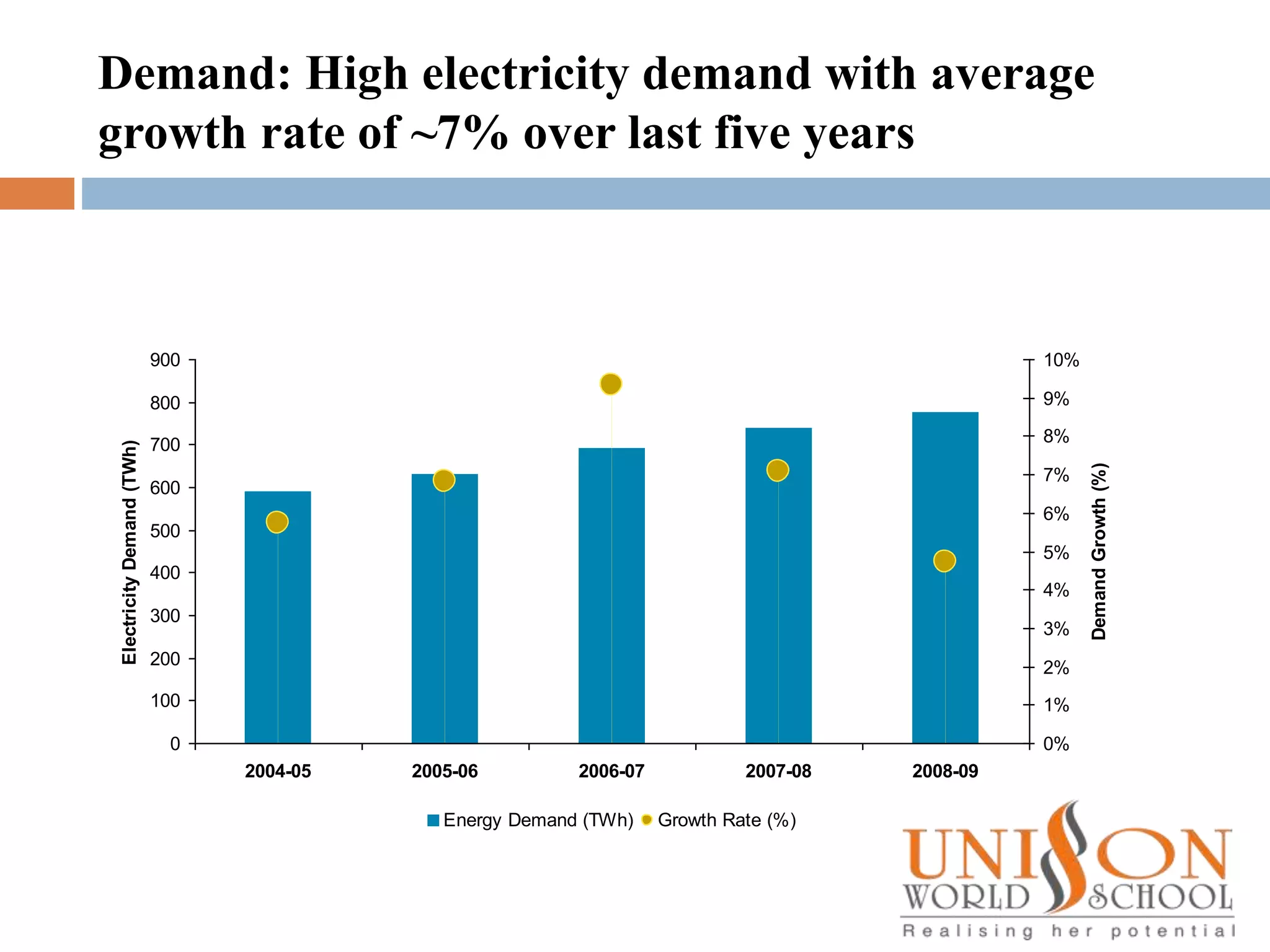
Demand: High electricity demand with average
growth rate of ~7% over last five years

9%

700

8%
7%

600

6%

500

5%
400

4%

300

3%

200

2%

100

1%

0

0%
2004-05

2005-06

2006-07

Energy Demand (TWh)

2007-08
Growth Rate (%)

2008-09

Demand Growth (%)

10%

800

Electricity Demand (TWh)

900
Demand growth expected to remain high






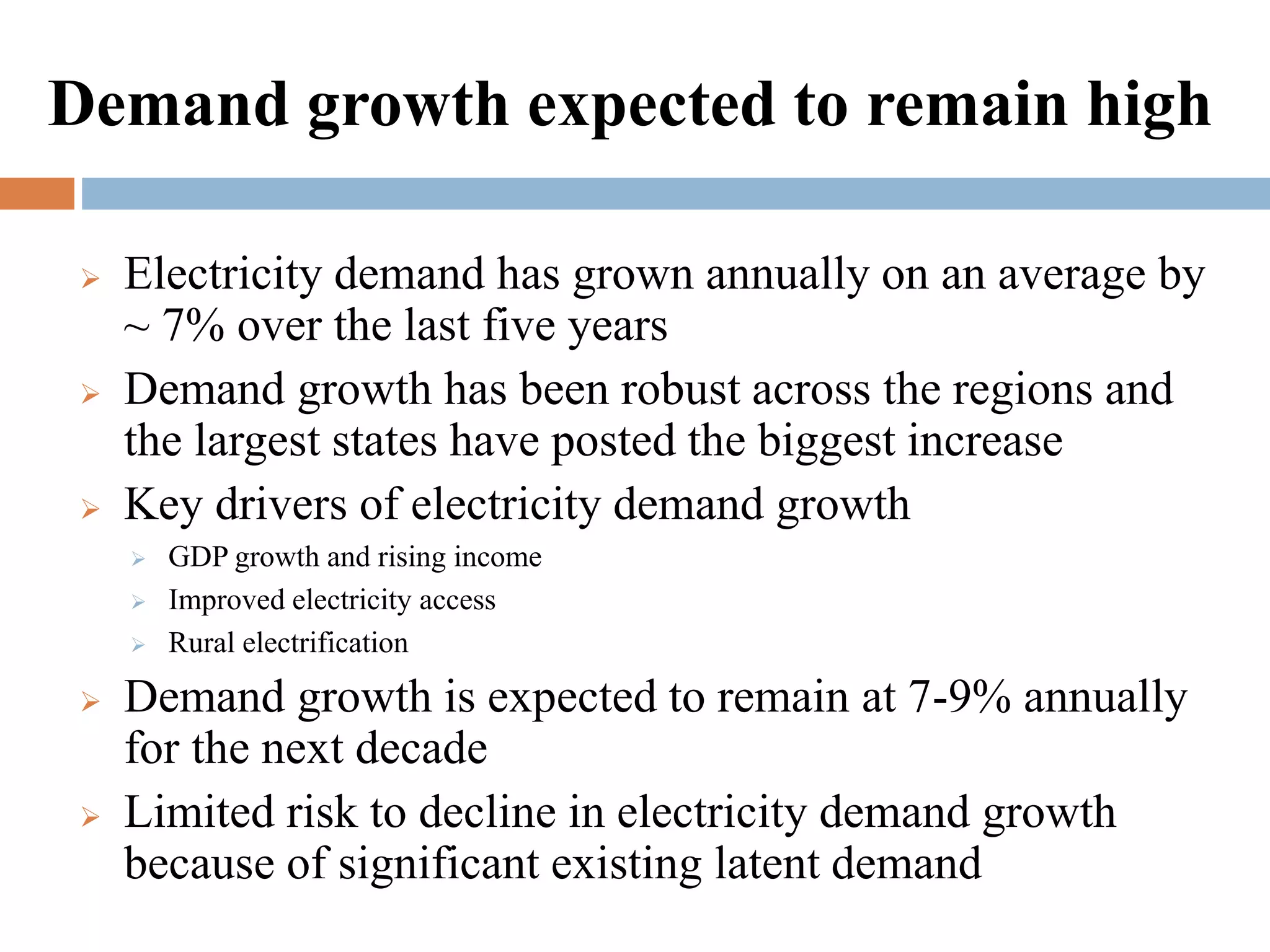
Electricity demand has grown annually on an average by
~ 7% over the last five years
Demand growth has been robust across the regions and
the largest states have posted the biggest increase
Key drivers of electricity demand growth








GDP growth and rising income
Improved electricity access
Rural electrification

Demand growth is expected to remain at 7-9% annually
for the next decade
Limited risk to decline in electricity demand growth
because of significant existing latent demand
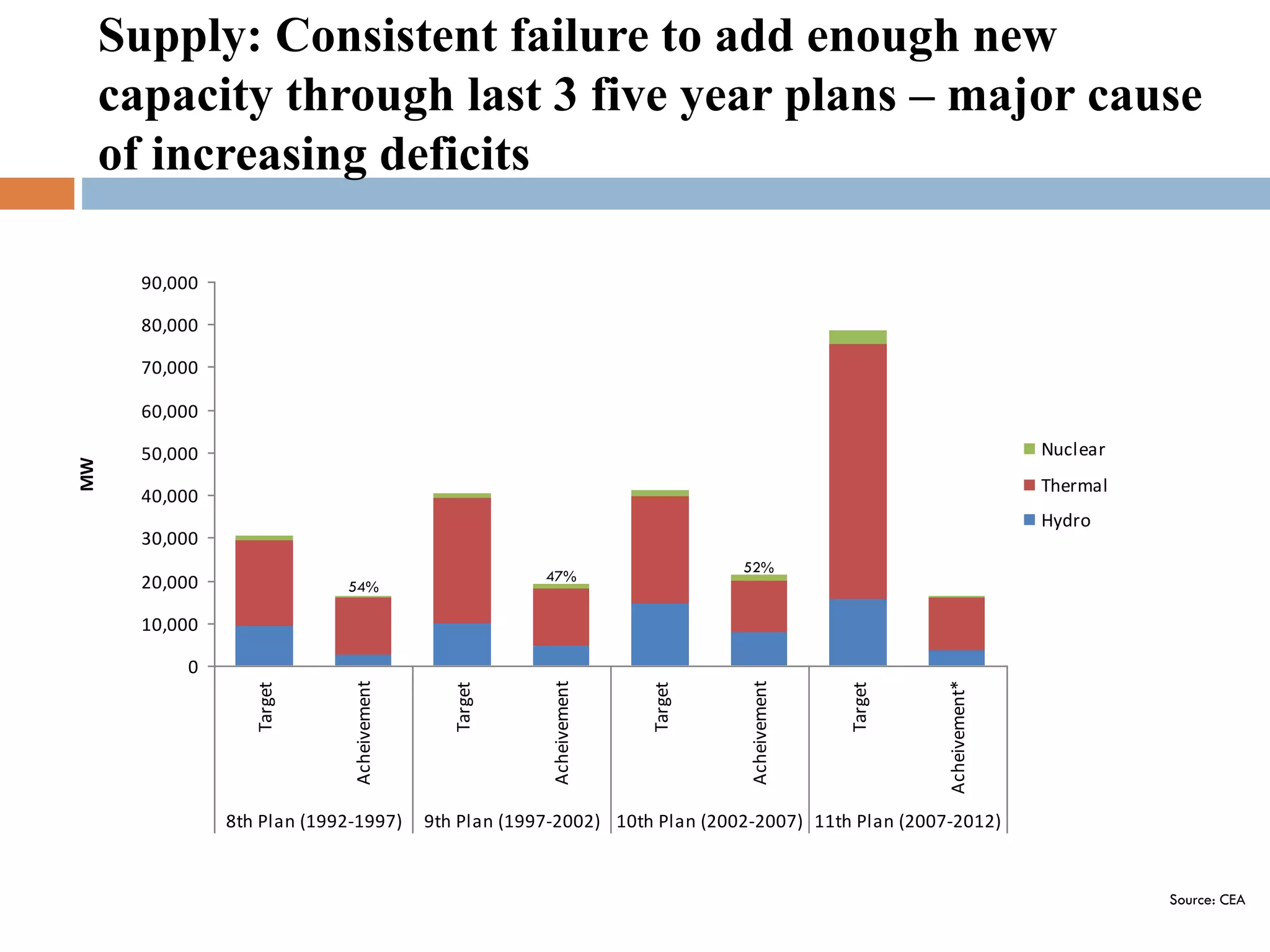
Supply: Consistent failure to add enough new
capacity through last 3 five year plans – major cause
of increasing deficits
90,000
80,000
70,000

Nuclear

50,000

Thermal

40,000

Hydro

30,000
20,000

52%

47%

54%

10,000

8th Plan (1992-1997)

Acheivement*

Target

Acheivement

Target

Acheivement

Target

Acheivement

0

Target

MW

60,000

9th Plan (1997-2002) 10th Plan (2002-2007) 11th Plan (2007-2012)

Source: CEA
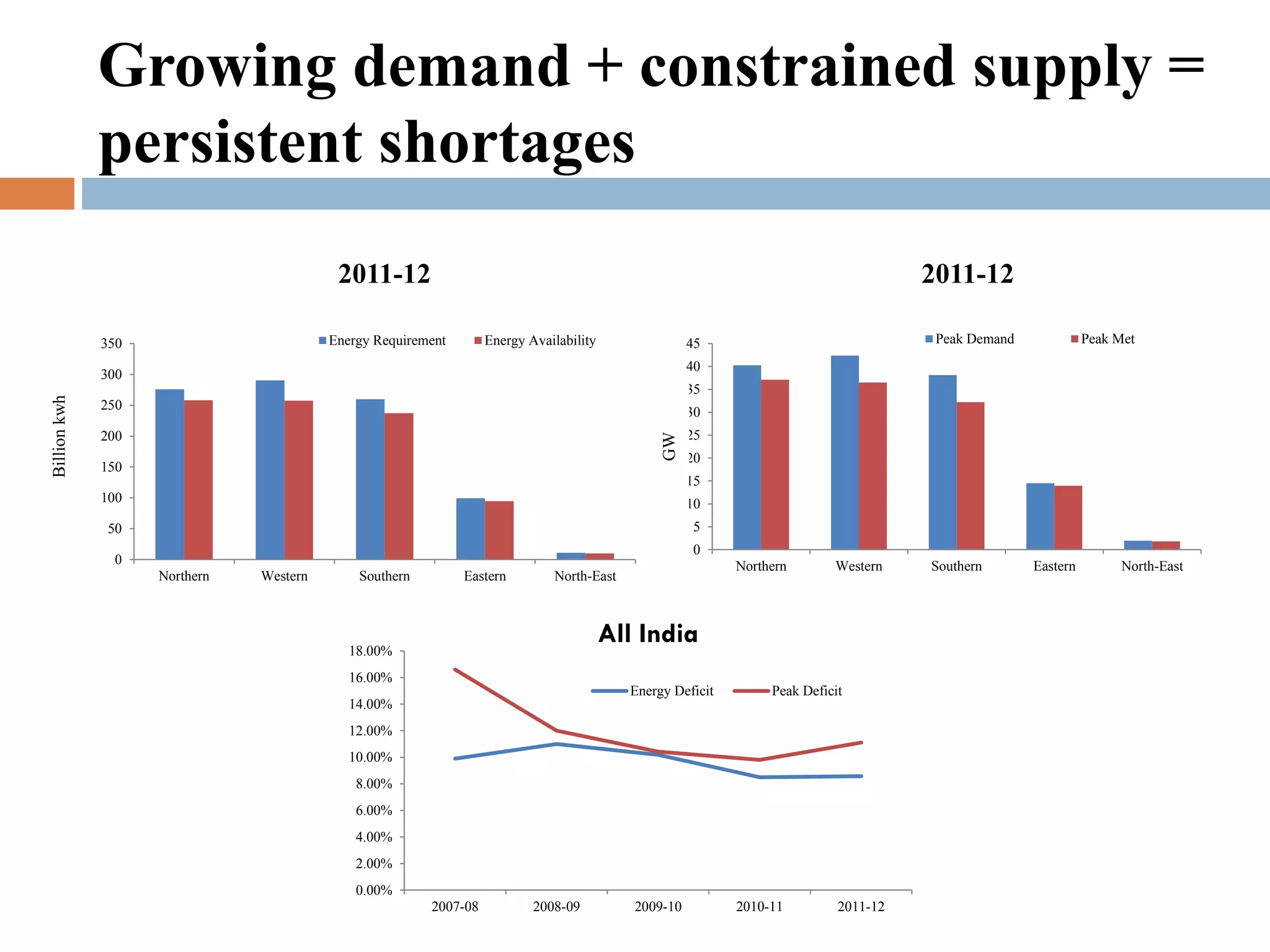
Growing demand + constrained supply =
persistent shortages
2011-12

2011-12

Energy Requirement

350

Energy Availability

Peak Met

40

300

35
250

30

200

25

GW

Billion kwh

Peak Demand

45

150

20
15

100

10

50

5
0

0
Northern

Western

Southern

Eastern

Northern

North-East

Western

All India

18.00%
16.00%

Energy Deficit

Peak Deficit

14.00%
12.00%
10.00%
8.00%
6.00%
4.00%
2.00%
0.00%
2007-08

2008-09

2009-10

2010-11

2011-12

Southern

Eastern

North-East
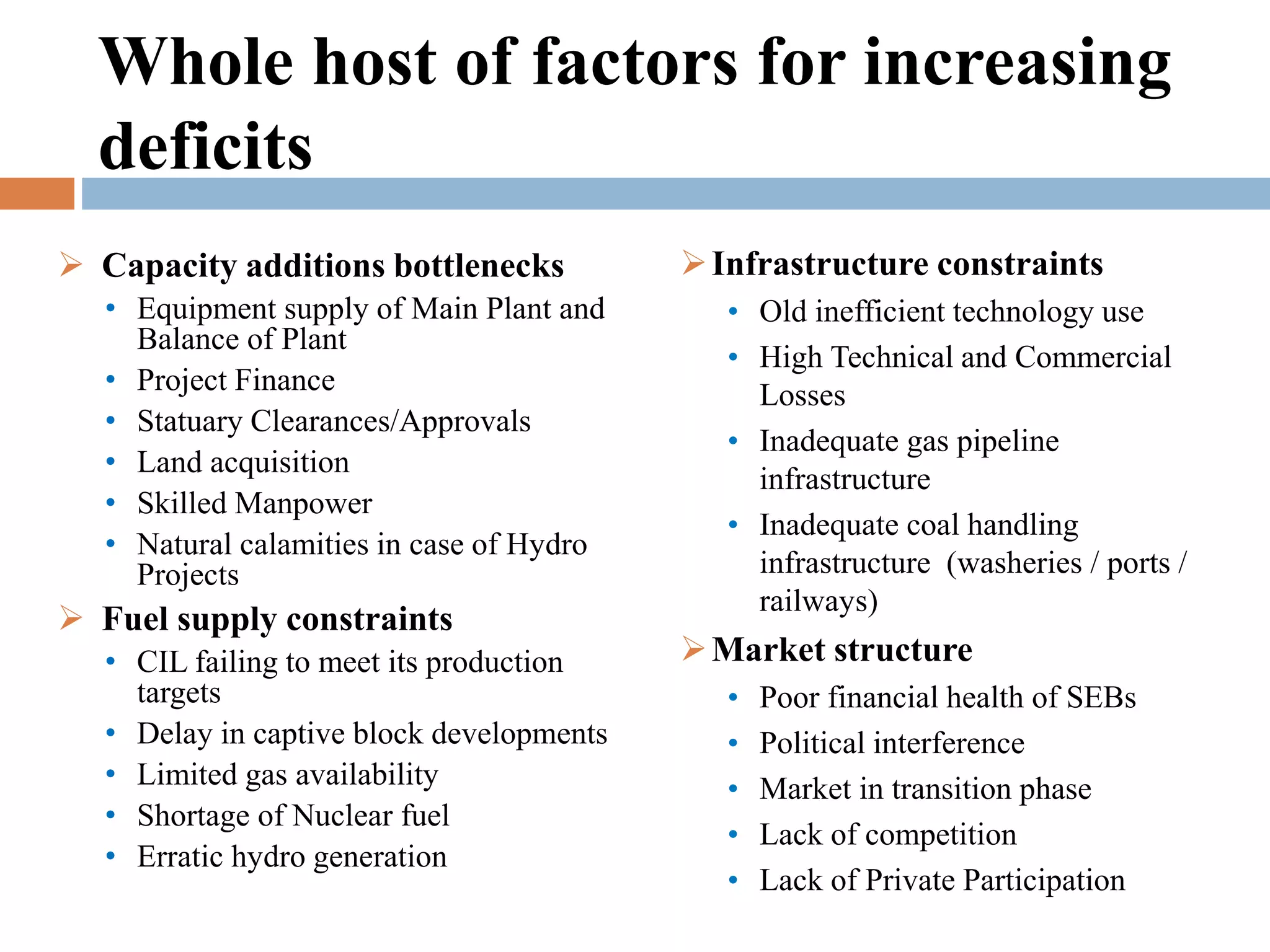
Whole host of factors for increasing
deficits
 Capacity additions bottlenecks
• Equipment supply of Main Plant and
Balance of Plant
• Project Finance
• Statuary Clearances/Approvals
• Land acquisition
• Skilled Manpower
• Natural calamities in case of Hydro
Projects

 Fuel supply constraints
• CIL failing to meet its production
targets
• Delay in captive block developments
• Limited gas availability
• Shortage of Nuclear fuel
• Erratic hydro generation

 Infrastructure constraints
• Old inefficient technology use
• High Technical and Commercial
Losses
• Inadequate gas pipeline
infrastructure
• Inadequate coal handling
infrastructure (washeries / ports /
railways)

 Market structure
•
•
•
•
•

Poor financial health of SEBs
Political interference
Market in transition phase
Lack of competition
Lack of Private Participation
A stable electric grid










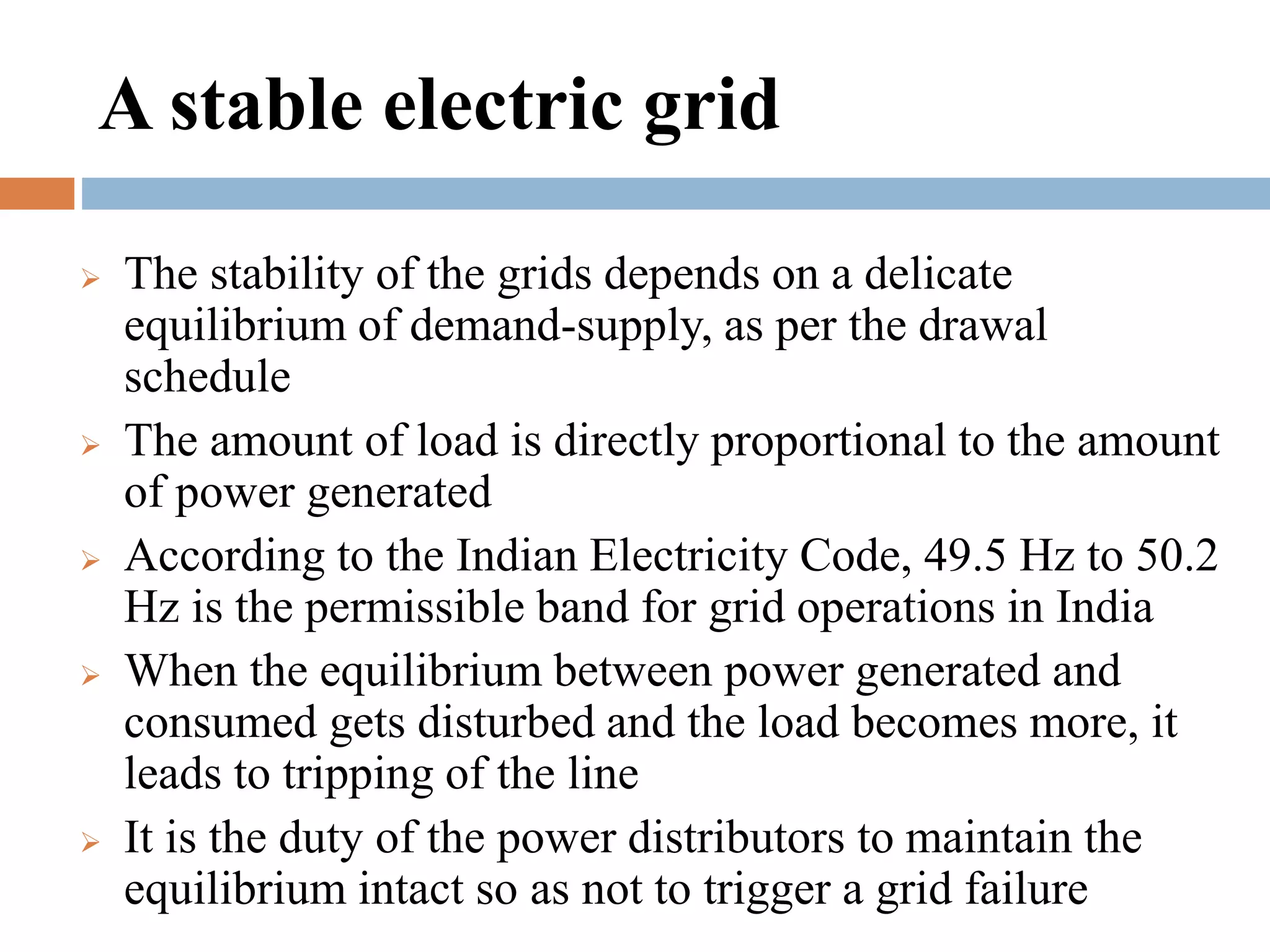
The stability of the grids depends on a delicate
equilibrium of demand-supply, as per the drawal
schedule
The amount of load is directly proportional to the amount
of power generated
According to the Indian Electricity Code, 49.5 Hz to 50.2
Hz is the permissible band for grid operations in India
When the equilibrium between power generated and
consumed gets disturbed and the load becomes more, it
leads to tripping of the line
It is the duty of the power distributors to maintain the
equilibrium intact so as not to trigger a grid failure
Reasons of a grid collapse






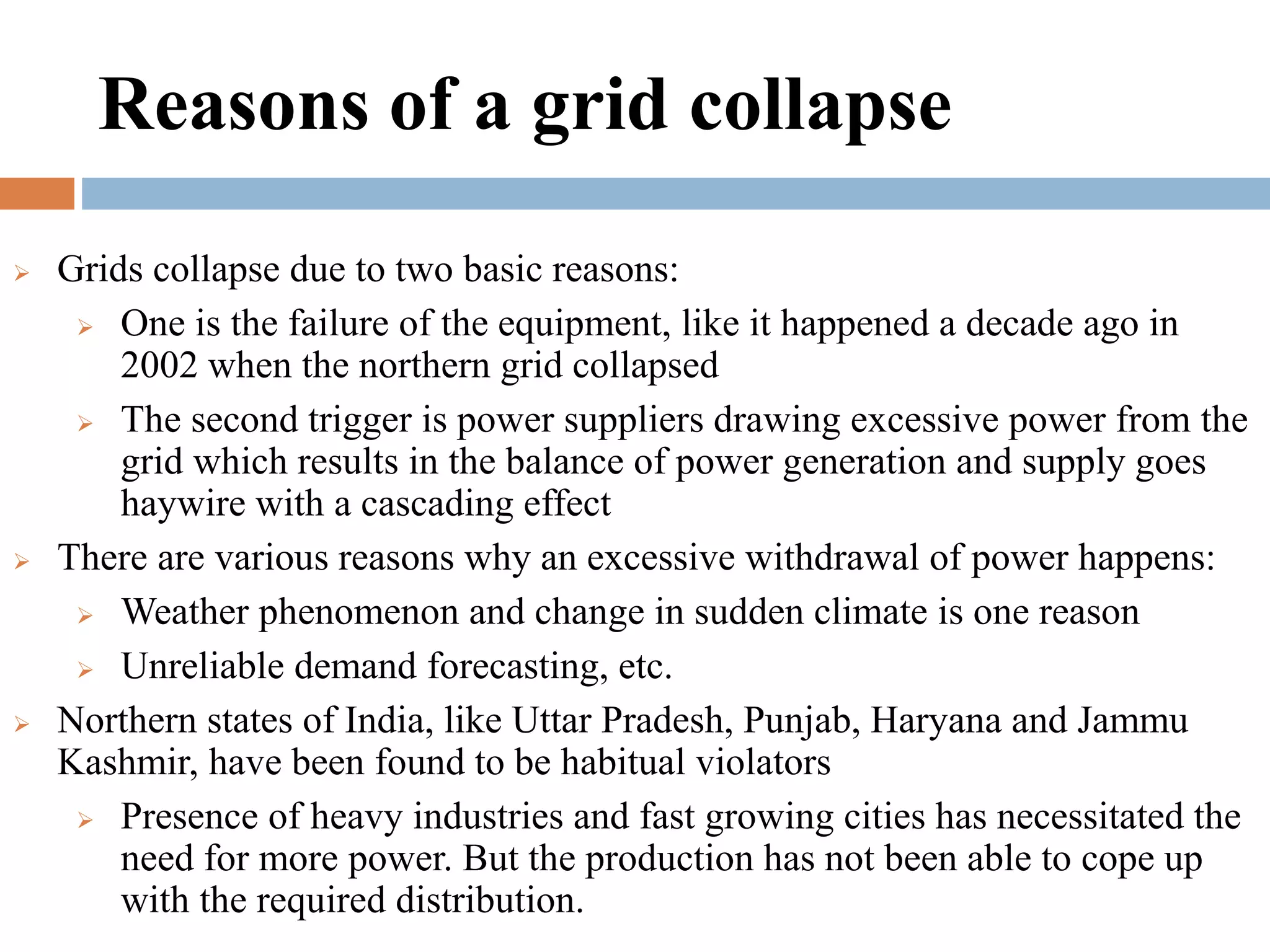
Grids collapse due to two basic reasons:
 One is the failure of the equipment, like it happened a decade ago in
2002 when the northern grid collapsed
 The second trigger is power suppliers drawing excessive power from the
grid which results in the balance of power generation and supply goes
haywire with a cascading effect
There are various reasons why an excessive withdrawal of power happens:
 Weather phenomenon and change in sudden climate is one reason
 Unreliable demand forecasting, etc.
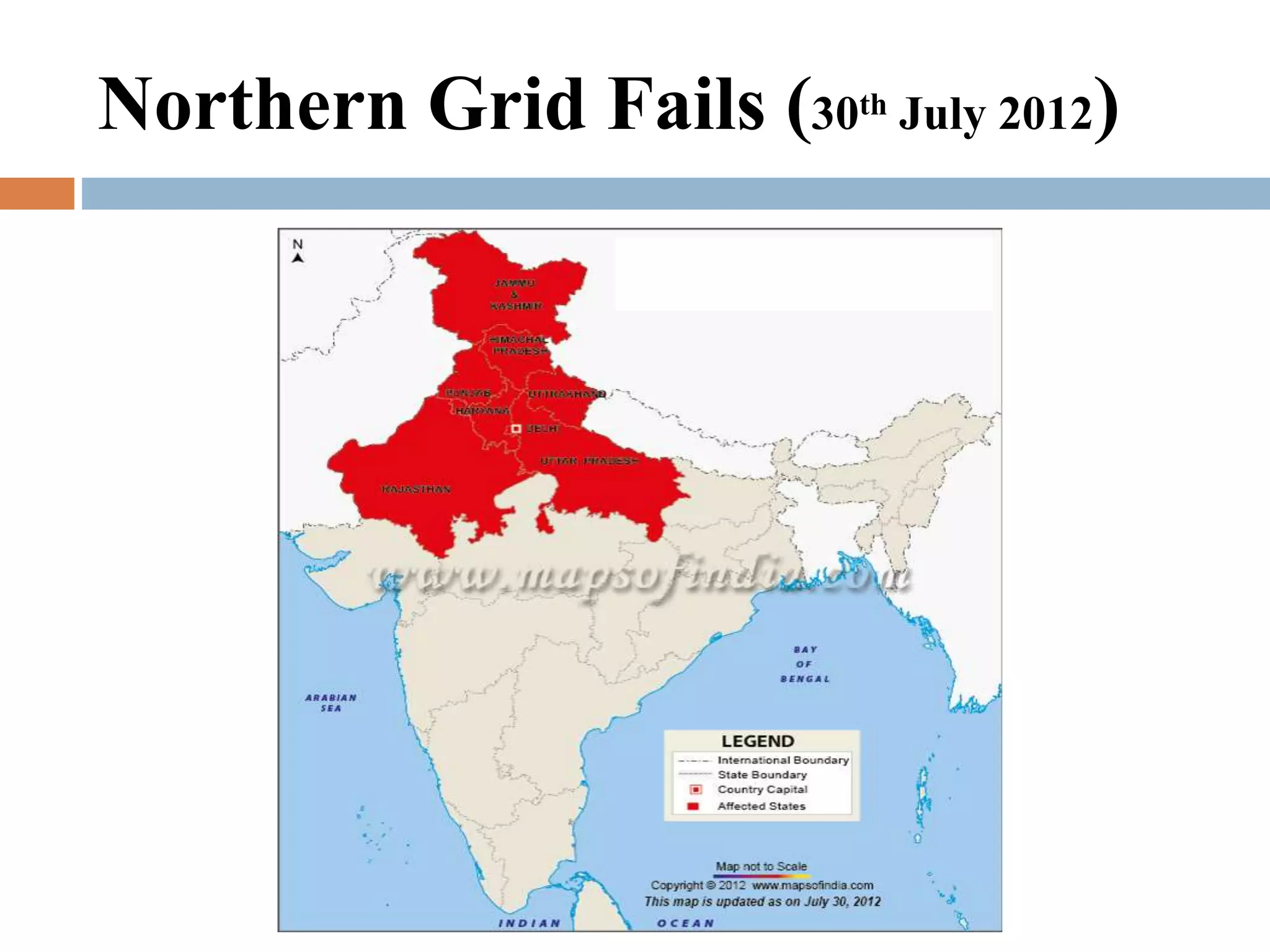
Northern states of India, like Uttar Pradesh, Punjab, Haryana and Jammu
Kashmir, have been found to be habitual violators
 Presence of heavy industries and fast growing cities has necessitated the
need for more power. But the production has not been able to cope up
with the required distribution.
Northern Grid Fails (30th July 2012)
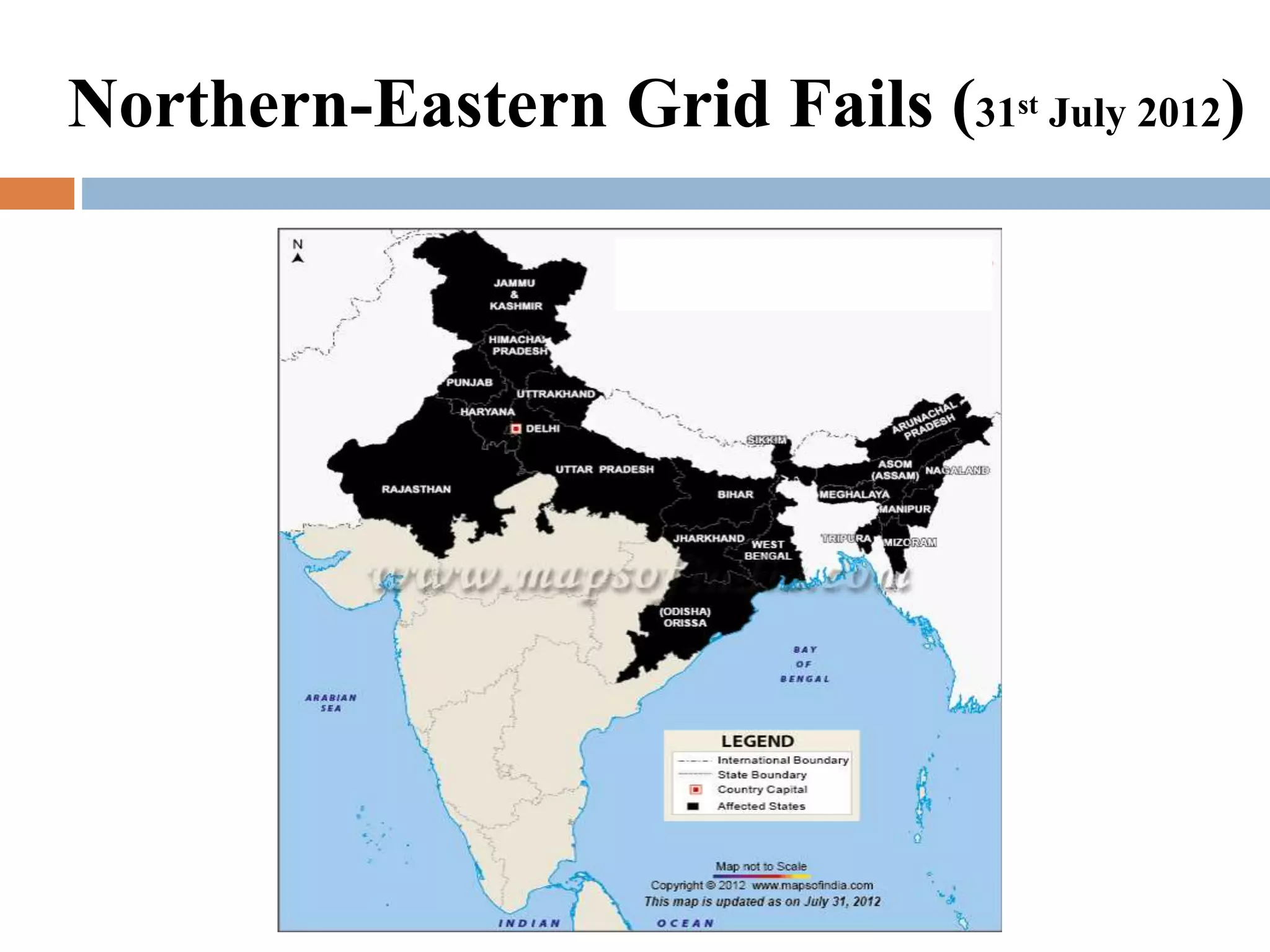
Northern-Eastern Grid Fails (31

st

July 2012

)
Results of power grid failure











The power failure affected all major services, like rail, water
and emergency services at hospitals all across the states
Thousands of train passengers were stranded at railway
stations all across the country. More than 300 trains came to a
standstill
Water services too were affected across the states and supply
was low all across the cities
Around 200 miners got trapped in the mines in West Bengal
The Railways network was the worst hit services, as trains,
other than those running on diesel engine, stopped midway.
Industry suffered heavy losses.
Thank you

Power failure presentation

  • 1.
    WHY ARE THE GRIDSFAILING TIME AND AGAIN?
  • 2.
    Electric grid  The powergenerating stations are hooked onto an interconnected network of transmission lines and substations.  These generating stations supply electricity through these transmission lines.  The companies responsible for distribution take the power coming through these lines and forward it to the consumers.
  • 3.
    Power market operations– divided into five regions  The Indian power system is divided into five regions  National Load Dispatch Centre (NLDC)   Western Southern NorthEastern Eastern Scheduling and despatch of electricity over interregional links  Coordination with RLDCs for the energy accounting of inter-regional exchange of power  Northern Supervision over the RLDCs Co-ordination for trans-national exchange of Powers  Regional Load Dispatch Centre (RLDC)  Schedule day ahead by matching supply to demand from states  State Load Dispatch Centre (SLDC)  Serve as control areas balancing supply-demand within the state in real time  Wholesale market effectively operates at the state level
  • 4.
    Power market –operational framework National Load Dispatch Centre Inter-Regional Network Regional Load Dispatch Centers State Load Dispatch Centers Eastern North Eastern Northern Western Central Sector Generation Units States State Generation Units Southern Regional Network Power Traders State Network State Utilities /Independent power producers / Captive
  • 5.
    Current day today information flow and dispatch mechanism ■ ■ ■ ■ Inter-state open access Customers (Power Exchange/ Bilateral Contracts) Availability information Drawl schedules Drawl requirements Import/export to other regions ■ ■ Currently State Electricity Boards (SEBs) operate as SLDCs SLDC 1 SLDC compares load requirement with own generation and comes up with drawl requirement from central plants ■ RLDC compares all drawl requirements with available generation, and determines drawl schedule for all SLDCs ■ Central Generating Stations (CGS) State generation units give their availability to SLDCs one day in advance ■ RLDC CGS provide RLDC their availability one day in advance SLDCs/SEBs plan load shedding etc., plants dispatched on merit order basis (purely variable cost) SLDC 2 Load curves Load curves State Generation Stations Independent Power Producers State Generation Stations In case forced outages all drawl schedules gets reduced on pro-rate basis.
  • 6.
    Demand: High electricitydemand with average growth rate of ~7% over last five years 9% 700 8% 7% 600 6% 500 5% 400 4% 300 3% 200 2% 100 1% 0 0% 2004-05 2005-06 2006-07 Energy Demand (TWh) 2007-08 Growth Rate (%) 2008-09 Demand Growth (%) 10% 800 Electricity Demand (TWh) 900
  • 7.
    Demand growth expectedto remain high    Electricity demand has grown annually on an average by ~ 7% over the last five years Demand growth has been robust across the regions and the largest states have posted the biggest increase Key drivers of electricity demand growth      GDP growth and rising income Improved electricity access Rural electrification Demand growth is expected to remain at 7-9% annually for the next decade Limited risk to decline in electricity demand growth because of significant existing latent demand
  • 8.
    Supply: Consistent failureto add enough new capacity through last 3 five year plans – major cause of increasing deficits 90,000 80,000 70,000 Nuclear 50,000 Thermal 40,000 Hydro 30,000 20,000 52% 47% 54% 10,000 8th Plan (1992-1997) Acheivement* Target Acheivement Target Acheivement Target Acheivement 0 Target MW 60,000 9th Plan (1997-2002) 10th Plan (2002-2007) 11th Plan (2007-2012) Source: CEA
  • 9.
    Growing demand +constrained supply = persistent shortages 2011-12 2011-12 Energy Requirement 350 Energy Availability Peak Met 40 300 35 250 30 200 25 GW Billion kwh Peak Demand 45 150 20 15 100 10 50 5 0 0 Northern Western Southern Eastern Northern North-East Western All India 18.00% 16.00% Energy Deficit Peak Deficit 14.00% 12.00% 10.00% 8.00% 6.00% 4.00% 2.00% 0.00% 2007-08 2008-09 2009-10 2010-11 2011-12 Southern Eastern North-East
  • 10.
    Whole host offactors for increasing deficits  Capacity additions bottlenecks • Equipment supply of Main Plant and Balance of Plant • Project Finance • Statuary Clearances/Approvals • Land acquisition • Skilled Manpower • Natural calamities in case of Hydro Projects  Fuel supply constraints • CIL failing to meet its production targets • Delay in captive block developments • Limited gas availability • Shortage of Nuclear fuel • Erratic hydro generation  Infrastructure constraints • Old inefficient technology use • High Technical and Commercial Losses • Inadequate gas pipeline infrastructure • Inadequate coal handling infrastructure (washeries / ports / railways)  Market structure • • • • • Poor financial health of SEBs Political interference Market in transition phase Lack of competition Lack of Private Participation
  • 11.
    A stable electricgrid      The stability of the grids depends on a delicate equilibrium of demand-supply, as per the drawal schedule The amount of load is directly proportional to the amount of power generated According to the Indian Electricity Code, 49.5 Hz to 50.2 Hz is the permissible band for grid operations in India When the equilibrium between power generated and consumed gets disturbed and the load becomes more, it leads to tripping of the line It is the duty of the power distributors to maintain the equilibrium intact so as not to trigger a grid failure
  • 12.
    Reasons of agrid collapse    Grids collapse due to two basic reasons:  One is the failure of the equipment, like it happened a decade ago in 2002 when the northern grid collapsed  The second trigger is power suppliers drawing excessive power from the grid which results in the balance of power generation and supply goes haywire with a cascading effect There are various reasons why an excessive withdrawal of power happens:  Weather phenomenon and change in sudden climate is one reason  Unreliable demand forecasting, etc. Northern states of India, like Uttar Pradesh, Punjab, Haryana and Jammu Kashmir, have been found to be habitual violators  Presence of heavy industries and fast growing cities has necessitated the need for more power. But the production has not been able to cope up with the required distribution.
  • 13.
    Northern Grid Fails(30th July 2012)
  • 14.
    Northern-Eastern Grid Fails(31 st July 2012 )
  • 15.
    Results of powergrid failure       The power failure affected all major services, like rail, water and emergency services at hospitals all across the states Thousands of train passengers were stranded at railway stations all across the country. More than 300 trains came to a standstill Water services too were affected across the states and supply was low all across the cities Around 200 miners got trapped in the mines in West Bengal The Railways network was the worst hit services, as trains, other than those running on diesel engine, stopped midway. Industry suffered heavy losses.
  • 16.