Distributed Generation
Musayed Musayb Alruwaili
Dr. Tareq Qandel
Jouf University
Introduction
Distributed generation (DG), also known as on - site generation, distributed
resources (DR), distributed energy resources (DER) or dispersed power
(DP) is the use of small - scale power generation technologies located close
to the load being served
Energy Companies
Equipment Suppliers
Regulators
Energy Users
Financial and Supporting Companies
Most countries generate electricity in large centralized facilities, such as
fossil fuel (coal, gas powered), nuclear, large solar power plants or
hydropower plants. These plants have excellent economies of scale, but
usually transmit electricity long distances and can negatively affect the
environment.
Introduction
Distributed generation reduces the amount of energy lost in the transmission of
electricity because the electricity is generated close to where it is used, and
possibly even in the same building.
This also reduces the size and number of power lines that must be created
Introduction
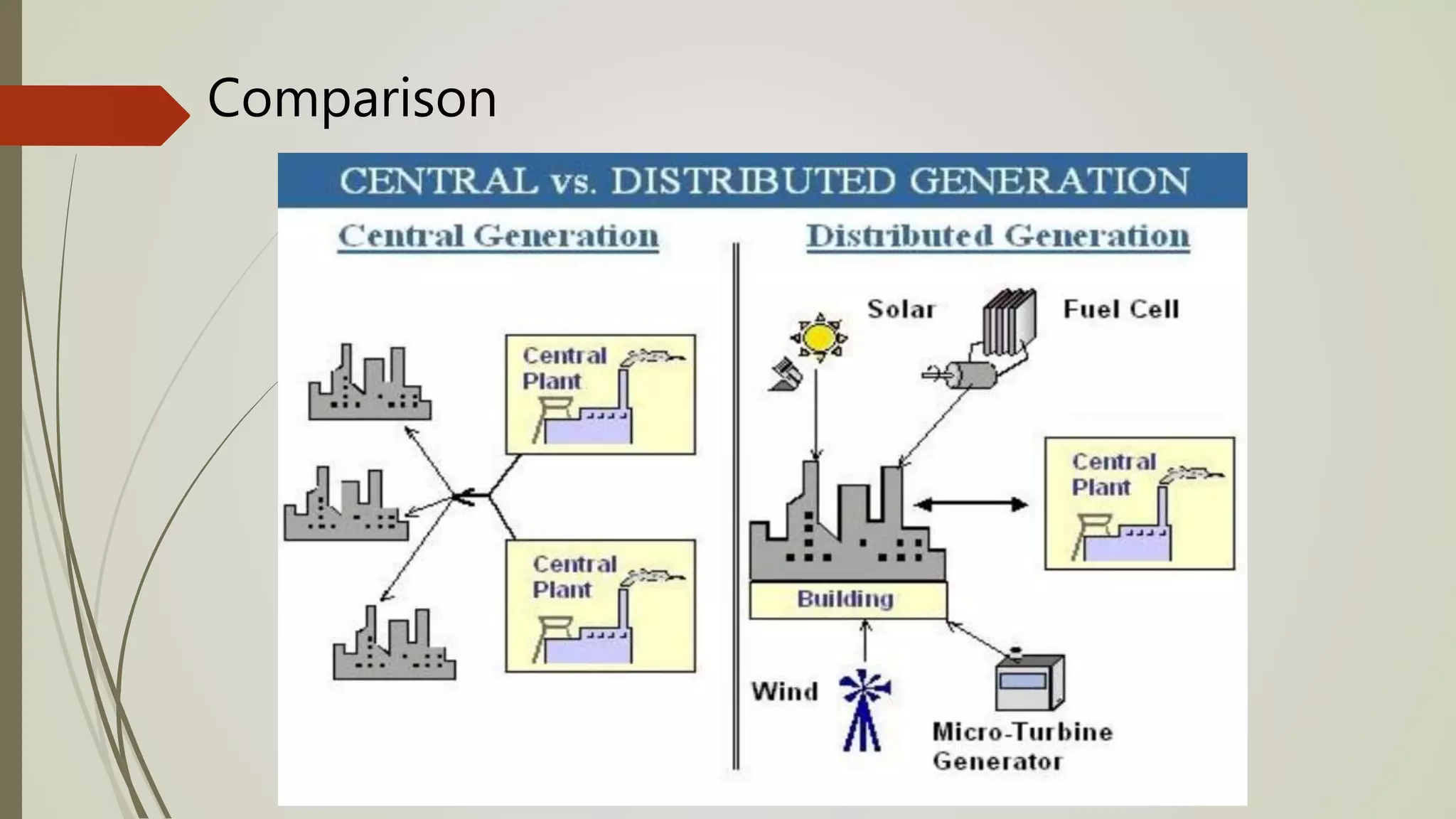
Comparison
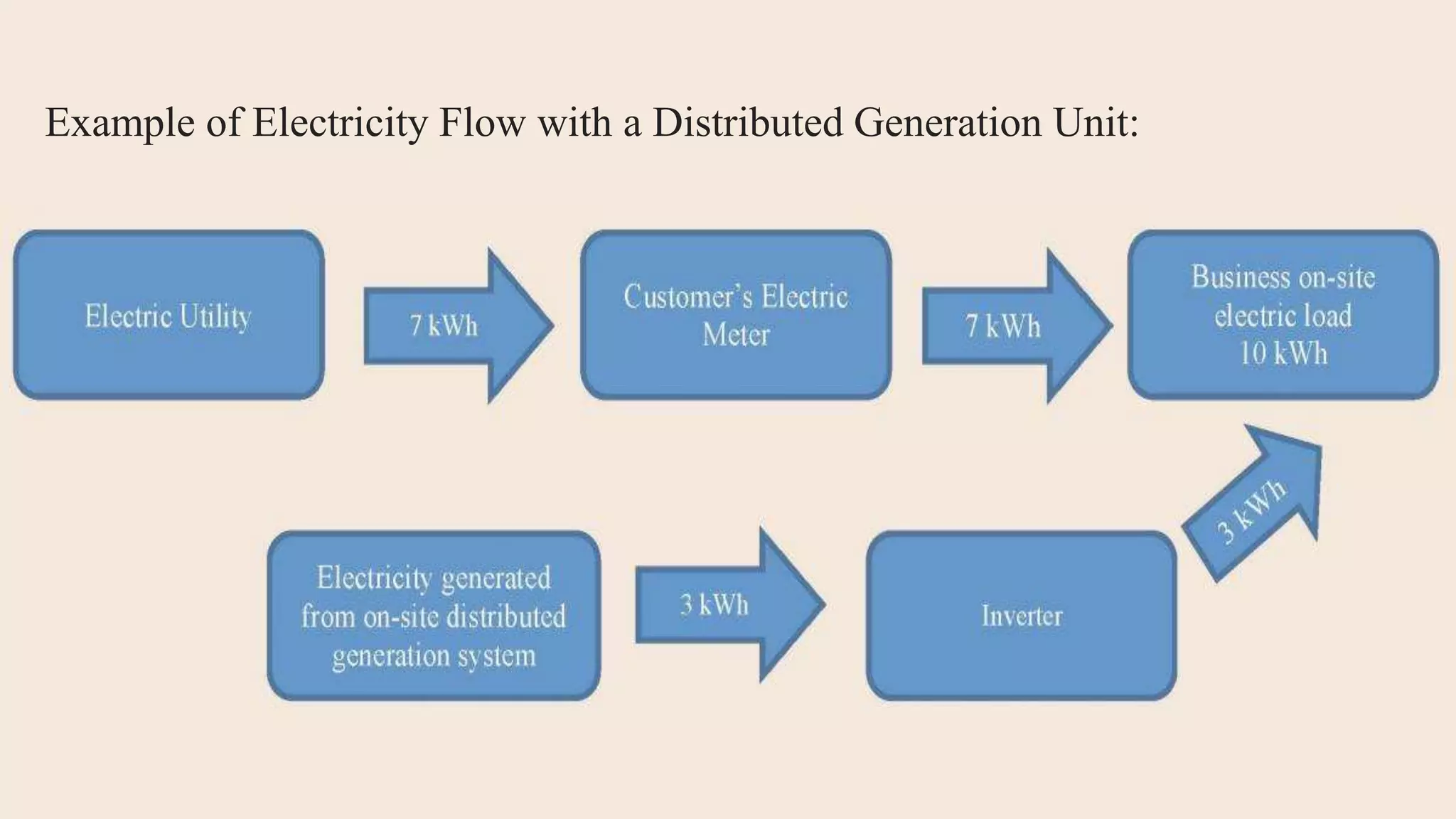
Example of Electricity Flow with a Distributed Generation Unit:
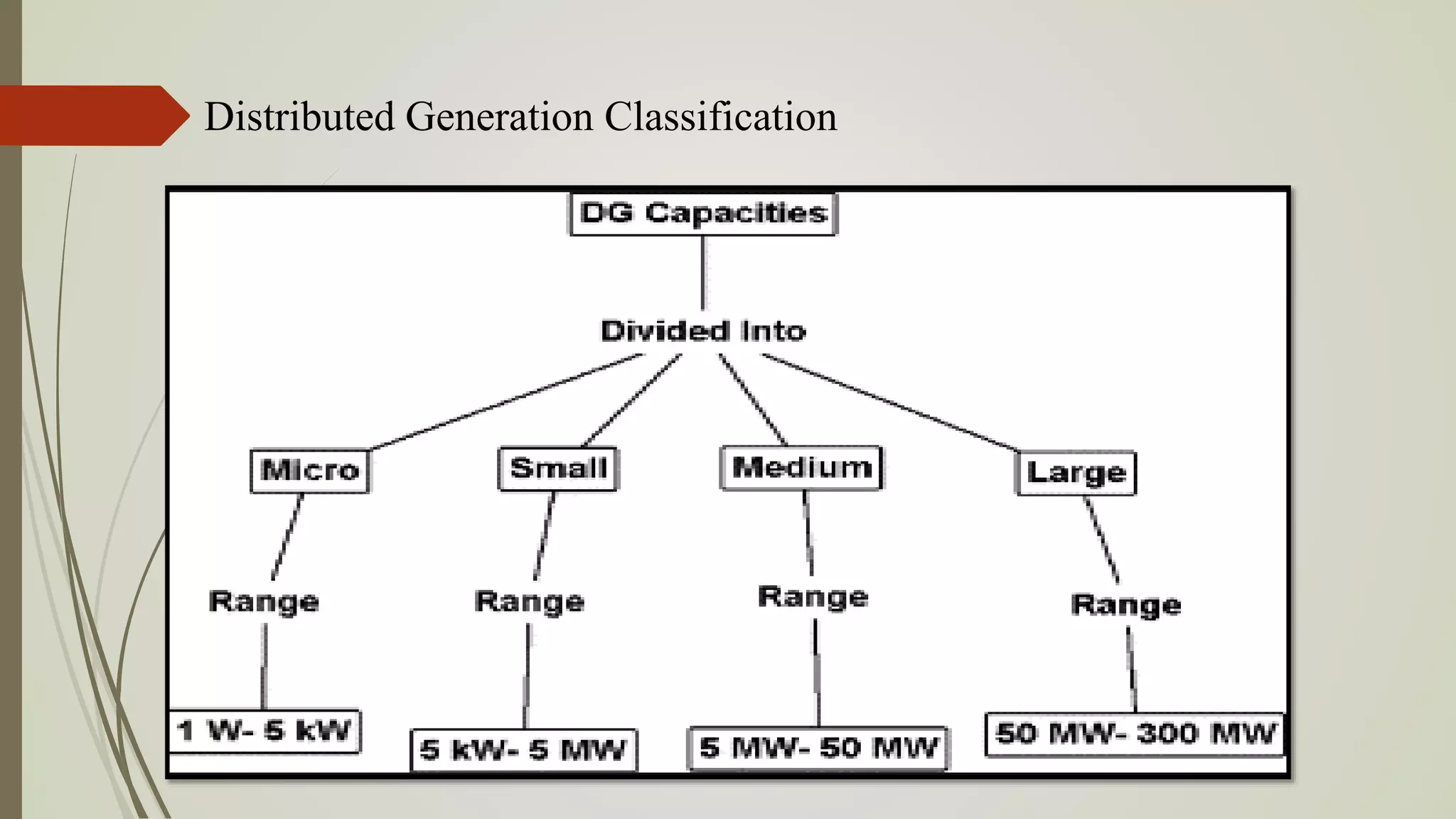
Distributed Generation Classification
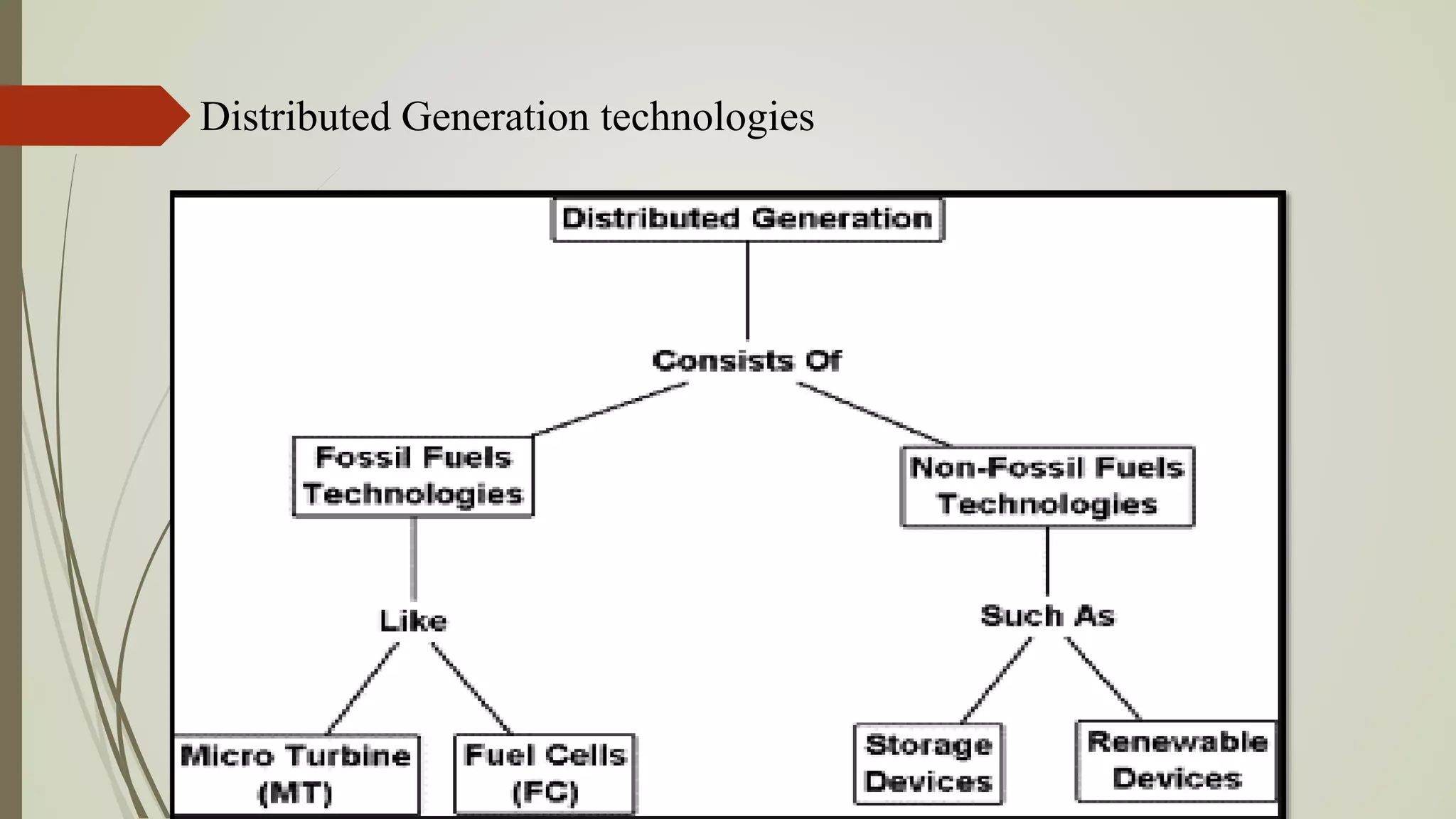
Distributed Generation technologies
Benefits of Distributed Generation
No high peak load shortages
Reduced high transmission and distribution losses
Linking remote and inaccessible areas
Faster response to new power demands
Disadvantages of Distributed Generation
Power Quality
Cost of Operation and Maintenance
Long term reliability of the units
( Not all the DGs types )
Distributed Generation Applications
Continuous Power
Emergency Power System
Standby Power System
Ancillary Service Power
Conclusion:
The distributed generation help us to reduce the cost of the transmission line and the
transmission losses.
Distributed generation play an important role in the field of the electricity
generation whereas Different issues related to power quality.
By generating electricity in smaller amounts closer to end-users, we can
dramatically increase energy efficiency, reduce carbon pollution, improve grid
resiliency, and curtail the need for new transmission investments.

Distributed Generation

  • 1.
    Distributed Generation Musayed MusaybAlruwaili Dr. Tareq Qandel Jouf University
  • 2.
    Introduction Distributed generation (DG),also known as on - site generation, distributed resources (DR), distributed energy resources (DER) or dispersed power (DP) is the use of small - scale power generation technologies located close to the load being served Energy Companies Equipment Suppliers Regulators Energy Users Financial and Supporting Companies
  • 3.
    Most countries generateelectricity in large centralized facilities, such as fossil fuel (coal, gas powered), nuclear, large solar power plants or hydropower plants. These plants have excellent economies of scale, but usually transmit electricity long distances and can negatively affect the environment. Introduction
  • 4.
    Distributed generation reducesthe amount of energy lost in the transmission of electricity because the electricity is generated close to where it is used, and possibly even in the same building. This also reduces the size and number of power lines that must be created Introduction
  • 5.
  • 6.
    Example of ElectricityFlow with a Distributed Generation Unit:
  • 7.
  • 8.
  • 9.
    Benefits of DistributedGeneration No high peak load shortages Reduced high transmission and distribution losses Linking remote and inaccessible areas Faster response to new power demands
  • 10.
    Disadvantages of DistributedGeneration Power Quality Cost of Operation and Maintenance Long term reliability of the units ( Not all the DGs types )
  • 11.
    Distributed Generation Applications ContinuousPower Emergency Power System Standby Power System Ancillary Service Power
  • 12.
    Conclusion: The distributed generationhelp us to reduce the cost of the transmission line and the transmission losses. Distributed generation play an important role in the field of the electricity generation whereas Different issues related to power quality. By generating electricity in smaller amounts closer to end-users, we can dramatically increase energy efficiency, reduce carbon pollution, improve grid resiliency, and curtail the need for new transmission investments.