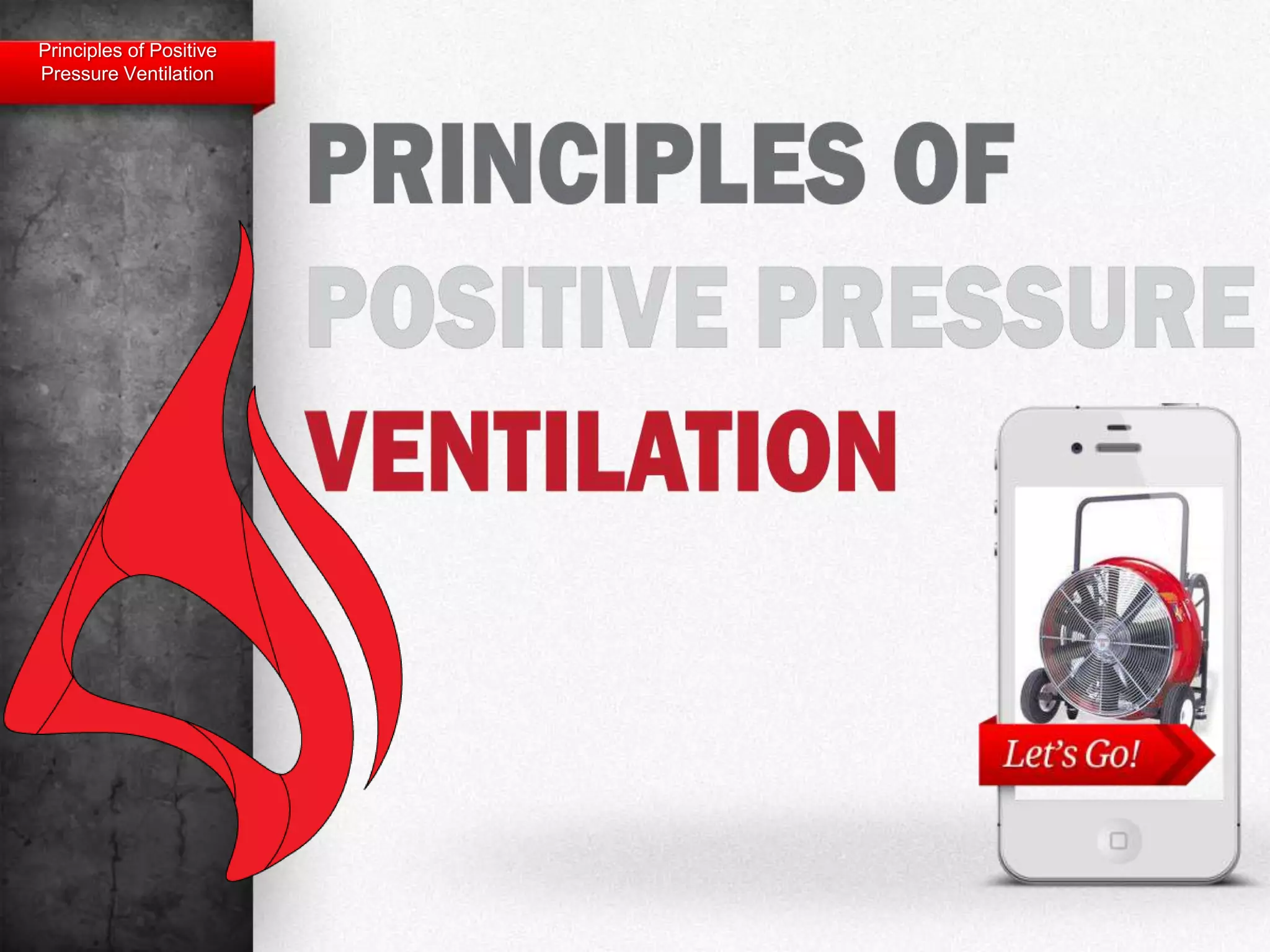
Principles of Positive
Pressure Ventilation
Principles of Positive
Pressure Ventilation

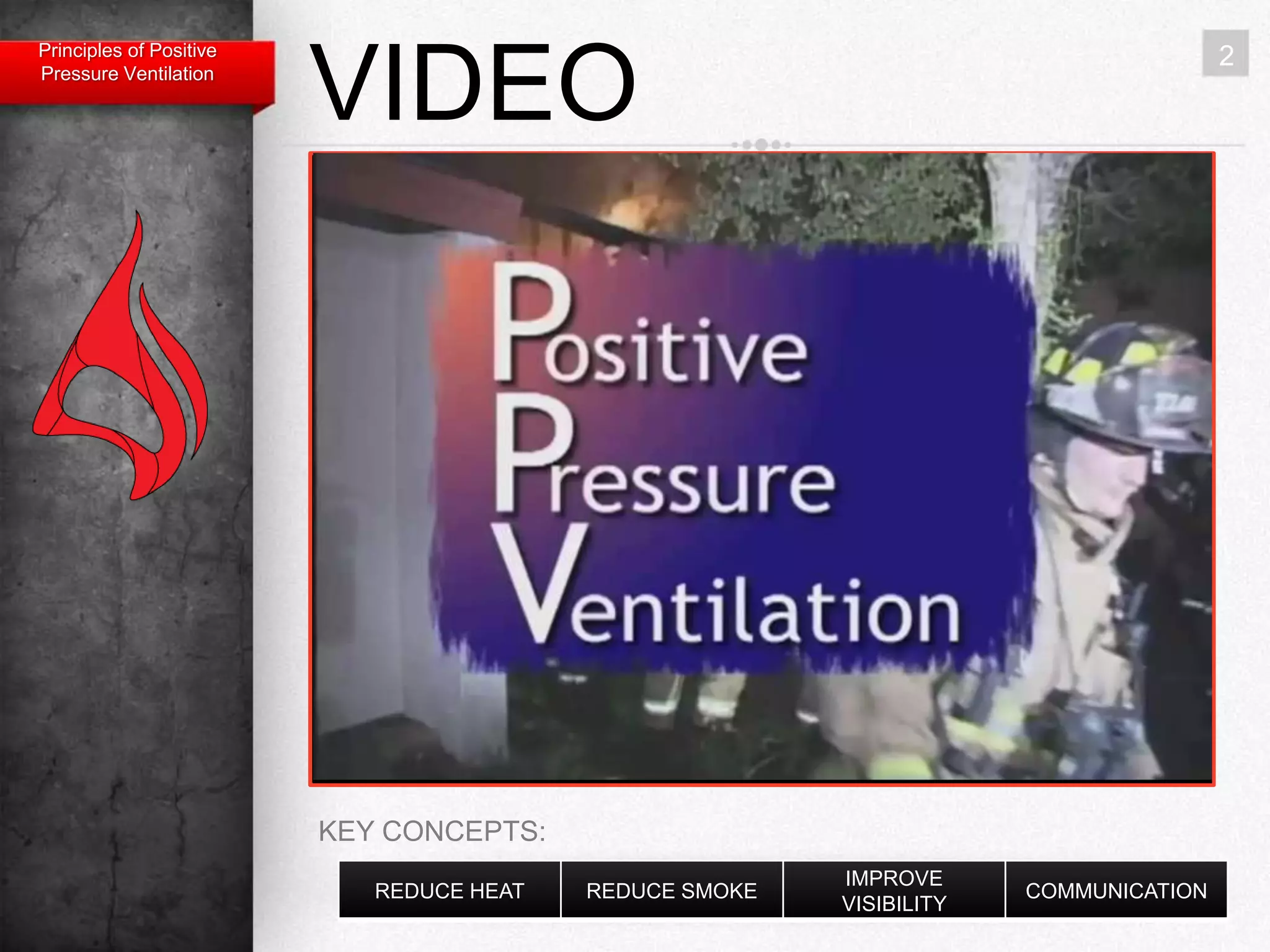
VIDEO

2

KEY CONCEPTS:
REDUCE HEAT

REDUCE SMOKE

IMPROVE
VISIBILITY

COMMUNICATION
Principles of Positive
Pressure Ventilation

3

OVERVIEW
I. PRINCIPLES OF PPV
II. LOCATION

III. MANAGING AIRFLOW
IV.SUCCESSFUL PPV

V. OPERATIONAL CONSIDERATIONS
VI.ADVANTAGES AND DISADVANTAGES OF PPV
Principles of Positive
Pressure Ventilation

4

Principles of PPV
A. Use to supplement natural airflow
1. Note prevailing wind direction
2. Do not try to reverse convection
What is convection?
The transfer of heat energy by the
movement of heated liquids or gases
(heated air and gases rise)
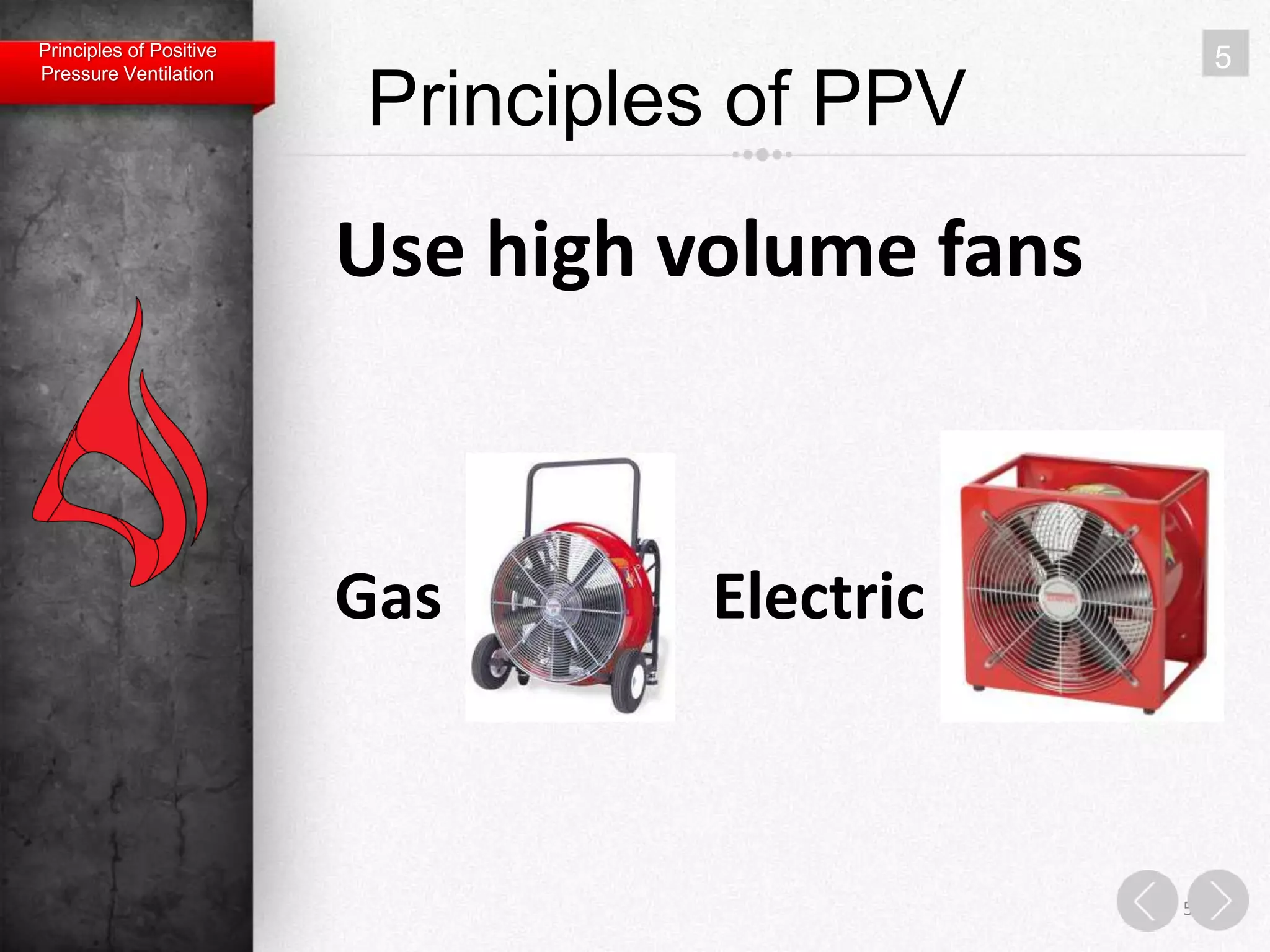
A. Use high volume fans
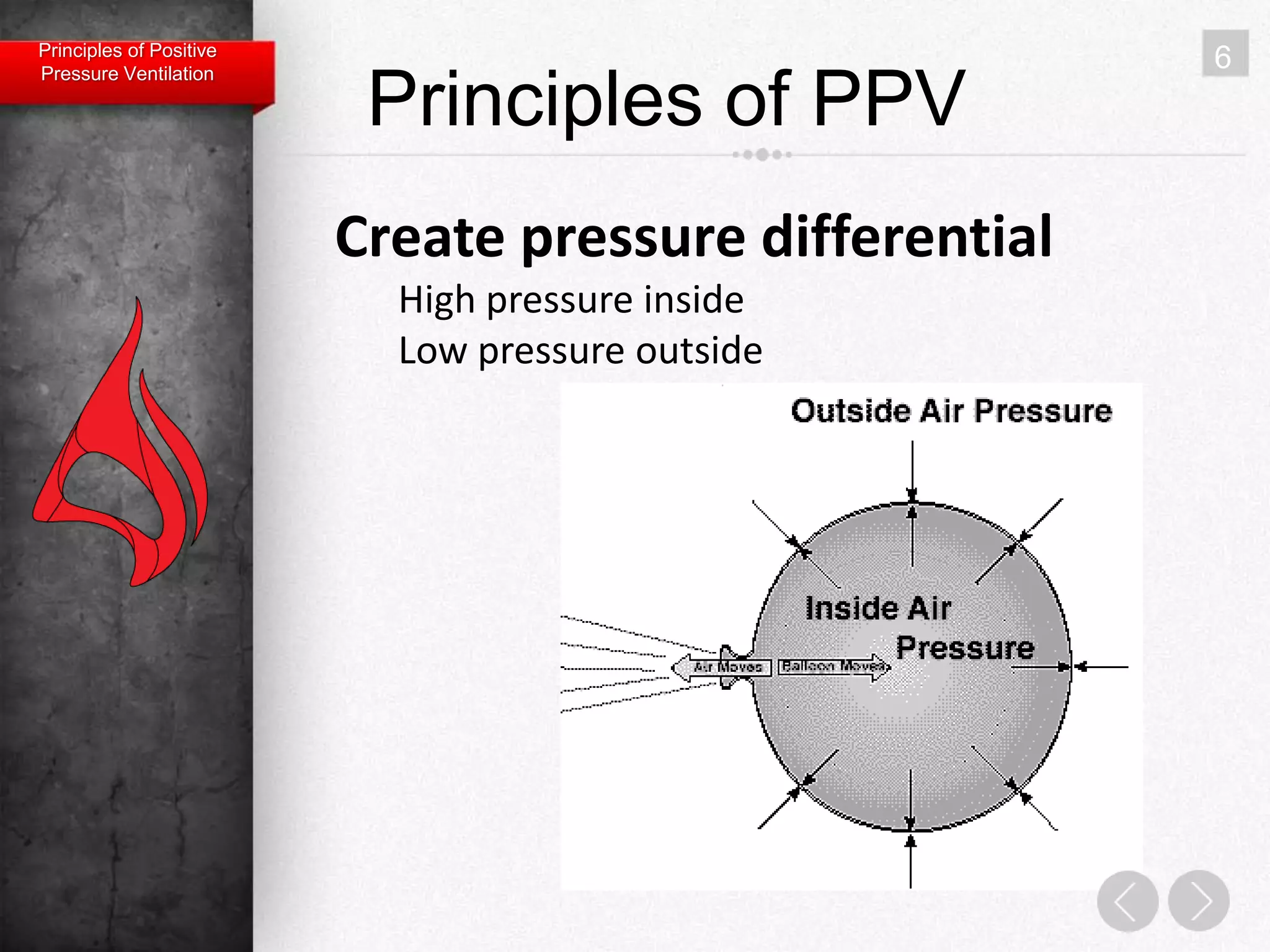
B. Create pressure differential
1. High pressure inside
2. Low pressure outside
C. Smoke seeks an outlet through an opening
controlled by fire fighters
4
Principles of Positive
Pressure Ventilation

5

Principles of PPV

Use high volume fans

Gas

Electric

5
Principles of Positive
Pressure Ventilation

6

Principles of PPV
Create pressure differential
High pressure inside
Low pressure outside

6
Principles of Positive
Pressure Ventilation

7

Location
A. Outside of
building
1. Fans produce
carbon
monoxide
B. At lowest point of
building
C. Cone of air must
fully cover
opening
Principles of Positive
Pressure Ventilation

8

Managing Airflow
A. Systematic process
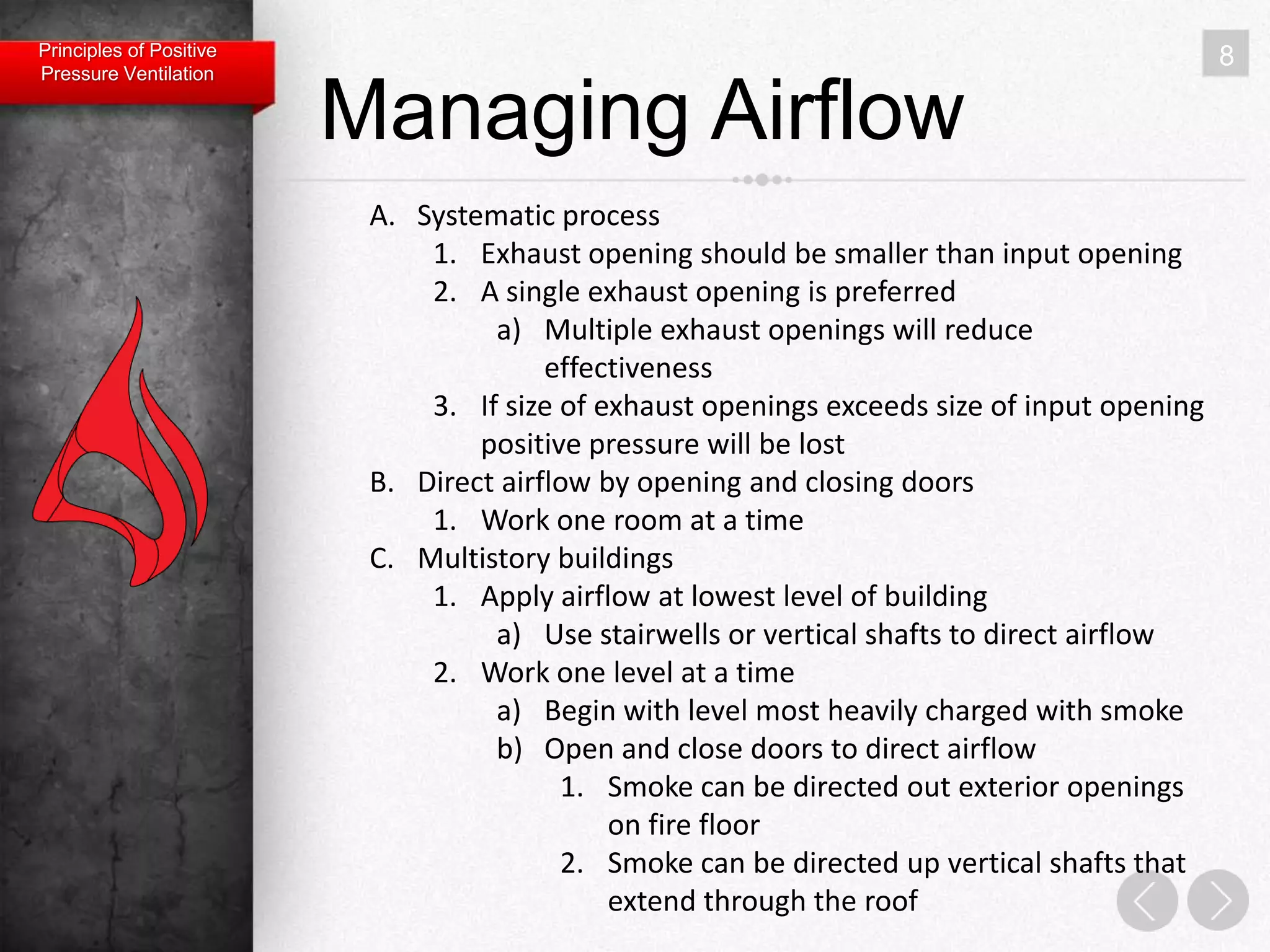
1. Exhaust opening should be smaller than input opening
2. A single exhaust opening is preferred
a) Multiple exhaust openings will reduce
effectiveness
3. If size of exhaust openings exceeds size of input opening
positive pressure will be lost
B. Direct airflow by opening and closing doors
1. Work one room at a time
C. Multistory buildings
1. Apply airflow at lowest level of building
a) Use stairwells or vertical shafts to direct airflow
2. Work one level at a time
a) Begin with level most heavily charged with smoke
b) Open and close doors to direct airflow
1. Smoke can be directed out exterior openings
on fire floor
2. Smoke can be directed up vertical shafts that
extend through the roof
Principles of Positive
Pressure Ventilation

9

Successful PPV
A.Good communications
B.Discipline
C.Building occupants may
compromise operations
1.Occupants leaving building may
alter airflow
2.Curious occupants open doors
and interfere with operations
3.In large buildings it may be
necessary to detail personnel
to patrol openings
Principles of Positive
Pressure Ventilation

10

Operational
Considerations
A. Exhaust openings
1. PPV is not effective if smoke and heat have no
where to go (vertical ventilation)
2. Remove screens, etc.
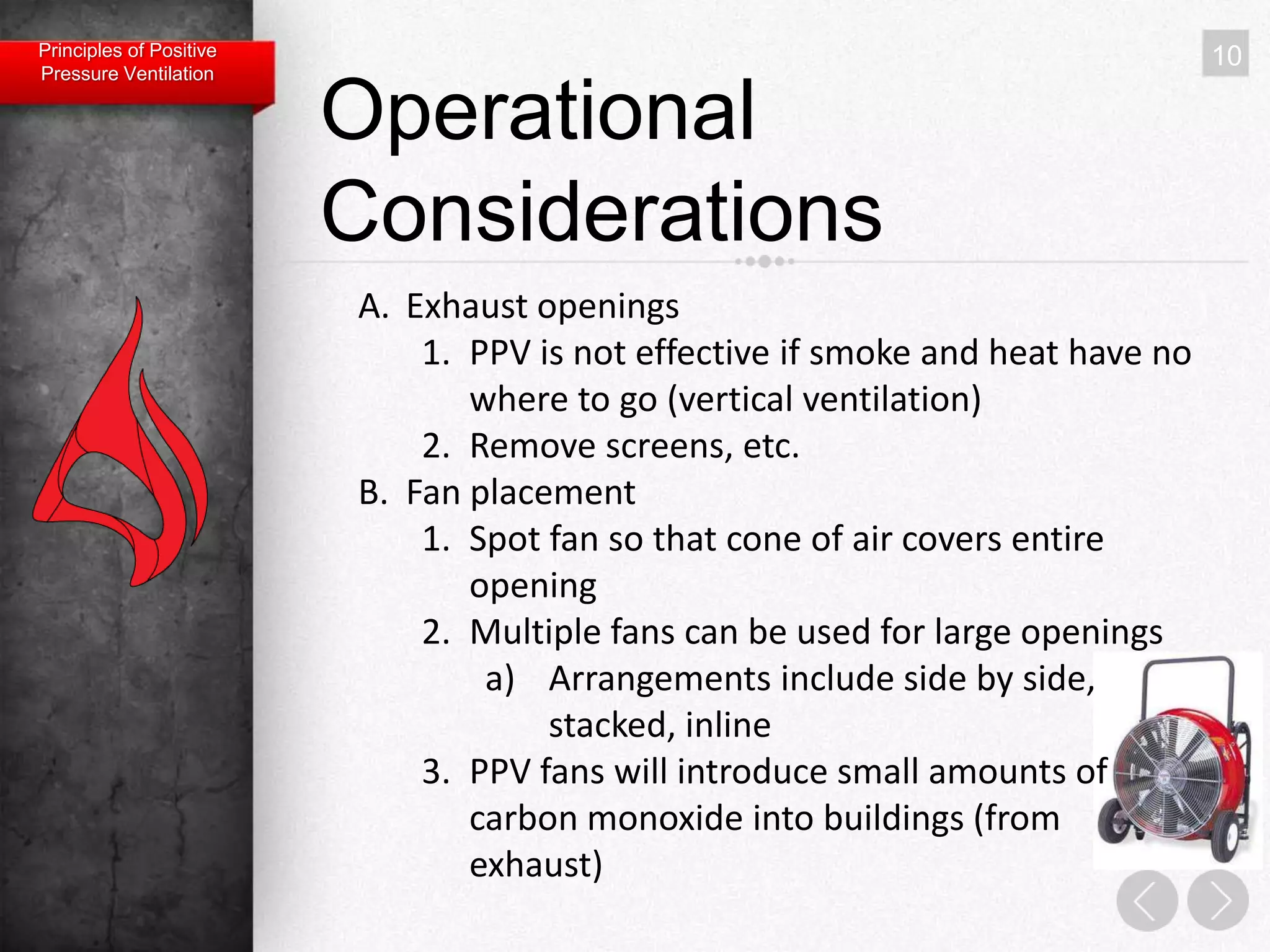
B. Fan placement
1. Spot fan so that cone of air covers entire
opening
2. Multiple fans can be used for large openings
a) Arrangements include side by side,
stacked, inline
3. PPV fans will introduce small amounts of
carbon monoxide into buildings (from
exhaust)
Principles of Positive
Pressure Ventilation

11

Advantages &
Disadvantages of PPV
A. Advantages
1. Set up without entering building
2. Most efficient forced ventilation
technique
3. Effective in very large buildings
B. Disadvantages
1. Structure must be intact (crews must have
the ability to control openings)
2. Introduces carbon monoxide into
structure (exhaust-gas fan)
3. May extend hidden fires
Principles of Positive
Pressure Ventilation

VIDEO-Bad PPV

KEY CONCEPTS:
COMMUNICATION

EGRESS

VERTICAL

PLACEMENT

12
Principles of Positive
Pressure Ventilation

Principles of Positive Pressure Ventilation

  • 1.
  • 2.
    Principles of Positive PressureVentilation VIDEO 2 KEY CONCEPTS: REDUCE HEAT REDUCE SMOKE IMPROVE VISIBILITY COMMUNICATION
  • 3.
    Principles of Positive PressureVentilation 3 OVERVIEW I. PRINCIPLES OF PPV II. LOCATION III. MANAGING AIRFLOW IV.SUCCESSFUL PPV V. OPERATIONAL CONSIDERATIONS VI.ADVANTAGES AND DISADVANTAGES OF PPV
  • 4.
    Principles of Positive PressureVentilation 4 Principles of PPV A. Use to supplement natural airflow 1. Note prevailing wind direction 2. Do not try to reverse convection What is convection? The transfer of heat energy by the movement of heated liquids or gases (heated air and gases rise) A. Use high volume fans B. Create pressure differential 1. High pressure inside 2. Low pressure outside C. Smoke seeks an outlet through an opening controlled by fire fighters 4
  • 5.
    Principles of Positive PressureVentilation 5 Principles of PPV Use high volume fans Gas Electric 5
  • 6.
    Principles of Positive PressureVentilation 6 Principles of PPV Create pressure differential High pressure inside Low pressure outside 6
  • 7.
    Principles of Positive PressureVentilation 7 Location A. Outside of building 1. Fans produce carbon monoxide B. At lowest point of building C. Cone of air must fully cover opening
  • 8.
    Principles of Positive PressureVentilation 8 Managing Airflow A. Systematic process 1. Exhaust opening should be smaller than input opening 2. A single exhaust opening is preferred a) Multiple exhaust openings will reduce effectiveness 3. If size of exhaust openings exceeds size of input opening positive pressure will be lost B. Direct airflow by opening and closing doors 1. Work one room at a time C. Multistory buildings 1. Apply airflow at lowest level of building a) Use stairwells or vertical shafts to direct airflow 2. Work one level at a time a) Begin with level most heavily charged with smoke b) Open and close doors to direct airflow 1. Smoke can be directed out exterior openings on fire floor 2. Smoke can be directed up vertical shafts that extend through the roof
  • 9.
    Principles of Positive PressureVentilation 9 Successful PPV A.Good communications B.Discipline C.Building occupants may compromise operations 1.Occupants leaving building may alter airflow 2.Curious occupants open doors and interfere with operations 3.In large buildings it may be necessary to detail personnel to patrol openings
  • 10.
    Principles of Positive PressureVentilation 10 Operational Considerations A. Exhaust openings 1. PPV is not effective if smoke and heat have no where to go (vertical ventilation) 2. Remove screens, etc. B. Fan placement 1. Spot fan so that cone of air covers entire opening 2. Multiple fans can be used for large openings a) Arrangements include side by side, stacked, inline 3. PPV fans will introduce small amounts of carbon monoxide into buildings (from exhaust)
  • 11.
    Principles of Positive PressureVentilation 11 Advantages & Disadvantages of PPV A. Advantages 1. Set up without entering building 2. Most efficient forced ventilation technique 3. Effective in very large buildings B. Disadvantages 1. Structure must be intact (crews must have the ability to control openings) 2. Introduces carbon monoxide into structure (exhaust-gas fan) 3. May extend hidden fires
  • 12.
    Principles of Positive PressureVentilation VIDEO-Bad PPV KEY CONCEPTS: COMMUNICATION EGRESS VERTICAL PLACEMENT 12
  • 13.

Editor's Notes

  • #4 Click in the text boxes to edit their content.
  • #5 Goals: Reduce Heat & Smoke, Improve Visibility
  • #9 How many exhaust openings should there be?How can you direct airflow within a building?How can airflow be directed to floors above ground?
  • #11 How would you set up PPV at a large opening (e.g., roll up door)? Tandem, SeriesMonitor CO with 4-gas monitor