Essentials of Fire Fighting
6th Edition
Firefighter I
Chapter 10 — Scene Lighting,
Rescue Tools, Vehicle
Extrication, and Technical
Rescue
Identify types of emergency scene
lighting equipment.
Learning Objective 1
10–2
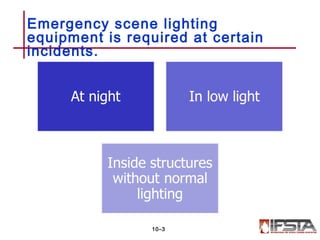
Emergency scene lighting
equipment is required at certain
incidents.
10–3
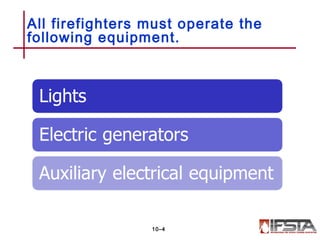
All firefighters must operate the
following equipment.
10–4
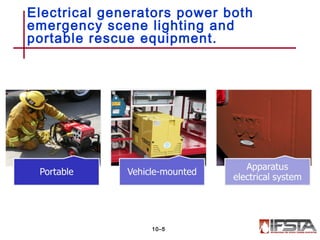
Electrical generators power both
emergency scene lighting and
portable rescue equipment.
10–5
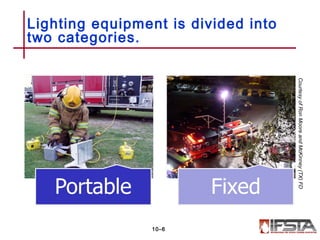
Lighting equipment is divided into
two categories.
10–6
CourtesyofRonMooreandMcKinney(TX)FD
CAUTION
Never connect more lights than the
power source can support. Overtaxing
the power source results in poor lighting
and possible damage to the lights,
generator, or electrical system. It may
also restrict the operation of other tools
using the same power source.
10–7
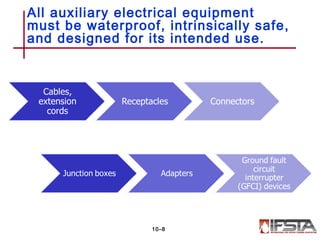
All auxiliary electrical equipment
must be waterproof, intrinsically safe,
and designed for its intended use.
10–8
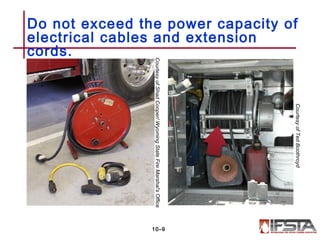
Do not exceed the power capacity of
electrical cables and extension
cords.
10–9
CourtesyofShadCooper/WyomingStateFireMarshal'sOffice
CourtesyofTedBoothroyd
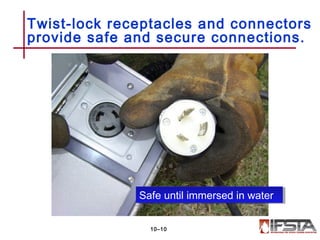
Twist-lock receptacles and connectors
provide safe and secure connections.
10–10
Safe until immersed in waterSafe until immersed in water
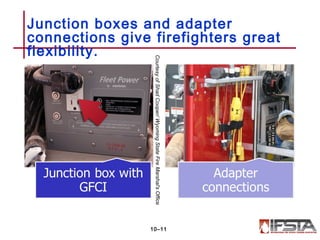
Junction boxes and adapter
connections give firefighters great
flexibility.
10–11
CourtesyofShadCooper/WyomingStateFireMarshal'sOffice
REVIEW QUESTION
What types of emergency scene
lighting equipment can be used for
vehicle extrication and technical
rescue incidents?
10–12
• Your duties include using lighting
equipment of all types while at
emergency scenes.
Summary
10–13

Chapter 10 power point

  • 1.
    Essentials of FireFighting 6th Edition Firefighter I Chapter 10 — Scene Lighting, Rescue Tools, Vehicle Extrication, and Technical Rescue
  • 2.
    Identify types ofemergency scene lighting equipment. Learning Objective 1 10–2
  • 3.
    Emergency scene lighting equipmentis required at certain incidents. 10–3
  • 4.
    All firefighters mustoperate the following equipment. 10–4
  • 5.
    Electrical generators powerboth emergency scene lighting and portable rescue equipment. 10–5
  • 6.
    Lighting equipment isdivided into two categories. 10–6 CourtesyofRonMooreandMcKinney(TX)FD
  • 7.
    CAUTION Never connect morelights than the power source can support. Overtaxing the power source results in poor lighting and possible damage to the lights, generator, or electrical system. It may also restrict the operation of other tools using the same power source. 10–7
  • 8.
    All auxiliary electricalequipment must be waterproof, intrinsically safe, and designed for its intended use. 10–8
  • 9.
    Do not exceedthe power capacity of electrical cables and extension cords. 10–9 CourtesyofShadCooper/WyomingStateFireMarshal'sOffice CourtesyofTedBoothroyd
  • 10.
    Twist-lock receptacles andconnectors provide safe and secure connections. 10–10 Safe until immersed in waterSafe until immersed in water
  • 11.
    Junction boxes andadapter connections give firefighters great flexibility. 10–11 CourtesyofShadCooper/WyomingStateFireMarshal'sOffice
  • 12.
    REVIEW QUESTION What typesof emergency scene lighting equipment can be used for vehicle extrication and technical rescue incidents? 10–12
  • 13.
    • Your dutiesinclude using lighting equipment of all types while at emergency scenes. Summary 10–13