Training on Basic Fire Safety & Extinguishing
Training Conducted By
Engr. Ali Kamal Mostofa Rubel(Electrical)
MPH in Occupational Health & Safety
alikamalmostofa@gmail.com
+880 1682560119
Objective
 1. What is Fire?
 2. Fire Tetrahedral
 3. Class of Fire
 4. Stage of Fire
 5. How to Extinguish Fire
 6. Fire Fighting System
 7. How to use Fire Extinguisher
 8. Fire Fighting Team
What is Fire?
The rapid oxidation of a fuel evolving heat,
particulates, gases and non- ionizing radiation.
Another point of view
Fire is a chemical reaction among Heat, Fuel and
Oxygen with considering of Flash point.
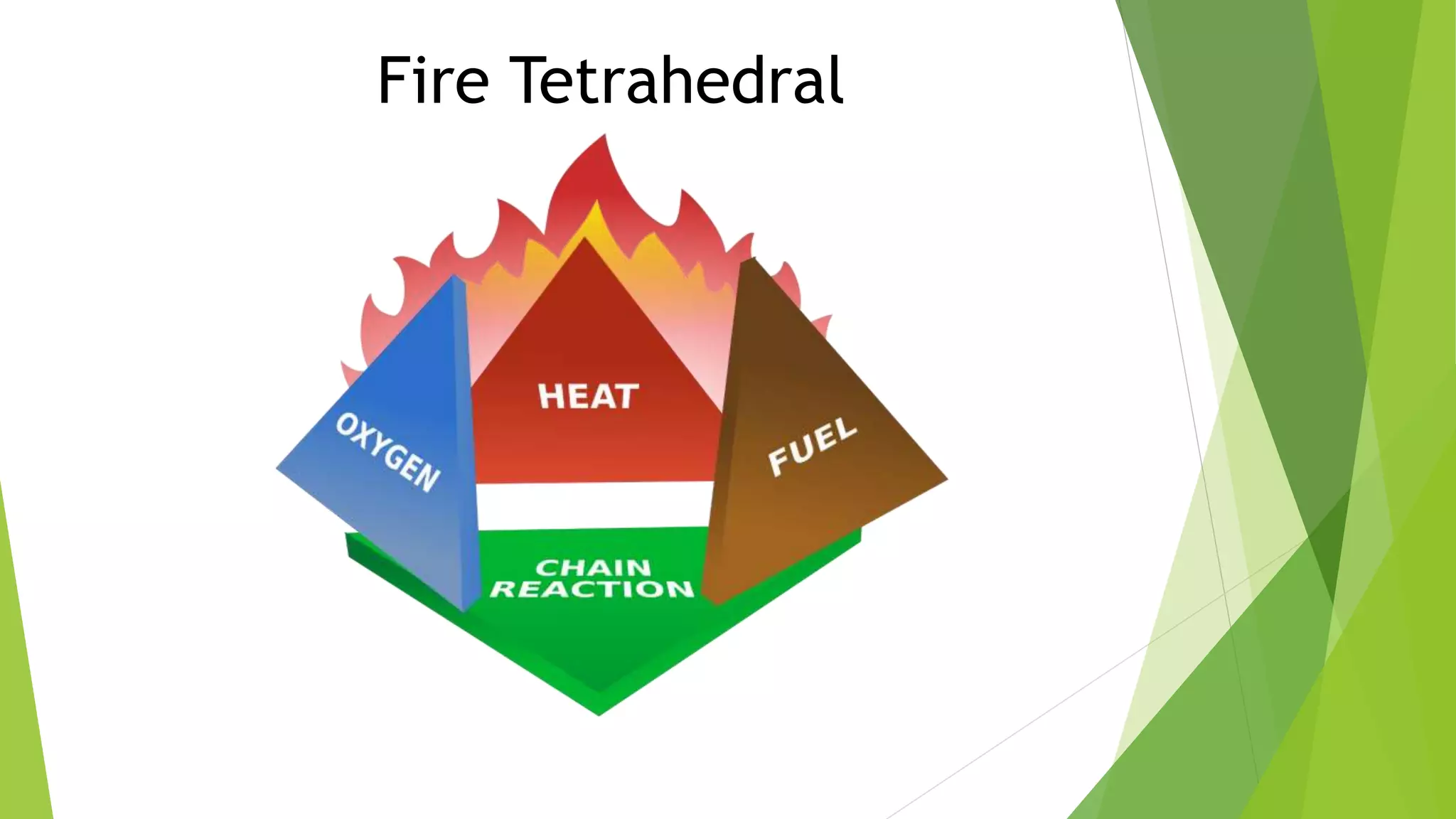
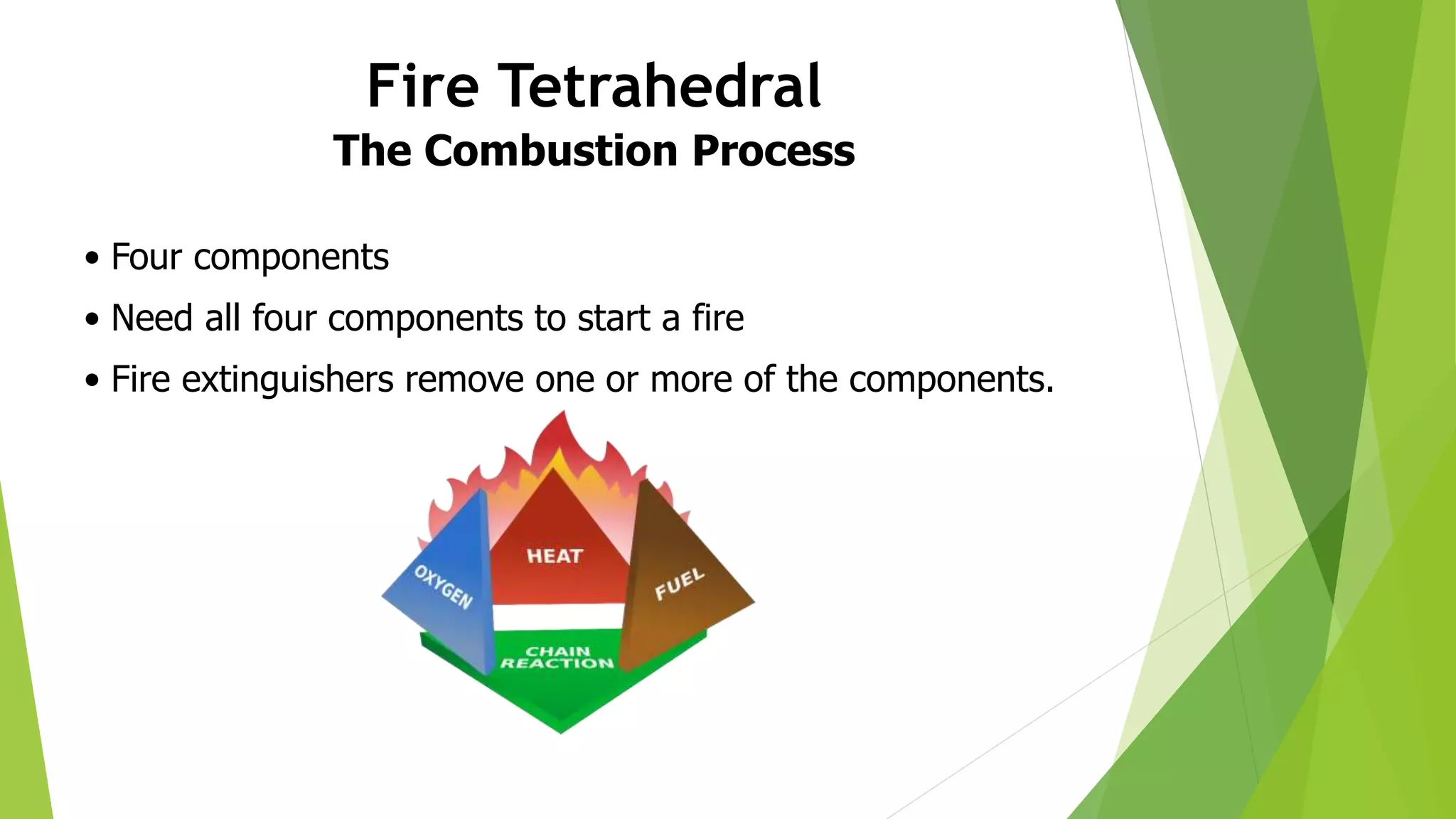
Fire Tetrahedral
Fire Tetrahedral
The Combustion Process
• Four components
• Need all four components to start a fire
• Fire extinguishers remove one or more of the components.
Class of Fire
1. Solid fire - Class – A
2. Liquid fire - Class – B
3. Gas fire - Class – C
4. Metal fire - Class – D
5. Electrical fire - Class – E
6. Cooking fire - Class – F
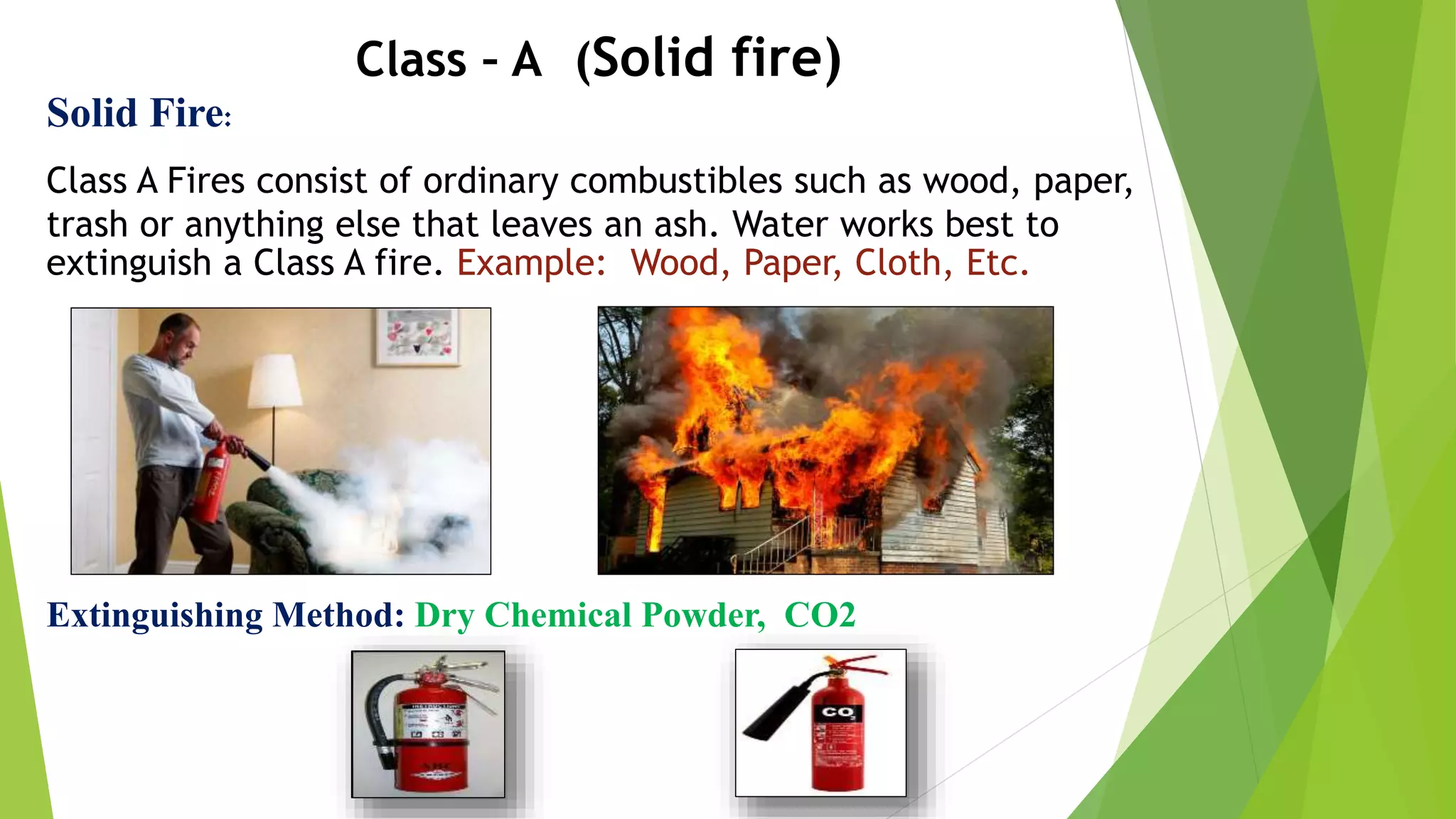
Class – A (Solid fire)
Solid Fire:
Class A Fires consist of ordinary combustibles such as wood, paper,
trash or anything else that leaves an ash. Water works best to
extinguish a Class A fire. Example: Wood, Paper, Cloth, Etc.
Extinguishing Method: Dry Chemical Powder, CO2
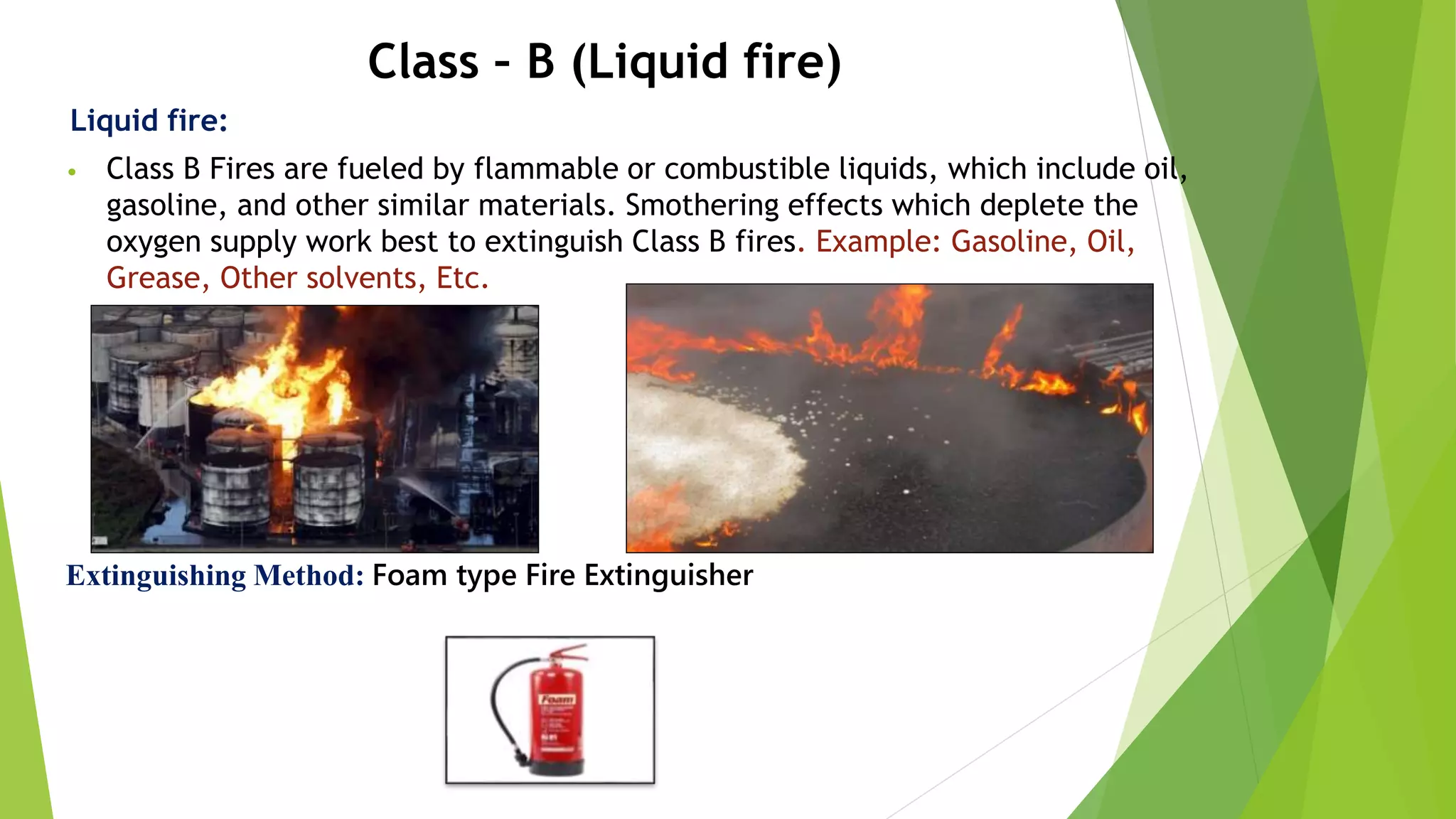
Class – B (Liquid fire)
Liquid fire:
• Class B Fires are fueled by flammable or combustible liquids, which include oil,
gasoline, and other similar materials. Smothering effects which deplete the
oxygen supply work best to extinguish Class B fires. Example: Gasoline, Oil,
Grease, Other solvents, Etc.
Extinguishing Method: Foam type Fire Extinguisher
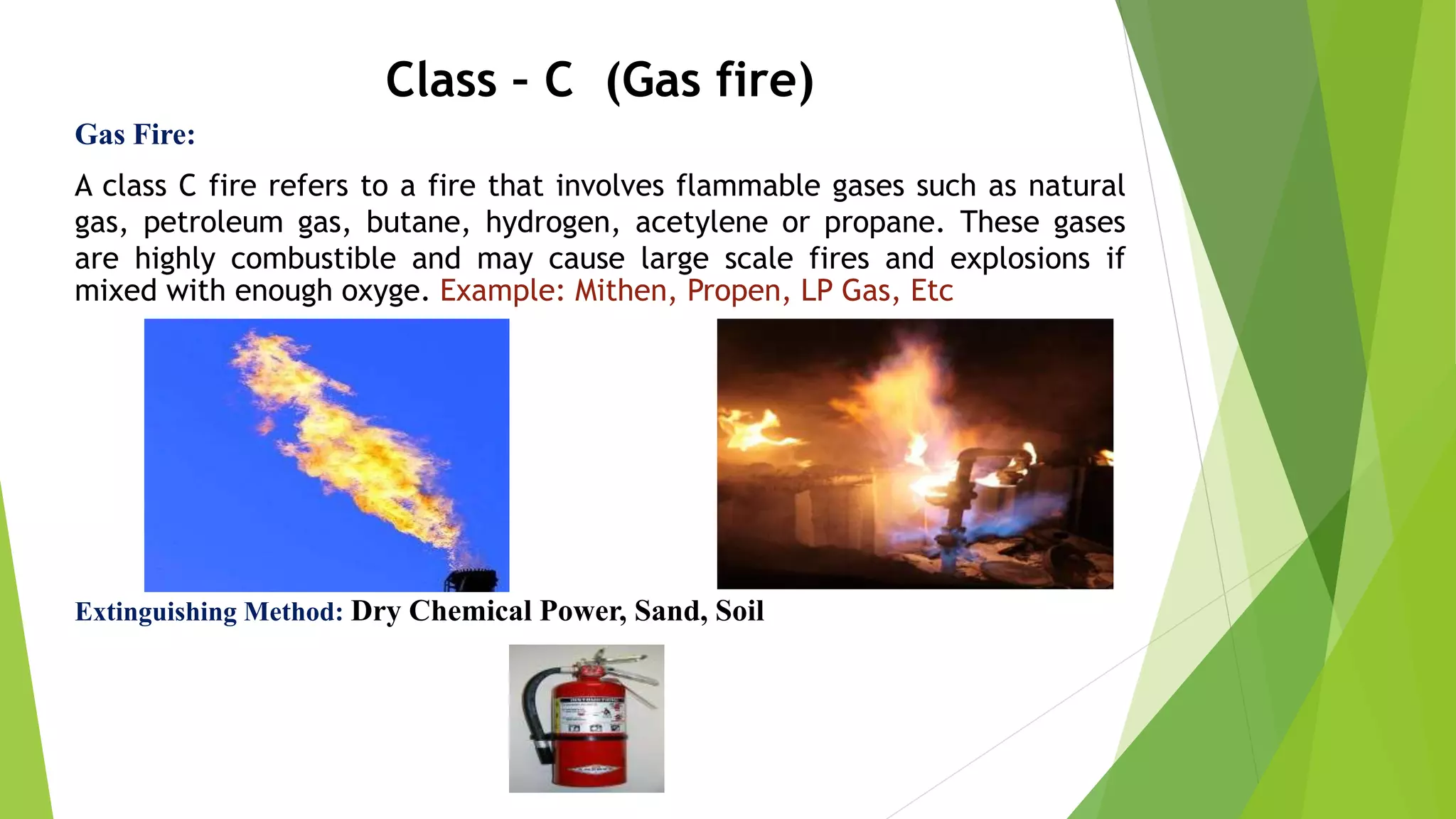
Class – C (Gas fire)
Gas Fire:
A class C fire refers to a fire that involves flammable gases such as natural
gas, petroleum gas, butane, hydrogen, acetylene or propane. These gases
are highly combustible and may cause large scale fires and explosions if
mixed with enough oxyge. Example: Mithen, Propen, LP Gas, Etc
Extinguishing Method: Dry Chemical Power, Sand, Soil
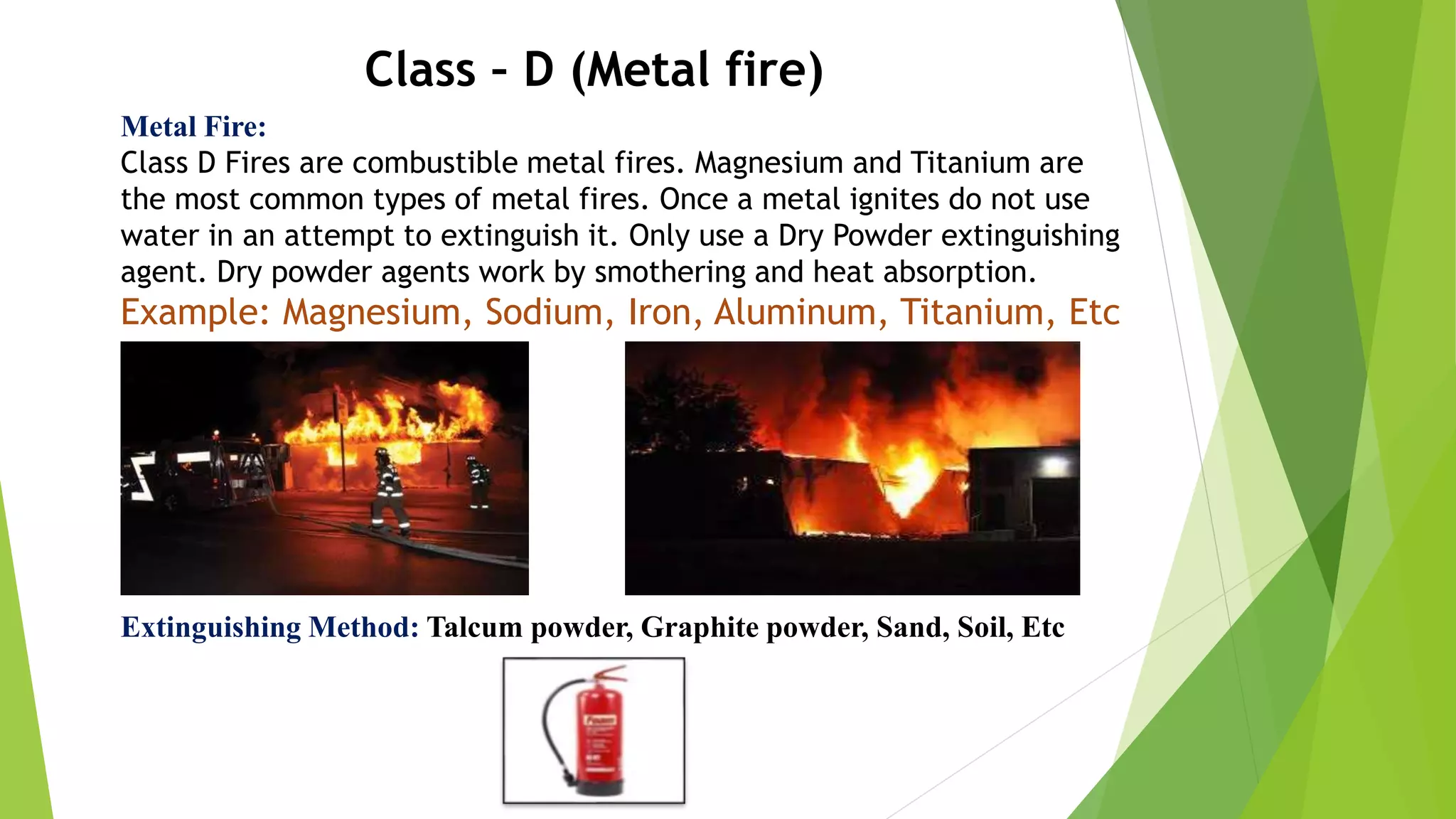
Class – D (Metal fire)
Metal Fire:
Class D Fires are combustible metal fires. Magnesium and Titanium are
the most common types of metal fires. Once a metal ignites do not use
water in an attempt to extinguish it. Only use a Dry Powder extinguishing
agent. Dry powder agents work by smothering and heat absorption.
Example: Magnesium, Sodium, Iron, Aluminum, Titanium, Etc
Extinguishing Method: Talcum powder, Graphite powder, Sand, Soil, Etc
Class – E (Electrical fire)
Electrical Fire: Class C Fires. Energized Electrical Fires are known as Class
C fires. Always de-energize the circuit then use a non-conductive
extinguishing agent. Such as Carbon dioxide. Example: Computer, Fax
machine, Etc
Extinguishing Method: CO2, Dry Chemical Powder
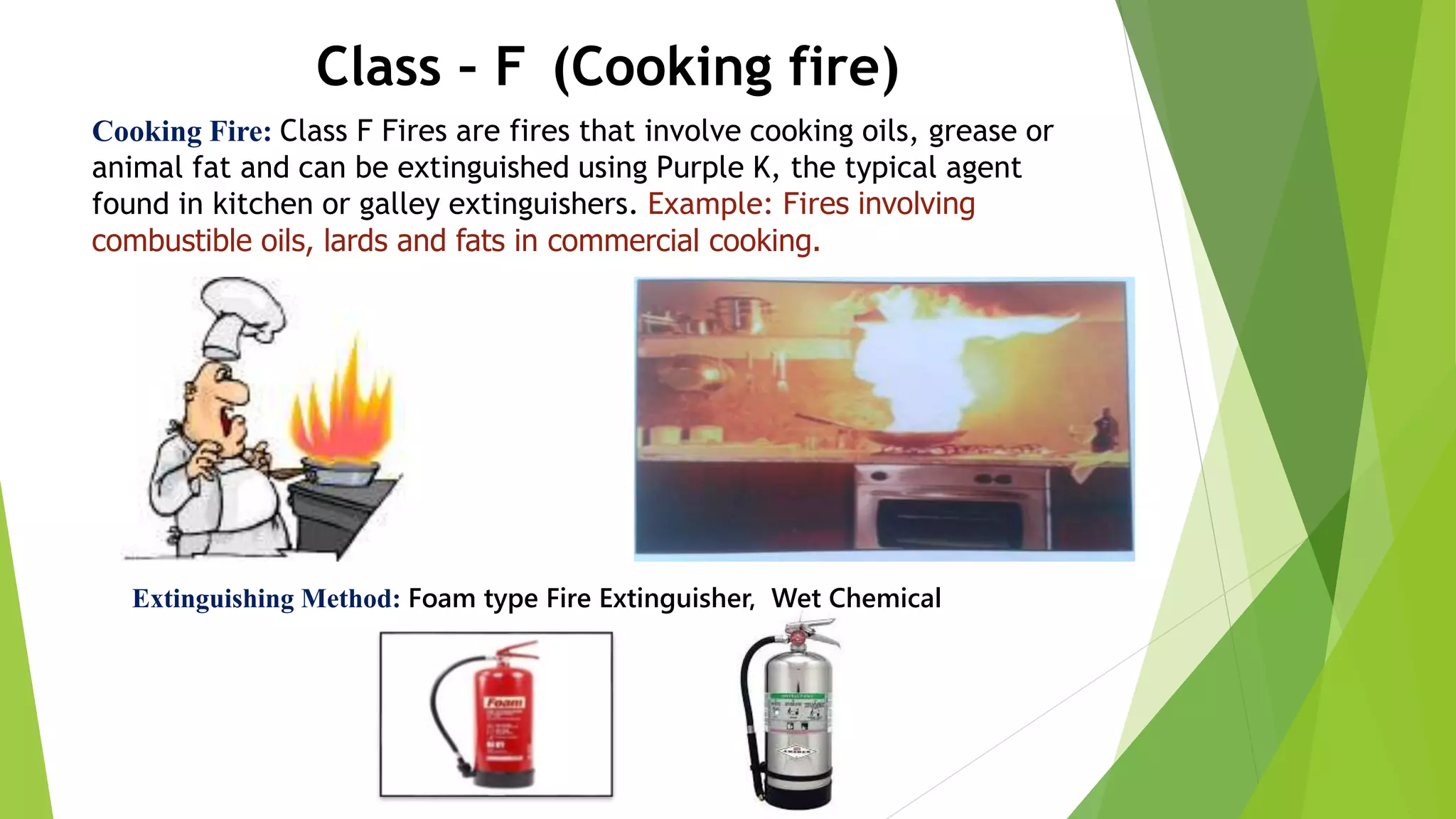
Class – F (Cooking fire)
Cooking Fire: Class F Fires are fires that involve cooking oils, grease or
animal fat and can be extinguished using Purple K, the typical agent
found in kitchen or galley extinguishers. Example: Fires involving
combustible oils, lards and fats in commercial cooking.
Extinguishing Method: Foam type Fire Extinguisher, Wet Chemical
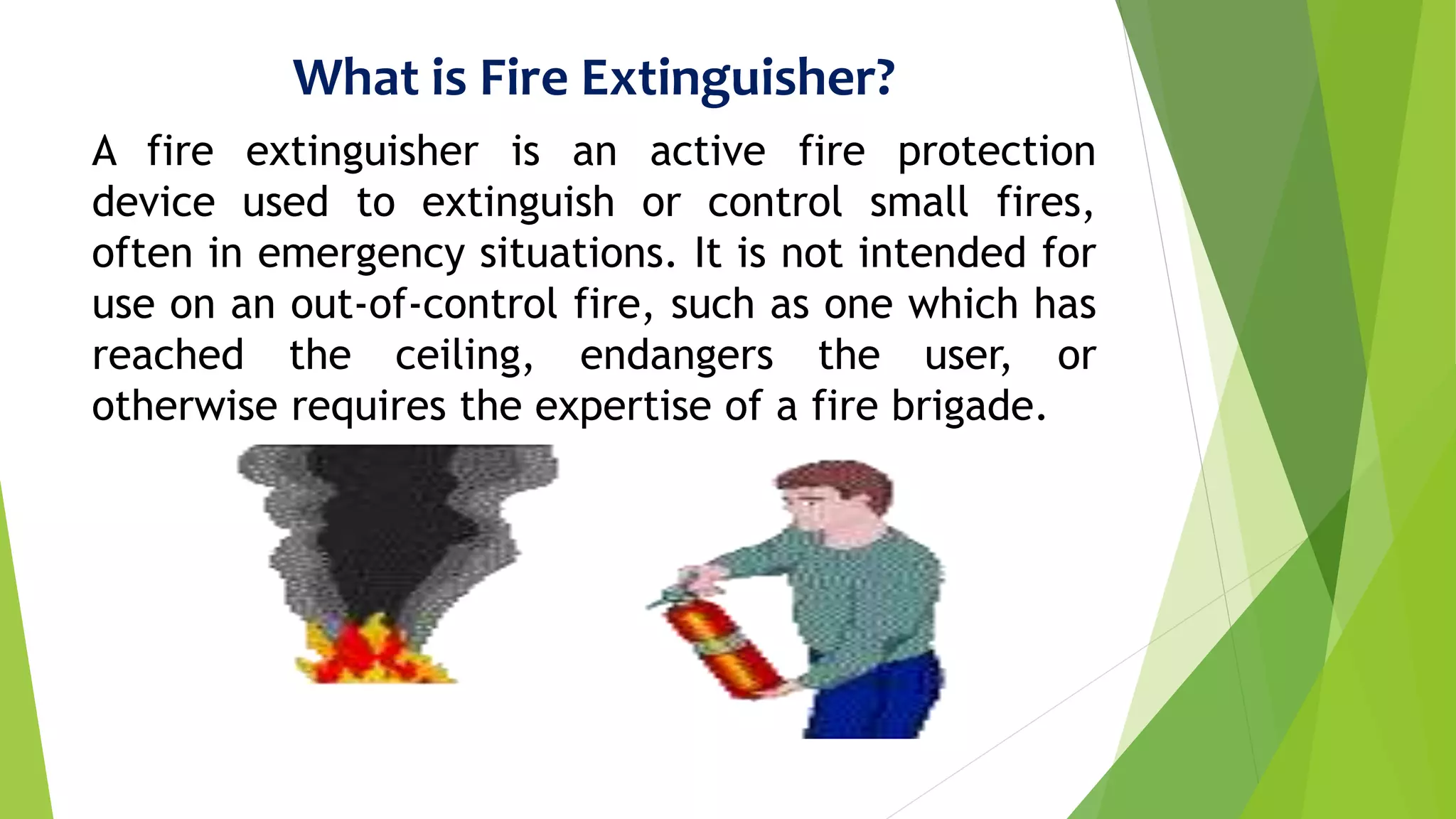
What is Fire Extinguisher?
A fire extinguisher is an active fire protection
device used to extinguish or control small fires,
often in emergency situations. It is not intended for
use on an out-of-control fire, such as one which has
reached the ceiling, endangers the user, or
otherwise requires the expertise of a fire brigade.
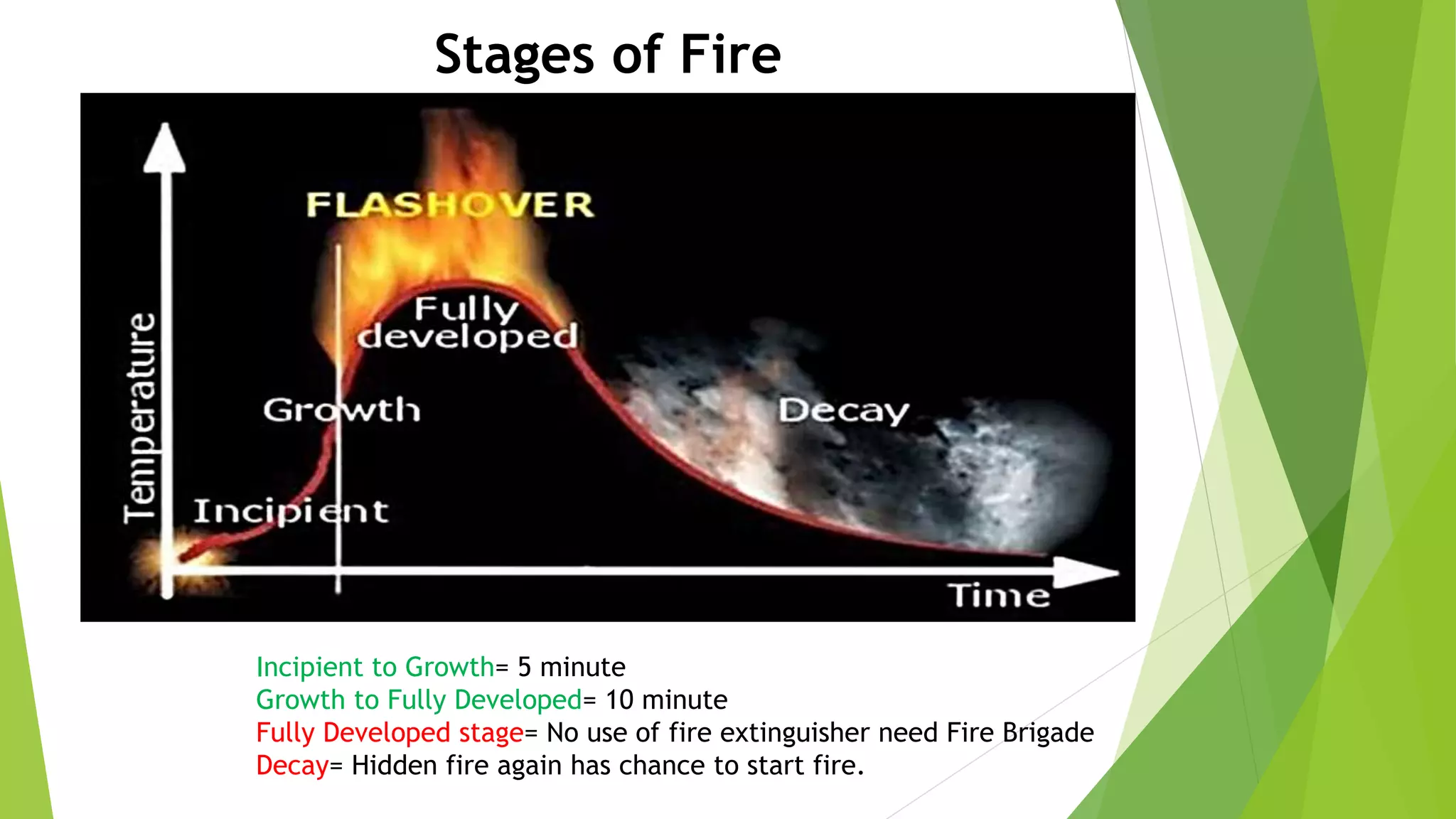
Stages of Fire
Incipient to Growth= 5 minute
Growth to Fully Developed= 10 minute
Fully Developed stage= No use of fire extinguisher need Fire Brigade
Decay= Hidden fire again has chance to start fire.
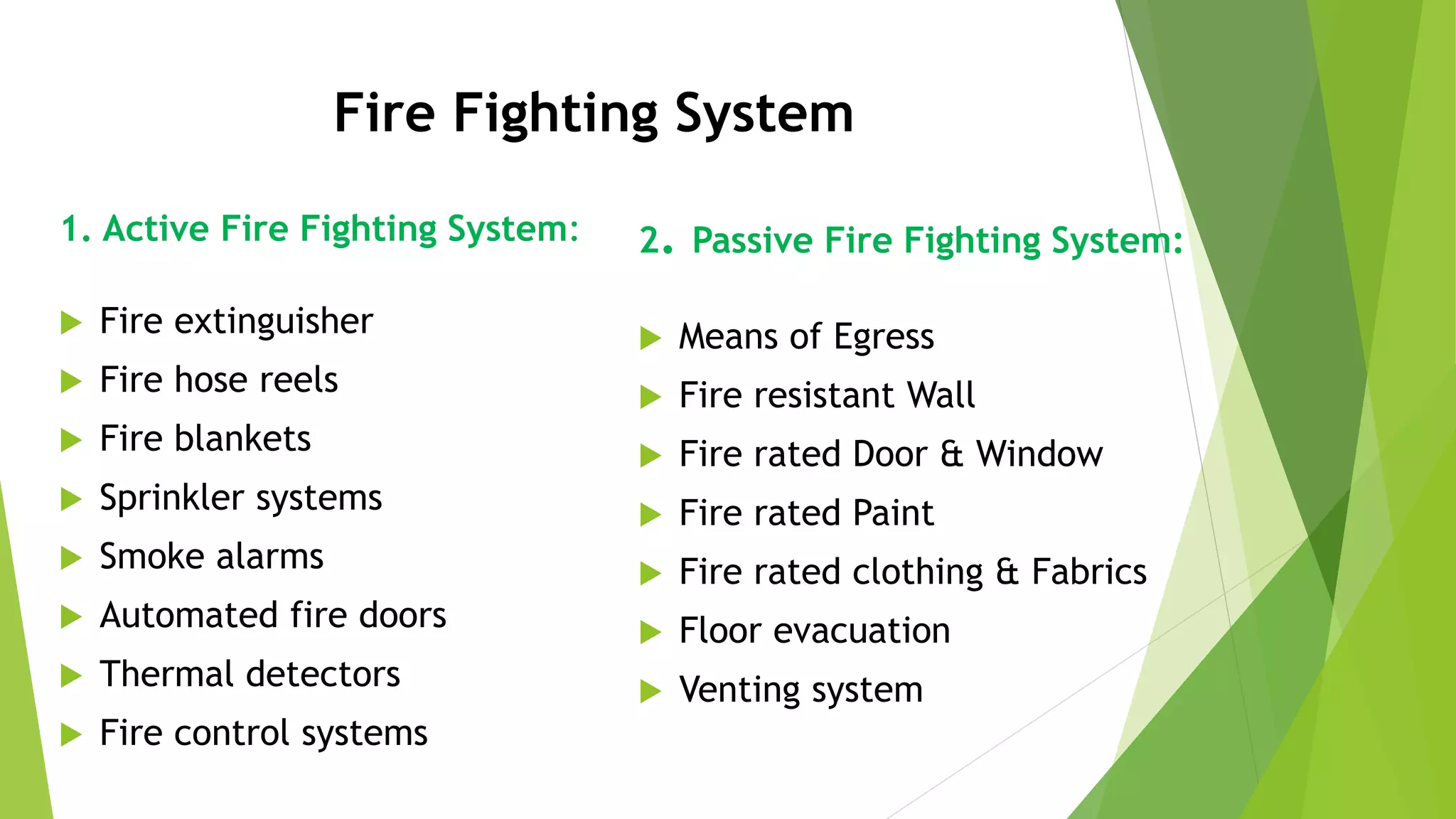
Fire Fighting System
1. Active Fire Fighting System:
 Fire extinguisher
 Fire hose reels
 Fire blankets
 Sprinkler systems
 Smoke alarms
 Automated fire doors
 Thermal detectors
 Fire control systems
2. Passive Fire Fighting System:
 Means of Egress
 Fire resistant Wall
 Fire rated Door & Window
 Fire rated Paint
 Fire rated clothing & Fabrics
 Floor evacuation
 Venting system
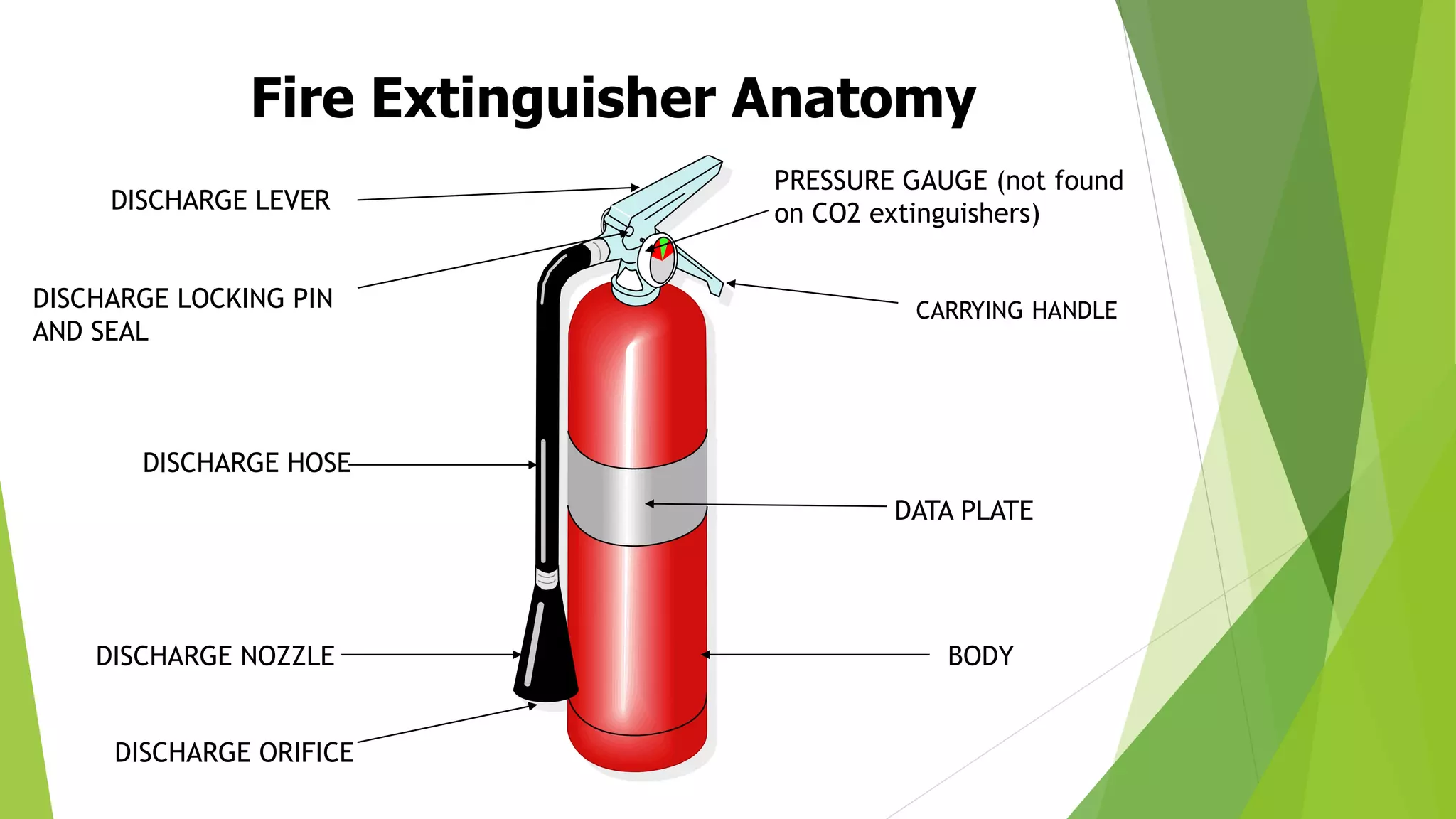
Fire Extinguisher Anatomy
DISCHARGE HOSE
DISCHARGE NOZZLE
DISCHARGE ORIFICE
DATA PLATE
CARRYING HANDLE
PRESSURE GAUGE (not found
on CO2 extinguishers)DISCHARGE LEVER
DISCHARGE LOCKING PIN
AND SEAL
BODY
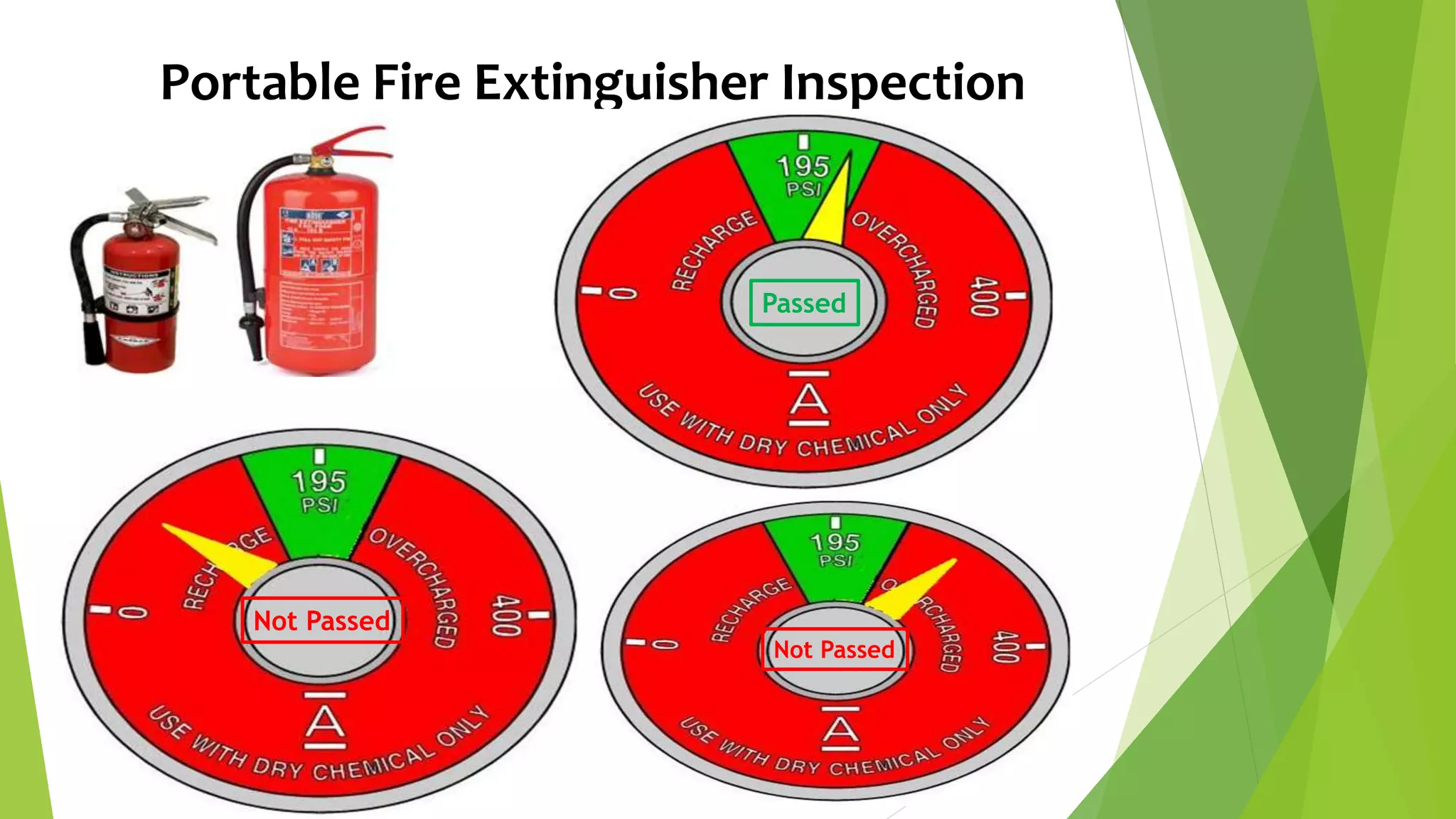
Portable Fire Extinguisher Inspection
Passed
Not Passed
Not Passed
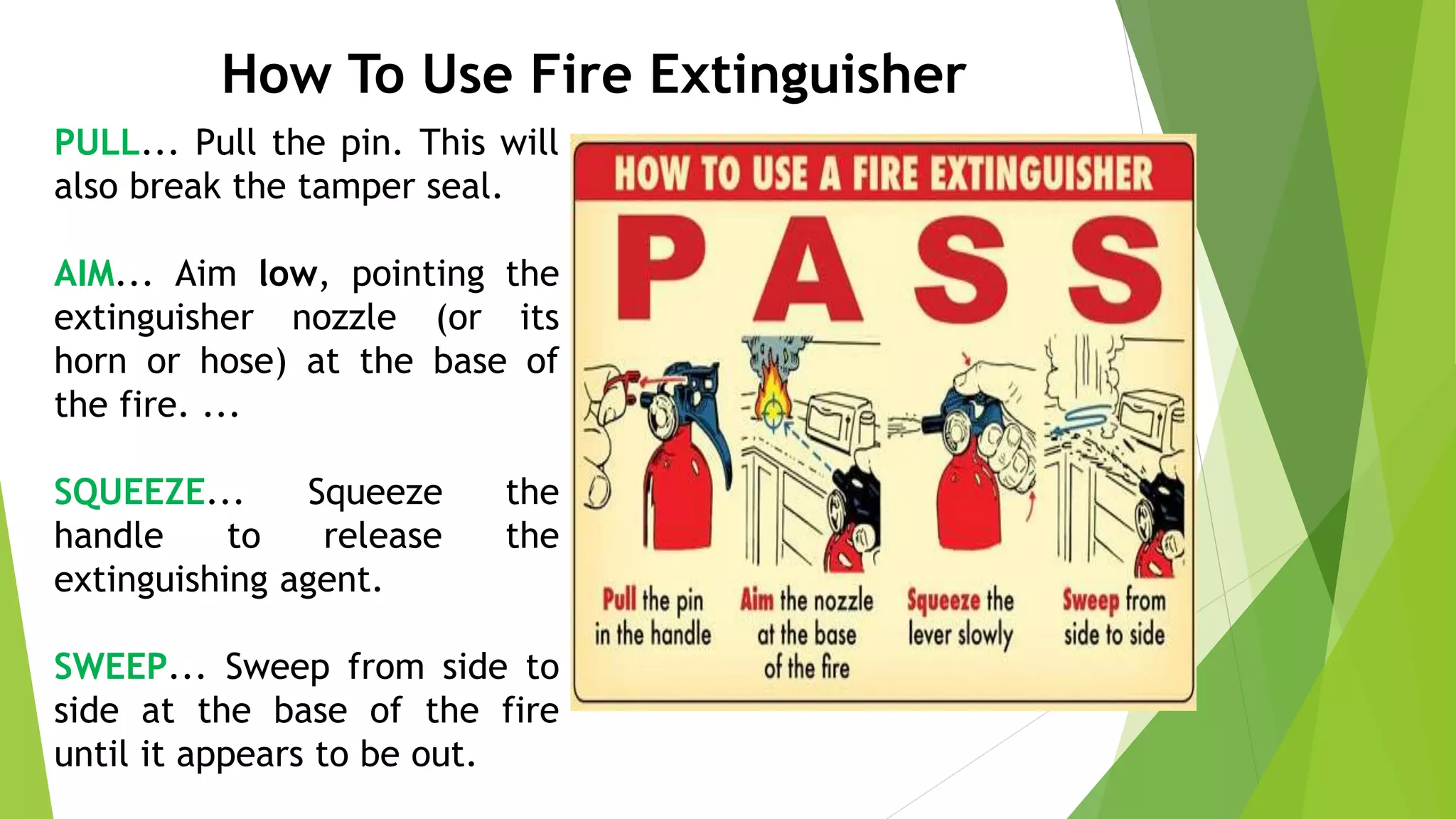
How To Use Fire Extinguisher
PULL... Pull the pin. This will
also break the tamper seal.
AIM... Aim low, pointing the
extinguisher nozzle (or its
horn or hose) at the base of
the fire. ...
SQUEEZE... Squeeze the
handle to release the
extinguishing agent.
SWEEP... Sweep from side to
side at the base of the fire
until it appears to be out.
Fire Prevention Team
Team Leader
Fire Extinguishing Team Rescue Team First Aid Team
1.
2.
3.
4.
5.
1.
2.
3.
4.
5.
1.
2.
3.
4.
5.
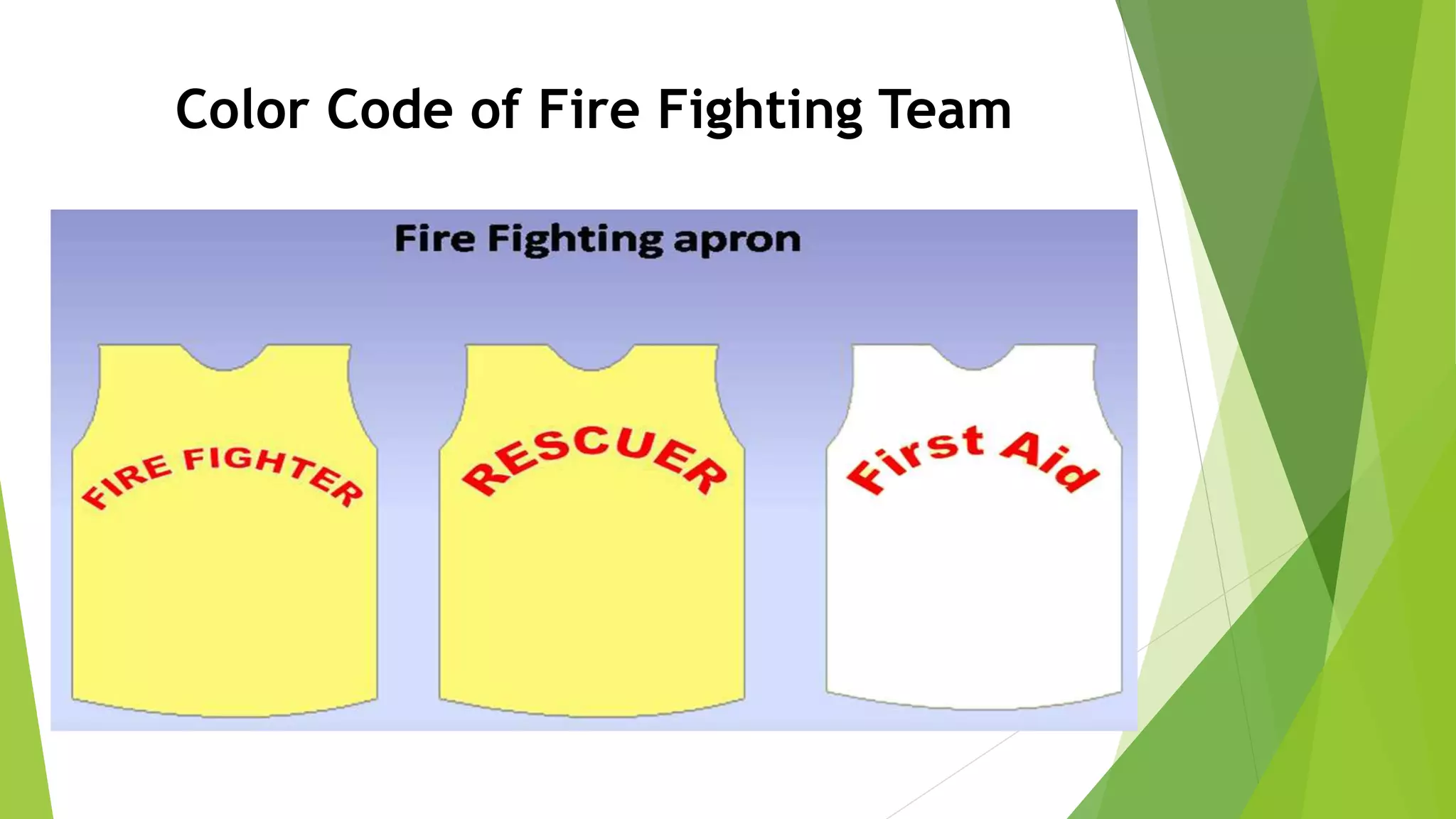
Color Code of Fire Fighting Team
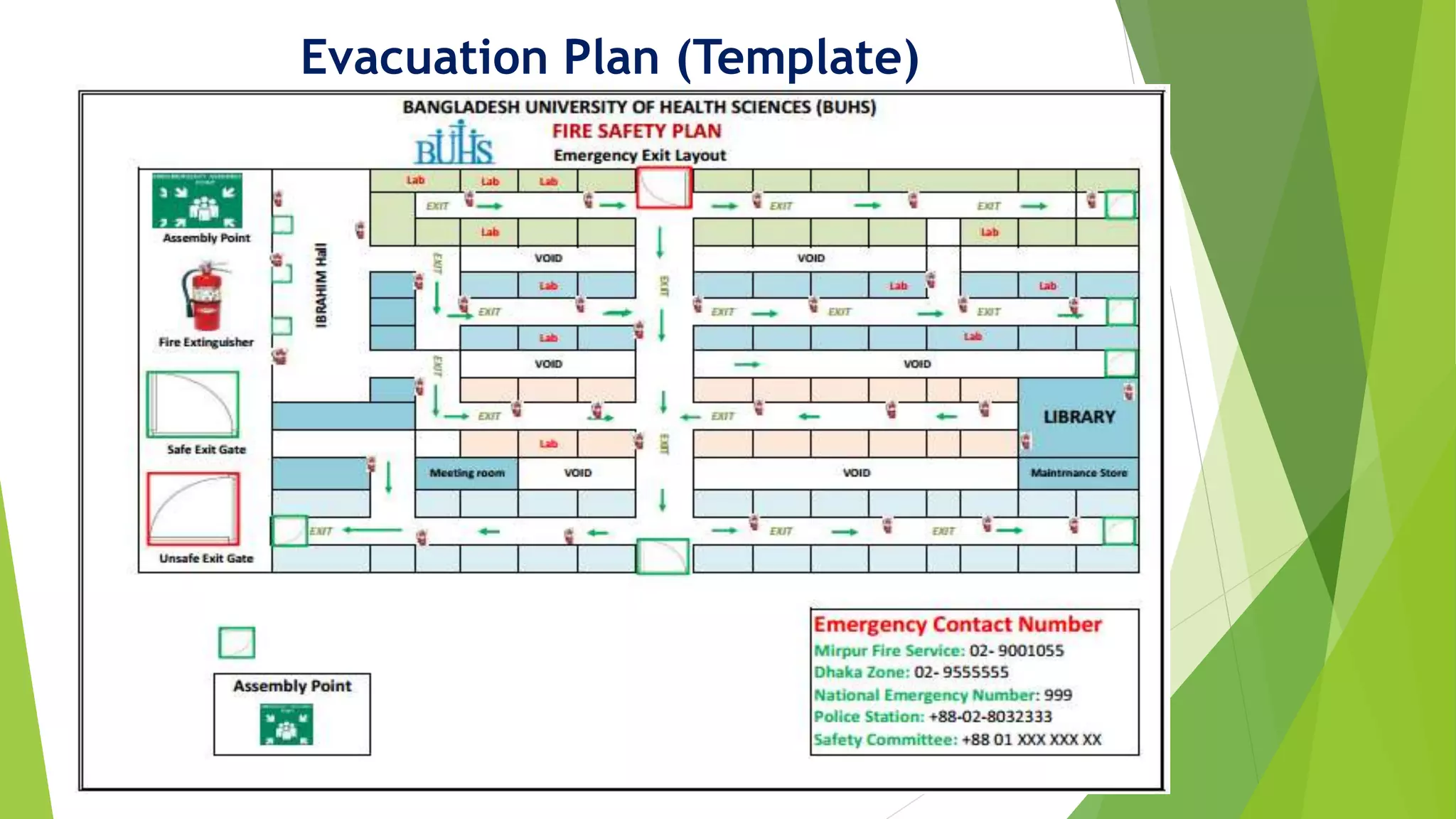
Evacuation Plan (Template)
Any
Question?

Basic fire safety

  • 1.
    Training on BasicFire Safety & Extinguishing Training Conducted By Engr. Ali Kamal Mostofa Rubel(Electrical) MPH in Occupational Health & Safety alikamalmostofa@gmail.com +880 1682560119
  • 2.
    Objective  1. Whatis Fire?  2. Fire Tetrahedral  3. Class of Fire  4. Stage of Fire  5. How to Extinguish Fire  6. Fire Fighting System  7. How to use Fire Extinguisher  8. Fire Fighting Team
  • 3.
    What is Fire? Therapid oxidation of a fuel evolving heat, particulates, gases and non- ionizing radiation. Another point of view Fire is a chemical reaction among Heat, Fuel and Oxygen with considering of Flash point.
  • 4.
  • 5.
    Fire Tetrahedral The CombustionProcess • Four components • Need all four components to start a fire • Fire extinguishers remove one or more of the components.
  • 6.
    Class of Fire 1.Solid fire - Class – A 2. Liquid fire - Class – B 3. Gas fire - Class – C 4. Metal fire - Class – D 5. Electrical fire - Class – E 6. Cooking fire - Class – F
  • 7.
    Class – A(Solid fire) Solid Fire: Class A Fires consist of ordinary combustibles such as wood, paper, trash or anything else that leaves an ash. Water works best to extinguish a Class A fire. Example: Wood, Paper, Cloth, Etc. Extinguishing Method: Dry Chemical Powder, CO2
  • 8.
    Class – B(Liquid fire) Liquid fire: • Class B Fires are fueled by flammable or combustible liquids, which include oil, gasoline, and other similar materials. Smothering effects which deplete the oxygen supply work best to extinguish Class B fires. Example: Gasoline, Oil, Grease, Other solvents, Etc. Extinguishing Method: Foam type Fire Extinguisher
  • 9.
    Class – C(Gas fire) Gas Fire: A class C fire refers to a fire that involves flammable gases such as natural gas, petroleum gas, butane, hydrogen, acetylene or propane. These gases are highly combustible and may cause large scale fires and explosions if mixed with enough oxyge. Example: Mithen, Propen, LP Gas, Etc Extinguishing Method: Dry Chemical Power, Sand, Soil
  • 10.
    Class – D(Metal fire) Metal Fire: Class D Fires are combustible metal fires. Magnesium and Titanium are the most common types of metal fires. Once a metal ignites do not use water in an attempt to extinguish it. Only use a Dry Powder extinguishing agent. Dry powder agents work by smothering and heat absorption. Example: Magnesium, Sodium, Iron, Aluminum, Titanium, Etc Extinguishing Method: Talcum powder, Graphite powder, Sand, Soil, Etc
  • 11.
    Class – E(Electrical fire) Electrical Fire: Class C Fires. Energized Electrical Fires are known as Class C fires. Always de-energize the circuit then use a non-conductive extinguishing agent. Such as Carbon dioxide. Example: Computer, Fax machine, Etc Extinguishing Method: CO2, Dry Chemical Powder
  • 12.
    Class – F(Cooking fire) Cooking Fire: Class F Fires are fires that involve cooking oils, grease or animal fat and can be extinguished using Purple K, the typical agent found in kitchen or galley extinguishers. Example: Fires involving combustible oils, lards and fats in commercial cooking. Extinguishing Method: Foam type Fire Extinguisher, Wet Chemical
  • 13.
    What is FireExtinguisher? A fire extinguisher is an active fire protection device used to extinguish or control small fires, often in emergency situations. It is not intended for use on an out-of-control fire, such as one which has reached the ceiling, endangers the user, or otherwise requires the expertise of a fire brigade.
  • 14.
    Stages of Fire Incipientto Growth= 5 minute Growth to Fully Developed= 10 minute Fully Developed stage= No use of fire extinguisher need Fire Brigade Decay= Hidden fire again has chance to start fire.
  • 15.
    Fire Fighting System 1.Active Fire Fighting System:  Fire extinguisher  Fire hose reels  Fire blankets  Sprinkler systems  Smoke alarms  Automated fire doors  Thermal detectors  Fire control systems 2. Passive Fire Fighting System:  Means of Egress  Fire resistant Wall  Fire rated Door & Window  Fire rated Paint  Fire rated clothing & Fabrics  Floor evacuation  Venting system
  • 16.
    Fire Extinguisher Anatomy DISCHARGEHOSE DISCHARGE NOZZLE DISCHARGE ORIFICE DATA PLATE CARRYING HANDLE PRESSURE GAUGE (not found on CO2 extinguishers)DISCHARGE LEVER DISCHARGE LOCKING PIN AND SEAL BODY
  • 17.
    Portable Fire ExtinguisherInspection Passed Not Passed Not Passed
  • 18.
    How To UseFire Extinguisher PULL... Pull the pin. This will also break the tamper seal. AIM... Aim low, pointing the extinguisher nozzle (or its horn or hose) at the base of the fire. ... SQUEEZE... Squeeze the handle to release the extinguishing agent. SWEEP... Sweep from side to side at the base of the fire until it appears to be out.
  • 19.
    Fire Prevention Team TeamLeader Fire Extinguishing Team Rescue Team First Aid Team 1. 2. 3. 4. 5. 1. 2. 3. 4. 5. 1. 2. 3. 4. 5.
  • 20.
    Color Code ofFire Fighting Team
  • 21.
  • 22.