Polyamide Fibers:
 Polyamide substance composed of long, multiple-unit molecules in which the
repeating units in the molecular chain are linked together by amide groups.
 Amide groups have the general chemical formula CO-NH. They may be produced
by the interaction of an amine (NH2) group and a carboxyl (COOH) group.
 NH2+COOH CONH+H20
 When 85% or more of the amide groups are linked directly to phenyl rings, the
polyamide is classified as an aramid. When the rate is lower than 85%, the polymer
is classified as a nylon.
Amide Linkage
Commonly Used Polyamide:
 Large number of polyamide materials available to produce nylon fibers.
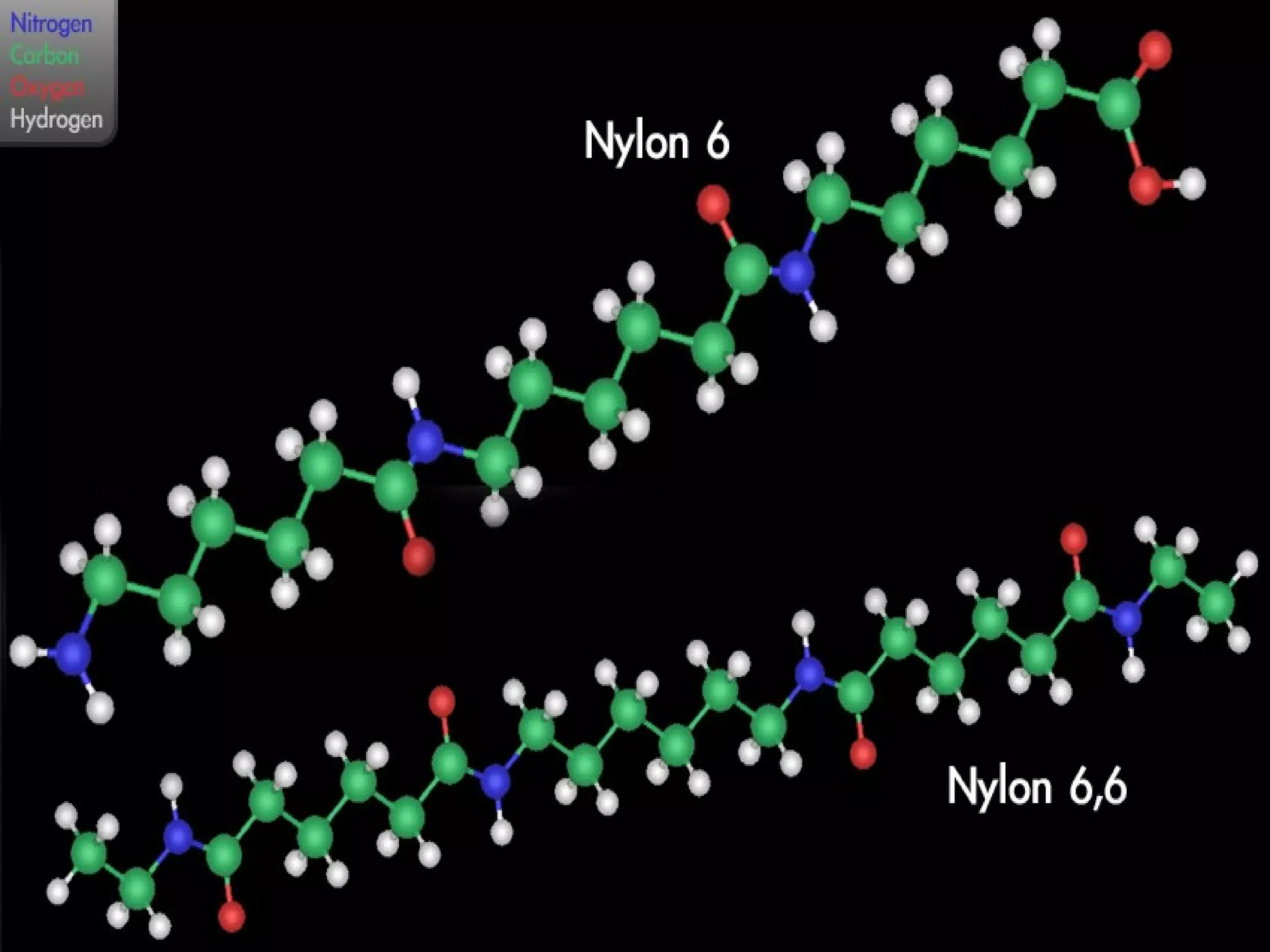
 The two most common versions are
 Nylon 66 (polyhexamethylene diamide)

Nylon 6 (Polycaprolactam)
(C6
H11
NO)n
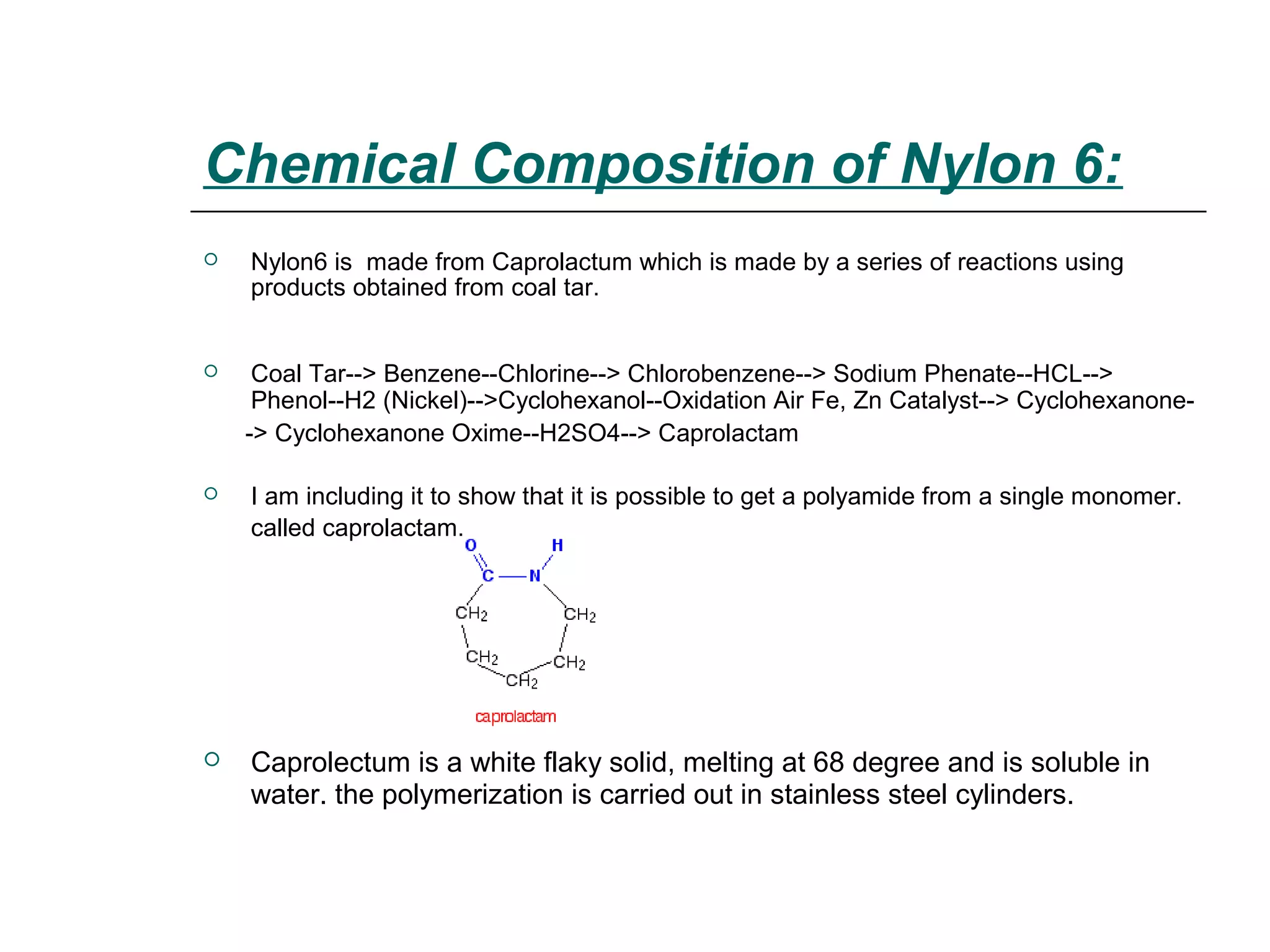
Chemical Composition of Nylon 6:
 Nylon6 is made from Caprolactum which is made by a series of reactions using
products obtained from coal tar.
 Coal Tar--> Benzene--Chlorine--> Chlorobenzene--> Sodium Phenate--HCL-->
Phenol--H2 (Nickel)-->Cyclohexanol--Oxidation Air Fe, Zn Catalyst--> Cyclohexanone-
-> Cyclohexanone Oxime--H2SO4--> Caprolactam
 I am including it to show that it is possible to get a polyamide from a single monomer.
called caprolactam.
 Caprolectum is a white flaky solid, melting at 68 degree and is soluble in
water. the polymerization is carried out in stainless steel cylinders.
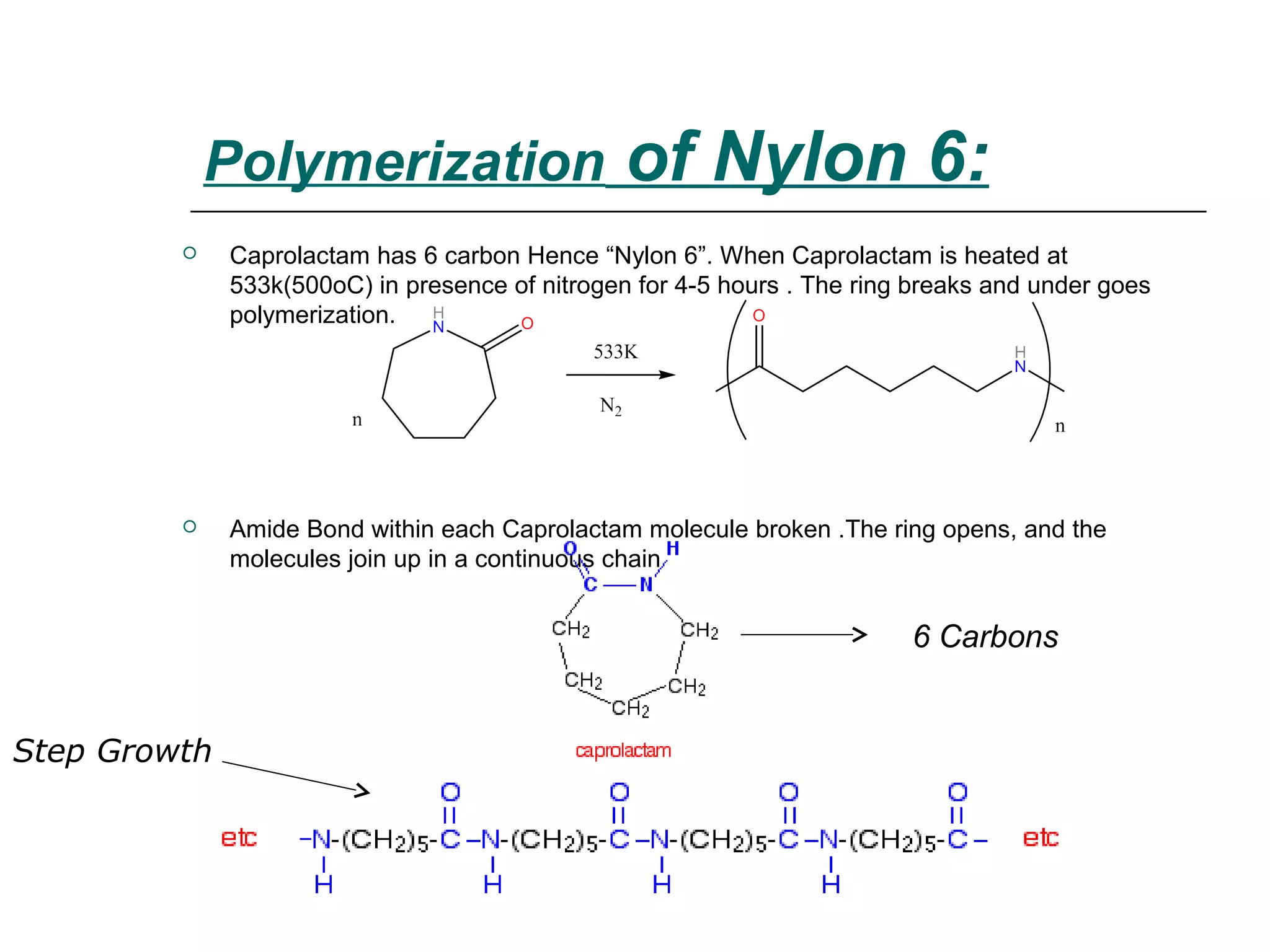
 Caprolactam has 6 carbon Hence “Nylon 6”. When Caprolactam is heated at
533k(500oC) in presence of nitrogen for 4-5 hours . The ring breaks and under goes
polymerization.
 Amide Bond within each Caprolactam molecule broken .The ring opens, and the
molecules join up in a continuous chain
Polymerization of Nylon 6:
Step Growth
6 Carbons
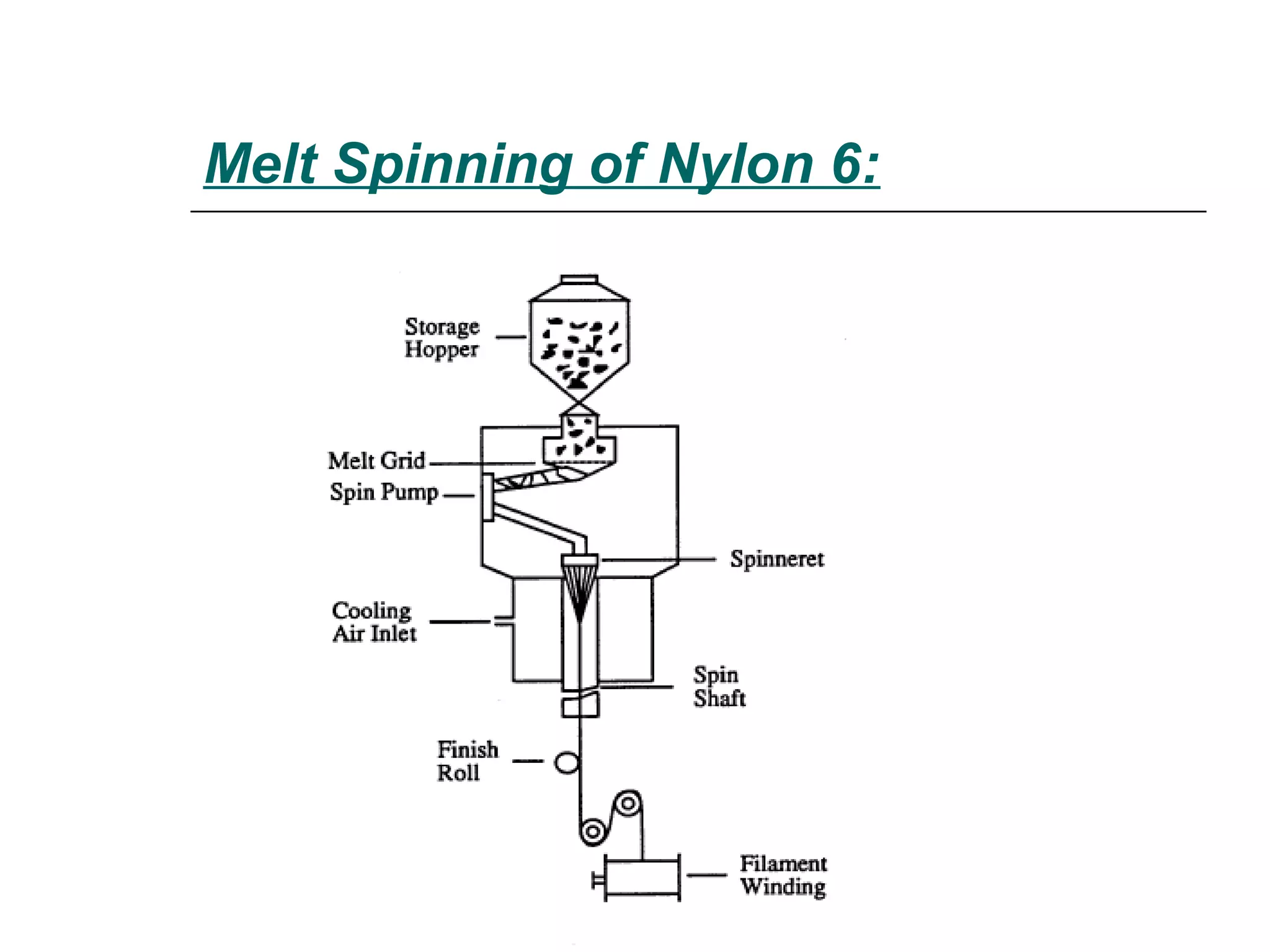
Melt Spinning of Nylon 6:
Chemical Properties of Nylon 6:
Acids - concentrated Poor
Acids - dilute Poor
Alcohols Good
Alkalis Good-Fair
Aromatic hydrocarbons Good
Greases and Oils Good
Halogenated Hydrocarbons Good-Poor
Halogens Poor
Ketones Good
Physical Properties of Nylon 6:
Density ( g cm-3
 ) 1.13
Flammability HB
Limiting oxygen index ( % ) 25
Radiation resistance Fair
Refractive index 1.53
Resistance to Ultra-violet Poor
Water absorption - equilibrium ( % ) >8
Water absorption - over 24 hours ( % ) 2.7
 Nylon 6,6 is made of hexamethylenediamine and adipic acid, which give nylon 6,6 a
total of 12 carbon atoms, and its name Nylon 66
 Hexamethylene diamine and adipic acid are combined with water in a reactor. This
produces nylon salt. The nylon salt is then sent to an evaporator where excess water
is removed. The nylon salt goes into a reaction vessel where a continuous
polymerization process takes place.
Chemical Composition of Nylon 66:
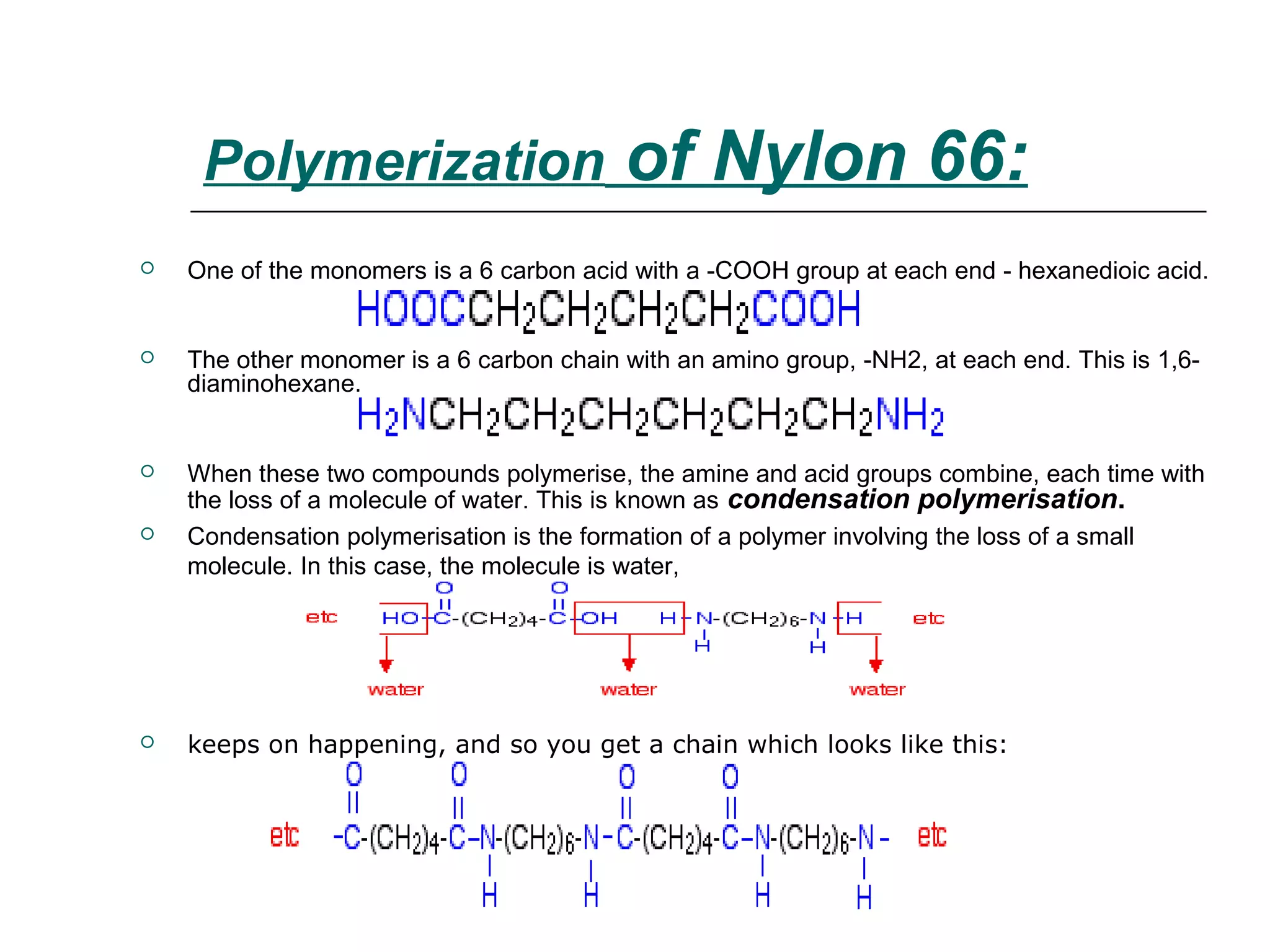
 One of the monomers is a 6 carbon acid with a -COOH group at each end - hexanedioic acid.
 The other monomer is a 6 carbon chain with an amino group, -NH2, at each end. This is 1,6-
diaminohexane.
 When these two compounds polymerise, the amine and acid groups combine, each time with
the loss of a molecule of water. This is known as condensation polymerisation.
 Condensation polymerisation is the formation of a polymer involving the loss of a small
molecule. In this case, the molecule is water,
 keeps on happening, and so you get a chain which looks like this:
Polymerization of Nylon 66:
Melt Spinning of Nylon 66:
Chemical Properties of Nylon
66:
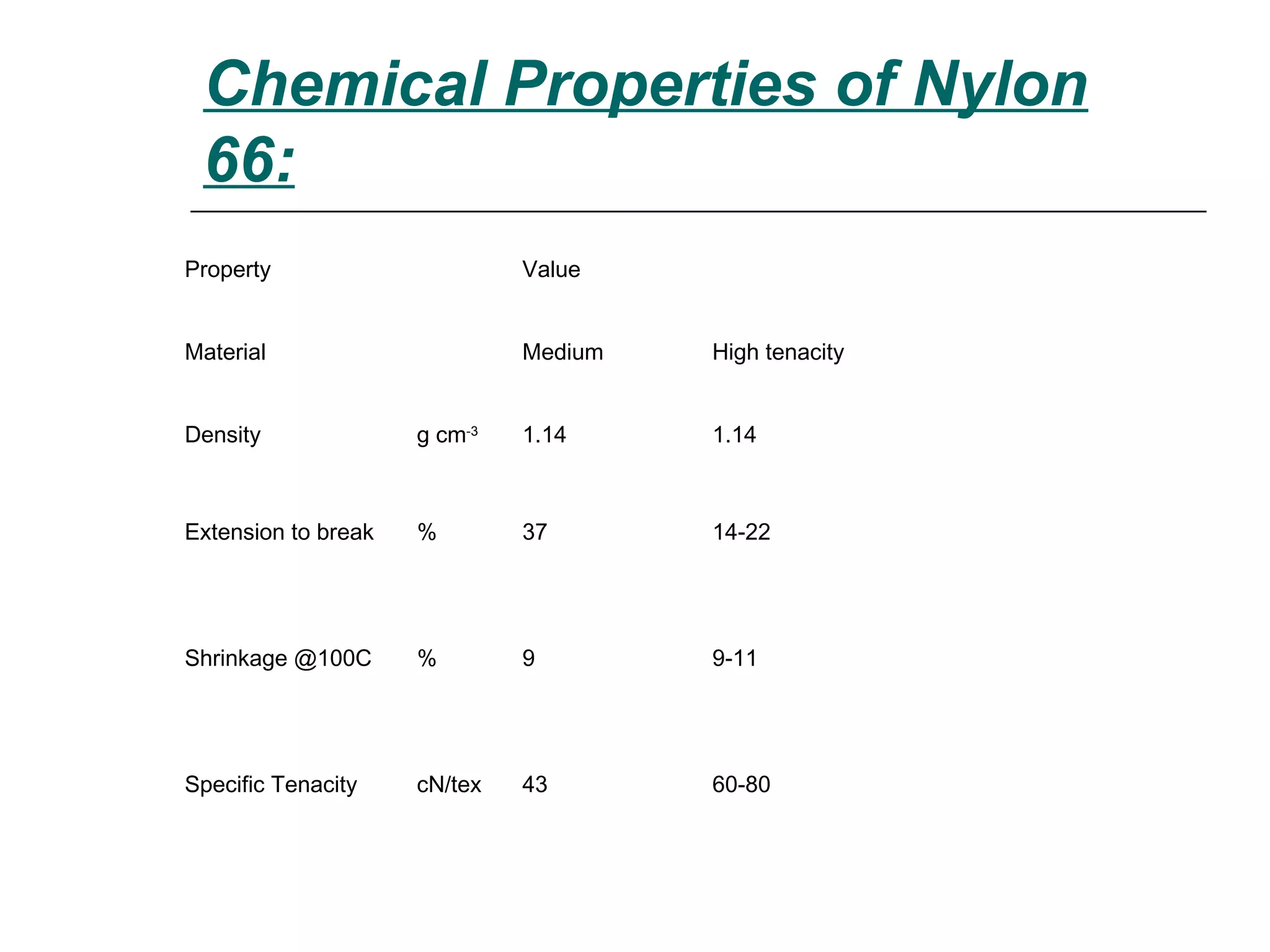
Property Value
Material Medium High tenacity
Density g cm-3
1.14 1.14
Extension to break % 37 14-22
Shrinkage @100C % 9 9-11
Specific Tenacity cN/tex 43 60-80
Uses of Nylons:
 Synthetic replacement for silk
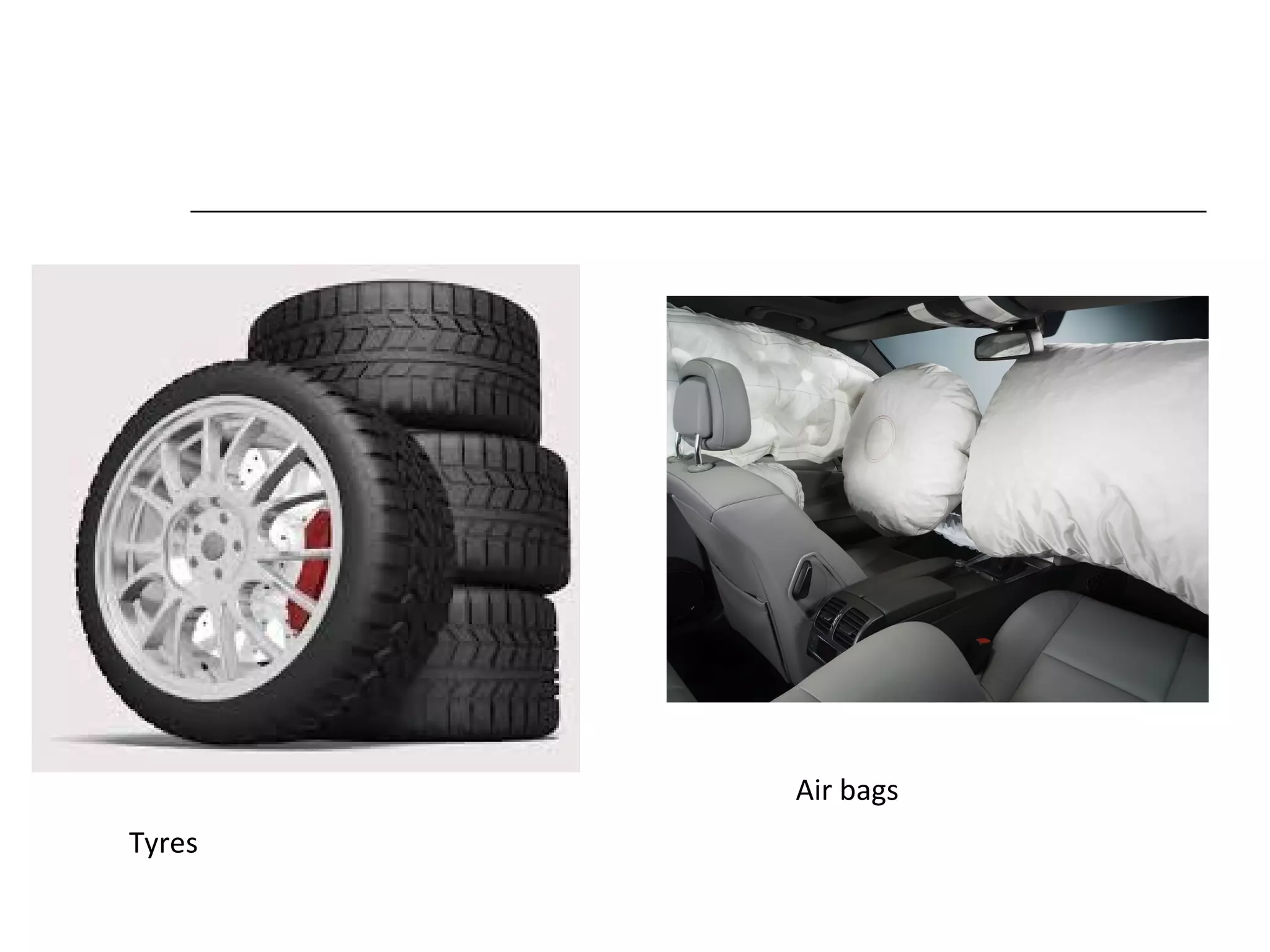
 It replaced silk in military applications such as parachutes and flak
vests, and was used in many types of vehicle tires.
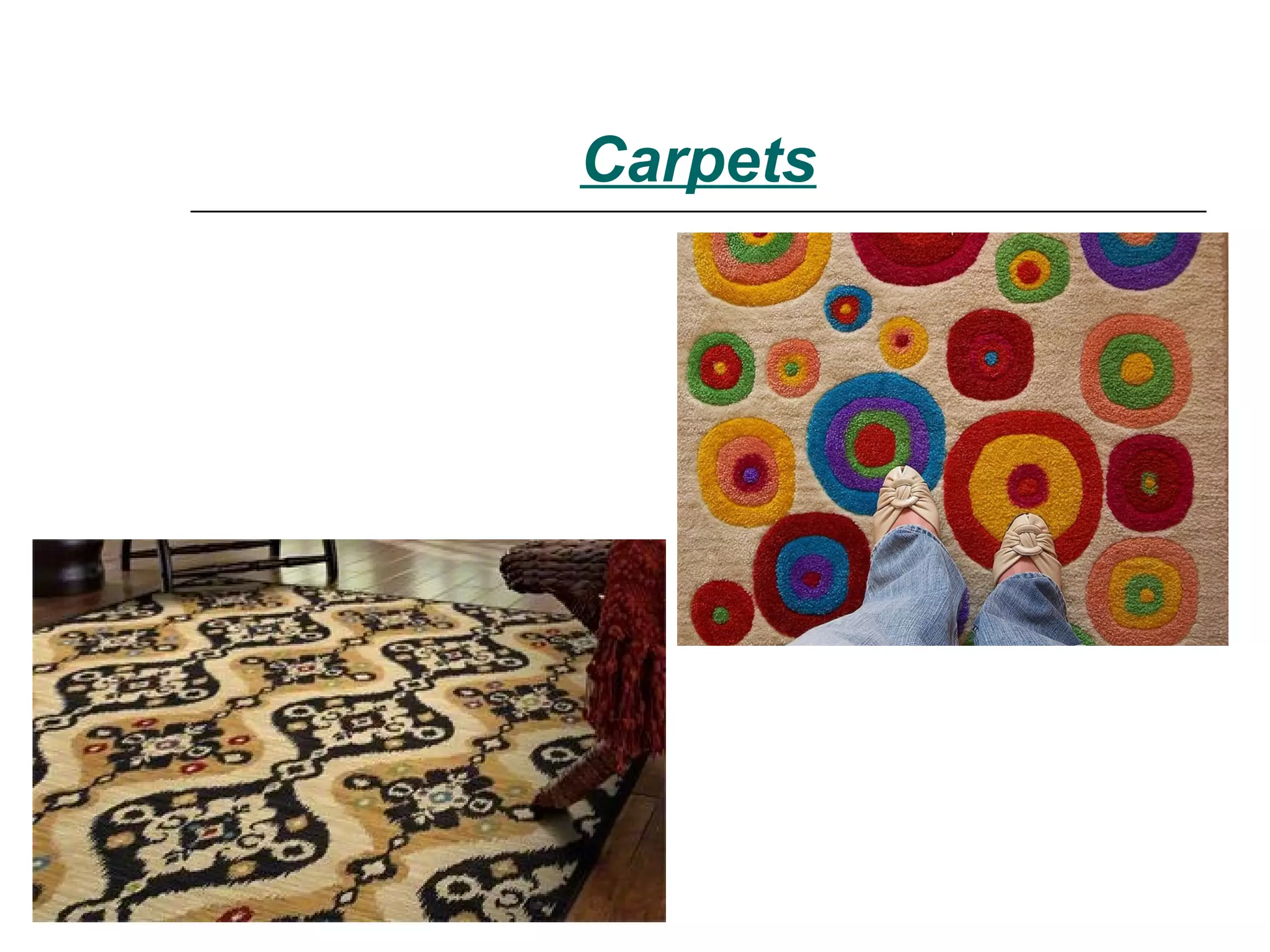
 Used in many applications, including fabrics, bridal veils, carpets,
musical strings, and rope.
Carpets
Ropes Zip ties
Hoses
conveyor belts
Tyres
Air bags
Polyamide

Polyamide

  • 3.
    Polyamide Fibers:  Polyamidesubstance composed of long, multiple-unit molecules in which the repeating units in the molecular chain are linked together by amide groups.  Amide groups have the general chemical formula CO-NH. They may be produced by the interaction of an amine (NH2) group and a carboxyl (COOH) group.  NH2+COOH CONH+H20  When 85% or more of the amide groups are linked directly to phenyl rings, the polyamide is classified as an aramid. When the rate is lower than 85%, the polymer is classified as a nylon. Amide Linkage
  • 4.
    Commonly Used Polyamide: Large number of polyamide materials available to produce nylon fibers.  The two most common versions are  Nylon 66 (polyhexamethylene diamide)  Nylon 6 (Polycaprolactam)
  • 5.
  • 6.
    Chemical Composition ofNylon 6:  Nylon6 is made from Caprolactum which is made by a series of reactions using products obtained from coal tar.  Coal Tar--> Benzene--Chlorine--> Chlorobenzene--> Sodium Phenate--HCL--> Phenol--H2 (Nickel)-->Cyclohexanol--Oxidation Air Fe, Zn Catalyst--> Cyclohexanone- -> Cyclohexanone Oxime--H2SO4--> Caprolactam  I am including it to show that it is possible to get a polyamide from a single monomer. called caprolactam.  Caprolectum is a white flaky solid, melting at 68 degree and is soluble in water. the polymerization is carried out in stainless steel cylinders.
  • 7.
     Caprolactam has6 carbon Hence “Nylon 6”. When Caprolactam is heated at 533k(500oC) in presence of nitrogen for 4-5 hours . The ring breaks and under goes polymerization.  Amide Bond within each Caprolactam molecule broken .The ring opens, and the molecules join up in a continuous chain Polymerization of Nylon 6: Step Growth 6 Carbons
  • 8.
  • 9.
    Chemical Properties ofNylon 6: Acids - concentrated Poor Acids - dilute Poor Alcohols Good Alkalis Good-Fair Aromatic hydrocarbons Good Greases and Oils Good Halogenated Hydrocarbons Good-Poor Halogens Poor Ketones Good
  • 10.
    Physical Properties ofNylon 6: Density ( g cm-3  ) 1.13 Flammability HB Limiting oxygen index ( % ) 25 Radiation resistance Fair Refractive index 1.53 Resistance to Ultra-violet Poor Water absorption - equilibrium ( % ) >8 Water absorption - over 24 hours ( % ) 2.7
  • 11.
     Nylon 6,6is made of hexamethylenediamine and adipic acid, which give nylon 6,6 a total of 12 carbon atoms, and its name Nylon 66  Hexamethylene diamine and adipic acid are combined with water in a reactor. This produces nylon salt. The nylon salt is then sent to an evaporator where excess water is removed. The nylon salt goes into a reaction vessel where a continuous polymerization process takes place. Chemical Composition of Nylon 66:
  • 12.
     One ofthe monomers is a 6 carbon acid with a -COOH group at each end - hexanedioic acid.  The other monomer is a 6 carbon chain with an amino group, -NH2, at each end. This is 1,6- diaminohexane.  When these two compounds polymerise, the amine and acid groups combine, each time with the loss of a molecule of water. This is known as condensation polymerisation.  Condensation polymerisation is the formation of a polymer involving the loss of a small molecule. In this case, the molecule is water,  keeps on happening, and so you get a chain which looks like this: Polymerization of Nylon 66:
  • 13.
  • 14.
    Chemical Properties ofNylon 66: Property Value Material Medium High tenacity Density g cm-3 1.14 1.14 Extension to break % 37 14-22 Shrinkage @100C % 9 9-11 Specific Tenacity cN/tex 43 60-80
  • 15.
    Uses of Nylons: Synthetic replacement for silk  It replaced silk in military applications such as parachutes and flak vests, and was used in many types of vehicle tires.  Used in many applications, including fabrics, bridal veils, carpets, musical strings, and rope.
  • 16.
  • 17.
  • 18.