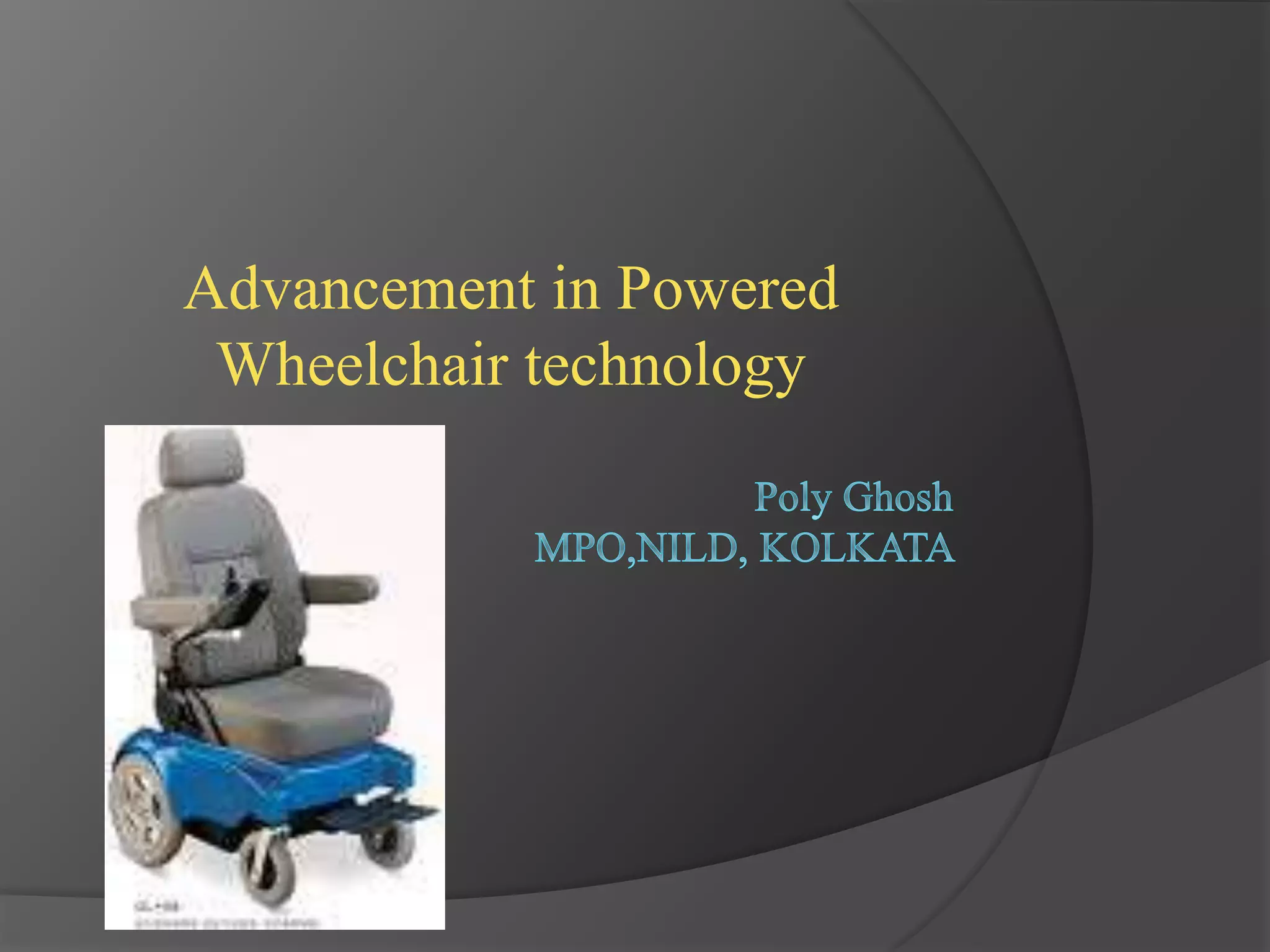
Advancement in Powered
Wheelchair technology
Introduction
๏‚ž The first practical electric powered w/c used starter
motors and batteries from automobiles.
๏‚ž These early w/c provided limited mobility for some
people with upper extremity impairments.
๏‚ž Relays were soon used to provide greater control over
electric powered w/c.
๏‚ž Next the transistor provided much better control and
allowed for the development of specialized control
interface for the user.
Contโ€ฆ
๏‚ž In 1980 the implementation of microprocessor and
metal oxide semiconductor field effect transistors
helped to improve reliability.
๏‚ž Microprocessor provided improved control and greater
stability to match the characteristics of the chair to the
abilities of the user.
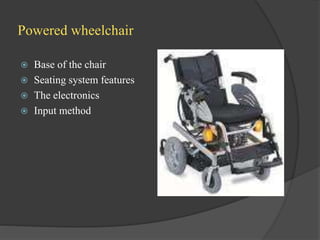
Powered wheelchair
๏‚ž Base of the chair
๏‚ž Seating system features
๏‚ž The electronics
๏‚ž Input method
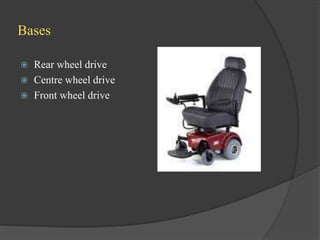
Bases
๏‚ž Rear wheel drive
๏‚ž Centre wheel drive
๏‚ž Front wheel drive
Seating system
1. Reclining wheel chair and Powered elevating leg rest
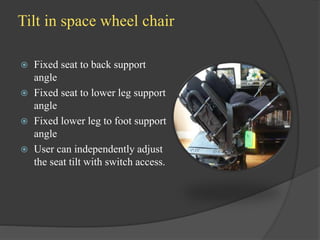
2. Tilt in space wheel chair
3. Powered seat elevator
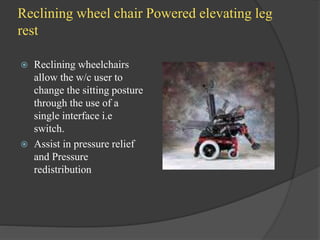
Reclining wheel chair Powered elevating leg
rest
๏‚ž Reclining wheelchairs
allow the w/c user to
change the sitting posture
through the use of a
single interface i.e
switch.
๏‚ž Assist in pressure relief
and Pressure
redistribution
Tilt in space wheel chair
๏‚ž Fixed seat to back support
angle
๏‚ž Fixed seat to lower leg support
angle
๏‚ž Fixed lower leg to foot support
angle
๏‚ž User can independently adjust
the seat tilt with switch access.
Powered seat elevator
๏‚ž This features allows the seat to
be raised or lowered to
accommodate for the height
differences
๏‚ž Improve reach
๏‚ž Improve social interaction
๏‚ž Chair is slowed for the safety
concearn
Electronic
๏‚ž Electronics vary with each powered w/c
๏‚ž The controller is the part of the wheelchair that acts as
the brain
๏‚ž Dictates the driving characteristics of wheelchair and
what type of input devices will be used.
๏‚ž The client activates input devices such as joystick
๏‚ž Joystick operates the controller and controller operates
the motor which drive the wheelchair
๏‚ž It can be programmable
Input method
๏‚ž Drive input
๏‚ž Proportional control
๏‚ž Digital control
๏‚ž Mode of operation-
๏‚ž Momentary
๏‚ž Latched
Contโ€ฆ
๏‚ž Drive control mechanism:-
1. Hand control
2. Pneumatic sip-puff / breath control system
3. Chin drive
4. Head control
5. Tongue control
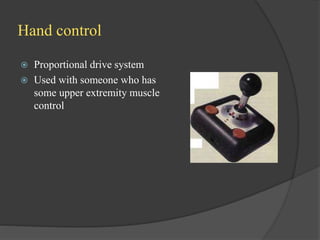
Hand control
๏‚ž Proportional drive system
๏‚ž Used with someone who has
some upper extremity muscle
control
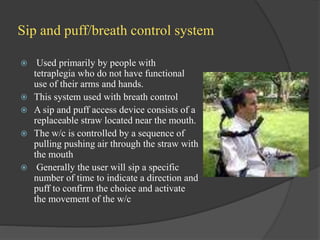
Sip and puff/breath control system
๏‚ž Used primarily by people with
tetraplegia who do not have functional
use of their arms and hands.
๏‚ž This system used with breath control
๏‚ž A sip and puff access device consists of a
replaceable straw located near the mouth.
๏‚ž The w/c is controlled by a sequence of
pulling pushing air through the straw with
the mouth
๏‚ž Generally the user will sip a specific
number of time to indicate a direction and
puff to confirm the choice and activate
the movement of the w/c
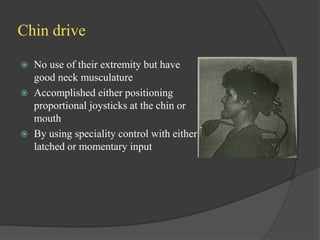
Chin drive
๏‚ž No use of their extremity but have
good neck musculature
๏‚ž Accomplished either positioning
proportional joysticks at the chin or
mouth
๏‚ž By using speciality control with either
latched or momentary input
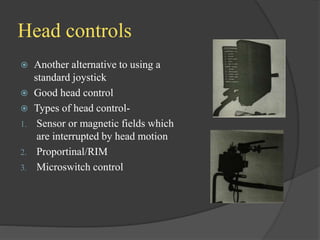
Head controls
๏‚ž Another alternative to using a
standard joystick
๏‚ž Good head control
๏‚ž Types of head control-
1. Sensor or magnetic fields which
are interrupted by head motion
2. Proportinal/RIM
3. Microswitch control
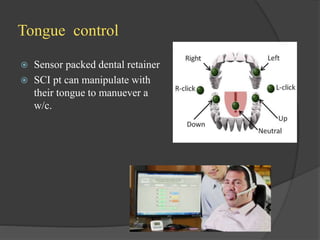
Tongue control
๏‚ž Sensor packed dental retainer
๏‚ž SCI pt can manipulate with
their tongue to manuever a
w/c.
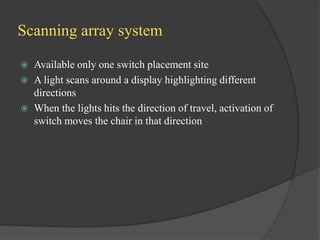
Scanning array system
๏‚ž Available only one switch placement site
๏‚ž A light scans around a display highlighting different
directions
๏‚ž When the lights hits the direction of travel, activation of
switch moves the chair in that direction
Single Switch system
๏‚ž Person is unable to use head array system or sip-puff
system
๏‚ž Single switch can be set up at any area with minimal
active movement to control the wheelchair
Other control system
๏‚ž Proximity switches
๏‚ž Zero touch switches
๏‚ž Infrared switches
PAPAW
๏‚ž uses a hybrid power source drawn
from human energy provided by the
user and electromechanical power
provided by a battery source and
electric motors.
๏‚ž control system uses a form of
shared control, commonly referred
to as gain-scheduling among control
systems engineers.
CONTโ€ฆ
๏‚ž The torque applied to the pushrim
by the occupant is amplified,
whether proportionally or through
the use of a formula or rule
structure.
๏‚ž The maximum speed with
assistance is limited to avoid
attaining uncontrollable or
potentially hazardous speeds.
๏‚ž braking is assisted in order to
control the rate of deceleration
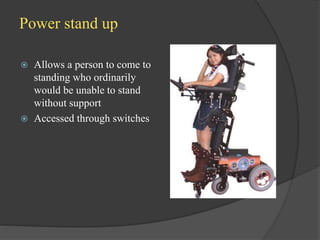
Power stand up
๏‚ž Allows a person to come to
standing who ordinarily
would be unable to stand
without support
๏‚ž Accessed through switches
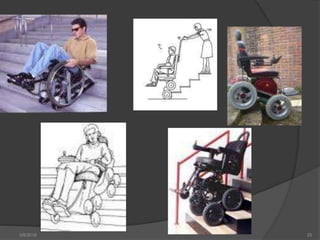
Stair climbing wheel chair
๏‚ž Stair climbing w/c can be
classified as multipurpose
or single purpose
๏‚ž Stair climbing w/c can be
grouped in to three broad
categories.
1. Assistant operated
2. Jointly operated and
3. Independently operated
253/8/2018
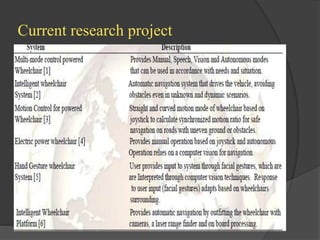
Current research project
References
๏‚ž Rory A. Cooper, Rosemarie Cooper, Michelle Tolerico, Songfeng
Guo, Dan Ding,and Jonathon Pearlman , Advances in Electric-
Powered Wheelchairs, Top Spinal Cord Inj Rehabil 2006;11(4):15โ€“
29
๏‚ž Susan B.O.Sullivan, The prescriptive wheelchair, Physical
rehabilitation, 6th edition, 2014
๏‚ž John d hsu, john w michael, John r Fisk, wheelchair mobility for
disabled childern and adults, AAOS Atlas of orthoses and assistive
devices, 4th edition.
๏‚ž John d hsu, positioning and wheeled mobility for children and
adults with disablities, Atlas of orthoses and assistive devices,, 3rd
edition,
๏‚ž tongue Drive uses dental retainer and tongue piercing to control
wheelchair (Wired UK).html
Thank you

Poly ghosh

  • 1.
  • 2.
    Introduction ๏‚ž The firstpractical electric powered w/c used starter motors and batteries from automobiles. ๏‚ž These early w/c provided limited mobility for some people with upper extremity impairments. ๏‚ž Relays were soon used to provide greater control over electric powered w/c. ๏‚ž Next the transistor provided much better control and allowed for the development of specialized control interface for the user.
  • 3.
    Contโ€ฆ ๏‚ž In 1980the implementation of microprocessor and metal oxide semiconductor field effect transistors helped to improve reliability. ๏‚ž Microprocessor provided improved control and greater stability to match the characteristics of the chair to the abilities of the user.
  • 4.
    Powered wheelchair ๏‚ž Baseof the chair ๏‚ž Seating system features ๏‚ž The electronics ๏‚ž Input method
  • 5.
    Bases ๏‚ž Rear wheeldrive ๏‚ž Centre wheel drive ๏‚ž Front wheel drive
  • 6.
    Seating system 1. Recliningwheel chair and Powered elevating leg rest 2. Tilt in space wheel chair 3. Powered seat elevator
  • 7.
    Reclining wheel chairPowered elevating leg rest ๏‚ž Reclining wheelchairs allow the w/c user to change the sitting posture through the use of a single interface i.e switch. ๏‚ž Assist in pressure relief and Pressure redistribution
  • 8.
    Tilt in spacewheel chair ๏‚ž Fixed seat to back support angle ๏‚ž Fixed seat to lower leg support angle ๏‚ž Fixed lower leg to foot support angle ๏‚ž User can independently adjust the seat tilt with switch access.
  • 9.
    Powered seat elevator ๏‚žThis features allows the seat to be raised or lowered to accommodate for the height differences ๏‚ž Improve reach ๏‚ž Improve social interaction ๏‚ž Chair is slowed for the safety concearn
  • 10.
    Electronic ๏‚ž Electronics varywith each powered w/c ๏‚ž The controller is the part of the wheelchair that acts as the brain ๏‚ž Dictates the driving characteristics of wheelchair and what type of input devices will be used. ๏‚ž The client activates input devices such as joystick ๏‚ž Joystick operates the controller and controller operates the motor which drive the wheelchair ๏‚ž It can be programmable
  • 11.
    Input method ๏‚ž Driveinput ๏‚ž Proportional control ๏‚ž Digital control ๏‚ž Mode of operation- ๏‚ž Momentary ๏‚ž Latched
  • 12.
    Contโ€ฆ ๏‚ž Drive controlmechanism:- 1. Hand control 2. Pneumatic sip-puff / breath control system 3. Chin drive 4. Head control 5. Tongue control
  • 13.
    Hand control ๏‚ž Proportionaldrive system ๏‚ž Used with someone who has some upper extremity muscle control
  • 14.
    Sip and puff/breathcontrol system ๏‚ž Used primarily by people with tetraplegia who do not have functional use of their arms and hands. ๏‚ž This system used with breath control ๏‚ž A sip and puff access device consists of a replaceable straw located near the mouth. ๏‚ž The w/c is controlled by a sequence of pulling pushing air through the straw with the mouth ๏‚ž Generally the user will sip a specific number of time to indicate a direction and puff to confirm the choice and activate the movement of the w/c
  • 15.
    Chin drive ๏‚ž Nouse of their extremity but have good neck musculature ๏‚ž Accomplished either positioning proportional joysticks at the chin or mouth ๏‚ž By using speciality control with either latched or momentary input
  • 16.
    Head controls ๏‚ž Anotheralternative to using a standard joystick ๏‚ž Good head control ๏‚ž Types of head control- 1. Sensor or magnetic fields which are interrupted by head motion 2. Proportinal/RIM 3. Microswitch control
  • 17.
    Tongue control ๏‚ž Sensorpacked dental retainer ๏‚ž SCI pt can manipulate with their tongue to manuever a w/c.
  • 18.
    Scanning array system ๏‚žAvailable only one switch placement site ๏‚ž A light scans around a display highlighting different directions ๏‚ž When the lights hits the direction of travel, activation of switch moves the chair in that direction
  • 19.
    Single Switch system ๏‚žPerson is unable to use head array system or sip-puff system ๏‚ž Single switch can be set up at any area with minimal active movement to control the wheelchair
  • 20.
    Other control system ๏‚žProximity switches ๏‚ž Zero touch switches ๏‚ž Infrared switches
  • 21.
    PAPAW ๏‚ž uses ahybrid power source drawn from human energy provided by the user and electromechanical power provided by a battery source and electric motors. ๏‚ž control system uses a form of shared control, commonly referred to as gain-scheduling among control systems engineers.
  • 22.
    CONTโ€ฆ ๏‚ž The torqueapplied to the pushrim by the occupant is amplified, whether proportionally or through the use of a formula or rule structure. ๏‚ž The maximum speed with assistance is limited to avoid attaining uncontrollable or potentially hazardous speeds. ๏‚ž braking is assisted in order to control the rate of deceleration
  • 23.
    Power stand up ๏‚žAllows a person to come to standing who ordinarily would be unable to stand without support ๏‚ž Accessed through switches
  • 24.
    Stair climbing wheelchair ๏‚ž Stair climbing w/c can be classified as multipurpose or single purpose ๏‚ž Stair climbing w/c can be grouped in to three broad categories. 1. Assistant operated 2. Jointly operated and 3. Independently operated
  • 25.
  • 26.
  • 27.
    References ๏‚ž Rory A.Cooper, Rosemarie Cooper, Michelle Tolerico, Songfeng Guo, Dan Ding,and Jonathon Pearlman , Advances in Electric- Powered Wheelchairs, Top Spinal Cord Inj Rehabil 2006;11(4):15โ€“ 29 ๏‚ž Susan B.O.Sullivan, The prescriptive wheelchair, Physical rehabilitation, 6th edition, 2014 ๏‚ž John d hsu, john w michael, John r Fisk, wheelchair mobility for disabled childern and adults, AAOS Atlas of orthoses and assistive devices, 4th edition. ๏‚ž John d hsu, positioning and wheeled mobility for children and adults with disablities, Atlas of orthoses and assistive devices,, 3rd edition, ๏‚ž tongue Drive uses dental retainer and tongue piercing to control wheelchair (Wired UK).html
  • 28.