Presentation on:-
Powered Wheelchair
Submitted by:-
1. Raghav Bagga (K10186)
2. Utkarsh Kumar (K10185)
3. Munfed Khan (K10452)
4. Sarafraj (K10444)
Contents:-
• Overview
• Introduction
• History
• Technical specifications
• Approach & method
• Future work
• Applications
• Advantages
Overview:-
• An electric-powered wheelchair is a wheelchair
that is moved via the means of an electric
motor and navigational controls which is usually a
small joystick mounted on the armrest, rather
than manual power.
• It is designed to have two major components, the
power base (containing the motors, wheels,
batteries and control module) and the seating
component. Each component (power base and
seat) are offered with a wide variety of options.
Introduction:-
• A motorized wheelchair or electric-powered
wheelchair is a wheelchair that is propelled by
means of an electric motor rather than manual
power.
• Motorized wheelchairs are useful for those who
are not able to impel a manual wheelchair. They
may also be used not just by people with
conventional mobility impairments, but also by
people with cardiovascular and fatigue based
conditions.
• Electric wheelchairs have enhanced the quality of
life for many people with physical disabilities
through the mobility they afford.
• The selection of power chair will rely on many
factors; including the kind of surface setting the
chair will be driven over, the need to settle
thresholds and curbs, and clearance widths in
accustomed environment.
• The most fundamental job of the chair is to take
input from the user, usually in the form of a small
joystick, to move the person in the preferred
direction.
History:-
• The foremost electric wheelchair was invented by
George Klein with the purpose to help the
wounded soldiers of the World War II. With time,
it has evolved into many designs and forms.
• The power chairs comprise a range of functions
like reclining, tilting, seat elevation, chin
controller, hand controller and many more.
• Some of the models are portable that is they can
be disassembled and carried along while
travelling.
• The electric wheelchair is characteristically
categorized into two categories:-
1. The front wheel powered chair: It is a power
chair for indoor purposes. This is a four wheel
driven chair and is most flexible among the lot.
2. The rear wheel powered chair: It is a power
chair facilitated for outdoors. Being rear
wheeled, they are appropriate for rugged roads.
Technical Specifications:-
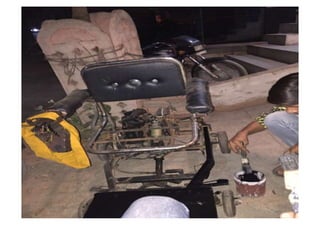
• Hydraulic cylinders are fitted at the base for the
proper movement of the seat in both up and
down directions.
• Small LED bulbs are fitted at the base so that the
track is easily visible.
• The battery charger will usually plug into the
powered wheelchair control unit where the
batteries are attached. This means that the user
doesn't have to worry about lifting or refitting
batteries.
Approach and Method:-
• The purpose of Power Wheelchair Trainer is to
assist in the training of children and adults with
severe motor impairments to use a power
wheelchair. To facilitate this, a prototype of the
Power Wheelchair Trainer was developed and
produced.
• The overall mechanical design of version of the
Power Wheelchair Trainer was based on the
version design because that design has received
positive feedback from therapists concerning
ease of loading and unloading manual
wheelchairs.
• The control system, including circuit boards,
cables, connectors, joystick, remote, and
software were collected & gathered from the raw
materials.
• The remaining mechanical components of the
Power Wheelchair Trainer, including frame,
platform, mounting systems, housing for the
joystick, and tray were produced by the process
of welding.
Future work:-
• The Hum-power controller presented in this
project proved to be promising and for future
commercialization of this product a number of
improvements are required.
• For truly autonomous control of the today’s
powered wheelchair it is important to develop an
indoor/outdoor guidance system with obstacle
avoidance capabilities.
• The original prototype developed in this project is
capable of handling analog inputs from distance
sensors such as sonar and infrared proximity
sensors.
• By taking advantage of these sensory inputs in
the final product the Hum-power controller
would be able to handle obstacle in its route.
• With the immerging WiFi based system the Hum-
power controller could be linked to smart homes
with positioning capabilities so that minimal
effort would be required for the user to navigate
to a desired point in the house.
Applications:-
• Going outside the home
• Keeping track of money and bills
• Preparing meals
• Doing light housework
• Taking prescription medicines in the right amount
at the right time
• Using the telephone
Advantages:-
• Ability to mount himself/herself on this powered
wheel chair.
• Height and the level of the seat can be
maintained by the person himself. It can be
adjusted to the ground level or to a maximum
height of 2.5ft
• Maintain the speed of this powered wheel chair
in accordance to the needs.
• Arm rests are movable so that the person can
transfer himself/herself to the bed on its own.
• Ability to dismount himself/herself from this
powered wheel chair.
Thank you!!

Powered wheel chair ppt

  • 1.
    Presentation on:- Powered Wheelchair Submittedby:- 1. Raghav Bagga (K10186) 2. Utkarsh Kumar (K10185) 3. Munfed Khan (K10452) 4. Sarafraj (K10444)
  • 2.
    Contents:- • Overview • Introduction •History • Technical specifications • Approach & method • Future work • Applications • Advantages
  • 3.
    Overview:- • An electric-poweredwheelchair is a wheelchair that is moved via the means of an electric motor and navigational controls which is usually a small joystick mounted on the armrest, rather than manual power. • It is designed to have two major components, the power base (containing the motors, wheels, batteries and control module) and the seating component. Each component (power base and seat) are offered with a wide variety of options.
  • 4.
    Introduction:- • A motorizedwheelchair or electric-powered wheelchair is a wheelchair that is propelled by means of an electric motor rather than manual power. • Motorized wheelchairs are useful for those who are not able to impel a manual wheelchair. They may also be used not just by people with conventional mobility impairments, but also by people with cardiovascular and fatigue based conditions.
  • 5.
    • Electric wheelchairshave enhanced the quality of life for many people with physical disabilities through the mobility they afford. • The selection of power chair will rely on many factors; including the kind of surface setting the chair will be driven over, the need to settle thresholds and curbs, and clearance widths in accustomed environment. • The most fundamental job of the chair is to take input from the user, usually in the form of a small joystick, to move the person in the preferred direction.
  • 6.
    History:- • The foremostelectric wheelchair was invented by George Klein with the purpose to help the wounded soldiers of the World War II. With time, it has evolved into many designs and forms. • The power chairs comprise a range of functions like reclining, tilting, seat elevation, chin controller, hand controller and many more. • Some of the models are portable that is they can be disassembled and carried along while travelling.
  • 7.
    • The electricwheelchair is characteristically categorized into two categories:- 1. The front wheel powered chair: It is a power chair for indoor purposes. This is a four wheel driven chair and is most flexible among the lot. 2. The rear wheel powered chair: It is a power chair facilitated for outdoors. Being rear wheeled, they are appropriate for rugged roads.
  • 8.
    Technical Specifications:- • Hydrauliccylinders are fitted at the base for the proper movement of the seat in both up and down directions. • Small LED bulbs are fitted at the base so that the track is easily visible. • The battery charger will usually plug into the powered wheelchair control unit where the batteries are attached. This means that the user doesn't have to worry about lifting or refitting batteries.
  • 9.
    Approach and Method:- •The purpose of Power Wheelchair Trainer is to assist in the training of children and adults with severe motor impairments to use a power wheelchair. To facilitate this, a prototype of the Power Wheelchair Trainer was developed and produced. • The overall mechanical design of version of the Power Wheelchair Trainer was based on the version design because that design has received positive feedback from therapists concerning ease of loading and unloading manual wheelchairs.
  • 10.
    • The controlsystem, including circuit boards, cables, connectors, joystick, remote, and software were collected & gathered from the raw materials. • The remaining mechanical components of the Power Wheelchair Trainer, including frame, platform, mounting systems, housing for the joystick, and tray were produced by the process of welding.
  • 11.
    Future work:- • TheHum-power controller presented in this project proved to be promising and for future commercialization of this product a number of improvements are required. • For truly autonomous control of the today’s powered wheelchair it is important to develop an indoor/outdoor guidance system with obstacle avoidance capabilities. • The original prototype developed in this project is capable of handling analog inputs from distance sensors such as sonar and infrared proximity sensors.
  • 12.
    • By takingadvantage of these sensory inputs in the final product the Hum-power controller would be able to handle obstacle in its route. • With the immerging WiFi based system the Hum- power controller could be linked to smart homes with positioning capabilities so that minimal effort would be required for the user to navigate to a desired point in the house.
  • 13.
    Applications:- • Going outsidethe home • Keeping track of money and bills • Preparing meals • Doing light housework • Taking prescription medicines in the right amount at the right time • Using the telephone
  • 14.
    Advantages:- • Ability tomount himself/herself on this powered wheel chair. • Height and the level of the seat can be maintained by the person himself. It can be adjusted to the ground level or to a maximum height of 2.5ft • Maintain the speed of this powered wheel chair in accordance to the needs.
  • 15.
    • Arm restsare movable so that the person can transfer himself/herself to the bed on its own. • Ability to dismount himself/herself from this powered wheel chair.
  • 17.