Pollution Prevention &
Waste Minimization
Presented by:
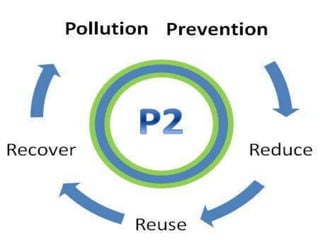
Pollution prevention (P2) is
any practice that reduces,
eliminates, or prevents
pollution at its source.
P2, also known as "source
reduction".
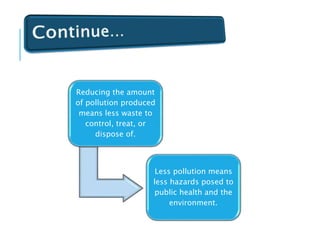
Reducing the amount
of pollution produced
means less waste to
control, treat, or
dispose of.
Less pollution means
less hazards posed to
public health and the
environment.
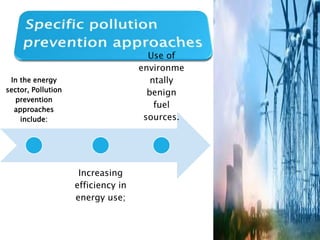
In the energy
sector, Pollution
prevention
approaches
include:
Increasing
efficiency in
energy use;
Use of
environme
ntally
benign
fuel
sources.
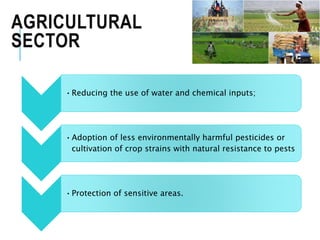
AGRICULTURAL
SECTOR
•Reducing the use of water and chemical inputs;
•Adoption of less environmentally harmful pesticides or
cultivation of crop strains with natural resistance to pests
•Protection of sensitive areas.
INDUSTRIAL SECTOR
Modifying a production process to
produce less waste
Using non-toxic or less toxic
chemicals as cleaners, degreasers and
other maintenance chemicals
Implementing water and energy
conservation practices
HOMES & SCHOOLS
Using reusable water bottles instead of
throw-aways
Automatically turning off lights when not
in use
Automatically turning off fans and other
electrical equipments when not in use
Switching to "green" cleaners
WHY IS POLLUTION
PREVENTION IMPORTANT?
Pollution prevention
reduces both financial
costs (waste
management and
cleanup) and
environmental costs
(health problems and
environmental
damage).
Pollution prevention protects
the environment by conserving
and protecting natural
resources strengthening
economic growth through more
efficient production in industry
and less need for households,
businesses and communities to
handle waste.
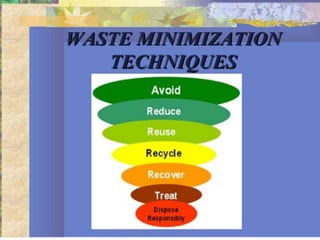
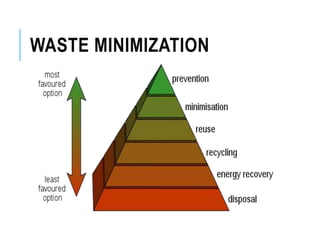
WASTE MINIMIZATION
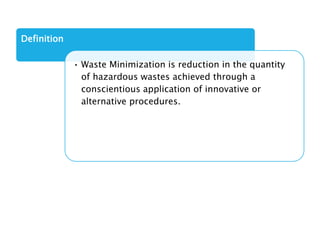
Definition
• Waste Minimization is reduction in the quantity
of hazardous wastes achieved through a
conscientious application of innovative or
alternative procedures.
Waste
Minimization
Suggestions
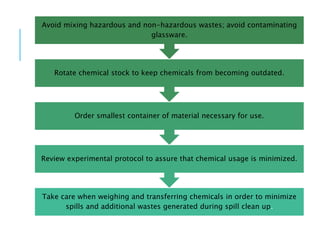
Take care when weighing and transferring chemicals in order to minimize
spills and additional wastes generated during spill clean up.
Review experimental protocol to assure that chemical usage is minimized.
Order smallest container of material necessary for use.
Rotate chemical stock to keep chemicals from becoming outdated.
Avoid mixing hazardous and non-hazardous wastes; avoid contaminating
glassware.
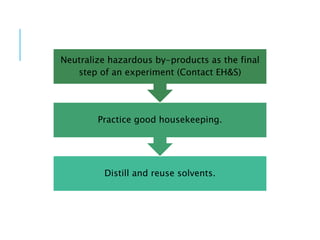
Distill and reuse solvents.
Practice good housekeeping.
Neutralize hazardous by-products as the final
step of an experiment (Contact EH&S)
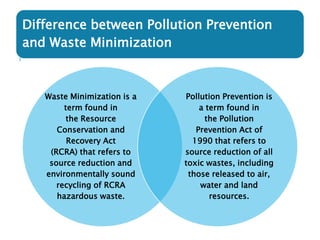
Difference between Pollution Prevention
and Waste Minimization
Waste Minimization is a
term found in
the Resource
Conservation and
Recovery Act
(RCRA) that refers to
source reduction and
environmentally sound
recycling of RCRA
hazardous waste.
Pollution Prevention is
a term found in
the Pollution
Prevention Act of
1990 that refers to
source reduction of all
toxic wastes, including
those released to air,
water and land
resources.
Pollution control and waste minimization

Pollution control and waste minimization

  • 1.
    Pollution Prevention & WasteMinimization Presented by:
  • 3.
    Pollution prevention (P2)is any practice that reduces, eliminates, or prevents pollution at its source. P2, also known as "source reduction".
  • 4.
    Reducing the amount ofpollution produced means less waste to control, treat, or dispose of. Less pollution means less hazards posed to public health and the environment.
  • 7.
    In the energy sector,Pollution prevention approaches include: Increasing efficiency in energy use; Use of environme ntally benign fuel sources.
  • 8.
    AGRICULTURAL SECTOR •Reducing the useof water and chemical inputs; •Adoption of less environmentally harmful pesticides or cultivation of crop strains with natural resistance to pests •Protection of sensitive areas.
  • 9.
    INDUSTRIAL SECTOR Modifying aproduction process to produce less waste Using non-toxic or less toxic chemicals as cleaners, degreasers and other maintenance chemicals Implementing water and energy conservation practices
  • 10.
    HOMES & SCHOOLS Usingreusable water bottles instead of throw-aways Automatically turning off lights when not in use Automatically turning off fans and other electrical equipments when not in use Switching to "green" cleaners
  • 11.
    WHY IS POLLUTION PREVENTIONIMPORTANT? Pollution prevention reduces both financial costs (waste management and cleanup) and environmental costs (health problems and environmental damage). Pollution prevention protects the environment by conserving and protecting natural resources strengthening economic growth through more efficient production in industry and less need for households, businesses and communities to handle waste.
  • 12.
  • 13.
    Definition • Waste Minimizationis reduction in the quantity of hazardous wastes achieved through a conscientious application of innovative or alternative procedures.
  • 14.
  • 15.
    Take care whenweighing and transferring chemicals in order to minimize spills and additional wastes generated during spill clean up. Review experimental protocol to assure that chemical usage is minimized. Order smallest container of material necessary for use. Rotate chemical stock to keep chemicals from becoming outdated. Avoid mixing hazardous and non-hazardous wastes; avoid contaminating glassware.
  • 16.
    Distill and reusesolvents. Practice good housekeeping. Neutralize hazardous by-products as the final step of an experiment (Contact EH&S)
  • 17.
    Difference between PollutionPrevention and Waste Minimization Waste Minimization is a term found in the Resource Conservation and Recovery Act (RCRA) that refers to source reduction and environmentally sound recycling of RCRA hazardous waste. Pollution Prevention is a term found in the Pollution Prevention Act of 1990 that refers to source reduction of all toxic wastes, including those released to air, water and land resources.

Editor's Notes

  • #8 Pollution prevention approaches can be applied to all potential and actual pollution-generating activities, including those found in the energy, agriculture, federal, consumer and industrial sectors. Prevention practices are essential for preserving wetlands, groundwater sources and other critical ecosystems - areas in which we especially want to stop pollution before it begins. pollution prevention can reduce environmental damages from extraction, processing, transport and combustion of fuels
  • #18 Source reduction includes any practice that reduces the quantity and/or toxicity of pollutants entering a waste stream prior to recycling, treatment, or disposal.