POLLUTION PREVENTION AND
WASTE MINIZATION
LECTURER: MS AFIZA ABDULLAH SUHAIMI
EXT:2296
DTS3613
CHAPTER 6
LEARNING OUTCOMES
 At the end of this lecture, students should be able to:
 Understand the cleaner production
 Describe the waste management hierarchy
 Explain the principle of volume reduction
 Explain the principle of toxicity reduction
 Discuss the recycling and recovery processes
 Understand the waste minimization opportunity assessment
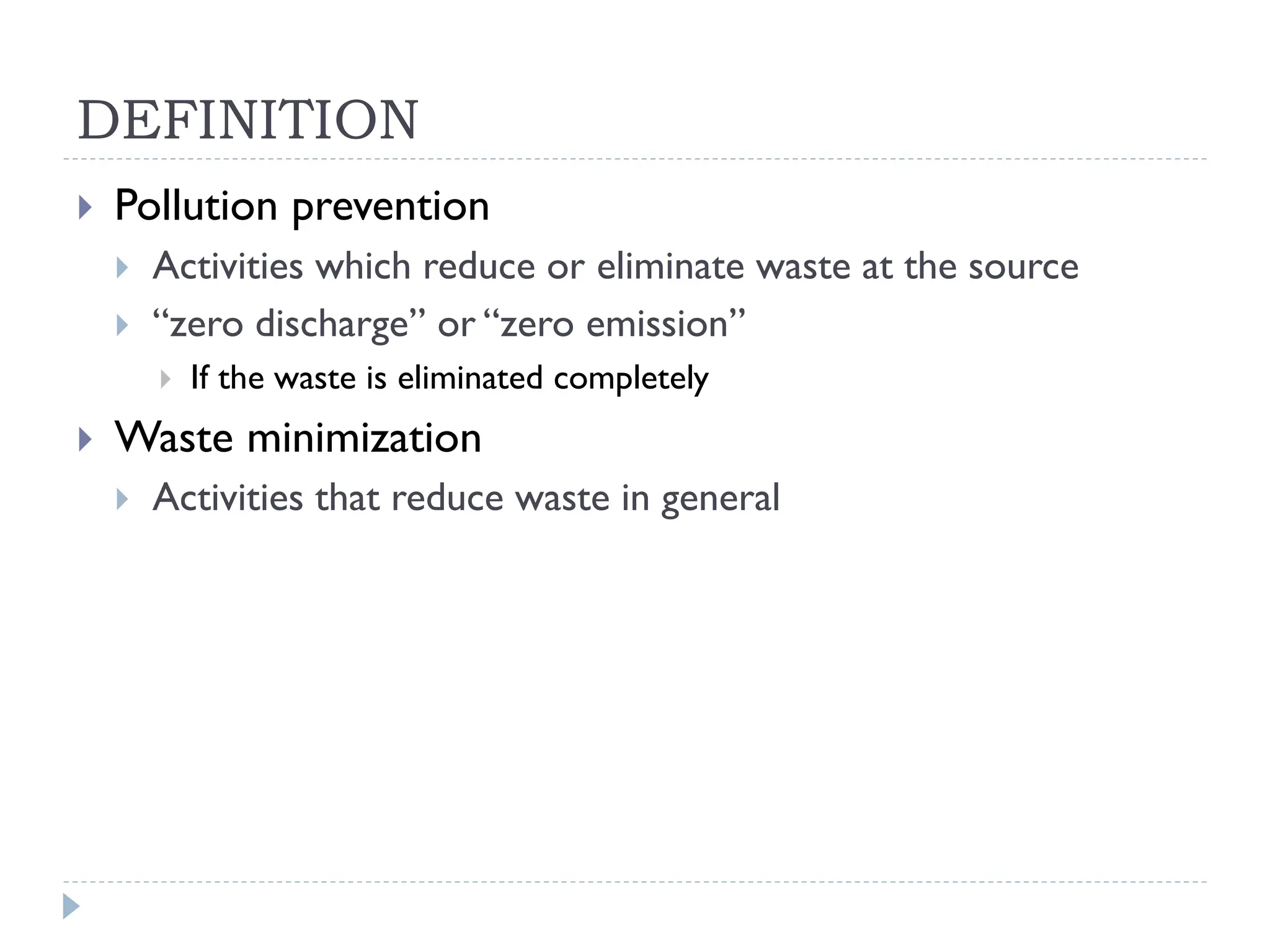
DEFINITION
 Pollution prevention
 Activities which reduce or eliminate waste at the source
 “zero discharge” or “zero emission”
 If the waste is eliminated completely
 Waste minimization
 Activities that reduce waste in general
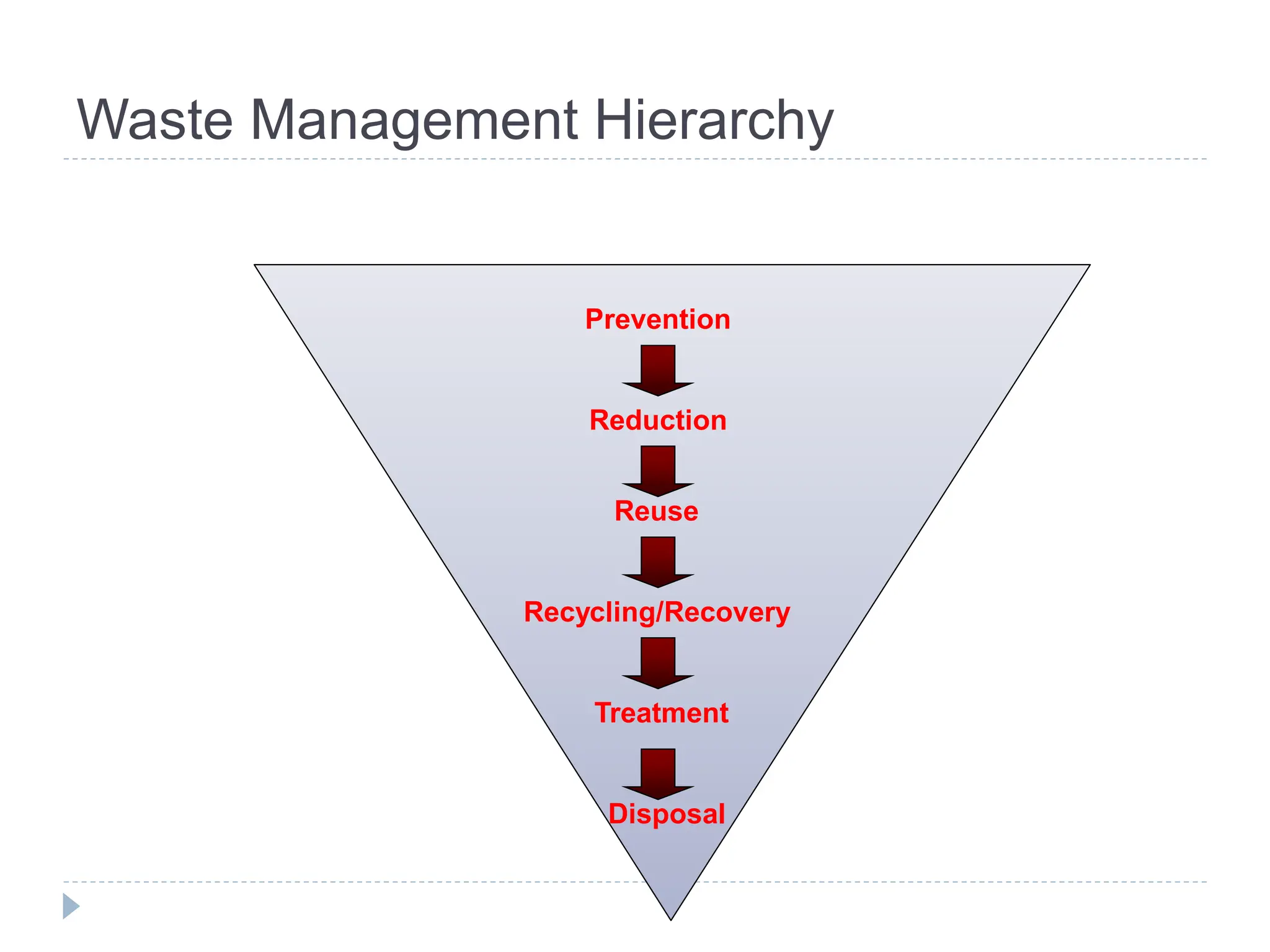
Waste Management Hierarchy
Reduction
Recycling/Recovery
Treatment
Disposal
Reuse
Prevention
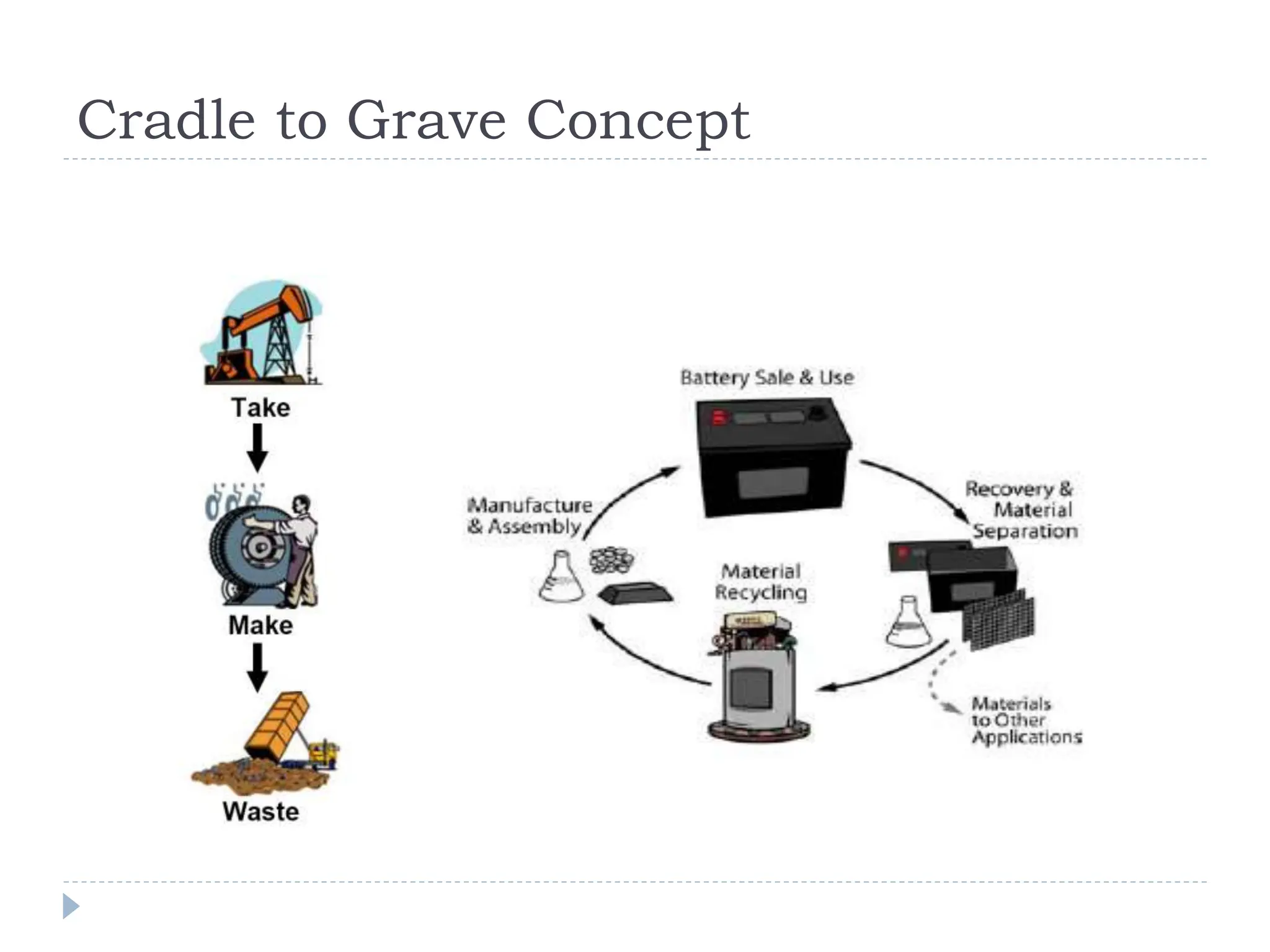
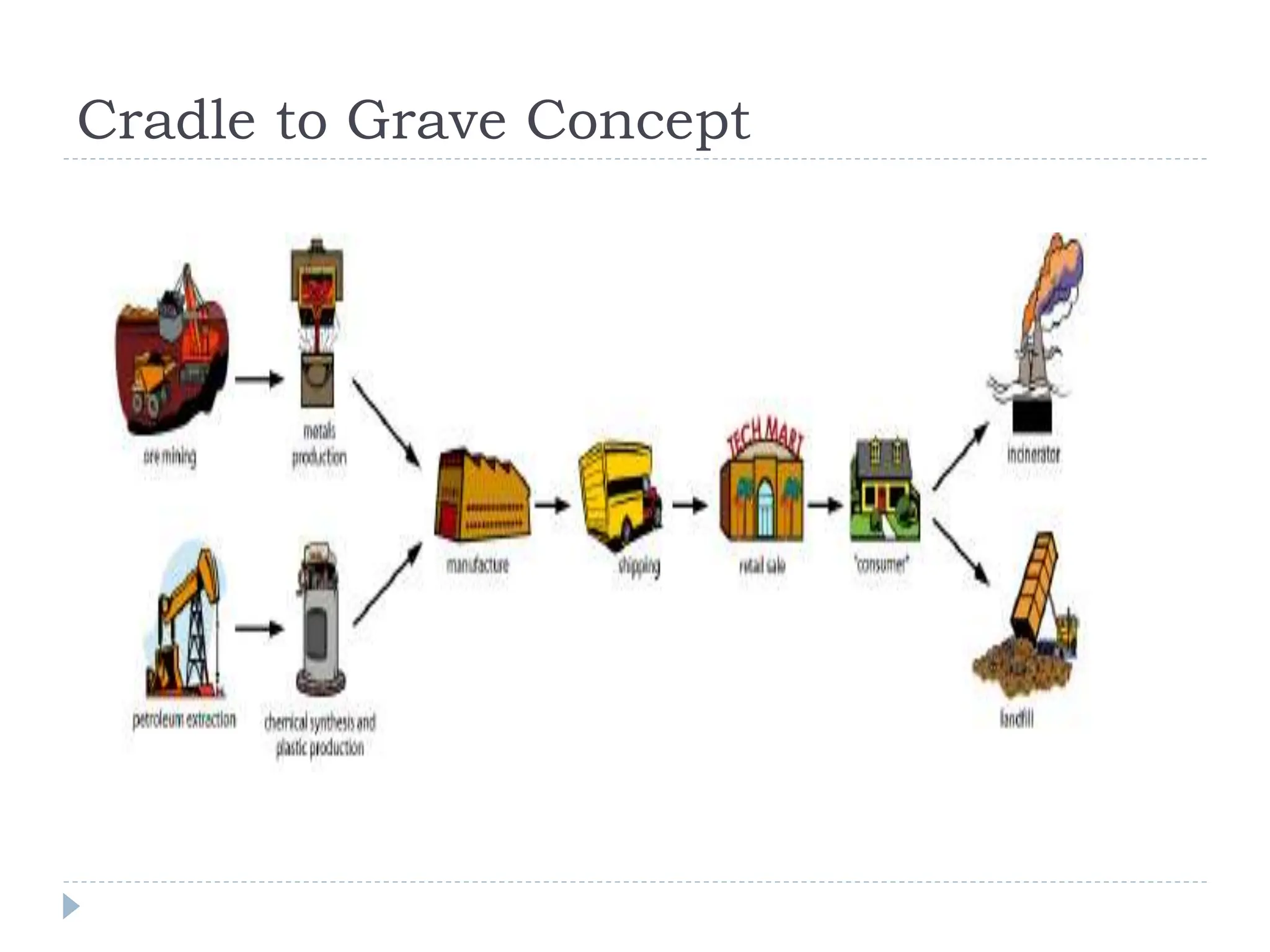
Cradle to Grave Concept
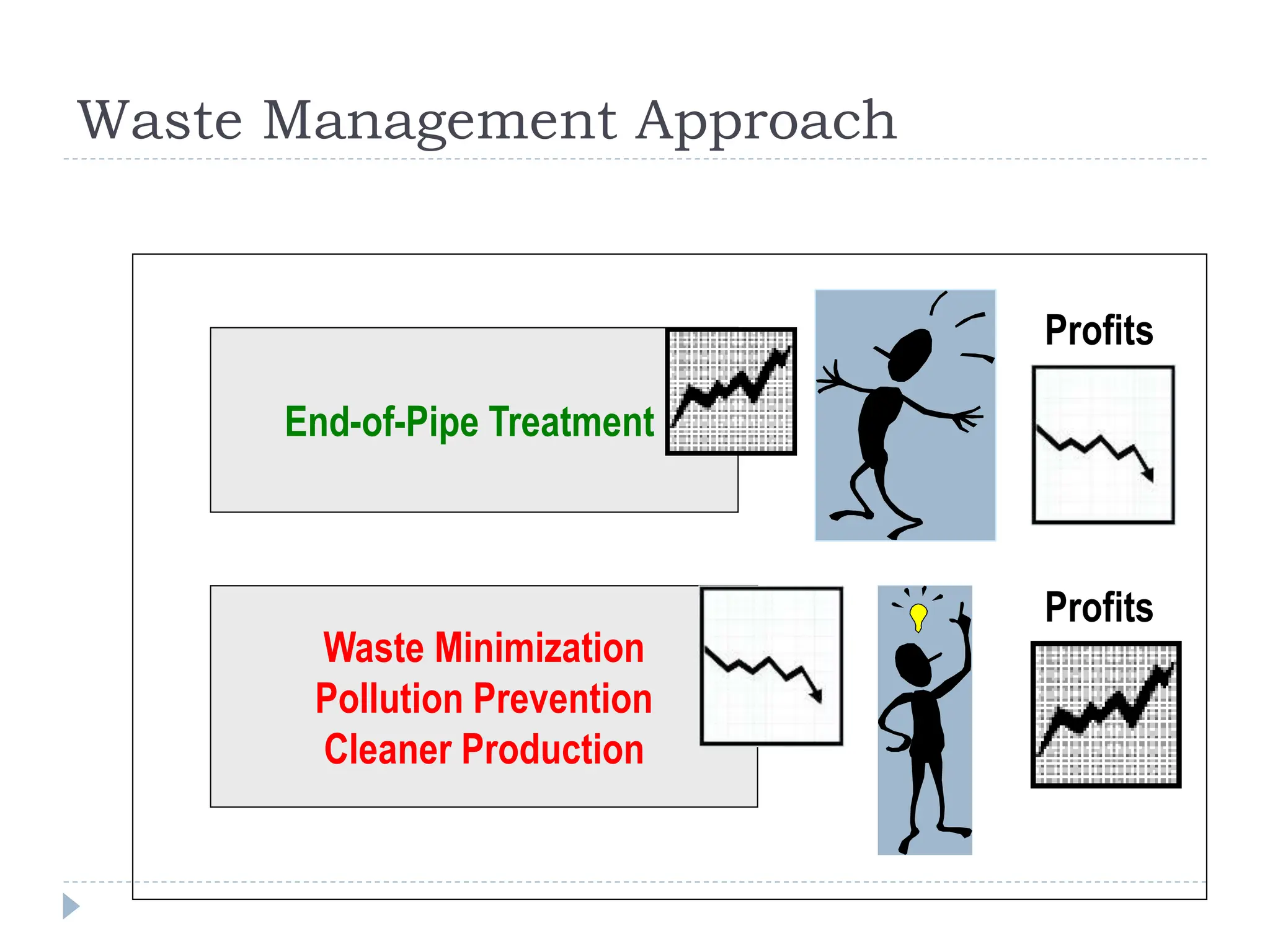
End-of-Pipe Treatment
Waste Minimization
Pollution Prevention
Cleaner Production
Profits
Profits
Waste Management Approach
Cleaner Production- Definition by UNEP
 Continuous application of an integrated
preventive environmental strategy to
processes, products, and services to increase
overall efficiency, and reduce risks to humans
and the environment
Cleaner Production Application
 Production processes - conserving raw materials, water and energy;
eliminating toxic and dangerous raw materials; and reducing the quantity
and toxicity of all emissions and wastes at source during the production
process
 For products - reduce the environmental, health and safety impacts of
products over their entire life cycles, from raw materials extraction,
through manufacturing and use, to the 'ultimate' disposal of the product
 For services - incorporating environmental concerns into designing and
delivering services
Cleaner Production Related Concepts
 Eco-efficiency
 Pollution Prevention
 Waste Minimisation
 Green Productivity
 Industrial Ecology
Eco-efficiency
 Delivery of competitively priced goods and services that satisfy
human needs and bring quality of life, while progressively
reducing ecological impacts and resource intensity throughout
the life cycle, to a level at least in line with the earth's
estimated carrying capacity
Pollution Prevention
 As the source reduction - preventing or reducing waste
where it originates, at the source - including practices
that conserve natural resources by reducing or
eliminating pollutants through increased efficiency in the
use of raw materials, energy, water and land
Waste Minimization
 On-site reduction source reduction of waste by
changes of input raw materials, technology changes,
good operating practices and product changes
 Off-site recycling by direct reuse after reclamation
are also considered to be waste minimisation
techniques,but have a distinctly lower priority
compared to on-site prevention or reduction
Green Productivity
 A strategy for enhancing productivity and environmental
performance for overall socio-economic development
Source Reduction
1. Input Materials
2. Technology Change
3. Procedural Change
4. Product Change
1. Input Materials
 “Source control investigations”
 Classified into :
a) Purification
Prevent inert or impure materials from entering the
production process
b) Substitution
Replacing toxic material with less toxic or more
environmentally desirable material
c) Dilution
Minor component – use more dilute solution
2. Technology Change
 Changes of technology made to physical plant
 Include :
a) Process change
b) Equipment, piping or layout change
c) Additional automation
d) Energy conservation
e)Water conservation
a) Process Change
 Applying innovative technology to achieve same
products – reducing waste
 Process redesign :
i) Alteration of existing processes – adding new
unit operations
ii) Implement new technology to replace
outmoded operations
b) Equipment, Piping or Layout Change
 Reducing equipment related inefficiencies
 Efficient equipment justified by higher productivity, reduced
raw materials costs and reduced waste material costs
 Modification needs detailed evaluation of process
characteristic – applicability of the process
 Equipment changes can be very simple and inexpensive
c) Operational Setting Changes
1 – Adjustment to temperature, pressure, flow rate and
residence time parameters
2 – Represent easiest and least expensive ways to reduce waste
generation
3 – Process equipment designed to operate most efficiently at
optimum parameter settings
4 – Less waste will be generated when equipment operates
efficiently and at optimum settings
d) Additional Control/Automation
1 – Improved monitoring and adjustment of operating
parameters - ensure maximum efficiency
2 – On stream set points controls / advanced statistical process
control systems
3 – Reduce human error, prevent spills, costly downtime
4 – Increase efficiency thus increase product
e, f ) Energy & Water Conservation
1 – Saving electrical consumption and usage
2 – Saving water consumption and usage
3. Procedural Change
 Referred as “Good operating practices” OR “Good
housekeeping”
 Include :
a) Material loss prevention
b) Segregating waste streams
c) Material tracking and inventory control
d) Production scheduling
e) Preventive maintenance
f) Container optimization
a) Material Loss Prevention
 To reduce the chances of spilling of
product
 Long term, slow release spill is often hard
to find and can create large amount of
hazardous waste
b) Segregating Waste Streams
 Decrease amount of waste to be disposed
 Include :
i) Prevent hazardous wastes from mixing with
non-hazardous waste
ii) Isolate hazardous wastes by contaminant
iii) Isolate liquid wastes from solid wastes
c) Material Tracking and Inventory Control
To track waste minimization
efforts and target areas for
improvements
d) Production Scheduling
 Alteration in product scheduling
 Include :
i) Maximize batch size
ii) Schedule production to reduce
cleaning frequency
e) Preventive Maintenance
 Cut production costs and decrease equipment downtime, in
addition to prevent waste release due to equipment failure
 Include :
i) Equipment data cards – equipment location,
characteristics and maintenance
ii) Equipment history cards
iii) Equipment history breakdown reports
iv) Manual or computerized repair history file
f) Container Optimization
 Options for minimizing wastes associate to containers
 Include :
i) Use large containers instead of small containers
whenever possible
ii) Use containers with a one-to-one height- to-
diameter ratio to minimize wetted area
iii) Empty drums and containers thoroughly before
cleaning or disposal
4. Product Change
 Include :
a) Product Substitution
Change design, composition or specifications of end
products
b) Product Reformulation
Reducing the concentration of hazardous substances /
changing the composition
c) Product Conservation
Effective management of inventory
Reuse
 Reuse : Returning waste material or to another process as an
input material
 Approach :
a) Direct on-site reuse
b) Sale for reuse off-site
 Should be considered when all source reduction options have
been investigated and implemented
 Effectiveness depends upon the ability to separate reusable
waste from other process waste
Purchasing Options for Pollution Prevention
 Buy in bulk
 Reduces packaging waste
 Usually less expensive
 Buy reusable or refillable products
 Reusable oil absorbent
 Refillable tanks for welding gas
 Buy recycled material
Purchasing Options for Pollution Prevention
 Inventory Control
 “just-in-time” purchasing
 watch shelf expiration dates
 rotate materials
 streamline materials purchased, minimize the types
 keep records of materials purchased - record savings
 return defective or outdated materials to the supplier
chapter 6 POLLUTION PREVENTION AND WASTE MINIZATION.pdf

chapter 6 POLLUTION PREVENTION AND WASTE MINIZATION.pdf

  • 1.
    POLLUTION PREVENTION AND WASTEMINIZATION LECTURER: MS AFIZA ABDULLAH SUHAIMI EXT:2296 DTS3613 CHAPTER 6
  • 2.
    LEARNING OUTCOMES  Atthe end of this lecture, students should be able to:  Understand the cleaner production  Describe the waste management hierarchy  Explain the principle of volume reduction  Explain the principle of toxicity reduction  Discuss the recycling and recovery processes  Understand the waste minimization opportunity assessment
  • 3.
    DEFINITION  Pollution prevention Activities which reduce or eliminate waste at the source  “zero discharge” or “zero emission”  If the waste is eliminated completely  Waste minimization  Activities that reduce waste in general
  • 4.
  • 5.
  • 6.
  • 7.
    End-of-Pipe Treatment Waste Minimization PollutionPrevention Cleaner Production Profits Profits Waste Management Approach
  • 8.
    Cleaner Production- Definitionby UNEP  Continuous application of an integrated preventive environmental strategy to processes, products, and services to increase overall efficiency, and reduce risks to humans and the environment
  • 9.
    Cleaner Production Application Production processes - conserving raw materials, water and energy; eliminating toxic and dangerous raw materials; and reducing the quantity and toxicity of all emissions and wastes at source during the production process  For products - reduce the environmental, health and safety impacts of products over their entire life cycles, from raw materials extraction, through manufacturing and use, to the 'ultimate' disposal of the product  For services - incorporating environmental concerns into designing and delivering services
  • 10.
    Cleaner Production RelatedConcepts  Eco-efficiency  Pollution Prevention  Waste Minimisation  Green Productivity  Industrial Ecology
  • 11.
    Eco-efficiency  Delivery ofcompetitively priced goods and services that satisfy human needs and bring quality of life, while progressively reducing ecological impacts and resource intensity throughout the life cycle, to a level at least in line with the earth's estimated carrying capacity
  • 12.
    Pollution Prevention  Asthe source reduction - preventing or reducing waste where it originates, at the source - including practices that conserve natural resources by reducing or eliminating pollutants through increased efficiency in the use of raw materials, energy, water and land
  • 13.
    Waste Minimization  On-sitereduction source reduction of waste by changes of input raw materials, technology changes, good operating practices and product changes  Off-site recycling by direct reuse after reclamation are also considered to be waste minimisation techniques,but have a distinctly lower priority compared to on-site prevention or reduction
  • 14.
    Green Productivity  Astrategy for enhancing productivity and environmental performance for overall socio-economic development
  • 15.
    Source Reduction 1. InputMaterials 2. Technology Change 3. Procedural Change 4. Product Change
  • 16.
    1. Input Materials “Source control investigations”  Classified into : a) Purification Prevent inert or impure materials from entering the production process b) Substitution Replacing toxic material with less toxic or more environmentally desirable material c) Dilution Minor component – use more dilute solution
  • 17.
    2. Technology Change Changes of technology made to physical plant  Include : a) Process change b) Equipment, piping or layout change c) Additional automation d) Energy conservation e)Water conservation
  • 18.
    a) Process Change Applying innovative technology to achieve same products – reducing waste  Process redesign : i) Alteration of existing processes – adding new unit operations ii) Implement new technology to replace outmoded operations
  • 19.
    b) Equipment, Pipingor Layout Change  Reducing equipment related inefficiencies  Efficient equipment justified by higher productivity, reduced raw materials costs and reduced waste material costs  Modification needs detailed evaluation of process characteristic – applicability of the process  Equipment changes can be very simple and inexpensive
  • 20.
    c) Operational SettingChanges 1 – Adjustment to temperature, pressure, flow rate and residence time parameters 2 – Represent easiest and least expensive ways to reduce waste generation 3 – Process equipment designed to operate most efficiently at optimum parameter settings 4 – Less waste will be generated when equipment operates efficiently and at optimum settings
  • 21.
    d) Additional Control/Automation 1– Improved monitoring and adjustment of operating parameters - ensure maximum efficiency 2 – On stream set points controls / advanced statistical process control systems 3 – Reduce human error, prevent spills, costly downtime 4 – Increase efficiency thus increase product
  • 22.
    e, f )Energy & Water Conservation 1 – Saving electrical consumption and usage 2 – Saving water consumption and usage
  • 23.
    3. Procedural Change Referred as “Good operating practices” OR “Good housekeeping”  Include : a) Material loss prevention b) Segregating waste streams c) Material tracking and inventory control d) Production scheduling e) Preventive maintenance f) Container optimization
  • 24.
    a) Material LossPrevention  To reduce the chances of spilling of product  Long term, slow release spill is often hard to find and can create large amount of hazardous waste
  • 25.
    b) Segregating WasteStreams  Decrease amount of waste to be disposed  Include : i) Prevent hazardous wastes from mixing with non-hazardous waste ii) Isolate hazardous wastes by contaminant iii) Isolate liquid wastes from solid wastes
  • 26.
    c) Material Trackingand Inventory Control To track waste minimization efforts and target areas for improvements
  • 27.
    d) Production Scheduling Alteration in product scheduling  Include : i) Maximize batch size ii) Schedule production to reduce cleaning frequency
  • 28.
    e) Preventive Maintenance Cut production costs and decrease equipment downtime, in addition to prevent waste release due to equipment failure  Include : i) Equipment data cards – equipment location, characteristics and maintenance ii) Equipment history cards iii) Equipment history breakdown reports iv) Manual or computerized repair history file
  • 29.
    f) Container Optimization Options for minimizing wastes associate to containers  Include : i) Use large containers instead of small containers whenever possible ii) Use containers with a one-to-one height- to- diameter ratio to minimize wetted area iii) Empty drums and containers thoroughly before cleaning or disposal
  • 30.
    4. Product Change Include : a) Product Substitution Change design, composition or specifications of end products b) Product Reformulation Reducing the concentration of hazardous substances / changing the composition c) Product Conservation Effective management of inventory
  • 31.
    Reuse  Reuse :Returning waste material or to another process as an input material  Approach : a) Direct on-site reuse b) Sale for reuse off-site  Should be considered when all source reduction options have been investigated and implemented  Effectiveness depends upon the ability to separate reusable waste from other process waste
  • 32.
    Purchasing Options forPollution Prevention  Buy in bulk  Reduces packaging waste  Usually less expensive  Buy reusable or refillable products  Reusable oil absorbent  Refillable tanks for welding gas  Buy recycled material
  • 33.
    Purchasing Options forPollution Prevention  Inventory Control  “just-in-time” purchasing  watch shelf expiration dates  rotate materials  streamline materials purchased, minimize the types  keep records of materials purchased - record savings  return defective or outdated materials to the supplier