
Political Revolutions  Liberty, Equality, Fraternity!
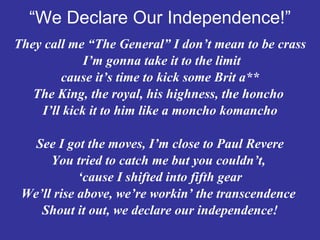
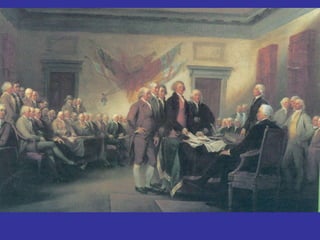
American Revolution  Declaration of Independence , 1776 Thomas Jefferson  Heavy influence from John Locke  Components: Popular sovereignty  Natural rights  Equality We Declare Our Independence
“ We Declare Our Independence!” They call me “The General” I don’t mean to be crass I’m gonna take it to the limit  cause it’s time to kick some Brit a** The King, the royal, his highness, the honcho  I’ll kick it to him like a moncho komancho See I got the moves, I’m close to Paul Revere You tried to catch me but you couldn’t,  ‘ cause I shifted into fifth gear We’ll rise above, we’re workin’ the transcendence  Shout it out, we declare our independence!
“ We Declare Our Independence!” I’m gettin’ chilly down in Philly, yo you know it’s my town I’m as ancient as a mariner, I can still get down, you see I get electric when I fly my kite I’m gettin’ bigger on the trigger, pop-pop in a gun fight Tommy P gonna kick some common sense Gather up the minute men to take it on the offence Sun is rising it’s the sign of our ascendance Up to the base we declare our independence!
“ We Declare Our Independence!” Tommy J – I’m the man with the grand plan  in the right hand I’m kickin’ grammar  gonna take you to the Promised Land  Bust crazy rhymes with the paper and the pen Rockin’ it on the mic to the King and his henchmen I wrote the letter and my homies called it divine Johnny H gonna kick it on the dotted line Straight from Virginia this required my attendance I’m here to tell you we declare our independence!
 
Democracy Before America Discussion Questions by John Stewart: If you lived in a monarchy, would rather be the king or a slave? Why or why not? What is the central ideological difference between democracy and cannibalism? Does the expression “When in Rome, do as the Romans do” apply to all cities, or just Rome?
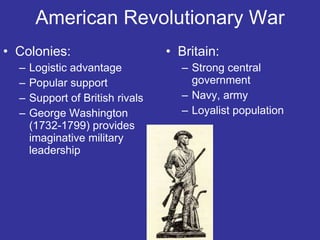
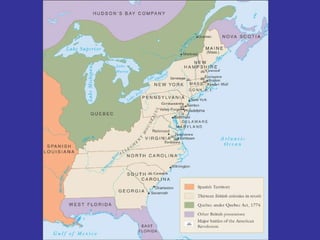
American Revolutionary War Colonies: Logistic advantage Popular support Support of British rivals George Washington (1732-1799) provides imaginative military leadership Britain: Strong central government Navy, army Loyalist population
 
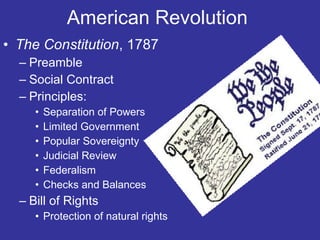
American Revolution  The Constitution , 1787 Preamble  Social Contract Principles: Separation of Powers Limited Government Popular Sovereignty Judicial Review  Federalism  Checks and Balances  Bill of Rights  Protection of natural rights
Impact of the American Revolution The new Republic would stand as a symbol of freedom to both Europe and Latin America The Constitution created the most liberal government of the time. The success of the American Revolution would soon inspire major global changes as other peoples challenged the power of absolute monarchs.  Shot at Lexington and Concord was the “shot heard round the world”
Revolution or War for Independence? The American Revolutionary War is considered a “revolution” and not a “war for independence” because the global impact was “revolutionary.” The American war against the British is indicative of a larger “turn” in history away from the monarchial system of government to a system of government where sovereignty is retained by the populace.  This begins the  Age of Revolutions.
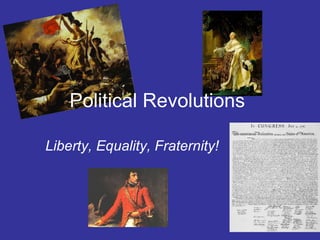
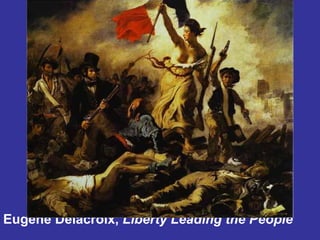
Eugène Delacroix,   Liberty Leading the People
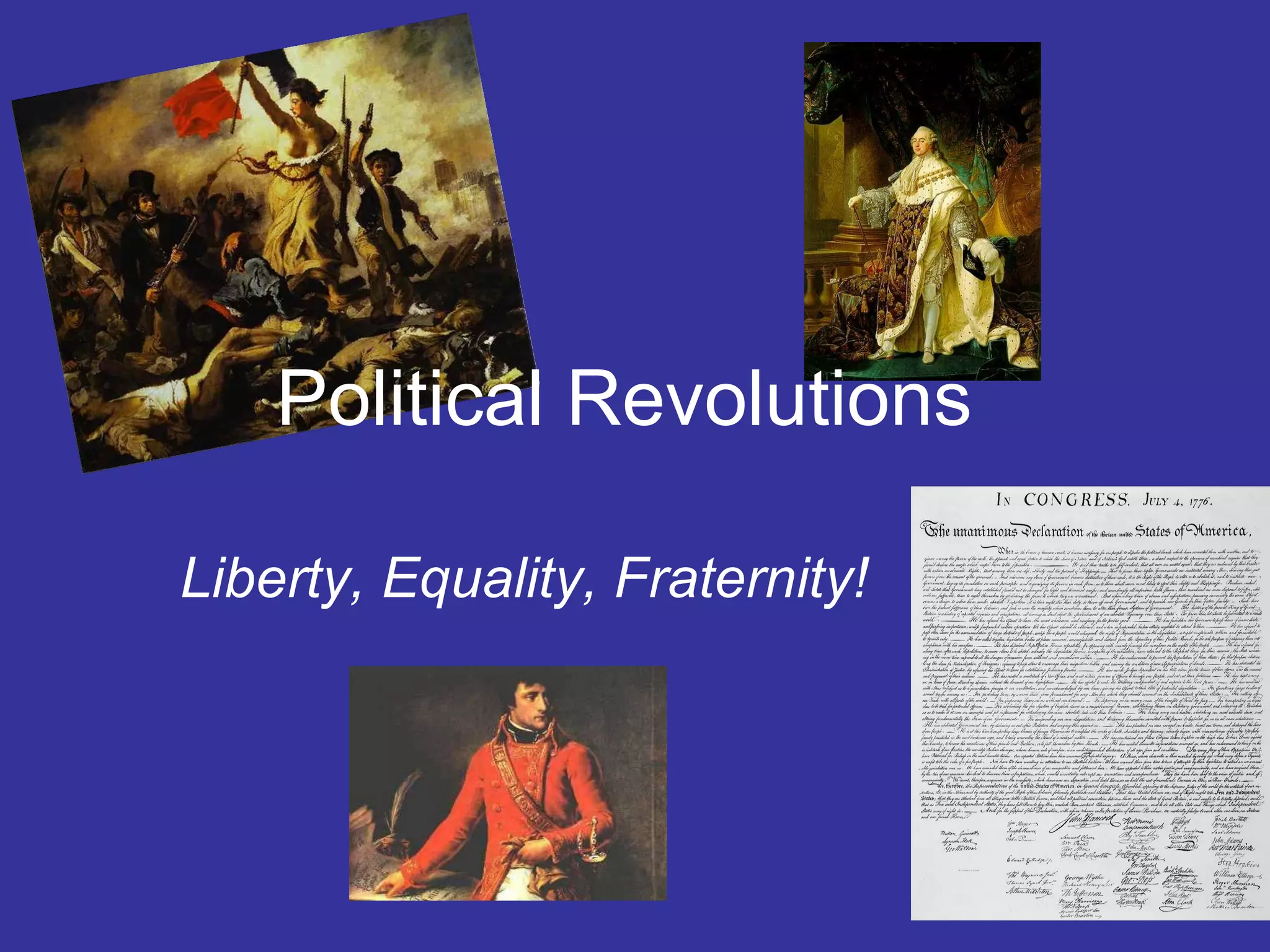
The French Revolution  French Revolution would be much more radical that its American predecessor Repudiation of many aspects of the  ancien régime Causes of the French Revolution: Absolute Monarchy  Social Inequality  Economic Injustices Enlightenment  English and American Examples
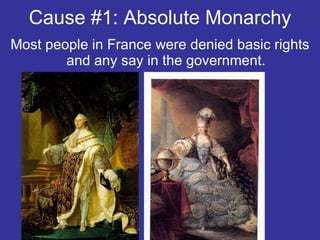
Cause #1: Absolute Monarchy Most people in France were denied basic rights and any say in the government.
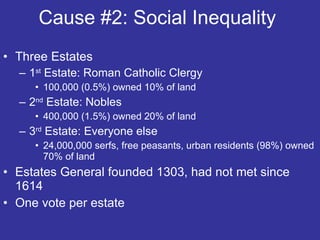
Cause #2: Social Inequality  Three Estates 1 st  Estate: Roman Catholic Clergy 100,000 (0.5%) owned 10% of land 2 nd  Estate: Nobles 400,000 (1.5%) owned 20% of land  3 rd  Estate: Everyone else 24,000,000 serfs, free peasants, urban residents (98%) owned 70% of land Estates General founded 1303, had not met since 1614 One vote per estate
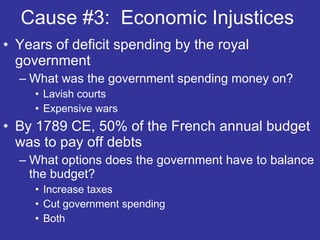
Cause #3:  Economic Injustices  Years of deficit spending by the royal government  What was the government spending money on? Lavish courts Expensive wars  By 1789 CE, 50% of the French annual budget was to pay off debts What options does the government have to balance the budget? Increase taxes  Cut government spending  Both
Cause #4: Enlightenment  Ideas spread to the Third Estate  Particularly  liberty, equality, fraternity
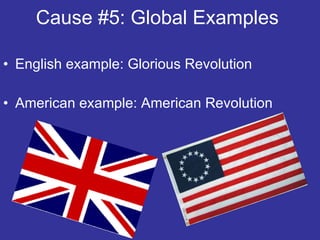
Cause #5: Global Examples  English example: Glorious Revolution  American example: American Revolution
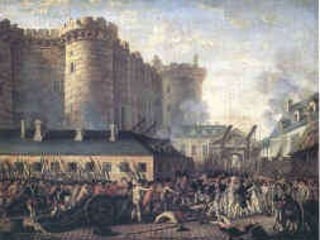
1789! Protest of nobility forces King Louis to call Estates General for new taxes, May 1789 3 rd  Estate demands greater social change Fairness in the tax policy  June, 3 rd  Estate secedes Renamed “National Assembly” July 14 th , mob attacks Bastille, bloody battle won by mob
 
Declaration of the Rights of Man and Citizen  August 1789 American influence Equality of men  Women not included Individual rights Sovereignty resides in the people
Enlightenment Ideals and Women Enlightenment thinkers remained conservative regarding women’s rights Rousseau argues women should receive education to prepare for lives as wives and mothers Mary Astell (England, 1666-1731) argues that women essentially born into slavery Mary Wollstonecraft (England, 1759-1797) A Vindication of the Rights of Woman  (1792)
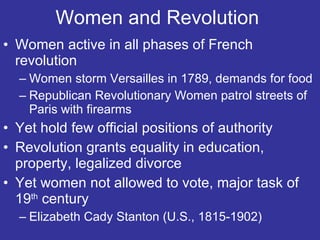
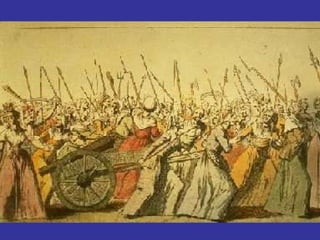
Women and Revolution  Women active in all phases of French revolution Women storm Versailles in 1789, demands for food Republican Revolutionary Women patrol streets of Paris with firearms Yet hold few official positions of authority Revolution grants equality in education, property, legalized divorce Yet women not allowed to vote, major task of 19 th  century Elizabeth Cady Stanton (U.S., 1815-1902)
On October 4, 1789, a crowd of women demanding bread for their families gathered other discontented Parisians, including some men, and marched toward Versailles, arriving soaking wet from the rain. The King agreed to meet with some of the women and promised to distribute all the bread in Versailles to the crowd. Some of the crowd got into the Queen's quarters and Marie Antoinette barely escaped by way of a secret passage to the King's room. He agreed to address the people from his balcony. "My friends," he said, "I will go to Paris with my wife and my children."
 
Political Spectrum
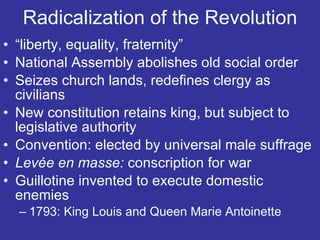
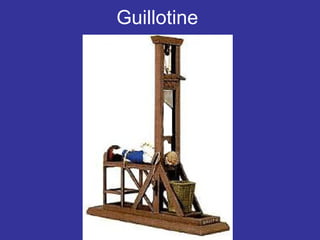
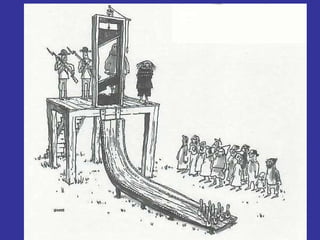
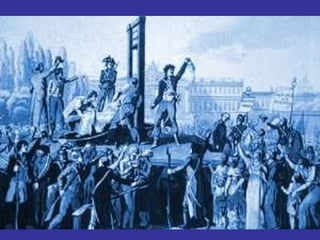
Radicalization of the Revolution “ liberty, equality, fraternity” National Assembly abolishes old social order Seizes church lands, redefines clergy as civilians New constitution retains king, but subject to legislative authority Convention: elected by universal male suffrage Levée  en masse:  conscription for war  Guillotine invented to execute domestic enemies 1793: King Louis and Queen Marie Antoinette
Guillotine
 
 
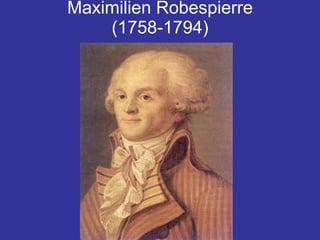
Maximilien Robespierre (1758-1794)
The Directory  Revolutionary enemies of the radicals 1794 Robespierre arrested, sent to guillotine Men of property take power in the form of the Directory Unable to solve economic and military problems of revolutionary France Weak and corrupt
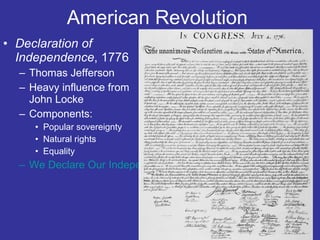
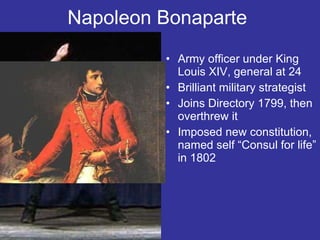
Napoleon Bonaparte  Army officer under King Louis XIV, general at 24 Brilliant military strategist Joins Directory 1799, then overthrew it Imposed new constitution, named self “Consul for life” in 1802


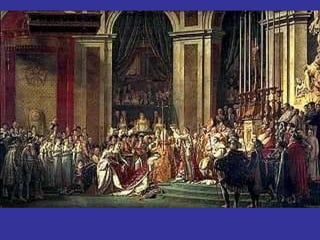
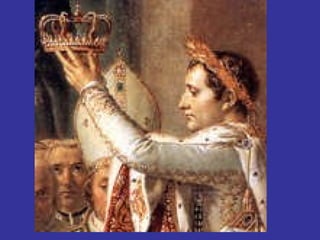
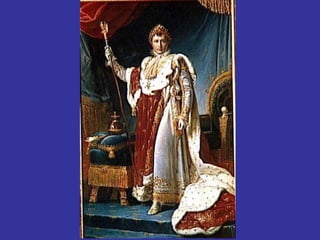
Napoleonic France  Concludes agreement with Pope: Concordat France retains church lands, but pay salaries to clergy Freedom of religion, also for Protestants, Jews 1804 promulgates Napoleonic Code Patriarchal authority Became model for many civil codes Tight control on newspapers, use of secret police Eventually declared himself Emperor
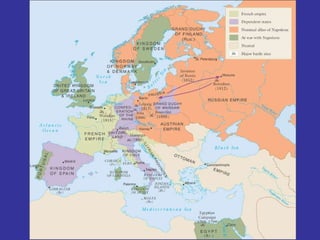
Napoleon’s Empire  Conquered Iberian, Italian Peninsulas, Netherlands Forced Austria and Prussia to enter into alliance Disastrous invasion of Russia in 1812 Burned Moscow, but defeated by Russian weather “ General Winter” British, Austrian, Prussian and Russian armies force Napoleon to abdicate, 1814 Exiled to Island of Elba, escaped to take power again for 100 days Defeated by British at Waterloo, exiled to St. Helena, dies 1821
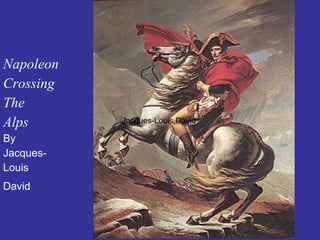
Napoleon Crossing  The  Alps By Jacques- Louis  David   Jacques-Louis David
 

Political revolutions

  • 1.
    Political Revolutions Liberty, Equality, Fraternity!
  • 2.
    American Revolution Declaration of Independence , 1776 Thomas Jefferson Heavy influence from John Locke Components: Popular sovereignty Natural rights Equality We Declare Our Independence
  • 3.
    “ We DeclareOur Independence!” They call me “The General” I don’t mean to be crass I’m gonna take it to the limit cause it’s time to kick some Brit a** The King, the royal, his highness, the honcho I’ll kick it to him like a moncho komancho See I got the moves, I’m close to Paul Revere You tried to catch me but you couldn’t, ‘ cause I shifted into fifth gear We’ll rise above, we’re workin’ the transcendence Shout it out, we declare our independence!
  • 4.
    “ We DeclareOur Independence!” I’m gettin’ chilly down in Philly, yo you know it’s my town I’m as ancient as a mariner, I can still get down, you see I get electric when I fly my kite I’m gettin’ bigger on the trigger, pop-pop in a gun fight Tommy P gonna kick some common sense Gather up the minute men to take it on the offence Sun is rising it’s the sign of our ascendance Up to the base we declare our independence!
  • 5.
    “ We DeclareOur Independence!” Tommy J – I’m the man with the grand plan in the right hand I’m kickin’ grammar gonna take you to the Promised Land Bust crazy rhymes with the paper and the pen Rockin’ it on the mic to the King and his henchmen I wrote the letter and my homies called it divine Johnny H gonna kick it on the dotted line Straight from Virginia this required my attendance I’m here to tell you we declare our independence!
  • 6.
  • 7.
    Democracy Before AmericaDiscussion Questions by John Stewart: If you lived in a monarchy, would rather be the king or a slave? Why or why not? What is the central ideological difference between democracy and cannibalism? Does the expression “When in Rome, do as the Romans do” apply to all cities, or just Rome?
  • 8.
    American Revolutionary WarColonies: Logistic advantage Popular support Support of British rivals George Washington (1732-1799) provides imaginative military leadership Britain: Strong central government Navy, army Loyalist population
  • 9.
  • 10.
    American Revolution The Constitution , 1787 Preamble Social Contract Principles: Separation of Powers Limited Government Popular Sovereignty Judicial Review Federalism Checks and Balances Bill of Rights Protection of natural rights
  • 11.
    Impact of theAmerican Revolution The new Republic would stand as a symbol of freedom to both Europe and Latin America The Constitution created the most liberal government of the time. The success of the American Revolution would soon inspire major global changes as other peoples challenged the power of absolute monarchs. Shot at Lexington and Concord was the “shot heard round the world”
  • 12.
    Revolution or Warfor Independence? The American Revolutionary War is considered a “revolution” and not a “war for independence” because the global impact was “revolutionary.” The American war against the British is indicative of a larger “turn” in history away from the monarchial system of government to a system of government where sovereignty is retained by the populace. This begins the Age of Revolutions.
  • 13.
    Eugène Delacroix, Liberty Leading the People
  • 14.
    The French Revolution French Revolution would be much more radical that its American predecessor Repudiation of many aspects of the ancien régime Causes of the French Revolution: Absolute Monarchy Social Inequality Economic Injustices Enlightenment English and American Examples
  • 15.
    Cause #1: AbsoluteMonarchy Most people in France were denied basic rights and any say in the government.
  • 16.
    Cause #2: SocialInequality Three Estates 1 st Estate: Roman Catholic Clergy 100,000 (0.5%) owned 10% of land 2 nd Estate: Nobles 400,000 (1.5%) owned 20% of land 3 rd Estate: Everyone else 24,000,000 serfs, free peasants, urban residents (98%) owned 70% of land Estates General founded 1303, had not met since 1614 One vote per estate
  • 17.
    Cause #3: Economic Injustices Years of deficit spending by the royal government What was the government spending money on? Lavish courts Expensive wars By 1789 CE, 50% of the French annual budget was to pay off debts What options does the government have to balance the budget? Increase taxes Cut government spending Both
  • 18.
    Cause #4: Enlightenment Ideas spread to the Third Estate Particularly liberty, equality, fraternity
  • 19.
    Cause #5: GlobalExamples English example: Glorious Revolution American example: American Revolution
  • 20.
    1789! Protest ofnobility forces King Louis to call Estates General for new taxes, May 1789 3 rd Estate demands greater social change Fairness in the tax policy June, 3 rd Estate secedes Renamed “National Assembly” July 14 th , mob attacks Bastille, bloody battle won by mob
  • 21.
  • 22.
    Declaration of theRights of Man and Citizen August 1789 American influence Equality of men Women not included Individual rights Sovereignty resides in the people
  • 23.
    Enlightenment Ideals andWomen Enlightenment thinkers remained conservative regarding women’s rights Rousseau argues women should receive education to prepare for lives as wives and mothers Mary Astell (England, 1666-1731) argues that women essentially born into slavery Mary Wollstonecraft (England, 1759-1797) A Vindication of the Rights of Woman (1792)
  • 24.
    Women and Revolution Women active in all phases of French revolution Women storm Versailles in 1789, demands for food Republican Revolutionary Women patrol streets of Paris with firearms Yet hold few official positions of authority Revolution grants equality in education, property, legalized divorce Yet women not allowed to vote, major task of 19 th century Elizabeth Cady Stanton (U.S., 1815-1902)
  • 25.
    On October 4,1789, a crowd of women demanding bread for their families gathered other discontented Parisians, including some men, and marched toward Versailles, arriving soaking wet from the rain. The King agreed to meet with some of the women and promised to distribute all the bread in Versailles to the crowd. Some of the crowd got into the Queen's quarters and Marie Antoinette barely escaped by way of a secret passage to the King's room. He agreed to address the people from his balcony. "My friends," he said, "I will go to Paris with my wife and my children."
  • 26.
  • 27.
  • 28.
    Radicalization of theRevolution “ liberty, equality, fraternity” National Assembly abolishes old social order Seizes church lands, redefines clergy as civilians New constitution retains king, but subject to legislative authority Convention: elected by universal male suffrage Levée en masse: conscription for war Guillotine invented to execute domestic enemies 1793: King Louis and Queen Marie Antoinette
  • 29.
  • 30.
  • 31.
  • 32.
  • 33.
    The Directory Revolutionary enemies of the radicals 1794 Robespierre arrested, sent to guillotine Men of property take power in the form of the Directory Unable to solve economic and military problems of revolutionary France Weak and corrupt
  • 34.
    Napoleon Bonaparte Army officer under King Louis XIV, general at 24 Brilliant military strategist Joins Directory 1799, then overthrew it Imposed new constitution, named self “Consul for life” in 1802
  • 35.
  • 36.
  • 37.
  • 38.
    Napoleonic France Concludes agreement with Pope: Concordat France retains church lands, but pay salaries to clergy Freedom of religion, also for Protestants, Jews 1804 promulgates Napoleonic Code Patriarchal authority Became model for many civil codes Tight control on newspapers, use of secret police Eventually declared himself Emperor
  • 39.
    Napoleon’s Empire Conquered Iberian, Italian Peninsulas, Netherlands Forced Austria and Prussia to enter into alliance Disastrous invasion of Russia in 1812 Burned Moscow, but defeated by Russian weather “ General Winter” British, Austrian, Prussian and Russian armies force Napoleon to abdicate, 1814 Exiled to Island of Elba, escaped to take power again for 100 days Defeated by British at Waterloo, exiled to St. Helena, dies 1821
  • 40.
    Napoleon Crossing The Alps By Jacques- Louis David Jacques-Louis David
  • 41.

Editor's Notes

  • #33 “ the Incorruptible,” leader of “Committee of Public Safety” Leader of Jacobin party Dominated Convention, 1793-1794 Churches closed, priests forced to marry Promoted “Cult of Reason” as secular alternative to Christianity Calendar reorganized: 10-day weeks, proclaimed Year 1 Executed 40,000; imprisoned 300,000