WHY NATIONS FAIL: The
Origins Of Power, Prosperity
and Poverty
Daron Acemoglu & James A. Robinson
Presentation by: Mahvish Shafique
Roll # 04
Sequence of presentation
 Introduction of Authors
 Introduction of book
 Chapter wise Summary
 Thesis of Authors
 Analysis
 Relevance of the book with Pakistan
 Conclusion
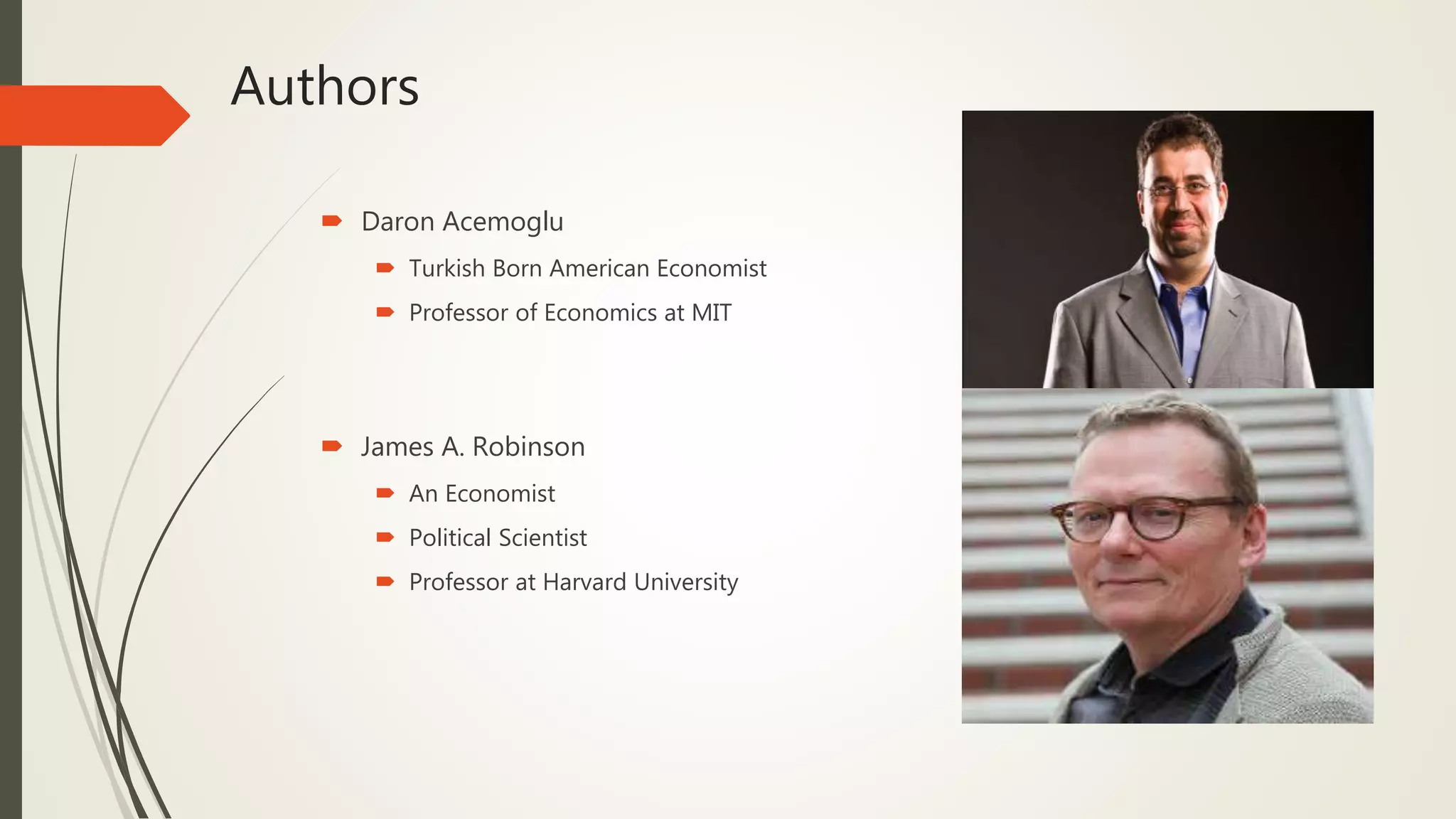
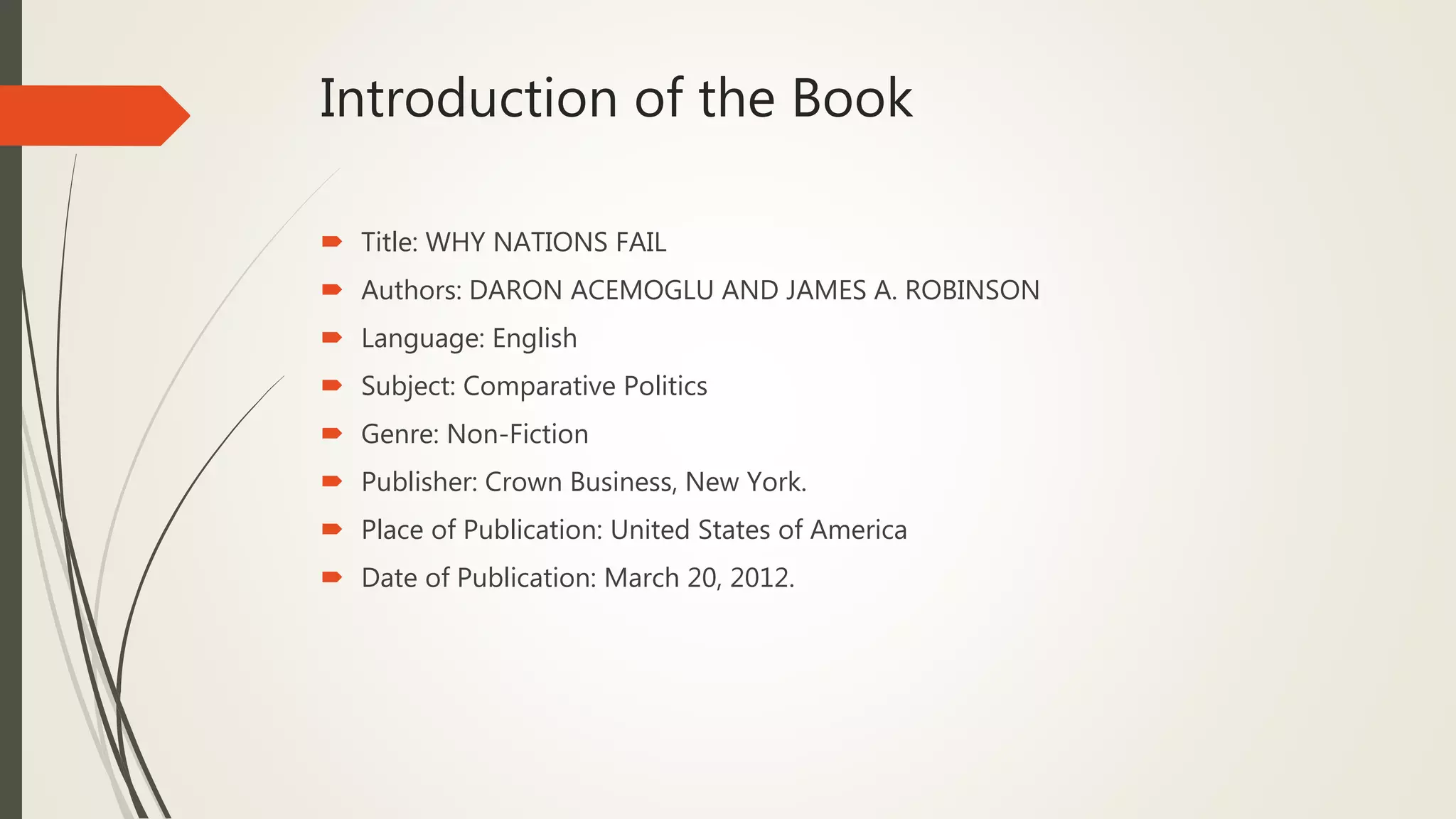
Authors
 Daron Acemoglu
 Turkish Born American Economist
 Professor of Economics at MIT
 James A. Robinson
 An Economist
 Political Scientist
 Professor at Harvard University
Introduction of the Book
 Title: WHY NATIONS FAIL
 Authors: DARON ACEMOGLU AND JAMES A. ROBINSON
 Language: English
 Subject: Comparative Politics
 Genre: Non-Fiction
 Publisher: Crown Business, New York.
 Place of Publication: United States of America
 Date of Publication: March 20, 2012.
Chapter 1: So Close And Yet So Different
 Comparison of two sides of Nogales city
 American side of Nogales
 Mexican side of Nogales
 Reason of Difference
 Difference in political and economic institutions
 Historical development of institutions
Chapter 2: Theories That Don’t Work
 The geography hypothesis
 People in tropical areas tend to be lazy
 The culture hypothesis
 Religion, beliefs, values and ethics determine the fate of the nation
 The ignorance hypothesis
 Rulers do not know how to make poor countries rich
 All three hypothesis are flawed
Chapter 3: The Making of Prosperity and
Poverty
 North Korea vs South Korea
 Inclusive Political Institutions
 Centralised and pluralistic
 Extractive political institutions
 Narrow, absolutist and uncostrained
 Inclusive political institutions give birth to inclusive economic institutions
 Extractive political institutions give birth to extractive economic institutions
Chapter 4: Small Differences and Critical
Junctures: The weight of History
 History and critical junctures shape the path of political and economic trajectory
 Why some nations make the transition to inclusive economic and political
institutions
 while others do not
Chapter 5: Growth under Extractive
Institutions
 Growth can take place under extractive institutions
 Sustainable growth needs technological changes
 Growth under extractive institutions will not be sustainable
Chapter 6: Drifting Apart
 Inclusive institutions can be reversed
 Example of Venice
 Political and economic institutions were overthrown
 Prosperity was reversed
 Today it is rich because people want to spend their money, admiring its past glory
Chapter:7 The Turning Point
 Fear of creative distruction is a hindance in development
 New technology renders old prectices obsolete
 Resistence is shown by the victims of creative destruction
 Industrial revolution in England
Chapter 8: Barriers to development
 Opposition to new technology is barrier to development
 Ottomans opposed printing press
 Absolutist regimes blocked the spread of industry
 Consequence; they lagged behind
Chapter 9: Reversing Development
 European colonalism impoverished large parts of the world
 Colonies did not benefit from industrialisation
 Rather strengthened already extractive institutions
Chapter 10: The Diffusion of Prosperity
 Some parts of the world took different parts to prosperity from that of Britain
 Industrial Revolution of the English economy to the United States and Australian
transformation
Chapter 11: The Virtous Cycle(1/2)
 Dictatorship is not welcomed in inclusive political institutions
 Inclusive political institutions support and are supported by inclusive economic
institutions
 Removes extractive economic relations
 Slavery and serfdom
Chapter 11: The Virtous Cycle(2/2)
 Reduces the importance of monopolies
 create a dynamic economy
 Reduce the economic benefits that one can secure by using political power.
 Allow a free media to flourish
Chapter 12: The Vicious Cycle
 Extractive political institutions lead to extractive economic institutions
 Enrich a few at the expense of many
 Create the platform for extractive political institutions to persist
 Provide no checks against abuses of power
 Creation of unconstrained power and great income
 Inequality increases the potential stakes of the political game
Chapter 13: Why Nations Fail Today
 Institutions, Institutions, Institutions
 Extractive economic institutions do not create incentives
 Extractive political institutions support economic institutions
 Extractive economic and political institutions are root of failure
Chapter 14: Breaking the Mold
 Vicious circle and extractive institutions can be replaced by inclusive institutions
 Examples of China, Botswana and the U.S
 Glorious Revolution in England
Chapter 15: understanding prosperity and
Poverty
 Explains huge differences in living standards around the world
 Differences in living standards are a result of distinction between extractive and
inclusive economic and political institutions
 Growth in extractive economic and political institutions is possible, but it is not
sustainable
Thesis of the Authors (1/2)
 Economic prosperity depends upon institutions
 Political institutions
 Economic institutions
 Further divided into two categories
 Inclusive political and economic institutions
 Extractive political and economic institutions
Thesis of the Authors (2/2)
 Virtuous circle strengthens inclusive institutions
 Viciuous circle strengthens extractive instututions
Analysis
 Not purely economic theory
 General reader can understand it
 Explains huge swathes of human history
 Use of multiple historical examples to show institutional developments
 Balance between the logic of political and economic behavior
 Use of maps and pattern
 Structurally well written book
Shortcomings(1/2)
 Fails to tell how nations can prevent the build-up of institutions that cause poverty
 Does not ponder upon the reasons of emergence of inclusive and extractive
institutions
 Ignores the role geography, culture and ignorance have to play in a Nation’s failure
or success.
Shortcomings(2/2)
 Growth cannot also sustain even under inclusive institutions.
 global financial meltdown of 2008
 Goes too far back in time in citing examples, reducing its relevance in current world
situations
 Use of too many historical examples makes the reading a little boring
Relevance to Pakistan(1/2)
 Extractive political institutions in Pakistan
 Monopoly of civil and military elite on politics
 Elections stregthen position of narrow elite
 Feudal lords use political institutions for their own benefit
Relevance to Pakistan(2/2)
 Foreign aid induced development benefits the rich
 Huge inflow during military dictatorship was not helpful
 Causes dependence on other countries
Why Nations Fail: the origins of power, prosperity and poverty

Why Nations Fail: the origins of power, prosperity and poverty

  • 1.
    WHY NATIONS FAIL:The Origins Of Power, Prosperity and Poverty Daron Acemoglu & James A. Robinson Presentation by: Mahvish Shafique Roll # 04
  • 2.
    Sequence of presentation Introduction of Authors  Introduction of book  Chapter wise Summary  Thesis of Authors  Analysis  Relevance of the book with Pakistan  Conclusion
  • 3.
    Authors  Daron Acemoglu Turkish Born American Economist  Professor of Economics at MIT  James A. Robinson  An Economist  Political Scientist  Professor at Harvard University
  • 4.
    Introduction of theBook  Title: WHY NATIONS FAIL  Authors: DARON ACEMOGLU AND JAMES A. ROBINSON  Language: English  Subject: Comparative Politics  Genre: Non-Fiction  Publisher: Crown Business, New York.  Place of Publication: United States of America  Date of Publication: March 20, 2012.
  • 5.
    Chapter 1: SoClose And Yet So Different  Comparison of two sides of Nogales city  American side of Nogales  Mexican side of Nogales  Reason of Difference  Difference in political and economic institutions  Historical development of institutions
  • 6.
    Chapter 2: TheoriesThat Don’t Work  The geography hypothesis  People in tropical areas tend to be lazy  The culture hypothesis  Religion, beliefs, values and ethics determine the fate of the nation  The ignorance hypothesis  Rulers do not know how to make poor countries rich  All three hypothesis are flawed
  • 7.
    Chapter 3: TheMaking of Prosperity and Poverty  North Korea vs South Korea  Inclusive Political Institutions  Centralised and pluralistic  Extractive political institutions  Narrow, absolutist and uncostrained  Inclusive political institutions give birth to inclusive economic institutions  Extractive political institutions give birth to extractive economic institutions
  • 8.
    Chapter 4: SmallDifferences and Critical Junctures: The weight of History  History and critical junctures shape the path of political and economic trajectory  Why some nations make the transition to inclusive economic and political institutions  while others do not
  • 9.
    Chapter 5: Growthunder Extractive Institutions  Growth can take place under extractive institutions  Sustainable growth needs technological changes  Growth under extractive institutions will not be sustainable
  • 10.
    Chapter 6: DriftingApart  Inclusive institutions can be reversed  Example of Venice  Political and economic institutions were overthrown  Prosperity was reversed  Today it is rich because people want to spend their money, admiring its past glory
  • 11.
    Chapter:7 The TurningPoint  Fear of creative distruction is a hindance in development  New technology renders old prectices obsolete  Resistence is shown by the victims of creative destruction  Industrial revolution in England
  • 12.
    Chapter 8: Barriersto development  Opposition to new technology is barrier to development  Ottomans opposed printing press  Absolutist regimes blocked the spread of industry  Consequence; they lagged behind
  • 13.
    Chapter 9: ReversingDevelopment  European colonalism impoverished large parts of the world  Colonies did not benefit from industrialisation  Rather strengthened already extractive institutions
  • 14.
    Chapter 10: TheDiffusion of Prosperity  Some parts of the world took different parts to prosperity from that of Britain  Industrial Revolution of the English economy to the United States and Australian transformation
  • 15.
    Chapter 11: TheVirtous Cycle(1/2)  Dictatorship is not welcomed in inclusive political institutions  Inclusive political institutions support and are supported by inclusive economic institutions  Removes extractive economic relations  Slavery and serfdom
  • 16.
    Chapter 11: TheVirtous Cycle(2/2)  Reduces the importance of monopolies  create a dynamic economy  Reduce the economic benefits that one can secure by using political power.  Allow a free media to flourish
  • 17.
    Chapter 12: TheVicious Cycle  Extractive political institutions lead to extractive economic institutions  Enrich a few at the expense of many  Create the platform for extractive political institutions to persist  Provide no checks against abuses of power  Creation of unconstrained power and great income  Inequality increases the potential stakes of the political game
  • 18.
    Chapter 13: WhyNations Fail Today  Institutions, Institutions, Institutions  Extractive economic institutions do not create incentives  Extractive political institutions support economic institutions  Extractive economic and political institutions are root of failure
  • 19.
    Chapter 14: Breakingthe Mold  Vicious circle and extractive institutions can be replaced by inclusive institutions  Examples of China, Botswana and the U.S  Glorious Revolution in England
  • 20.
    Chapter 15: understandingprosperity and Poverty  Explains huge differences in living standards around the world  Differences in living standards are a result of distinction between extractive and inclusive economic and political institutions  Growth in extractive economic and political institutions is possible, but it is not sustainable
  • 21.
    Thesis of theAuthors (1/2)  Economic prosperity depends upon institutions  Political institutions  Economic institutions  Further divided into two categories  Inclusive political and economic institutions  Extractive political and economic institutions
  • 22.
    Thesis of theAuthors (2/2)  Virtuous circle strengthens inclusive institutions  Viciuous circle strengthens extractive instututions
  • 23.
    Analysis  Not purelyeconomic theory  General reader can understand it  Explains huge swathes of human history  Use of multiple historical examples to show institutional developments  Balance between the logic of political and economic behavior  Use of maps and pattern  Structurally well written book
  • 24.
    Shortcomings(1/2)  Fails totell how nations can prevent the build-up of institutions that cause poverty  Does not ponder upon the reasons of emergence of inclusive and extractive institutions  Ignores the role geography, culture and ignorance have to play in a Nation’s failure or success.
  • 25.
    Shortcomings(2/2)  Growth cannotalso sustain even under inclusive institutions.  global financial meltdown of 2008  Goes too far back in time in citing examples, reducing its relevance in current world situations  Use of too many historical examples makes the reading a little boring
  • 26.
    Relevance to Pakistan(1/2) Extractive political institutions in Pakistan  Monopoly of civil and military elite on politics  Elections stregthen position of narrow elite  Feudal lords use political institutions for their own benefit
  • 27.
    Relevance to Pakistan(2/2) Foreign aid induced development benefits the rich  Huge inflow during military dictatorship was not helpful  Causes dependence on other countries