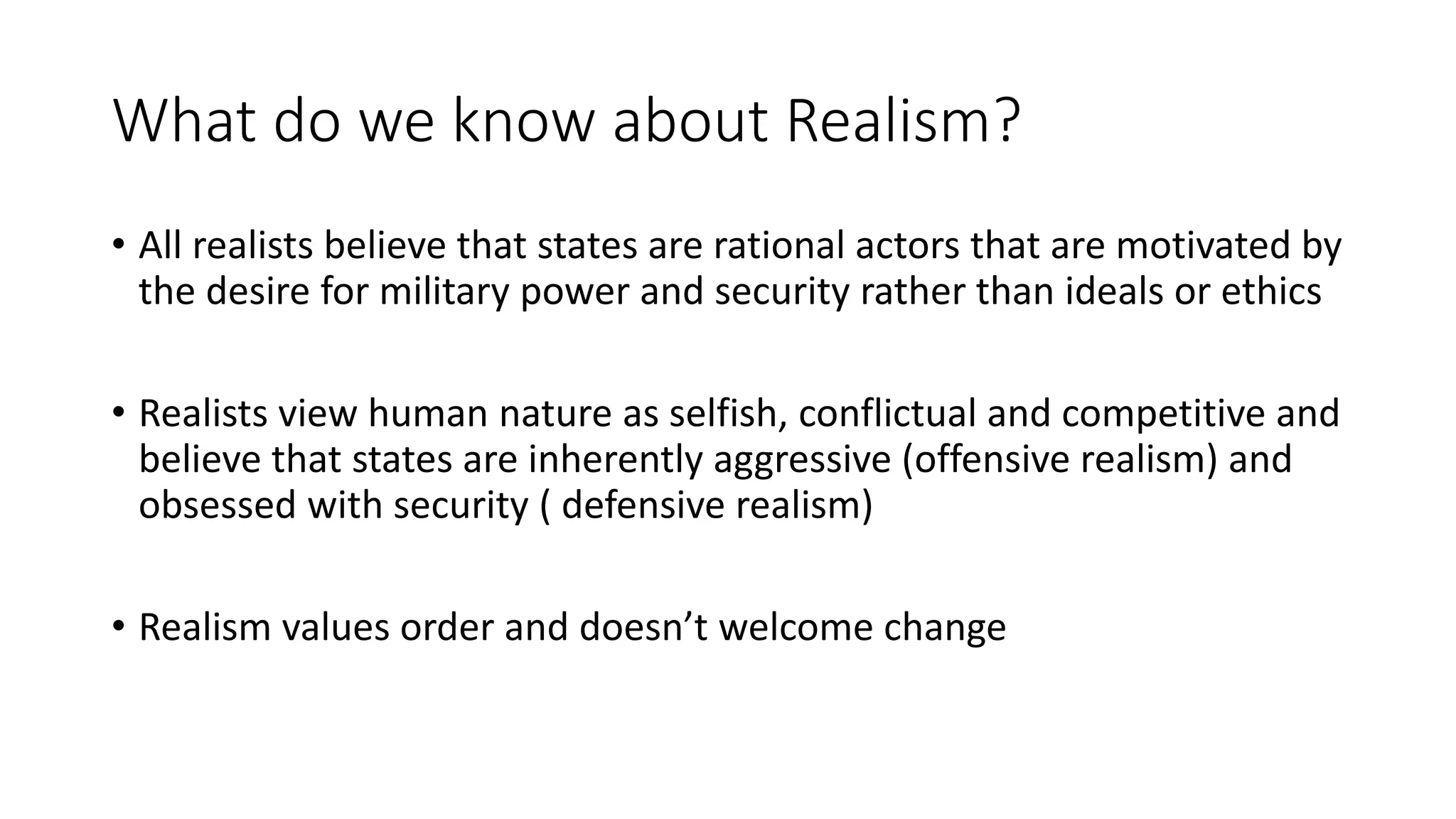
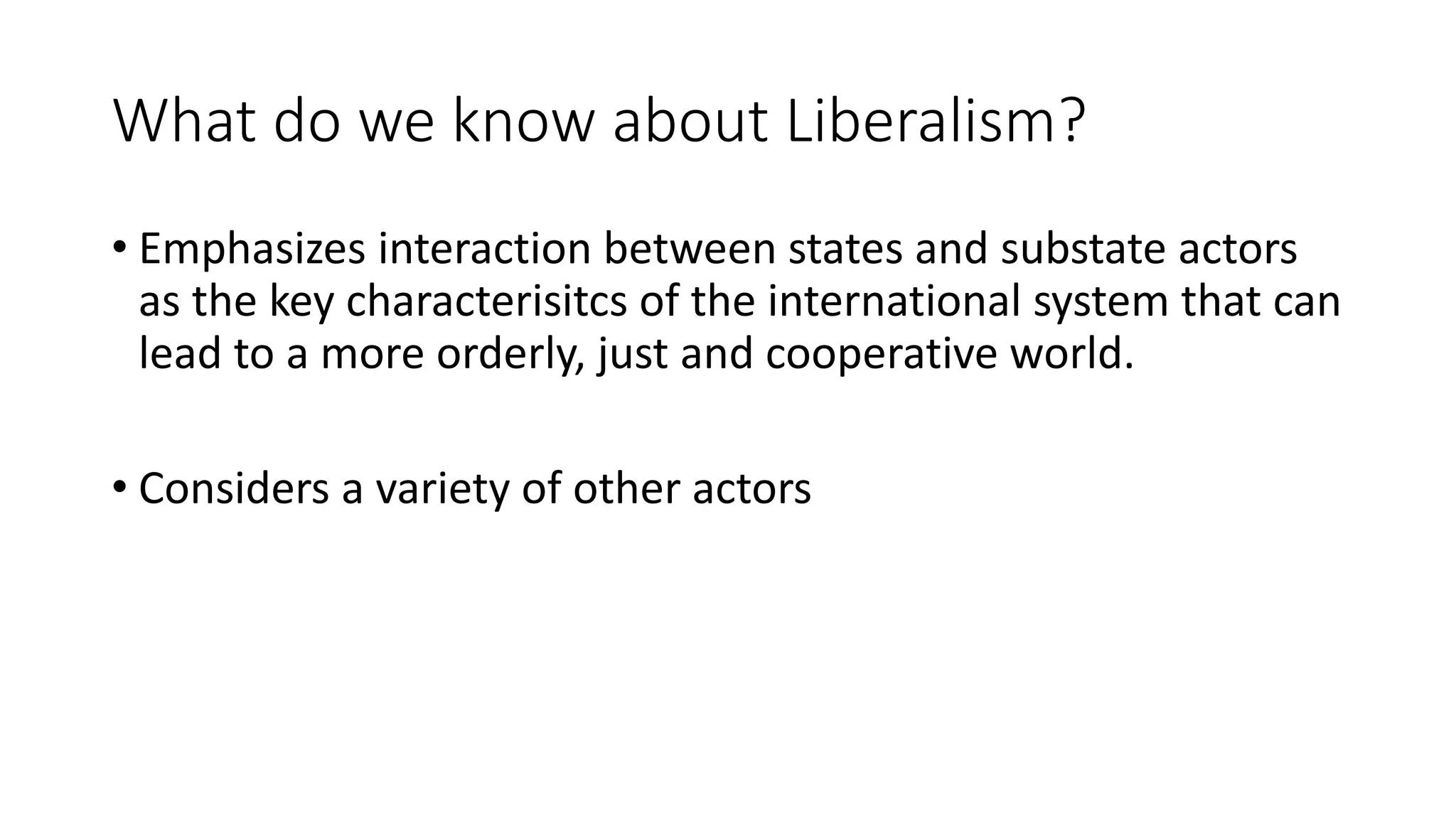
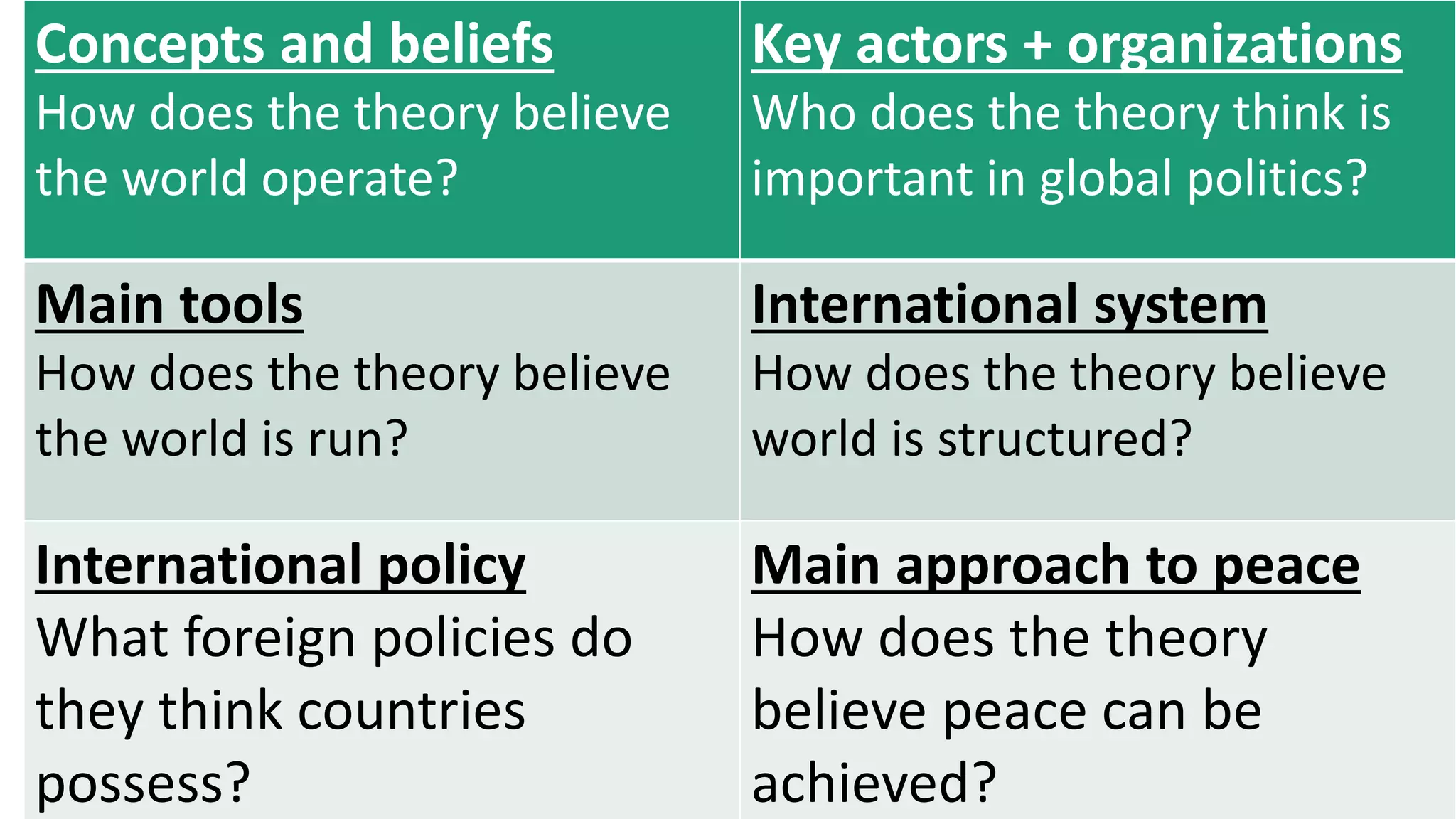
This document provides an overview and critique of realism and liberalism as international relations theories. It notes that realism views states as rational actors seeking power and security, with a competitive human nature. Realism is criticized for ignoring non-state actors and non-military forces. Liberalism emphasizes interaction between states and other actors as leading to a more cooperative world, but is critiqued for downplaying the importance of wars and reducing predictability. The document concludes by framing an evaluation of structural realism and liberalism, suggesting strengths and weaknesses be weighed with supporting evidence.