Bimel kottarathil
A poison is any substance that causes
harm if it gets into the body. . Almost any
chemical can be a poison if there is enough
in the body.
The amount of a chemical substance that
gets into the body at one time is called the
dose.
 Depends upon availability and culture
 Uk –paracetamol is a problem
 Srilanka –pesticides
 South india –copper sulphate
 Acute exposure
 Chronic exposure
 Through mouth by swallowing
 Through lungs by breathing
 Contact Through skin
 Injection through skin
 Most common route
 Children are commonly involved
 Can be accidental or deliberate
 Eg. Pesticide poisoning
 Gas, vapour, dust
 Fine spray or droplet
 Poison enters to lungs and then spread
across the whole body
 Eg. carbon monoxide
 chemical is sprayed or splashed onto the
skin
 if they wear clothes soaked with chemical.
 E.g. pesticide
 Poisons can be injected through the skin
from a syringe or a pressure gun
 During tattooing
 The bite or sting of a poisonous animal,
insect, fish or snake.
 DRUGS ,OTHER CHEMICALS
 Ethylene glycol
 Methanol
 Amphetamine
 Anticonvulsants
 Corrosives
 Anti diabetic drugs
 Antimalarials
 Batteries
 Benzodiazepines
 Calcium channel blockers
 Insecticide
 Carbon monoxide
 Cocaine
 Cyanide
 Digoxin
 House hold products
 Nail polish
 Heavy metal poisoning
 Organophosphorous poisoning
 Antidepressants
 Acetaminophen
 NSAID
 Antipsychotics
 Methyl xanthine
 Theophylline
 Snakes
 Ethylene glycol is a sweet-tasting substance
that is a common constituent of antifreeze.
 The clinical course of ethylene glycol
intoxication can be divided into three
phases
The first phase
 The first phase occurs less than 1 h after
ingestion and is characterized by mental
status depression, similar to that of alcohol
intoxication ,coma ,seizurs, and respiratory
depression
Second phase
 Cardio pulmonary toxicity
 Acidosis ,heart failure and pulmonary
oedema
Final stage
 Flank pain
 Acute tubular necrosis
 Hypocalcaemia
 Renal toxicity due to calcium oxalate
 Air way support
 Circulatory support
 Correction of metabolic abnormalities
 Control of seizures
 Bicarbonate to correct acidosis
 Fomepizole is the new antidote by FDA
 Haemodialysis
 Industrial alcohol
 Toxic alcohol
 Used in antifreeze,paint,thinner rubbing
alcohol
 Oxidised to formaldehyde then to formate
 Formate produces toxic effect and acidosis
 Cns depression
 Head ache
 Lethargy
 Convulsions
 Delirium
 Coma
Ocular symptoms
 Photophobia
 Central scotoma (loss of central vision )
 Visual field defects
 Fixed pupils
 Difficuilty in light adaptation
 Optic disc oedema
 Optic atrophy
Other symptoms
Nausea ,vomiting ,diaphoresis ,abdominal
pain
(due to pancreatitis)
 airway protec-tion
 circulatory support
 correction of metabolic abnorm-alities
 control of seizures.
 ethanol and fomepizole for specific
treatment
 Hemodialysis
 commonly known as ecstasy drug or party
drug, has been abused world-wide.
 Amphetamines are CNS and cardiovascular
stimulants
 Euphoria, extrovert behavior, lack of desire
to eat or sleep, tremor, dilated pupils,
tachycardia and hypertension
Severe intoxication
 Agitation, paranoid delusions, hallucinations
and violent behavior. Convulsions,
rhabdomyolysis, hyperthermia and cardiac
arrhythmias
 Intracerebral and subarachnoid
Hemorrhage(rare)
 Base line support
 Agitation is controlled by diazepam 10-20
mg i.v.
 chlorpromazine 50-100 mg i.m. injection
 Carbamazepine.
 Phenytoin.
 Sodium valproate.
 Gabapentin.
 Lamotrigine
 Topiramaie
 Drowsiness, respiratory depression,loss of
consciousness, moclonic jerks, seizurs
 Lethargy, ataxia, slurred speech,
nystagmus
 Posturing, agitation ,hallucinations
 charcoal 50-100 g oral
 Hemodialysis
 Corrosive agents:
 Acids: hydrochloric acid, sulfuric acid,
hydrofluoric acid
 Alkali: sodium hydroxide, potassium
hydroxide, ammonia, sodium hypochlorite
 Other: zinc chloride, mercuric chloride,,
phenols, potassium permanganate, button
batteries
 Do not put NGT
 Acid exposure is life threatening
 Maintain ABC
 Specific antidots given to nutralise acid or
alkali
 Sodium bi carbonate in acid poisoning
 Soda ,lemon juice ammonia in alkali
poisoning
 Insulin
 Sulfonylurea
 drowsiness, coma, twitching, convulsion
depressed limb reflexes,apnea, pulmonary
oedema, tachycardia and hypoglycemia
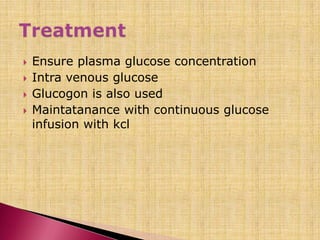
 Ensure plasma glucose concentration
 Intra venous glucose
 Glucogon is also used
 Maintatanance with continuous glucose
infusion with kcl
 Chloroquine.
 Quinine.
 Hypotension
 acute heart failure, pulmonary oedema and
cardiac arrest. Agitation and acute
psychosis, convulsions and coma Brady
arrhythmias and tachyarrhythmia's are
common and ECG conduction abnormalities
are similar to those seen in quinine
poisoning (QT prolongation)
 tinnitus, deafness, vertigo, nausea,
headache and diarrhea
 Common suicidal agents
 Rarely produce severe poisoning
 Mostly in elderly with respiratory disease
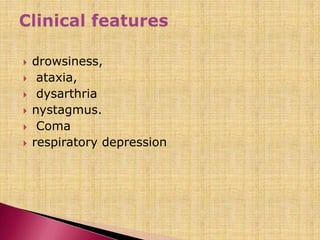
 drowsiness,
 ataxia,
 dysarthria
 nystagmus.
 Coma
 respiratory depression
 Respiratory depression is managed by
Airway support
 Flumanezenil 0.5-1.0 mg iv is the drug of
choice
 act by blocking voltage-gated calcium
channels, Overdose of these drugs,
particularly with verapamil and diltiazem,
are serious with heart block and
hypotension causing a significant fatality
rate.

 Hypotension
 Myocardial depression
 Conduction block
 Sinus bradycardia
 Heart block
 Pulmonary oedema
 Nausea
 Vomiting
 Seizures
 Lactic acidosis
 Activated charcoal
 Intravenous hypotension with intravenous
crystalloid
 Iv glucagon
 Dopamine to treat hypotension
 Carbonate insecticides inhibit acetyl
cholinesterase
 this effect is comparatively short-lived,and
milder
similar to Organophosphorous poisoning
Atropine is the drug of choice
 The commonest source of carbon monoxide
is an improperly maintained and poor,
ventilated heating system. The affinity of
hemoglobin for carbon monoxide is some
240 times greater than that for oxygen.
Carbon monoxide combines with
hemoglobin to form carboxyhaemoglobin
 Symptoms of mild to moderate exposure to
carbon monox-ide may be mistaken for a
viral illness
 In headache and mild exertional dyspnoea
 Higher concentrations of COHB are
associated with coma, convulsions and
cardio respiratory arrest
 High flow oxygen
 Et intubation and mechanical ventillation
 Assess airway and breathing
 Intubations
Primary intervention
 Oxygen administration
 Intubation
Subsequent assessment
 History,determine, LOC ,asses complaints
 Vital signs , look for rales or wheezes
 Cocaine hydrochloride ('street' cocaine,
'coke') is a water-soluble powder or granule
that can be taken orally, intrave-nously or
intranasally.
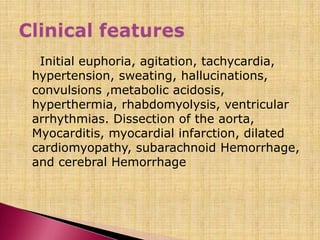
Initial euphoria, agitation, tachycardia,
hypertension, sweating, hallucinations,
convulsions ,metabolic acidosis,
hyperthermia, rhabdomyolysis, ventricular
arrhythmias. Dissection of the aorta,
Myocarditis, myocardial infarction, dilated
cardiomyopathy, subarachnoid Hemorrhage,
and cerebral Hemorrhage
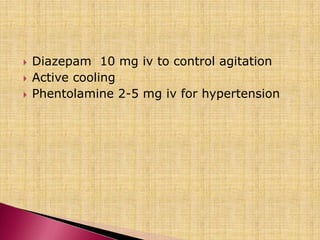
 Diazepam 10 mg iv to control agitation
 Active cooling
 Phentolamine 2-5 mg iv for hypertension
 Primary assessment and interventions
 Subsequent assessment
 General interventions
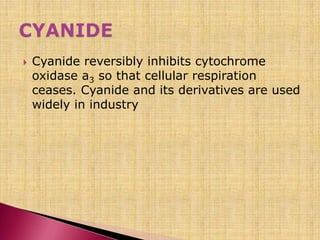
 Cyanide reversibly inhibits cytochrome
oxidase a3 so that cellular respiration
ceases. Cyanide and its derivatives are used
widely in industry
 Chest tightness
 Dyspnoea
 Coma
 Convulsion
 Metabolic acidosis
 Support ABC
 Dicobalt edetate
 Sodium thiosulphate
 hydroxocobalamin
 Toxicity occurring during chronic
administration is common, though acute
poisoning is infrequent
 nausea, vomiting, dizziness, anorexia and
drowsiness. Rarely, confusion, visual
disturbances and hallucinations
 SVT with or without heart block VPC
 hyperkalemia
 Atropine
Digoxin –fab –specific antibody to
neutralise
Digoxin
 bleach, cosmetics, toiletries, detergents,
disinfectants and petroleum distillate
Management
 Symptomatic
 Arsenic
 Mercury
 Cadmium
 Iron
 Aluminium
 Lead
 Arsenic is the most common cause of acute
heavy metal poisoning in adults
 Symptoms of acute exposure are cough,
sore throat, and shortness of breath;
metallic taste in the mouth, abdominal pain,
nausea, vomiting and diarrhea; headaches,
weakness, visual disturbances, tachycardia,
and hypertension.
 It is used in nickel-cadmium batteries
 chronic exposure could include alopecia,
anemia, arthritis, learning disorders,
migraines, growth impairment,
emphysema, osteoporosis, loss of taste and
smell, poor appetite, and cardiovascular
disease
 most of the toxic effects of iron occurs
because iron is absorbed rapidly in the
gastrointestinal tractMost overdoses appear
to be the result of children mistaking red-
coated ferrous sulfate tablets or adult
multivitamin preparations for candy
 Although aluminum is not a heavy metal
Symptoms of aluminum toxicity include
memory loss, learning difficulty, loss of
coordination, disorientation, mental
confusion, colic, heartburn, flatulence, and
headaches
 Lead accounts for most of the cases of
pediatric heavy metal poisoning. It is a very
soft metal and was used in pipes, drains,
and soldering materials for many years.
Target organs are the bones, brain, blood,
kidneys, and thyroid gland exposure to lead
occurs occupationally
 abdominal pain-vomiting, constipation and
encephalopathy (seizures, delir-ium, and
coma) may develop in more severe cases.
 chelation therapy
 sodium calcium acetate 75 mg/kg/day
has been the chelating agent of choice
 Organophosphorous insecticides are used
widely throughout the world and are a
common cause of poisoning, causing
thousands of deaths, in the developing
world
 anxiety, restlessness, tired-ness, headache,
and muscarinic features such as nausea,
vomiting, abdominal colic, diarrhoea,
tenesmus, sweating, hypersalivation and
chest tightness.
 intermediate syndrome
 Support ABC
 Gastric lavage
 Activated charcol
 Atropine 2 mg i.v. Should be given to
reduce pulmonary oedema
 Tricyclic antidepressants (TCAS) are
potentially lethal in overdose. TCA agents
act on multiple receptor sites. Their
principal antidepressant action is mediated
by serotonin and noradrenalin re-uptake
inhibition.
 Anticholinergic effects
 Agitation, delirium
 Dilated pupils
 Dry, warm, flushed skin
 Tachycardia
 Urinary retention
 Neurotoxicity
 Sedation
 Seizures
 Coma
 Cardiotoxicity
 Tachycardia
 Hypotension
 Broad complex arrhythmias
 Bradycardia (late)
 Ecg changes
 Prolonged pr, qrs and qt interval
 Within a few hours of acetaminophen
overdose, typical symptoms include nausea
and vomiting. Tenderness and pain in the
upper right abdomen may be present.
 Very large doses can result in lactic acidosis
(a drop in pH of the blood) and coma
 NSAID use is associated with significant
adverse effects such as gastrointestinal
bleeding, peptic ulcer disease, high blood
pressure, edema (i.e., swelling), and kidney
disease
 combine with gastro protective agents
 H2 receptor antagonist
 Ppi inhibiters
Nutritional Support
Antioxidents
Dopamine receptors
Serotonin receptors
Muscarinic receptors
Alpha adrenargic receptors
Histamine receptors
 The methylxanthines theobromine and
caffeine can be found in a variety of
substances (e.g., chocolate, cocoaand
coffee beans, over-the-countersleep
prevention aids, asthma medications
[theophylline, aminophylline]).
 vomiting, diarrhea, polyuria, polydipsia,
hyperactivity, ataxia,
tachycardia,tachypnea, hypertension,
weakness,cardiac arrhythmias, tremors,
seizures,coma, and death
 Emesis
 Activated charcol
 Supportive management
 Theophylline has been widely prescribed for
the management of patients with chronic
obstructive lung disease and asthma.
Despite declining use over recent years,
 Agitation, hyperventilation, headache,
convulsions Arrhythmiasnausea & vomiting
(may be intractable), thirst, diarrhoea
 Asymptomatic
 Charcoal 1g/kg Observe 4 hours. If no
symptoms, discharge if not slow release
medication .If ingestion of slow release
preparation, admit for observation and
serial drug levels
 Symptomatic
 Charcoal 1g/kg initially unless altered
conscious state (protect airway first)
then 0.5g/kg 4 hourly, and whole bowel
irrigation with colonic lavage solution
30ml/kg/hr.Cardiac monitoringI.V. fluid
resuscitation & maintenance of adequate
hydration is vital if depressed conscious
state, arrhythmias or intractable vomiting
may need intubation
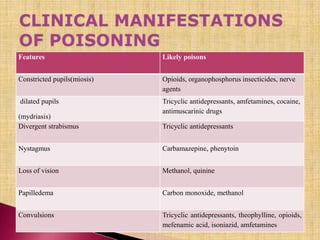
Features Likely poisons
Constricted pupils(miosis) Opioids, organophosphorus insecticides, nerve
agents
dilated pupils
(mydriasis)
Tricyclic antidepressants, amfetamines, cocaine,
antimuscarinic drugs
Divergent strabismus Tricyclic antidepressants
Nystagmus Carbamazepine, phenytoin
Loss of vision Methanol, quinine
Papilledema Carbon monoxide, methanol
Convulsions Tricyclic antidepressants, theophylline, opioids,
mefenamic acid, isoniazid, amfetamines
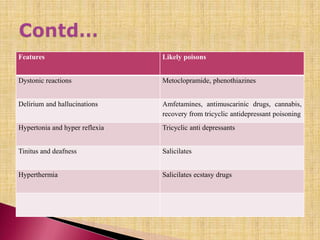
Features Likely poisons
Dystonic reactions Metoclopramide, phenothiazines
Delirium and hallucinations Amfetamines, antimuscarinic drugs, cannabis,
recovery from tricyclic antidepressant poisoning
Hypertonia and hyper reflexia Tricyclic anti depressants
Tinitus and deafness Salicilates
Hyperthermia Salicilates ecstasy drugs
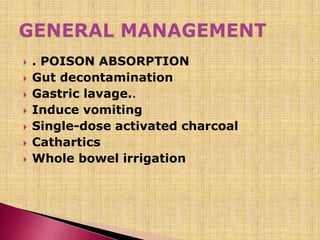
 . POISON ABSORPTION
 Gut decontamination
 Gastric lavage..
 Induce vomiting
 Single-dose activated charcoal
 Cathartics
 Whole bowel irrigation
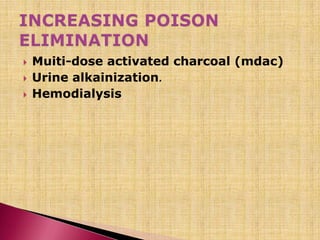
 Muiti-dose activated charcoal (mdac)
 Urine alkainization.
 Hemodialysis
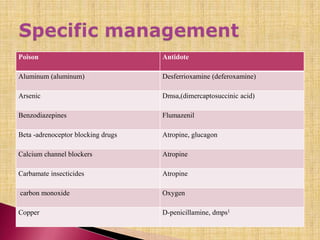
Poison Antidote
Aluminum (aluminum) Desferrioxamine (deferoxamine)
Arsenic Dmsa,(dimercaptosuccinic acid)
Benzodiazepines Flumazenil
Beta -adrenoceptor blocking drugs Atropine, glucagon
Calcium channel blockers Atropine
Carbamate insecticides Atropine
carbon monoxide Oxygen
Copper D-penicillamine, dmps1
Poison Antidote
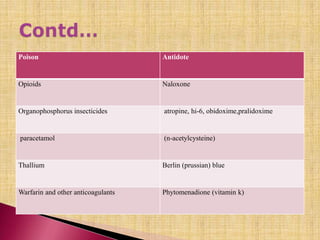
Opioids Naloxone
Organophosphorus insecticides atropine, hi-6, obidoxime,pralidoxime
paracetamol (n-acetylcysteine)
Thallium Berlin (prussian) blue
Warfarin and other anticoagulants Phytomenadione (vitamin k)
Thank you

Poisoning (toxicology)

  • 1.
  • 2.
    A poison isany substance that causes harm if it gets into the body. . Almost any chemical can be a poison if there is enough in the body.
  • 3.
    The amount ofa chemical substance that gets into the body at one time is called the dose.
  • 4.
     Depends uponavailability and culture  Uk –paracetamol is a problem  Srilanka –pesticides  South india –copper sulphate
  • 5.
     Acute exposure Chronic exposure
  • 6.
     Through mouthby swallowing  Through lungs by breathing  Contact Through skin  Injection through skin
  • 7.
     Most commonroute  Children are commonly involved  Can be accidental or deliberate  Eg. Pesticide poisoning
  • 8.
     Gas, vapour,dust  Fine spray or droplet  Poison enters to lungs and then spread across the whole body  Eg. carbon monoxide
  • 9.
     chemical issprayed or splashed onto the skin  if they wear clothes soaked with chemical.  E.g. pesticide
  • 10.
     Poisons canbe injected through the skin from a syringe or a pressure gun  During tattooing  The bite or sting of a poisonous animal, insect, fish or snake.
  • 11.
     DRUGS ,OTHERCHEMICALS  Ethylene glycol  Methanol  Amphetamine  Anticonvulsants  Corrosives  Anti diabetic drugs  Antimalarials  Batteries  Benzodiazepines
  • 12.
     Calcium channelblockers  Insecticide  Carbon monoxide  Cocaine  Cyanide  Digoxin  House hold products  Nail polish  Heavy metal poisoning  Organophosphorous poisoning
  • 13.
     Antidepressants  Acetaminophen NSAID  Antipsychotics  Methyl xanthine  Theophylline  Snakes
  • 14.
     Ethylene glycolis a sweet-tasting substance that is a common constituent of antifreeze.
  • 15.
     The clinicalcourse of ethylene glycol intoxication can be divided into three phases The first phase  The first phase occurs less than 1 h after ingestion and is characterized by mental status depression, similar to that of alcohol intoxication ,coma ,seizurs, and respiratory depression
  • 16.
    Second phase  Cardiopulmonary toxicity  Acidosis ,heart failure and pulmonary oedema Final stage  Flank pain  Acute tubular necrosis  Hypocalcaemia  Renal toxicity due to calcium oxalate
  • 17.
     Air waysupport  Circulatory support  Correction of metabolic abnormalities  Control of seizures  Bicarbonate to correct acidosis  Fomepizole is the new antidote by FDA  Haemodialysis
  • 18.
     Industrial alcohol Toxic alcohol  Used in antifreeze,paint,thinner rubbing alcohol
  • 19.
     Oxidised toformaldehyde then to formate  Formate produces toxic effect and acidosis
  • 20.
     Cns depression Head ache  Lethargy  Convulsions  Delirium  Coma Ocular symptoms  Photophobia  Central scotoma (loss of central vision )  Visual field defects  Fixed pupils
  • 21.
     Difficuilty inlight adaptation  Optic disc oedema  Optic atrophy Other symptoms Nausea ,vomiting ,diaphoresis ,abdominal pain (due to pancreatitis)
  • 22.
     airway protec-tion circulatory support  correction of metabolic abnorm-alities  control of seizures.  ethanol and fomepizole for specific treatment  Hemodialysis
  • 23.
     commonly knownas ecstasy drug or party drug, has been abused world-wide.  Amphetamines are CNS and cardiovascular stimulants
  • 24.
     Euphoria, extrovertbehavior, lack of desire to eat or sleep, tremor, dilated pupils, tachycardia and hypertension Severe intoxication  Agitation, paranoid delusions, hallucinations and violent behavior. Convulsions, rhabdomyolysis, hyperthermia and cardiac arrhythmias  Intracerebral and subarachnoid Hemorrhage(rare)
  • 25.
     Base linesupport  Agitation is controlled by diazepam 10-20 mg i.v.  chlorpromazine 50-100 mg i.m. injection
  • 26.
     Carbamazepine.  Phenytoin. Sodium valproate.  Gabapentin.  Lamotrigine  Topiramaie
  • 27.
     Drowsiness, respiratorydepression,loss of consciousness, moclonic jerks, seizurs  Lethargy, ataxia, slurred speech, nystagmus  Posturing, agitation ,hallucinations
  • 28.
     charcoal 50-100g oral  Hemodialysis
  • 29.
     Corrosive agents: Acids: hydrochloric acid, sulfuric acid, hydrofluoric acid  Alkali: sodium hydroxide, potassium hydroxide, ammonia, sodium hypochlorite  Other: zinc chloride, mercuric chloride,, phenols, potassium permanganate, button batteries
  • 30.
     Do notput NGT  Acid exposure is life threatening  Maintain ABC  Specific antidots given to nutralise acid or alkali  Sodium bi carbonate in acid poisoning  Soda ,lemon juice ammonia in alkali poisoning
  • 31.
  • 32.
     drowsiness, coma,twitching, convulsion depressed limb reflexes,apnea, pulmonary oedema, tachycardia and hypoglycemia
  • 33.
     Ensure plasmaglucose concentration  Intra venous glucose  Glucogon is also used  Maintatanance with continuous glucose infusion with kcl
  • 34.
  • 35.
     Hypotension  acuteheart failure, pulmonary oedema and cardiac arrest. Agitation and acute psychosis, convulsions and coma Brady arrhythmias and tachyarrhythmia's are common and ECG conduction abnormalities are similar to those seen in quinine poisoning (QT prolongation)  tinnitus, deafness, vertigo, nausea, headache and diarrhea
  • 36.
     Common suicidalagents  Rarely produce severe poisoning  Mostly in elderly with respiratory disease
  • 37.
     drowsiness,  ataxia, dysarthria  nystagmus.  Coma  respiratory depression
  • 38.
     Respiratory depressionis managed by Airway support  Flumanezenil 0.5-1.0 mg iv is the drug of choice
  • 39.
     act byblocking voltage-gated calcium channels, Overdose of these drugs, particularly with verapamil and diltiazem, are serious with heart block and hypotension causing a significant fatality rate. 
  • 40.
     Hypotension  Myocardialdepression  Conduction block  Sinus bradycardia  Heart block  Pulmonary oedema  Nausea  Vomiting  Seizures  Lactic acidosis
  • 41.
     Activated charcoal Intravenous hypotension with intravenous crystalloid  Iv glucagon  Dopamine to treat hypotension
  • 42.
     Carbonate insecticidesinhibit acetyl cholinesterase  this effect is comparatively short-lived,and milder similar to Organophosphorous poisoning Atropine is the drug of choice
  • 43.
     The commonestsource of carbon monoxide is an improperly maintained and poor, ventilated heating system. The affinity of hemoglobin for carbon monoxide is some 240 times greater than that for oxygen. Carbon monoxide combines with hemoglobin to form carboxyhaemoglobin
  • 44.
     Symptoms ofmild to moderate exposure to carbon monox-ide may be mistaken for a viral illness  In headache and mild exertional dyspnoea  Higher concentrations of COHB are associated with coma, convulsions and cardio respiratory arrest
  • 45.
     High flowoxygen  Et intubation and mechanical ventillation
  • 46.
     Assess airwayand breathing  Intubations Primary intervention  Oxygen administration  Intubation Subsequent assessment  History,determine, LOC ,asses complaints  Vital signs , look for rales or wheezes
  • 47.
     Cocaine hydrochloride('street' cocaine, 'coke') is a water-soluble powder or granule that can be taken orally, intrave-nously or intranasally.
  • 48.
    Initial euphoria, agitation,tachycardia, hypertension, sweating, hallucinations, convulsions ,metabolic acidosis, hyperthermia, rhabdomyolysis, ventricular arrhythmias. Dissection of the aorta, Myocarditis, myocardial infarction, dilated cardiomyopathy, subarachnoid Hemorrhage, and cerebral Hemorrhage
  • 49.
     Diazepam 10mg iv to control agitation  Active cooling  Phentolamine 2-5 mg iv for hypertension
  • 50.
     Primary assessmentand interventions  Subsequent assessment  General interventions
  • 51.
     Cyanide reversiblyinhibits cytochrome oxidase a3 so that cellular respiration ceases. Cyanide and its derivatives are used widely in industry
  • 52.
     Chest tightness Dyspnoea  Coma  Convulsion  Metabolic acidosis
  • 53.
     Support ABC Dicobalt edetate  Sodium thiosulphate  hydroxocobalamin
  • 54.
     Toxicity occurringduring chronic administration is common, though acute poisoning is infrequent
  • 55.
     nausea, vomiting,dizziness, anorexia and drowsiness. Rarely, confusion, visual disturbances and hallucinations  SVT with or without heart block VPC  hyperkalemia
  • 56.
     Atropine Digoxin –fab–specific antibody to neutralise Digoxin
  • 57.
     bleach, cosmetics,toiletries, detergents, disinfectants and petroleum distillate Management  Symptomatic
  • 58.
     Arsenic  Mercury Cadmium  Iron  Aluminium  Lead
  • 59.
     Arsenic isthe most common cause of acute heavy metal poisoning in adults
  • 60.
     Symptoms ofacute exposure are cough, sore throat, and shortness of breath; metallic taste in the mouth, abdominal pain, nausea, vomiting and diarrhea; headaches, weakness, visual disturbances, tachycardia, and hypertension.
  • 61.
     It isused in nickel-cadmium batteries  chronic exposure could include alopecia, anemia, arthritis, learning disorders, migraines, growth impairment, emphysema, osteoporosis, loss of taste and smell, poor appetite, and cardiovascular disease
  • 62.
     most ofthe toxic effects of iron occurs because iron is absorbed rapidly in the gastrointestinal tractMost overdoses appear to be the result of children mistaking red- coated ferrous sulfate tablets or adult multivitamin preparations for candy
  • 63.
     Although aluminumis not a heavy metal Symptoms of aluminum toxicity include memory loss, learning difficulty, loss of coordination, disorientation, mental confusion, colic, heartburn, flatulence, and headaches
  • 64.
     Lead accountsfor most of the cases of pediatric heavy metal poisoning. It is a very soft metal and was used in pipes, drains, and soldering materials for many years. Target organs are the bones, brain, blood, kidneys, and thyroid gland exposure to lead occurs occupationally
  • 65.
     abdominal pain-vomiting,constipation and encephalopathy (seizures, delir-ium, and coma) may develop in more severe cases.
  • 66.
     chelation therapy sodium calcium acetate 75 mg/kg/day has been the chelating agent of choice
  • 67.
     Organophosphorous insecticidesare used widely throughout the world and are a common cause of poisoning, causing thousands of deaths, in the developing world
  • 68.
     anxiety, restlessness,tired-ness, headache, and muscarinic features such as nausea, vomiting, abdominal colic, diarrhoea, tenesmus, sweating, hypersalivation and chest tightness.  intermediate syndrome
  • 69.
     Support ABC Gastric lavage  Activated charcol  Atropine 2 mg i.v. Should be given to reduce pulmonary oedema
  • 70.
     Tricyclic antidepressants(TCAS) are potentially lethal in overdose. TCA agents act on multiple receptor sites. Their principal antidepressant action is mediated by serotonin and noradrenalin re-uptake inhibition.
  • 71.
     Anticholinergic effects Agitation, delirium  Dilated pupils  Dry, warm, flushed skin  Tachycardia  Urinary retention  Neurotoxicity  Sedation  Seizures  Coma
  • 72.
     Cardiotoxicity  Tachycardia Hypotension  Broad complex arrhythmias  Bradycardia (late)  Ecg changes  Prolonged pr, qrs and qt interval
  • 73.
     Within afew hours of acetaminophen overdose, typical symptoms include nausea and vomiting. Tenderness and pain in the upper right abdomen may be present.  Very large doses can result in lactic acidosis (a drop in pH of the blood) and coma
  • 74.
     NSAID useis associated with significant adverse effects such as gastrointestinal bleeding, peptic ulcer disease, high blood pressure, edema (i.e., swelling), and kidney disease
  • 75.
     combine withgastro protective agents  H2 receptor antagonist  Ppi inhibiters Nutritional Support Antioxidents
  • 76.
    Dopamine receptors Serotonin receptors Muscarinicreceptors Alpha adrenargic receptors Histamine receptors
  • 77.
     The methylxanthinestheobromine and caffeine can be found in a variety of substances (e.g., chocolate, cocoaand coffee beans, over-the-countersleep prevention aids, asthma medications [theophylline, aminophylline]).
  • 78.
     vomiting, diarrhea,polyuria, polydipsia, hyperactivity, ataxia, tachycardia,tachypnea, hypertension, weakness,cardiac arrhythmias, tremors, seizures,coma, and death
  • 79.
     Emesis  Activatedcharcol  Supportive management
  • 80.
     Theophylline hasbeen widely prescribed for the management of patients with chronic obstructive lung disease and asthma. Despite declining use over recent years,
  • 81.
     Agitation, hyperventilation,headache, convulsions Arrhythmiasnausea & vomiting (may be intractable), thirst, diarrhoea
  • 82.
     Asymptomatic  Charcoal1g/kg Observe 4 hours. If no symptoms, discharge if not slow release medication .If ingestion of slow release preparation, admit for observation and serial drug levels
  • 83.
     Symptomatic  Charcoal1g/kg initially unless altered conscious state (protect airway first) then 0.5g/kg 4 hourly, and whole bowel irrigation with colonic lavage solution 30ml/kg/hr.Cardiac monitoringI.V. fluid resuscitation & maintenance of adequate hydration is vital if depressed conscious state, arrhythmias or intractable vomiting may need intubation
  • 84.
    Features Likely poisons Constrictedpupils(miosis) Opioids, organophosphorus insecticides, nerve agents dilated pupils (mydriasis) Tricyclic antidepressants, amfetamines, cocaine, antimuscarinic drugs Divergent strabismus Tricyclic antidepressants Nystagmus Carbamazepine, phenytoin Loss of vision Methanol, quinine Papilledema Carbon monoxide, methanol Convulsions Tricyclic antidepressants, theophylline, opioids, mefenamic acid, isoniazid, amfetamines
  • 85.
    Features Likely poisons Dystonicreactions Metoclopramide, phenothiazines Delirium and hallucinations Amfetamines, antimuscarinic drugs, cannabis, recovery from tricyclic antidepressant poisoning Hypertonia and hyper reflexia Tricyclic anti depressants Tinitus and deafness Salicilates Hyperthermia Salicilates ecstasy drugs
  • 86.
     . POISONABSORPTION  Gut decontamination  Gastric lavage..  Induce vomiting  Single-dose activated charcoal  Cathartics  Whole bowel irrigation
  • 87.
     Muiti-dose activatedcharcoal (mdac)  Urine alkainization.  Hemodialysis
  • 88.
    Poison Antidote Aluminum (aluminum)Desferrioxamine (deferoxamine) Arsenic Dmsa,(dimercaptosuccinic acid) Benzodiazepines Flumazenil Beta -adrenoceptor blocking drugs Atropine, glucagon Calcium channel blockers Atropine Carbamate insecticides Atropine carbon monoxide Oxygen Copper D-penicillamine, dmps1
  • 89.
    Poison Antidote Opioids Naloxone Organophosphorusinsecticides atropine, hi-6, obidoxime,pralidoxime paracetamol (n-acetylcysteine) Thallium Berlin (prussian) blue Warfarin and other anticoagulants Phytomenadione (vitamin k)
  • 90.