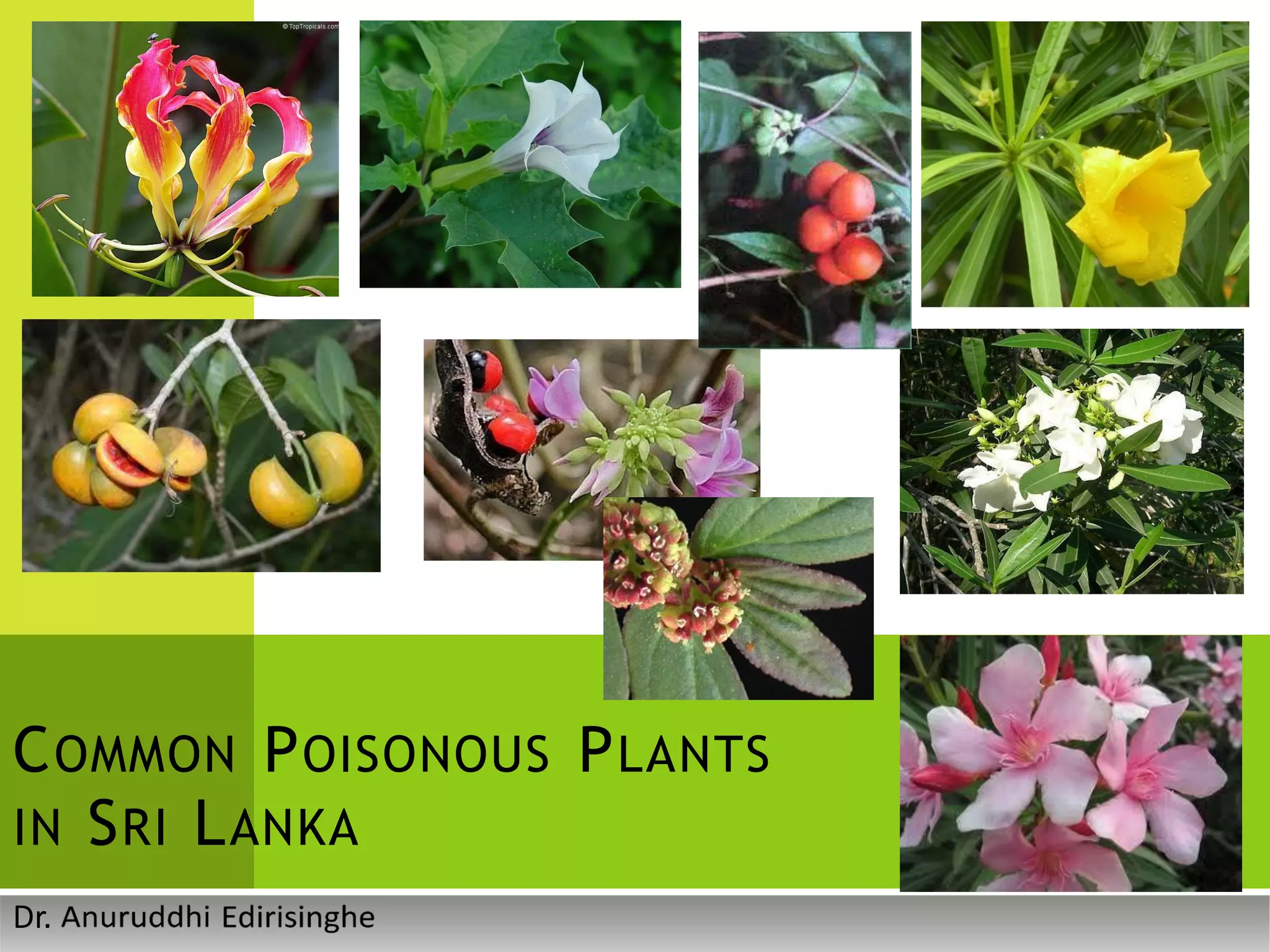
COMMON POISONOUS PLANTS 
IN SRI LANKA
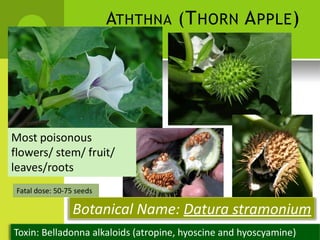
ATHTHNA (THORN APPLE) 
Most poisonous 
flowers/ stem/ fruit/ 
leaves/roots 
Fatal dose: 50-75 seeds 
Botanical Name: Datura stramonium 
Toxin: Belladonna alkaloids (atropine, hyoscine and hyoscyamine)
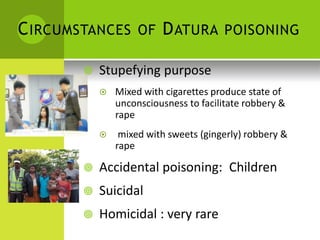
CIRCUMSTANCES OF DATURA POISONING 
 Stupefying purpose 
 Mixed with cigarettes produce state of unconsciousness to facilitate robbery & rape 
 mixed with sweets (gingerly) robbery & 
rape 
 Accidental poisoning: Children 
 Suicidal 
 Homicidal : very rare
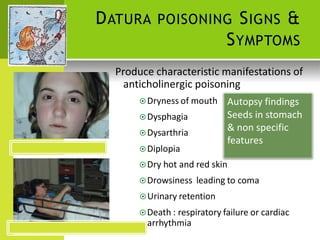
DATURA POISONING SIGNS & 
SYMPTOMS 
Produce characteristic manifestations of anticholinergic poisoning 
 Dryness of mouth 
 Dysphagia 
 Dysarthria 
 Diplopia 
Autopsy findings 
Seeds in stomach 
& non specific 
features 
 Dry hot and red skin 
 Drowsiness leading to coma 
 Urinary retention 
 Death : respiratory failure or cardiac arrhythmia
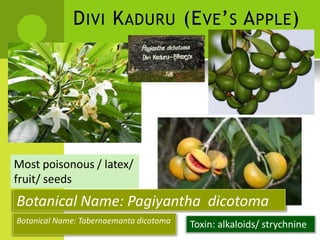
DIVI KADURU (EVE’S APPLE) 
Most poisonous / latex/ 
fruit/ seeds 
Botanical Name: Pagiyantha dicotoma 
Botanical Name: Tabernaemanta dicotoma 
Toxin: alkaloids/ strychnine
g: Children 
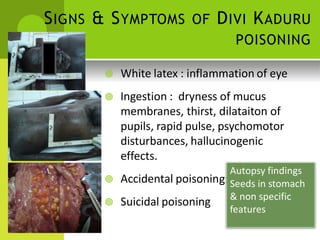
SIGNS & SYMPTOMS OF DIVI KADURU 
POISONING 
 White latex : inflammation of eye 
 Ingestion : dryness of mucus membranes, thirst, dilataiton of pupils, rapid pulse, psychomotor disturbances, hallucinogenic effects. 
 Accidental poisonin 
 Suicidal poisoning 
Autopsy findings 
Seeds in stomach 
& non specific 
features
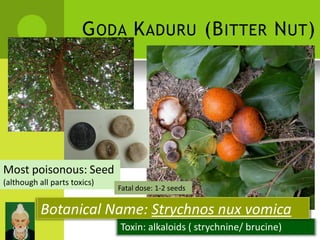
GODA KADURU (BITTER NUT) 
Most poisonous: Seed 
(although all parts toxics) 
Fatal dose: 1-2 seeds 
Botanical Name: Strychnos nux vomica 
Toxin: alkaloids ( strychnine/ brucine)
CIRCUMSTANCES OF GODA KADURU 
POISONING 
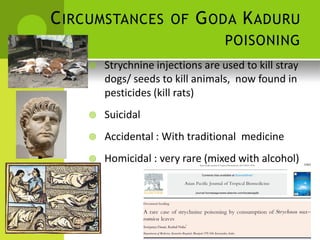
 Strychnine injections are used to kill stray 
dogs/ seeds to kill animals, now found in 
pesticides (kill rats) 
 Suicidal 
 Accidental : With traditional medicine 
 Homicidal : very rare (mixed with alcohol)
STRYCHNINE POISONING 
SIGNS & SYMPTOMS 
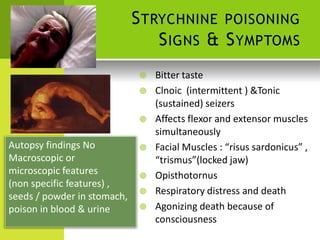
Autopsy findings No Macroscopic or microscopic features (non specific features) , 
seeds / powder in stomach, poison in blood & urine 
 Bitter taste 
 Clnoic (intermittent ) &Tonic 
(sustained) seizers 
 Affects flexor and extensor muscles 
simultaneously 
 Facial Muscles : “risus sardonicus” , 
“trismus”(locked jaw) 
 Opisthotornus 
 Respiratory distress and death 
 Agonizing death because of 
consciousness
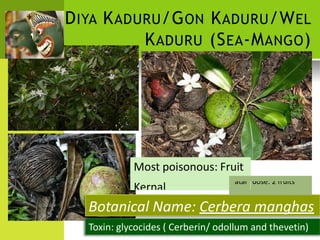
Most poisonous: Fruit 
Kernal Fatal dose: 2 fruits 
DIYA KADURU/GON KADURU/WEL 
KADURU (SEA-MANGO) 
Botanical Name: Cerbera manghas 
Toxin: glycocides ( Cerberin/ odollum and thevetin)
CIRCUMSTANCES, SIGNS & SYMPTOMS 
OF DIYA KADURU POISONING 
Autopsy findings (non specific features) , kernal of the fruits 
 Suicidal : common in Eastern province 
 Accidental , Homicidal : very rare 
 Burning sensation and dryness of the mouth, nausea, vomiting, diarrhoea and abdominal pain are early features. 
 CVS – Bradycardia, hypotension, 1st and 2nd degree heart block atrial and ventricular extrasystoles, ventricular fibrillation. (ECG Changes) 
 Convulsions and coma
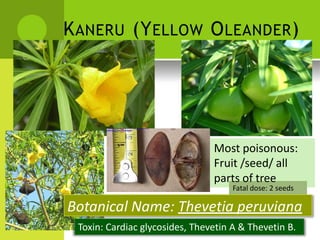
KANERU (YELLOW OLEANDER) 
Most poisonous: 
Fruit /seed/ all 
parts of tree 
Fatal dose: 2 seeds 
Botanical Name: Thevetia peruviana 
Toxin: Cardiac glycosides, Thevetin A & Thevetin B.
CIRCUMSTANCES OF KANERU POISONING 
 medicinal plant as a folk medicine in many countries as an abortifacient, appetizer, and in the treatment of leprosy, ringworm, malaria and venereal disease 
 Suicidal poisoning is very common 
 Before 80s it was not reported. Jaffna 2 girls died 
and highly news coverage in 1983. 
 Now common in : Anuradhapura, Pollonaruwa and Kurunegala Districts. 
 Accidental : children and adults 
 Homicidal : very rare
o local 
h 
after ant 
es 
SIGNS & SYMPTOMS OF 
KANERU POISONING 
nausea and vomiting due t 
irritant effect of the stomac 
Vomiting 6 to 12 hours ingestion implies signific absorption of the toxin. 
Cardio-toxicity caus bradycardia, varying degrees of 
Atropine 
heart block and hypotension 
KaneruTAB
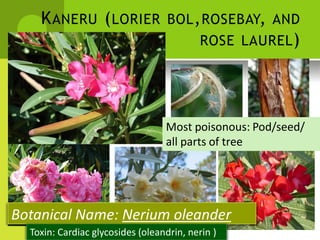
KANERU (LORIER BOL,ROSEBAY, AND 
ROSE LAUREL) 
Most poisonous: Pod/seed/ 
all parts of tree 
Botanical Name: Nerium oleander 
Toxin: Cardiac glycosides (oleandrin, nerin )
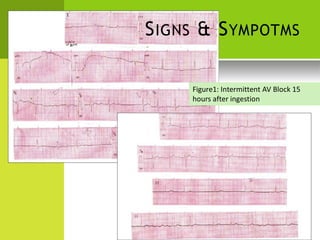
SIGNS & SYMPOTMS 
Figure1: Intermittent AV Block 15 
hours after ingestion
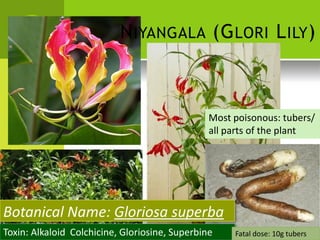
NIYANGALA (GLORI LILY) 
Most poisonous: tubers/ 
all parts of the plant 
Botanical Name: Gloriosa superba 
Toxin: Alkaloid Colchicine, Gloriosine, Superbine 
Fatal dose: 10g tubers
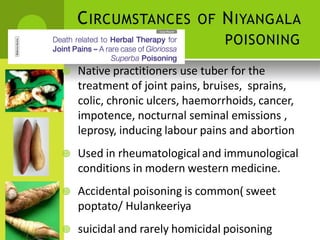
CIRCUMSTANCES OF NIYANGALA 
POISONING 
 Native practitioners use tuber for the treatment of joint pains, bruises, sprains, colic, chronic ulcers, haemorrhoids, cancer, impotence, nocturnal seminal emissions , leprosy, inducing labour pains and abortion 
 Used in rheumatological and immunological conditions in modern western medicine. 
 Accidental poisoning is common( sweet 
poptato/ Hulankeeriya 
 suicidal and rarely homicidal poisoning
Acute 
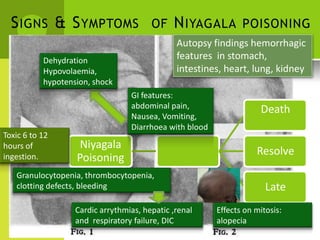
SIGNS & SYMPTOMS OF NIYAGALA POISONING 
Autopsy findings hemorrhagic 
Dehydration Hypovolaemia, hypotension, shock 
GI features: 
features in stomach, 
intestines, heart, lung, kidney 
Toxic 6 to 12 hours of ingestion. 
Niyagala 
Poisoning 
abdominal pain, Nausea, Vomiting, Diarrhoea with blood 
Death 
Resolve 
Granulocytopenia, thrombocytopenia, 
clotting defects, bleeding 
Late 
Cardic arrythmias, hepatic ,renal 
and respiratory failure, DIC 
Effects on mitosis: 
alopecia
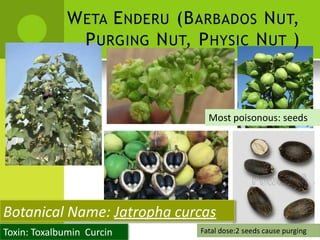
WETA ENDERU (BARBADOS NUT, 
PURGING NUT, PHYSIC NUT ) 
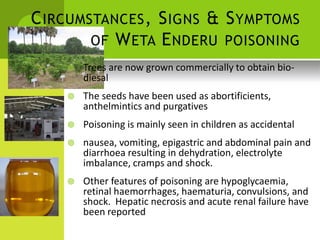
Most poisonous: seeds 
Botanical Name: Jatropha curcas 
Toxin: Toxalbumin Curcin 
Fatal dose:2 seeds cause purging
CIRCUMSTANCES, SIGNS & SYMPTOMS 
OF WETA ENDERU POISONING 
 Trees are now grown commercially to obtain bio- 
diesal 
 The seeds have been used as abortificients, 
anthelmintics and purgatives 
 Poisoning is mainly seen in children as accidental 
 nausea, vomiting, epigastric and abdominal pain and diarrhoea resulting in dehydration, electrolyte imbalance, cramps and shock. 
 Other features of poisoning are hypoglycaemia, retinal haemorrhages, haematuria, convulsions, and shock. Hepatic necrosis and acute renal failure have been reported
BEHETH ENDARU / THEL 
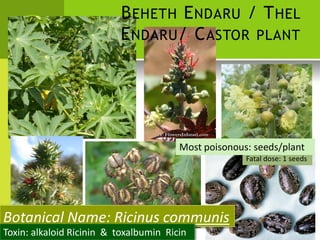
ENDARU/ CASTOR PLANT 
Most poisonous: seeds/plant 
Fatal dose: 1 seeds 
Botanical Name: Ricinus communis 
Toxin: alkaloid Ricinin & toxalbumin Ricin
CIRCUMSTANCES OF BEHETH ENDERU 
POISONING 
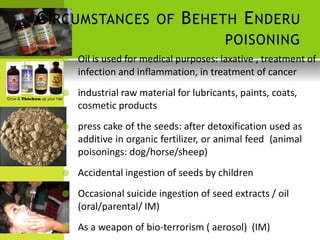
 Oil is used for medical purposes: laxative , treatment of 
infection and inflammation, in treatment of cancer 
 industrial raw material for lubricants, paints, coats, cosmetic products 
 press cake of the seeds: after detoxification used as additive in organic fertilizer, or animal feed (animal poisonings: dog/horse/sheep) 
 Accidental ingestion of seeds by children 
 Occasional suicide ingestion of seed extracts / oil 
(oral/parental/ IM) 
 As a weapon of bio-terrorism ( aerosol) (IM)
BEHETH 
ENDERU POISONING 
SIGNS & SYMPTOMS OF 
 Symptoms seen after 3 to 20 h 
 Abdominal pain, emesis, diarrhea with or without 
blood, muscular pain 
 cramps in the limbs, circulatory collapse, dyspnoea and dehydration 
 Late features: liver and kidneys dysfunction 
 injected ricin: pain at the injection site, muscular 
necrotizing, 
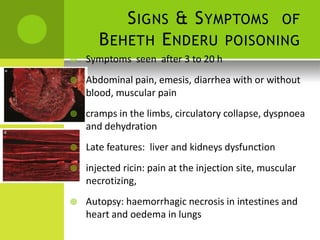
 Autopsy: haemorrhagic necrosis in intestines and heart and oedema in lungs
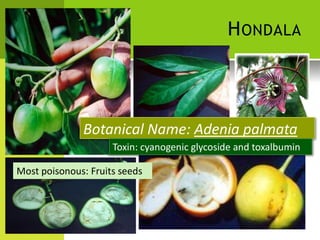
HONDALA 
Botanical Name: Adenia palmata 
Toxin: cyanogenic glycoside and toxalbumin 
Most poisonous: Fruits seeds
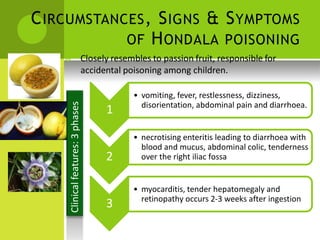
Clinical features: 3 phases 
CIRCUMSTANCES, SIGNS & SYMPTOMS 
OF HONDALA POISONING 
 Closely resembles to passion fruit, responsible for 
accidental poisoning among children. 
• vomiting, fever, restlessness, dizziness, 
1 disorientation, abdominal pain and diarrhoea. 
• necrotising enteritis leading to diarrhoea with 
blood and mucus, abdominal colic, tenderness 
2 over the right iliac fossa 
• myocarditis, tender hepatomegaly and 
3 retinopathy occurs 2-3 weeks after ingestion
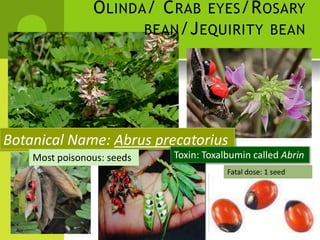
OLINDA/ CRAB EYES/ROSARY 
BEAN/JEQUIRITY BEAN 
Botanical Name: Abrus precatorius 
Most poisonous: seeds 
Toxin: Toxalbumin called Abrin 
Fatal dose: 1 seed
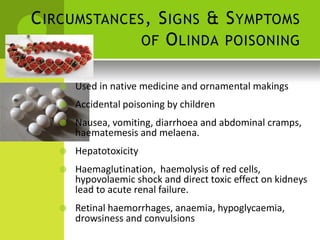
CIRCUMSTANCES, SIGNS & SYMPTOMS 
OF OLINDA POISONING 
 Used in native medicine and ornamental makings 
 Accidental poisoning by children 
 Nausea, vomiting, diarrhoea and abdominal cramps, haematemesis and melaena. 
 Hepatotoxicity 
 Haemaglutination, haemolysis of red cells, hypovolaemic shock and direct toxic effect on kidneys lead to acute renal failure. 
 Retinal haemorrhages, anaemia, hypoglycaemia, 
drowsiness and convulsions
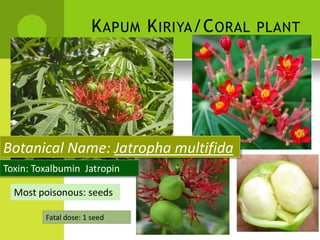
KAPUM KIRIYA/CORAL PLANT 
Botanical Name: Jatropha multifida 
Toxin: Toxalbumin Jatropin 
Most poisonous: seeds 
Fatal dose: 1 seed
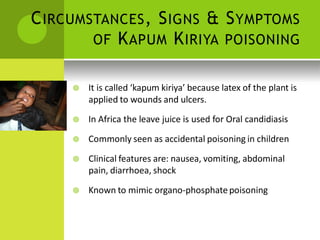
CIRCUMSTANCES, SIGNS & SYMPTOMS 
OF KAPUM KIRIYA POISONING 
 It is called ‘kapum kiriya’ because latex of the plant is 
applied to wounds and ulcers. 
 In Africa the leave juice is used for Oral candidiasis 
 Commonly seen as accidental poisoning in children 
 Clinical features are: nausea, vomiting, abdominal pain, diarrhoea, shock 
 Known to mimic organo-phosphate poisoning
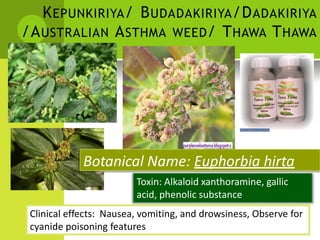
KEPUNKIRIYA/ BUDADAKIRIYA/DADAKIRIYA 
/AUSTRALIAN ASTHMA WEED/ THAWA THAWA 
Botanical Name: Euphorbia hirta 
Toxin: Alkaloid xanthoramine, gallic acid, phenolic substance 
Clinical effects: Nausea, vomiting, and drowsiness, Observe for cyanide poisoning features
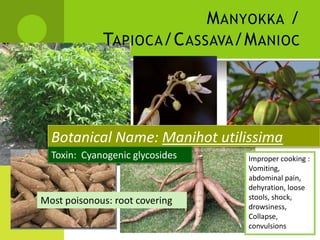
MANYOKKA / 
TAPIOCA/CASSAVA/MANIOC 
Botanical Name: Manihot utilissima 
Toxin: Cyanogenic glycosides Improper cooking : Vomiting, abdominal pain, dehyration, loose 
Most poisonous: root covering 
stools, shock, 
drowsiness, 
Collapse, 
convulsions
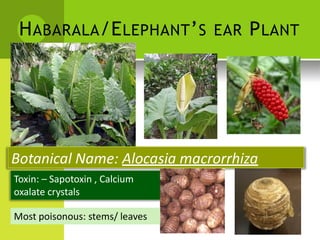
HABARALA/ELEPHANT’S EAR PLANT 
Botanical Name: Alocasia macrorrhiza 
Toxin: – Sapotoxin , Calcium oxalate crystals 
Most poisonous: stems/ leaves
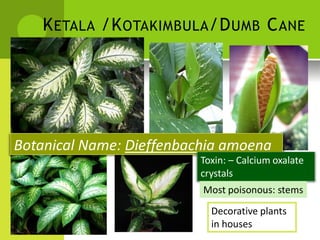
KETALA /KOTAKIMBULA/DUMB CANE 
Botanical Name: Dieffenbachia amoena 
Toxin: – Calcium oxalate 
crystals 
Most poisonous: stems 
Decorative plants 
in houses
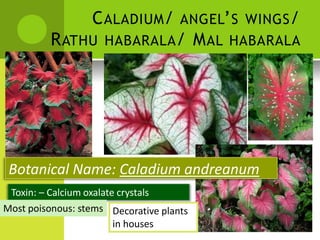
CALADIUM/ ANGEL’S WINGS/ 
RATHU HABARALA/ MAL HABARALA 
Botanical Name: Caladium andreanum 
Toxin: – Calcium oxalate crystals 
Most poisonous: stems 
Decorative plants in houses
CIRCUMSTANCES, SIGNS & SYMPTOMS 
OF HABARALA, KETALA, RATU 
HABARALA POISONING 
 Mainly accidental poisoning in children due to chewing of the stems 
 The name ‘dumbcane’ is used as the cane-like stem can 
cause instant “dumbness” when chewed 
 profuse salivation, irritation, burning sensation and pain of the oral cavity 
 Oedema of the tongue, lips, cheeks, salivary glands and throat lead to disphagia and aphonia. 
 Ingestion of large amount lead to necrotic oesophagitis and haemorrhagic gastritis. 
 Death may result from laryngeal oedema. 
 Bradycardia, tremos, muscle twitching and trismus, convulsions and acute renal failure also can occur
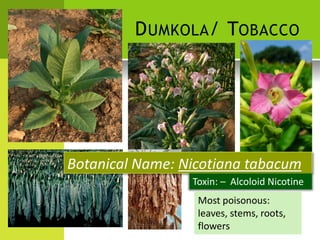
DUMKOLA/ TOBACCO 
Botanical Name: Nicotiana tabacum 
Toxin: – Alcoloid Nicotine 
Most poisonous: leaves, stems, roots, flowers
CIRCUMSTANCES, SIGNS & SYMPTOMS 
OF TOBACCO POISONING 
 Accidental in children and adults 
 Mild: salivation, nausea, dizziness, drowsiness, headache, vomiting, diarrhoea, hand tremor 
 Serious: mental confusion, circulatory collapse (shallow rapid pulse, ‘cold sweating’), convulsions, loss of consciousness, cardiac arrest, respiratory paralysis
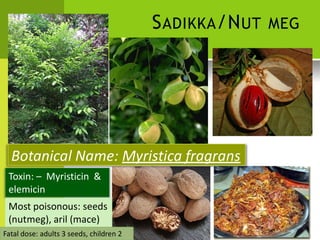
SADIKKA/NUT MEG 
Botanical Name: Myristica fragrans 
Toxin: – Myristicin & 
elemicin 
Most poisonous: seeds 
(nutmeg), aril (mace) 
Fatal dose: adults 3 seeds, children 2
CIRCUMSTANCES, SIGNS & SYMPTOMS 
OF NUTMEG POISONING 
 Used as a spice and has many medicinal use 
 Poisoning is usually accidental in children 
 symptoms are usually seen within 3-6 hours after ingestion 
 intoxication resembles anti-cholinergic intoxication ie profuse sweating, flushed face, dry mouth, burning epigastric pain, tachycardia, restlessness, giddiness, hallucinations
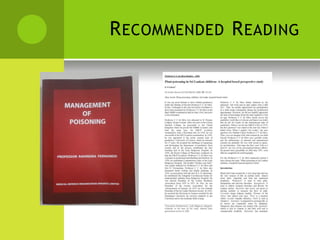
RECOMMENDED READING
THANK YOU

Poison plants - forensic medicine and toxicology

  • 1.
  • 2.
    ATHTHNA (THORN APPLE) Most poisonous flowers/ stem/ fruit/ leaves/roots Fatal dose: 50-75 seeds Botanical Name: Datura stramonium Toxin: Belladonna alkaloids (atropine, hyoscine and hyoscyamine)
  • 3.
    CIRCUMSTANCES OF DATURAPOISONING  Stupefying purpose  Mixed with cigarettes produce state of unconsciousness to facilitate robbery & rape  mixed with sweets (gingerly) robbery & rape  Accidental poisoning: Children  Suicidal  Homicidal : very rare
  • 4.
    DATURA POISONING SIGNS& SYMPTOMS Produce characteristic manifestations of anticholinergic poisoning  Dryness of mouth  Dysphagia  Dysarthria  Diplopia Autopsy findings Seeds in stomach & non specific features  Dry hot and red skin  Drowsiness leading to coma  Urinary retention  Death : respiratory failure or cardiac arrhythmia
  • 5.
    DIVI KADURU (EVE’SAPPLE) Most poisonous / latex/ fruit/ seeds Botanical Name: Pagiyantha dicotoma Botanical Name: Tabernaemanta dicotoma Toxin: alkaloids/ strychnine
  • 6.
    g: Children SIGNS& SYMPTOMS OF DIVI KADURU POISONING  White latex : inflammation of eye  Ingestion : dryness of mucus membranes, thirst, dilataiton of pupils, rapid pulse, psychomotor disturbances, hallucinogenic effects.  Accidental poisonin  Suicidal poisoning Autopsy findings Seeds in stomach & non specific features
  • 7.
    GODA KADURU (BITTERNUT) Most poisonous: Seed (although all parts toxics) Fatal dose: 1-2 seeds Botanical Name: Strychnos nux vomica Toxin: alkaloids ( strychnine/ brucine)
  • 8.
    CIRCUMSTANCES OF GODAKADURU POISONING  Strychnine injections are used to kill stray dogs/ seeds to kill animals, now found in pesticides (kill rats)  Suicidal  Accidental : With traditional medicine  Homicidal : very rare (mixed with alcohol)
  • 9.
    STRYCHNINE POISONING SIGNS& SYMPTOMS Autopsy findings No Macroscopic or microscopic features (non specific features) , seeds / powder in stomach, poison in blood & urine  Bitter taste  Clnoic (intermittent ) &Tonic (sustained) seizers  Affects flexor and extensor muscles simultaneously  Facial Muscles : “risus sardonicus” , “trismus”(locked jaw)  Opisthotornus  Respiratory distress and death  Agonizing death because of consciousness
  • 10.
    Most poisonous: Fruit Kernal Fatal dose: 2 fruits DIYA KADURU/GON KADURU/WEL KADURU (SEA-MANGO) Botanical Name: Cerbera manghas Toxin: glycocides ( Cerberin/ odollum and thevetin)
  • 11.
    CIRCUMSTANCES, SIGNS &SYMPTOMS OF DIYA KADURU POISONING Autopsy findings (non specific features) , kernal of the fruits  Suicidal : common in Eastern province  Accidental , Homicidal : very rare  Burning sensation and dryness of the mouth, nausea, vomiting, diarrhoea and abdominal pain are early features.  CVS – Bradycardia, hypotension, 1st and 2nd degree heart block atrial and ventricular extrasystoles, ventricular fibrillation. (ECG Changes)  Convulsions and coma
  • 12.
    KANERU (YELLOW OLEANDER) Most poisonous: Fruit /seed/ all parts of tree Fatal dose: 2 seeds Botanical Name: Thevetia peruviana Toxin: Cardiac glycosides, Thevetin A & Thevetin B.
  • 13.
    CIRCUMSTANCES OF KANERUPOISONING  medicinal plant as a folk medicine in many countries as an abortifacient, appetizer, and in the treatment of leprosy, ringworm, malaria and venereal disease  Suicidal poisoning is very common  Before 80s it was not reported. Jaffna 2 girls died and highly news coverage in 1983.  Now common in : Anuradhapura, Pollonaruwa and Kurunegala Districts.  Accidental : children and adults  Homicidal : very rare
  • 14.
    o local h after ant es SIGNS & SYMPTOMS OF KANERU POISONING nausea and vomiting due t irritant effect of the stomac Vomiting 6 to 12 hours ingestion implies signific absorption of the toxin. Cardio-toxicity caus bradycardia, varying degrees of Atropine heart block and hypotension KaneruTAB
  • 15.
    KANERU (LORIER BOL,ROSEBAY,AND ROSE LAUREL) Most poisonous: Pod/seed/ all parts of tree Botanical Name: Nerium oleander Toxin: Cardiac glycosides (oleandrin, nerin )
  • 16.
    SIGNS & SYMPOTMS Figure1: Intermittent AV Block 15 hours after ingestion
  • 17.
    NIYANGALA (GLORI LILY) Most poisonous: tubers/ all parts of the plant Botanical Name: Gloriosa superba Toxin: Alkaloid Colchicine, Gloriosine, Superbine Fatal dose: 10g tubers
  • 18.
    CIRCUMSTANCES OF NIYANGALA POISONING  Native practitioners use tuber for the treatment of joint pains, bruises, sprains, colic, chronic ulcers, haemorrhoids, cancer, impotence, nocturnal seminal emissions , leprosy, inducing labour pains and abortion  Used in rheumatological and immunological conditions in modern western medicine.  Accidental poisoning is common( sweet poptato/ Hulankeeriya  suicidal and rarely homicidal poisoning
  • 19.
    Acute SIGNS &SYMPTOMS OF NIYAGALA POISONING Autopsy findings hemorrhagic Dehydration Hypovolaemia, hypotension, shock GI features: features in stomach, intestines, heart, lung, kidney Toxic 6 to 12 hours of ingestion. Niyagala Poisoning abdominal pain, Nausea, Vomiting, Diarrhoea with blood Death Resolve Granulocytopenia, thrombocytopenia, clotting defects, bleeding Late Cardic arrythmias, hepatic ,renal and respiratory failure, DIC Effects on mitosis: alopecia
  • 20.
    WETA ENDERU (BARBADOSNUT, PURGING NUT, PHYSIC NUT ) Most poisonous: seeds Botanical Name: Jatropha curcas Toxin: Toxalbumin Curcin Fatal dose:2 seeds cause purging
  • 21.
    CIRCUMSTANCES, SIGNS &SYMPTOMS OF WETA ENDERU POISONING  Trees are now grown commercially to obtain bio- diesal  The seeds have been used as abortificients, anthelmintics and purgatives  Poisoning is mainly seen in children as accidental  nausea, vomiting, epigastric and abdominal pain and diarrhoea resulting in dehydration, electrolyte imbalance, cramps and shock.  Other features of poisoning are hypoglycaemia, retinal haemorrhages, haematuria, convulsions, and shock. Hepatic necrosis and acute renal failure have been reported
  • 22.
    BEHETH ENDARU /THEL ENDARU/ CASTOR PLANT Most poisonous: seeds/plant Fatal dose: 1 seeds Botanical Name: Ricinus communis Toxin: alkaloid Ricinin & toxalbumin Ricin
  • 23.
    CIRCUMSTANCES OF BEHETHENDERU POISONING  Oil is used for medical purposes: laxative , treatment of infection and inflammation, in treatment of cancer  industrial raw material for lubricants, paints, coats, cosmetic products  press cake of the seeds: after detoxification used as additive in organic fertilizer, or animal feed (animal poisonings: dog/horse/sheep)  Accidental ingestion of seeds by children  Occasional suicide ingestion of seed extracts / oil (oral/parental/ IM)  As a weapon of bio-terrorism ( aerosol) (IM)
  • 24.
    BEHETH ENDERU POISONING SIGNS & SYMPTOMS OF  Symptoms seen after 3 to 20 h  Abdominal pain, emesis, diarrhea with or without blood, muscular pain  cramps in the limbs, circulatory collapse, dyspnoea and dehydration  Late features: liver and kidneys dysfunction  injected ricin: pain at the injection site, muscular necrotizing,  Autopsy: haemorrhagic necrosis in intestines and heart and oedema in lungs
  • 25.
    HONDALA Botanical Name:Adenia palmata Toxin: cyanogenic glycoside and toxalbumin Most poisonous: Fruits seeds
  • 26.
    Clinical features: 3phases CIRCUMSTANCES, SIGNS & SYMPTOMS OF HONDALA POISONING  Closely resembles to passion fruit, responsible for accidental poisoning among children. • vomiting, fever, restlessness, dizziness, 1 disorientation, abdominal pain and diarrhoea. • necrotising enteritis leading to diarrhoea with blood and mucus, abdominal colic, tenderness 2 over the right iliac fossa • myocarditis, tender hepatomegaly and 3 retinopathy occurs 2-3 weeks after ingestion
  • 27.
    OLINDA/ CRAB EYES/ROSARY BEAN/JEQUIRITY BEAN Botanical Name: Abrus precatorius Most poisonous: seeds Toxin: Toxalbumin called Abrin Fatal dose: 1 seed
  • 28.
    CIRCUMSTANCES, SIGNS &SYMPTOMS OF OLINDA POISONING  Used in native medicine and ornamental makings  Accidental poisoning by children  Nausea, vomiting, diarrhoea and abdominal cramps, haematemesis and melaena.  Hepatotoxicity  Haemaglutination, haemolysis of red cells, hypovolaemic shock and direct toxic effect on kidneys lead to acute renal failure.  Retinal haemorrhages, anaemia, hypoglycaemia, drowsiness and convulsions
  • 29.
    KAPUM KIRIYA/CORAL PLANT Botanical Name: Jatropha multifida Toxin: Toxalbumin Jatropin Most poisonous: seeds Fatal dose: 1 seed
  • 30.
    CIRCUMSTANCES, SIGNS &SYMPTOMS OF KAPUM KIRIYA POISONING  It is called ‘kapum kiriya’ because latex of the plant is applied to wounds and ulcers.  In Africa the leave juice is used for Oral candidiasis  Commonly seen as accidental poisoning in children  Clinical features are: nausea, vomiting, abdominal pain, diarrhoea, shock  Known to mimic organo-phosphate poisoning
  • 31.
    KEPUNKIRIYA/ BUDADAKIRIYA/DADAKIRIYA /AUSTRALIANASTHMA WEED/ THAWA THAWA Botanical Name: Euphorbia hirta Toxin: Alkaloid xanthoramine, gallic acid, phenolic substance Clinical effects: Nausea, vomiting, and drowsiness, Observe for cyanide poisoning features
  • 32.
    MANYOKKA / TAPIOCA/CASSAVA/MANIOC Botanical Name: Manihot utilissima Toxin: Cyanogenic glycosides Improper cooking : Vomiting, abdominal pain, dehyration, loose Most poisonous: root covering stools, shock, drowsiness, Collapse, convulsions
  • 33.
    HABARALA/ELEPHANT’S EAR PLANT Botanical Name: Alocasia macrorrhiza Toxin: – Sapotoxin , Calcium oxalate crystals Most poisonous: stems/ leaves
  • 34.
    KETALA /KOTAKIMBULA/DUMB CANE Botanical Name: Dieffenbachia amoena Toxin: – Calcium oxalate crystals Most poisonous: stems Decorative plants in houses
  • 35.
    CALADIUM/ ANGEL’S WINGS/ RATHU HABARALA/ MAL HABARALA Botanical Name: Caladium andreanum Toxin: – Calcium oxalate crystals Most poisonous: stems Decorative plants in houses
  • 36.
    CIRCUMSTANCES, SIGNS &SYMPTOMS OF HABARALA, KETALA, RATU HABARALA POISONING  Mainly accidental poisoning in children due to chewing of the stems  The name ‘dumbcane’ is used as the cane-like stem can cause instant “dumbness” when chewed  profuse salivation, irritation, burning sensation and pain of the oral cavity  Oedema of the tongue, lips, cheeks, salivary glands and throat lead to disphagia and aphonia.  Ingestion of large amount lead to necrotic oesophagitis and haemorrhagic gastritis.  Death may result from laryngeal oedema.  Bradycardia, tremos, muscle twitching and trismus, convulsions and acute renal failure also can occur
  • 37.
    DUMKOLA/ TOBACCO BotanicalName: Nicotiana tabacum Toxin: – Alcoloid Nicotine Most poisonous: leaves, stems, roots, flowers
  • 38.
    CIRCUMSTANCES, SIGNS &SYMPTOMS OF TOBACCO POISONING  Accidental in children and adults  Mild: salivation, nausea, dizziness, drowsiness, headache, vomiting, diarrhoea, hand tremor  Serious: mental confusion, circulatory collapse (shallow rapid pulse, ‘cold sweating’), convulsions, loss of consciousness, cardiac arrest, respiratory paralysis
  • 39.
    SADIKKA/NUT MEG BotanicalName: Myristica fragrans Toxin: – Myristicin & elemicin Most poisonous: seeds (nutmeg), aril (mace) Fatal dose: adults 3 seeds, children 2
  • 40.
    CIRCUMSTANCES, SIGNS &SYMPTOMS OF NUTMEG POISONING  Used as a spice and has many medicinal use  Poisoning is usually accidental in children  symptoms are usually seen within 3-6 hours after ingestion  intoxication resembles anti-cholinergic intoxication ie profuse sweating, flushed face, dry mouth, burning epigastric pain, tachycardia, restlessness, giddiness, hallucinations
  • 41.
  • 42.