BY:
-M.PRADEEP
M.Sc.Nursing
2nd year
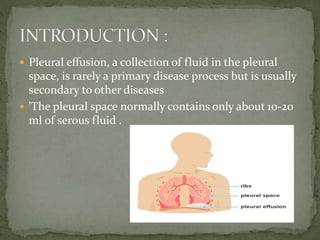
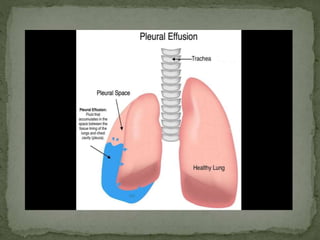
 Pleural effusion, a collection of fluid in the pleural
space, is rarely a primary disease process but is usually
secondary to other diseases
 'The pleural space normally contains only about 10-20
ml of serous fluid .
 Pleural fluid normally seeps continually into
the pleural space from the capillaries lining
the parietal pleura and is reabsorbed by the
visceral pleural capillaries and lymphatic
system
 Any condition that interferes with either
secretion or drainage of this fluid leads to
pleural effusion
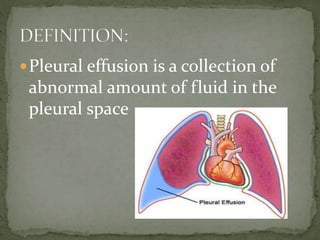
Pleural effusion is a collection of
abnormal amount of fluid in the
pleural space
 The estimated prevalence of pleural effusion
is 320 cases per 100,000 people in
industrialized countries, with a distribution
of etiologies related to the prevalence of
underlying disease.
 Smoking and drinking alcohol
 Any previous complaint of high blood pressure
 History of any contact with asbestos
 Congestive heart failure
 Pneumonia
 Pulmonary embolism
 malignancy
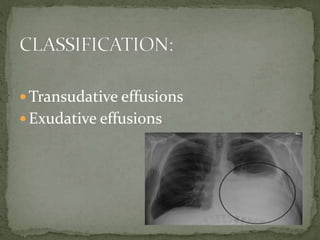
 Transudative effusions
 Exudative effusions
 Transudative effusions also known as
hydrothoraces, occur primarily in
noninflammatory conditions; is an
accumulation of low-protein, low cell
count fluid
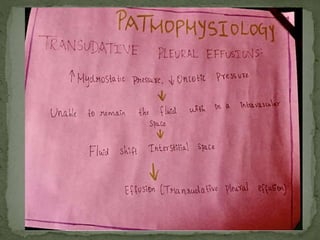
 lncrease hydrostatic pressure found in heart
failure (most common cause of pleural
effusion)
 Decrease oncotic pressure ( From
hypoalbuminemia) found in cirrhosis of liver or
renal disease.
 In this condition, fluid movement is faciliated
out of the capillaries and into the pleural space
 Exudative effusions occur in an area of
inflammation; is an accumulation of high-protein
fluid.
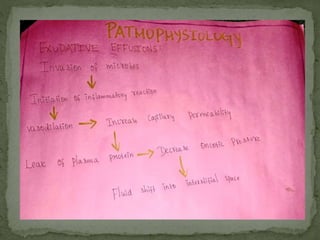
 An exudative effusion results from increased
capillary permeability characteristic of
inflammatory reaction.
 This types of effusion occurs secondary to conditions
such as pulmonary malignancies, pulmonary
infections and pulmonary eymbolization.
 Disseminated cancer (particularly lung and
breast), lymphoma
 Pleuro-pulmonary infections (pneumonia)
 Heart failure, cirrhosis, nephrotic syndrome
 Other conditions sarcoidosis, systemic lupus
erythematosus(SLE)
 Peritoneal dialysis
 Chest CT scan – Fine needle aspiration
 MRI
 Bronchoscopy/Thoracoscopy
 Sputum cytology
 Thoracentesis biochemical , bacteriologic
 Cytologic studies of pleural fluid
 The objectives of treatment are to discover
the underlying cause, to prevent
reaccumulation of fluid, and to relieve
discomfort, dyspnea , and respiratory
compromise
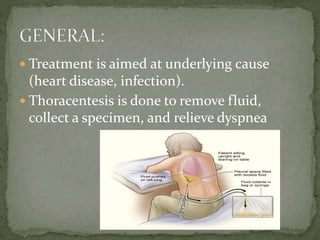
 Treatment is aimed at underlying cause
(heart disease, infection).
 Thoracentesis is done to remove fluid,
collect a specimen, and relieve dyspnea
 Chest tube drainage
 radiation
 Chemotherapy
 surgical pleurectomy
 pleuroperitoneal shunt
 pleurodesis
 Permanent decrease in lung function
 Lung scarring
 Empyema
 Sepsis(blood infection)
 Large effusion could lead to respiratory
failure
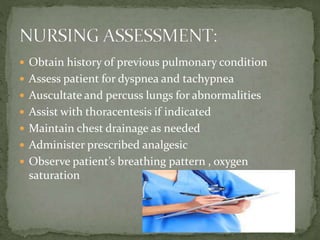
 Obtain history of previous pulmonary condition
 Assess patient for dyspnea and tachypnea
 Auscultate and percuss lungs for abnormalities
 Assist with thoracentesis if indicated
 Maintain chest drainage as needed
 Administer prescribed analgesic
 Observe patient’s breathing pattern , oxygen
saturation
 Ineffective breathing pattern related to collection
of fluid in pleural space as evidenced by dyspnea
 Impaired gas exchange related to ineffective
breathing pattern as evidenced by accesory
muscle use
 Anxiety related to diagnosis and therapeutic
procedure (thoracentesis , chest drainage)
 Risk for infection related to introduction of foreign
object (thoracentesis needle, chest tube) in to
chest cavity
 Chintamani,lewis,heitkemper,dirksen,O’Brien and
Bucher.(2011). Lewis’s Medical surgical Nursing ;
Assessment and management of clinical problems , 7th
edition , pg no 595
 Suzanne C.S., Brenda G.B., Janice L.H., and kerry
H.C.Brunner & Suddarth’s textbook of Medical-
Surgical Nursing; 11th edition, pg no – 540
 Lippincott Manual of nursing practice(2010). William
and wilkins. Nineth edition , Pg no - 302
Pleural effusion Seminar Presentation

Pleural effusion Seminar Presentation

  • 1.
  • 2.
     Pleural effusion,a collection of fluid in the pleural space, is rarely a primary disease process but is usually secondary to other diseases  'The pleural space normally contains only about 10-20 ml of serous fluid .
  • 3.
     Pleural fluidnormally seeps continually into the pleural space from the capillaries lining the parietal pleura and is reabsorbed by the visceral pleural capillaries and lymphatic system  Any condition that interferes with either secretion or drainage of this fluid leads to pleural effusion
  • 4.
    Pleural effusion isa collection of abnormal amount of fluid in the pleural space
  • 5.
     The estimatedprevalence of pleural effusion is 320 cases per 100,000 people in industrialized countries, with a distribution of etiologies related to the prevalence of underlying disease.
  • 6.
     Smoking anddrinking alcohol  Any previous complaint of high blood pressure  History of any contact with asbestos  Congestive heart failure  Pneumonia  Pulmonary embolism  malignancy
  • 8.
     Transudative effusions Exudative effusions
  • 9.
     Transudative effusionsalso known as hydrothoraces, occur primarily in noninflammatory conditions; is an accumulation of low-protein, low cell count fluid
  • 10.
     lncrease hydrostaticpressure found in heart failure (most common cause of pleural effusion)  Decrease oncotic pressure ( From hypoalbuminemia) found in cirrhosis of liver or renal disease.  In this condition, fluid movement is faciliated out of the capillaries and into the pleural space
  • 13.
     Exudative effusionsoccur in an area of inflammation; is an accumulation of high-protein fluid.  An exudative effusion results from increased capillary permeability characteristic of inflammatory reaction.  This types of effusion occurs secondary to conditions such as pulmonary malignancies, pulmonary infections and pulmonary eymbolization.
  • 14.
     Disseminated cancer(particularly lung and breast), lymphoma  Pleuro-pulmonary infections (pneumonia)  Heart failure, cirrhosis, nephrotic syndrome  Other conditions sarcoidosis, systemic lupus erythematosus(SLE)  Peritoneal dialysis
  • 19.
     Chest CTscan – Fine needle aspiration  MRI  Bronchoscopy/Thoracoscopy  Sputum cytology  Thoracentesis biochemical , bacteriologic  Cytologic studies of pleural fluid
  • 20.
     The objectivesof treatment are to discover the underlying cause, to prevent reaccumulation of fluid, and to relieve discomfort, dyspnea , and respiratory compromise
  • 21.
     Treatment isaimed at underlying cause (heart disease, infection).  Thoracentesis is done to remove fluid, collect a specimen, and relieve dyspnea
  • 22.
     Chest tubedrainage  radiation  Chemotherapy  surgical pleurectomy  pleuroperitoneal shunt  pleurodesis
  • 23.
     Permanent decreasein lung function  Lung scarring  Empyema  Sepsis(blood infection)  Large effusion could lead to respiratory failure
  • 24.
     Obtain historyof previous pulmonary condition  Assess patient for dyspnea and tachypnea  Auscultate and percuss lungs for abnormalities  Assist with thoracentesis if indicated  Maintain chest drainage as needed  Administer prescribed analgesic  Observe patient’s breathing pattern , oxygen saturation
  • 25.
     Ineffective breathingpattern related to collection of fluid in pleural space as evidenced by dyspnea  Impaired gas exchange related to ineffective breathing pattern as evidenced by accesory muscle use  Anxiety related to diagnosis and therapeutic procedure (thoracentesis , chest drainage)  Risk for infection related to introduction of foreign object (thoracentesis needle, chest tube) in to chest cavity
  • 26.
     Chintamani,lewis,heitkemper,dirksen,O’Brien and Bucher.(2011).Lewis’s Medical surgical Nursing ; Assessment and management of clinical problems , 7th edition , pg no 595  Suzanne C.S., Brenda G.B., Janice L.H., and kerry H.C.Brunner & Suddarth’s textbook of Medical- Surgical Nursing; 11th edition, pg no – 540  Lippincott Manual of nursing practice(2010). William and wilkins. Nineth edition , Pg no - 302