BY:
M.PRADEEP
M.Sc Nursing
 About 13.9% of the adult population (25+ years) have been
diagnosed with COPD – An estimated 15-19% of COPD
cases are work related. 24 million other adults have
evidence of troubled breathing, indicating COPD is under
diagnosed by up to 60%.
 COPD is the fourth leading cause of death in the India.
Approximately one half of COPD patients die within 10
years of their initial diagnosis.
 COPD is most common in older people because
symptomatic COPD usually takes more than 20 pack-years
of smoking to develop. The typical COPD patient has a
smoking history of more than 40 pack-years. Today, 21% of
adult Indians are smokers.
 A 65-year-old man with a 60-pack-year history of cigarette
smoking presents with worsening exertional dyspnea.
Pulmonary function testing showed significant restrictive
lung disease that was thought to be secondary to the
patient’s chronic obstructive pulmonary disease (COPD).
Two-dimensional echocardiography revealed a mean
pulmonary artery pressure (PAP) of 53 mm Hg with normal
right ventricular size and function. Right heart
catheterization at the time of diagnosis confirmed the
elevated mean PAP with a capillary wedge pressure of 12
mm Hg and peripheral vascular resistance of 7 wood units.
 The study was positive for vasodilator response with a drop
in mean PAP to 40 mm Hg. Cardiac output remained stable.
The patient was started on long-acting nifedipine.
Ventilation perfusion scan showed no mismatched
perfusion defects. Complete metabolic profile and complete
blood count were normal, and screening for HIV was
negative. High-resolution CT of the lungs showed evidence
of pulmonary fibrosis. The patient was given a diagnosis of
concomitant idiopathic pulmonary fibrosis and COPD.
Initially, he appeared to do well with the nifedipine with
improved symptoms but presented back for evaluation 2
months later with worsening shortness of breath with
minimal activity. He feels well at rest but gets markedly
short of breath when washing dishes or walking to the
bathroom. He is medically optimized for his COPD, with
multiple inhaled medications and inhaled corticosteroids.
 Physical exam revealed 1+ bilateral lower extremity
edema and hepatomegaly. Cardiovascular exam
revealed a right ventricular heave, jugular venous
distention to his jaw, and lungs that are clear to
auscultation. Follow-up labs revealed a N-terminal pro-
B-type natriuretic peptide level of 500 pg/mL, and a
repeat 2-dimensional echo revealed mild right atrial
dilatation, trace pericardial effusion, and a dilated
inferior vena cava with partial collapse. Left ventricular
function remained reserved
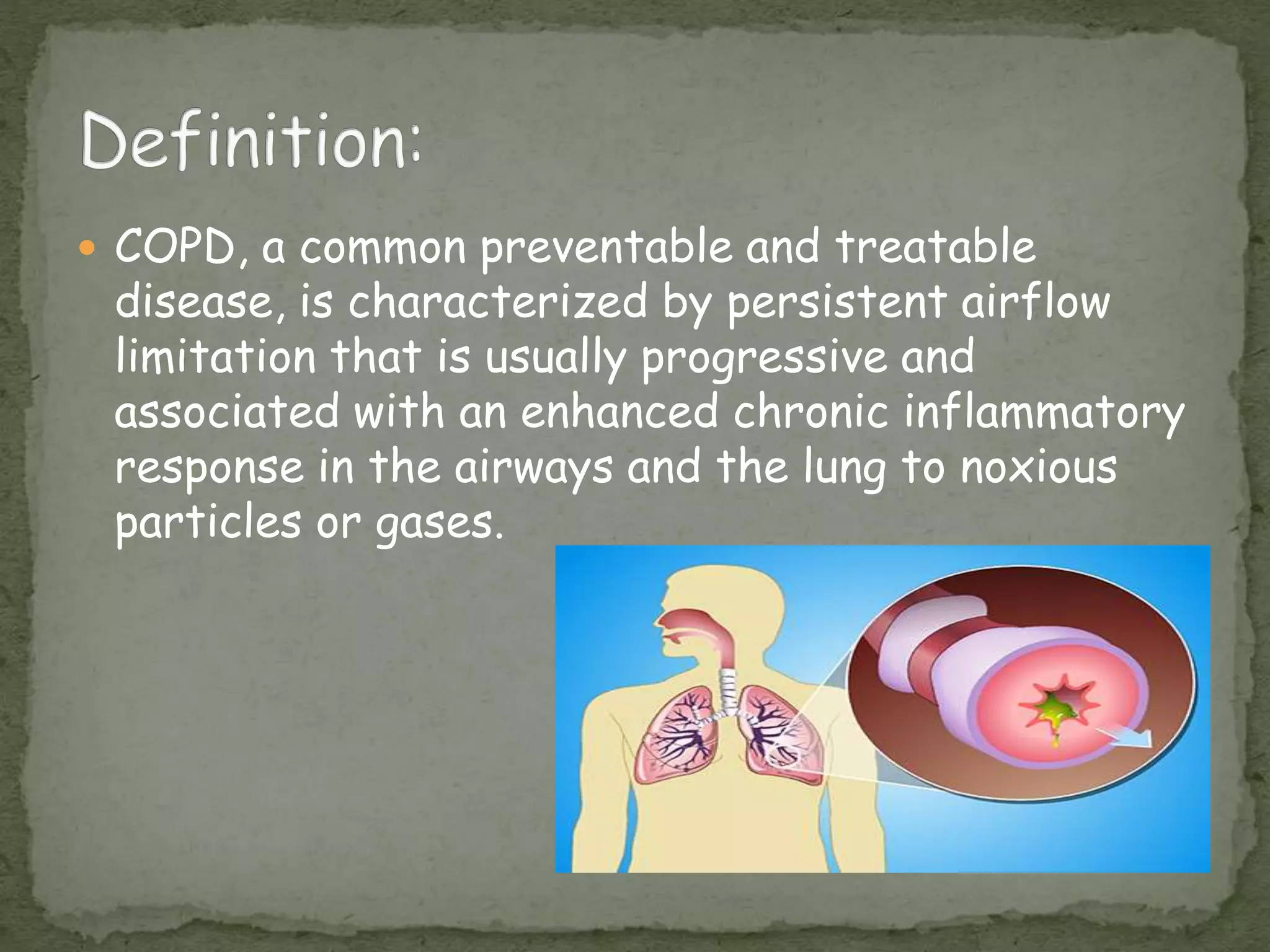
 COPD, a common preventable and treatable
disease, is characterized by persistent airflow
limitation that is usually progressive and
associated with an enhanced chronic inflammatory
response in the airways and the lung to noxious
particles or gases.
 Defined as a chronic productive cough
for three months in each of two
successive years in a patient in whom
other causes of chronic cough have been
excluded.
 Abnormal and permanent enlargement of
the airspaces distal to the terminal
bronchioles that is accompanied by
destruction of the airspace walls,
without obvious fibrosis.
 The progressive destruction of lung tissue leads to the
emphysematous form of COPD, which is characterized
by:
 Destruction of alveoli
 Loss of lung elasticity
 Loss of lung supporting tissue
 The collapse of small airways
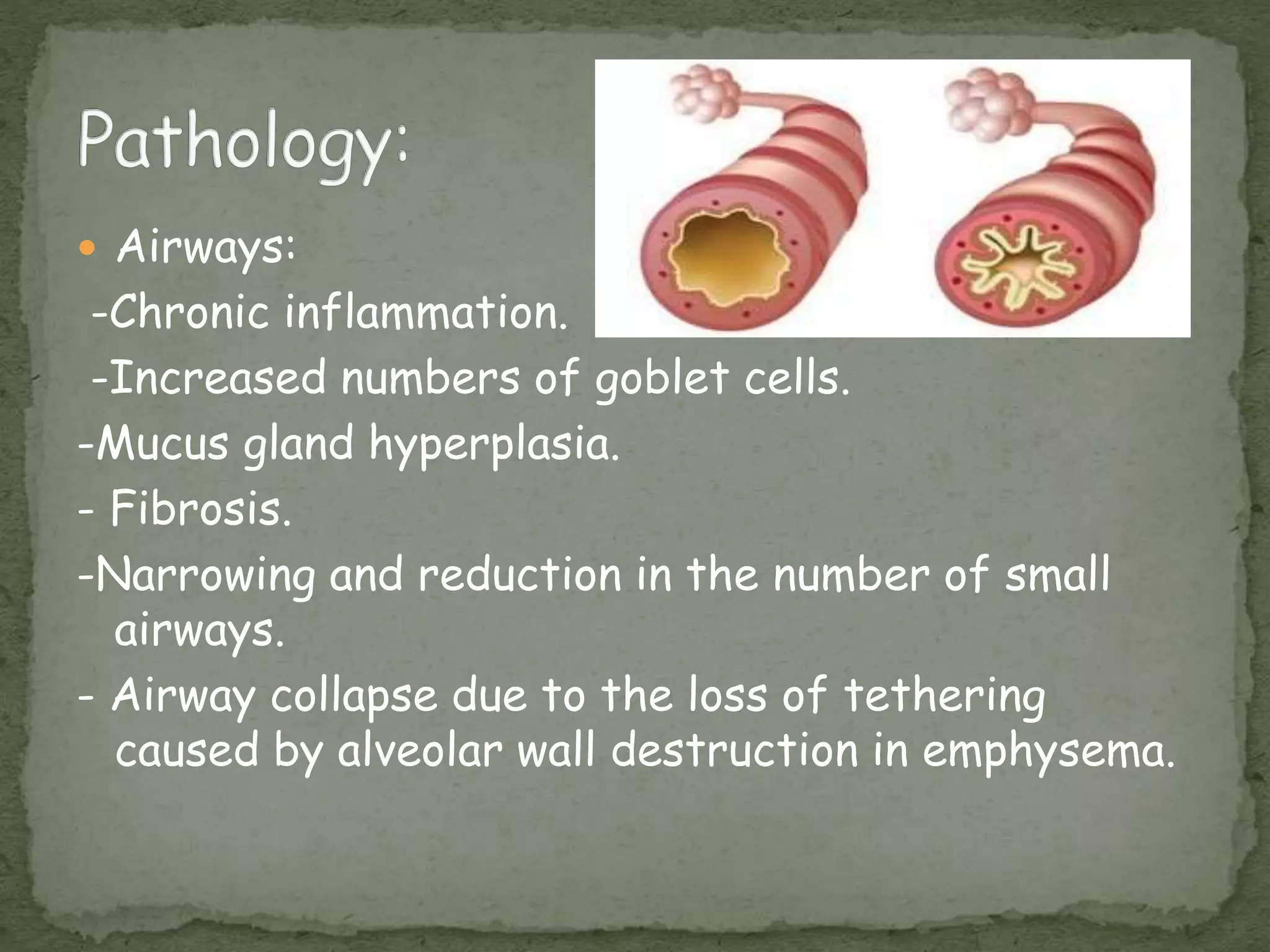
 Airways:
-Chronic inflammation.
-Increased numbers of goblet cells.
-Mucus gland hyperplasia.
- Fibrosis.
-Narrowing and reduction in the number of small
airways.
- Airway collapse due to the loss of tethering
caused by alveolar wall destruction in emphysema.
 History of smoking
 Occupation (certain occupations have increased risk
for lung disease related to environmental work
conditions)
 History of lung disease
 Allergies
 Recent pulmonary infection
 Genes
 Infections
 Socio-economic status
 Aging Populations
 Cigarette smoking
 Occupational dust and chemicals
 Indoor and outdoor air pollution
 Environmental tobacco smoke(ETS).
 Alpha 1-antitrypsin deficiency is a genetic
condition that is responsible for about 2% of
cases of
 In this condition, the body does not make enough
of a protein, alpha 1-antitrypsin.
 Alpha 1-antitrypsin protects the lungs from
damage caused by protease enzymes, such as
elastase and trypsin, that can be released as a
result of an inflammatory response to tobacco
smoke.
 COPD patients are at increased risk for:
- Cardiovascular diseases.
- Osteoporosis .
-Respiratory infections .
-Anxiety and Depression.
- Diabetes.
- Lung cancer.
- Bronchiectasis.
 These comorbid conditions may influence mortality
and hospitalizations and should be looked for
routinely, and treated appropriately.
 The characteristic symptoms of COPD are chronic
and progressive dyspnea, cough, and sputum
production that can be variable from day to-day.
-Dyspnea: Progressive, persistent and
characteristically worse with exercise.
-Chronic cough: May be intermittent and may be
unproductive.
-Chronic sputum production: COPD patients
commonly cough up sputum.
 Chest tightness.
 Weight loss.
 Respiratory infections.
 Wheezing.
 Hyperinflated ‘barrel chest’.
 Use of accessory muscles.
 Pursed lip breathing , central cyanosis , prolonged
expiration.
 Intercoastal indrawing during inspiration.
Inspection:
 Barrel-shaped chest .
 Accessory respiratory muscle participate.
 Prolonged expiration during quiet breathing.
 Expiration through pursed lips.
 Paradoxical retraction of the lower interspaces
during inspiration (ie, hoover's sign) .
 Patients with end-stage COPD may adopt positions
that relieve dyspnea, such as leaning forward with
arms outstretched and weight supported on the
palms or elbows.
 Palpation:
- Decreased fremitus vocalis.
 Percussion :
- Hyperresonant .
- Depressed diaphragm.
- Dimination of the area of absolute cardiac dullness.
 Auscultation:
- Prolonged expiration
- Reduced breath sounds.
- The presence of wheezing during quiet breathing
Crackle can be heard if infection exist.
COPD
 Onset in mid-life .
 Symptoms slowly
Progressive.
 Long smoking history.
 Onset early in life (often
childhood).
 Symptoms vary from day
to day .
 Symptoms worse at
night/early morning .
 Allergy, rhinitis, and/or
eczema also present .
 Family history of
asthma.
ASTHMA
 "characterized by persistent airflow limitation
with several features usually associated with
asthma and several features usually associated
with COPD. ACOS is therefore identified in
clinical practice by the features that it shares
with both asthma and COPD."
 The presence of a post-bronchodilator FEV1/FVC < 0.70
confirms the presence of persistent airflow limitation and
thus of COPD.
 Classification of Severity of Airflow Limitation in COPD:
 In patients with FEV1 /FVC < 0.70:
- GOLD 1: Mild FEV1 > 80% predicted
- GOLD 2: Moderate 50% < FEV1 < 80% predicted
- GOLD 3: Severe 30% < FEV1 < 50% predicted
- GOLD 4: Very Severe FEV1 < 30% predicted
- Based on Post-Bronchodilator FEV1
 Chest x-ray
 Blood examination:
- In excerbation or acute infection in airway, leucocytosis
may be detected.
 Sputum examination:
-Streptococcus pneumonia
- haemophilus influenzae
- moraxella catarrhalis
- klebsiella pneumonia
 PaO2 < 8.0 kPa with or without PaCO2 >
6.7 kPa when breathing room air
indicates respiratory failure.
 Based on the principles of
 Prevention of further progress of disease
 Preservation and enhancement of pulmonary
functional capacity
 Avoidance of exacerbations in order to improve
the quality of life.
 Bronchodilators are central to the symptomatic management of
COPD.
 Improve emptying of the lungs,reduce dynamic hyperinflation and
improve exercise performance .
Bronchodilators:
 Three major classes of bronchodilators:
 β2 - agonists:
 Short acting: salbutamol & terbutaline.
 Long acting :Salmeterol & formoterol.
Anticholinergic agents:
 Ipratropium,tiotropium.
Theophylline:
 (a weak bronchodilator, which may have some anti-inflammatory
properties).
 Regular treatment with inhaled
glucocorticoids is appropriate for
symptomatic patients with an
FEV150%pred and repeated
exacerbations.
 Combination therapy of long acting ß2-
agonists and inhaled corticosteroids
show a significant additional effect on
pulmonary function and a reduction in
symptoms.
 Mainly in patients with an FEV150%pred.
 Antioxidant agents.
 Mucolytic.
 Phosphodiesterase-4 Inhibitors:
-In patients with severe and very severe COPD
(GOLD 3 and 4) and a history of exacerbations
and chronic bronchitis, the phospodiesterase-4
inhibitor, roflumilast, reduces exacerbations
treated with oral glucocorticosteroids.
 Influenza vaccines can reduce serious illness.
Pneumococcal polysaccharide vaccine is
recommended for COPD patients 65 years and
older and for COPD patients younger than age 65
with an FEV1 < 40% predicted.
 The use of antibiotics, other than for treating
infectious exacerbations of COPD and other
bacterial infections, is currently not indicated.
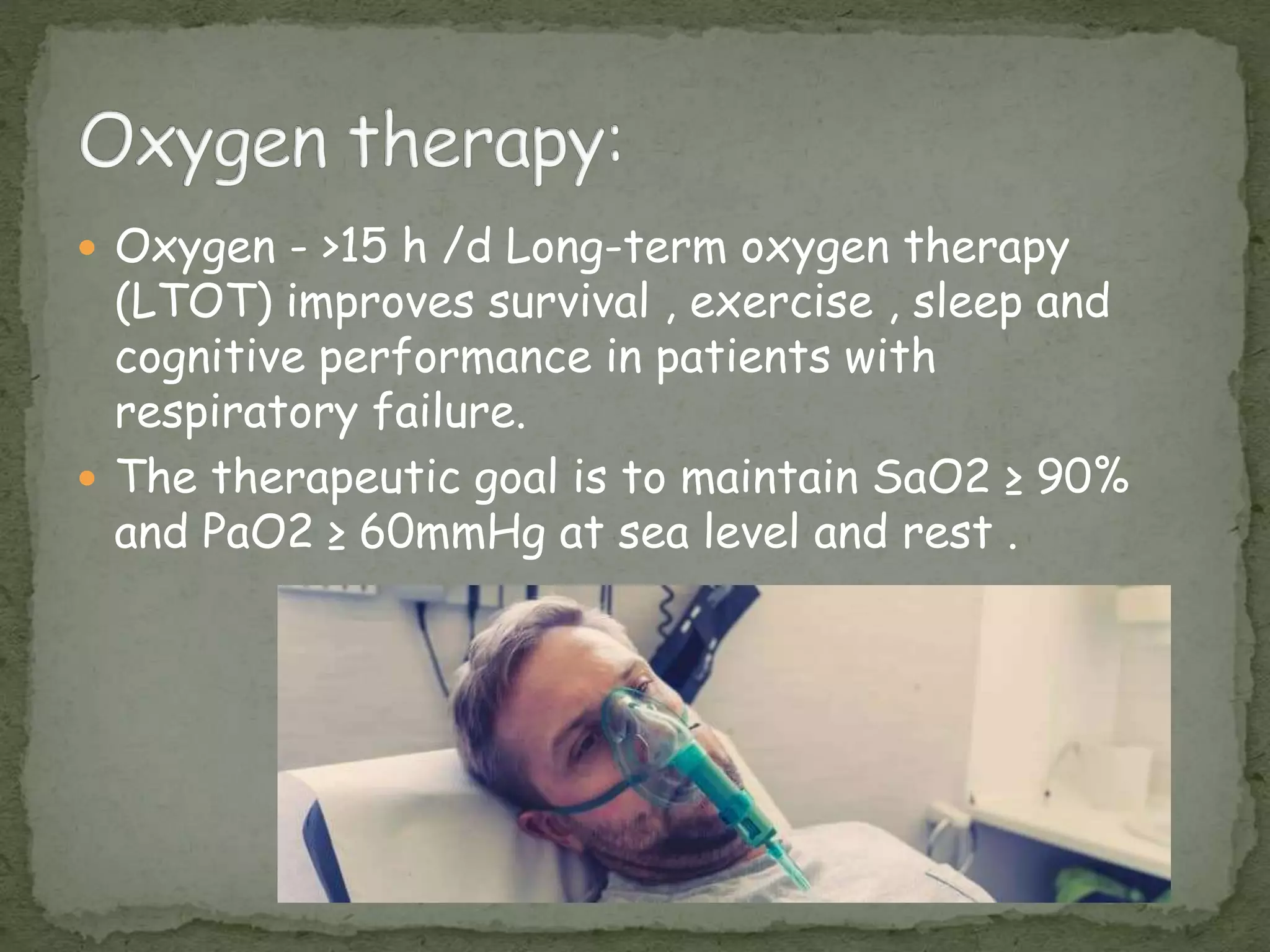
 Oxygen - >15 h /d Long-term oxygen therapy
(LTOT) improves survival , exercise , sleep and
cognitive performance in patients with
respiratory failure.
 The therapeutic goal is to maintain SaO2 ≥ 90%
and PaO2 ≥ 60mmHg at sea level and rest .
 Pulmonary rehabilitation
 Nutrition
 Breathing exercise
 Psycological support.
 Bullectomy
 Lung volume reduction surgery
 Lung transplantation
 Nasal flaring
 Cyanosis
 Dyspnea
 Decreased respiratory effort
 Decreased LOC
 Accessory muscle use
 Decreased breath sounds
 Decreased oxygen saturation
 Acute pain related to coughing/respiratory distress
evidence by tachycardia and increased BP, HR
 Ineffective breathing pattern related to inadequate
chest expansion evidence by increase respiratory rate.
 Ineffective airway clearance related to increased mucus
production in bronchial tubes evidence by productive
cough with sputum, wheezing, alteration of ABG and
change in breathing pattern.
 Impaired gas exchange related to increased upper and
lower airway resistance caused by over production of
secretion along bronchial tubes evidence by Po2 with
room air and PCo2, BP,HR, RR, general weakness.
 Decrease cardiac output related to disease process
evidence by BP,HR, RR
 Hyperthermia/infection related to a gram-positive
organism, streptococcous pneumonia evidence by
temp and WBCs Activity intolerance related to
increase breathing work.
 Imbalance nutrition: less than body requirements
related to poor appetite resulting from fever, dyspnoea
and fatigue/increases metabolic need caused by
increased work of breathing.
 Anxiety related change in health status.
 Allow the patient to assume a position of comfort for
easiest breathing.
 Begin O2 therapy based on the patient's condition.
Continue to monitor oxygen delivery, especially if the
patient is showing signs of chronic bronchitis. High-
flow oxygen could cause the opposite effect desired,
making the patient lose the drive to breathe. A Venturi
mask is the most precise method of delivering exact
amounts of oxygen.
 Continuously monitor vital signs, including oxygen
saturation.
 Prepare for more aggressive measures in case the
patient's condition worsens. Greater ventilatory
support may become necessary.
 Continuously monitor for cardiac dysrhythmias.
 If the patient is in respiratory failure, begin high-
flow oxygen delivery regardless of history.
 Obtain IV access. Fluids are frequently given to
help liquefy secretions.
 1. Nebulized inhalers - medication is inhaled by the patient.
 2. Bronchodilator - stimulates b-receptors for
bronchodilation. Medication is inhaled through the mouth.
The dosage differs, based on the type of bronchodilator
used as well as the patient's age and acute or chronic
condition.
 3. Corticosteroids - decrease inflammation of epithelial
cells in asthma.
 4.Antibiotics may also be given if an infectious process is
suspected. Administer as ordered by the physician, and
discuss administration with the patient to ensure that
antibiotic therapy is continued when the patient is
released, if needed.
 Smoking cessation has the greatest capacity to
influence the natural history of COPD .
 Pharmacotherapy and nicotine replacement
reliably increase long-term smoking abstinence
rates.
 Nicotine replacement therapy (nicotine gum,
inhaler, nasal spray, transdermal patch, sublingual
tablet, or lozenge) as well as pharmacotherapy
with varenicline, bupropion, and nortriptyline
reliably increases long-term smoking abstinence
rates and are significantly more effective than
placebo.
Brief Strategies to Help the Patient Willing to Quit
Smoking:
 1.ASK - Systematically identify all tobacco users
at every visit .
 2. ADVISE - Strongly urge all tobacco users to
quit.
 3. ASSESS - Determine willingness to make a
quit attempt .
 4. ASSIST - Aid the patient in quitting.
 5. ARRANGE - Schedule follow-up contact.
 Cor pulmonale .
 Exacerbations of copd.
 Respiratory failure.
 pneumothorax
 Centres for Disease Control, DHHS, CDC Programs in
BriefWorkplace Health and Safety-Work-Related Lung
Disease, 2005
 National Heart, Lung, and Blood Institute, NIH.
Global strategy for the diagnosis, management, and
prevention of chronic obstructive pulmonary disease
Executive Summary
 http://www.nursingceu.com/courses
 Pilot Study of Chronic Obstructive Pulmonary
Disease in an Industrial Town in India, March
2019 – Journal of Health & Pollution.
 Background; The burden of chronic obstructive
pulmonary disease (COPD) in India is not well
understood. Due to geographical and environmental
heterogeneity, the epidemiological profile of COPD
may not be uniform across the country. Studies carried
out in small geographical areas can help to determine
the prevalence and risk factors of COPD.
 Objectives; The present study was conducted in one city
in northwest India in order to calculate prevalence in small
geographically determined areas within the city as well as
across socio-economic strata and adjoining
neighbourhoods.
 Methods;The present study was conducted in Ludhiana,
an industrial town in Punjab, India. Residential colonies
were identified in an industrial and nonindustrial area and
all households were screened for COPD using the Global
Initiative for Chronic Obstructive Lung Disease criteria and
confirmed by spirometry. Information about exposure to
possible risk factors was also collected from suspected
cases of COPD. Cases were mapped on a digital map of the
city and hotspots were identified.
 Results;Fifty-six cases of COPD were detected. More than
half (71%) were in the industrial area. The overall
prevalence rate of COPD in the city was 3.17 per 1 000. The
highest prevalence (5.6-9.4 per thousand) was observed in
the colonies of the industrial area. All surveyed colonies in
the nonindustrial area showed a low prevalence (0.0 to 0.9
per thousand).
 Conclusions;Hotspots were located in the industrial area
and there was no such aggregation in the nonindustrial
area. This suggests a potential association of industrial air
pollutants with COPD. A strength of the present study is
that it provides important baseline data. However, the
study was limited, as it did not show a temporal association
of exposure to air pollution and smoking with COPD.
Chronic obstructive pulmonary disease

Chronic obstructive pulmonary disease

  • 1.
  • 2.
     About 13.9%of the adult population (25+ years) have been diagnosed with COPD – An estimated 15-19% of COPD cases are work related. 24 million other adults have evidence of troubled breathing, indicating COPD is under diagnosed by up to 60%.  COPD is the fourth leading cause of death in the India. Approximately one half of COPD patients die within 10 years of their initial diagnosis.  COPD is most common in older people because symptomatic COPD usually takes more than 20 pack-years of smoking to develop. The typical COPD patient has a smoking history of more than 40 pack-years. Today, 21% of adult Indians are smokers.
  • 3.
     A 65-year-oldman with a 60-pack-year history of cigarette smoking presents with worsening exertional dyspnea. Pulmonary function testing showed significant restrictive lung disease that was thought to be secondary to the patient’s chronic obstructive pulmonary disease (COPD). Two-dimensional echocardiography revealed a mean pulmonary artery pressure (PAP) of 53 mm Hg with normal right ventricular size and function. Right heart catheterization at the time of diagnosis confirmed the elevated mean PAP with a capillary wedge pressure of 12 mm Hg and peripheral vascular resistance of 7 wood units.
  • 4.
     The studywas positive for vasodilator response with a drop in mean PAP to 40 mm Hg. Cardiac output remained stable. The patient was started on long-acting nifedipine. Ventilation perfusion scan showed no mismatched perfusion defects. Complete metabolic profile and complete blood count were normal, and screening for HIV was negative. High-resolution CT of the lungs showed evidence of pulmonary fibrosis. The patient was given a diagnosis of concomitant idiopathic pulmonary fibrosis and COPD. Initially, he appeared to do well with the nifedipine with improved symptoms but presented back for evaluation 2 months later with worsening shortness of breath with minimal activity. He feels well at rest but gets markedly short of breath when washing dishes or walking to the bathroom. He is medically optimized for his COPD, with multiple inhaled medications and inhaled corticosteroids.
  • 5.
     Physical examrevealed 1+ bilateral lower extremity edema and hepatomegaly. Cardiovascular exam revealed a right ventricular heave, jugular venous distention to his jaw, and lungs that are clear to auscultation. Follow-up labs revealed a N-terminal pro- B-type natriuretic peptide level of 500 pg/mL, and a repeat 2-dimensional echo revealed mild right atrial dilatation, trace pericardial effusion, and a dilated inferior vena cava with partial collapse. Left ventricular function remained reserved
  • 6.
     COPD, acommon preventable and treatable disease, is characterized by persistent airflow limitation that is usually progressive and associated with an enhanced chronic inflammatory response in the airways and the lung to noxious particles or gases.
  • 8.
     Defined asa chronic productive cough for three months in each of two successive years in a patient in whom other causes of chronic cough have been excluded.
  • 9.
     Abnormal andpermanent enlargement of the airspaces distal to the terminal bronchioles that is accompanied by destruction of the airspace walls, without obvious fibrosis.
  • 10.
     The progressivedestruction of lung tissue leads to the emphysematous form of COPD, which is characterized by:  Destruction of alveoli  Loss of lung elasticity  Loss of lung supporting tissue  The collapse of small airways
  • 13.
     Airways: -Chronic inflammation. -Increasednumbers of goblet cells. -Mucus gland hyperplasia. - Fibrosis. -Narrowing and reduction in the number of small airways. - Airway collapse due to the loss of tethering caused by alveolar wall destruction in emphysema.
  • 17.
     History ofsmoking  Occupation (certain occupations have increased risk for lung disease related to environmental work conditions)  History of lung disease  Allergies  Recent pulmonary infection
  • 18.
     Genes  Infections Socio-economic status  Aging Populations  Cigarette smoking  Occupational dust and chemicals  Indoor and outdoor air pollution  Environmental tobacco smoke(ETS).
  • 19.
     Alpha 1-antitrypsindeficiency is a genetic condition that is responsible for about 2% of cases of  In this condition, the body does not make enough of a protein, alpha 1-antitrypsin.  Alpha 1-antitrypsin protects the lungs from damage caused by protease enzymes, such as elastase and trypsin, that can be released as a result of an inflammatory response to tobacco smoke.
  • 20.
     COPD patientsare at increased risk for: - Cardiovascular diseases. - Osteoporosis . -Respiratory infections . -Anxiety and Depression. - Diabetes. - Lung cancer. - Bronchiectasis.  These comorbid conditions may influence mortality and hospitalizations and should be looked for routinely, and treated appropriately.
  • 21.
     The characteristicsymptoms of COPD are chronic and progressive dyspnea, cough, and sputum production that can be variable from day to-day. -Dyspnea: Progressive, persistent and characteristically worse with exercise. -Chronic cough: May be intermittent and may be unproductive. -Chronic sputum production: COPD patients commonly cough up sputum.
  • 23.
     Chest tightness. Weight loss.  Respiratory infections.  Wheezing.  Hyperinflated ‘barrel chest’.  Use of accessory muscles.  Pursed lip breathing , central cyanosis , prolonged expiration.  Intercoastal indrawing during inspiration.
  • 24.
    Inspection:  Barrel-shaped chest.  Accessory respiratory muscle participate.  Prolonged expiration during quiet breathing.  Expiration through pursed lips.  Paradoxical retraction of the lower interspaces during inspiration (ie, hoover's sign) .
  • 25.
     Patients withend-stage COPD may adopt positions that relieve dyspnea, such as leaning forward with arms outstretched and weight supported on the palms or elbows.
  • 26.
     Palpation: - Decreasedfremitus vocalis.  Percussion : - Hyperresonant . - Depressed diaphragm. - Dimination of the area of absolute cardiac dullness.  Auscultation: - Prolonged expiration - Reduced breath sounds. - The presence of wheezing during quiet breathing Crackle can be heard if infection exist.
  • 27.
    COPD  Onset inmid-life .  Symptoms slowly Progressive.  Long smoking history.  Onset early in life (often childhood).  Symptoms vary from day to day .  Symptoms worse at night/early morning .  Allergy, rhinitis, and/or eczema also present .  Family history of asthma. ASTHMA
  • 28.
     "characterized bypersistent airflow limitation with several features usually associated with asthma and several features usually associated with COPD. ACOS is therefore identified in clinical practice by the features that it shares with both asthma and COPD."
  • 29.
     The presenceof a post-bronchodilator FEV1/FVC < 0.70 confirms the presence of persistent airflow limitation and thus of COPD.  Classification of Severity of Airflow Limitation in COPD:  In patients with FEV1 /FVC < 0.70: - GOLD 1: Mild FEV1 > 80% predicted - GOLD 2: Moderate 50% < FEV1 < 80% predicted - GOLD 3: Severe 30% < FEV1 < 50% predicted - GOLD 4: Very Severe FEV1 < 30% predicted - Based on Post-Bronchodilator FEV1  Chest x-ray
  • 31.
     Blood examination: -In excerbation or acute infection in airway, leucocytosis may be detected.  Sputum examination: -Streptococcus pneumonia - haemophilus influenzae - moraxella catarrhalis - klebsiella pneumonia
  • 32.
     PaO2 <8.0 kPa with or without PaCO2 > 6.7 kPa when breathing room air indicates respiratory failure.
  • 33.
     Based onthe principles of  Prevention of further progress of disease  Preservation and enhancement of pulmonary functional capacity  Avoidance of exacerbations in order to improve the quality of life.
  • 34.
     Bronchodilators arecentral to the symptomatic management of COPD.  Improve emptying of the lungs,reduce dynamic hyperinflation and improve exercise performance . Bronchodilators:  Three major classes of bronchodilators:  β2 - agonists:  Short acting: salbutamol & terbutaline.  Long acting :Salmeterol & formoterol. Anticholinergic agents:  Ipratropium,tiotropium. Theophylline:  (a weak bronchodilator, which may have some anti-inflammatory properties).
  • 35.
     Regular treatmentwith inhaled glucocorticoids is appropriate for symptomatic patients with an FEV150%pred and repeated exacerbations.
  • 36.
     Combination therapyof long acting ß2- agonists and inhaled corticosteroids show a significant additional effect on pulmonary function and a reduction in symptoms.  Mainly in patients with an FEV150%pred.
  • 37.
     Antioxidant agents. Mucolytic.  Phosphodiesterase-4 Inhibitors: -In patients with severe and very severe COPD (GOLD 3 and 4) and a history of exacerbations and chronic bronchitis, the phospodiesterase-4 inhibitor, roflumilast, reduces exacerbations treated with oral glucocorticosteroids.
  • 38.
     Influenza vaccinescan reduce serious illness. Pneumococcal polysaccharide vaccine is recommended for COPD patients 65 years and older and for COPD patients younger than age 65 with an FEV1 < 40% predicted.  The use of antibiotics, other than for treating infectious exacerbations of COPD and other bacterial infections, is currently not indicated.
  • 39.
     Oxygen ->15 h /d Long-term oxygen therapy (LTOT) improves survival , exercise , sleep and cognitive performance in patients with respiratory failure.  The therapeutic goal is to maintain SaO2 ≥ 90% and PaO2 ≥ 60mmHg at sea level and rest .
  • 40.
     Pulmonary rehabilitation Nutrition  Breathing exercise  Psycological support.
  • 42.
     Bullectomy  Lungvolume reduction surgery  Lung transplantation
  • 43.
     Nasal flaring Cyanosis  Dyspnea  Decreased respiratory effort  Decreased LOC  Accessory muscle use  Decreased breath sounds  Decreased oxygen saturation
  • 44.
     Acute painrelated to coughing/respiratory distress evidence by tachycardia and increased BP, HR  Ineffective breathing pattern related to inadequate chest expansion evidence by increase respiratory rate.  Ineffective airway clearance related to increased mucus production in bronchial tubes evidence by productive cough with sputum, wheezing, alteration of ABG and change in breathing pattern.  Impaired gas exchange related to increased upper and lower airway resistance caused by over production of secretion along bronchial tubes evidence by Po2 with room air and PCo2, BP,HR, RR, general weakness.
  • 45.
     Decrease cardiacoutput related to disease process evidence by BP,HR, RR  Hyperthermia/infection related to a gram-positive organism, streptococcous pneumonia evidence by temp and WBCs Activity intolerance related to increase breathing work.  Imbalance nutrition: less than body requirements related to poor appetite resulting from fever, dyspnoea and fatigue/increases metabolic need caused by increased work of breathing.  Anxiety related change in health status.
  • 46.
     Allow thepatient to assume a position of comfort for easiest breathing.  Begin O2 therapy based on the patient's condition. Continue to monitor oxygen delivery, especially if the patient is showing signs of chronic bronchitis. High- flow oxygen could cause the opposite effect desired, making the patient lose the drive to breathe. A Venturi mask is the most precise method of delivering exact amounts of oxygen.  Continuously monitor vital signs, including oxygen saturation.
  • 47.
     Prepare formore aggressive measures in case the patient's condition worsens. Greater ventilatory support may become necessary.  Continuously monitor for cardiac dysrhythmias.  If the patient is in respiratory failure, begin high- flow oxygen delivery regardless of history.  Obtain IV access. Fluids are frequently given to help liquefy secretions.
  • 48.
     1. Nebulizedinhalers - medication is inhaled by the patient.  2. Bronchodilator - stimulates b-receptors for bronchodilation. Medication is inhaled through the mouth. The dosage differs, based on the type of bronchodilator used as well as the patient's age and acute or chronic condition.  3. Corticosteroids - decrease inflammation of epithelial cells in asthma.  4.Antibiotics may also be given if an infectious process is suspected. Administer as ordered by the physician, and discuss administration with the patient to ensure that antibiotic therapy is continued when the patient is released, if needed.
  • 49.
     Smoking cessationhas the greatest capacity to influence the natural history of COPD .  Pharmacotherapy and nicotine replacement reliably increase long-term smoking abstinence rates.  Nicotine replacement therapy (nicotine gum, inhaler, nasal spray, transdermal patch, sublingual tablet, or lozenge) as well as pharmacotherapy with varenicline, bupropion, and nortriptyline reliably increases long-term smoking abstinence rates and are significantly more effective than placebo.
  • 50.
    Brief Strategies toHelp the Patient Willing to Quit Smoking:  1.ASK - Systematically identify all tobacco users at every visit .  2. ADVISE - Strongly urge all tobacco users to quit.  3. ASSESS - Determine willingness to make a quit attempt .  4. ASSIST - Aid the patient in quitting.  5. ARRANGE - Schedule follow-up contact.
  • 51.
     Cor pulmonale.  Exacerbations of copd.  Respiratory failure.  pneumothorax
  • 52.
     Centres forDisease Control, DHHS, CDC Programs in BriefWorkplace Health and Safety-Work-Related Lung Disease, 2005  National Heart, Lung, and Blood Institute, NIH. Global strategy for the diagnosis, management, and prevention of chronic obstructive pulmonary disease Executive Summary  http://www.nursingceu.com/courses
  • 53.
     Pilot Studyof Chronic Obstructive Pulmonary Disease in an Industrial Town in India, March 2019 – Journal of Health & Pollution.  Background; The burden of chronic obstructive pulmonary disease (COPD) in India is not well understood. Due to geographical and environmental heterogeneity, the epidemiological profile of COPD may not be uniform across the country. Studies carried out in small geographical areas can help to determine the prevalence and risk factors of COPD.
  • 54.
     Objectives; Thepresent study was conducted in one city in northwest India in order to calculate prevalence in small geographically determined areas within the city as well as across socio-economic strata and adjoining neighbourhoods.  Methods;The present study was conducted in Ludhiana, an industrial town in Punjab, India. Residential colonies were identified in an industrial and nonindustrial area and all households were screened for COPD using the Global Initiative for Chronic Obstructive Lung Disease criteria and confirmed by spirometry. Information about exposure to possible risk factors was also collected from suspected cases of COPD. Cases were mapped on a digital map of the city and hotspots were identified.
  • 55.
     Results;Fifty-six casesof COPD were detected. More than half (71%) were in the industrial area. The overall prevalence rate of COPD in the city was 3.17 per 1 000. The highest prevalence (5.6-9.4 per thousand) was observed in the colonies of the industrial area. All surveyed colonies in the nonindustrial area showed a low prevalence (0.0 to 0.9 per thousand).  Conclusions;Hotspots were located in the industrial area and there was no such aggregation in the nonindustrial area. This suggests a potential association of industrial air pollutants with COPD. A strength of the present study is that it provides important baseline data. However, the study was limited, as it did not show a temporal association of exposure to air pollution and smoking with COPD.