transfer of heat
energy
conduction and convention,
moist heat or dry heat water and steam Air
(or) fat
not require
special skill
equipment
Uniform cooking
damage in the
structure and texture
Loss nutrients
B and C vitamins
water is discarded
Time consuming
fuel wasted
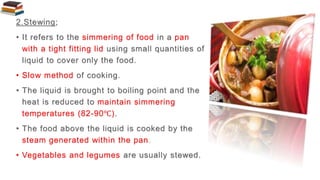
simmering of food pan
with a tight fitting lid
• Slow method
maintain simmering
temperatures (82-90℃)
steam generated within the pan.
• Vegetables and legumes
Loss of nutrients
avoided water
not discarded
Flavour retained
time consuming
Wastage of fuel
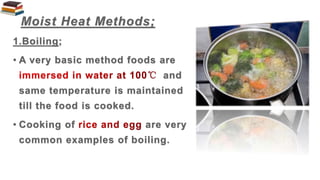
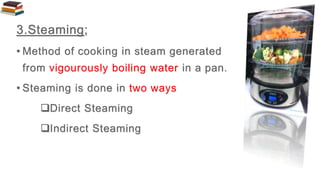
vigourously boiling water
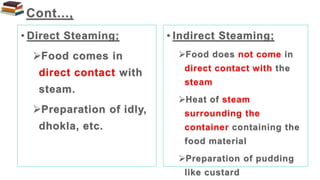
two ways
direct contact
not come
direct contact with
steam
steam
surrounding the
container
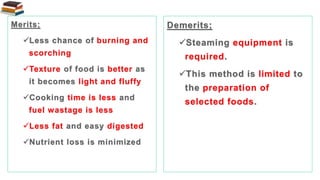
burning and
scorching
Texture better
light and fluffy
time is less
fuel wastage is less
Less fat digested
equipment
required
limited
preparation of
selected foods
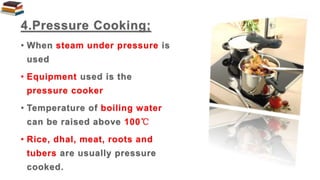
steam under pressure
• Equipment
pressure cooker
boiling water
100℃
• Rice, dhal, meat, roots and
tubers
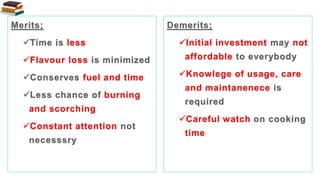
less
Flavour loss
fuel and time
burning
and scorching
Constant attention
Initial investment not
affordable
Knowlege of usage, care
and maintanenece
Careful watch
time
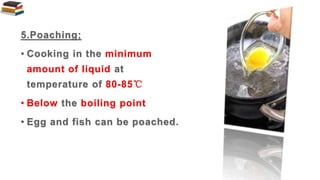
minimum
amount of liquid
80-85℃
• Below boiling point
Easily digestable
no fat
not
appeal to everybody
Scorched
Water soluble nutrients
leached
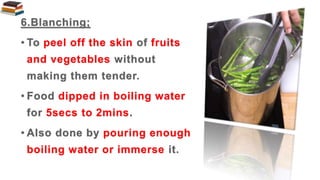
peel off the skin fruits
and vegetables
dipped in boiling water
5secs to 2mins
pouring enough
boiling water or immerse
improves digestibility
Destroy enzymes
Texture maintained
improving colour
flavour
Loss of nutrients
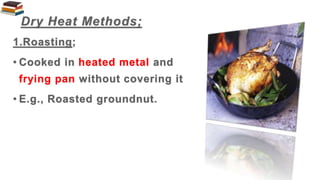
heated metal
frying pan
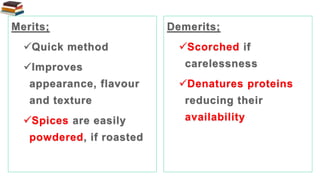
Spices
powdered
Scorched
Denatures proteins
availability
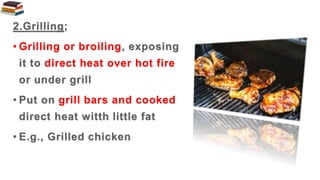
• Grilling or broiling
direct heat over hot fire
grill bars and cooked
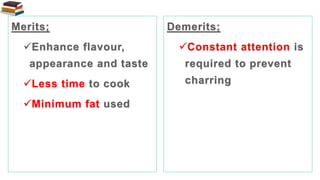
Less time
Minimum fat
Constant attention
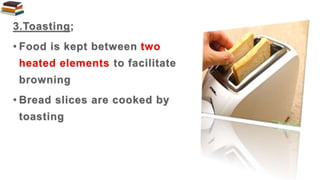
two
heated elements
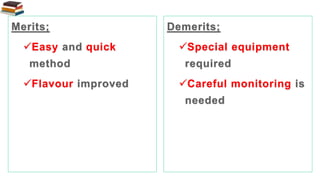
Easy quick
Flavour
Special equipment
Careful monitoring
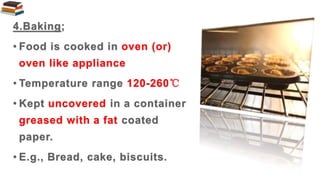
oven (or)
oven like appliance
120-260℃
uncovered
greased with a fat
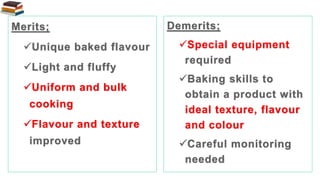
Uniform and bulk
cooking
Flavour and texture
Special equipment
ideal texture, flavour
and colour
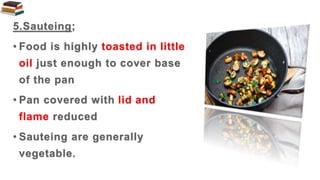
toasted in little
oil
lid and
flame
less time
Minimum oil
Constant attention
scorching
(or) burning
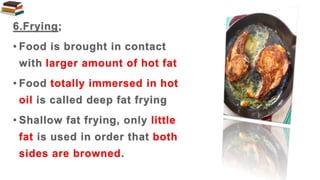
larger amount of hot fat
totally immersed in hot
oil
little
fat both
sides are browned
quick
Calorific value
Delicious flavour
attractive
Taste and texture
Careful monitoring
charred
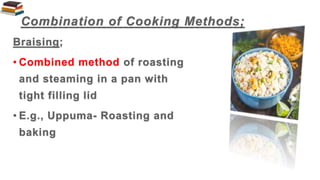
• Combined method
tasty and full of
flavour
attention
needed
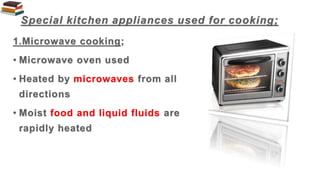
microwaves
food and liquid fluids
Convenient, fast
Leftover
flavour and texture
simmering, stewing or
deep frying
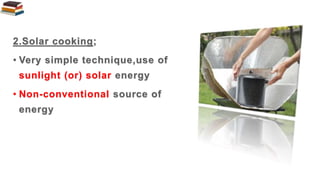
sunlight (or) solar
• Non-conventional
Original flavour
No danger
equipment
needed
absence of sunlight,
rainy season, late
evening an night
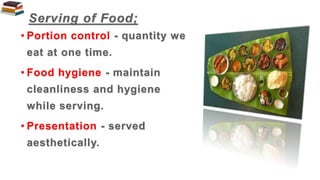
• Portion control
• Food hygiene
• Presentation
physical and chemical
colour, texture, flavour and taste
carbohydrates, fats, protiens
inorganic, mineral
component and number of pigments, flavour competent,
vitamins, acids, enzymes
palatable and nutritive
• Facts and rules
maintain nutrients
water soluble vitamins lose
sunlight, air and by prolonged
heating
• Proper practice minimize
loss
carried easily at
home
industrial level
technology
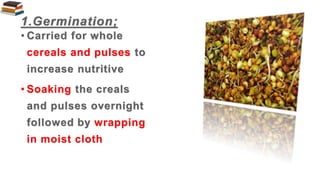
cereals and pulses
• Soaking
wrapping
in moist cloth
vitamin C and B absorption
of iron
• Destroying non-nutritional
digestibility
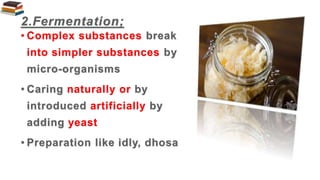
• Complex substances
into simpler substances
naturally or
artificially
yeast
vitamin B
iron, calcium and protiens
destruction phytates and trypsin
digestibility, texture taste
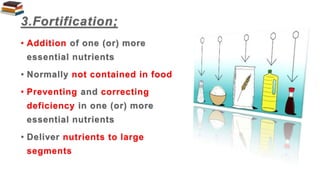
• Addition
not contained in food
• Preventing correcting
deficiency
nutrients to large
segments
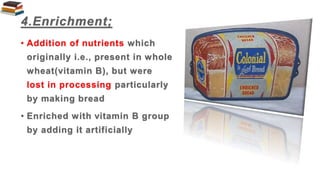
• Addition of nutrients
lost in processing
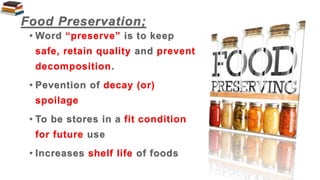
“preserve”
safe, retain quality prevent
decomposition
decay (or)
spoilage
fit condition
for future
shelf life
available throughout the year
seasonally available
variety
natural calamities
travelling
causes of food spoilage
• Growth and activity of micro-organisms
food enzymes chemical
reactions
• Non-enzymatic oxidation
• Mechanical damage abuse insects and
rodents
(Asepsis)
(Filtration)
• Hindering growth and activity
boiling, irradiation
(Blanching)
delay of chemical reactions
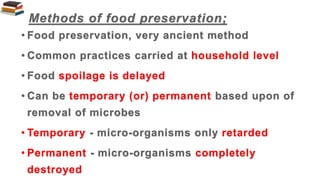
household level
spoilage is delayed
temporary (or) permanent
• Temporary retarded
• Permanent completely
destroyed
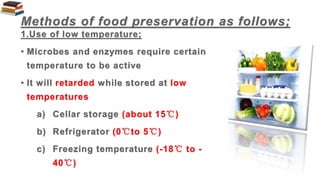
retarded low
temperatures
(about 15℃)
(0℃to 5℃)
(-18℃ to -
40℃)
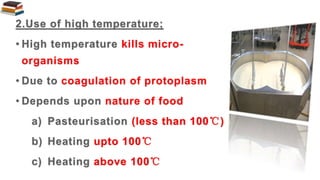
kills micro-
organisms
coagulation of protoplasm
nature of food
(less than 100℃)
upto 100℃
above 100℃
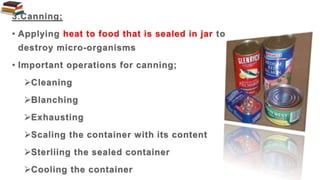
heat to food that is sealed in jar
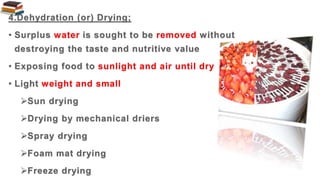
water removed
sunlight and air until dry
weight and small
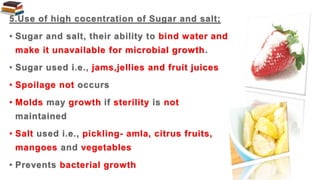
bind water and
make it unavailable for microbial growth
jams,jellies and fruit juices
• Spoilage not
• Molds growth sterility not
• Salt pickling- amla, citrus fruits,
mangoes vegetables
bacterial growth
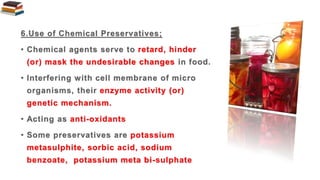
retard, hinder
(or) mask the undesirable changes
enzyme activity (or)
genetic mechanism.
anti-oxidants
potassium
metasulphite, sorbic acid, sodium
benzoate, potassium meta bi-sulphate
• Radiant energy
kill micro-oragnisms
• Inactive enzymes
• Meats
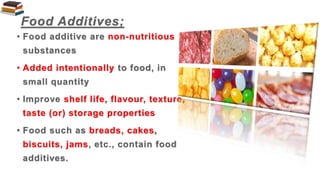
non-nutritious
• Added intentionally
shelf life, flavour, texture,
taste (or) storage properties
breads, cakes,
biscuits, jams
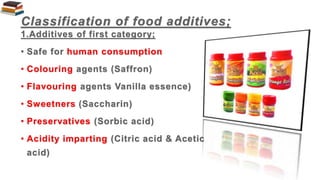
human consumption
• Colouring
• Flavouring
• Sweetners
• Preservatives
• Acidity imparting
nitrites and nitrates
production of toxic
substances nitrosamines
cancer
etiology
flavour sharper
preservatives anti-oxidants
preventing foaming
Vitamin C
inhibits effect of
oxygen
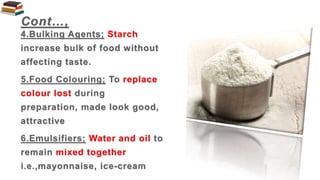
Starch
replace
colour lost
Water and oil
mixed together
spoilage of food
Stablizers, thickners gelling agents
firmer texture
flavouring energy low
viscocity
• Quality
reduced
foriegn (or) an inferior
substance
Adulterant
weaker (or) worse in quality
intention to increase
margin of profit
ignorance, negligence (or)
lack of proper facilities
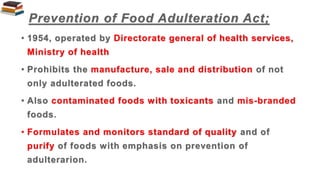
Directorate general of health services,
Ministry of health
manufacture, sale and distribution
contaminated foods with toxicants mis-branded
• Formulates and monitors standard of quality
purify
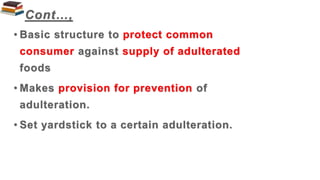
protect common
consumer supply of adulterated
provision for prevention
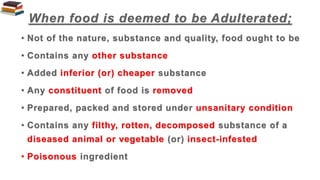
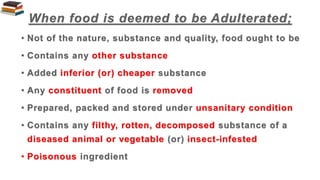
other substance
inferior (or) cheaper
constituent removed
unsanitary condition
filthy, rotten, decomposed
diseased animal or vegetable insect-infested
• Poisonous
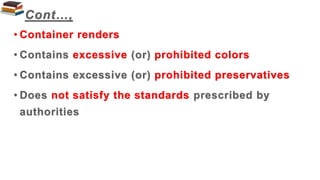
• Container renders
excessive prohibited colors
prohibited preservatives
not satisfy the standards
other substance
inferior (or) cheaper
constituent removed
unsanitary condition
filthy, rotten, decomposed
diseased animal or vegetable insect-infested
• Poisonous
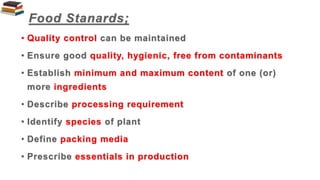
• Quality control
quality, hygienic, free from contaminants
minimum and maximum content
ingredients
processing requirement
species
packing media
essentials in production
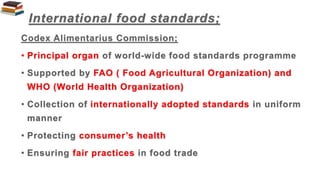
• Principal organ
FAO ( Food Agricultural Organization) and
WHO (World Health Organization)
internationally adopted standards
consumer’s health
fair practices
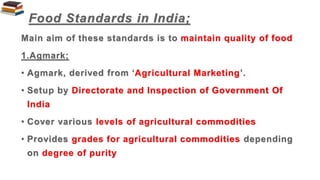
maintain quality of food
Agricultural Marketing
Directorate and Inspection of Government Of
India
levels of agricultural commodities
grades for agricultural commodities
degree of purity
good quality fruit product
minimum standards
standards and sanitation and hygiene
packing, marking and labelling
good quality of meat
• Detect and destroy diseased
disease free animals
preparation and handling clean
and sanitary manner
• Prevents harmful substance
• Prevents illegal transport
standardization of vegetables and
fruit products, spices and condinents, animal products
and processed foods
ISI (Indian Standard Institution)
laboratory tests
member of ISO
• FSSAI 2006 food related issues
ministries and departments
science based standards
manufacture, storage, distribution, sale
and import
availability of safe and wholesome human
consumption
standards and
guidelines
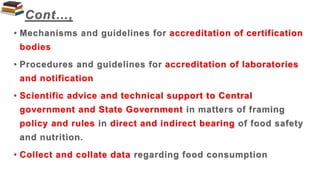
accreditation of certification
bodies
accreditation of laboratories
and notification
• Scientific advice and technical support to Central
government and State Government
policy and rules direct and indirect bearing
• Collect and collate data
Nutrition cookery rules