Prepared by :-
MOHAMMAD SIDDIQ SALIM
III SEM - II YR
B-arch
POORNIMA UNIVERSITY, jaipur
Plastic is a synthetic material made from a wide range
of organic polymers such as polyethylene, PVC, nylon,
etc., that can be moulded into shape while soft, and
then set into a rigid or slightly elastic form.
Organic
Polymers + Carbon +
O
2
+
Nitrogen Sulphur+
Orga ni c Pol yme rs ma y i ncl ude :
CHALK, STARCH, IV OR Y DUS T, WOOD FLOOR,
ZINC OXIDE
There are many ways of classifying plastics. They can
be classified considering various aspects, as according
to their:
1. Behaviour with respect to heating,
2. Structure, and
3. Physical and mechanical properties.
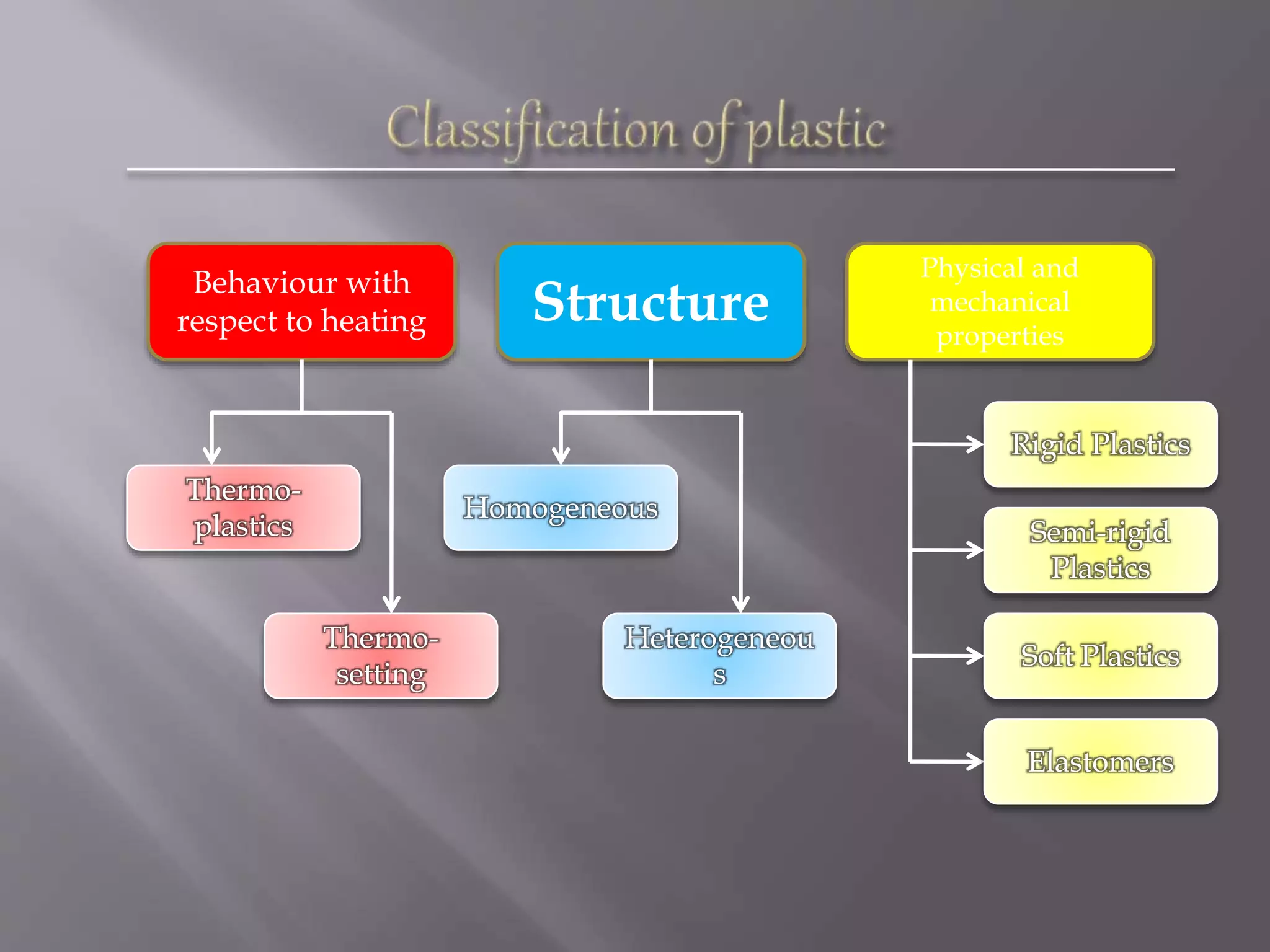
Behaviour with
respect to heating Structure
Physical and
mechanical
properties
Thermo-
plastics
Thermo-
setting
Homogeneous
Heterogeneou
s
Rigid Plastics
Semi-rigid
Plastics
Soft Plastics
Elastomers
Basic difference between Thermoplastics and Thermosetting
plastics
THERMOPLASTICS
THERMO-SETTING
PLASTICS
Thermoplastics variety
softens by heat and hardens
when cooled down. It can be
used by remolding as many
times as required.
Thermosetting plastics can
not be reused .This variety
requires a great pressure and
momentary heat during
molding which hardens on
cooling.
 The thermo-plastic or heat non-convertible group is the general
term applied to the plastics which becomes soft when heated and
hard when cooled.
 Thermoplastic materials can be cooled and heated several times.
 They can be recycled.
 When thermoplastics are heated, they melt to a liquid. They also
freeze to a glassy state when cooled enough.
 Thermoplastic can be moulded into any shape.
 It may melt before passing to a gaseous state.
 Allow plastic deformation when it is heated.
 They are brittle and glossy.
 They are soluble in certain solvents.
 Swell in the presence of certain solvents.
 Good resistance to creep.
PROPERTIES
 Thermoplastic materials have many features. Some products made from
thermoplastic materials are used for electronic applications. They protect
against electrostatic discharge and radio frequency interference.
 High pressure polyethylene as applied to rigid material covered with
electrical machines, tubes, etc...
 Low pressure polyethylene elastic material used for insulation of electrical
cables, etc...
 Polystyrene applied for electrical insulation, handles of tools...
 Polyamide used for making ropes, belts, etc...
 PVC or polyvinyl chloride for the manufacture of insulation materials,
pipes, containers, etc...
Examples and applications of thermoplastic plastic materials
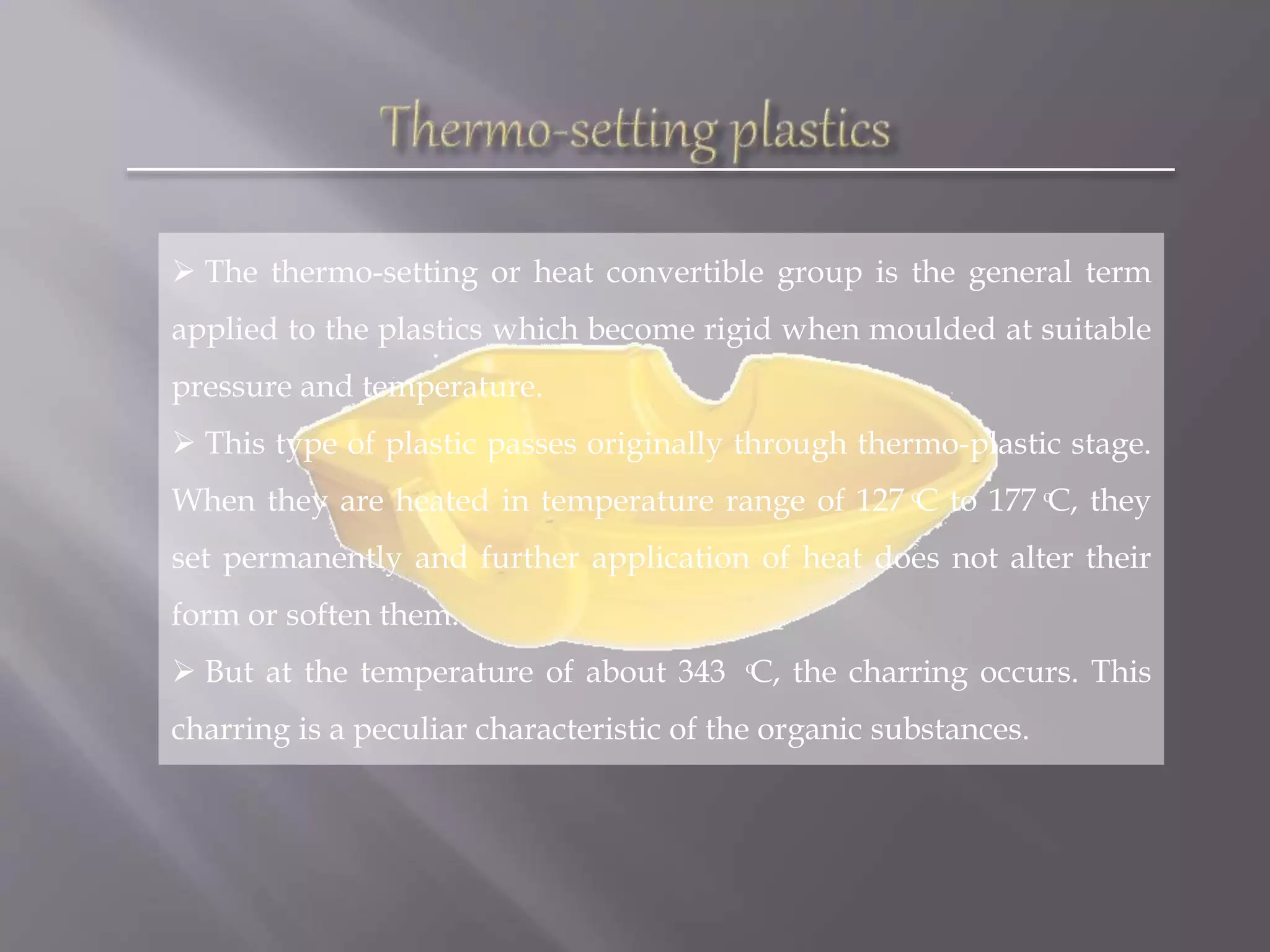
 The thermo-setting or heat convertible group is the general term
applied to the plastics which become rigid when moulded at suitable
pressure and temperature.
 This type of plastic passes originally through thermo-plastic stage.
When they are heated in temperature range of 127 ͦC to 177 ͦC, they
set permanently and further application of heat does not alter their
form or soften them.
 But at the temperature of about 343 ͦC, the charring occurs. This
charring is a peculiar characteristic of the organic substances.
 These are soluble in alcohol and certain organic solvents,
when they are in thermo-plastic stage. This property is utilized
for making paints and varnishes from these plastics.
 These are durable, strong and hard.
 They are available in a variety of beautiful colours.
 They are mainly used in engineering application of plastics.
PROPERTIES
*Melamine
Crockeries
APPLICATIONS
Epoxies
Properties: good dimensional stability, excellent mechanical and
electrical properties, good resistance to heat and chemicals
Applications: electrical components requiring strength, tools and
dies, fiber reinforced epoxies are used in structural components,
tanks, pressure vessels, rocket motor casing
Phenolics
Properties: good dimensional stability, rigid, high resistance to heat,
water, electricity, and chemicals
Applications: laminated panels, handles, knobs, electrical
components; connectors, insulators
APPLICATIONS
Polyesters (thermosetting, reinforced with glass fibers)
Properties: good mechanical, electrical, and chemical properties, good
resistance to heat and chemicals
Applications: boats, luggage, swimming pools, automotive bodies,
chairs
Silicones
Properties: excellent electrical properties over a wide rang of
temperature and humidity, good heat and chemical properties
Applications: electrical components requiring strength at high temp.,
waterproof materials, heat seals
 Electronic chips
 Fibre-reinforced composites
 Polymeric coatings
 Spectacle lenses
 Dental fillings
General Uses
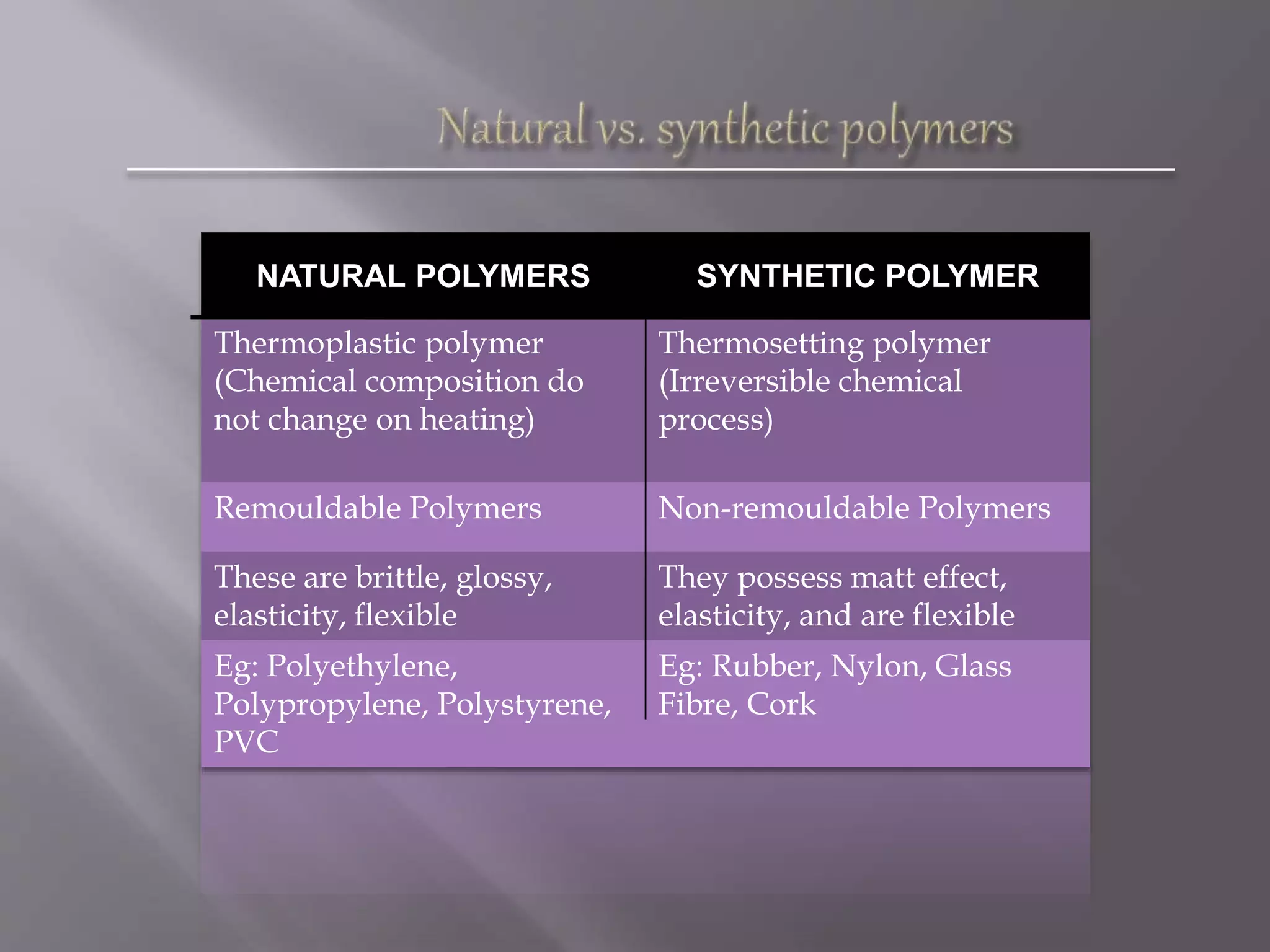
NATURAL POLYMERS SYNTHETIC POLYMER
Thermoplastic polymer
(Chemical composition do
not change on heating)
Thermosetting polymer
(Irreversible chemical
process)
Remouldable Polymers Non-remouldable Polymers
These are brittle, glossy,
elasticity, flexible
They possess matt effect,
elasticity, and are flexible
Eg: Polyethylene,
Polypropylene, Polystyrene,
PVC
Eg: Rubber, Nylon, Glass
Fibre, Cork
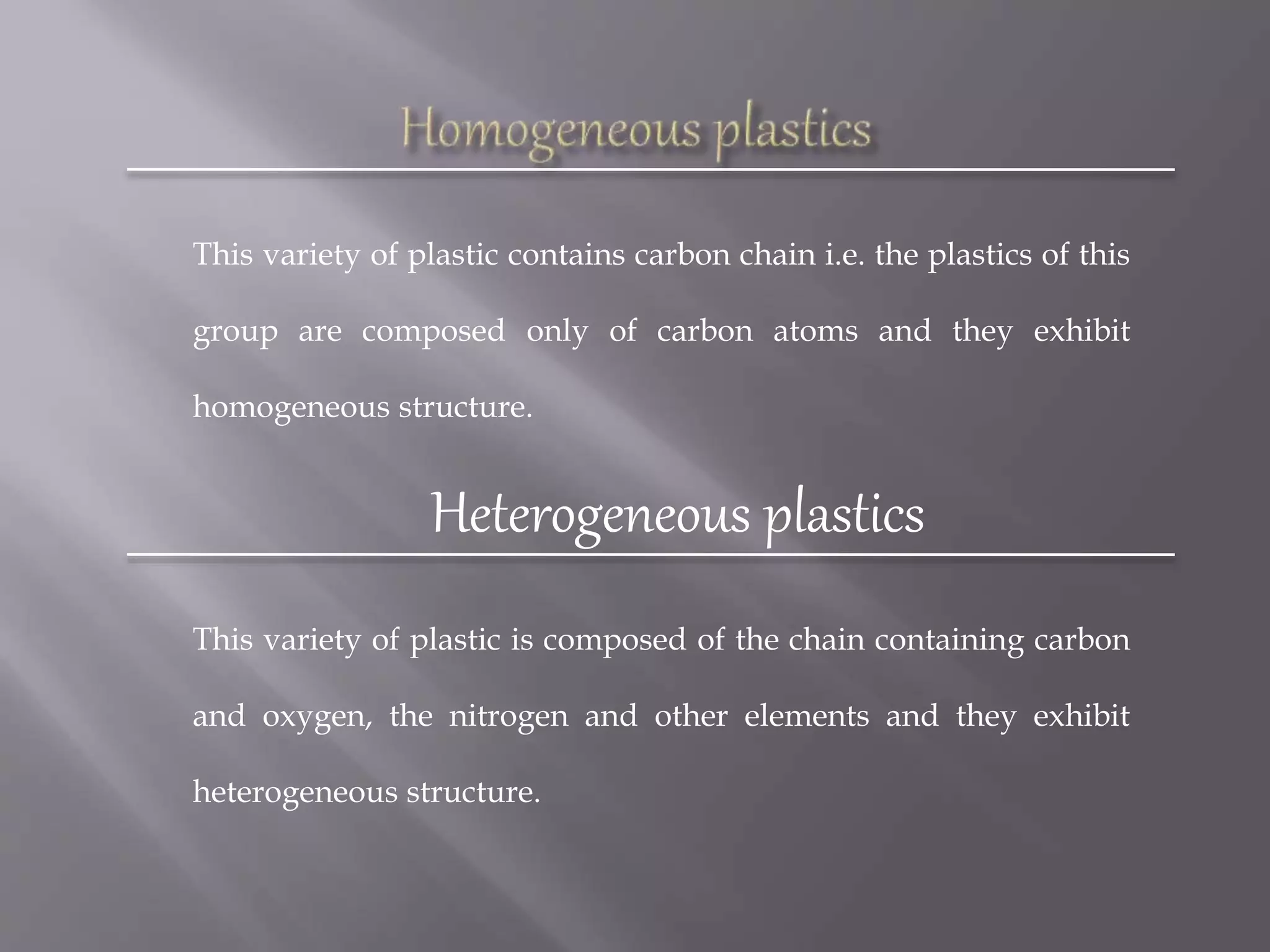
Homogeneou
s Plastics
Heterogeneou
s Plastics
This variety of plastic contains carbon chain i.e. the plastics of this
group are composed only of carbon atoms and they exhibit
homogeneous structure.
Heterogeneous plastics
This variety of plastic is composed of the chain containing carbon
and oxygen, the nitrogen and other elements and they exhibit
heterogeneous structure.
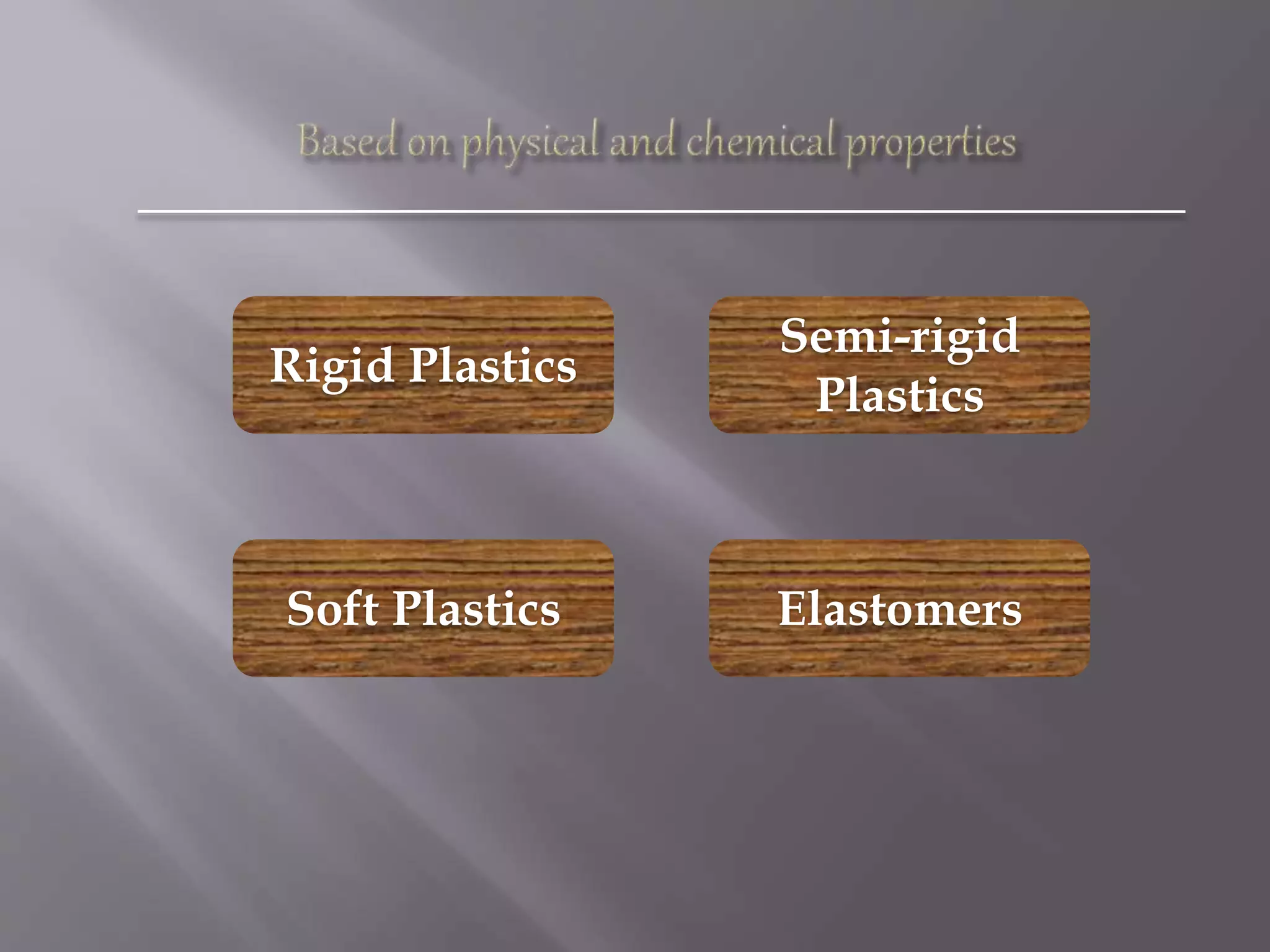
Soft Plastics
Semi-rigid
Plastics
Elastomers
Rigid Plastics
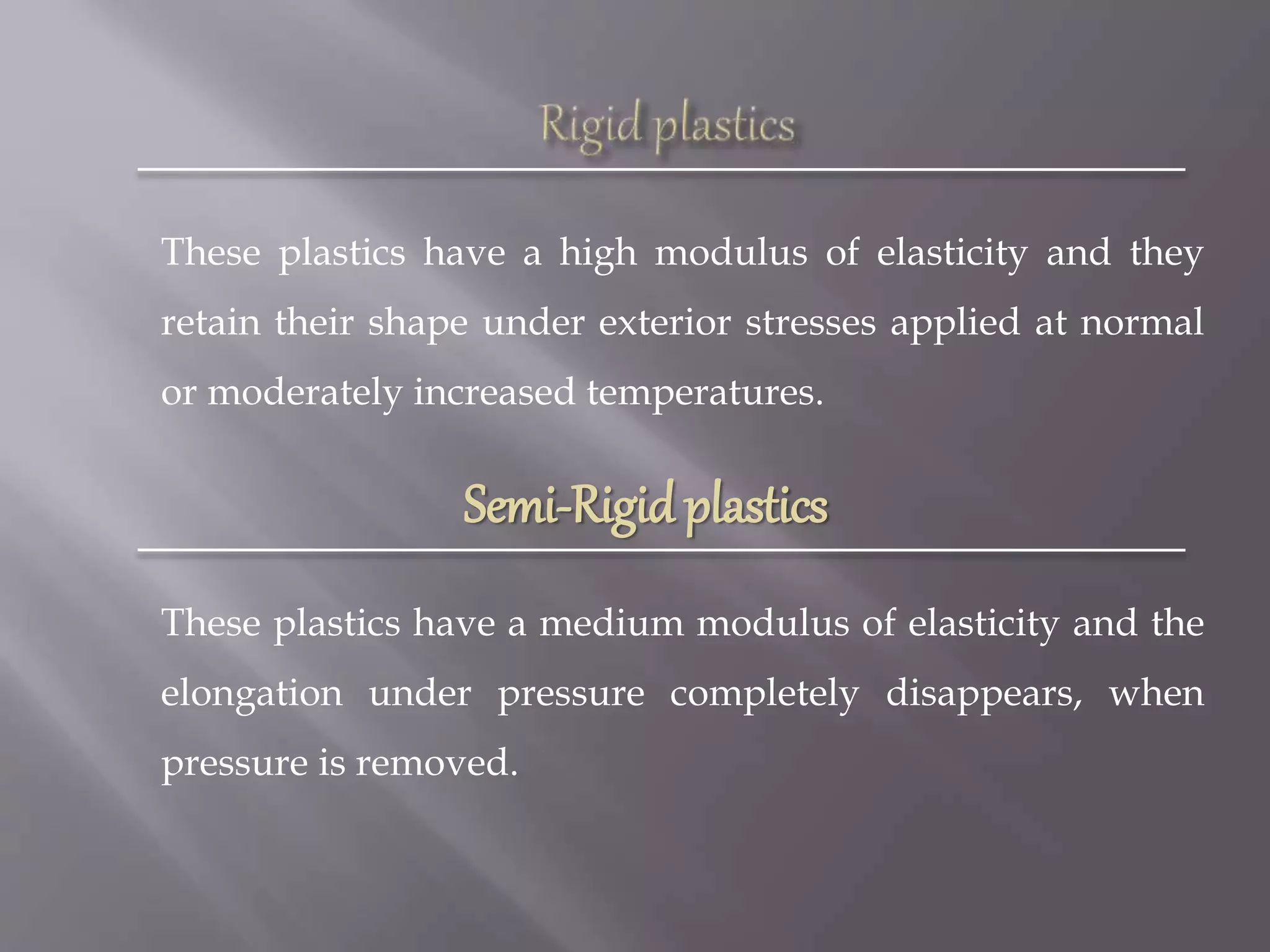
These plastics have a high modulus of elasticity and they
retain their shape under exterior stresses applied at normal
or moderately increased temperatures.
Semi-Rigidplastics
These plastics have a medium modulus of elasticity and the
elongation under pressure completely disappears, when
pressure is removed.
 These plastics have a low modulus of elasticity and the
elongation under pressure disappears slowly, when
pressure is removed.
 Soft plastics are available in a large range of colours, sizes
and particularly shapes.
USES: Used in making children’s toys eg: rattles etc., fishing
baits.
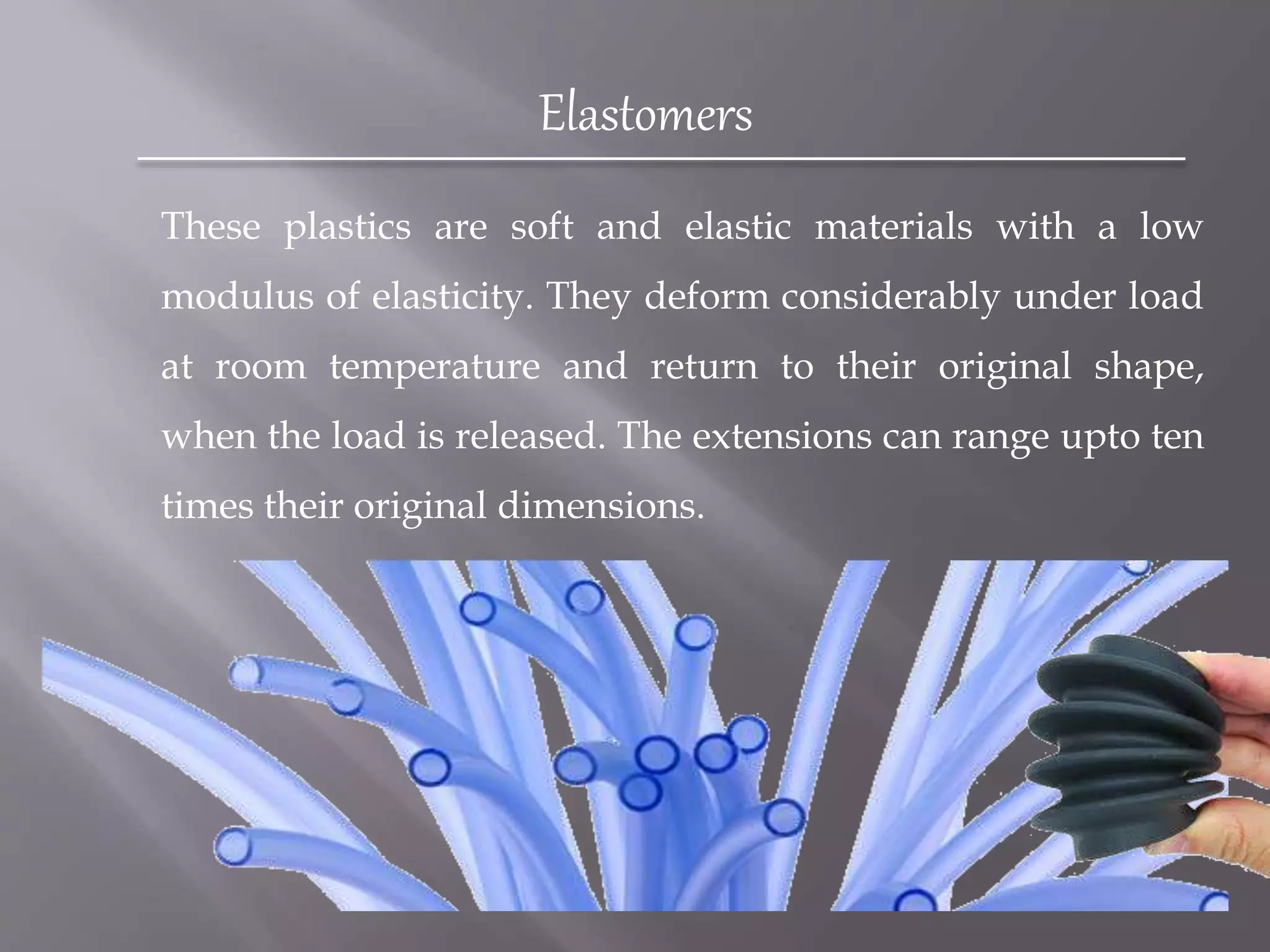
Elastomers
These plastics are soft and elastic materials with a low
modulus of elasticity. They deform considerably under load
at room temperature and return to their original shape,
when the load is released. The extensions can range upto ten
times their original dimensions.
 Biodegradable plastic decomposes in the natural environment.
It is produced from biopolymers called polyhydroxyalkanoate
(PHA). This material is completely biodegradable.
 Biodegradation of plastics can be achieved by enabling
microorganisms in the environment to metabolize the molecular
structure of plastic films to produce an inert humus like material
that is harmful to environment.
 The use of bio-active compounds compounded with swelling
agents ensures that, when combined with heat and moisture, they
expand the plastic’s molecular structure and allow the bio-active
compounds to metabolise and neutralize the plastic.
 Under proper conditions biodegradable plastics can degrade to
the point where microorganisms can metabolize them.
 This reduces the problems with litter and reduces harmful
effects on wildlife.
 However degradation of biodegradable plastic occurs very
slowly.
 Proper composting methods are required to degrade the plastic,
which may actually contribute to carbon dioxide emissions.
Some of the moulding components are:
 Catalyst
 Fillers
 Hardeners
 Lubricants
 Pigments
 Plasticizers
 Solvents
 These components are added to assist and accelerate the
hardening of resins.
 For instance, the ester acts as catalyst for urea formaldehyde.
 They are used for quick and complete polymerization.
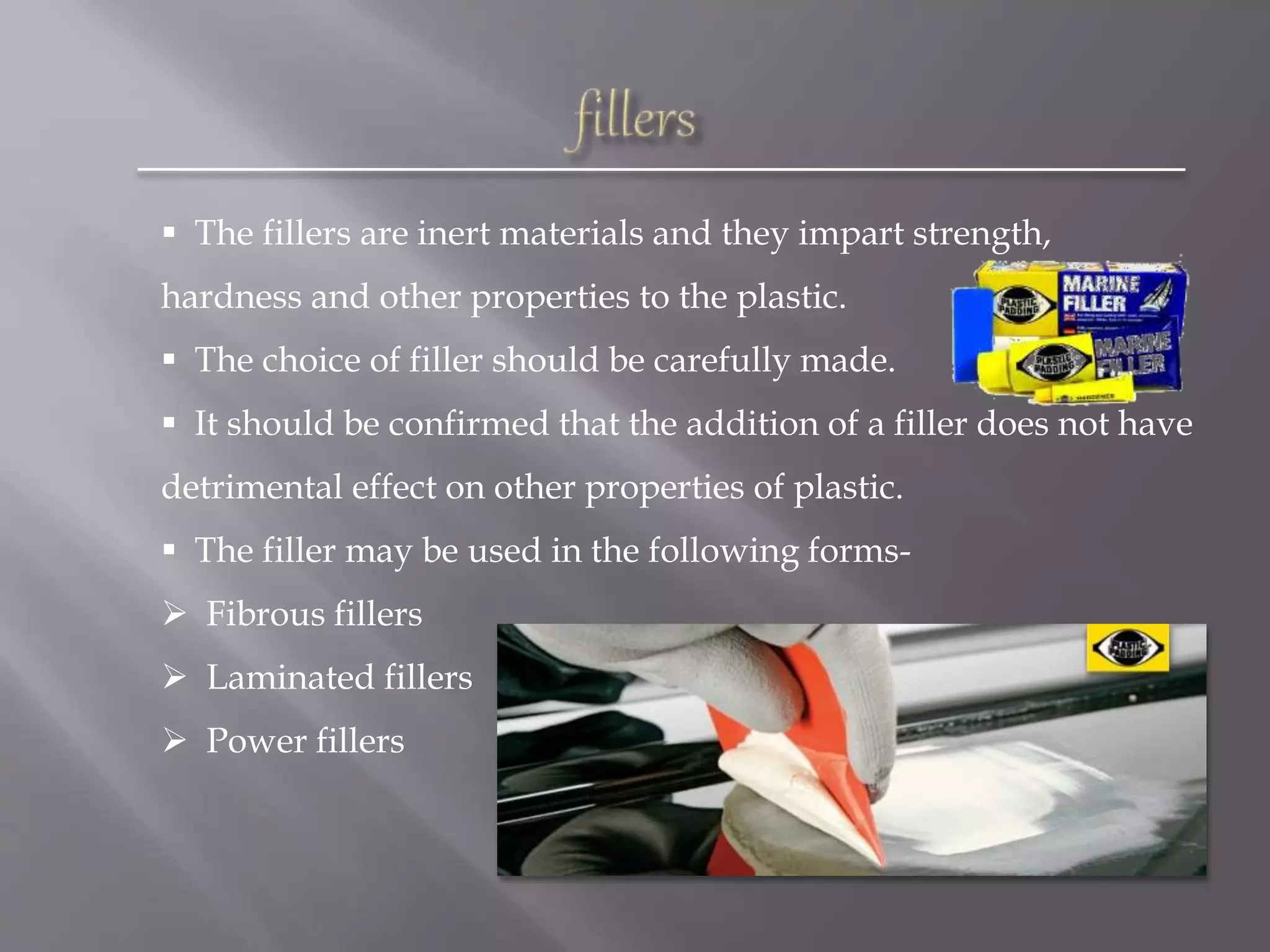
 The fillers are inert materials and they impart strength,
hardness and other properties to the plastic.
 The choice of filler should be carefully made.
 It should be confirmed that the addition of a filler does not have
detrimental effect on other properties of plastic.
 The filler may be used in the following forms-
 Fibrous fillers
 Laminated fillers
 Power fillers
 These compounds are added to increase the hardness of resin.
 For instance, the hexamethylene tetramine acts as hardeners
for phenol formaldehyde.
 The lubricants are applied on the surface of moulds so that the
articles of plastic do not stick to the moulds.
 The application of lubricants on surface of moulds allows easy
removal of articles of plastic from the moulds.
 The commonly used lubricants are graphite, parafine, wax, etc.
 The addition of dyes and pigments helps in two ways, namely, they act as
fillers
an they impart desired colour to the plastic.
 They should be durable and adequately fast to light.
 The commonly used pigments are zinc oxide, barytes, etc.
 The selection of pigments should be done in such a way that their addition
does
not alter or affect the other properties of plastic.
 The plasticizers are the organic compounds which are oily in nature and
low molecular weight.
 They are used to separate the polymer chain by a greater distance to
make the crystallization difficult.
 These components are added to improve the plasticity and to impart
softness to the plastic.
 They gives flexibility to the material and act like a lubricant.
 The addition of plasticizers facilitates the moulding process of plastic
articles.
 The commonly used plasticizers in plastic are camphor, triacetin, tributyl
phosphate, etc.
 The properties of plasticizers in plastic should not exceed 10% otherwise
strength of plastic will decrease.
 These components are added to dissolve the plasticizers.
 For instance the alcohol is added in cellulose nitrate plastics to dissolve
camphor.
Following are the process involved in the fabrication of articles
of plastics:
 Blowing
 Calendering
 Casting
 Laminating
 Moulding
 This method of lubrication of articles of plastic is more or less the
same as the one employed in the glass industry.
 A lump of plastic material is taken and by blowing, it is
converted into hollow plastic articles such as jars, bottles, toys, etc.
 In this process the plastic material is allowed to pass between the
cylindrical rollers.
 The process is used to prepare plain flat sheets of plastics.
 The roller may be provided with artistic designs which will
appear on the finished product.
 This process is similar in principle to that of metal casting.
 The resin is heated and when it is in plastic form, it is poured
into the mould.
 The curing of articles is then done either with or without the
application of heat.
 During curing the low pressure may be applied if necessary.
 This process is used to prepare plastics of beautiful colours and it
is most suitable for cellulose plastics.
 In this process, the thermosetting resin are just applied on sheets
of paper, asbestos, cloth, wood, glass, fibre, etc. and they are
subjected to heavy pressure by allowing them to pass through
rollers to form plastic laminates.
 The thickness of sheets varies from 0.12 mm to 15 mm
 Due to the pleasing finished surface, they are used for
ornamental and decorative purposes.
 This is the most commonly adopted process for the fabrication of plastic
articles.
 The general process consist in placing the raw materials in a mould and
then heating it.
 The moulding can be done by various methods:
 Compression moulding
 Extrusion moulding
 Injection moulding
 Jet moulding
 Transfer moulding
NOTE: The choice of moulding method will depend on the article to be
prepared.
MOULDING MACHINE (PROCESS)
A VARIETY OF MOULDED
ARCTICLES
 APPEARANCE: Some plastics are completely transparent in appearance.
With the addition of suitable pigments, the plastics can be made to have
appearance of variety of attractive, opaque, stable and translucent colours.
 CHEMICAL RESISTANCE: The plastics offer great resistance to moisture,
chemicals and solvents. The degree of chemical resistance depends on the
chemical composition of plastics. Many plastics are found to possess excellent
corrosion resistance. Hence they are used to convey chemicals.
 DIMENSIONAL STABILITY: This property of plastic favours quite
satisfactory with that of other common engineering materials.
 DUCTILITY: The plastics possess excellent electric insulating property. They
are far superior to ordinary electric insulators.
 MAINTENANCE: It is easy to maintain plastic surfaces. They do not require
any protective coat of paints.
 MELTING POINT: Most of the plastics have low melting point and the
melting point of some plastics is only about 50 ͦC. They cannot therefore be
used in positions having high temperatures or to convey boiling water.
 OPTICAL PROPERTY: Several types of plastics are transparent and
translucent.
 RECYCLING: The most environmentally aware people condemn the use of
plastics for the amount of pollution caused by them in disposal. The plastics
used for soft-drink bottles, milk and juice bottles, bread bags, syrup bottles,
coffee cups, plastic utensils, etc. can be conveniently recycled into carpets,
detergent bottles, drainage pipes, fencing, handrails, grocery bags, car battery
cases, pencil holders, benches, picnic tables, roadside posts, etc.
 SOUND ABSORPTION: The acoustical boards are prepared by
impregnating fibre-glass with phenolic resins. This material has absorption
coefficient of about 0.67.
 STRENGTH: An ideal section of plastics for structural member has yet not
been designed. The plastics are reasonably strong. The strength of plastics may
be increased by reinforcing with various fibrous materials.
Following considerations are responsible to discourage the use of
plastics as the structural material:
1. The plastics are costly.
2. The plastics are subject to creep under constant heavy loads.
3. The behaviour of plastics is very sensitive to the changes in temperature.
4. The stiffness of plastics is very poor
 THERMAL PROPERTY: The thermal conductivity of plastics is low and it
can be compared with that of wood. The foamed or expanded plastics are
among the leading thermal insulators.
 WEATHER RESISTANCE: Only limited varieties of plastics can be exposed
to weather. The certain plastics are seriously affected by ultraviolet light in the
presence of sunlight. The resistance to sunlight of such plastics can be
improved by incorporating fillers and pigments which absorb or reflect the
ultraviolet light at the surface. Thus the interior of plastics is protected.
 WEIGHT: The plastics, whether thermo-plastic or thermo-setting, have low
specific gravity, the average being 1.30 to 1.40. The light weight of plastics
reduces the transport costs and facilitates fixing.
The Indian Petrochemical Corporation Ltd. (IPCL), near Baroda, has put
a commercial brand of plastics, known as the ‘Koylene’. It is the lightest of
all commercial known plastics and it is available in a wide range of grades.
It is tailor-made to suit various applications such as automotive and
scooter parts, box strappings, industrial woven fabrics, ball pen refills,
drinking straws, etc. This material possesses rigidity, good gloss, ability to
withstand temperatures upto 100 ͦC and easy processibility.
SECTION USED FOR JOINING PVC SHEET
ADVANTAGES of plastic
 Corrosion resistance
 Low electrical and thermal conductivity, insulator
 Easily formed into complex shapes, can be formed,
casted and joined.
 Wide choice of appearance, colors and
transparencies
Ken Youssefi Mechanical Engineering 53
 Low strength
 Low useful temperature range (up to 600
o
F)
 Less dimensional stability over period of time (creep
effect)
 Aging effect, hardens and become brittle over time
 Sensitive to environment, moisture and chemicals
 Poor machinibility
 There are more than 10000 different kinds of plastics available in the
market and their performance abilities span those of every other known
material from soft rubber to steel.
 The typical uses of plastics in building are summarized as follows:
 Bath and sink units
 Cistern ball floats
 Corrugated and plain sheets
 Decorative laminates and
mouldings
 Electrical conduits
 Electrical Insulators
 Films for water proofing, damp
proofing and concrete curing
 Floor tiles
 Foams for thermal insulation
 Jointless flooring
 Lighting fixtures
 Overhead water tanks
 Paints and varnishes
 Pipes to carry cold water
 Roof lights
 Safety glass
 Wall tiles
 Water resistance adhesives
COMPANIES-
GE, POLYGAL, GOODSALES,
SUNBEAM
COLOURS-
 NATURAL
 SMOKE
 GREEN
 BLUE
RATE DIFFERENCES-
Rates difference as per texture is Rs 15 to 20
PER SQ FT.
IT IS TRANSPORTED IN THE FORM OF ROLLS
POLYCARBONATESHEETS
USES OF POLYCARBONATE SHEETS
SIZE - 3X100 sq ft ,4X100 sq ft (FOR 1 mm)
7X20 sq ft, 7X40 sq ft (FOR 2 TO 12
mm)
THICKNESS - 1,2,4 ,6 ,8 ,10,12 mm
PVC
PANELS
THICKNESS RATES PER SQ.
FT.
1 MM RS. 57
2 MM RS. 65
4 MM RS. 75
6 MM RS. 95
8 MM RS. 135
10 MM RS. 140
12 MM RS. 145
DOME
CONSTRUCTION
BY PVC SHEETS
PVC DOORS

PLASTIC

  • 1.
    Prepared by :- MOHAMMADSIDDIQ SALIM III SEM - II YR B-arch POORNIMA UNIVERSITY, jaipur
  • 2.
    Plastic is asynthetic material made from a wide range of organic polymers such as polyethylene, PVC, nylon, etc., that can be moulded into shape while soft, and then set into a rigid or slightly elastic form.
  • 3.
    Organic Polymers + Carbon+ O 2 + Nitrogen Sulphur+ Orga ni c Pol yme rs ma y i ncl ude : CHALK, STARCH, IV OR Y DUS T, WOOD FLOOR, ZINC OXIDE
  • 4.
    There are manyways of classifying plastics. They can be classified considering various aspects, as according to their: 1. Behaviour with respect to heating, 2. Structure, and 3. Physical and mechanical properties.
  • 5.
    Behaviour with respect toheating Structure Physical and mechanical properties Thermo- plastics Thermo- setting Homogeneous Heterogeneou s Rigid Plastics Semi-rigid Plastics Soft Plastics Elastomers
  • 6.
    Basic difference betweenThermoplastics and Thermosetting plastics THERMOPLASTICS THERMO-SETTING PLASTICS Thermoplastics variety softens by heat and hardens when cooled down. It can be used by remolding as many times as required. Thermosetting plastics can not be reused .This variety requires a great pressure and momentary heat during molding which hardens on cooling.
  • 7.
     The thermo-plasticor heat non-convertible group is the general term applied to the plastics which becomes soft when heated and hard when cooled.  Thermoplastic materials can be cooled and heated several times.  They can be recycled.  When thermoplastics are heated, they melt to a liquid. They also freeze to a glassy state when cooled enough.  Thermoplastic can be moulded into any shape.
  • 9.
     It maymelt before passing to a gaseous state.  Allow plastic deformation when it is heated.  They are brittle and glossy.  They are soluble in certain solvents.  Swell in the presence of certain solvents.  Good resistance to creep. PROPERTIES
  • 10.
     Thermoplastic materialshave many features. Some products made from thermoplastic materials are used for electronic applications. They protect against electrostatic discharge and radio frequency interference.  High pressure polyethylene as applied to rigid material covered with electrical machines, tubes, etc...  Low pressure polyethylene elastic material used for insulation of electrical cables, etc...  Polystyrene applied for electrical insulation, handles of tools...  Polyamide used for making ropes, belts, etc...  PVC or polyvinyl chloride for the manufacture of insulation materials, pipes, containers, etc... Examples and applications of thermoplastic plastic materials
  • 12.
     The thermo-settingor heat convertible group is the general term applied to the plastics which become rigid when moulded at suitable pressure and temperature.  This type of plastic passes originally through thermo-plastic stage. When they are heated in temperature range of 127 ͦC to 177 ͦC, they set permanently and further application of heat does not alter their form or soften them.  But at the temperature of about 343 ͦC, the charring occurs. This charring is a peculiar characteristic of the organic substances.
  • 14.
     These aresoluble in alcohol and certain organic solvents, when they are in thermo-plastic stage. This property is utilized for making paints and varnishes from these plastics.  These are durable, strong and hard.  They are available in a variety of beautiful colours.  They are mainly used in engineering application of plastics. PROPERTIES *Melamine Crockeries
  • 15.
    APPLICATIONS Epoxies Properties: good dimensionalstability, excellent mechanical and electrical properties, good resistance to heat and chemicals Applications: electrical components requiring strength, tools and dies, fiber reinforced epoxies are used in structural components, tanks, pressure vessels, rocket motor casing Phenolics Properties: good dimensional stability, rigid, high resistance to heat, water, electricity, and chemicals Applications: laminated panels, handles, knobs, electrical components; connectors, insulators
  • 16.
    APPLICATIONS Polyesters (thermosetting, reinforcedwith glass fibers) Properties: good mechanical, electrical, and chemical properties, good resistance to heat and chemicals Applications: boats, luggage, swimming pools, automotive bodies, chairs Silicones Properties: excellent electrical properties over a wide rang of temperature and humidity, good heat and chemical properties Applications: electrical components requiring strength at high temp., waterproof materials, heat seals
  • 17.
     Electronic chips Fibre-reinforced composites  Polymeric coatings  Spectacle lenses  Dental fillings General Uses
  • 18.
    NATURAL POLYMERS SYNTHETICPOLYMER Thermoplastic polymer (Chemical composition do not change on heating) Thermosetting polymer (Irreversible chemical process) Remouldable Polymers Non-remouldable Polymers These are brittle, glossy, elasticity, flexible They possess matt effect, elasticity, and are flexible Eg: Polyethylene, Polypropylene, Polystyrene, PVC Eg: Rubber, Nylon, Glass Fibre, Cork
  • 19.
  • 20.
    This variety ofplastic contains carbon chain i.e. the plastics of this group are composed only of carbon atoms and they exhibit homogeneous structure. Heterogeneous plastics This variety of plastic is composed of the chain containing carbon and oxygen, the nitrogen and other elements and they exhibit heterogeneous structure.
  • 21.
  • 22.
    These plastics havea high modulus of elasticity and they retain their shape under exterior stresses applied at normal or moderately increased temperatures. Semi-Rigidplastics These plastics have a medium modulus of elasticity and the elongation under pressure completely disappears, when pressure is removed.
  • 23.
     These plasticshave a low modulus of elasticity and the elongation under pressure disappears slowly, when pressure is removed.  Soft plastics are available in a large range of colours, sizes and particularly shapes. USES: Used in making children’s toys eg: rattles etc., fishing baits.
  • 24.
    Elastomers These plastics aresoft and elastic materials with a low modulus of elasticity. They deform considerably under load at room temperature and return to their original shape, when the load is released. The extensions can range upto ten times their original dimensions.
  • 25.
     Biodegradable plasticdecomposes in the natural environment. It is produced from biopolymers called polyhydroxyalkanoate (PHA). This material is completely biodegradable.  Biodegradation of plastics can be achieved by enabling microorganisms in the environment to metabolize the molecular structure of plastic films to produce an inert humus like material that is harmful to environment.  The use of bio-active compounds compounded with swelling agents ensures that, when combined with heat and moisture, they expand the plastic’s molecular structure and allow the bio-active compounds to metabolise and neutralize the plastic.
  • 27.
     Under properconditions biodegradable plastics can degrade to the point where microorganisms can metabolize them.  This reduces the problems with litter and reduces harmful effects on wildlife.  However degradation of biodegradable plastic occurs very slowly.  Proper composting methods are required to degrade the plastic, which may actually contribute to carbon dioxide emissions.
  • 28.
    Some of themoulding components are:  Catalyst  Fillers  Hardeners  Lubricants  Pigments  Plasticizers  Solvents
  • 29.
     These componentsare added to assist and accelerate the hardening of resins.  For instance, the ester acts as catalyst for urea formaldehyde.  They are used for quick and complete polymerization.
  • 30.
     The fillersare inert materials and they impart strength, hardness and other properties to the plastic.  The choice of filler should be carefully made.  It should be confirmed that the addition of a filler does not have detrimental effect on other properties of plastic.  The filler may be used in the following forms-  Fibrous fillers  Laminated fillers  Power fillers
  • 31.
     These compoundsare added to increase the hardness of resin.  For instance, the hexamethylene tetramine acts as hardeners for phenol formaldehyde.
  • 32.
     The lubricantsare applied on the surface of moulds so that the articles of plastic do not stick to the moulds.  The application of lubricants on surface of moulds allows easy removal of articles of plastic from the moulds.  The commonly used lubricants are graphite, parafine, wax, etc.
  • 33.
     The additionof dyes and pigments helps in two ways, namely, they act as fillers an they impart desired colour to the plastic.  They should be durable and adequately fast to light.  The commonly used pigments are zinc oxide, barytes, etc.  The selection of pigments should be done in such a way that their addition does not alter or affect the other properties of plastic.
  • 34.
     The plasticizersare the organic compounds which are oily in nature and low molecular weight.  They are used to separate the polymer chain by a greater distance to make the crystallization difficult.  These components are added to improve the plasticity and to impart softness to the plastic.  They gives flexibility to the material and act like a lubricant.  The addition of plasticizers facilitates the moulding process of plastic articles.  The commonly used plasticizers in plastic are camphor, triacetin, tributyl phosphate, etc.  The properties of plasticizers in plastic should not exceed 10% otherwise strength of plastic will decrease.
  • 35.
     These componentsare added to dissolve the plasticizers.  For instance the alcohol is added in cellulose nitrate plastics to dissolve camphor.
  • 36.
    Following are theprocess involved in the fabrication of articles of plastics:  Blowing  Calendering  Casting  Laminating  Moulding
  • 37.
     This methodof lubrication of articles of plastic is more or less the same as the one employed in the glass industry.  A lump of plastic material is taken and by blowing, it is converted into hollow plastic articles such as jars, bottles, toys, etc.
  • 38.
     In thisprocess the plastic material is allowed to pass between the cylindrical rollers.  The process is used to prepare plain flat sheets of plastics.  The roller may be provided with artistic designs which will appear on the finished product.
  • 40.
     This processis similar in principle to that of metal casting.  The resin is heated and when it is in plastic form, it is poured into the mould.  The curing of articles is then done either with or without the application of heat.  During curing the low pressure may be applied if necessary.  This process is used to prepare plastics of beautiful colours and it is most suitable for cellulose plastics.
  • 42.
     In thisprocess, the thermosetting resin are just applied on sheets of paper, asbestos, cloth, wood, glass, fibre, etc. and they are subjected to heavy pressure by allowing them to pass through rollers to form plastic laminates.  The thickness of sheets varies from 0.12 mm to 15 mm  Due to the pleasing finished surface, they are used for ornamental and decorative purposes.
  • 44.
     This isthe most commonly adopted process for the fabrication of plastic articles.  The general process consist in placing the raw materials in a mould and then heating it.  The moulding can be done by various methods:  Compression moulding  Extrusion moulding  Injection moulding  Jet moulding  Transfer moulding NOTE: The choice of moulding method will depend on the article to be prepared.
  • 45.
  • 46.
    A VARIETY OFMOULDED ARCTICLES
  • 47.
     APPEARANCE: Someplastics are completely transparent in appearance. With the addition of suitable pigments, the plastics can be made to have appearance of variety of attractive, opaque, stable and translucent colours.  CHEMICAL RESISTANCE: The plastics offer great resistance to moisture, chemicals and solvents. The degree of chemical resistance depends on the chemical composition of plastics. Many plastics are found to possess excellent corrosion resistance. Hence they are used to convey chemicals.  DIMENSIONAL STABILITY: This property of plastic favours quite satisfactory with that of other common engineering materials.  DUCTILITY: The plastics possess excellent electric insulating property. They are far superior to ordinary electric insulators.
  • 48.
     MAINTENANCE: Itis easy to maintain plastic surfaces. They do not require any protective coat of paints.  MELTING POINT: Most of the plastics have low melting point and the melting point of some plastics is only about 50 ͦC. They cannot therefore be used in positions having high temperatures or to convey boiling water.  OPTICAL PROPERTY: Several types of plastics are transparent and translucent.  RECYCLING: The most environmentally aware people condemn the use of plastics for the amount of pollution caused by them in disposal. The plastics used for soft-drink bottles, milk and juice bottles, bread bags, syrup bottles, coffee cups, plastic utensils, etc. can be conveniently recycled into carpets, detergent bottles, drainage pipes, fencing, handrails, grocery bags, car battery cases, pencil holders, benches, picnic tables, roadside posts, etc.
  • 49.
     SOUND ABSORPTION:The acoustical boards are prepared by impregnating fibre-glass with phenolic resins. This material has absorption coefficient of about 0.67.  STRENGTH: An ideal section of plastics for structural member has yet not been designed. The plastics are reasonably strong. The strength of plastics may be increased by reinforcing with various fibrous materials. Following considerations are responsible to discourage the use of plastics as the structural material: 1. The plastics are costly. 2. The plastics are subject to creep under constant heavy loads. 3. The behaviour of plastics is very sensitive to the changes in temperature. 4. The stiffness of plastics is very poor
  • 50.
     THERMAL PROPERTY:The thermal conductivity of plastics is low and it can be compared with that of wood. The foamed or expanded plastics are among the leading thermal insulators.  WEATHER RESISTANCE: Only limited varieties of plastics can be exposed to weather. The certain plastics are seriously affected by ultraviolet light in the presence of sunlight. The resistance to sunlight of such plastics can be improved by incorporating fillers and pigments which absorb or reflect the ultraviolet light at the surface. Thus the interior of plastics is protected.  WEIGHT: The plastics, whether thermo-plastic or thermo-setting, have low specific gravity, the average being 1.30 to 1.40. The light weight of plastics reduces the transport costs and facilitates fixing.
  • 51.
    The Indian PetrochemicalCorporation Ltd. (IPCL), near Baroda, has put a commercial brand of plastics, known as the ‘Koylene’. It is the lightest of all commercial known plastics and it is available in a wide range of grades. It is tailor-made to suit various applications such as automotive and scooter parts, box strappings, industrial woven fabrics, ball pen refills, drinking straws, etc. This material possesses rigidity, good gloss, ability to withstand temperatures upto 100 ͦC and easy processibility.
  • 52.
    SECTION USED FORJOINING PVC SHEET
  • 53.
    ADVANTAGES of plastic Corrosion resistance  Low electrical and thermal conductivity, insulator  Easily formed into complex shapes, can be formed, casted and joined.  Wide choice of appearance, colors and transparencies Ken Youssefi Mechanical Engineering 53
  • 54.
     Low strength Low useful temperature range (up to 600 o F)  Less dimensional stability over period of time (creep effect)  Aging effect, hardens and become brittle over time  Sensitive to environment, moisture and chemicals  Poor machinibility
  • 55.
     There aremore than 10000 different kinds of plastics available in the market and their performance abilities span those of every other known material from soft rubber to steel.  The typical uses of plastics in building are summarized as follows:  Bath and sink units  Cistern ball floats  Corrugated and plain sheets  Decorative laminates and mouldings  Electrical conduits  Electrical Insulators  Films for water proofing, damp proofing and concrete curing  Floor tiles  Foams for thermal insulation  Jointless flooring  Lighting fixtures  Overhead water tanks  Paints and varnishes  Pipes to carry cold water  Roof lights  Safety glass  Wall tiles  Water resistance adhesives
  • 57.
    COMPANIES- GE, POLYGAL, GOODSALES, SUNBEAM COLOURS- NATURAL  SMOKE  GREEN  BLUE RATE DIFFERENCES- Rates difference as per texture is Rs 15 to 20 PER SQ FT. IT IS TRANSPORTED IN THE FORM OF ROLLS POLYCARBONATESHEETS USES OF POLYCARBONATE SHEETS
  • 58.
    SIZE - 3X100sq ft ,4X100 sq ft (FOR 1 mm) 7X20 sq ft, 7X40 sq ft (FOR 2 TO 12 mm) THICKNESS - 1,2,4 ,6 ,8 ,10,12 mm PVC PANELS THICKNESS RATES PER SQ. FT. 1 MM RS. 57 2 MM RS. 65 4 MM RS. 75 6 MM RS. 95 8 MM RS. 135 10 MM RS. 140 12 MM RS. 145
  • 60.
  • 62.