RUBBER
Lecture 2
RUBBER
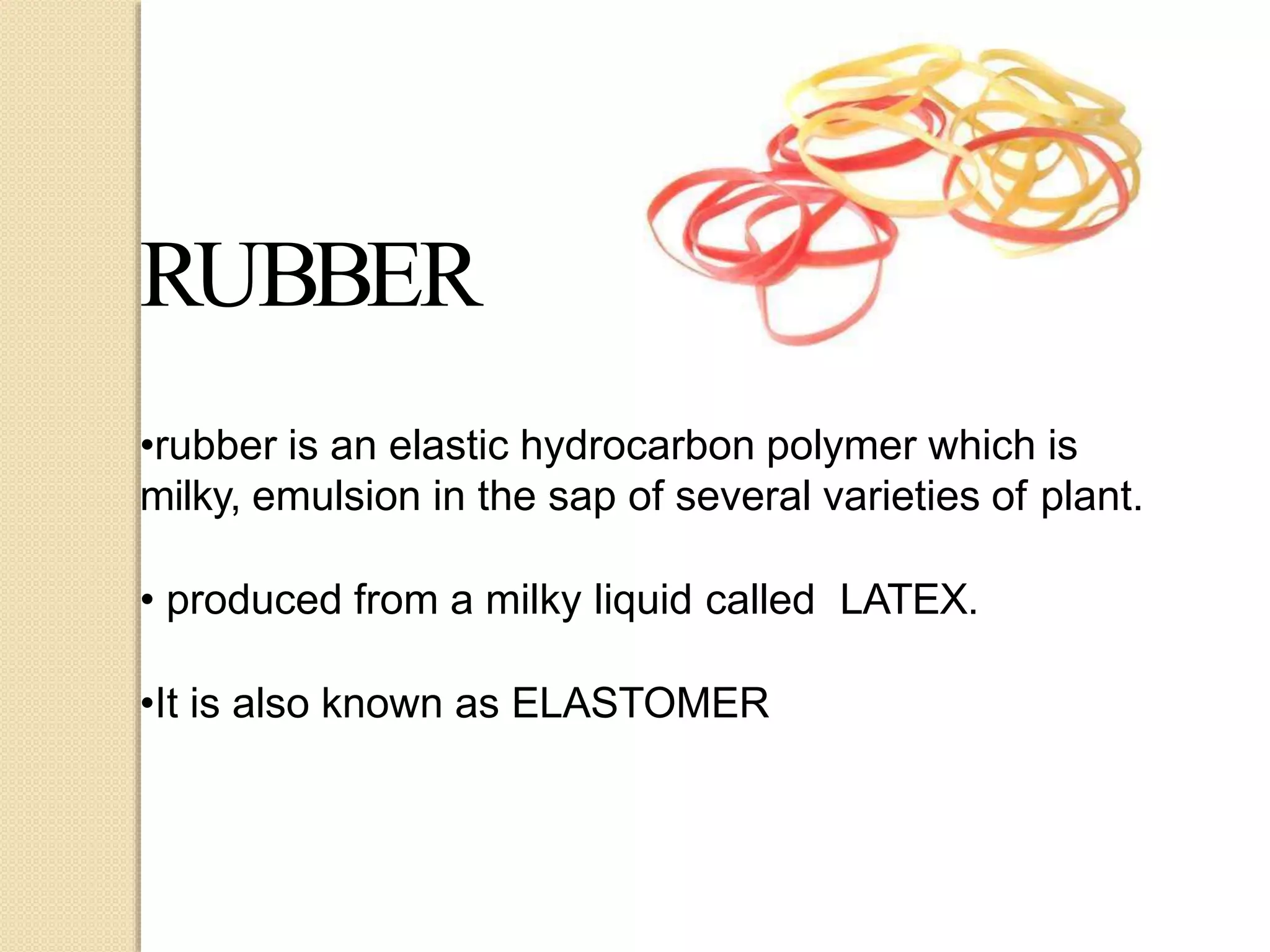
•rubber is an elastic hydrocarbon polymer which is
milky, emulsion in the sap of several varieties of plant.
• produced from a milky liquid called LATEX.
•It is also known as ELASTOMER
Rubber tree(extraction of
milk)
It can be classified in two parts:
1.natural rubber
2.synthetic rubber
Synthetic rubber, invariably a polymer, is any type
of artificial elastomer mainly synthesised from
petroleum byproducts.
Synthetic rubber
Natural rubber
Natural rubber is obtained from the milky secretion
(latex) of various plants, but the only important
commercial source of natural rubber (sometimes called
Para rubber) is the tree Heve brasilien.
Vulcanization-
chemical process for converting rubber into more
durable materials by adding sulphur or
equivalent materials.
5% of sulphur- tyre rubber
20-25% of sulphur- ebonite rubber
30% of sulphur- battery case
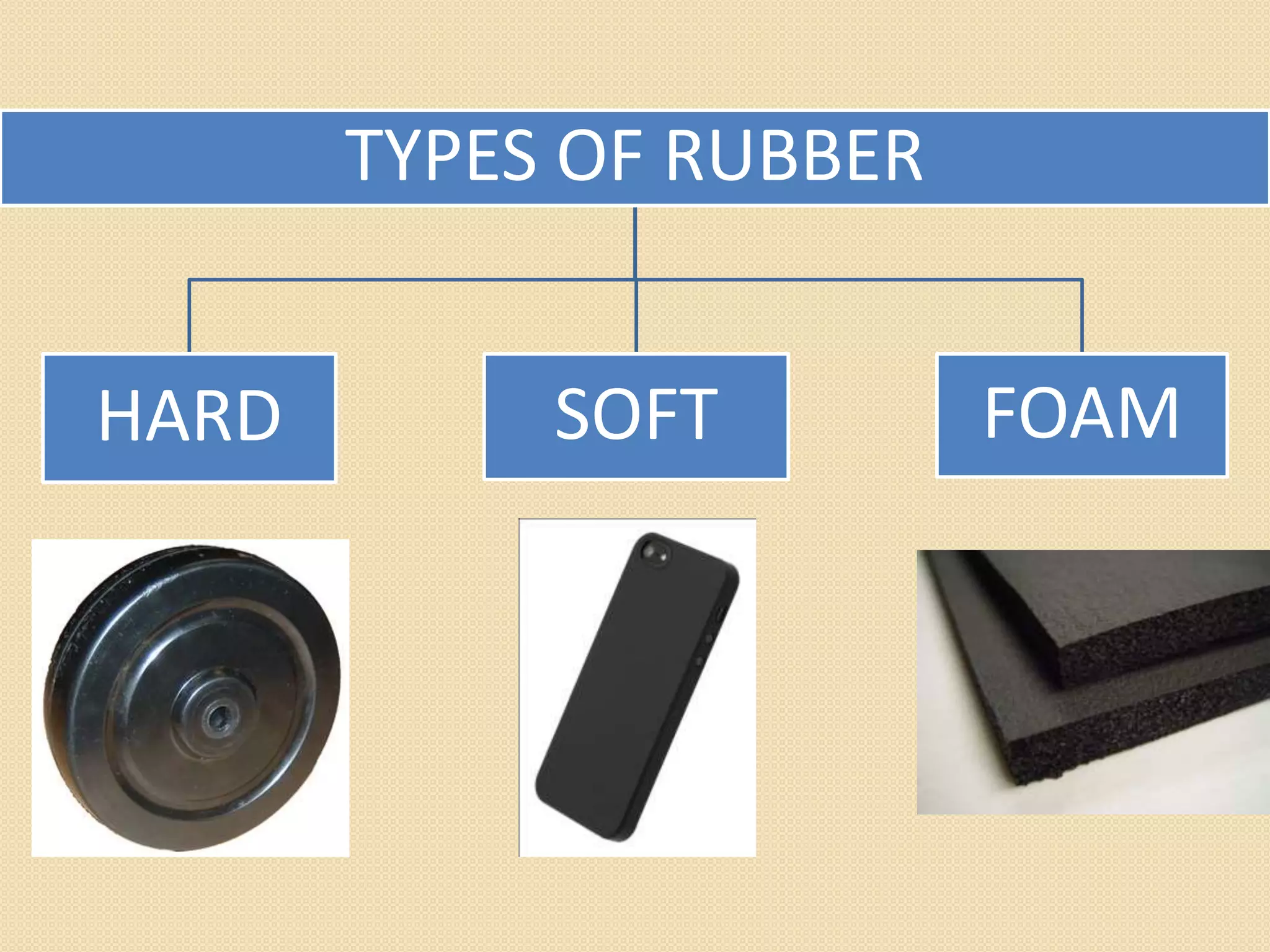
TYPES OF RUBBER
HARD SOFT FOAM
Soft rubber is used in application such as automobile tyres, tubes,
air hose for water, steam and air, overshoes, raincoats, floor tiles and
mats, hot water bottles, erasers etc.Industial uses include protective
lining in tanks and pumps, rubber belting, seals, closure.
Hard rubber/ebonite rubber looks exactly like ebony wood. is used
in electrical insulating parts, chemically resistant pipes and equipments
and similar materials.
Foam rubber rubber that has been manufactured with a foaming
agent to create an air-filled matrix structure. Commercial foam rubbers
are generally made of either polyurethane or natural latex .
USES:-
PROPERTIES
 Elasticity
 Flexibility
 Hardness
 Abrasion Resistance- no damage while rubbing
 Insulate electricity
 Acid and alkaline resistance
 Water proof / repellence
GREEN MATERIAL / ECO FRIENDLY
MATERIAL
Rubber is produced naturaly which is a green material and
can be recycled.
Importance of recycled rubber
Reclaming and recycled rubber uses less energy than
produced by a new one.
It reduces the demand of new natural rubber which may
keep rubber tree plantation from expanding into sensitive
tropical ecosystem.
Uses in :
 Flooring
 Bridge construction
 Expansion joints
 Windows
 Pipes
 Roofing
 Sound insulation
Sound absorber Windows, doors & glazing
Cladding
Electrical cable & components
Bridge bearings
Geomembranes & geotextiles
Road construction
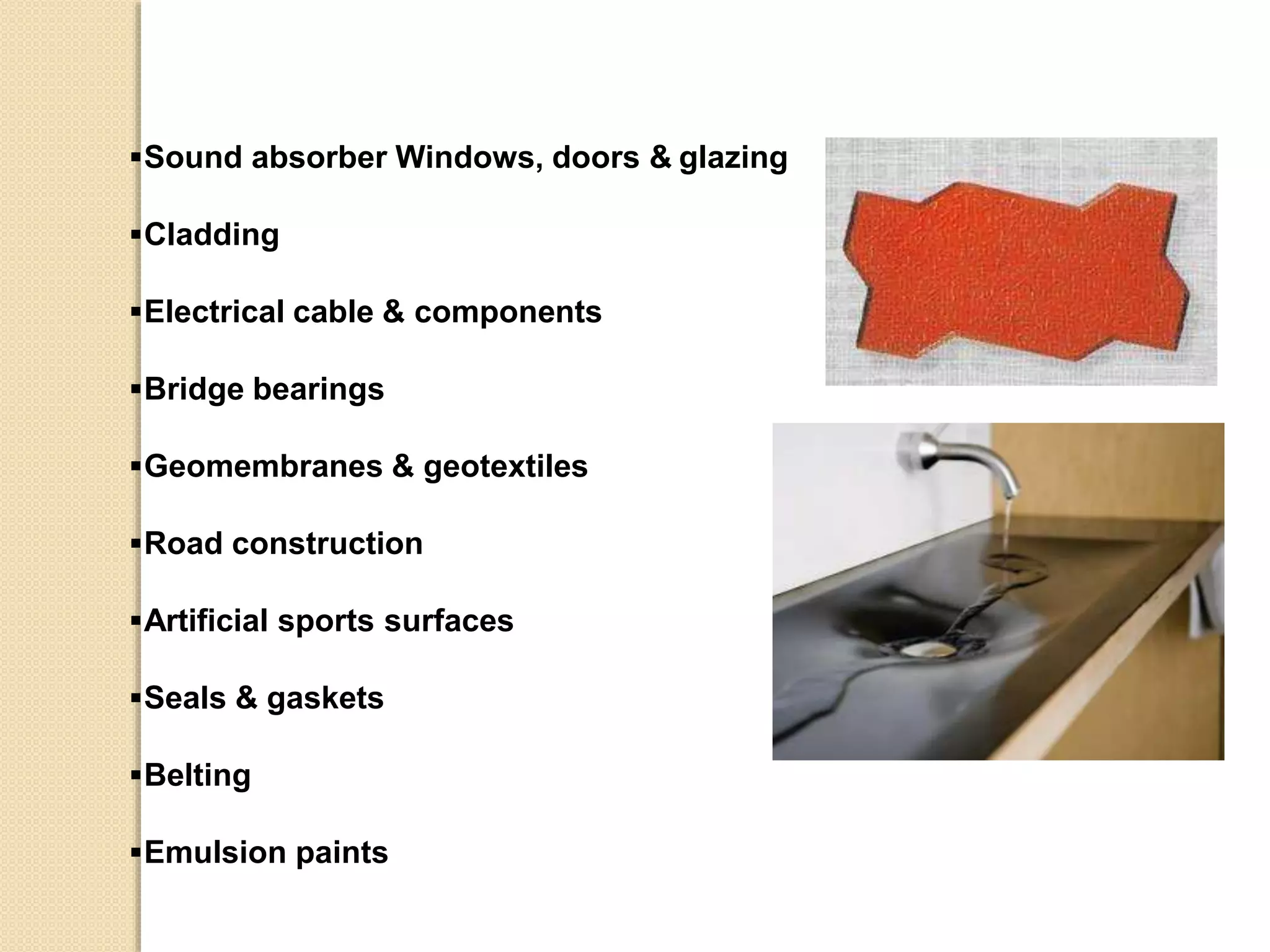
Artificial sports surfaces
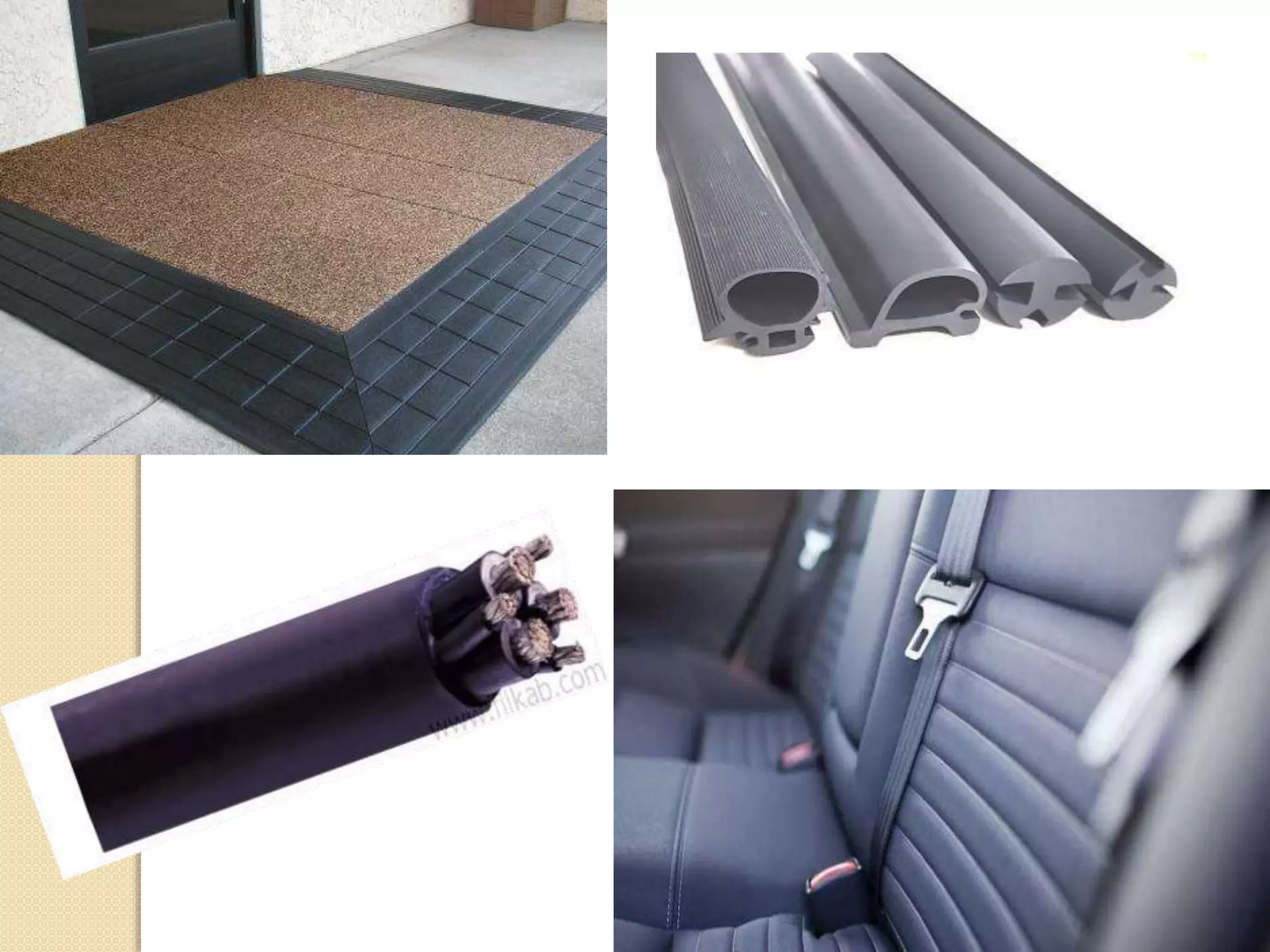
Seals & gaskets
Belting
Emulsion paints
R ‘
U
B
B
E
R
P
R
O
D
U
C
T
S
RUBBER AS GLAZING GASKETS
In the construction industry, thermoplastic rubber is used for weather stripping
windows and doors.
Thermoplastic rubber is highly recommended as glazing gaskets for its ability to
last long in harsh climate and extreme hot and cold temperatures.
When glazing gaskets are exposed to the natural elements, there is that danger of
it shrinking and deteriorating after a few years.
Designers and engineers often prefer specifying top quality materials such as
thermoplastic rubber to make sure the glazing gaskets will be able to withstand
thermal pressure.
The inside portion of the building also benefits from thermoplastic
glazing gaskets as the air quality is kept intact, particularly when air
conditioning or heating is used inside the room.
supplied as a double extrusion: tear it in
half before installation.
Using a putty knife or scraper, press the
gap gasket into the gap between the
window frame and the rough opening.
RUBBER SHEET-
1)Made of recycled rubber
2)Specifications: 1,200x 1,800x
16 / 20mm
3)Widely used to pave the
floors of stables
RUBBER MOULDS
One great use for rubber is the creation of moulds. As rubber is made
by turning a liquid into a solid via the vulcanization process, it can be
used to make a flexible mold, or injected into a mold to make a solid
shape
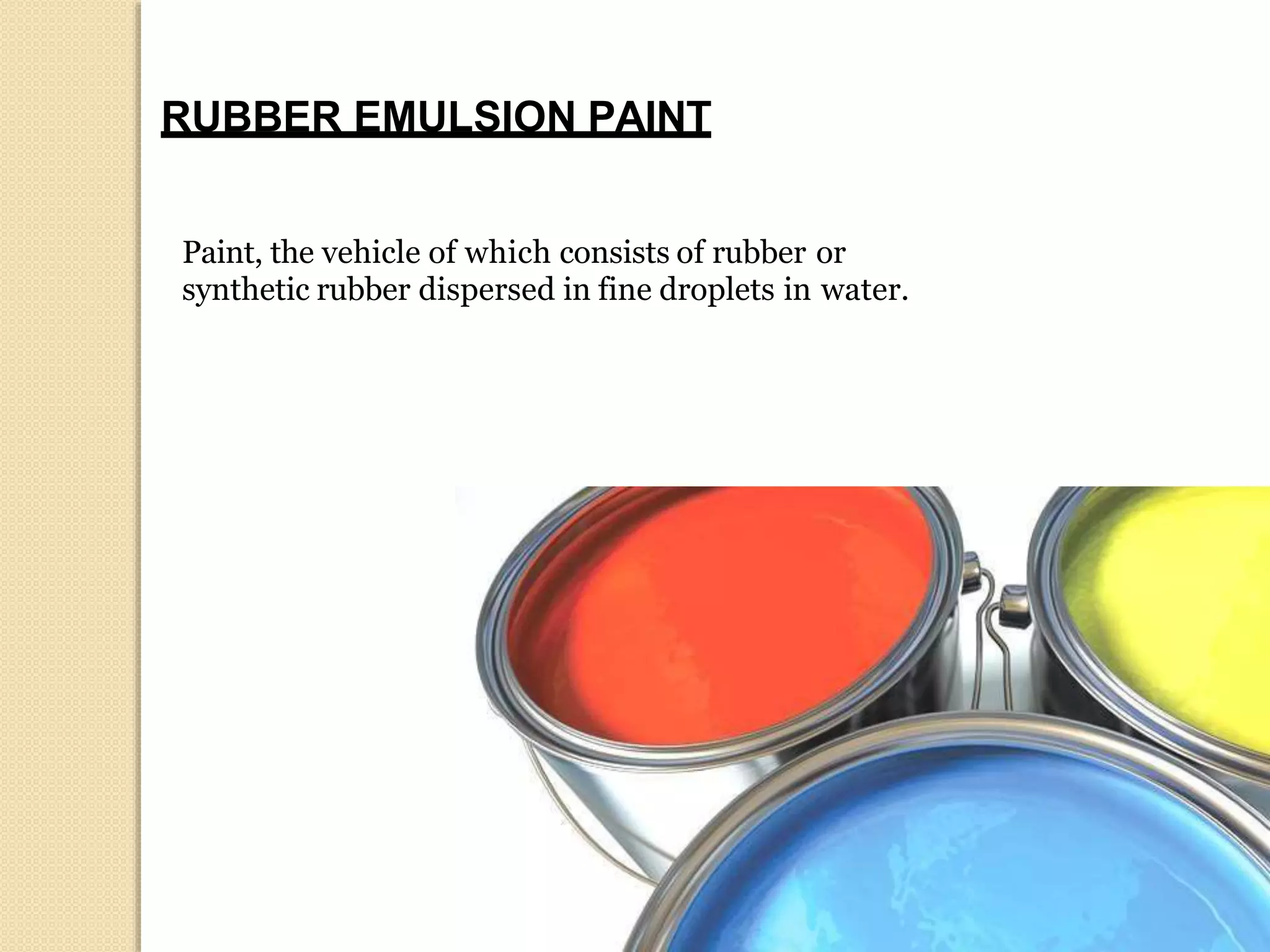
RUBBER EMULSION PAINT
Paint, the vehicle of which consists of rubber or
synthetic rubber dispersed in fine droplets in water.
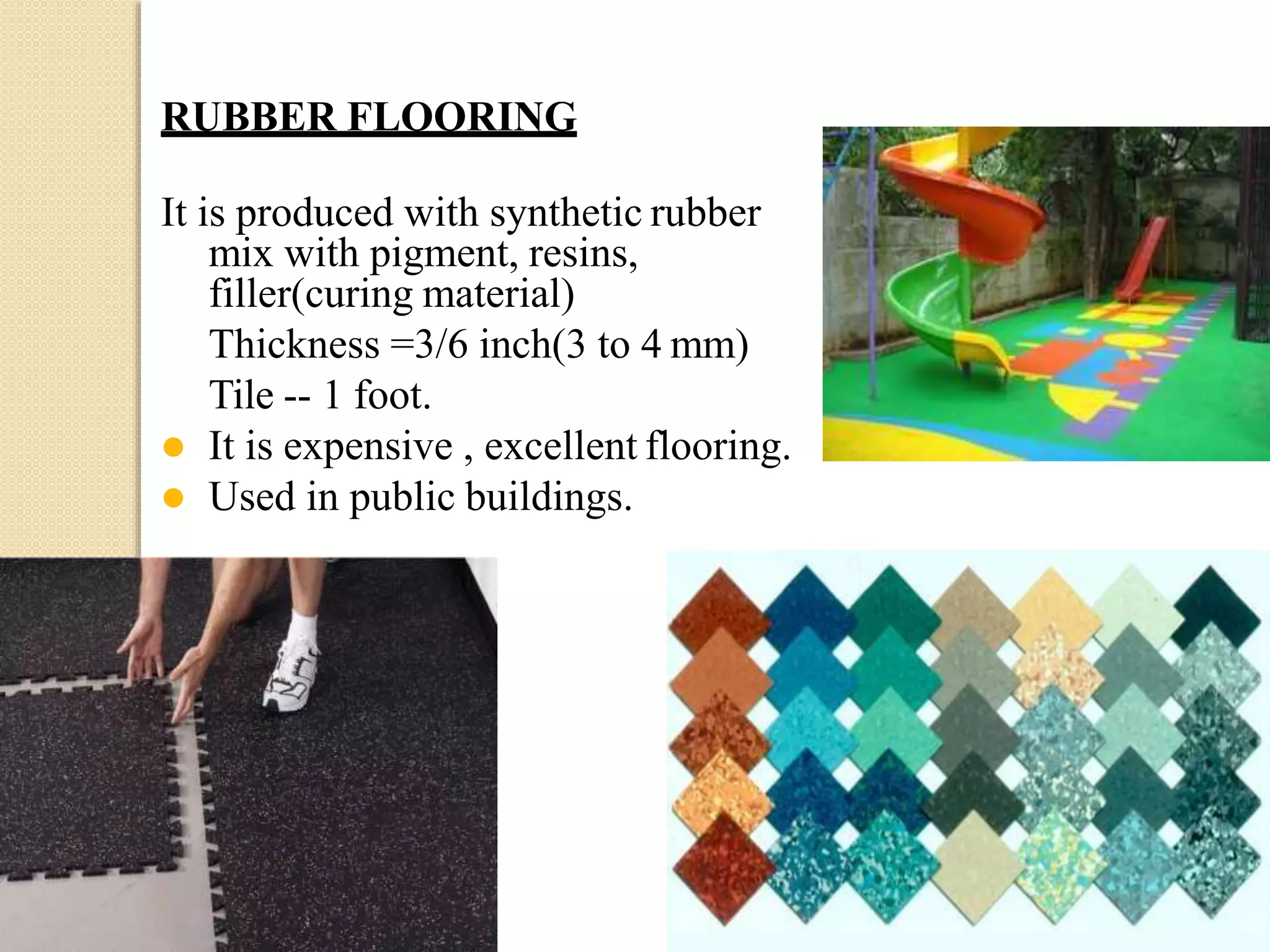
RUBBER FLOORING
It is produced with synthetic rubber
mix with pigment, resins,
filler(curing material)
Thickness =3/6 inch(3 to 4 mm)
Tile -- 1 foot.
 It is expensive , excellent flooring.
 Used in public buildings.
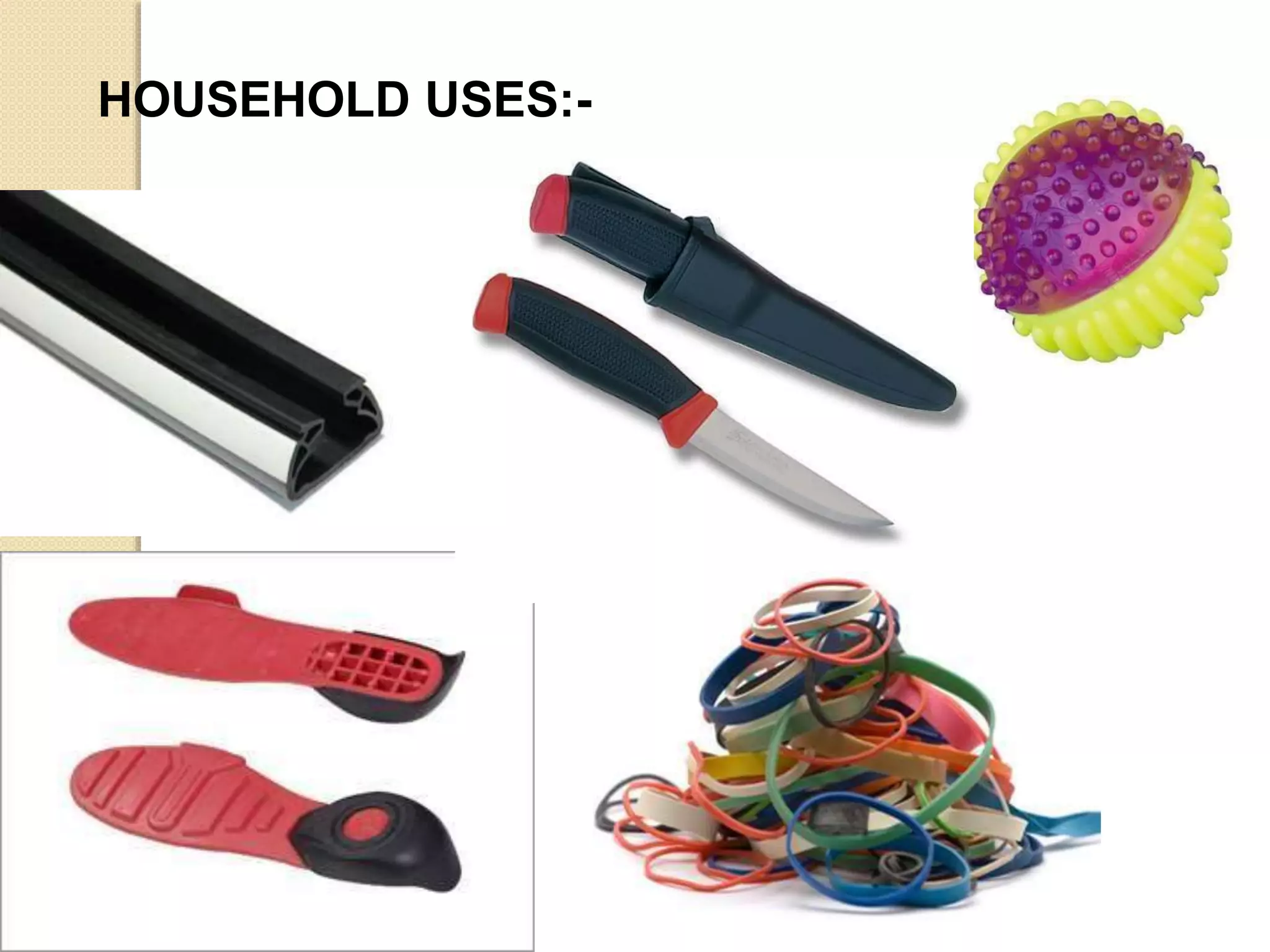
HOUSEHOLD USES:-
Thank you

Rubber ppt

  • 1.
  • 2.
    RUBBER •rubber is anelastic hydrocarbon polymer which is milky, emulsion in the sap of several varieties of plant. • produced from a milky liquid called LATEX. •It is also known as ELASTOMER
  • 3.
  • 4.
    It can beclassified in two parts: 1.natural rubber 2.synthetic rubber
  • 5.
    Synthetic rubber, invariablya polymer, is any type of artificial elastomer mainly synthesised from petroleum byproducts. Synthetic rubber Natural rubber Natural rubber is obtained from the milky secretion (latex) of various plants, but the only important commercial source of natural rubber (sometimes called Para rubber) is the tree Heve brasilien.
  • 6.
    Vulcanization- chemical process forconverting rubber into more durable materials by adding sulphur or equivalent materials. 5% of sulphur- tyre rubber 20-25% of sulphur- ebonite rubber 30% of sulphur- battery case
  • 7.
  • 8.
    Soft rubber isused in application such as automobile tyres, tubes, air hose for water, steam and air, overshoes, raincoats, floor tiles and mats, hot water bottles, erasers etc.Industial uses include protective lining in tanks and pumps, rubber belting, seals, closure. Hard rubber/ebonite rubber looks exactly like ebony wood. is used in electrical insulating parts, chemically resistant pipes and equipments and similar materials. Foam rubber rubber that has been manufactured with a foaming agent to create an air-filled matrix structure. Commercial foam rubbers are generally made of either polyurethane or natural latex . USES:-
  • 9.
    PROPERTIES  Elasticity  Flexibility Hardness  Abrasion Resistance- no damage while rubbing  Insulate electricity  Acid and alkaline resistance  Water proof / repellence
  • 10.
    GREEN MATERIAL /ECO FRIENDLY MATERIAL Rubber is produced naturaly which is a green material and can be recycled. Importance of recycled rubber Reclaming and recycled rubber uses less energy than produced by a new one. It reduces the demand of new natural rubber which may keep rubber tree plantation from expanding into sensitive tropical ecosystem.
  • 11.
    Uses in : Flooring  Bridge construction  Expansion joints  Windows  Pipes  Roofing  Sound insulation
  • 12.
    Sound absorber Windows,doors & glazing Cladding Electrical cable & components Bridge bearings Geomembranes & geotextiles Road construction Artificial sports surfaces Seals & gaskets Belting Emulsion paints
  • 13.
  • 16.
    RUBBER AS GLAZINGGASKETS In the construction industry, thermoplastic rubber is used for weather stripping windows and doors. Thermoplastic rubber is highly recommended as glazing gaskets for its ability to last long in harsh climate and extreme hot and cold temperatures. When glazing gaskets are exposed to the natural elements, there is that danger of it shrinking and deteriorating after a few years. Designers and engineers often prefer specifying top quality materials such as thermoplastic rubber to make sure the glazing gaskets will be able to withstand thermal pressure. The inside portion of the building also benefits from thermoplastic glazing gaskets as the air quality is kept intact, particularly when air conditioning or heating is used inside the room.
  • 17.
    supplied as adouble extrusion: tear it in half before installation. Using a putty knife or scraper, press the gap gasket into the gap between the window frame and the rough opening.
  • 18.
    RUBBER SHEET- 1)Made ofrecycled rubber 2)Specifications: 1,200x 1,800x 16 / 20mm 3)Widely used to pave the floors of stables
  • 19.
    RUBBER MOULDS One greatuse for rubber is the creation of moulds. As rubber is made by turning a liquid into a solid via the vulcanization process, it can be used to make a flexible mold, or injected into a mold to make a solid shape
  • 20.
    RUBBER EMULSION PAINT Paint,the vehicle of which consists of rubber or synthetic rubber dispersed in fine droplets in water.
  • 21.
    RUBBER FLOORING It isproduced with synthetic rubber mix with pigment, resins, filler(curing material) Thickness =3/6 inch(3 to 4 mm) Tile -- 1 foot.  It is expensive , excellent flooring.  Used in public buildings.
  • 22.
  • 25.