EXTRA CHROMOSOMAL DNA (PLASMIDS)
Dr. M.Sankareswaran
Department of Microbiology
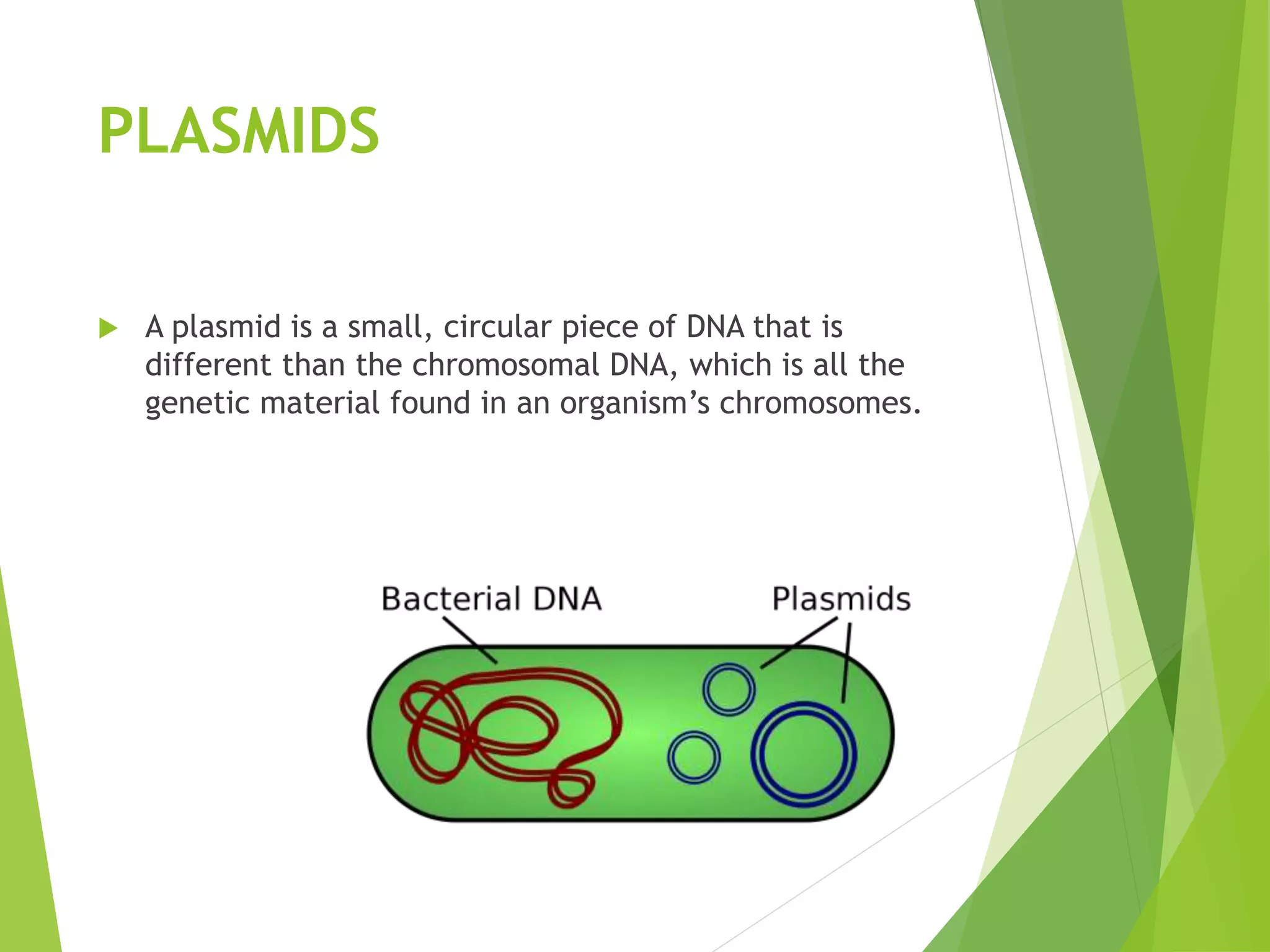
PLASMIDS
 A plasmid is a small, circular piece of DNA that is
different than the chromosomal DNA, which is all the
genetic material found in an organism’s chromosomes.
Properties
 It is an extra chromosomal DNA molecule separate from
the chromosomal DNA which is able to replicate
independently of the chromosomal DNA
 They vary from 1kb to 1000kb
 The term plasmid was first introduced by the American
molecular biologistJoshua Lederberg in 1952
 The plasmid doesnot contribute to the genome of the bacterial cell it is
present in but often translates proteins of significance.
 It contains the antibiotic resistance gene that helps the bacteria survive from
that specific antibiotic.
 It replicates independently of chromosomal DNA.
 Plasmids are mainly found in bacteria, but they can also be found in archaea
and multicellular organisms.
 Plasmids usually carry at least one gene, and many of the genes that plasmids
carry are beneficial to their host organisms
Episome
 In another words, an episome is a plasmid of bacteria or
viral DNA that can integrate itself into the chromosomal
DNA of the host organism.
 Episomes are not essential and may be absent in the
cells.
Types of plasmids
 Fertility plasmid: plasmid that allow genes to be transferred from one bacteria to
another through conjugation.
 Resistance Plasmid or R plasmids : It help a bacterial cell defend against
environmental factors such as poisons or antibiotics.
 Pseudomonas Plasmid: Plasmids which incorporated with pseudomonas that help in
treatment of bacterial infection.
 Col plasmid: It make bacteriocins (also known as colicins), which are proteins that
kill other bacteria
 Degradative plasmid:help the host bacterium to digest compounds that are not
commonly found in nature.
 Virulent plasmids: it turns the host into a pathogen, which is an agent of disease
 Yeast plasmids: They are normally 2 micrometer circular plasmids present in yeast
cells
 Cryptic plasmid: The plasmids without any functional genes are termed as cryptic
plasmid.
 Conjugative and Non-Conjugative: Plasmids that facilitate the beginning of
conjugation.
Functions of Plasmids
 They contain genes that enhance the survival of an organism, either by
killing other organisms or by defending the host cell by producing toxins.
 Some plasmids facilitate the process of replication in bacteria.
 Since plasmids are so small, they usually only contain a few genes with a
specific function (as opposed to a large amount of noncoding DNA).
 Multiple plasmids can coexist in the same cell, each with different
functions.
Applications of Plasmids
 Plasmids are used in genetic engineering to amplify, or produce many
copies of, certain genes.
 In molecular cloning, a plasmid is a type of vector.
 Plasmids are useful in cloning short segments of DNA.

 Plasmids are being investigated as a way to transfer genes into human
cells as part of gene therapy.
 Cells may lack a specific protein if the patient has a hereditary disorder
involving a gene mutation.
Plasmids

Plasmids

  • 1.
    EXTRA CHROMOSOMAL DNA(PLASMIDS) Dr. M.Sankareswaran Department of Microbiology
  • 2.
    PLASMIDS  A plasmidis a small, circular piece of DNA that is different than the chromosomal DNA, which is all the genetic material found in an organism’s chromosomes.
  • 4.
    Properties  It isan extra chromosomal DNA molecule separate from the chromosomal DNA which is able to replicate independently of the chromosomal DNA  They vary from 1kb to 1000kb  The term plasmid was first introduced by the American molecular biologistJoshua Lederberg in 1952
  • 5.
     The plasmiddoesnot contribute to the genome of the bacterial cell it is present in but often translates proteins of significance.  It contains the antibiotic resistance gene that helps the bacteria survive from that specific antibiotic.  It replicates independently of chromosomal DNA.  Plasmids are mainly found in bacteria, but they can also be found in archaea and multicellular organisms.  Plasmids usually carry at least one gene, and many of the genes that plasmids carry are beneficial to their host organisms
  • 6.
    Episome  In anotherwords, an episome is a plasmid of bacteria or viral DNA that can integrate itself into the chromosomal DNA of the host organism.  Episomes are not essential and may be absent in the cells.
  • 7.
    Types of plasmids Fertility plasmid: plasmid that allow genes to be transferred from one bacteria to another through conjugation.  Resistance Plasmid or R plasmids : It help a bacterial cell defend against environmental factors such as poisons or antibiotics.  Pseudomonas Plasmid: Plasmids which incorporated with pseudomonas that help in treatment of bacterial infection.  Col plasmid: It make bacteriocins (also known as colicins), which are proteins that kill other bacteria  Degradative plasmid:help the host bacterium to digest compounds that are not commonly found in nature.  Virulent plasmids: it turns the host into a pathogen, which is an agent of disease  Yeast plasmids: They are normally 2 micrometer circular plasmids present in yeast cells  Cryptic plasmid: The plasmids without any functional genes are termed as cryptic plasmid.  Conjugative and Non-Conjugative: Plasmids that facilitate the beginning of conjugation.
  • 8.
    Functions of Plasmids They contain genes that enhance the survival of an organism, either by killing other organisms or by defending the host cell by producing toxins.  Some plasmids facilitate the process of replication in bacteria.  Since plasmids are so small, they usually only contain a few genes with a specific function (as opposed to a large amount of noncoding DNA).  Multiple plasmids can coexist in the same cell, each with different functions.
  • 9.
    Applications of Plasmids Plasmids are used in genetic engineering to amplify, or produce many copies of, certain genes.  In molecular cloning, a plasmid is a type of vector.  Plasmids are useful in cloning short segments of DNA.   Plasmids are being investigated as a way to transfer genes into human cells as part of gene therapy.  Cells may lack a specific protein if the patient has a hereditary disorder involving a gene mutation.