SRI PARAMAKALYANI COLLEGE
REACCREDITED WITH B GRADE WITH A CGPA OF 2.71 IN THE SECOND CYCLE OF NAAC
AFFILIATED TO MANOMANIUM SUNDARANAR UNIVERSITY, TIRUNELVELI.
ALWARKURICHI 627 412, TAMIL NADU, INDIA
POST GRADUATE & RESEARCH CENTRE
DEPARTMENT OF MICROBIOLOGY
(GOVERNMENT AIDED)
ACADEMIC YEAR 2021-2022
II SEM CORE: VIROLOGY (ZMBM23)
UNIT- 2
BACTERIAL VIRUS : PHI X 174 PHAGE
Submitted by,
Indhumathi S
Reg no: 20211232516110
I M.Sc., Microbiology
Sri Paramakalyani College,
Alwarkurichi.
Submitted to,
Dr.C.Mariappan Ph.D.
Assistant professor,
Department of microbiology,
Sri paramakalyani college,
Alwarkurichi.
INTRODUCTION
TAXONOMIC ARRANGEMENT OF PHI X 174
HISTORY
MORPHOLOGY
GENOME ORGANIZATION
LIFE CYCLE
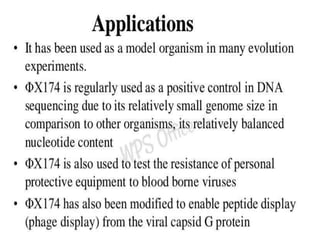
APPLICATIONS
Introduction
Bacteriophage (phages)
 Bacteriophages were first discovered in 1915 by William Twort.
 In 1917 by Felix d'Herelle realized that they had the potential to
kill bacteria.
 Viruses that attacks and infects the bacteria.
 Bacteriophage is specific to one form of bacteria
 Bacteriophage also infect archaea.
Taxonomial arrangement
Realm : Monodnaviria
Kingdom : Sangervirae
Phylum : Phixviricota
Class : Malgrandaviricetes
Order : Petitvirales
Family : Microviridae
Sub-family : Bullavirinae
Genus : Sinsheimervirus
Species : Escherichia virus ΦX174
History
 It is a bacteriophage infects the bacterium E.coli
 In 1962, Walter fiers and Robert Sinsheimer – demonstrated the physical,
covalently closed circularity of ΦX174 DNA.
 The first DNA-based genome to be sequenced.This work was completed by
Frederick sanger in 1977.
 Studies of phage replication led to discovery of Rolling circle replication.
 Family: Microviridae provided the first evidence of overlapping genes.
Morphology
The genome consists of circular ssDNA.
Genome size ranges from 4.6 to 6.1 kb.
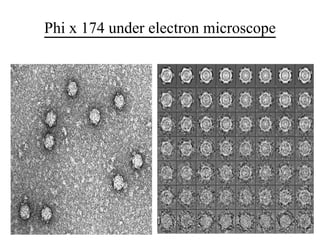
The capsid is icosahedral (i.e.spherical).
Diameter is 25-27nm
Tailess icosahedral bacteriophage
Phi x 174 under electron microscope
Genome organization
1) Genome: circular ssDNA.
2) Consists of 5386 nucleotides.
3) 10 genes codes for 11 proteins.
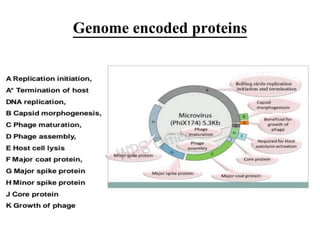
4) Proteins are A , A* , B , C , D , E , F , G , H , J , K encoded.
5) The 11 protein together contain a total of 1986 aminoacids
6) 10 genes encoded for 11 proteins , because of overlapping genes.
Overlapping of genes
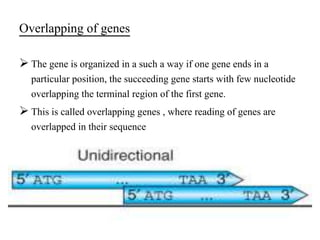
 The gene is organized in a such a way if one gene ends in a
particular position, the succeeding gene starts with few nucleotide
overlapping the terminal region of the first gene.
 This is called overlapping genes , where reading of genes are
overlapped in their sequence
Arrangement of genes
 Gene A contains an internal
translation initiation site to
encode protein A*
 Gene B is encoded within A
in different reading frame.
 Gene K is at the end of gene
A and extend into gene C
 Gene E is totally within
gene D.
 The termination codon of D
overlaps intiation codon for
gene J .
Genome encoded proteins
Life cycle of x174
Attachment of phage
Infection begins when G protein binds to lipopolysaccharides on the
bacterial host cell surface.
Phage recognizes the lipopolysaccharide receptor in the outer membrane
of E.coli by the minor spike protein H.
Entry of phage genome
• H protein (or the DNA Pilot Protein) pilots the viral genome through the
bacterial membrane of E.coli bacteria
• The outer part recognizes the LPS receptor.The inner part of the H protein is
responsible for the injection of genome into the host cell.
• Atleat one H protein enters into the host cell with the viral DNA.
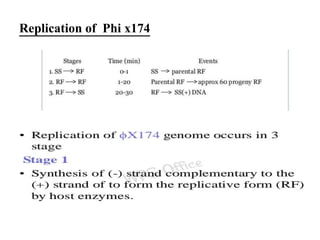
Replication of Phi x174
Assembly of mature virions
Release of mature virions
Cell lysis Requires E protein, which inhibits the Mra Y translocase , which is involved in
the Synthesis of lipid I for the biosynthesis of peptidoglycan.
Reference
• https://www.slideshare.net/qamrunnisashaikh1997/phi-x-
174-phage
• https://en.wikipedia.org/wiki/Bullavirinae
• https://www.ncbi.nlm.nih.gov/pmc/articles/PMC326969/
THANK YOU

Phi X 174 - 2.pptx

  • 1.
    SRI PARAMAKALYANI COLLEGE REACCREDITEDWITH B GRADE WITH A CGPA OF 2.71 IN THE SECOND CYCLE OF NAAC AFFILIATED TO MANOMANIUM SUNDARANAR UNIVERSITY, TIRUNELVELI. ALWARKURICHI 627 412, TAMIL NADU, INDIA POST GRADUATE & RESEARCH CENTRE DEPARTMENT OF MICROBIOLOGY (GOVERNMENT AIDED) ACADEMIC YEAR 2021-2022 II SEM CORE: VIROLOGY (ZMBM23) UNIT- 2 BACTERIAL VIRUS : PHI X 174 PHAGE Submitted by, Indhumathi S Reg no: 20211232516110 I M.Sc., Microbiology Sri Paramakalyani College, Alwarkurichi. Submitted to, Dr.C.Mariappan Ph.D. Assistant professor, Department of microbiology, Sri paramakalyani college, Alwarkurichi.
  • 2.
    INTRODUCTION TAXONOMIC ARRANGEMENT OFPHI X 174 HISTORY MORPHOLOGY GENOME ORGANIZATION LIFE CYCLE APPLICATIONS
  • 3.
    Introduction Bacteriophage (phages)  Bacteriophageswere first discovered in 1915 by William Twort.  In 1917 by Felix d'Herelle realized that they had the potential to kill bacteria.  Viruses that attacks and infects the bacteria.  Bacteriophage is specific to one form of bacteria  Bacteriophage also infect archaea.
  • 4.
    Taxonomial arrangement Realm :Monodnaviria Kingdom : Sangervirae Phylum : Phixviricota Class : Malgrandaviricetes Order : Petitvirales Family : Microviridae Sub-family : Bullavirinae Genus : Sinsheimervirus Species : Escherichia virus ΦX174
  • 5.
    History  It isa bacteriophage infects the bacterium E.coli  In 1962, Walter fiers and Robert Sinsheimer – demonstrated the physical, covalently closed circularity of ΦX174 DNA.  The first DNA-based genome to be sequenced.This work was completed by Frederick sanger in 1977.  Studies of phage replication led to discovery of Rolling circle replication.  Family: Microviridae provided the first evidence of overlapping genes.
  • 6.
    Morphology The genome consistsof circular ssDNA. Genome size ranges from 4.6 to 6.1 kb. The capsid is icosahedral (i.e.spherical). Diameter is 25-27nm Tailess icosahedral bacteriophage
  • 7.
    Phi x 174under electron microscope
  • 8.
    Genome organization 1) Genome:circular ssDNA. 2) Consists of 5386 nucleotides. 3) 10 genes codes for 11 proteins. 4) Proteins are A , A* , B , C , D , E , F , G , H , J , K encoded. 5) The 11 protein together contain a total of 1986 aminoacids 6) 10 genes encoded for 11 proteins , because of overlapping genes.
  • 9.
    Overlapping of genes The gene is organized in a such a way if one gene ends in a particular position, the succeeding gene starts with few nucleotide overlapping the terminal region of the first gene.  This is called overlapping genes , where reading of genes are overlapped in their sequence
  • 10.
    Arrangement of genes Gene A contains an internal translation initiation site to encode protein A*  Gene B is encoded within A in different reading frame.  Gene K is at the end of gene A and extend into gene C  Gene E is totally within gene D.  The termination codon of D overlaps intiation codon for gene J .
  • 11.
  • 12.
  • 13.
    Attachment of phage Infectionbegins when G protein binds to lipopolysaccharides on the bacterial host cell surface. Phage recognizes the lipopolysaccharide receptor in the outer membrane of E.coli by the minor spike protein H.
  • 14.
    Entry of phagegenome • H protein (or the DNA Pilot Protein) pilots the viral genome through the bacterial membrane of E.coli bacteria • The outer part recognizes the LPS receptor.The inner part of the H protein is responsible for the injection of genome into the host cell. • Atleat one H protein enters into the host cell with the viral DNA.
  • 15.
  • 17.
  • 18.
    Release of maturevirions Cell lysis Requires E protein, which inhibits the Mra Y translocase , which is involved in the Synthesis of lipid I for the biosynthesis of peptidoglycan.
  • 20.