
Presented by
Vivek kumar
M.Sc Microbiology
Bangalore university
“ENDOSPORE AND
EXOSPORE”
Definition
Endospores are dormant,tough structures made by some bacteria. These structures allows the
bacteria to survive during unfavorable conditions,such as intense heat,disinfectants and even UV
radiation.
History
Endospores were first described by Cohn in Bacillus subtilis and later by koch
in pathogen, Bacillus anthracis.cohn demonstrated the heat resistance of
endospore in B.subtilis and koch described developmental cycle of spore
formation in B.anthracis.Endospores are so named because they are formed
intracellularly,although they are eventually released from the mother cell or
Sporangium as free spores.Endospores have proven to be the most durable type
Of cell found in nature,and their state of dormancy they can remain viable for
Extremely long periods of time,million of years.
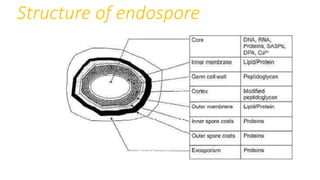
Structure of endospore
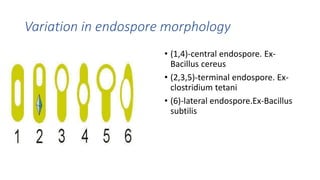
Variation in endospore morphology
• (1,4)-central endospore. Ex-
Bacillus cereus
• (2,3,5)-terminal endospore. Ex-
clostridium tetani
• (6)-lateral endospore.Ex-Bacillus
subtilis
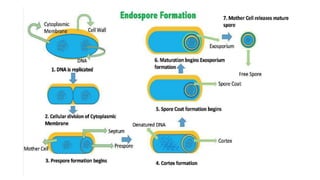
Endospore formation
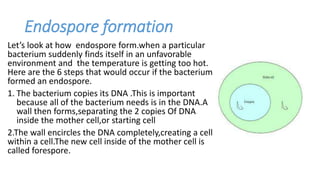
Let’s look at how endospore form.when a particular
bacterium suddenly finds itself in an unfavorable
environment and the temperature is getting too hot.
Here are the 6 steps that would occur if the bacterium
formed an endospore.
1. The bacterium copies its DNA .This is important
because all of the bacterium needs is in the DNA.A
wall then forms,separating the 2 copies Of DNA
inside the mother cell,or starting cell
2.The wall encircles the DNA completely,creating a cell
within a cell.The new cell inside of the mother cell is
called forespore.
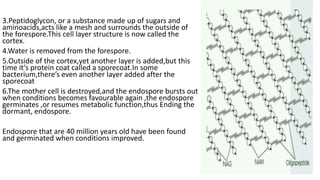
3.Peptidoglycon, or a substance made up of sugars and
aminoacids,acts like a mesh and surrounds the outside of
the forespore.This cell layer structure is now called the
cortex.
4.Water is removed from the forespore.
5.Outside of the cortex,yet another layer is added,but this
time it’s protein coat called a sporecoat.In some
bacterium,there’s even another layer added after the
sporecoat
6.The mother cell is destroyed,and the endospore bursts out
when conditions becomes favourable again ,the endospore
germinates ,or resumes metabolic function,thus Ending the
dormant, endospore.
Endospore that are 40 million years old have been found
and germinated when conditions improved.
Exospore
Exospores are formed external to the vegetative cell by budding at one end of the cell.
Exospore is another resistant bacteria produced mainly by fungi and algae to reproduce under unfavorable
conditions .Exopores develop from the end of the mother cell by cell division . The sepration of the exospore
occurs by the formation septum between the mother and the daug&ter cell.The expore comes out as a bud.
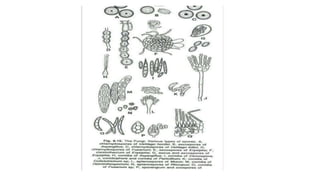
Under favorable condition ,conidiophores are a type of fungal spores, which are produced as exospores .
The algae such as chamaesiphon and stichosiphone produce exospores.Bacteria such as actinomyces ,
streptomyces , and actinobacteria produce exospores.The cyanobacteria like chamaesiphon also produce
expores.
“
”
“SIMILARITIES BETWEEN ENDOSPORE AND EXOSPORE”
Endospores and exospores are two types of spores produced by bacteria,fungi,and algae.
The process of producing spores is called sporulation.
Typically both endospore and exospore are produced in unfavourable environmental
conditions
Both are unicellular
They are highly resistant structure.
Both can retain without nutrients since they comprise very low metabolic rates.
DIFFERENCE BETWEEN ENDSPORE AND EXOSPORE
1. Endospore is a structure formed by bacteria to
survive under unfavorable environmental
conditions,consisting of DNA and a small amount
of cytoplasm.
2. Edospore are produced by bacteria
3. Endospores are formed inside the mother cell
4. Cell division is not involved in the formation of
endospores.
5. The endospores are released by rupturing the
mother cell.
6. Only one endospore can be produced per one
organism.
7. Examples-Bacillus,clostridiu,paenibacillus………..
1. Exospore is an asexual spore that is seperated from
the mother cell by the formation of septum.
2. Exospore are produced by fungi and algae.
3. Exospores are formed near an end of the mother cell.
4. Exospores are produced by cell division.
5. The exospore are released by budding.
6. Several exospores can be produced by one organism
7. Conidiospores,chamaesiphon,sitchosiphon,actinomy
ces,streptomyces,actinobacteria.
CONCLUSION
Endospores and exospores are two types of spores produced as resting units.Endospores
are mainly produced by bacteria.Exospores are produced by fungi,algae,cyanobacteria and
bacteria.Endospores are formed inside the mother cell,Exospores are formed at the end of
the mother cell and released as bud.This concludes Endospores and exospores…..
Thankyou

Endospore and Exospore

  • 1.
    Presented by Vivek kumar M.ScMicrobiology Bangalore university “ENDOSPORE AND EXOSPORE”
  • 2.
    Definition Endospores are dormant,toughstructures made by some bacteria. These structures allows the bacteria to survive during unfavorable conditions,such as intense heat,disinfectants and even UV radiation.
  • 3.
    History Endospores were firstdescribed by Cohn in Bacillus subtilis and later by koch in pathogen, Bacillus anthracis.cohn demonstrated the heat resistance of endospore in B.subtilis and koch described developmental cycle of spore formation in B.anthracis.Endospores are so named because they are formed intracellularly,although they are eventually released from the mother cell or Sporangium as free spores.Endospores have proven to be the most durable type Of cell found in nature,and their state of dormancy they can remain viable for Extremely long periods of time,million of years.
  • 4.
  • 5.
    Variation in endosporemorphology • (1,4)-central endospore. Ex- Bacillus cereus • (2,3,5)-terminal endospore. Ex- clostridium tetani • (6)-lateral endospore.Ex-Bacillus subtilis
  • 6.
    Endospore formation Let’s lookat how endospore form.when a particular bacterium suddenly finds itself in an unfavorable environment and the temperature is getting too hot. Here are the 6 steps that would occur if the bacterium formed an endospore. 1. The bacterium copies its DNA .This is important because all of the bacterium needs is in the DNA.A wall then forms,separating the 2 copies Of DNA inside the mother cell,or starting cell 2.The wall encircles the DNA completely,creating a cell within a cell.The new cell inside of the mother cell is called forespore.
  • 7.
    3.Peptidoglycon, or asubstance made up of sugars and aminoacids,acts like a mesh and surrounds the outside of the forespore.This cell layer structure is now called the cortex. 4.Water is removed from the forespore. 5.Outside of the cortex,yet another layer is added,but this time it’s protein coat called a sporecoat.In some bacterium,there’s even another layer added after the sporecoat 6.The mother cell is destroyed,and the endospore bursts out when conditions becomes favourable again ,the endospore germinates ,or resumes metabolic function,thus Ending the dormant, endospore. Endospore that are 40 million years old have been found and germinated when conditions improved.
  • 9.
    Exospore Exospores are formedexternal to the vegetative cell by budding at one end of the cell. Exospore is another resistant bacteria produced mainly by fungi and algae to reproduce under unfavorable conditions .Exopores develop from the end of the mother cell by cell division . The sepration of the exospore occurs by the formation septum between the mother and the daug&ter cell.The expore comes out as a bud. Under favorable condition ,conidiophores are a type of fungal spores, which are produced as exospores . The algae such as chamaesiphon and stichosiphone produce exospores.Bacteria such as actinomyces , streptomyces , and actinobacteria produce exospores.The cyanobacteria like chamaesiphon also produce expores.
  • 11.
    “ ” “SIMILARITIES BETWEEN ENDOSPOREAND EXOSPORE” Endospores and exospores are two types of spores produced by bacteria,fungi,and algae. The process of producing spores is called sporulation. Typically both endospore and exospore are produced in unfavourable environmental conditions Both are unicellular They are highly resistant structure. Both can retain without nutrients since they comprise very low metabolic rates.
  • 12.
    DIFFERENCE BETWEEN ENDSPOREAND EXOSPORE 1. Endospore is a structure formed by bacteria to survive under unfavorable environmental conditions,consisting of DNA and a small amount of cytoplasm. 2. Edospore are produced by bacteria 3. Endospores are formed inside the mother cell 4. Cell division is not involved in the formation of endospores. 5. The endospores are released by rupturing the mother cell. 6. Only one endospore can be produced per one organism. 7. Examples-Bacillus,clostridiu,paenibacillus……….. 1. Exospore is an asexual spore that is seperated from the mother cell by the formation of septum. 2. Exospore are produced by fungi and algae. 3. Exospores are formed near an end of the mother cell. 4. Exospores are produced by cell division. 5. The exospore are released by budding. 6. Several exospores can be produced by one organism 7. Conidiospores,chamaesiphon,sitchosiphon,actinomy ces,streptomyces,actinobacteria.
  • 13.
    CONCLUSION Endospores and exosporesare two types of spores produced as resting units.Endospores are mainly produced by bacteria.Exospores are produced by fungi,algae,cyanobacteria and bacteria.Endospores are formed inside the mother cell,Exospores are formed at the end of the mother cell and released as bud.This concludes Endospores and exospores…..
  • 14.