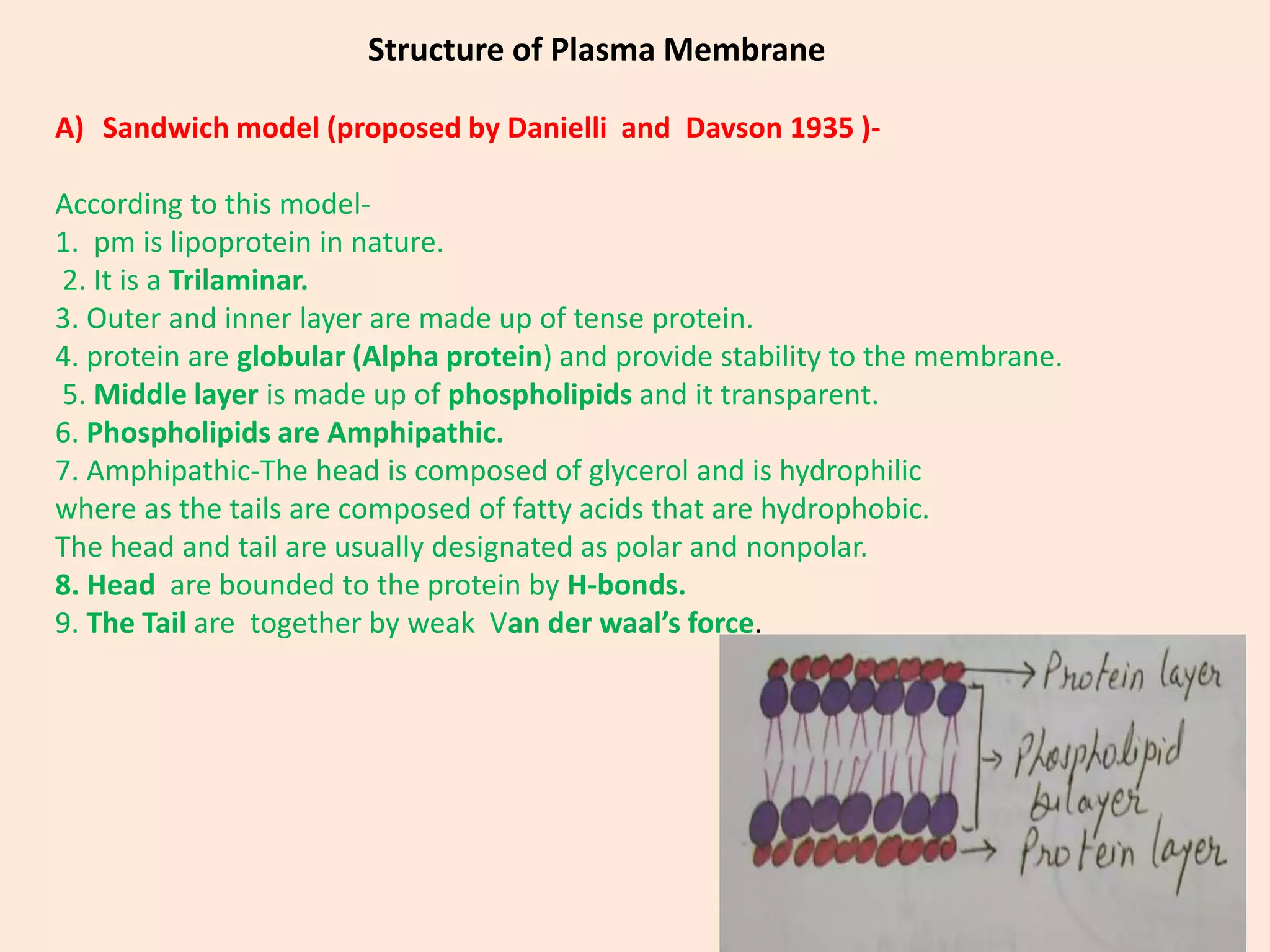
The plasma membrane defines the boundary of the cell. It is a selectively permeable phospholipid bilayer with embedded proteins. It is composed of 50-75% proteins, 21-50% lipids, and 8% carbohydrates. There are three models that describe its structure: the sandwich model depicts outer and inner protein layers with a phospholipid middle layer; the unit membrane model also has a trilaminar structure but with extended fibrous proteins; the fluid mosaic model views the membrane as a mosaic of integral and peripheral proteins existing within the fluid phospholipid bilayer. The plasma membrane functions to protect the cell, provide shape, regulate transport, receive signals, act as a receptor, and facilitate chemical exchange.




![Chloroplasts[1]](https://cdn.slidesharecdn.com/ss_thumbnails/chloroplasts1-160424155457-thumbnail.jpg?width=640&height=640&fit=bounds)


