PLANTS
- P A R T S
- K I N D S
PARTS OF THE
PLANT
ROOTS
• parts of the plant that are buried
in the soil from which they absorb
water and minerals. Also hold
plant firmly to the ground.
• Two types:
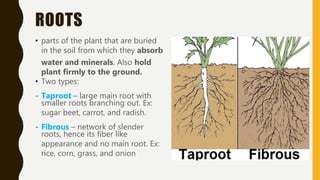
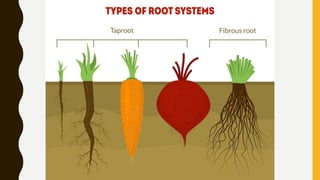
- Taproot – large main root with
smaller roots branching out. Ex:
sugar beet, carrot, and radish.
- Fibrous – network of slender
roots, hence its fiber like
appearance and no main root. Ex:
rice, corn, grass, and onion
STEM
• part that transports water and
minerals from the roots to the
other parts of the plant. Also
holds the leaves, flowers, and
fruits of the plants.
• Two types:
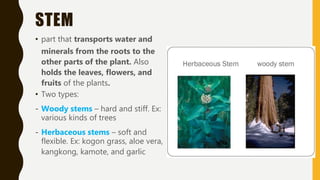
- Woody stems – hard and stiff. Ex:
various kinds of trees
- Herbaceous stems – soft and
flexible. Ex: kogon grass, aloe vera,
kangkong, kamote, and garlic
LEAF
• part where the plant makes its food
in a process called photosynthesis.
• Made of parts:
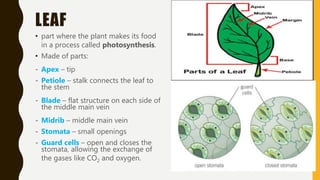
- Apex – tip
- Petiole – stalk connects the leaf to
the stem
- Blade – flat structure on each side of
the middle main vein
- Midrib – middle main vein
- Stomata – small openings
- Guard cells – open and closes the
stomata, allowing the exchange of
the gases like CO2 and oxygen.
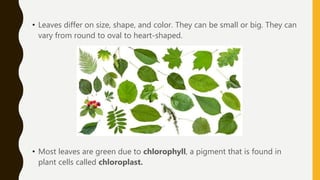
• Leaves differ on size, shape, and color. They can be small or big. They can
vary from round to oval to heart-shaped.
• Most leaves are green due to chlorophyll, a pigment that is found in
plant cells called chloroplast.
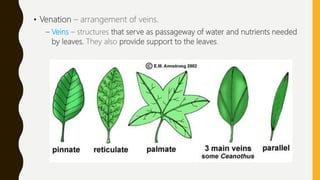
• Venation – arrangement of veins.
– Veins – structures that serve as passageway of water and nutrients needed
by leaves. They also provide support to the leaves.
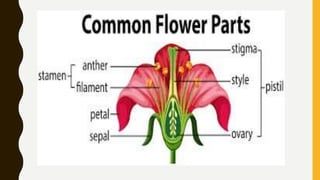
FLOWER
• main reproductive part of a plant. It produces seeds from which young
plants grow and develop.
• Parts:
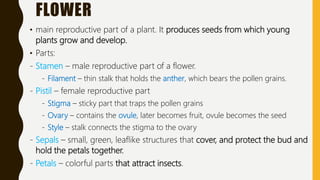
- Stamen – male reproductive part of a flower.
- Filament – thin stalk that holds the anther, which bears the pollen grains.
- Pistil – female reproductive part
- Stigma – sticky part that traps the pollen grains
- Ovary – contains the ovule, later becomes fruit, ovule becomes the seed
- Style – stalk connects the stigma to the ovary
- Sepals – small, green, leaflike structures that cover, and protect the bud and
hold the petals together.
- Petals – colorful parts that attract insects.
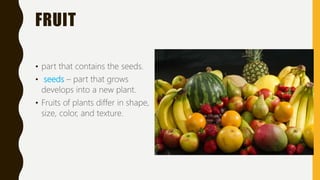
FRUIT
• part that contains the seeds.
• seeds – part that grows
develops into a new plant.
• Fruits of plants differ in shape,
size, color, and texture.
KINDS OF
PLANTS
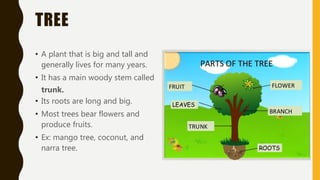
TREE
• A plant that is big and tall and
generally lives for many years.
• It has a main woody stem called
trunk.
• Its roots are long and big.
• Most trees bear flowers and
produce fruits.
• Ex: mango tree, coconut, and
narra tree.
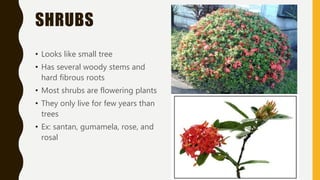
SHRUBS
• Looks like small tree
• Has several woody stems and
hard fibrous roots
• Most shrubs are flowering plants
• They only live for few years than
trees
• Ex: santan, gumamela, rose, and
rosal
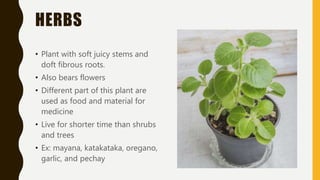
HERBS
• Plant with soft juicy stems and
doft fibrous roots.
• Also bears flowers
• Different part of this plant are
used as food and material for
medicine
• Live for shorter time than shrubs
and trees
• Ex: mayana, katakataka, oregano,
garlic, and pechay
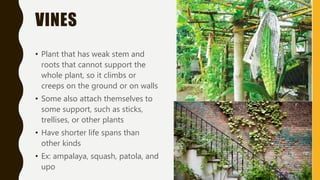
VINES
• Plant that has weak stem and
roots that cannot support the
whole plant, so it climbs or
creeps on the ground or on walls
• Some also attach themselves to
some support, such as sticks,
trellises, or other plants
• Have shorter life spans than
other kinds
• Ex: ampalaya, squash, patola, and
upo
Plants

Plants

  • 1.
    PLANTS - P AR T S - K I N D S
  • 2.
  • 3.
    ROOTS • parts ofthe plant that are buried in the soil from which they absorb water and minerals. Also hold plant firmly to the ground. • Two types: - Taproot – large main root with smaller roots branching out. Ex: sugar beet, carrot, and radish. - Fibrous – network of slender roots, hence its fiber like appearance and no main root. Ex: rice, corn, grass, and onion
  • 5.
    STEM • part thattransports water and minerals from the roots to the other parts of the plant. Also holds the leaves, flowers, and fruits of the plants. • Two types: - Woody stems – hard and stiff. Ex: various kinds of trees - Herbaceous stems – soft and flexible. Ex: kogon grass, aloe vera, kangkong, kamote, and garlic
  • 6.
    LEAF • part wherethe plant makes its food in a process called photosynthesis. • Made of parts: - Apex – tip - Petiole – stalk connects the leaf to the stem - Blade – flat structure on each side of the middle main vein - Midrib – middle main vein - Stomata – small openings - Guard cells – open and closes the stomata, allowing the exchange of the gases like CO2 and oxygen.
  • 7.
    • Leaves differon size, shape, and color. They can be small or big. They can vary from round to oval to heart-shaped. • Most leaves are green due to chlorophyll, a pigment that is found in plant cells called chloroplast.
  • 8.
    • Venation –arrangement of veins. – Veins – structures that serve as passageway of water and nutrients needed by leaves. They also provide support to the leaves.
  • 9.
    FLOWER • main reproductivepart of a plant. It produces seeds from which young plants grow and develop. • Parts: - Stamen – male reproductive part of a flower. - Filament – thin stalk that holds the anther, which bears the pollen grains. - Pistil – female reproductive part - Stigma – sticky part that traps the pollen grains - Ovary – contains the ovule, later becomes fruit, ovule becomes the seed - Style – stalk connects the stigma to the ovary - Sepals – small, green, leaflike structures that cover, and protect the bud and hold the petals together. - Petals – colorful parts that attract insects.
  • 11.
    FRUIT • part thatcontains the seeds. • seeds – part that grows develops into a new plant. • Fruits of plants differ in shape, size, color, and texture.
  • 12.
  • 13.
    TREE • A plantthat is big and tall and generally lives for many years. • It has a main woody stem called trunk. • Its roots are long and big. • Most trees bear flowers and produce fruits. • Ex: mango tree, coconut, and narra tree.
  • 14.
    SHRUBS • Looks likesmall tree • Has several woody stems and hard fibrous roots • Most shrubs are flowering plants • They only live for few years than trees • Ex: santan, gumamela, rose, and rosal
  • 15.
    HERBS • Plant withsoft juicy stems and doft fibrous roots. • Also bears flowers • Different part of this plant are used as food and material for medicine • Live for shorter time than shrubs and trees • Ex: mayana, katakataka, oregano, garlic, and pechay
  • 16.
    VINES • Plant thathas weak stem and roots that cannot support the whole plant, so it climbs or creeps on the ground or on walls • Some also attach themselves to some support, such as sticks, trellises, or other plants • Have shorter life spans than other kinds • Ex: ampalaya, squash, patola, and upo