CLASSIFICATION OF LEAVES
OBJECTIVES
TO DEFINE AND UNDERSTAND
• Leaf Types: broad, needle-like,
scale-like, evergreen, and
deciduous
• Simple versus compound leaves
• Phyllotaxy
• Venation
• Margin
Leaf Types
Leaves are plant organs which are
very important to the photosynthetic
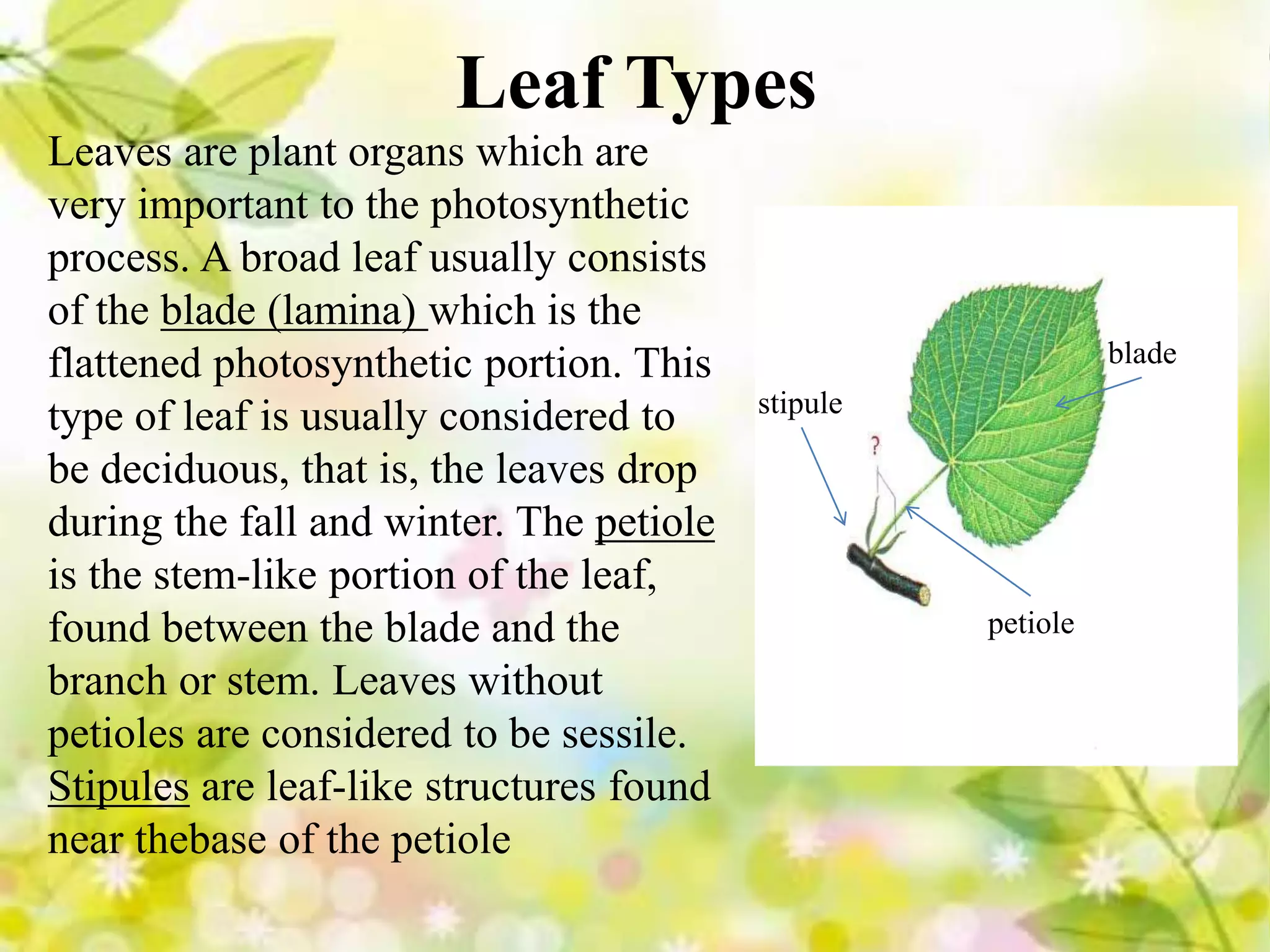
process. A broad leaf usually consists
of the blade (lamina) which is the
flattened photosynthetic portion. This
type of leaf is usually considered to
be deciduous, that is, the leaves drop
during the fall and winter. The petiole
is the stem-like portion of the leaf,
found between the blade and the
branch or stem. Leaves without
petioles are considered to be sessile.
Stipules are leaf-like structures found
near thebase of the petiole
stipule
blade
petiole
Simple and Compound leaves
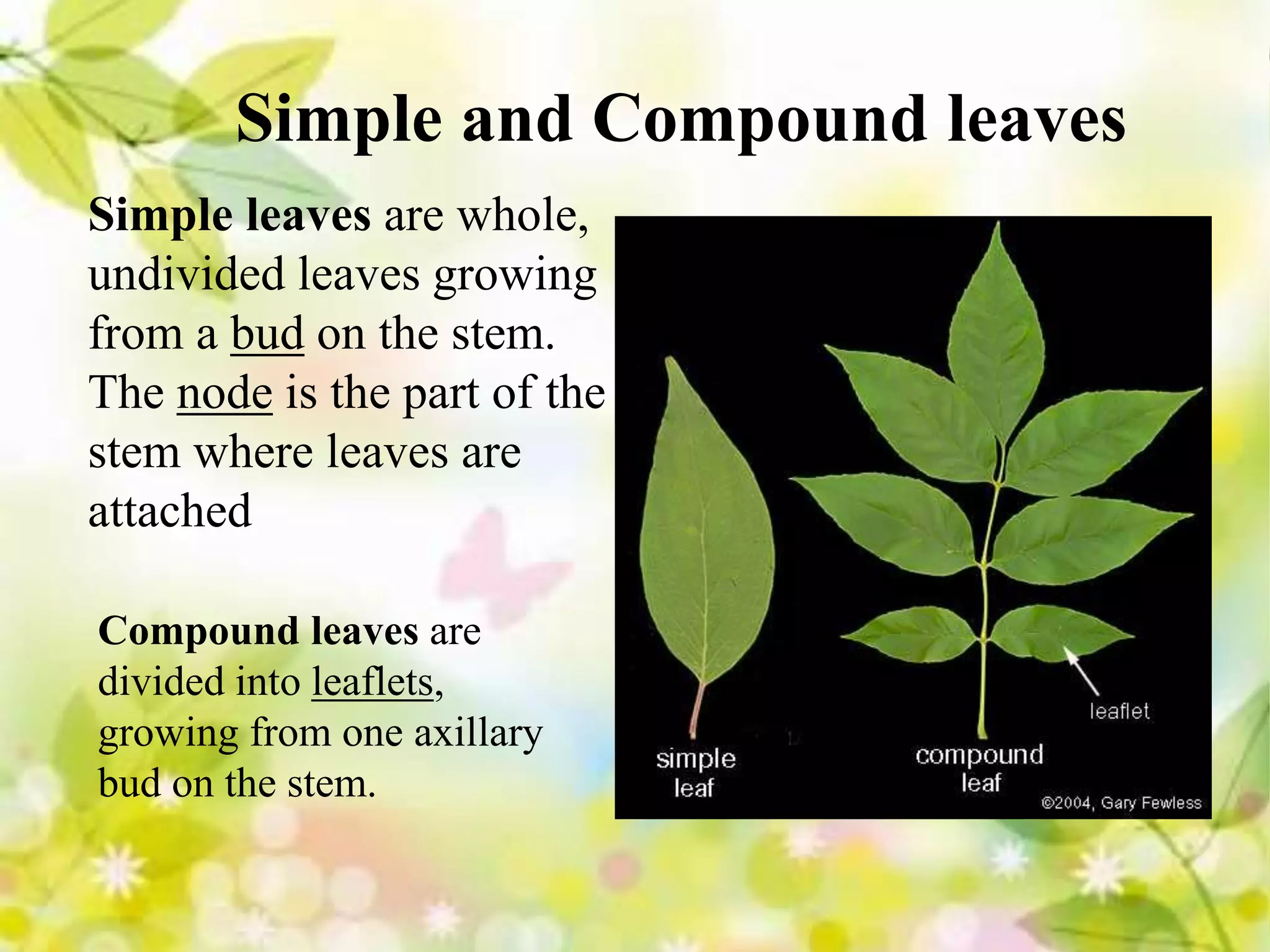
Simple leaves are whole,
undivided leaves growing
from a bud on the stem.
The node is the part of the
stem where leaves are
attached
Compound leaves are
divided into leaflets,
growing from one axillary
bud on the stem.
Phyllotaxy
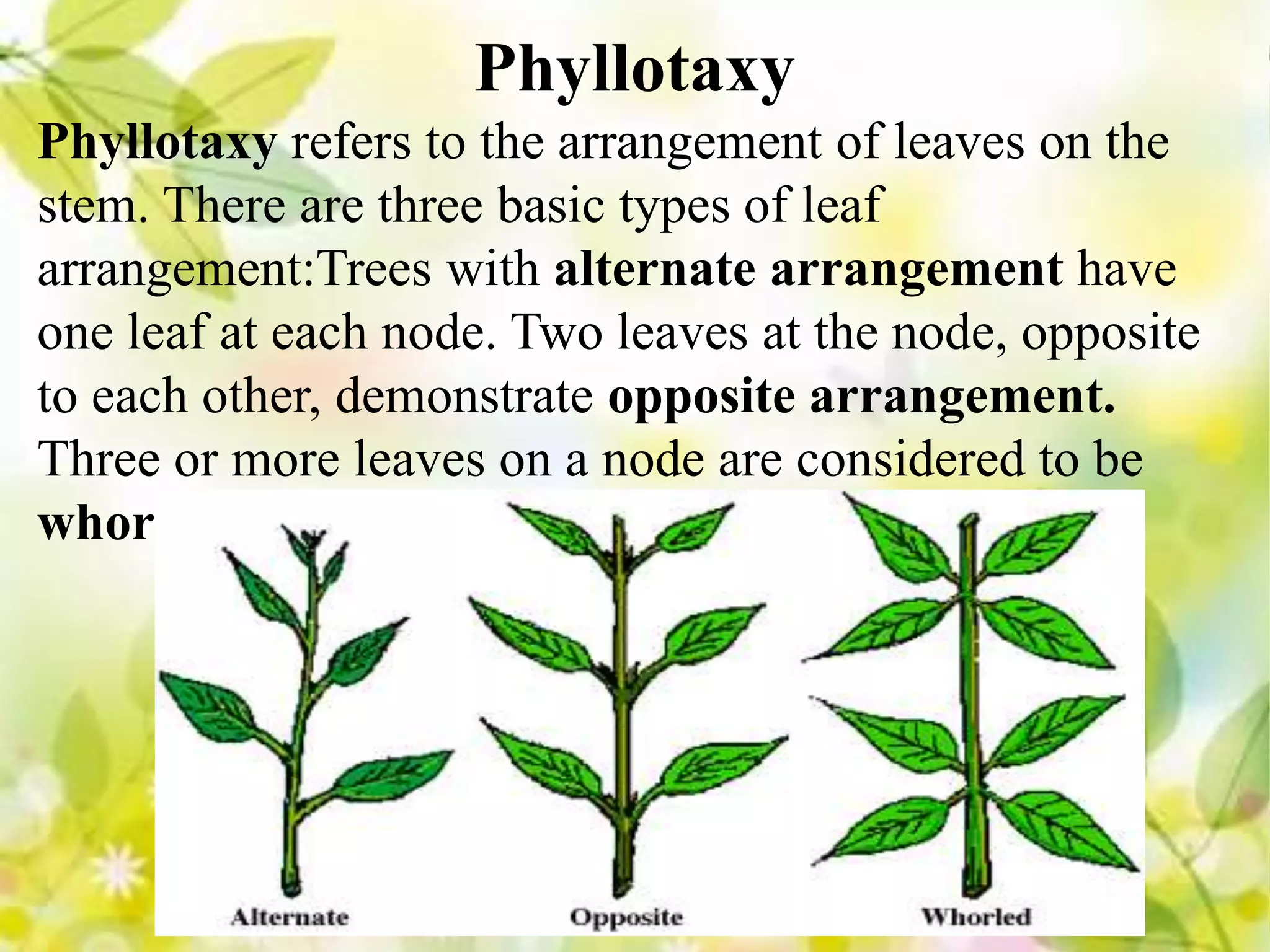
Phyllotaxy refers to the arrangement of leaves on the
stem. There are three basic types of leaf
arrangement:Trees with alternate arrangement have
one leaf at each node. Two leaves at the node, opposite
to each other, demonstrate opposite arrangement.
Three or more leaves on a node are considered to be
whorled.
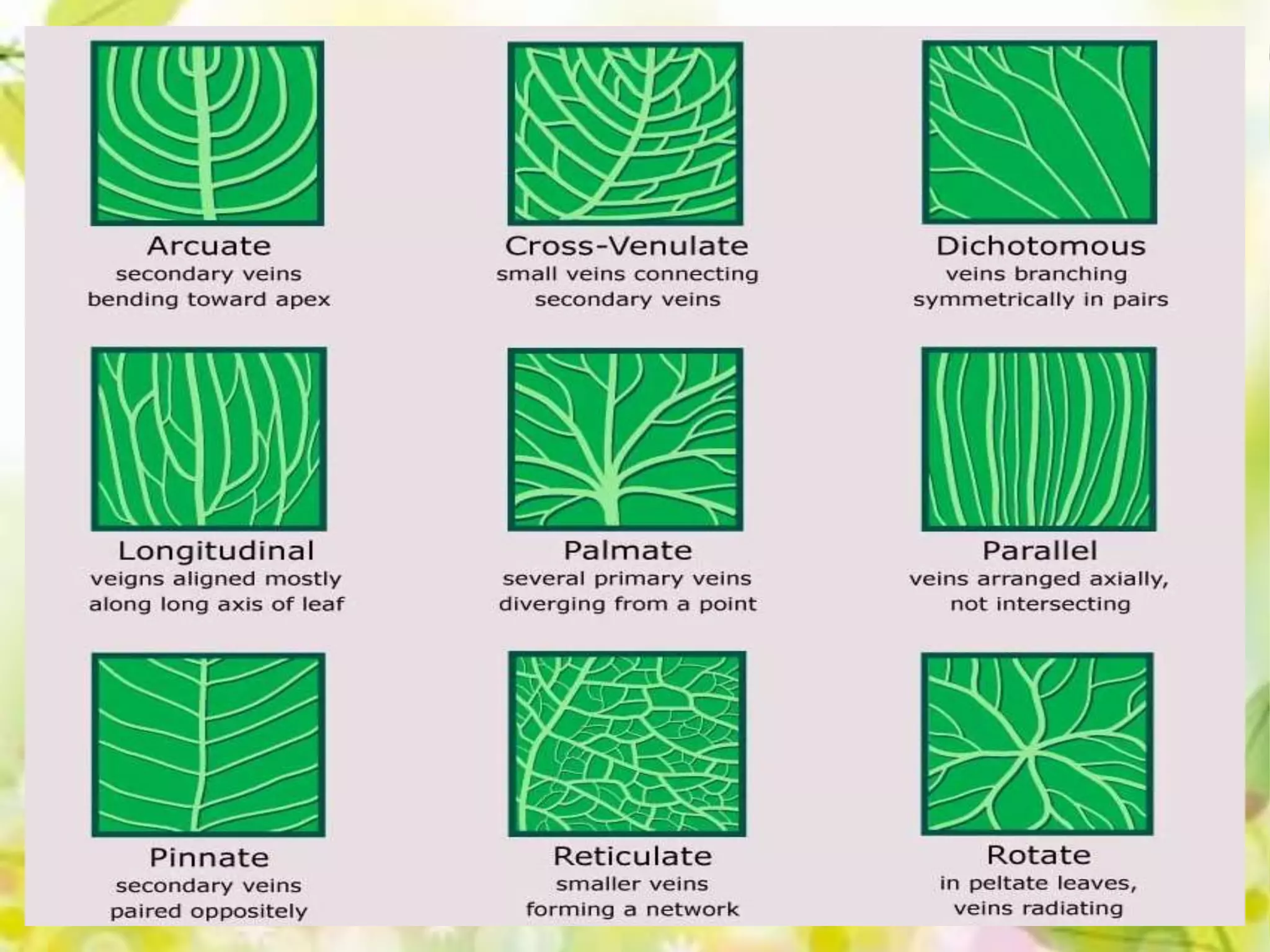
Venation
Venation deals with the arrangement of veins.
Veins are strands of
vascular tissue which
appear prominently on the
blade.
Margin
Leaf margin deals with the morphology
or shape of the blade. The margin of a
leaf is another name for the structure of
the leaf's edge.
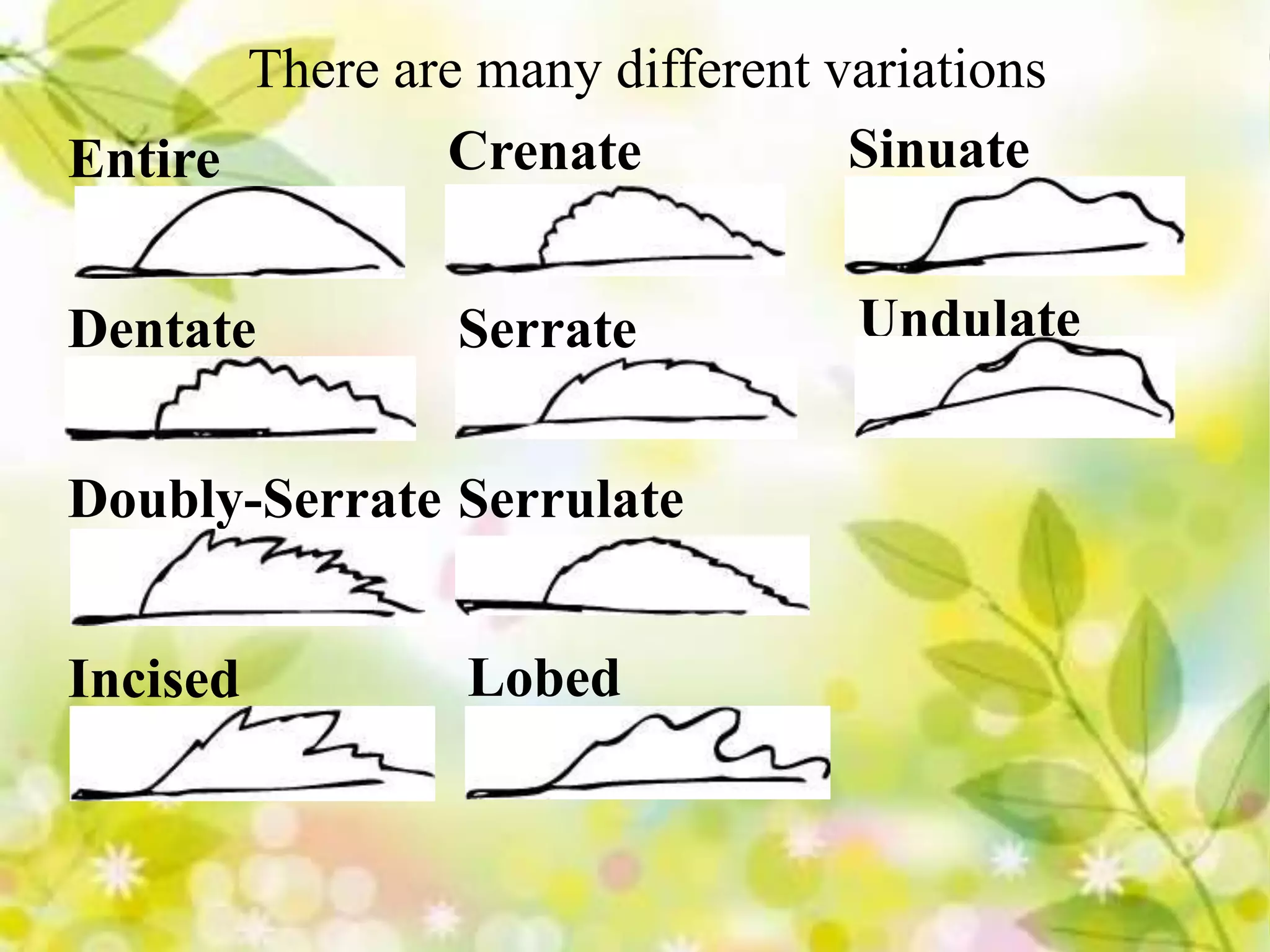
There are many different variations
Entire Crenate
Dentate Serrate
Doubly-Serrate Serrulate
Incised Lobed
Sinuate
Undulate

brief classification of leaves

  • 1.
  • 2.
    OBJECTIVES TO DEFINE ANDUNDERSTAND • Leaf Types: broad, needle-like, scale-like, evergreen, and deciduous • Simple versus compound leaves • Phyllotaxy • Venation • Margin
  • 3.
    Leaf Types Leaves areplant organs which are very important to the photosynthetic process. A broad leaf usually consists of the blade (lamina) which is the flattened photosynthetic portion. This type of leaf is usually considered to be deciduous, that is, the leaves drop during the fall and winter. The petiole is the stem-like portion of the leaf, found between the blade and the branch or stem. Leaves without petioles are considered to be sessile. Stipules are leaf-like structures found near thebase of the petiole stipule blade petiole
  • 4.
    Simple and Compoundleaves Simple leaves are whole, undivided leaves growing from a bud on the stem. The node is the part of the stem where leaves are attached Compound leaves are divided into leaflets, growing from one axillary bud on the stem.
  • 5.
    Phyllotaxy Phyllotaxy refers tothe arrangement of leaves on the stem. There are three basic types of leaf arrangement:Trees with alternate arrangement have one leaf at each node. Two leaves at the node, opposite to each other, demonstrate opposite arrangement. Three or more leaves on a node are considered to be whorled.
  • 6.
    Venation Venation deals withthe arrangement of veins. Veins are strands of vascular tissue which appear prominently on the blade.
  • 8.
    Margin Leaf margin dealswith the morphology or shape of the blade. The margin of a leaf is another name for the structure of the leaf's edge.
  • 9.
    There are manydifferent variations Entire Crenate Dentate Serrate Doubly-Serrate Serrulate Incised Lobed Sinuate Undulate