PLANT OF THE
PARTS
What Do Different Plant Parts Do?

•Plant parts do different
things for the plant
Roots
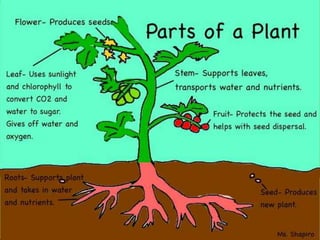
• Roots act like straws absorbing water
and minerals from the soil. Tiny root
hairs stick out of the root, helping in
the absorption. Roots help to anchor
the plant in the soil so it does not fall
over. Roots also store extra food for
future use.
Stems
• Stems do many things. They support the plant.
They act like the plant's plumbing system,
conducting water and nutrients from the roots
and food in the form of glucose from the
leaves to other plant parts. Stems can be
herbaceous like the bendable stem of a daisy
or woody like the trunk of an oak tree.
Leaves
• Most plants' food is made in
their leaves. Leaves are
designed to capture sunlight
which the plant uses to make
food through a process called
photosynthesis.
Flowers
• Flowers are the reproductive part of
most plants. Flowers contain pollen
and tiny eggs called ovules. After
pollination of the flower and
fertilization of the ovule, the ovule
develops into a fruit.
Fruit
• Fruit provides a covering
for seeds. Fruit can be
fleshy like an apple or hard
like a nut.
Seeds
•Seeds contain new
plants. Seeds form in
fruit.
•
Plant of

Plant of

  • 1.
  • 2.
    What Do DifferentPlant Parts Do? •Plant parts do different things for the plant
  • 3.
    Roots • Roots actlike straws absorbing water and minerals from the soil. Tiny root hairs stick out of the root, helping in the absorption. Roots help to anchor the plant in the soil so it does not fall over. Roots also store extra food for future use.
  • 4.
    Stems • Stems domany things. They support the plant. They act like the plant's plumbing system, conducting water and nutrients from the roots and food in the form of glucose from the leaves to other plant parts. Stems can be herbaceous like the bendable stem of a daisy or woody like the trunk of an oak tree.
  • 5.
    Leaves • Most plants'food is made in their leaves. Leaves are designed to capture sunlight which the plant uses to make food through a process called photosynthesis.
  • 6.
    Flowers • Flowers arethe reproductive part of most plants. Flowers contain pollen and tiny eggs called ovules. After pollination of the flower and fertilization of the ovule, the ovule develops into a fruit.
  • 7.
    Fruit • Fruit providesa covering for seeds. Fruit can be fleshy like an apple or hard like a nut.
  • 8.
    Seeds •Seeds contain new plants.Seeds form in fruit. •