Translocation in the Phloem
•
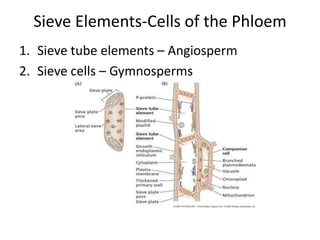
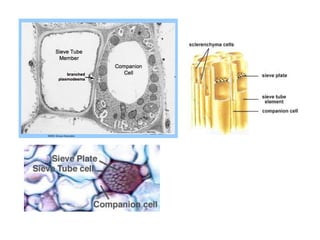
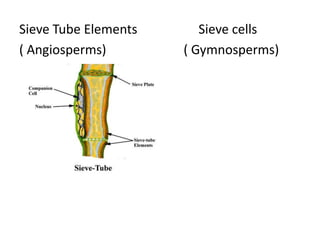
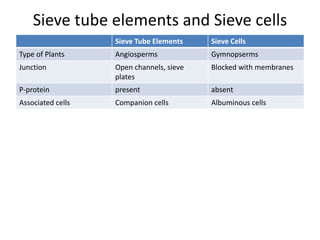
Sieve Elements-Cells of the Phloem
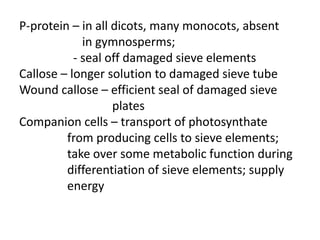
1. Sieve tube elements – Angiosperm
2. Sieve cells – Gymnosperms
Sieve Tube Elements      Sieve cells
( Angiosperms)        ( Gymnosperms)
Sieve tube elements and Sieve cells
                   Sieve Tube Elements    Sieve Cells
Type of Plants     Angiosperms            Gymnopserms
Junction           Open channels, sieve   Blocked with membranes
                   plates
P-protein          present                absent
Associated cells   Companion cells        Albuminous cells
P-protein – in all dicots, many monocots, absent
             in gymnosperms;
           - seal off damaged sieve elements
Callose – longer solution to damaged sieve tube
Wound callose – efficient seal of damaged sieve
                   plates
Companion cells – transport of photosynthate
         from producing cells to sieve elements;
         take over some metabolic function during
         differentiation of sieve elements; supply
         energy
Specialized Companion cells
1. Ordinary companion cells – have chloroplasts
2. Transfer cells – have wall ingrowths which
   increase the surface area of the plasma
   membrane and enhance solute transfer
3. Intermediary cells- with numerous
   plasmodesmata which connect them to
   sorrounding cells
Patterns of Translocation
Sources –areas of supply;
         include photosynthetic parts or
          exporting storage organ
Sink-areas of metabolism or storage ;
          nonphotosynthetic organs; ex. Roots,
tubers, developing fruits, immature leaves
Factors which affect Translocation:
1. Proximity
2. Development
3. Vascular connections
   orthostichy- vertical row of leaves

Anastomoses – vascular interconnections,
alternative pathway in cases of interferences in
the translocation path
Translocated Materials
1. Water – solvent of carbohydrates
2. Nitrogen- in the form of amino acids and
   amides
3. Plant hormones – auxin, gibberellins,
   cytokinins, abscisic acid
4. Proteins- P-proteins ( wound sealing); protein
   kinases( phosphorylation);
   thioredoxin(disulfide reduction); ubiquitin(
   protein turnover); chaperones(protein
   folding); protease inhibitors ( against insects)
5. Inorganic solutes – K, P, Mg, PO4, Cl

Reducing Sugars – not generally translocated in
the phloem : aldehyde and ketone
Nonreducing sugars - sucrose
Rates of Movement
1. Velocity – linera distance travelled per unit
   time
2. Mass transfer rate- quantity of material
   passing through a given cross sectionof
   phloem per unit time

* Transport velocities in the phloem exceed rate
of diffusion over long distances
Mechanism of Translocation
phloem loading – movement of photosynthate
        from producing cells into sieve elements
 phloem unloading – from sieve elements to
        sink cells
Pressure-Flow Model: by Ernst Munch
A flow of solution in the sieve elements is
driven by an osmotically generated pressure
gradient between source and sink.

Plant physio translocation in the phloem

  • 1.
  • 2.
  • 3.
    Sieve Elements-Cells ofthe Phloem 1. Sieve tube elements – Angiosperm 2. Sieve cells – Gymnosperms
  • 5.
    Sieve Tube Elements Sieve cells ( Angiosperms) ( Gymnosperms)
  • 6.
    Sieve tube elementsand Sieve cells Sieve Tube Elements Sieve Cells Type of Plants Angiosperms Gymnopserms Junction Open channels, sieve Blocked with membranes plates P-protein present absent Associated cells Companion cells Albuminous cells
  • 7.
    P-protein – inall dicots, many monocots, absent in gymnosperms; - seal off damaged sieve elements Callose – longer solution to damaged sieve tube Wound callose – efficient seal of damaged sieve plates Companion cells – transport of photosynthate from producing cells to sieve elements; take over some metabolic function during differentiation of sieve elements; supply energy
  • 8.
    Specialized Companion cells 1.Ordinary companion cells – have chloroplasts 2. Transfer cells – have wall ingrowths which increase the surface area of the plasma membrane and enhance solute transfer 3. Intermediary cells- with numerous plasmodesmata which connect them to sorrounding cells
  • 9.
    Patterns of Translocation Sources–areas of supply; include photosynthetic parts or exporting storage organ Sink-areas of metabolism or storage ; nonphotosynthetic organs; ex. Roots, tubers, developing fruits, immature leaves
  • 10.
    Factors which affectTranslocation: 1. Proximity 2. Development 3. Vascular connections orthostichy- vertical row of leaves Anastomoses – vascular interconnections, alternative pathway in cases of interferences in the translocation path
  • 11.
    Translocated Materials 1. Water– solvent of carbohydrates 2. Nitrogen- in the form of amino acids and amides 3. Plant hormones – auxin, gibberellins, cytokinins, abscisic acid 4. Proteins- P-proteins ( wound sealing); protein kinases( phosphorylation); thioredoxin(disulfide reduction); ubiquitin( protein turnover); chaperones(protein folding); protease inhibitors ( against insects)
  • 12.
    5. Inorganic solutes– K, P, Mg, PO4, Cl Reducing Sugars – not generally translocated in the phloem : aldehyde and ketone Nonreducing sugars - sucrose
  • 13.
    Rates of Movement 1.Velocity – linera distance travelled per unit time 2. Mass transfer rate- quantity of material passing through a given cross sectionof phloem per unit time * Transport velocities in the phloem exceed rate of diffusion over long distances
  • 14.
    Mechanism of Translocation phloemloading – movement of photosynthate from producing cells into sieve elements phloem unloading – from sieve elements to sink cells Pressure-Flow Model: by Ernst Munch A flow of solution in the sieve elements is driven by an osmotically generated pressure gradient between source and sink.