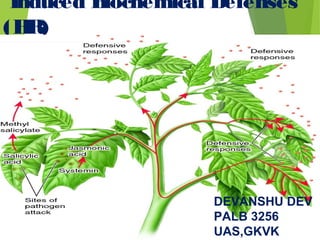
Induced Biochemical Defenses
(HR)
DEVANSHU DEV
PALB 3256
UAS,GKVK
Hypersensitive ResponseHypersensitive Response
Plant defensePlant defense
responseresponse
Cell deathCell death
•Plants have a general response to infection
anti-microbial molecules (secondary metabolites,
phytoalexins)
• Plants respond to specific infections through the
Hypersensitive Response (PCD) rapid accumulation of
reactive oxygen species (directly kill pathogen)
•Induction of defense genes (pathogenesis-related
proteins)
How do plants defend against bacteria that enter the cell?
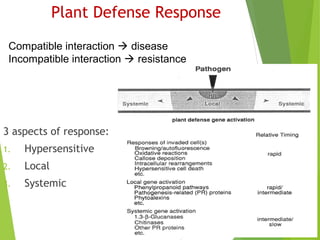
Plant Defense Response
 Hypersensitive response
 Production of reactive oxygen species
 Cell wall fortification
 Production of antimicrobial metabolites (phytoalexins)
 Defense signal transduction
 Synthesis of enzymes harmful to pathogen (eg. chitinases, glucanases)
Plant Defense Response
3 aspects of response:
1. Hypersensitive
2. Local
3. Systemic
Compatible interaction  disease
Incompatible interaction  resistance
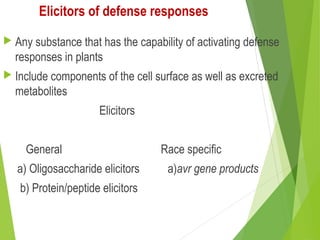
Elicitors of defense responses
 Any substance that has the capability of activating defense
responses in plants
 Include components of the cell surface as well as excreted
metabolites
Elicitors
General Race specific
a) Oligosaccharide elicitors a)avr gene products
b) Protein/peptide elicitors
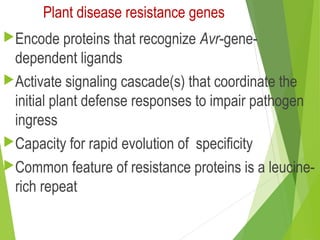
Plant disease resistance genes
Encode proteins that recognize Avr-gene-
dependent ligands
Activate signaling cascade(s) that coordinate the
initial plant defense responses to impair pathogen
ingress
Capacity for rapid evolution of specificity
Common feature of resistance proteins is a leucine-
rich repeat
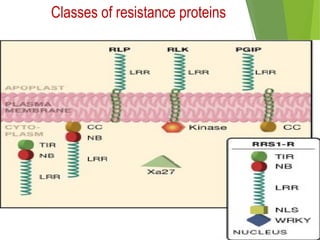
Classes of resistance proteins
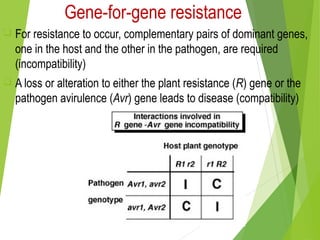
Gene-for-gene resistance
 For resistance to occur, complementary pairs of dominant genes,
one in the host and the other in the pathogen, are required
(incompatibility)
 A loss or alteration to either the plant resistance (R) gene or the
pathogen avirulence (Avr) gene leads to disease (compatibility)
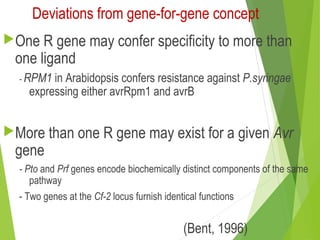
Deviations from gene-for-gene concept
One R gene may confer specificity to more than
one ligand
- RPM1 in Arabidopsis confers resistance against P.syringae
expressing either avrRpm1 and avrB
More than one R gene may exist for a given Avr
gene
- Pto and Prf genes encode biochemically distinct components of the same
pathway
- Two genes at the Cf-2 locus furnish identical functions
(Bent, 1996)
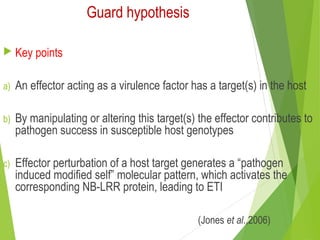
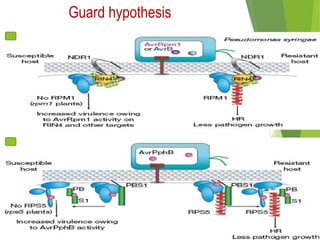
Guard hypothesis
 Key points
a) An effector acting as a virulence factor has a target(s) in the host
b) By manipulating or altering this target(s) the effector contributes to
pathogen success in susceptible host genotypes
c) Effector perturbation of a host target generates a “pathogen
induced modified self” molecular pattern, which activates the
corresponding NB-LRR protein, leading to ETI
(Jones et al.,2006)
Guard hypothesis
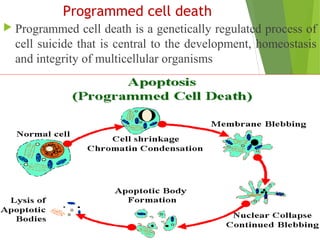
Programmed cell death
 Programmed cell death is a genetically regulated process of
cell suicide that is central to the development, homeostasis
and integrity of multicellular organisms
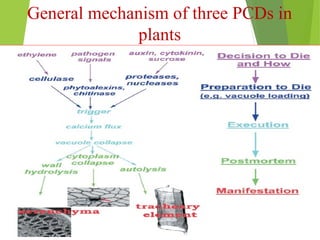
General mechanism of three PCDs in
plants
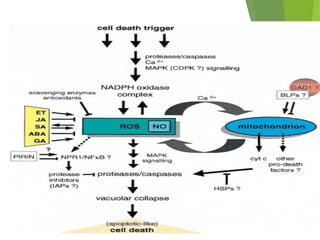
Model of plant programmed cell death
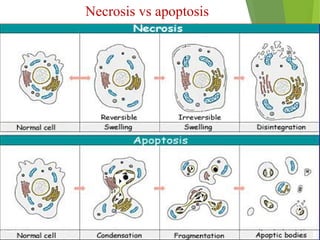
Necrosis vs apoptosis
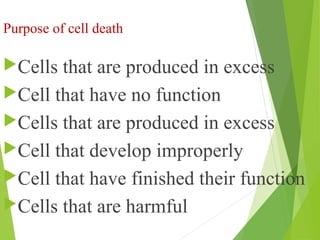
Purpose of cell death
Cells that are produced in excess
Cell that have no function
Cells that are produced in excess
Cell that develop improperly
Cell that have finished their function
Cells that are harmful
Hypersensitive response
Rapid, localized plant cell death upon contact
with avirulent pathogens. HR is considered to
be a key component of multifaceted plant
defense responses to restrict attempted
infection by avirulent pathogens
Rapid - within 24 h
Not always needed for resistance
HR also contributes to the establishmentof the
long-lasting systemic acquired resistance
against subsequentattack by a broad range of
normally virulent pathogens
 HR Includes:
 oxidative bust (production of reactive oxygen
species)
Disruption of cell membranes
opening of ion channels
Cross linking of phenolics with cell wall component
Production of anti-microbial phytoalexins and PR
protein
apoptosis (programmed cell death)
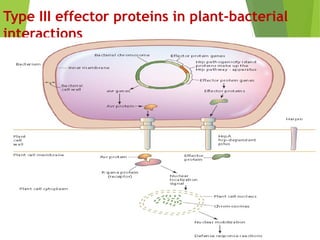
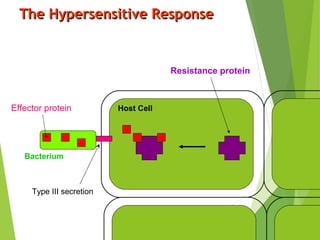
•Bacteria like Pseudomonas syringae inject effector
proteins (bacterial avirulence and virulence
proteins) into plant cells using the Type-III
secretion system.
•Plants that are resistant to the bacteria have
resistance proteins that recognize the effector
proteins and cause the infected cell to commit
suicide (apoptosis/PCD/Hypersensitive
Response)
•prevents the bacteria from infecting the rest of the
plant by directly killing them and depleting nutrients
The Hypersensitive ResponseThe Hypersensitive Response
• Pectic enzymes
- Soft rot Erwinia spp.
- Multiple isozymes, some plant regulated
• Toxins
- e.g., coronatine acts as JA mimic to downregulate plant defense
• Extracellular polysaccharides
- Important in many diseases, esp. vascular diseases
- Postulated roles in protection from plant-derived antimicrobials, osmotic stress,
dessication; evading recognition; causing wilt, etc.
• Quorum sensing (cell-cell signaling) and global
regulation of virulence
- Soft rot Erwinia spp. regulation of virulence associated genes, including pectic
enzymes
- Cell wall degradation products elicit plant defense, so benefit to repressing
pectolytic activity until high numbers of bacteria accumulate.
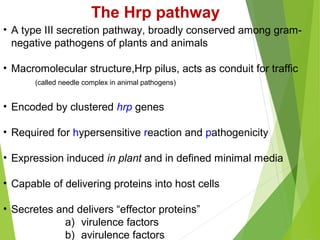
• The Type III secretion (Hrp) pathway
- Essential for necrogenic Gram negative pathogens
Major findings
• A type III secretion pathway, broadly conserved among gram-
negative pathogens of plants and animals
• Macromolecular structure,Hrp pilus, acts as conduit for traffic
(called needle complex in animal pathogens)
• Encoded by clustered hrp genes
• Required for hypersensitive reaction and pathogenicity
• Expression induced in plant and in defined minimal media
• Capable of delivering proteins into host cells
• Secretes and delivers “effector proteins”
a) virulence factors
b) avirulence factors
The Hrp pathway
Type III effector proteins in plant-bacterial
interactions
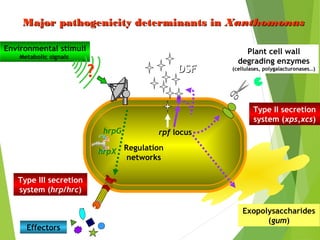
Exopolysaccharides
(gum)
Major pathogenicity determinants inMajor pathogenicity determinants in XanthomonasXanthomonas
Regulation
networks
rpf locus
DSFDSF
Plant cell wall
degrading enzymes
(cellulases, polygalacturonases…)
hrpG
Environmental stimuli
Metabolic signals
?
hrpX
Type III secretion
system (hrp/hrc)
Effectors
Type II secretion
system (xps,xcs)
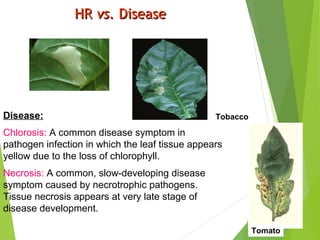
HRHR vs.vs. DiseaseDisease
Disease:
Chlorosis: A common disease symptom in
pathogen infection in which the leaf tissue appears
yellow due to the loss of chlorophyll.
Necrosis: A common, slow-developing disease
symptom caused by necrotrophic pathogens.
Tissue necrosis appears at very late stage of
disease development.
Tobacco
Tomato
The Hypersensitive ResponseThe Hypersensitive Response
Host Cell
Bacterium
Effector protein
Type III secretion
Resistance protein
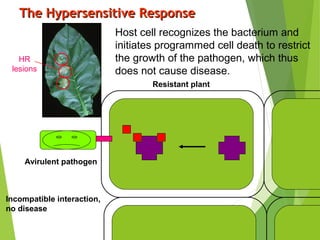
The Hypersensitive ResponseThe Hypersensitive Response
Host cell recognizes the bacterium and
initiates programmed cell death to restrict
the growth of the pathogen, which thus
does not cause disease.
Avirulent pathogen
HR
lesions
Resistant plant
Incompatible interaction,
no disease
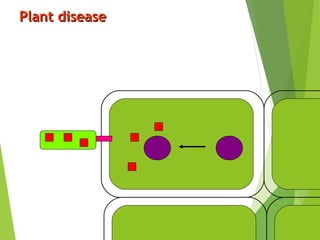
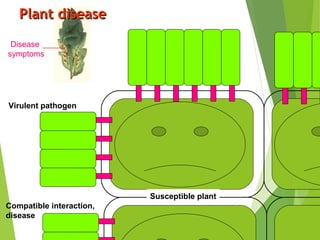
Plant diseasePlant disease
Disease
symptoms
Susceptible plant
Virulent pathogen
Compatible interaction,
disease
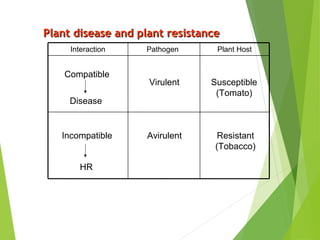
Plant disease and plant resistancePlant disease and plant resistance
Plant HostPathogenInteraction
Virulent
Avirulent
Compatible
Incompatible
Susceptible
(Tomato)
Resistant
(Tobacco)
Disease
HR
Systemic Acquired Resistance (SAR)Systemic Acquired Resistance (SAR)
 SAR is a mechanism of induced defense that confers
long-lasting protection against a broad spectrum of
microorganisms.
 Enhance resistance against subsequent attack by a
wide array of pathogen.
 The vasculature provide the excellent channel for
transport of systemic signals.
 SAR takes 24-48 h to start, can last for months
Involves gene activation and a transmitted signal.
 Genes induced:
chitinases
β 1,3- glucanases
other PR proteins
Complex signalling networks orchestrate
different types of plant-inducible defences to
prevent microbial growth.
 Pathogen recognition triggers a number of
rapid cellular responses, including ionic
changes, and phosphorylation cascades,
which precede the accumulation of reactive
oxygen species, nitric oxide, and salicylic acid
(SA) and the transcriptional activation of
defence-related genes.
Interplay between reactive oxygen species, nitric
oxide, and SA contributes to the establishment of
HR.
 SA also has a key role in establishing local and
systemic resistance to many virulent biotrophic
pathogens, whereas jasmonic acid (JA) and
ethylene (ET) are more often associated with
resistance to necrotrophic pathogens.
 Considerable interactions occur within and
between these hormone signalling networks,
resulting in an overall mutual antagonism between
SA and JA/ET signalling
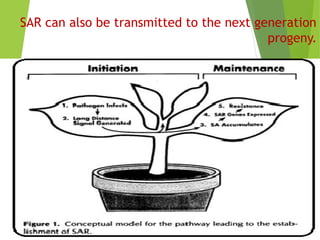
SAR can also be transmitted to the next generation
progeny.
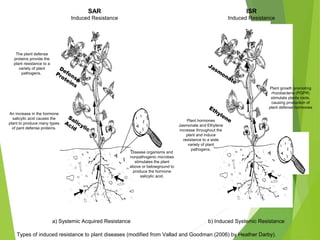
Defense
Proteins
Salicylic
Acid
The plant defense
proteins provide the
plant resistance to a
variety of plant
pathogens.
Disease organisms and
nonpathogenic microbes
stimulates the plant
above or belowground to
produce the hormone
salicylic acid.
An increase in the hormone
salicylic acid causes the
plant to produce many types
of pant defense proteins.
Plant hormones
Jasmonate and Ethylene
increase throughout the
plant and induce
resistance to a wide
variety of plant
pathogens.
Jasm
onate
Ethylene
Plant growth promoting
rhizobacteria (PGPR)
stimulate plants roots,
causing production of
plant defense hormones
ISR
Induced Resistance
SAR
Induced Resistance
a) Systemic Acquired Resistance b) Induced Systemic Resistance
Types of induced resistance to plant diseases (modified from Vallad and Goodman (2006) by Heather Darby).
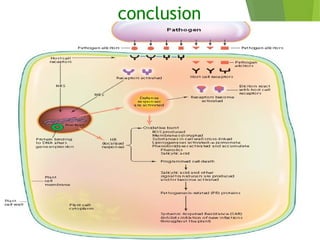
conclusion
THANK YOU

Biochemical plant defences(HR)

  • 1.
  • 2.
    Hypersensitive ResponseHypersensitive Response PlantdefensePlant defense responseresponse Cell deathCell death
  • 3.
    •Plants have ageneral response to infection anti-microbial molecules (secondary metabolites, phytoalexins) • Plants respond to specific infections through the Hypersensitive Response (PCD) rapid accumulation of reactive oxygen species (directly kill pathogen) •Induction of defense genes (pathogenesis-related proteins) How do plants defend against bacteria that enter the cell?
  • 4.
    Plant Defense Response Hypersensitive response  Production of reactive oxygen species  Cell wall fortification  Production of antimicrobial metabolites (phytoalexins)  Defense signal transduction  Synthesis of enzymes harmful to pathogen (eg. chitinases, glucanases)
  • 5.
    Plant Defense Response 3aspects of response: 1. Hypersensitive 2. Local 3. Systemic Compatible interaction  disease Incompatible interaction  resistance
  • 6.
    Elicitors of defenseresponses  Any substance that has the capability of activating defense responses in plants  Include components of the cell surface as well as excreted metabolites Elicitors General Race specific a) Oligosaccharide elicitors a)avr gene products b) Protein/peptide elicitors
  • 7.
    Plant disease resistancegenes Encode proteins that recognize Avr-gene- dependent ligands Activate signaling cascade(s) that coordinate the initial plant defense responses to impair pathogen ingress Capacity for rapid evolution of specificity Common feature of resistance proteins is a leucine- rich repeat
  • 8.
  • 9.
    Gene-for-gene resistance  Forresistance to occur, complementary pairs of dominant genes, one in the host and the other in the pathogen, are required (incompatibility)  A loss or alteration to either the plant resistance (R) gene or the pathogen avirulence (Avr) gene leads to disease (compatibility)
  • 10.
    Deviations from gene-for-geneconcept One R gene may confer specificity to more than one ligand - RPM1 in Arabidopsis confers resistance against P.syringae expressing either avrRpm1 and avrB More than one R gene may exist for a given Avr gene - Pto and Prf genes encode biochemically distinct components of the same pathway - Two genes at the Cf-2 locus furnish identical functions (Bent, 1996)
  • 11.
    Guard hypothesis  Keypoints a) An effector acting as a virulence factor has a target(s) in the host b) By manipulating or altering this target(s) the effector contributes to pathogen success in susceptible host genotypes c) Effector perturbation of a host target generates a “pathogen induced modified self” molecular pattern, which activates the corresponding NB-LRR protein, leading to ETI (Jones et al.,2006)
  • 12.
  • 13.
    Programmed cell death Programmed cell death is a genetically regulated process of cell suicide that is central to the development, homeostasis and integrity of multicellular organisms
  • 14.
    General mechanism ofthree PCDs in plants
  • 15.
    Model of plantprogrammed cell death
  • 16.
  • 17.
    Purpose of celldeath Cells that are produced in excess Cell that have no function Cells that are produced in excess Cell that develop improperly Cell that have finished their function Cells that are harmful
  • 18.
    Hypersensitive response Rapid, localizedplant cell death upon contact with avirulent pathogens. HR is considered to be a key component of multifaceted plant defense responses to restrict attempted infection by avirulent pathogens Rapid - within 24 h Not always needed for resistance HR also contributes to the establishmentof the long-lasting systemic acquired resistance against subsequentattack by a broad range of normally virulent pathogens
  • 19.
     HR Includes: oxidative bust (production of reactive oxygen species) Disruption of cell membranes opening of ion channels Cross linking of phenolics with cell wall component Production of anti-microbial phytoalexins and PR protein apoptosis (programmed cell death)
  • 20.
    •Bacteria like Pseudomonassyringae inject effector proteins (bacterial avirulence and virulence proteins) into plant cells using the Type-III secretion system. •Plants that are resistant to the bacteria have resistance proteins that recognize the effector proteins and cause the infected cell to commit suicide (apoptosis/PCD/Hypersensitive Response) •prevents the bacteria from infecting the rest of the plant by directly killing them and depleting nutrients The Hypersensitive ResponseThe Hypersensitive Response
  • 21.
    • Pectic enzymes -Soft rot Erwinia spp. - Multiple isozymes, some plant regulated • Toxins - e.g., coronatine acts as JA mimic to downregulate plant defense • Extracellular polysaccharides - Important in many diseases, esp. vascular diseases - Postulated roles in protection from plant-derived antimicrobials, osmotic stress, dessication; evading recognition; causing wilt, etc. • Quorum sensing (cell-cell signaling) and global regulation of virulence - Soft rot Erwinia spp. regulation of virulence associated genes, including pectic enzymes - Cell wall degradation products elicit plant defense, so benefit to repressing pectolytic activity until high numbers of bacteria accumulate. • The Type III secretion (Hrp) pathway - Essential for necrogenic Gram negative pathogens Major findings
  • 22.
    • A typeIII secretion pathway, broadly conserved among gram- negative pathogens of plants and animals • Macromolecular structure,Hrp pilus, acts as conduit for traffic (called needle complex in animal pathogens) • Encoded by clustered hrp genes • Required for hypersensitive reaction and pathogenicity • Expression induced in plant and in defined minimal media • Capable of delivering proteins into host cells • Secretes and delivers “effector proteins” a) virulence factors b) avirulence factors The Hrp pathway
  • 23.
    Type III effectorproteins in plant-bacterial interactions
  • 24.
    Exopolysaccharides (gum) Major pathogenicity determinantsinMajor pathogenicity determinants in XanthomonasXanthomonas Regulation networks rpf locus DSFDSF Plant cell wall degrading enzymes (cellulases, polygalacturonases…) hrpG Environmental stimuli Metabolic signals ? hrpX Type III secretion system (hrp/hrc) Effectors Type II secretion system (xps,xcs)
  • 25.
    HRHR vs.vs. DiseaseDisease Disease: Chlorosis:A common disease symptom in pathogen infection in which the leaf tissue appears yellow due to the loss of chlorophyll. Necrosis: A common, slow-developing disease symptom caused by necrotrophic pathogens. Tissue necrosis appears at very late stage of disease development. Tobacco Tomato
  • 26.
    The Hypersensitive ResponseTheHypersensitive Response Host Cell Bacterium Effector protein Type III secretion Resistance protein
  • 27.
    The Hypersensitive ResponseTheHypersensitive Response Host cell recognizes the bacterium and initiates programmed cell death to restrict the growth of the pathogen, which thus does not cause disease. Avirulent pathogen HR lesions Resistant plant Incompatible interaction, no disease
  • 28.
  • 29.
    Plant diseasePlant disease Disease symptoms Susceptibleplant Virulent pathogen Compatible interaction, disease
  • 30.
    Plant disease andplant resistancePlant disease and plant resistance Plant HostPathogenInteraction Virulent Avirulent Compatible Incompatible Susceptible (Tomato) Resistant (Tobacco) Disease HR
  • 31.
    Systemic Acquired Resistance(SAR)Systemic Acquired Resistance (SAR)  SAR is a mechanism of induced defense that confers long-lasting protection against a broad spectrum of microorganisms.  Enhance resistance against subsequent attack by a wide array of pathogen.  The vasculature provide the excellent channel for transport of systemic signals.  SAR takes 24-48 h to start, can last for months Involves gene activation and a transmitted signal.  Genes induced: chitinases β 1,3- glucanases other PR proteins
  • 32.
    Complex signalling networksorchestrate different types of plant-inducible defences to prevent microbial growth.  Pathogen recognition triggers a number of rapid cellular responses, including ionic changes, and phosphorylation cascades, which precede the accumulation of reactive oxygen species, nitric oxide, and salicylic acid (SA) and the transcriptional activation of defence-related genes.
  • 33.
    Interplay between reactiveoxygen species, nitric oxide, and SA contributes to the establishment of HR.  SA also has a key role in establishing local and systemic resistance to many virulent biotrophic pathogens, whereas jasmonic acid (JA) and ethylene (ET) are more often associated with resistance to necrotrophic pathogens.  Considerable interactions occur within and between these hormone signalling networks, resulting in an overall mutual antagonism between SA and JA/ET signalling
  • 34.
    SAR can alsobe transmitted to the next generation progeny.
  • 35.
    Defense Proteins Salicylic Acid The plant defense proteinsprovide the plant resistance to a variety of plant pathogens. Disease organisms and nonpathogenic microbes stimulates the plant above or belowground to produce the hormone salicylic acid. An increase in the hormone salicylic acid causes the plant to produce many types of pant defense proteins. Plant hormones Jasmonate and Ethylene increase throughout the plant and induce resistance to a wide variety of plant pathogens. Jasm onate Ethylene Plant growth promoting rhizobacteria (PGPR) stimulate plants roots, causing production of plant defense hormones ISR Induced Resistance SAR Induced Resistance a) Systemic Acquired Resistance b) Induced Systemic Resistance Types of induced resistance to plant diseases (modified from Vallad and Goodman (2006) by Heather Darby).

  • 36.
  • 37.

Editor's Notes

  • #25 Molecular biology studies have characterized several key pathogenicity determinants of Xcc. In addition to motility and attachment to plant, some key elements of Xcc pathogenicity are EPS and Plant cell wall degrading enzymes. The synthesis of these 2 last is regulated by a quorum sensing system via rpf genes. Then the major pathogenicity determinant of Xcc is the TTSS which injects bacterial proteins into the plant cell. This secretion system is induced by metabolic signals in the extra cellular medium and is regulated by 2 master regulatory genes hrpG and hrpX.