Translocation
What is it?






Translocation is the movement of organic substances
made by the plant which are called assimilates.
These are things such as sugars and other chemicals
made by plant cells and are transported in the
phloem tissue.
Assimilates are transported in sieve elements, which
work closely together with companion cells to
achieve translocation.
The part of the plant that releases the assimilate into
the phloem is called a source, and the part of the
plant that removes the assimilate from the phloem is
called a sink.
Sieve Elements






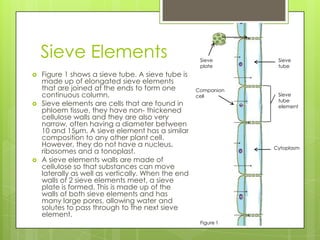
Figure 1 shows a sieve tube. A sieve tube is
made up of elongated sieve elements
that are joined at the ends to form one
continuous column.
Sieve elements are cells that are found in
phloem tissue, they have non- thickened
cellulose walls and they are also very
narrow, often having a diameter between
10 and 15µm. A sieve element has a similar
composition to any other plant cell.
However, they do not have a nucleus,
ribosomes and a tonoplast.
A sieve elements walls are made of
cellulose so that substances can move
laterally as well as vertically. When the end
walls of 2 sieve elements meet, a sieve
plate is formed. This is made up of the
walls of both sieve elements and has
many large pores, allowing water and
solutes to pass through to the next sieve
element.

Sieve
plate

Companion
cell

Sieve
tube

Sieve
tube
element

Cytoplasm

Figure 1
Companion cells




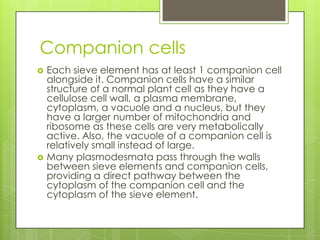
Each sieve element has at least 1 companion cell
alongside it. Companion cells have a similar
structure of a normal plant cell as they have a
cellulose cell wall, a plasma membrane,
cytoplasm, a vacuole and a nucleus, but they
have a larger number of mitochondria and
ribosome as these cells are very metabolically
active. Also, the vacuole of a companion cell is
relatively small instead of large.
Many plasmodesmata pass through the walls
between sieve elements and companion cells,
providing a direct pathway between the
cytoplasm of the companion cell and the
cytoplasm of the sieve element.
How translocation occurs






Inside a sieve tube is phloem sap. This moves by mass
flow, so a pressure difference needs to be created in
order to achieve mass flow in the phloem, meaning that
the plant has to use its own energy.
This pressure difference is the outcome of active loading
of sucrose into sieve elements at the place from which
the sucrose is to be transported (normally a
photosynthesising leaf). This movement of sucrose
decreases the water potential in the sap inside the sieve
tube, which causes water to move into the sieve
element down a water potential gradient, by the
process of osmosis.
In the leaf (source), water moves into the sieve tube and
moves out of it in the root (sink) and a pressure
difference is created. This pressure difference causes the
liquid inside the tube to flow from the higher pressure
area to the lower one.
Loading sucrose into the phloem




Some sugars produced by photosynthesis are
converted into sucrose. This sucrose is transported
to other parts of the plant by the phloem. Sucrose
is a soluble substance, so it dissolves in water in the
mesophyll cells, and moves out of the cell and
across the leaf by either the apoplast or symplast
pathway.
The sucrose is then transferred into the companion
cells by active transport and then into the sieve
tube, through the plasmodesmata.
Apoplast and Symplast pathway:
what's the difference?
 Apoplast:

Water soaks into wall and then seeps
from cell wall to cell wall, and through spaces
between the cells without ever entering a cell.

 Symplast:

The water moves from cell to cell by
osmosis or through plasmodesmata and
actually enters the cells.
Unloading sucrose from the
phloem
 This

occurs in any tissue that requires the
sucrose. The sucrose usually moves out of the
phloem and into the tissue by facilitated
diffusion and it is then converted into another
substance to maintain a concentration
gradient.

Translocation in plants

  • 1.
  • 2.
    What is it?    Translocationis the movement of organic substances made by the plant which are called assimilates. These are things such as sugars and other chemicals made by plant cells and are transported in the phloem tissue. Assimilates are transported in sieve elements, which work closely together with companion cells to achieve translocation. The part of the plant that releases the assimilate into the phloem is called a source, and the part of the plant that removes the assimilate from the phloem is called a sink.
  • 3.
    Sieve Elements    Figure 1shows a sieve tube. A sieve tube is made up of elongated sieve elements that are joined at the ends to form one continuous column. Sieve elements are cells that are found in phloem tissue, they have non- thickened cellulose walls and they are also very narrow, often having a diameter between 10 and 15µm. A sieve element has a similar composition to any other plant cell. However, they do not have a nucleus, ribosomes and a tonoplast. A sieve elements walls are made of cellulose so that substances can move laterally as well as vertically. When the end walls of 2 sieve elements meet, a sieve plate is formed. This is made up of the walls of both sieve elements and has many large pores, allowing water and solutes to pass through to the next sieve element. Sieve plate Companion cell Sieve tube Sieve tube element Cytoplasm Figure 1
  • 4.
    Companion cells   Each sieveelement has at least 1 companion cell alongside it. Companion cells have a similar structure of a normal plant cell as they have a cellulose cell wall, a plasma membrane, cytoplasm, a vacuole and a nucleus, but they have a larger number of mitochondria and ribosome as these cells are very metabolically active. Also, the vacuole of a companion cell is relatively small instead of large. Many plasmodesmata pass through the walls between sieve elements and companion cells, providing a direct pathway between the cytoplasm of the companion cell and the cytoplasm of the sieve element.
  • 5.
    How translocation occurs    Insidea sieve tube is phloem sap. This moves by mass flow, so a pressure difference needs to be created in order to achieve mass flow in the phloem, meaning that the plant has to use its own energy. This pressure difference is the outcome of active loading of sucrose into sieve elements at the place from which the sucrose is to be transported (normally a photosynthesising leaf). This movement of sucrose decreases the water potential in the sap inside the sieve tube, which causes water to move into the sieve element down a water potential gradient, by the process of osmosis. In the leaf (source), water moves into the sieve tube and moves out of it in the root (sink) and a pressure difference is created. This pressure difference causes the liquid inside the tube to flow from the higher pressure area to the lower one.
  • 6.
    Loading sucrose intothe phloem   Some sugars produced by photosynthesis are converted into sucrose. This sucrose is transported to other parts of the plant by the phloem. Sucrose is a soluble substance, so it dissolves in water in the mesophyll cells, and moves out of the cell and across the leaf by either the apoplast or symplast pathway. The sucrose is then transferred into the companion cells by active transport and then into the sieve tube, through the plasmodesmata.
  • 7.
    Apoplast and Symplastpathway: what's the difference?  Apoplast: Water soaks into wall and then seeps from cell wall to cell wall, and through spaces between the cells without ever entering a cell.  Symplast: The water moves from cell to cell by osmosis or through plasmodesmata and actually enters the cells.
  • 8.
    Unloading sucrose fromthe phloem  This occurs in any tissue that requires the sucrose. The sucrose usually moves out of the phloem and into the tissue by facilitated diffusion and it is then converted into another substance to maintain a concentration gradient.