Plant cell wall and membrane
Dr. Baljinder Singh Gill
• The cell wall is a tough, flexible but sometimes fairly rigid layer
that surrounds some types of cells.
• It is located outside the cell membrane and provides these cells
with structural support and protection, in addition to acting as a
filtering mechanism.
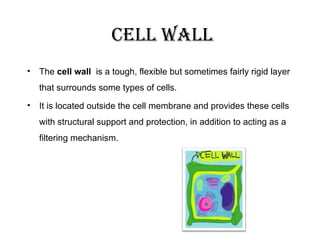
cell wall
MAJOR FUCTION OF CELL WALL
maintaining/determining cell shape,
mechanical strength
As a natural product, the plant cell wall is used commercially in the
form of paper, textiles, fibers (cotton, flax, hemp, and others), charcoal,
lumber, and other wood products. Another major use of plant cell walls
is in the form of extracted polysaccharides that have been modified to
make plastics, films, coatings, adhesives, gels, and thickeners in a huge
variety of products
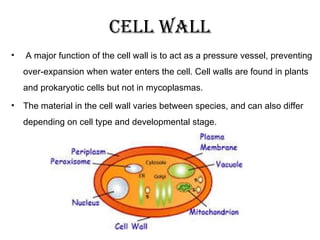
• A major function of the cell wall is to act as a pressure vessel, preventing
over-expansion when water enters the cell. Cell walls are found in plants
and prokaryotic cells but not in mycoplasmas.
• The material in the cell wall varies between species, and can also differ
depending on cell type and developmental stage.
Cell wall
• The cell wall serves a similar purpose in organisms that
possess them.
• The wall gives cells rigidity and strength, offering protection
against mechanical stress.
• The cell wall also limits the entry of large molecules that
may be toxic to the cell.
property
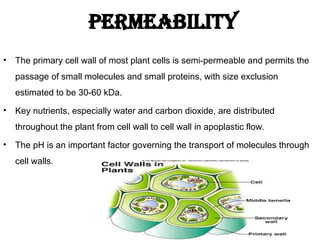
• The primary cell wall of most plant cells is semi-permeable and permits the
passage of small molecules and small proteins, with size exclusion
estimated to be 30-60 kDa.
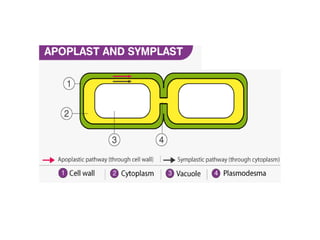
• Key nutrients, especially water and carbon dioxide, are distributed
throughout the plant from cell wall to cell wall in apoplastic flow.
• The pH is an important factor governing the transport of molecules through
cell walls.
Permeability
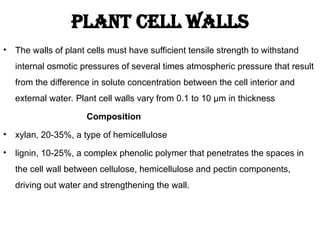
• The walls of plant cells must have sufficient tensile strength to withstand
internal osmotic pressures of several times atmospheric pressure that result
from the difference in solute concentration between the cell interior and
external water. Plant cell walls vary from 0.1 to 10 µm in thickness
Composition
• xylan, 20-35%, a type of hemicellulose
• lignin, 10-25%, a complex phenolic polymer that penetrates the spaces in
the cell wall between cellulose, hemicellulose and pectin components,
driving out water and strengthening the wall.
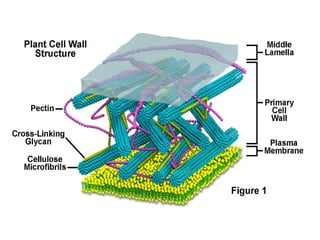
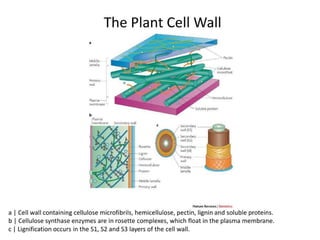
Plant cell walls
Components of Plant Cell Wall
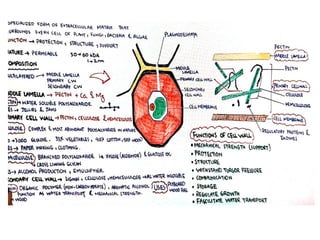
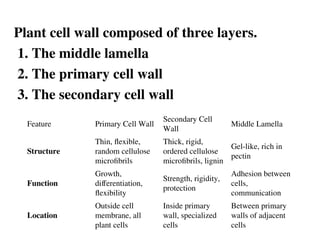
Plant cell wall composed of three layers.
1. The middle lamella
2. The primary cell wall
3. The secondary cell wall
Feature Primary Cell Wall
Secondary Cell
Wall
Middle Lamella
Structure
Thin, flexible,
random cellulose
microfibrils
Thick, rigid,
ordered cellulose
microfibrils, lignin
Gel-like, rich in
pectin
Function
Growth,
differentiation,
flexibility
Strength, rigidity,
protection
Adhesion between
cells,
communication
Location
Outside cell
membrane, all
plant cells
Inside primary
wall, specialized
cells
Between primary
walls of adjacent
cells
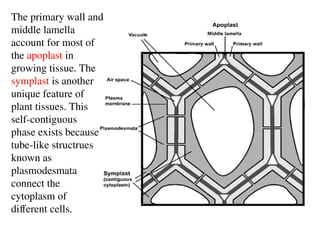
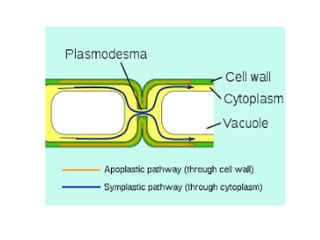
The primary wall and
middle lamella
account for most of
the apoplast in
growing tissue. The
symplast is another
unique feature of
plant tissues. This
self-contiguous
phase exists because
tube-like structrues
known as
plasmodesmata
connect the
cytoplasm of
different cells.
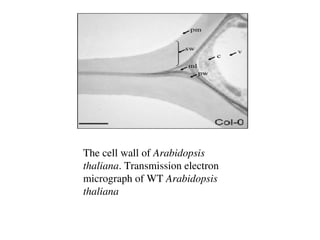
The cell wall of Arabidopsis
thaliana. Transmission electron
micrograph of WT Arabidopsis
thaliana
Composition of Plant Cell Wall
• In the primary plant cell wall, the major
carbohydrates are cellulose, hemicellulose and
pectin.
• The outer part of the primary cell wall of the
plant cell wall is made of wax and cutin and is
known as plant cuticle.
• The secondary cell wall contains cellulose,
xylan, lignin. And one type of hemicellulose.
CELL WALL
gatekeeper, shape and rigidity
There are holes all over the cell wall called plasmodesmata. These
are holes that allow for nutrients to enter the cell as well as waste to
exit the cell. These small holes can cause the cell to lose water, and
this is when the plant will start to droop. But as soon as the plant can
get a drink, it will bounce right back up to its proper shape.
Primary wall composition and architecture
Composed predominantly of polysaccharides,
lesser amounts of structural glycoproteins, phenolic esters ionically and
covalently bound minerals (e.g. calcium and boron), and enzymes.
The major polysaccharides in the primary wall are
Cellulose - 1,4-linked β-D-glucose,
Hemicellulose-xyloglucan-1,4-linked β-D-hexosyl residues
Pectin -1,4-linked α-D-galacturonic acid.
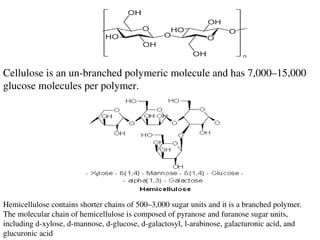
Hemicellulose contains shorter chains of 500–3,000 sugar units and it is a branched polymer.
The molecular chain of hemicellulose is composed of pyranose and furanose sugar units,
including d-xylose, d-mannose, d-glucose, d-galactosyl, l-arabinose, galacturonic acid, and
glucuronic acid
Cellulose is an un-branched polymeric molecule and has 7,000–15,000
glucose molecules per polymer.
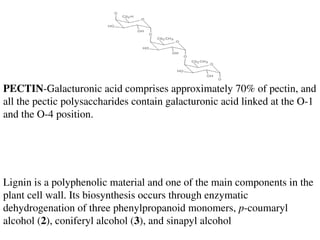
PECTIN-Galacturonic acid comprises approximately 70% of pectin, and
all the pectic polysaccharides contain galacturonic acid linked at the O-1
and the O-4 position.
Lignin is a polyphenolic material and one of the main components in the
plant cell wall. Its biosynthesis occurs through enzymatic
dehydrogenation of three phenylpropanoid monomers, p-coumaryl
alcohol (2), coniferyl alcohol (3), and sinapyl alcohol
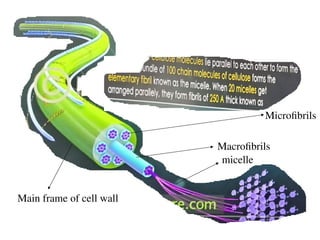
Microfibrils
Macrofibrils
Main frame of cell wall
micelle
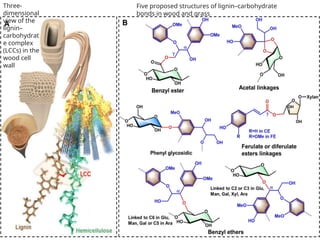
Three-
dimensional
view of the
lignin–
carbohydrat
e complex
(LCCs) in the
wood cell
wall
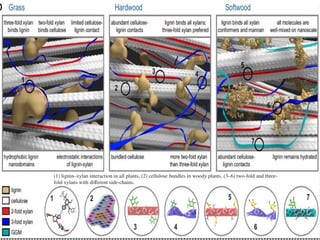
Five proposed structures of lignin–carbohydrate
bonds in wood and grass
(1) lignin–xylan interaction in all plants, (2) cellulose bundles in woody plants, (3–6) two-fold and three-
fold xylans with different side-chains,
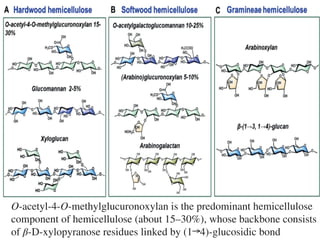
O-acetyl-4-O-methylglucuronoxylan is the predominant hemicellulose
component of hemicellulose (about 15–30%), whose backbone consists
of β-D-xylopyranose residues linked by (1→4)-glucosidic bond
Hydrogen bonds form between the hydroxyl groups of hemicellulose
and the hydroxyl groups on the surfaces of cellulose microfibrils.
Weak van der Waals forces help in the close packing of polysaccharide
chains
Hemicellulose may form covalent bonds with lignin, another component
of the cell wall. While these interactions are more common between
lignin and hemicellulose, they can indirectly affect the overall binding
and stability of the cell wall structure involving cellulose.
Hemicellulose can be physically entangled with cellulose microfibrils,
providing additional mechanical strength and rigidity to the cell wall.
Interaction between hemicellulose and cellulose
The covalently cross-linked model
Peter Albersheim and colleagues in 1973 proposed that the wall matrix
polymers (xyloglucan, pectin, and glycoprotein) are covalently linked to
one another. The binding of xyloglucan to cellulose microfibrils results
in a non-covalently cross-linked cellulose-hemicellulose network that
gives the wall tensile strength. This model has been questioned because
of the lack of evidence for the existence of covalent linkages between
xyloglucan, pectin and glycoprotein.
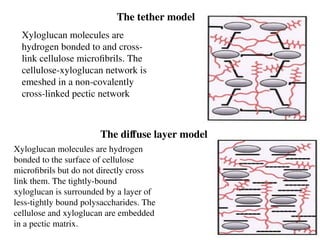
The tether model
Xyloglucan molecules are
hydrogen bonded to and cross-
link cellulose microfibrils. The
cellulose-xyloglucan network is
emeshed in a non-covalently
cross-linked pectic network
The diffuse layer model
Xyloglucan molecules are hydrogen
bonded to the surface of cellulose
microfibrils but do not directly cross
link them. The tightly-bound
xyloglucan is surrounded by a layer of
less-tightly bound polysaccharides. The
cellulose and xyloglucan are embedded
in a pectic matrix.
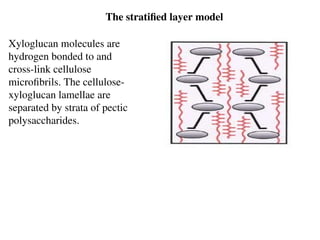
The stratified layer model
Xyloglucan molecules are
hydrogen bonded to and
cross-link cellulose
microfibrils. The cellulose-
xyloglucan lamellae are
separated by strata of pectic
polysaccharides.
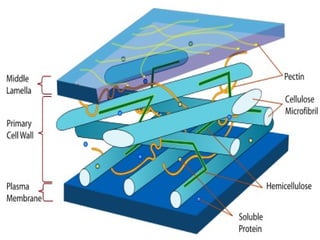
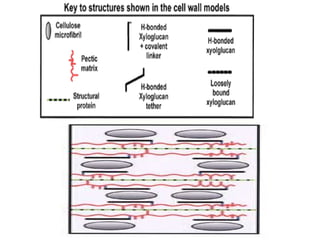
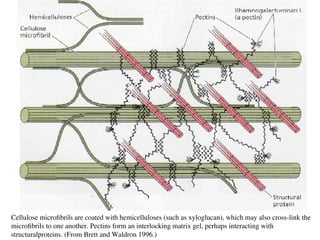
Cellulose microfibrils are coated with hemicelluloses (such as xyloglucan), which may also cross-link the
microfibrils to one another. Pectins form an interlocking matrix gel, perhaps interacting with
structuralproteins. (From Brett and Waldron 1996.)
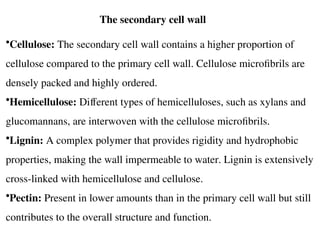
•Cellulose: The secondary cell wall contains a higher proportion of
cellulose compared to the primary cell wall. Cellulose microfibrils are
densely packed and highly ordered.
•Hemicellulose: Different types of hemicelluloses, such as xylans and
glucomannans, are interwoven with the cellulose microfibrils.
•Lignin: A complex polymer that provides rigidity and hydrophobic
properties, making the wall impermeable to water. Lignin is extensively
cross-linked with hemicellulose and cellulose.
•Pectin: Present in lower amounts than in the primary cell wall but still
contributes to the overall structure and function.
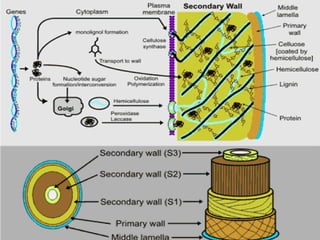
The secondary cell wall
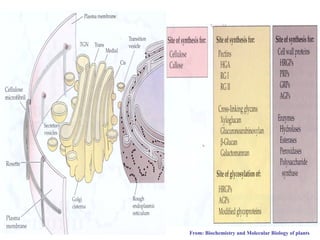
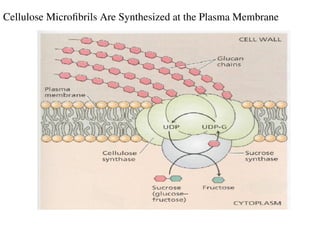
Fig. 2 Subcellular localization of the pathways for SCW synthesis and assembly. Cellulose is synthesized at the PM by
the CSC. The components of the CSC are made on ER-bound ribosomes where assembly of the complex is also likely
to take place. The assembled complexes are then transported to the PM via the Golgi. Actin plays a vital role in the
trafficking of the CSC. Once inserted into the PM, the CSC moves around in the plane of the PM and extrudes glucan
chains into cell walls which bind into cellulose microfibrils. The hemicelluloses are synthesized in the Golgi by
resident GTs. The pre-synthesized hemicellulose molecules are transported to the cell wall, where they may be
further modified. Monolignols of lignin are synthesized on the ER surface/cytoplasm and transported to the cell wall
where they are activated and polymerized into complex lignin polymer. Finally the cell wall components are cross-
linked to make the assembled cell wall.
cellulose synthase complex
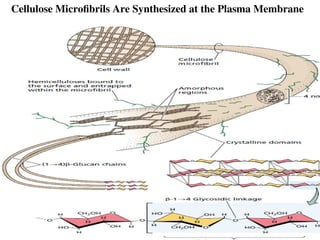
Cellulose Microfibrils Are Synthesized at the Plasma Membrane
From: Biochemistry and Molecular Biology of plants
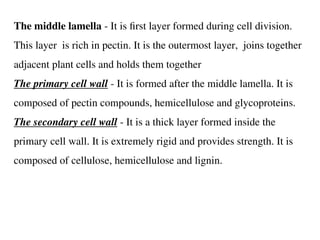
The middle lamella - It is first layer formed during cell division.
This layer is rich in pectin. It is the outermost layer, joins together
adjacent plant cells and holds them together
The primary cell wall - It is formed after the middle lamella. It is
composed of pectin compounds, hemicellulose and glycoproteins.
The secondary cell wall - It is a thick layer formed inside the
primary cell wall. It is extremely rigid and provides strength. It is
composed of cellulose, hemicellulose and lignin.
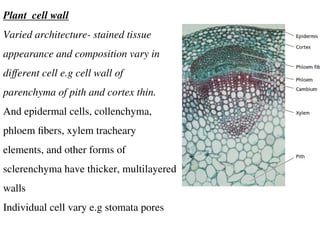
Plant cell wall
Varied architecture- stained tissue
appearance and composition vary in
different cell e.g cell wall of
parenchyma of pith and cortex thin.
And epidermal cells, collenchyma,
phloem fibers, xylem tracheary
elements, and other forms of
sclerenchyma have thicker, multilayered
walls
Individual cell vary e.g stomata pores
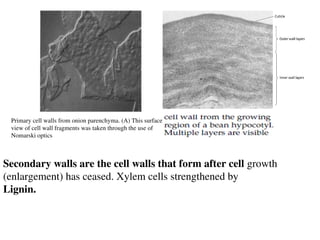
Primary cell walls from onion parenchyma. (A) This surface
view of cell wall fragments was taken through the use of
Nomarski optics
Secondary walls are the cell walls that form after cell growth
(enlargement) has ceased. Xylem cells strengthened by
Lignin.
The much thicker and stronger secondary wall which accounts for
most of the carbohydrate in biomass, is deposited once the cell has
ceased to grow. The secondary walls of xylem fibers, tracheids, and
sclereids are further strengthened by the incorporation of lignin.
The secondary walls of woody tissue and grasses are composed
predominantly of cellulose, lignin, and hemicellulose
The middle lamella (plural lamellae), high in pectin and contains
different proteins compared with the bulk of the wall.
Cellulose Microfibrils Are Synthesized at the Plasma Membrane
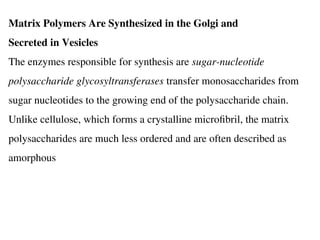
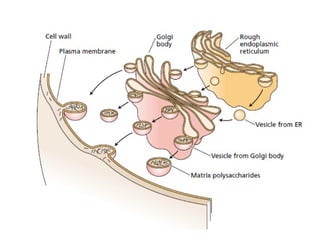
Matrix Polymers Are Synthesized in the Golgi and
Secreted in Vesicles
The enzymes responsible for synthesis are sugar-nucleotide
polysaccharide glycosyltransferases transfer monosaccharides from
sugar nucleotides to the growing end of the polysaccharide chain.
Unlike cellulose, which forms a crystalline microfibril, the matrix
polysaccharides are much less ordered and are often described as
amorphous
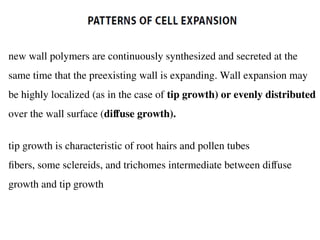
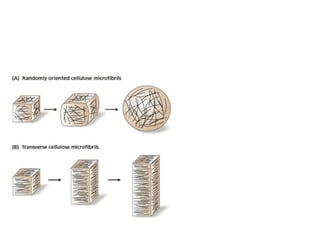
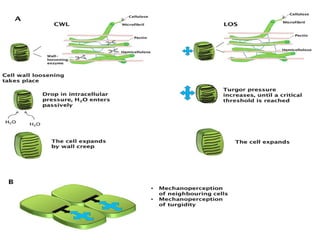
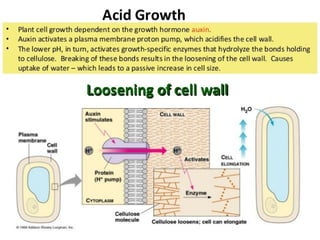
new wall polymers are continuously synthesized and secreted at the
same time that the preexisting wall is expanding. Wall expansion may
be highly localized (as in the case of tip growth) or evenly distributed
over the wall surface (diffuse growth).
tip growth is characteristic of root hairs and pollen tubes
fibers, some sclereids, and trichomes intermediate between diffuse
growth and tip growth
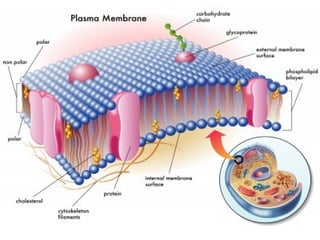
Plasma membrane
• Contact between cell and environment
• Keeps useful materials inside and
harmful stuff outside
• Allows transport, communication in
both directions
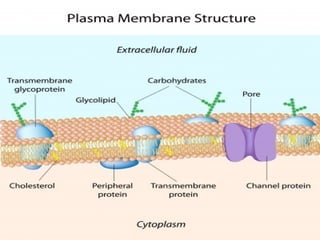
Plasma membrane components
 Phospholipid bilayer
 Cholesterol
 Proteins
 Glycocalyx
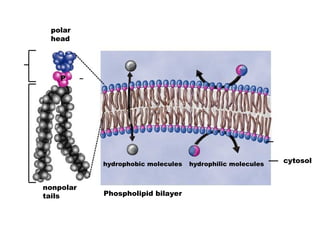
polar
head
nonpolar
tails
P –
Phospholipid bilayer
hydrophobic molecules hydrophilic molecules cytosol
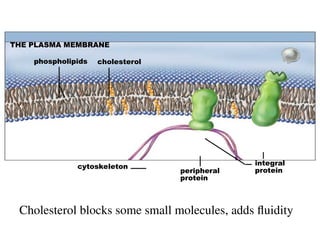
THE PLASMA MEMBRANE
phospholipids cholesterol
cytoskeleton
peripheral
protein
integral
protein
Cholesterol blocks some small molecules, adds fluidity
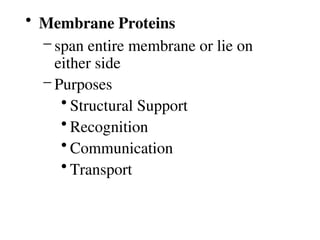
• Membrane Proteins
– span entire membrane or lie on
either side
– Purposes
• Structural Support
• Recognition
• Communication
• Transport
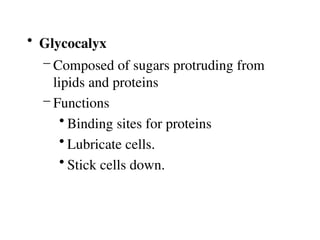
• Glycocalyx
– Composed of sugars protruding from
lipids and proteins
– Functions
• Binding sites for proteins
• Lubricate cells.
• Stick cells down.
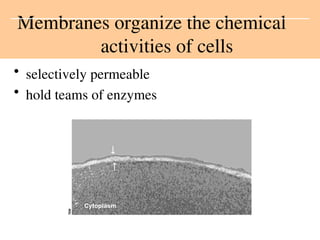
• selectively permeable
• hold teams of enzymes
Membranes organize the chemical
activities of cells
Cytoplasm


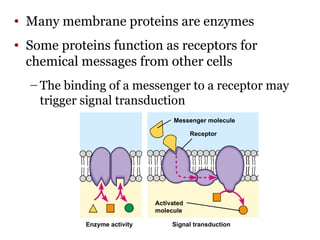
• Many membrane proteins are enzymes
• Some proteins function as receptors for
chemical messages from other cells
– The binding of a messenger to a receptor may
trigger signal transduction
Enzyme activity Signal transduction
Messenger molecule
Receptor
Activated
molecule
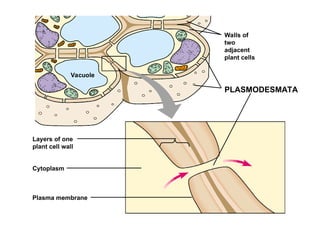
Surfaces allow exchange of signals and molecules.
• Plant cells connect by plasmodesmata
Cell surfaces protect, support, and join cells
Vacuole
Layers of one
plant cell wall
Walls of
two
adjacent
plant cells
PLASMODESMATA
Cytoplasm
Plasma membrane
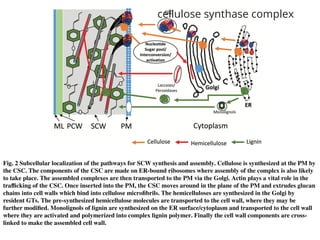
Pure phospholipid bilayers are permeable to gases, such as O2
and CO2, but they are barely permeable to water and nearly
impermeable to inorganic ions and other hydrophilic solutes,
such as sucrose and amino acids. Proteins are required to
transport protons, inorganic ions, and organic solutes across the
plasma membrane and the tonoplast at rates sufficient to meet
the needs of the cell.

Plant cell wall structure and plasma membrane

  • 3.
    Plant cell walland membrane Dr. Baljinder Singh Gill
  • 5.
    • The cellwall is a tough, flexible but sometimes fairly rigid layer that surrounds some types of cells. • It is located outside the cell membrane and provides these cells with structural support and protection, in addition to acting as a filtering mechanism. cell wall
  • 6.
    MAJOR FUCTION OFCELL WALL maintaining/determining cell shape, mechanical strength As a natural product, the plant cell wall is used commercially in the form of paper, textiles, fibers (cotton, flax, hemp, and others), charcoal, lumber, and other wood products. Another major use of plant cell walls is in the form of extracted polysaccharides that have been modified to make plastics, films, coatings, adhesives, gels, and thickeners in a huge variety of products
  • 7.
    • A majorfunction of the cell wall is to act as a pressure vessel, preventing over-expansion when water enters the cell. Cell walls are found in plants and prokaryotic cells but not in mycoplasmas. • The material in the cell wall varies between species, and can also differ depending on cell type and developmental stage. Cell wall
  • 8.
    • The cellwall serves a similar purpose in organisms that possess them. • The wall gives cells rigidity and strength, offering protection against mechanical stress. • The cell wall also limits the entry of large molecules that may be toxic to the cell. property
  • 9.
    • The primarycell wall of most plant cells is semi-permeable and permits the passage of small molecules and small proteins, with size exclusion estimated to be 30-60 kDa. • Key nutrients, especially water and carbon dioxide, are distributed throughout the plant from cell wall to cell wall in apoplastic flow. • The pH is an important factor governing the transport of molecules through cell walls. Permeability
  • 11.
    • The wallsof plant cells must have sufficient tensile strength to withstand internal osmotic pressures of several times atmospheric pressure that result from the difference in solute concentration between the cell interior and external water. Plant cell walls vary from 0.1 to 10 µm in thickness Composition • xylan, 20-35%, a type of hemicellulose • lignin, 10-25%, a complex phenolic polymer that penetrates the spaces in the cell wall between cellulose, hemicellulose and pectin components, driving out water and strengthening the wall. Plant cell walls
  • 13.
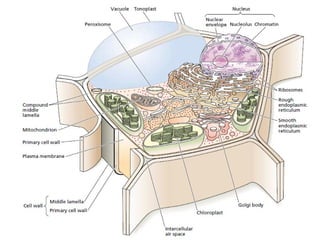
    Components of PlantCell Wall Plant cell wall composed of three layers. 1. The middle lamella 2. The primary cell wall 3. The secondary cell wall Feature Primary Cell Wall Secondary Cell Wall Middle Lamella Structure Thin, flexible, random cellulose microfibrils Thick, rigid, ordered cellulose microfibrils, lignin Gel-like, rich in pectin Function Growth, differentiation, flexibility Strength, rigidity, protection Adhesion between cells, communication Location Outside cell membrane, all plant cells Inside primary wall, specialized cells Between primary walls of adjacent cells
  • 15.
    The primary walland middle lamella account for most of the apoplast in growing tissue. The symplast is another unique feature of plant tissues. This self-contiguous phase exists because tube-like structrues known as plasmodesmata connect the cytoplasm of different cells.
  • 17.
    The cell wallof Arabidopsis thaliana. Transmission electron micrograph of WT Arabidopsis thaliana
  • 18.
    Composition of PlantCell Wall • In the primary plant cell wall, the major carbohydrates are cellulose, hemicellulose and pectin. • The outer part of the primary cell wall of the plant cell wall is made of wax and cutin and is known as plant cuticle. • The secondary cell wall contains cellulose, xylan, lignin. And one type of hemicellulose.
  • 19.
    CELL WALL gatekeeper, shapeand rigidity There are holes all over the cell wall called plasmodesmata. These are holes that allow for nutrients to enter the cell as well as waste to exit the cell. These small holes can cause the cell to lose water, and this is when the plant will start to droop. But as soon as the plant can get a drink, it will bounce right back up to its proper shape.
  • 20.
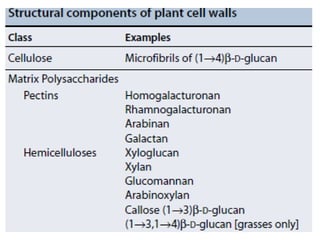
    Primary wall compositionand architecture Composed predominantly of polysaccharides, lesser amounts of structural glycoproteins, phenolic esters ionically and covalently bound minerals (e.g. calcium and boron), and enzymes. The major polysaccharides in the primary wall are Cellulose - 1,4-linked β-D-glucose, Hemicellulose-xyloglucan-1,4-linked β-D-hexosyl residues Pectin -1,4-linked α-D-galacturonic acid.
  • 21.
    Hemicellulose contains shorterchains of 500–3,000 sugar units and it is a branched polymer. The molecular chain of hemicellulose is composed of pyranose and furanose sugar units, including d-xylose, d-mannose, d-glucose, d-galactosyl, l-arabinose, galacturonic acid, and glucuronic acid Cellulose is an un-branched polymeric molecule and has 7,000–15,000 glucose molecules per polymer.
  • 22.
    PECTIN-Galacturonic acid comprisesapproximately 70% of pectin, and all the pectic polysaccharides contain galacturonic acid linked at the O-1 and the O-4 position. Lignin is a polyphenolic material and one of the main components in the plant cell wall. Its biosynthesis occurs through enzymatic dehydrogenation of three phenylpropanoid monomers, p-coumaryl alcohol (2), coniferyl alcohol (3), and sinapyl alcohol
  • 23.
  • 24.
    Three- dimensional view of the lignin– carbohydrat ecomplex (LCCs) in the wood cell wall Five proposed structures of lignin–carbohydrate bonds in wood and grass
  • 25.
    (1) lignin–xylan interactionin all plants, (2) cellulose bundles in woody plants, (3–6) two-fold and three- fold xylans with different side-chains,
  • 26.
    O-acetyl-4-O-methylglucuronoxylan is thepredominant hemicellulose component of hemicellulose (about 15–30%), whose backbone consists of β-D-xylopyranose residues linked by (1→4)-glucosidic bond
  • 28.
    Hydrogen bonds formbetween the hydroxyl groups of hemicellulose and the hydroxyl groups on the surfaces of cellulose microfibrils. Weak van der Waals forces help in the close packing of polysaccharide chains Hemicellulose may form covalent bonds with lignin, another component of the cell wall. While these interactions are more common between lignin and hemicellulose, they can indirectly affect the overall binding and stability of the cell wall structure involving cellulose. Hemicellulose can be physically entangled with cellulose microfibrils, providing additional mechanical strength and rigidity to the cell wall. Interaction between hemicellulose and cellulose
  • 29.
    The covalently cross-linkedmodel Peter Albersheim and colleagues in 1973 proposed that the wall matrix polymers (xyloglucan, pectin, and glycoprotein) are covalently linked to one another. The binding of xyloglucan to cellulose microfibrils results in a non-covalently cross-linked cellulose-hemicellulose network that gives the wall tensile strength. This model has been questioned because of the lack of evidence for the existence of covalent linkages between xyloglucan, pectin and glycoprotein.
  • 31.
    The tether model Xyloglucanmolecules are hydrogen bonded to and cross- link cellulose microfibrils. The cellulose-xyloglucan network is emeshed in a non-covalently cross-linked pectic network The diffuse layer model Xyloglucan molecules are hydrogen bonded to the surface of cellulose microfibrils but do not directly cross link them. The tightly-bound xyloglucan is surrounded by a layer of less-tightly bound polysaccharides. The cellulose and xyloglucan are embedded in a pectic matrix.
  • 32.
    The stratified layermodel Xyloglucan molecules are hydrogen bonded to and cross-link cellulose microfibrils. The cellulose- xyloglucan lamellae are separated by strata of pectic polysaccharides.
  • 33.
    Cellulose microfibrils arecoated with hemicelluloses (such as xyloglucan), which may also cross-link the microfibrils to one another. Pectins form an interlocking matrix gel, perhaps interacting with structuralproteins. (From Brett and Waldron 1996.)
  • 36.
    •Cellulose: The secondarycell wall contains a higher proportion of cellulose compared to the primary cell wall. Cellulose microfibrils are densely packed and highly ordered. •Hemicellulose: Different types of hemicelluloses, such as xylans and glucomannans, are interwoven with the cellulose microfibrils. •Lignin: A complex polymer that provides rigidity and hydrophobic properties, making the wall impermeable to water. Lignin is extensively cross-linked with hemicellulose and cellulose. •Pectin: Present in lower amounts than in the primary cell wall but still contributes to the overall structure and function. The secondary cell wall
  • 37.
    Fig. 2 Subcellularlocalization of the pathways for SCW synthesis and assembly. Cellulose is synthesized at the PM by the CSC. The components of the CSC are made on ER-bound ribosomes where assembly of the complex is also likely to take place. The assembled complexes are then transported to the PM via the Golgi. Actin plays a vital role in the trafficking of the CSC. Once inserted into the PM, the CSC moves around in the plane of the PM and extrudes glucan chains into cell walls which bind into cellulose microfibrils. The hemicelluloses are synthesized in the Golgi by resident GTs. The pre-synthesized hemicellulose molecules are transported to the cell wall, where they may be further modified. Monolignols of lignin are synthesized on the ER surface/cytoplasm and transported to the cell wall where they are activated and polymerized into complex lignin polymer. Finally the cell wall components are cross- linked to make the assembled cell wall. cellulose synthase complex
  • 38.
    Cellulose Microfibrils AreSynthesized at the Plasma Membrane
  • 39.
    From: Biochemistry andMolecular Biology of plants
  • 40.
    The middle lamella- It is first layer formed during cell division. This layer is rich in pectin. It is the outermost layer, joins together adjacent plant cells and holds them together The primary cell wall - It is formed after the middle lamella. It is composed of pectin compounds, hemicellulose and glycoproteins. The secondary cell wall - It is a thick layer formed inside the primary cell wall. It is extremely rigid and provides strength. It is composed of cellulose, hemicellulose and lignin.
  • 41.
    Plant cell wall Variedarchitecture- stained tissue appearance and composition vary in different cell e.g cell wall of parenchyma of pith and cortex thin. And epidermal cells, collenchyma, phloem fibers, xylem tracheary elements, and other forms of sclerenchyma have thicker, multilayered walls Individual cell vary e.g stomata pores
  • 42.
    Primary cell wallsfrom onion parenchyma. (A) This surface view of cell wall fragments was taken through the use of Nomarski optics Secondary walls are the cell walls that form after cell growth (enlargement) has ceased. Xylem cells strengthened by Lignin.
  • 43.
    The much thickerand stronger secondary wall which accounts for most of the carbohydrate in biomass, is deposited once the cell has ceased to grow. The secondary walls of xylem fibers, tracheids, and sclereids are further strengthened by the incorporation of lignin. The secondary walls of woody tissue and grasses are composed predominantly of cellulose, lignin, and hemicellulose The middle lamella (plural lamellae), high in pectin and contains different proteins compared with the bulk of the wall.
  • 46.
    Cellulose Microfibrils AreSynthesized at the Plasma Membrane
  • 47.
    Matrix Polymers AreSynthesized in the Golgi and Secreted in Vesicles The enzymes responsible for synthesis are sugar-nucleotide polysaccharide glycosyltransferases transfer monosaccharides from sugar nucleotides to the growing end of the polysaccharide chain. Unlike cellulose, which forms a crystalline microfibril, the matrix polysaccharides are much less ordered and are often described as amorphous
  • 49.
    new wall polymersare continuously synthesized and secreted at the same time that the preexisting wall is expanding. Wall expansion may be highly localized (as in the case of tip growth) or evenly distributed over the wall surface (diffuse growth). tip growth is characteristic of root hairs and pollen tubes fibers, some sclereids, and trichomes intermediate between diffuse growth and tip growth
  • 53.
    Plasma membrane • Contactbetween cell and environment • Keeps useful materials inside and harmful stuff outside • Allows transport, communication in both directions
  • 54.
    Plasma membrane components Phospholipid bilayer  Cholesterol  Proteins  Glycocalyx
  • 55.
  • 56.
    THE PLASMA MEMBRANE phospholipidscholesterol cytoskeleton peripheral protein integral protein Cholesterol blocks some small molecules, adds fluidity
  • 59.
    • Membrane Proteins –span entire membrane or lie on either side – Purposes • Structural Support • Recognition • Communication • Transport
  • 60.
    • Glycocalyx – Composedof sugars protruding from lipids and proteins – Functions • Binding sites for proteins • Lubricate cells. • Stick cells down.
  • 61.
    • selectively permeable •hold teams of enzymes Membranes organize the chemical activities of cells Cytoplasm  
  • 62.
    • Many membraneproteins are enzymes • Some proteins function as receptors for chemical messages from other cells – The binding of a messenger to a receptor may trigger signal transduction Enzyme activity Signal transduction Messenger molecule Receptor Activated molecule
  • 63.
    Surfaces allow exchangeof signals and molecules. • Plant cells connect by plasmodesmata Cell surfaces protect, support, and join cells
  • 64.
    Vacuole Layers of one plantcell wall Walls of two adjacent plant cells PLASMODESMATA Cytoplasm Plasma membrane
  • 65.
    Pure phospholipid bilayersare permeable to gases, such as O2 and CO2, but they are barely permeable to water and nearly impermeable to inorganic ions and other hydrophilic solutes, such as sucrose and amino acids. Proteins are required to transport protons, inorganic ions, and organic solutes across the plasma membrane and the tonoplast at rates sufficient to meet the needs of the cell.

Editor's Notes

  • #43 http://www.ccrc.uga.edu/~mao/intro/ouline.htm
  • #55 Figure: 05-01a-b Note: The nature of phospholipids (polar, nonpolar) gives a membrane its selective permeabiility.as far as hydrophobic and hydrophilic molecules. Caption: The essential building block of the cell’s plasma membrane is the phospholipid molecule, which has both a hydrophilic “head” that bonds with water, and hydrophobic “tails” that do not. Two layers of phospholipids sandwich together to form the plasma membrane. The phospholipids’ hydrophobic tails form the interior of the membrane, while their hydrophilic heads jut out toward the watery environments that exist both inside and outside of the cell. The bilayer forms a barrier to all but the smallest hydrophilic molecules, but hydrophobic molecules can pass through fairly freely.
  • #56 Figure: 05-02a Title: The plasma membrane. Caption: The plasma membrane.