Planning is deciding in advance what to
do, how to do it, when to do it and who
to do it. It involves anticipating the future
and conciously
Choosing the future course of action.
“According to Haimann, Planning is the
function that determines in advance
what should be done.”
Planning is goal-oriented
 Planning is a primary function
 Planning is all-pervasive
 Planning is a continuous process
 Planning is forward-looking
 Planning involves choice
 Planning is directed toword efficiency

The main step in planning proccess are as
follow:Step 1- DEFINE THE TASKStep 2- IDENTIFY RESOURCESStep 3- CONSIDER ALTERNATIVEstep 4- CREATE THE PLANNINGStep 5- WORK THE PLANStep 6- EVALUATE-
Focuses attention on objectives and
result
 Reduces uncertainty and risk
 Provides sense of direction
 Encourages innovation and creativity
 Helps in co-ordination
 Guides decision-making
 Provide efficiency in operation

Lack of accurate information
 Time and cost
 Resistance to change
 Lock of ability to plans
 False sense of security
 Environmental constraints
















Principle of contribution to objectives
Principle of efficiency of plans
Principle of primary of planning
Principle of planning premises
Principle of policy framwork
Principle of timing
Principle of alternatives
Principle of limiting factor
Principle of commitment
Principle of flexibility
Principle of navigational change
Principle of competitive stategies
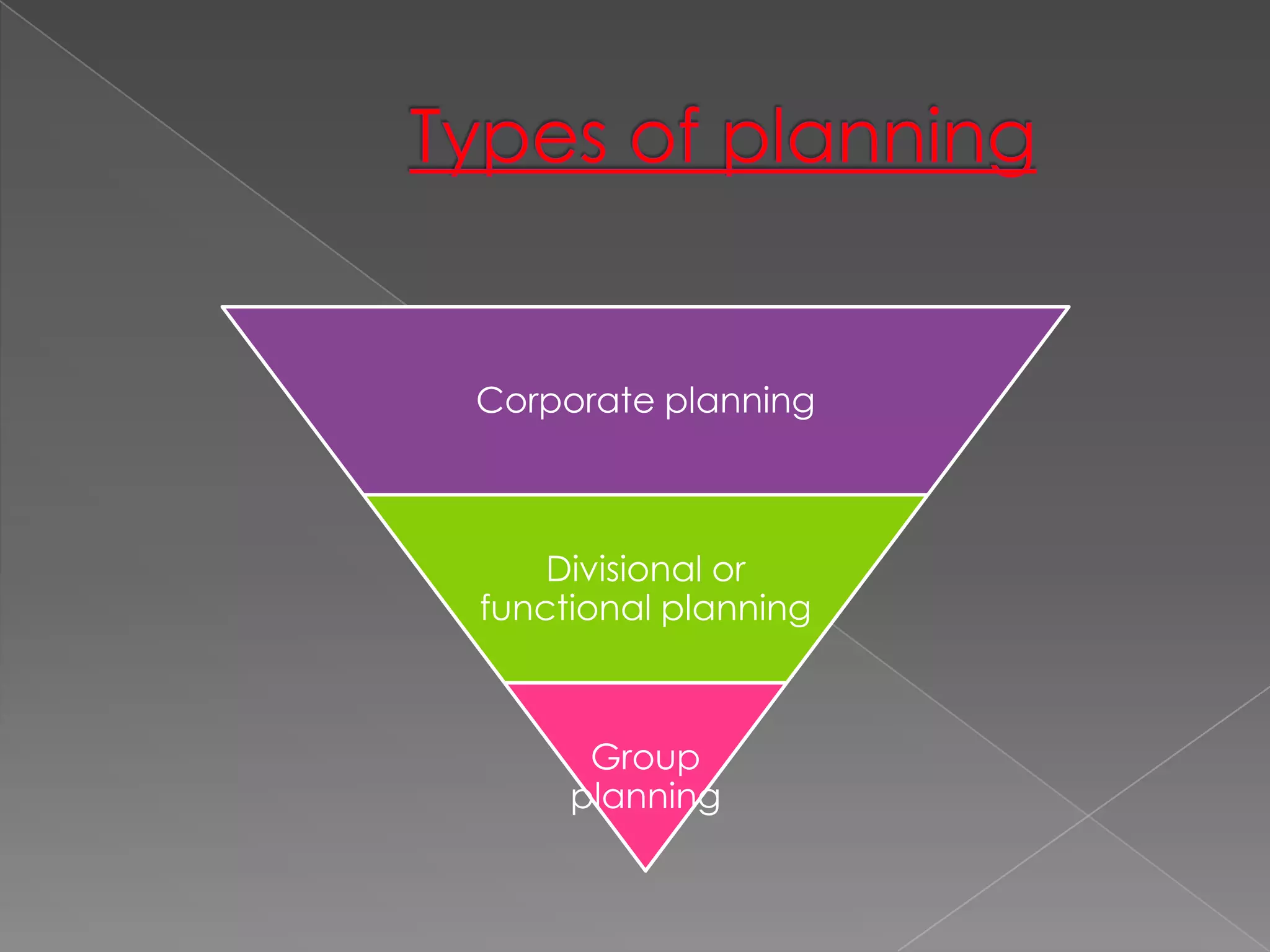
Corporate planning

Divisional or
functional planning

Group
planning
Group or sectional planning refers to
planning for specific groups or section
within a department or division .
group or sectional planning are
formulated mainly at the opreting level of
management . They have to approved by
higher authorities.
Such planning includes the plans
formulated for various departments or
division of an enterprise.it determines the
scope and activities of a particular
department.
Departmental or divisional plans are
formulated at the middle level of
management and approved by the top
management.
Planning for the company as a whole is
known as corporate planning. It lays
down objectives, strategies, and policies
for the entire orgainisation.
corprate planinng is done at the top
level of management.
Planning

Planning

  • 2.
    Planning is decidingin advance what to do, how to do it, when to do it and who to do it. It involves anticipating the future and conciously Choosing the future course of action. “According to Haimann, Planning is the function that determines in advance what should be done.”
  • 3.
    Planning is goal-oriented Planning is a primary function  Planning is all-pervasive  Planning is a continuous process  Planning is forward-looking  Planning involves choice  Planning is directed toword efficiency 
  • 4.
    The main stepin planning proccess are as follow:Step 1- DEFINE THE TASKStep 2- IDENTIFY RESOURCESStep 3- CONSIDER ALTERNATIVEstep 4- CREATE THE PLANNINGStep 5- WORK THE PLANStep 6- EVALUATE-
  • 5.
    Focuses attention onobjectives and result  Reduces uncertainty and risk  Provides sense of direction  Encourages innovation and creativity  Helps in co-ordination  Guides decision-making  Provide efficiency in operation 
  • 6.
    Lack of accurateinformation  Time and cost  Resistance to change  Lock of ability to plans  False sense of security  Environmental constraints 
  • 7.
                Principle of contributionto objectives Principle of efficiency of plans Principle of primary of planning Principle of planning premises Principle of policy framwork Principle of timing Principle of alternatives Principle of limiting factor Principle of commitment Principle of flexibility Principle of navigational change Principle of competitive stategies
  • 8.
  • 9.
    Group or sectionalplanning refers to planning for specific groups or section within a department or division . group or sectional planning are formulated mainly at the opreting level of management . They have to approved by higher authorities.
  • 10.
    Such planning includesthe plans formulated for various departments or division of an enterprise.it determines the scope and activities of a particular department. Departmental or divisional plans are formulated at the middle level of management and approved by the top management.
  • 11.
    Planning for thecompany as a whole is known as corporate planning. It lays down objectives, strategies, and policies for the entire orgainisation. corprate planinng is done at the top level of management.