Planetary
Boundaries
There are 9 planetary boundaries that allow the
earth to function and within an operating capacity.
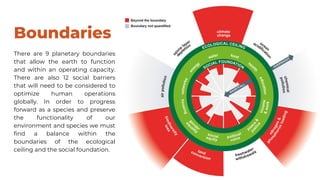
Boundaries
There are 9 planetary boundaries
that allow the earth to function
and within an operating capacity.
There are also 12 social barriers
that will need to be considered to
optimize human operations
globally. In order to progress
forward as a species and preserve
the functionality of our
environment and species we must
find a balance within the
boundaries of the ecological
ceiling and the social foundation.
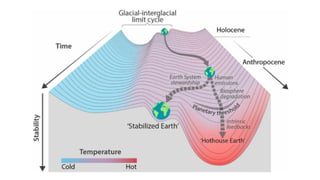
The threshold is the ability of an ecosystem to
withstand environmental pressures being able to
adapt and stay constant in a state of homeostasis. The
breaking point is where the ecosystem can no longer
withstand the external pressure crossing its threshold
of sustainability making the damages irreversible to
the ecosystem, thus not being able to return to its
normal state. Managing each ecosystem and limiting
the chance of surpassing its threshold, will essentially
sustain its resources and the species that are
associated with that ecosystem. This is essential to
endure the functionality of ecosystems, the planet and
the homeostatic capacities of the environment.
Threshold
Individual
Boundaries
Climate Change
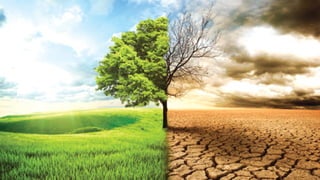
Recent evidence suggests that the Earth, now having passed 415 parts per
million (ppm) of CO2 in the atmosphere, has already exceeded the planetary
boundary and is surpassing Earth system thresholds. We have reached a
point at which the loss of summer polar sea-ice is almost certainly
irreversible. This is one example of a well-defined threshold above which rapid
physical feedback loops can drive the Earth system into a much warmer state
with sea levels metres higher than present. The weakening or reversal of
ecological carbon sinks, for example through the on-going destruction of the
world's rainforests, is another potential tipping point, where climate-carbon
cycle feedbacks accelerate Earth's warming and intensify the climate
impacts. A major question is how long we can remain over this boundary
before large, irreversible changes become unavoidable.
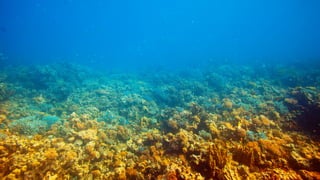
Ocean Acidification
Around a quarter of the CO2 that humanity emits into the atmosphere is ultimately
dissolved in the oceans. Here it forms carbonic acid, altering ocean chemistry and
decreasing the pH of the surface water. This increased acidity and reduces the amount
of available carbonate ions, an essential 'building block' used by many marine species for
shell and skeleton formation. Beyond a threshold concentration, this rising acidity makes
it hard for organisms such as corals, some shellfish and plankton species to grow and
survive. Losses of these species would change the structure and dynamics of ocean
ecosystems and could potentially lead to drastic reductions in fish stocks. Compared to
pre-industrial times, surface ocean acidity has already increased by 30 percent. Unlike
most other human impacts on the marine environment, which are often local in scale,
the ocean acidification boundary has consequences for the whole planet. It is also an
example of how interrelated the boundaries are, since atmospheric CO2 concentration is
the underlying controlling variable for both the climate and the ocean acidification
boundaries, although they are defined in terms of different Earth system thresholds.
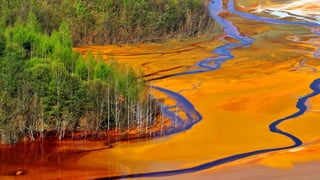
Chemical pollution
Emissions of toxic and long-lasting substances such as synthetic organic pollutants,
heavy metal compounds and radioactive materials represent some of the primary
human-driven changes to the environment. These compounds can have potentially
irreversible effects on living organisms and ecosystems (by affecting atmospheric
processes and climate). The uptake and bioaccumulation of chemical pollution can
be detrimental to organisms, it causes reduced fertility and the potential of
permanent genetic damage that can have severe effects on ecosystems. For
example, persistent organic compounds have caused dramatic reductions in bird
populations and impaired reproduction in marine mammals. There are many
examples of additional effects from these compounds, but these are still poorly
understood scientifically. At present, we are unable to quantify a single chemical
pollution boundary, although the risk of crossing Earth system thresholds is
considered sufficiently well-defined for it to be included in the list as a priority for
precautionary action.
Nitrogen & Phosphorus loading
The biogeochemical cycles of nitrogen and phosphorus have been radically changed
by humans as a result of many industrial and agricultural processes. Nitrogen and
phosphorus are both essential elements for plant growth, therefore fertilizer
production and overuse are a primary concern. Human activities now convert more
atmospheric nitrogen into reactive forms than all of the Earth's terrestrial processes
combined. Much of this new reactive nitrogen is emitted to the atmosphere in various
forms rather than taken up by crops. When it is rained out, it pollutes waterways and
coastal zones or accumulates in the terrestrial biosphere. Additionally, a relatively small
proportion of phosphorus fertilizers applied to food production systems is taken up by
plants; a large quantity of phosphorus utilized by humans also ends up in water
systems. These can become oxygen-starved as bacteria consume the blooms of algae
that grow in response to the high nutrient supply. A significant fraction of the applied
nitrogen and phosphorus journeys to the sea, and can result in marine and aquatic
systems crossing ecological thresholds of their own.
Freshwater withdrawals
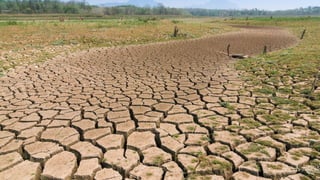
The freshwater cycle is strongly affected by climate change and its boundary is
closely linked to the climate boundary, yet human pressure is now the dominant
driving force determining the operation and distribution of global freshwater
systems. The consequences of human alteration of water bodies include both global-
scale river flow changes and shifts in vapour flows linked to land use change. These
changes in the hydrological system can be sudden and irreversible. Water is
becoming increasingly scarce and by 2050 about half a billion people are likely to be
subject to water-stress, increasing the pressure to interfere with water systems. A
water boundary related to consumption of freshwater has been proposed to
maintain the overall resilience of the Earth’s water system and to avoid the risk of
surpassing local and regional thresholds.
Land Conversion
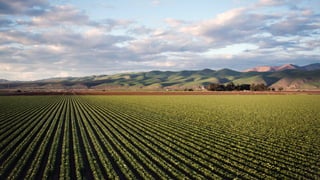
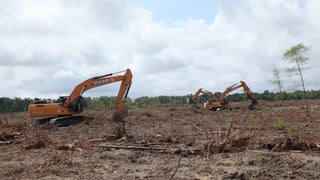
Land is transformed for human use all over the planet. Forests, grasslands, wetlands
and other vegetation types have primarily been converted to agricultural land. The
exploitation of land is one driving forces behind the serious implications on
biodiversity, and it has impacts on water flows and on the global ecosystem
functionality, specifically biogeochemical cycling of carbon, nitrogen and
phosphorus. Even the impacts of land cover change on a local scale, can exacerbate
impacts and consequences for Earth system processes on a global scale. A boundary
for human changes to land systems needs to reflect not just the absolute quantity of
land, but also its function, quality and spatial distribution in order to protect and
preserve earths interconnected ecosystems. Forests play a particularly important
role in controlling the linked dynamics of land use and climate, and is the focus of
the boundary for land system change.
Biodiversity Loss
The Millennium Ecosystem Assessment of 2005 concluded that changes to
ecosystems due to human activities were more rapid in the past 50 years than at any
time in human history, increasing the risks of abrupt and irreversible changes. The
main drivers of change are the demand for food, water, and natural resources,
causing severe biodiversity loss and leading to changes in ecosystem services. These
drivers are either steady, showing no evidence of declining over time, or are
increasing in intensity. The current high rates of ecosystem damage and extinction
can be slowed by efforts to protect the integrity of living systems (the biosphere),
enhancing habitat, and improving connectivity between ecosystems while
maintaining the high agricultural productivity that humanity needs. Further
research is underway to improve the availability of reliable data for use as the 'control
variables' for this boundary.
Air Pollution
An atmospheric aerosol planetary boundary was proposed, because of the influence of aerosols
on Earth's climate system. Through their interaction with water vapour, aerosols play a critically
important role in the hydrological cycle affecting cloud formation and global-scale and regional
patterns of atmospheric circulation. They have a direct effect on climate, by changing how
much solar radiation is reflected or absorbed in the atmosphere. Humans change the aerosol
loading by emitting atmospheric pollution (many pollutant gases condense into droplets and
particles), and also through land-use change that increases the release of dust and smoke into
the air. Changes in climate systems have already been seen in highly polluted environments,
giving a quantifiable regional measure for an aerosol boundary. A further reason for an aerosol
boundary is that aerosols have adverse effects on many living organisms. Inhaling highly
polluted air causes roughly 800,000 people to die prematurely each year. The toxicological and
ecological effects of aerosols correlates to other Earth system thresholds. However, the
behaviour of aerosols in the atmosphere is extremely complex, depending on their chemical
composition, geographical location and height in the atmosphere. While many relationships
between aerosols, climate and ecosystems are well established, many underlying links are yet
to be determined.
Ozone Layer Depletion
The stratospheric ozone layer in the atmosphere filters out ultraviolet (UV) radiation from
the sun. If this layer decreases, increasing amounts of UV radiation will reach ground level
and more heat will circulate within the earth’s climate. This can cause a higher occurrence
of skin cancer in humans as well as damage to earths biosphere and marine biological
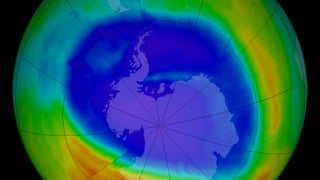
systems. The appearance of the Antarctic ozone hole was proof that increased
concentrations of anthropogenic ozone-depleting chemical substances, interacting with
polar stratospheric clouds, had passed a threshold and moved the Antarctic stratosphere
into a new regime. Fortunately, the actions taken to reduce ozone depleting substances,
we have reduced our impact and appear to be on the path that will allow us to stay within
this planetary boundary.
The Current Crisis
The current global crisis requires significant change to maximize
efficiency and management of resources. Equal allocation of resources
is needed to promote equality and proficiency of the products that are
exploited through the environment. Recent trends have been
implemented into agricultural, production and transport processes to
reduce the effects humans are having on the ecosystem and to
promote its sustainability. These changes come with the primary goal
of reducing the overall consumption rates to maintain and begin the
restoration process of each ecosystem.
The Current Problem
The current ‘growth’ debate is centred around the simultaneous
progression of human population and economic system, against the
diminishing finite ecosystem. The speculation of the limited
environmental capacities has shifted the focus onto the adaptation of
technological advancement. The exponential growth of the human
population approximately increases by one-hundred million people a
year, this accumulates an irreversible pressure on earth’s finite
resources. With the growing absence of resources, social cohesion of
society fluctuates causing tension amongst the wealthy and poorer
communities and is likely to result in warfare over the remaining
resources.
The Current System
The current system of functionality assumes a 'Mickey Mouse model' of
functionality below, suggesting that the economy is more important
than society and the environment. The current global operation is
destined for failure, only once we adopt a system that places the
environment first will we be to thrive. Without a functional environment
there will be no society and without people there would be no economy.
The environment has to come first, 'Nature doesn't need people, people
need nature.' Governments, businesses and society need to let go of
unrealistic continuous economic growth and we need to adopt the
'bullseye sustainability method,' as this is the only way for humanity to
flourish. Therefore, the fact that systems put the economy above all is
preposterous and continuous economic growth becomes intangible.

Planetary boundaries

  • 1.
    Planetary Boundaries There are 9planetary boundaries that allow the earth to function and within an operating capacity.
  • 2.
    Boundaries There are 9planetary boundaries that allow the earth to function and within an operating capacity. There are also 12 social barriers that will need to be considered to optimize human operations globally. In order to progress forward as a species and preserve the functionality of our environment and species we must find a balance within the boundaries of the ecological ceiling and the social foundation.
  • 3.
    The threshold isthe ability of an ecosystem to withstand environmental pressures being able to adapt and stay constant in a state of homeostasis. The breaking point is where the ecosystem can no longer withstand the external pressure crossing its threshold of sustainability making the damages irreversible to the ecosystem, thus not being able to return to its normal state. Managing each ecosystem and limiting the chance of surpassing its threshold, will essentially sustain its resources and the species that are associated with that ecosystem. This is essential to endure the functionality of ecosystems, the planet and the homeostatic capacities of the environment. Threshold
  • 5.
  • 6.
    Climate Change Recent evidencesuggests that the Earth, now having passed 415 parts per million (ppm) of CO2 in the atmosphere, has already exceeded the planetary boundary and is surpassing Earth system thresholds. We have reached a point at which the loss of summer polar sea-ice is almost certainly irreversible. This is one example of a well-defined threshold above which rapid physical feedback loops can drive the Earth system into a much warmer state with sea levels metres higher than present. The weakening or reversal of ecological carbon sinks, for example through the on-going destruction of the world's rainforests, is another potential tipping point, where climate-carbon cycle feedbacks accelerate Earth's warming and intensify the climate impacts. A major question is how long we can remain over this boundary before large, irreversible changes become unavoidable.
  • 8.
    Ocean Acidification Around aquarter of the CO2 that humanity emits into the atmosphere is ultimately dissolved in the oceans. Here it forms carbonic acid, altering ocean chemistry and decreasing the pH of the surface water. This increased acidity and reduces the amount of available carbonate ions, an essential 'building block' used by many marine species for shell and skeleton formation. Beyond a threshold concentration, this rising acidity makes it hard for organisms such as corals, some shellfish and plankton species to grow and survive. Losses of these species would change the structure and dynamics of ocean ecosystems and could potentially lead to drastic reductions in fish stocks. Compared to pre-industrial times, surface ocean acidity has already increased by 30 percent. Unlike most other human impacts on the marine environment, which are often local in scale, the ocean acidification boundary has consequences for the whole planet. It is also an example of how interrelated the boundaries are, since atmospheric CO2 concentration is the underlying controlling variable for both the climate and the ocean acidification boundaries, although they are defined in terms of different Earth system thresholds.
  • 10.
    Chemical pollution Emissions oftoxic and long-lasting substances such as synthetic organic pollutants, heavy metal compounds and radioactive materials represent some of the primary human-driven changes to the environment. These compounds can have potentially irreversible effects on living organisms and ecosystems (by affecting atmospheric processes and climate). The uptake and bioaccumulation of chemical pollution can be detrimental to organisms, it causes reduced fertility and the potential of permanent genetic damage that can have severe effects on ecosystems. For example, persistent organic compounds have caused dramatic reductions in bird populations and impaired reproduction in marine mammals. There are many examples of additional effects from these compounds, but these are still poorly understood scientifically. At present, we are unable to quantify a single chemical pollution boundary, although the risk of crossing Earth system thresholds is considered sufficiently well-defined for it to be included in the list as a priority for precautionary action.
  • 12.
    Nitrogen & Phosphorusloading The biogeochemical cycles of nitrogen and phosphorus have been radically changed by humans as a result of many industrial and agricultural processes. Nitrogen and phosphorus are both essential elements for plant growth, therefore fertilizer production and overuse are a primary concern. Human activities now convert more atmospheric nitrogen into reactive forms than all of the Earth's terrestrial processes combined. Much of this new reactive nitrogen is emitted to the atmosphere in various forms rather than taken up by crops. When it is rained out, it pollutes waterways and coastal zones or accumulates in the terrestrial biosphere. Additionally, a relatively small proportion of phosphorus fertilizers applied to food production systems is taken up by plants; a large quantity of phosphorus utilized by humans also ends up in water systems. These can become oxygen-starved as bacteria consume the blooms of algae that grow in response to the high nutrient supply. A significant fraction of the applied nitrogen and phosphorus journeys to the sea, and can result in marine and aquatic systems crossing ecological thresholds of their own.
  • 14.
    Freshwater withdrawals The freshwatercycle is strongly affected by climate change and its boundary is closely linked to the climate boundary, yet human pressure is now the dominant driving force determining the operation and distribution of global freshwater systems. The consequences of human alteration of water bodies include both global- scale river flow changes and shifts in vapour flows linked to land use change. These changes in the hydrological system can be sudden and irreversible. Water is becoming increasingly scarce and by 2050 about half a billion people are likely to be subject to water-stress, increasing the pressure to interfere with water systems. A water boundary related to consumption of freshwater has been proposed to maintain the overall resilience of the Earth’s water system and to avoid the risk of surpassing local and regional thresholds.
  • 16.
    Land Conversion Land istransformed for human use all over the planet. Forests, grasslands, wetlands and other vegetation types have primarily been converted to agricultural land. The exploitation of land is one driving forces behind the serious implications on biodiversity, and it has impacts on water flows and on the global ecosystem functionality, specifically biogeochemical cycling of carbon, nitrogen and phosphorus. Even the impacts of land cover change on a local scale, can exacerbate impacts and consequences for Earth system processes on a global scale. A boundary for human changes to land systems needs to reflect not just the absolute quantity of land, but also its function, quality and spatial distribution in order to protect and preserve earths interconnected ecosystems. Forests play a particularly important role in controlling the linked dynamics of land use and climate, and is the focus of the boundary for land system change.
  • 18.
    Biodiversity Loss The MillenniumEcosystem Assessment of 2005 concluded that changes to ecosystems due to human activities were more rapid in the past 50 years than at any time in human history, increasing the risks of abrupt and irreversible changes. The main drivers of change are the demand for food, water, and natural resources, causing severe biodiversity loss and leading to changes in ecosystem services. These drivers are either steady, showing no evidence of declining over time, or are increasing in intensity. The current high rates of ecosystem damage and extinction can be slowed by efforts to protect the integrity of living systems (the biosphere), enhancing habitat, and improving connectivity between ecosystems while maintaining the high agricultural productivity that humanity needs. Further research is underway to improve the availability of reliable data for use as the 'control variables' for this boundary.
  • 20.
    Air Pollution An atmosphericaerosol planetary boundary was proposed, because of the influence of aerosols on Earth's climate system. Through their interaction with water vapour, aerosols play a critically important role in the hydrological cycle affecting cloud formation and global-scale and regional patterns of atmospheric circulation. They have a direct effect on climate, by changing how much solar radiation is reflected or absorbed in the atmosphere. Humans change the aerosol loading by emitting atmospheric pollution (many pollutant gases condense into droplets and particles), and also through land-use change that increases the release of dust and smoke into the air. Changes in climate systems have already been seen in highly polluted environments, giving a quantifiable regional measure for an aerosol boundary. A further reason for an aerosol boundary is that aerosols have adverse effects on many living organisms. Inhaling highly polluted air causes roughly 800,000 people to die prematurely each year. The toxicological and ecological effects of aerosols correlates to other Earth system thresholds. However, the behaviour of aerosols in the atmosphere is extremely complex, depending on their chemical composition, geographical location and height in the atmosphere. While many relationships between aerosols, climate and ecosystems are well established, many underlying links are yet to be determined.
  • 22.
    Ozone Layer Depletion Thestratospheric ozone layer in the atmosphere filters out ultraviolet (UV) radiation from the sun. If this layer decreases, increasing amounts of UV radiation will reach ground level and more heat will circulate within the earth’s climate. This can cause a higher occurrence of skin cancer in humans as well as damage to earths biosphere and marine biological systems. The appearance of the Antarctic ozone hole was proof that increased concentrations of anthropogenic ozone-depleting chemical substances, interacting with polar stratospheric clouds, had passed a threshold and moved the Antarctic stratosphere into a new regime. Fortunately, the actions taken to reduce ozone depleting substances, we have reduced our impact and appear to be on the path that will allow us to stay within this planetary boundary.
  • 24.
    The Current Crisis Thecurrent global crisis requires significant change to maximize efficiency and management of resources. Equal allocation of resources is needed to promote equality and proficiency of the products that are exploited through the environment. Recent trends have been implemented into agricultural, production and transport processes to reduce the effects humans are having on the ecosystem and to promote its sustainability. These changes come with the primary goal of reducing the overall consumption rates to maintain and begin the restoration process of each ecosystem.
  • 26.
    The Current Problem Thecurrent ‘growth’ debate is centred around the simultaneous progression of human population and economic system, against the diminishing finite ecosystem. The speculation of the limited environmental capacities has shifted the focus onto the adaptation of technological advancement. The exponential growth of the human population approximately increases by one-hundred million people a year, this accumulates an irreversible pressure on earth’s finite resources. With the growing absence of resources, social cohesion of society fluctuates causing tension amongst the wealthy and poorer communities and is likely to result in warfare over the remaining resources.
  • 28.
    The Current System Thecurrent system of functionality assumes a 'Mickey Mouse model' of functionality below, suggesting that the economy is more important than society and the environment. The current global operation is destined for failure, only once we adopt a system that places the environment first will we be to thrive. Without a functional environment there will be no society and without people there would be no economy. The environment has to come first, 'Nature doesn't need people, people need nature.' Governments, businesses and society need to let go of unrealistic continuous economic growth and we need to adopt the 'bullseye sustainability method,' as this is the only way for humanity to flourish. Therefore, the fact that systems put the economy above all is preposterous and continuous economic growth becomes intangible.