PLANETARY BOUNDARIES
ABDUL-WAHAB, JUNIOR
KDI SCHOOL OF PUBLIC POLICY AND MANAGEMENT
SOUTH KOREA
13TH SEPTEMBER, 2017
INTRODUCTION
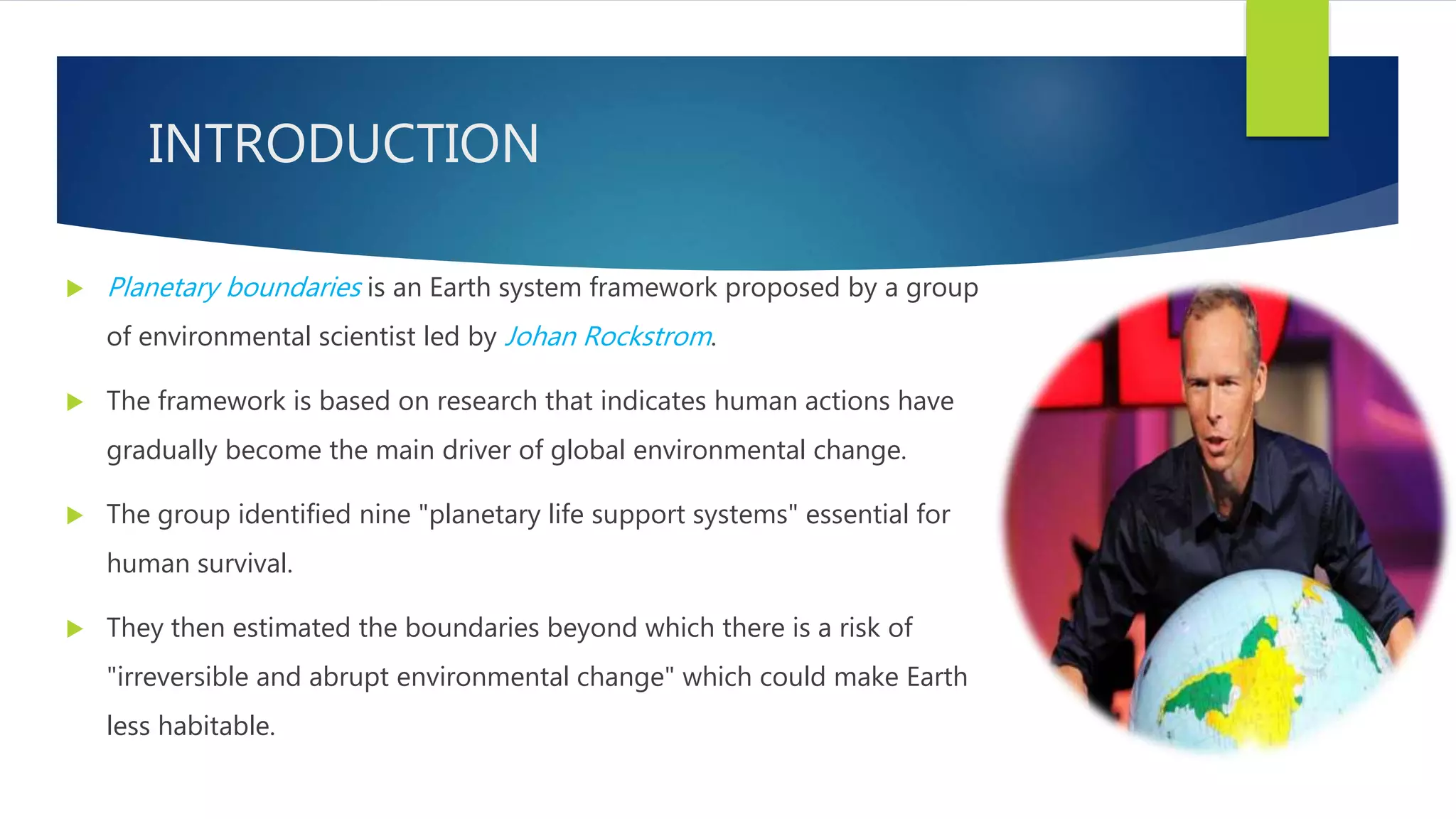
 Planetary boundaries is an Earth system framework proposed by a group
of environmental scientist led by Johan Rockstrom.
 The framework is based on research that indicates human actions have
gradually become the main driver of global environmental change.
 The group identified nine "planetary life support systems" essential for
human survival.
 They then estimated the boundaries beyond which there is a risk of
"irreversible and abrupt environmental change" which could make Earth
less habitable.
BACKGROUND
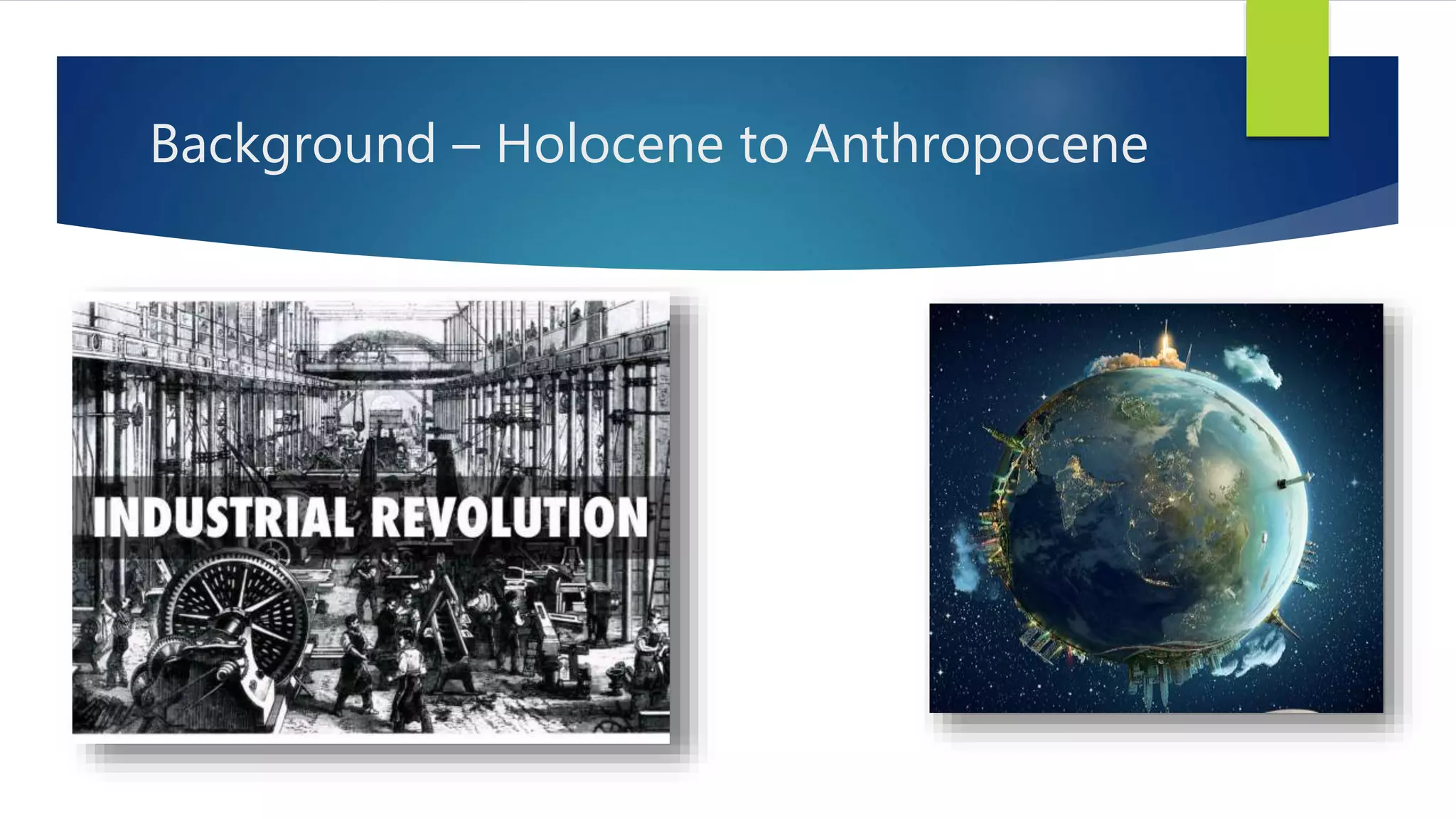
Holocene; relative stable period of time which enabled agriculture to develop and complex societies to thrive.
Background – Holocene to Anthropocene
Background – Trends in the Anthropocene
We are responsible for the planet or better still we must
be responsible for our actions, otherwise….
“We have our foot on the accelerator
driving towards the Abyss...”
Ban Ki-Moon, Secretary General of the UN
September 2009
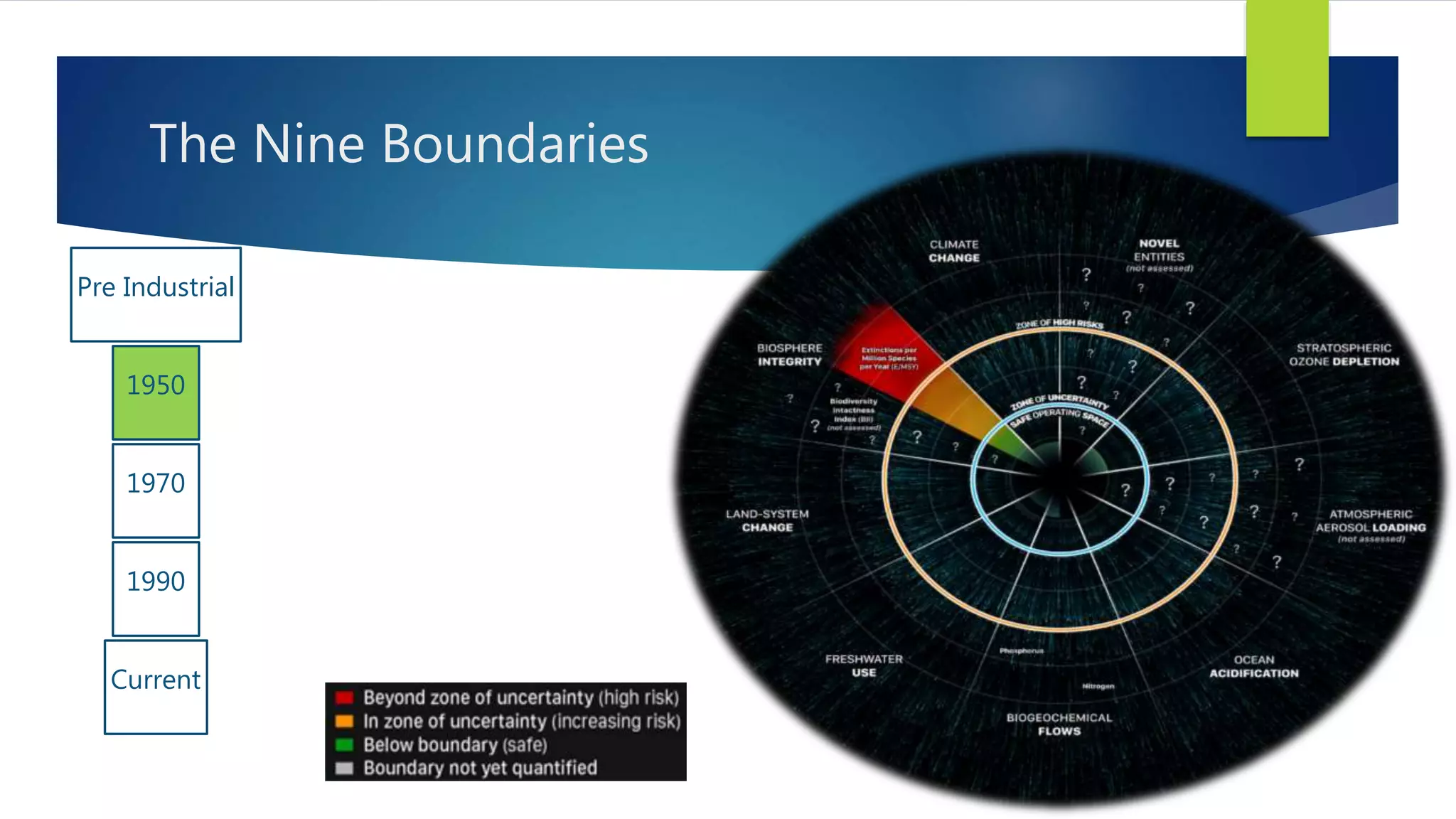
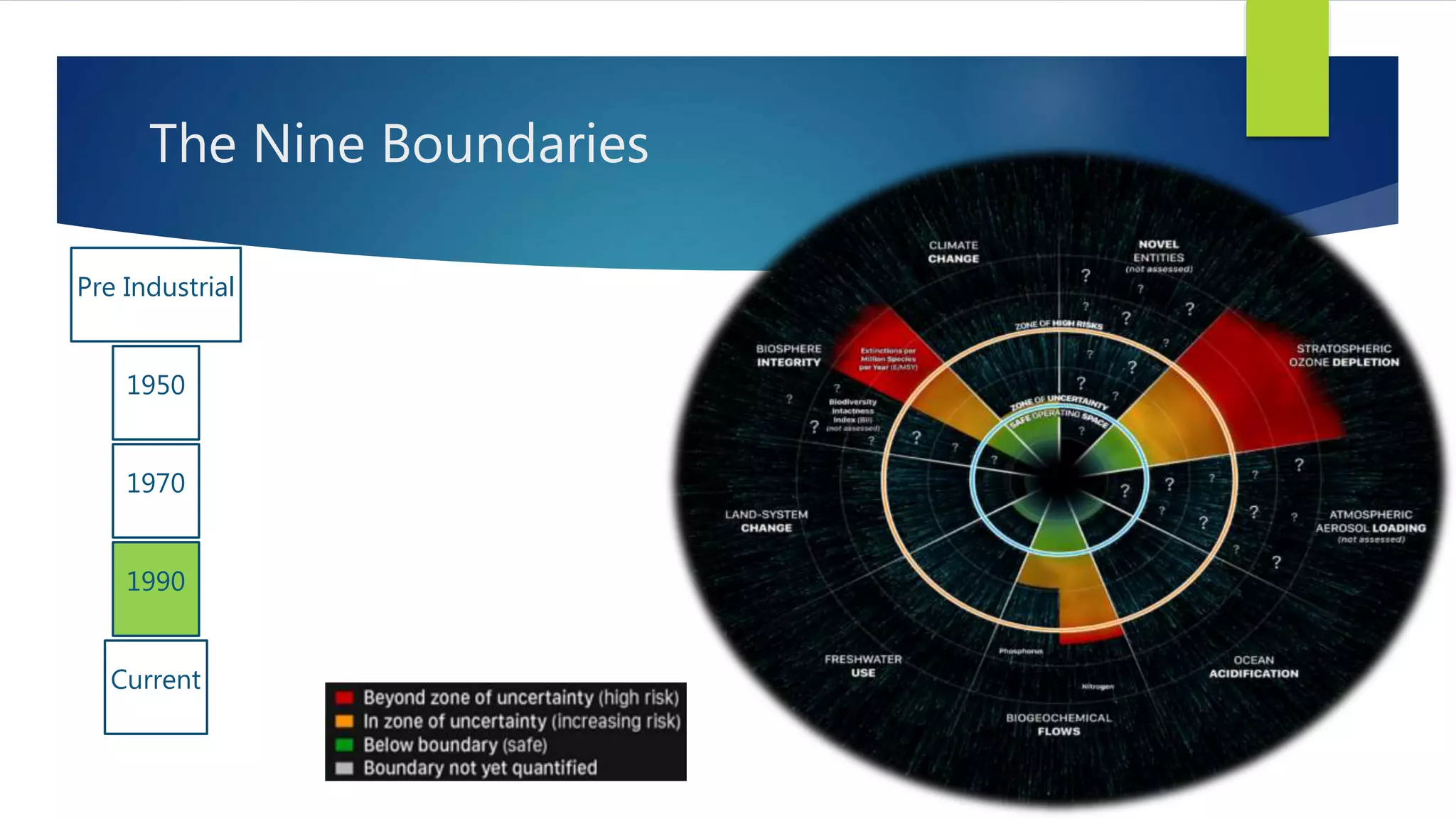
The nine boundaries
Climate Change Biodiversity Loss Biogeochemical Cycle
Ocean Acidification Land Use Freshwater Use
Ozone Depletion Atmospheric Aerosols Chemical Pollution
Climate Change
 Control variable : Atmospheric carbon dioxide concentration / Increase in radiative forcing
 Boundary: 350 ppm / 1.0 𝑊/𝑚2
Current value: 400 ppm / 1.5 𝑊/𝑚2
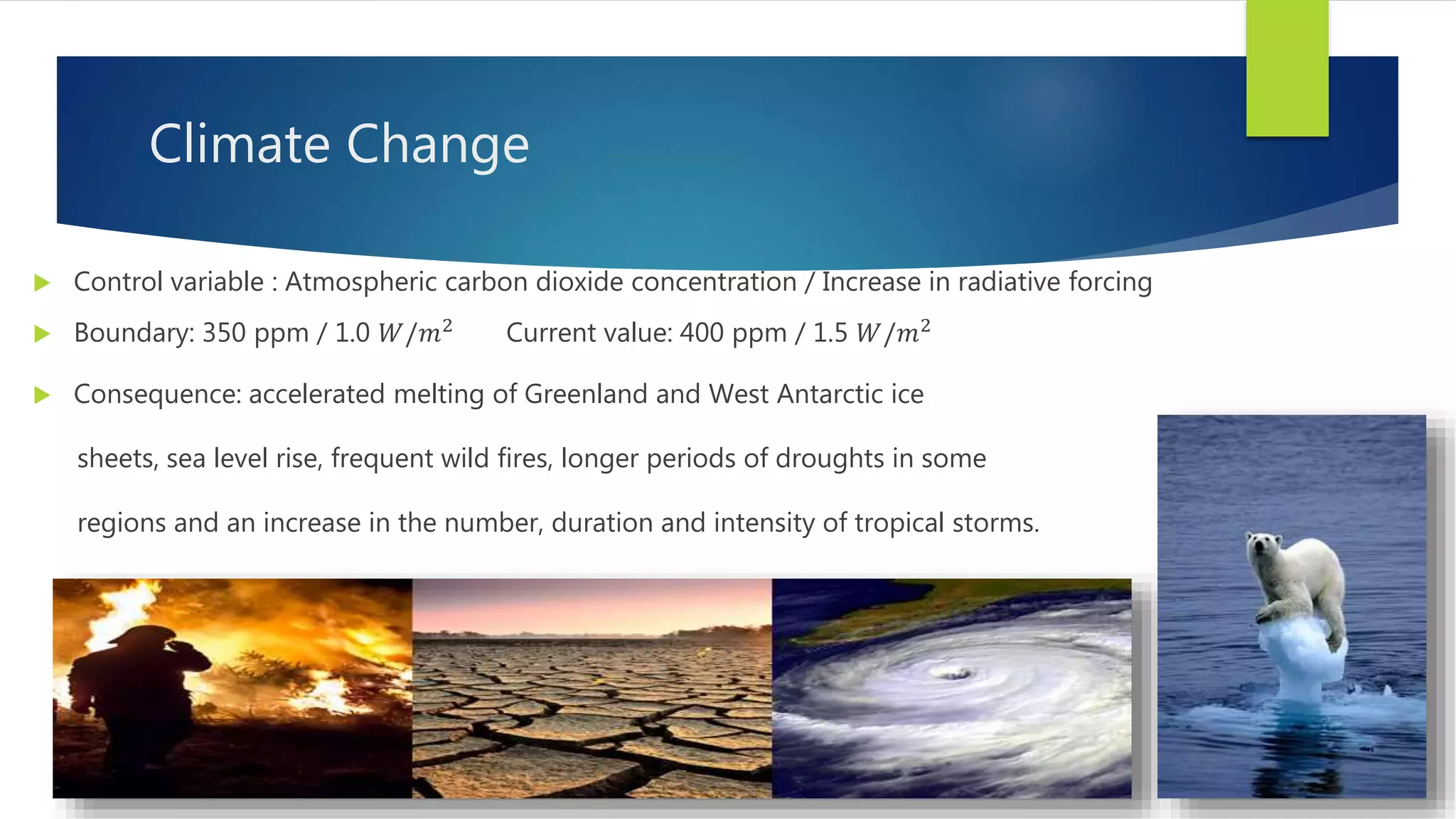
 Consequence: accelerated melting of Greenland and West Antarctic ice
sheets, sea level rise, frequent wild fires, longer periods of droughts in some
regions and an increase in the number, duration and intensity of tropical storms.
Ozone Layer depletion
 Filters out harmful UV radiation from the sun
 Control variable: Stratospheric ozone concentration
 In the 1980s increased concentration of ozone-depleting chemical substances
resulted in the Antarctic ozone hole.
 Actions taken after the Montreal protocol appears to be keeping the planet
within safe boundaries.
Ocean Acidification
 Around a quarter of the carbon dioxide humanity emits is
dissolved in the oceans. It forms carbonic acid. This acidity
inhibits the ability of corals, shellfish and plankton to build
shells and skeletons.
Land Use
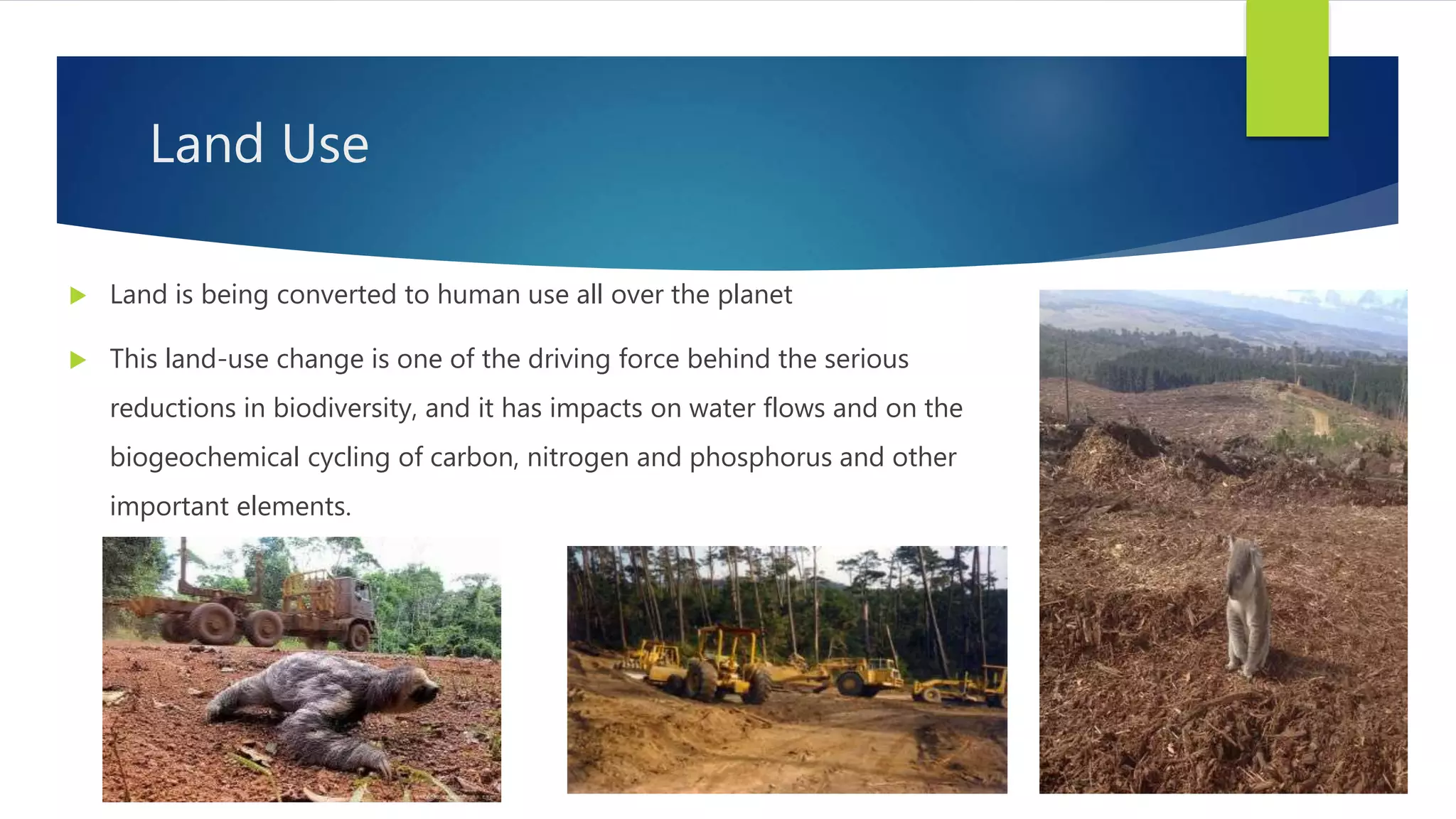
 Land is being converted to human use all over the planet
 This land-use change is one of the driving force behind the serious
reductions in biodiversity, and it has impacts on water flows and on the
biogeochemical cycling of carbon, nitrogen and phosphorus and other
important elements.
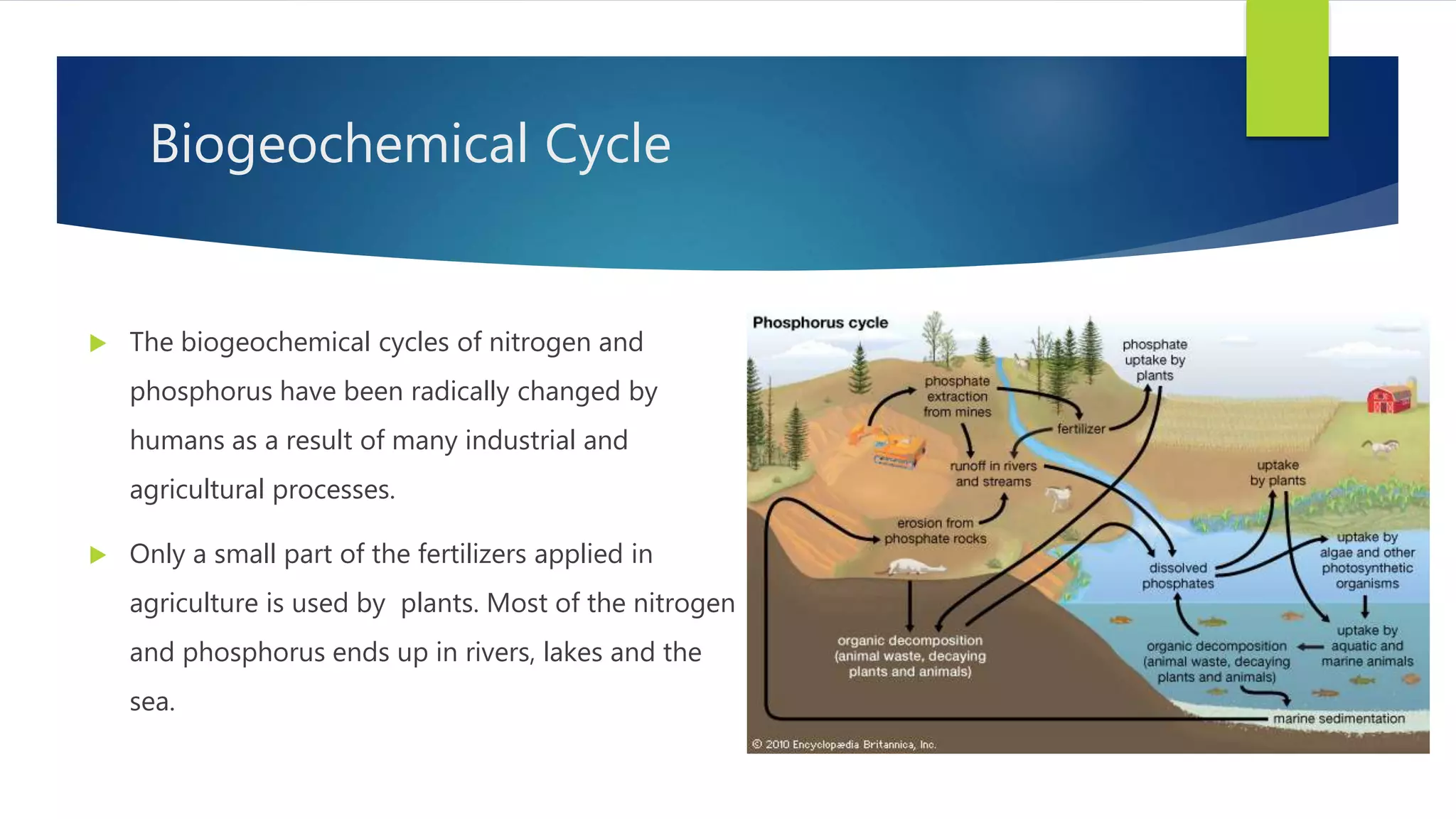
Biogeochemical Cycle
 The biogeochemical cycles of nitrogen and
phosphorus have been radically changed by
humans as a result of many industrial and
agricultural processes.
 Only a small part of the fertilizers applied in
agriculture is used by plants. Most of the nitrogen
and phosphorus ends up in rivers, lakes and the
sea.
Biodiversity loss
 Control variable: Extinction rate (number of species
per million per year)
 Loss of plant and animal species due to human
activities have been more rapid in the past 50 years
than at any time in human history.
The Nine Boundaries
Pre Industrial
1950
1970
1990
Current
The Nine Boundaries
Pre Industrial
1950
1970
1990
Current
The Nine Boundaries
Pre Industrial
1950
1970
1990
Current
The Nine Boundaries
Pre Industrial
1950
1970
1990
Current
The Nine Boundaries
Pre Industrial
1950
1970
1990
Current
 https://youtu.be/PGtCkv7_nIs?list=PLExYXELRcSgGsOBrE2GCdLggbuR4yopxq
THANK YOU

Planetary boundaries

  • 1.
    PLANETARY BOUNDARIES ABDUL-WAHAB, JUNIOR KDISCHOOL OF PUBLIC POLICY AND MANAGEMENT SOUTH KOREA 13TH SEPTEMBER, 2017
  • 2.
    INTRODUCTION  Planetary boundariesis an Earth system framework proposed by a group of environmental scientist led by Johan Rockstrom.  The framework is based on research that indicates human actions have gradually become the main driver of global environmental change.  The group identified nine "planetary life support systems" essential for human survival.  They then estimated the boundaries beyond which there is a risk of "irreversible and abrupt environmental change" which could make Earth less habitable.
  • 3.
    BACKGROUND Holocene; relative stableperiod of time which enabled agriculture to develop and complex societies to thrive.
  • 4.
    Background – Holoceneto Anthropocene
  • 5.
    Background – Trendsin the Anthropocene
  • 6.
    Background – Trendsin the Anthropocene We are responsible for the planet or better still we must be responsible for our actions, otherwise….
  • 7.
    “We have ourfoot on the accelerator driving towards the Abyss...” Ban Ki-Moon, Secretary General of the UN September 2009
  • 8.
    The nine boundaries ClimateChange Biodiversity Loss Biogeochemical Cycle Ocean Acidification Land Use Freshwater Use Ozone Depletion Atmospheric Aerosols Chemical Pollution
  • 9.
    Climate Change  Controlvariable : Atmospheric carbon dioxide concentration / Increase in radiative forcing  Boundary: 350 ppm / 1.0 𝑊/𝑚2 Current value: 400 ppm / 1.5 𝑊/𝑚2  Consequence: accelerated melting of Greenland and West Antarctic ice sheets, sea level rise, frequent wild fires, longer periods of droughts in some regions and an increase in the number, duration and intensity of tropical storms.
  • 10.
    Ozone Layer depletion Filters out harmful UV radiation from the sun  Control variable: Stratospheric ozone concentration  In the 1980s increased concentration of ozone-depleting chemical substances resulted in the Antarctic ozone hole.  Actions taken after the Montreal protocol appears to be keeping the planet within safe boundaries.
  • 11.
    Ocean Acidification  Arounda quarter of the carbon dioxide humanity emits is dissolved in the oceans. It forms carbonic acid. This acidity inhibits the ability of corals, shellfish and plankton to build shells and skeletons.
  • 12.
    Land Use  Landis being converted to human use all over the planet  This land-use change is one of the driving force behind the serious reductions in biodiversity, and it has impacts on water flows and on the biogeochemical cycling of carbon, nitrogen and phosphorus and other important elements.
  • 13.
    Biogeochemical Cycle  Thebiogeochemical cycles of nitrogen and phosphorus have been radically changed by humans as a result of many industrial and agricultural processes.  Only a small part of the fertilizers applied in agriculture is used by plants. Most of the nitrogen and phosphorus ends up in rivers, lakes and the sea.
  • 14.
    Biodiversity loss  Controlvariable: Extinction rate (number of species per million per year)  Loss of plant and animal species due to human activities have been more rapid in the past 50 years than at any time in human history.
  • 15.
    The Nine Boundaries PreIndustrial 1950 1970 1990 Current
  • 16.
    The Nine Boundaries PreIndustrial 1950 1970 1990 Current
  • 17.
    The Nine Boundaries PreIndustrial 1950 1970 1990 Current
  • 18.
    The Nine Boundaries PreIndustrial 1950 1970 1990 Current
  • 19.
    The Nine Boundaries PreIndustrial 1950 1970 1990 Current
  • 20.
  • 21.