Determination of woven fabric
performance: pilling, abrasion,
tear and breaking strength
Berrak Arıkan
Esin Yegin
Sinem Atasoy
Pilling (boncuklanma)
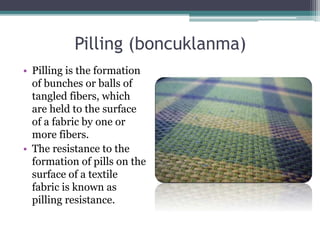
• Pilling is the formation
of bunches or balls of
tangled fibers, which
are held to the surface
of a fabric by one or
more fibers.
• The resistance to the
formation of pills on the
surface of a textile
fabric is known as
pilling resistance.
Pilling
• Pilling of yarn or fabric is due to the fiber
mobility action with in the yarn.
• Yarn dimensional stability is very
important because if yarn is dimensionally
stable less fiber mobility in the yarn and
hence less pilling will occur on the fabric
surface.
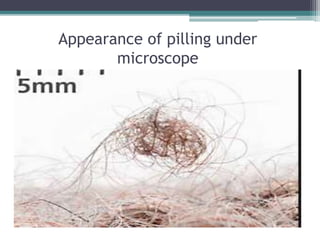
Appearance of pilling under
microscope
The pilling of textile fabrics is a very complex property
because it is affected by many factors that include:
•Type of fiber or blends
•Fiber dimensions
•Yarn construction
•Fabric construction
•Fabric finishing treatments
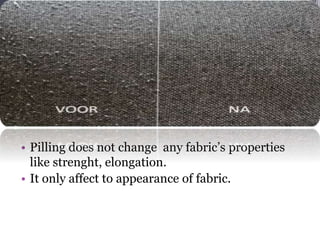
• Pilling does not change any fabric’s properties
like strenght, elongation.
• It only affect to appearance of fabric.
Pilling tests
•ICI Pilling box
•Random tumble pilling test
•Pilling test Swiss standard
•Martindale pilling tests
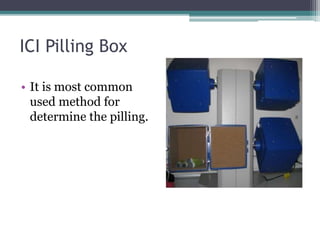
ICI Pilling Box
• It is most common
used method for
determine the pilling.
Procedure
• For this test four specimens (125 x 125 mm) are
cut from fabric. ( two of them is warp direction,
two of them is weft direction)
• A seam allowance of 12 mm is marked on the
back of each square and a seam is sewn on the
marked lines.
• All four specimens which are prepared on
polyurethane tube are placed in one pilling box.
• The usual number of revolutions used in the test
is 18.000 which takes 5 hours.
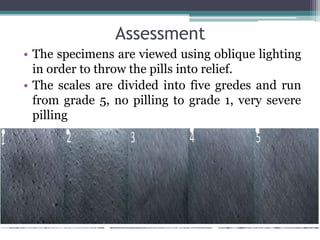
Assessment
• The specimens are viewed using oblique lighting
in order to throw the pills into relief.
• The scales are divided into five gredes and run
from grade 5, no pilling to grade 1, very severe
pilling
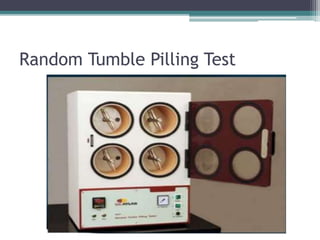
Random Tumble Pilling Test
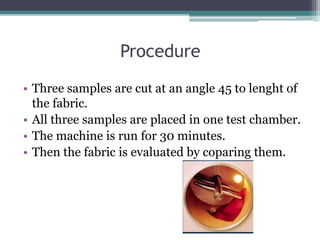
Procedure
• Three samples are cut at an angle 45 to lenght of
the fabric.
• All three samples are placed in one test chamber.
• The machine is run for 30 minutes.
• Then the fabric is evaluated by coparing them.
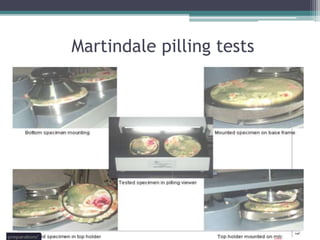
Martindale pilling tests
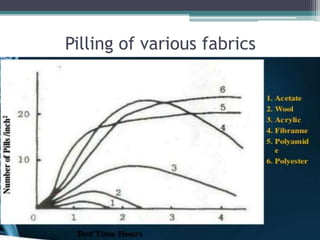
Pilling of various fabrics
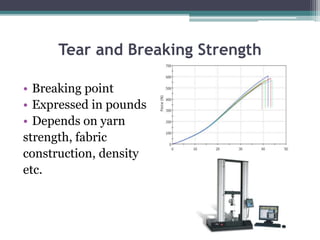
Tear and Breaking Strength
• Breaking point
• Expressed in pounds
• Depends on yarn
strength, fabric
construction, density
etc.
Strip method
• Clamp specimen
with a grip distance of
75 mm (3 in.).
• Pull the strips until
the fabric breaks.
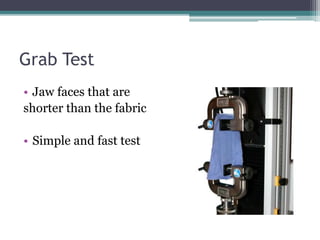
Grab Test
• Jaw faces that are
shorter than the fabric
• Simple and fast test
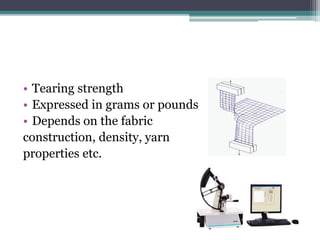
• Tearing strength
• Expressed in grams or pounds
• Depends on the fabric
construction, density, yarn
properties etc.
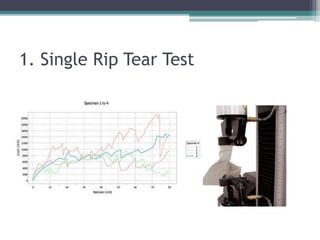
1. Single Rip Tear Test
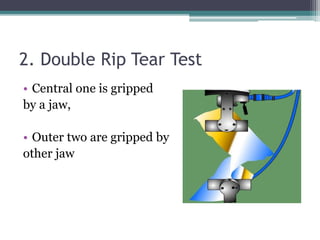
2. Double Rip Tear Test
• Central one is gripped
by a jaw,
• Outer two are gripped by
other jaw
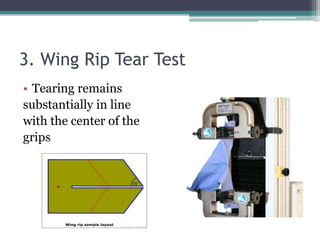
3. Wing Rip Tear Test
• Tearing remains
substantially in line
with the center of the
grips
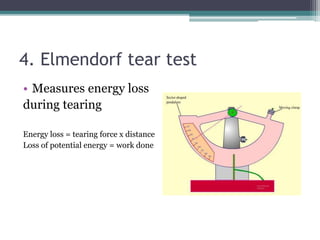
4. Elmendorf tear test
• Measures energy loss
during tearing
Energy loss = tearing force x distance
Loss of potential energy = work done
Abrasion resistance tests for
woven fabrics
What is abrasion?
• Academics at Leeds University have described
abrasion as “the physical destruction of fibres,
yarns, and fabrics, resulting from the rubbing of
a textile surface over another surface”.
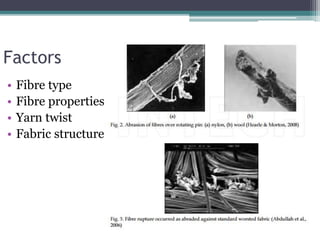
Factors
• Fibre type
• Fibre properties
• Yarn twist
• Fabric structure
ASTM D4157-07* Wyzenbeek
(Oscillatory Cylinder) test method
• The Wyzenbeek testing process requires samples
of the test fabric to be pulled taut in a frame and
held stationary. Individual test specimens cut
from the warp and weft directions are then
rubbed back and forth using an ACT approved
#10 cotton duck fabric as the abradant.
• upholstery fabrics
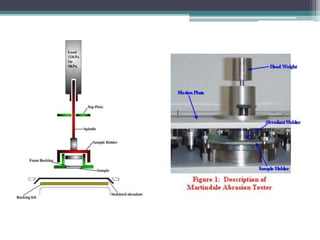
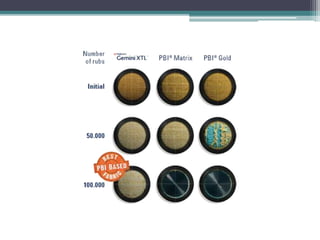
ASTM D4966-98** Martindale test
method
• The Martindale testing process requires fabric
samples to be mounted flat and rubbed in an
enlarging elliptical T shape using a piece of worsted
wool cloth as the abradant. The end point is reached
when two yarn breaks occur or when there is an
appreciable change in shade or appearance.
• The advantage of the Martindale abrasion test is
that the fabric sample gets abrasion in all directions.
• https://www.youtube.com/wa
tch?v=KpNj_iO99xE
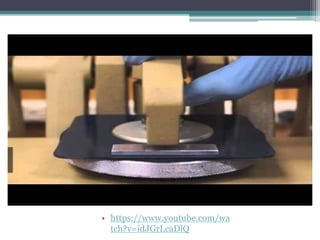
Taber abraser device(Rotary
Platform)
• can be used for most fabrics.
• https://www.youtube.com/wa
tch?v=idJGrLcaDlQ
•Berrak Arıkan
•Esin Yegin
•Sinem Atasoy

Pilling - tear strength - abration tests

  • 1.
    Determination of wovenfabric performance: pilling, abrasion, tear and breaking strength Berrak Arıkan Esin Yegin Sinem Atasoy
  • 2.
    Pilling (boncuklanma) • Pillingis the formation of bunches or balls of tangled fibers, which are held to the surface of a fabric by one or more fibers. • The resistance to the formation of pills on the surface of a textile fabric is known as pilling resistance.
  • 3.
    Pilling • Pilling ofyarn or fabric is due to the fiber mobility action with in the yarn. • Yarn dimensional stability is very important because if yarn is dimensionally stable less fiber mobility in the yarn and hence less pilling will occur on the fabric surface.
  • 4.
    Appearance of pillingunder microscope
  • 5.
    The pilling oftextile fabrics is a very complex property because it is affected by many factors that include: •Type of fiber or blends •Fiber dimensions •Yarn construction •Fabric construction •Fabric finishing treatments
  • 6.
    • Pilling doesnot change any fabric’s properties like strenght, elongation. • It only affect to appearance of fabric.
  • 7.
    Pilling tests •ICI Pillingbox •Random tumble pilling test •Pilling test Swiss standard •Martindale pilling tests
  • 8.
    ICI Pilling Box •It is most common used method for determine the pilling.
  • 9.
    Procedure • For thistest four specimens (125 x 125 mm) are cut from fabric. ( two of them is warp direction, two of them is weft direction) • A seam allowance of 12 mm is marked on the back of each square and a seam is sewn on the marked lines. • All four specimens which are prepared on polyurethane tube are placed in one pilling box. • The usual number of revolutions used in the test is 18.000 which takes 5 hours.
  • 10.
    Assessment • The specimensare viewed using oblique lighting in order to throw the pills into relief. • The scales are divided into five gredes and run from grade 5, no pilling to grade 1, very severe pilling
  • 11.
  • 12.
    Procedure • Three samplesare cut at an angle 45 to lenght of the fabric. • All three samples are placed in one test chamber. • The machine is run for 30 minutes. • Then the fabric is evaluated by coparing them.
  • 13.
  • 14.
  • 15.
    Tear and BreakingStrength • Breaking point • Expressed in pounds • Depends on yarn strength, fabric construction, density etc.
  • 16.
    Strip method • Clampspecimen with a grip distance of 75 mm (3 in.). • Pull the strips until the fabric breaks.
  • 17.
    Grab Test • Jawfaces that are shorter than the fabric • Simple and fast test
  • 18.
    • Tearing strength •Expressed in grams or pounds • Depends on the fabric construction, density, yarn properties etc.
  • 19.
    1. Single RipTear Test
  • 20.
    2. Double RipTear Test • Central one is gripped by a jaw, • Outer two are gripped by other jaw
  • 21.
    3. Wing RipTear Test • Tearing remains substantially in line with the center of the grips
  • 22.
    4. Elmendorf teartest • Measures energy loss during tearing Energy loss = tearing force x distance Loss of potential energy = work done
  • 23.
    Abrasion resistance testsfor woven fabrics
  • 24.
    What is abrasion? •Academics at Leeds University have described abrasion as “the physical destruction of fibres, yarns, and fabrics, resulting from the rubbing of a textile surface over another surface”.
  • 25.
    Factors • Fibre type •Fibre properties • Yarn twist • Fabric structure
  • 26.
    ASTM D4157-07* Wyzenbeek (OscillatoryCylinder) test method • The Wyzenbeek testing process requires samples of the test fabric to be pulled taut in a frame and held stationary. Individual test specimens cut from the warp and weft directions are then rubbed back and forth using an ACT approved #10 cotton duck fabric as the abradant. • upholstery fabrics
  • 28.
    ASTM D4966-98** Martindaletest method • The Martindale testing process requires fabric samples to be mounted flat and rubbed in an enlarging elliptical T shape using a piece of worsted wool cloth as the abradant. The end point is reached when two yarn breaks occur or when there is an appreciable change in shade or appearance. • The advantage of the Martindale abrasion test is that the fabric sample gets abrasion in all directions.
  • 31.
  • 33.
    Taber abraser device(Rotary Platform) •can be used for most fabrics.
  • 34.
  • 35.