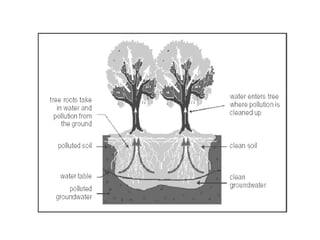
PHYTOREMEDIATION
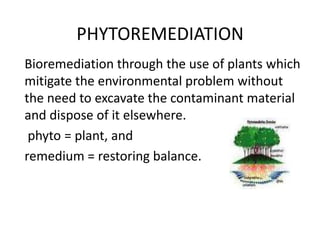
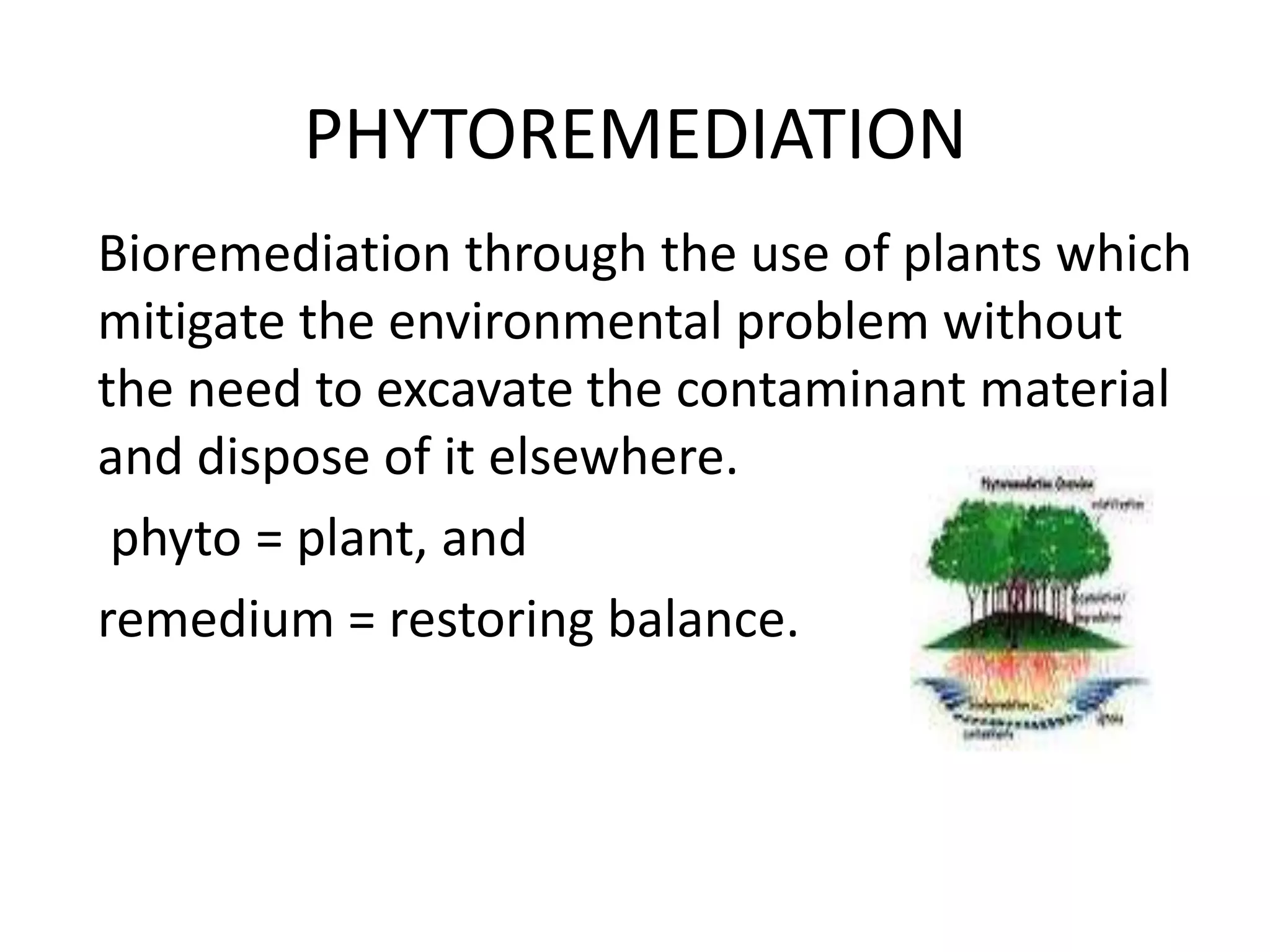
Bioremediation through the use of plants which
mitigate the environmental problem without
the need to excavate the contaminant material
and dispose of it elsewhere.
 phyto = plant, and
remedium = restoring balance.
Advantages
• the cost of the phytoremediation is lower than that of
  traditional processes both in situ and ex situ
• the plants can be easily monitored
• the possibility of the recovery and re-use of valuable
  metals (by companies specializing in “phyto mining”)
• it is potentially the least harmful method because it
  uses naturally occurring organisms and preserves the
  environment in a more natural state.
Limitations
 Phytoremediation is limited to the surface area and depth
  occupied by the roots.
 slow growth and low biomass require a long-term
  commitment
 with plant-based systems of remediation, it is not possible
  to completely prevent the leaching of contaminants into
  the groundwater
 the survival of the plants is affected by the toxicity of the
  contaminated land and the general condition of the soil.
 bio-accumulation of contaminants, especially metals, into
  the plants which then pass into the food chain, from
  primary level consumers upwards and/or requires the safe
  disposal of the affected plant material.
Various phytoremediation processes

•   Phytoextraction
•   Phytostabilization
•   Phytotransformation
•   Phytostimulation
•   Phytovolatilization
•   Rhizofiltration
Phytoextraction
Phytoextraction (or phytoaccumulation) uses plants or algae to remove
contaminants from soils, sediments or water into harvestable plant biomass.

Advantages:
• The main advantage of phytoextraction is environmental friendliness.
  Traditional methods which are used for cleaning up heavy metal
  contaminated soil disrupt soil structure and reduce soil productivity,
  whereas phytoextraction can clean up the soil without causing any kind of
  harm to soil quality.
• Another benefit of phytoextraction is that it is less expensive than any
  other clean up process.

Disadvantages: As this process is controlled by plants, it takes more time than
traditional soil clean up methods.
Examples of phytoextraction from soils

• Arsenic, using the Sunflower, or the Chinese Brake fern , a
  hyperaccumulator. Chinese Brake fern stores arsenic in its leaves.

• Cadmium, using Willow. As willow has some specific characteristics like
  high transport capacity of heavy metals from root to shoot,huge amount
  of biomass production, can use also for production of bio energy in the
  biomass energy power plant.

• Cadmium and zinc, using Alpine pennycress, a hyperaccumulator of these
  metals at levels that would be toxic to many plants. On the other
  hand, the presence of copper seems to impair its growth.

• Lead, using Indian Mustard, Ragweed, Hemp
  Dogbane, or Poplar trees, which sequester lead in its biomass.
• Uranium, using sunflowers, as used after the Chernobyl accident.

• Mercury, selenium and organic pollutants such as polychlorinated
  biphenyls (PCBs) have been removed from soils by transgenic plants .
Phytostabilization
Phytostabilization focuses on long-term
stabilization and containment of the pollutant.
Unlike phytoextraction, phytostabilization
mainly focuses on sequestering pollutants in
soil near the roots but not in plant tissues.
Pollutants become less bioavailable and
livestock, wildlife, and human exposure is
reduced.
Phytotransformation
Chemical modification of environmental Substances as a direct
result of plant metabolism.
After uptake of the contaminats, plant enzymes increase the
polarity of the contaminants by adding functional groups such as
hydroxyl groups (-OH). This is known as Phase I metabolism.
In the second stage of phytotransformation, known as Phase II
metabolism, plant biomolecules such as glucose and amino acids
are added to the polarized xenobiotic to further increase the
polarity (known as conjugation). In the final stage of
phytotransformation (Phase III metabolism), a sequestration of
the xenobiotic occurs within the plant.
e.g: Trinitrotoluene phytotransformation
• Phytostimulation - enhancement of soil
  microbial activity for the degradation of
  contaminants, typically by organisms that associate
  with roots. This process is also known
  asrhizosphere degradation.

• Phytovolatilization - removal of substances from soil or
  water with release into the air, sometimes as a result of
  phytotransformation to more volatile and / or less
  polluting substances.

• Rhizofiltration - filtering water through a mass of roots
  to remove toxic substances or excess nutrients. The
  pollutants remain absorbed in or adsorbed to the
  roots.
The role of genetics
Genetic engineering is a powerful method for
enhancing natural phytoremediation
capabilities, or for introducing new capabilities
into plants. For example, genes encoding a
nitroreductase from a bacterium were inserted
into tobacco and showed faster removal of TNT
and enhanced resistance to the toxic effects of
TNT

Phytoremediation

  • 1.
    PHYTOREMEDIATION Bioremediation through theuse of plants which mitigate the environmental problem without the need to excavate the contaminant material and dispose of it elsewhere. phyto = plant, and remedium = restoring balance.
  • 2.
    Advantages • the costof the phytoremediation is lower than that of traditional processes both in situ and ex situ • the plants can be easily monitored • the possibility of the recovery and re-use of valuable metals (by companies specializing in “phyto mining”) • it is potentially the least harmful method because it uses naturally occurring organisms and preserves the environment in a more natural state.
  • 3.
    Limitations  Phytoremediation islimited to the surface area and depth occupied by the roots.  slow growth and low biomass require a long-term commitment  with plant-based systems of remediation, it is not possible to completely prevent the leaching of contaminants into the groundwater  the survival of the plants is affected by the toxicity of the contaminated land and the general condition of the soil.  bio-accumulation of contaminants, especially metals, into the plants which then pass into the food chain, from primary level consumers upwards and/or requires the safe disposal of the affected plant material.
  • 5.
    Various phytoremediation processes • Phytoextraction • Phytostabilization • Phytotransformation • Phytostimulation • Phytovolatilization • Rhizofiltration
  • 6.
    Phytoextraction Phytoextraction (or phytoaccumulation)uses plants or algae to remove contaminants from soils, sediments or water into harvestable plant biomass. Advantages: • The main advantage of phytoextraction is environmental friendliness. Traditional methods which are used for cleaning up heavy metal contaminated soil disrupt soil structure and reduce soil productivity, whereas phytoextraction can clean up the soil without causing any kind of harm to soil quality. • Another benefit of phytoextraction is that it is less expensive than any other clean up process. Disadvantages: As this process is controlled by plants, it takes more time than traditional soil clean up methods.
  • 7.
    Examples of phytoextractionfrom soils • Arsenic, using the Sunflower, or the Chinese Brake fern , a hyperaccumulator. Chinese Brake fern stores arsenic in its leaves. • Cadmium, using Willow. As willow has some specific characteristics like high transport capacity of heavy metals from root to shoot,huge amount of biomass production, can use also for production of bio energy in the biomass energy power plant. • Cadmium and zinc, using Alpine pennycress, a hyperaccumulator of these metals at levels that would be toxic to many plants. On the other hand, the presence of copper seems to impair its growth. • Lead, using Indian Mustard, Ragweed, Hemp Dogbane, or Poplar trees, which sequester lead in its biomass. • Uranium, using sunflowers, as used after the Chernobyl accident. • Mercury, selenium and organic pollutants such as polychlorinated biphenyls (PCBs) have been removed from soils by transgenic plants .
  • 8.
    Phytostabilization Phytostabilization focuses onlong-term stabilization and containment of the pollutant. Unlike phytoextraction, phytostabilization mainly focuses on sequestering pollutants in soil near the roots but not in plant tissues. Pollutants become less bioavailable and livestock, wildlife, and human exposure is reduced.
  • 9.
    Phytotransformation Chemical modification ofenvironmental Substances as a direct result of plant metabolism. After uptake of the contaminats, plant enzymes increase the polarity of the contaminants by adding functional groups such as hydroxyl groups (-OH). This is known as Phase I metabolism. In the second stage of phytotransformation, known as Phase II metabolism, plant biomolecules such as glucose and amino acids are added to the polarized xenobiotic to further increase the polarity (known as conjugation). In the final stage of phytotransformation (Phase III metabolism), a sequestration of the xenobiotic occurs within the plant. e.g: Trinitrotoluene phytotransformation
  • 10.
    • Phytostimulation -enhancement of soil microbial activity for the degradation of contaminants, typically by organisms that associate with roots. This process is also known asrhizosphere degradation. • Phytovolatilization - removal of substances from soil or water with release into the air, sometimes as a result of phytotransformation to more volatile and / or less polluting substances. • Rhizofiltration - filtering water through a mass of roots to remove toxic substances or excess nutrients. The pollutants remain absorbed in or adsorbed to the roots.
  • 11.
    The role ofgenetics Genetic engineering is a powerful method for enhancing natural phytoremediation capabilities, or for introducing new capabilities into plants. For example, genes encoding a nitroreductase from a bacterium were inserted into tobacco and showed faster removal of TNT and enhanced resistance to the toxic effects of TNT