BIODEGRADATION OF
POLLUTANT
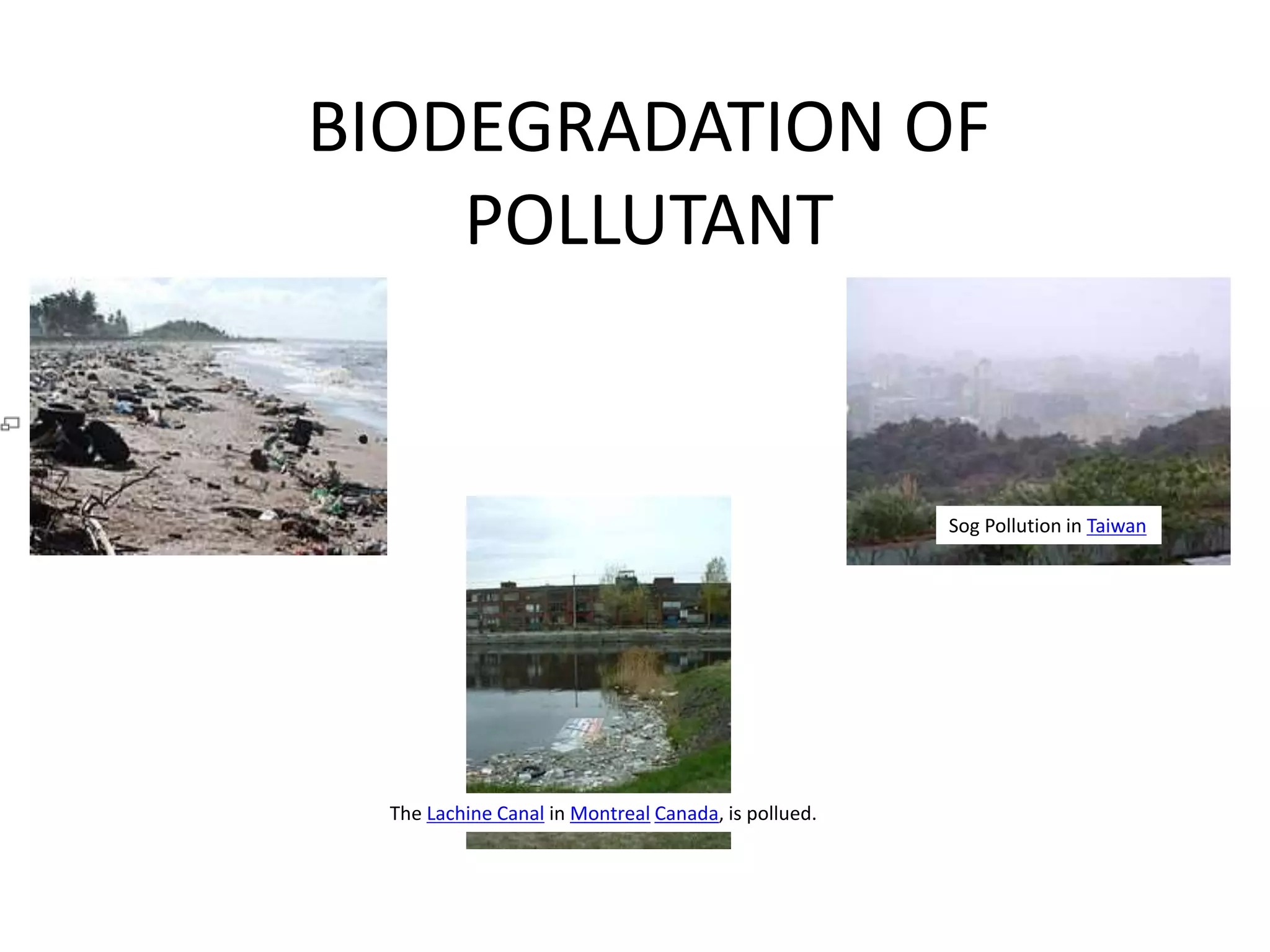
Sog Pollution in Taiwan
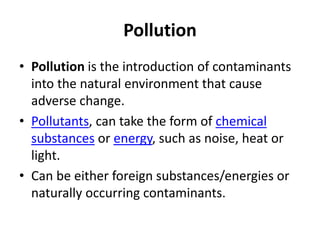
The Lachine Canal in Montreal Canada, is pollued.
Pollution
• Pollution is the introduction of contaminants
into the natural environment that cause
adverse change.
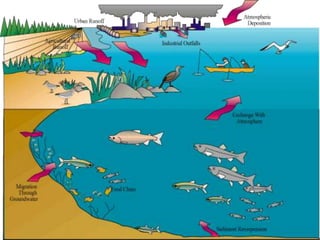
• Pollutants, can take the form of chemical
substances or energy, such as noise, heat or
light.
• Can be either foreign substances/energies or
naturally occurring contaminants.
Forms of Pollution
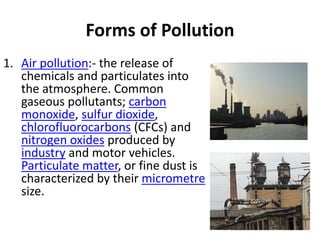
1. Air pollution:- the release of
chemicals and particulates into
the atmosphere. Common
gaseous pollutants; carbon
monoxide, sulfur dioxide,
chlorofluorocarbons (CFCs) and
nitrogen oxides produced by
industry and motor vehicles.
Particulate matter, or fine dust is
characterized by their micrometre
size.
Forms of Pollution
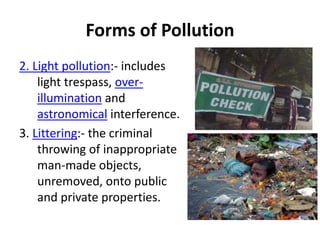
2. Light pollution:- includes
light trespass, over-
illumination and
astronomical interference.
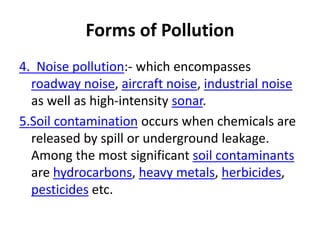
3. Littering:- the criminal
throwing of inappropriate
man-made objects,
unremoved, onto public
and private properties.
Forms of Pollution
4. Noise pollution:- which encompasses
roadway noise, aircraft noise, industrial noise
as well as high-intensity sonar.
5.Soil contamination occurs when chemicals are
released by spill or underground leakage.
Among the most significant soil contaminants
are hydrocarbons, heavy metals, herbicides,
pesticides etc.
Forms of Pollution
6. Radioactive contamination, resulting from 20th
century activities in atomic physics, such as
nuclear power generation and nuclear weapons
research, manufacture and deployment. (See
alpha emitters and actinides in the environment.)
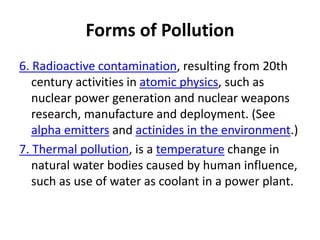
7. Thermal pollution, is a temperature change in
natural water bodies caused by human influence,
such as use of water as coolant in a power plant.
Forms of Pollution
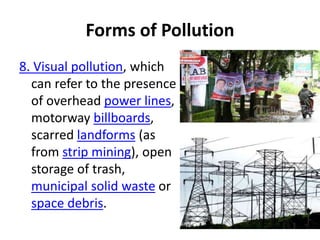
8. Visual pollution, which
can refer to the presence
of overhead power lines,
motorway billboards,
scarred landforms (as
from strip mining), open
storage of trash,
municipal solid waste or
space debris.
Forms of Pollution
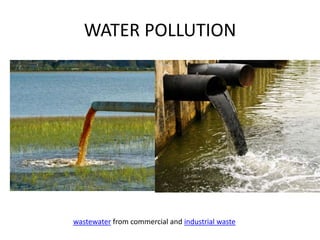
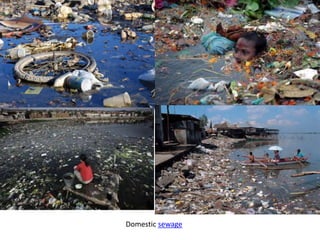
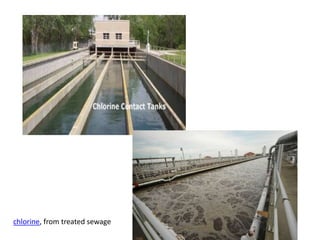
9. Water pollution, by the discharge of
• wastewater from commercial and industrial waste;
• Domestic sewage, and
• Chemical contaminants, such as chlorine, from treated
sewage;
• Waste and contaminants into surface runoff flowing to
surface waters (including urban runoff and agricultural
runoff, which may contain chemical fertilizers and
pesticides); waste disposal and leaching into
groundwater; eutrophication and littering.
WATER POLLUTION
wastewater from commercial and industrial waste
Domestic sewage
chlorine, from treated sewage
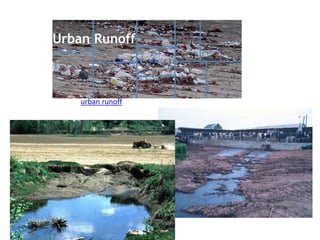
urban runoff
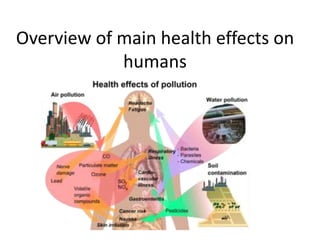
Overview of main health effects on
humans
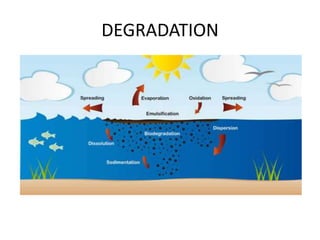
POLLUTANT DEGRADATION
• Chemically
• Phisically
– Evaporate
– Temperature Destroy
• Mechanically
– Disperse
– Submerged etc
• Biologically
– Utilization as nutrient
– Utilization as food
– Biodegradation
DEGRADATION
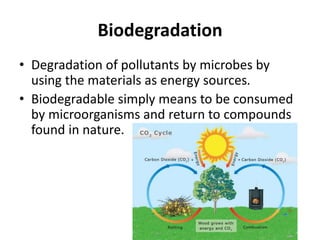
Biodegradation
• Degradation of pollutants by microbes by
using the materials as energy sources.
• Biodegradable simply means to be consumed
by microorganisms and return to compounds
found in nature.
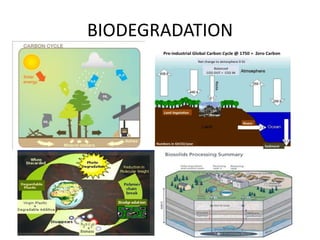
BIODEGRADATION
Biodegradation
• Bioremediation associated with
environmentally friendly products that are
capable of decomposing back into natural
elements.
• Biosurfactant, an extracellular surfactant
secreted by microorganisms, enhances the
biodegradation process.
Biodegradation
• Some microorganisms have a naturally occurring,
microbial catabolic diversity to degrade,
transform or accumulate a huge range of
compounds.
• Including hydrocarbons (e.g. oil), polychlorinated
biphenyls (PCBs), polyaromatic hydrocarbons
(PAHs), pharmaceutical substances,
radionuclides, pesticides, and metals.
Decomposition of biodegradable substances may
include both biological and abiotic steps.
Bioremediation
• In situ bioremediation involves treating the
contaminated material at the site, while ex
situ involves the removal of the contaminated
material to be treated elsewhere.
• Some examples of bioremediation related
technologies are phytoremediation,
bioventing, bioleaching, landfarming,
bioreactor, composting, bioaugmentation,
rhizofiltration, and biostimulation.
Bioremediation
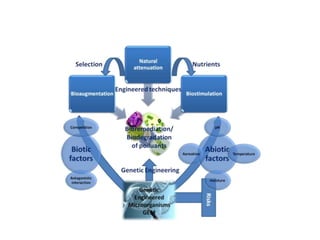
• Bioremediation can occur on its own or can be
spurred on via the addition of fertilizers
(biostimulation) to increase the bioavailability
within the medium.
• Addition of matched microbe strains to the
medium to enhance the resident microbe
population's ability to break down contaminants.
• Microorganisms used to perform the function of
bioremediation are known as bioremediators.
Bioremediation
• However, not all contaminants are easily treated
by bioremediation
• Heavy metals such as cadmium and lead are not
readily absorbed or captured by microorganisms.
• A recent experiment, however, suggests that fish
bones have some success absorbing lead from
contaminated soil.
• Bone char has been shown to bioremediate small
amounts of Cadmium, Copper, and Zinc.
• The assimilation of metals such as mercury into
the food chain may worsen matters.
Bioremediation
• Phytoremediation is useful in these
circumstances because natural plants or
transgenic plants are able to bioaccumulate
these toxins in their above-ground parts,
which are then harvested for removal.
• The heavy metals in the harvested biomass
may be further concentrated by incineration
or even recycled for industrial use.
• Interest in the microbial biodegradation of pollutants has
intensified in recent years as humanity strives to find
sustainable ways to clean up contaminated environments
• These bioremediation and biotransformation methods
endeavour to harness the astonishing, naturally occurring
ability of microbial xenobiotic metabolism to degrade,
transform or accumulate a huge range of compounds.
• Including hydrocarbons (e.g. oil), polychlorinated biphenyls
(PCBs), polyaromatic hydrocarbons (PAHs), heterocyclic
compounds (such as pyridine or quinoline), pharmaceutical
substances, radionuclides and metals
Bioremediation
Oil biodegradation
• Petroleum oil contains aromatic compounds that
are toxic for most life forms. Episodic and chronic
pollution of the environment by oil causes major
ecological perturbations.
• Marine environments are especially vulnerable
since oil spills of coastal regions and the open sea
are poorly containable and mitigation is difficult.
• In addition to pollution through human activities,
about 250 million liters of petroleum enter the
marine environment every year from natural
seepages.[9]
Oil biodegradation
• Despite its toxicity, a considerable fraction of
petroleum oil entering marine systems is eliminated by
the hydrocarbon-degrading activities of microbial
communities, in particular by a remarkable recently
discovered group of specialists, the so-called
hydrocarbonoclastic bacteria (HCB).
• Alcanivorax borkumensis was the first HCB to have its
genome sequenced.[11]
• Crude oil often contains various heterocyclic
compounds, such as pyridine, which appear to be
degraded by similar, though separate mechanisms than
hydrocarbons.[12]
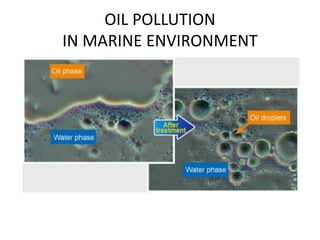
OIL POLLUTION
IN MARINE ENVIRONMENT

Biodegradation of pollutant 1

  • 1.
    BIODEGRADATION OF POLLUTANT Sog Pollutionin Taiwan The Lachine Canal in Montreal Canada, is pollued.
  • 2.
    Pollution • Pollution isthe introduction of contaminants into the natural environment that cause adverse change. • Pollutants, can take the form of chemical substances or energy, such as noise, heat or light. • Can be either foreign substances/energies or naturally occurring contaminants.
  • 3.
    Forms of Pollution 1.Air pollution:- the release of chemicals and particulates into the atmosphere. Common gaseous pollutants; carbon monoxide, sulfur dioxide, chlorofluorocarbons (CFCs) and nitrogen oxides produced by industry and motor vehicles. Particulate matter, or fine dust is characterized by their micrometre size.
  • 4.
    Forms of Pollution 2.Light pollution:- includes light trespass, over- illumination and astronomical interference. 3. Littering:- the criminal throwing of inappropriate man-made objects, unremoved, onto public and private properties.
  • 5.
    Forms of Pollution 4.Noise pollution:- which encompasses roadway noise, aircraft noise, industrial noise as well as high-intensity sonar. 5.Soil contamination occurs when chemicals are released by spill or underground leakage. Among the most significant soil contaminants are hydrocarbons, heavy metals, herbicides, pesticides etc.
  • 6.
    Forms of Pollution 6.Radioactive contamination, resulting from 20th century activities in atomic physics, such as nuclear power generation and nuclear weapons research, manufacture and deployment. (See alpha emitters and actinides in the environment.) 7. Thermal pollution, is a temperature change in natural water bodies caused by human influence, such as use of water as coolant in a power plant.
  • 7.
    Forms of Pollution 8.Visual pollution, which can refer to the presence of overhead power lines, motorway billboards, scarred landforms (as from strip mining), open storage of trash, municipal solid waste or space debris.
  • 8.
    Forms of Pollution 9.Water pollution, by the discharge of • wastewater from commercial and industrial waste; • Domestic sewage, and • Chemical contaminants, such as chlorine, from treated sewage; • Waste and contaminants into surface runoff flowing to surface waters (including urban runoff and agricultural runoff, which may contain chemical fertilizers and pesticides); waste disposal and leaching into groundwater; eutrophication and littering.
  • 9.
    WATER POLLUTION wastewater fromcommercial and industrial waste
  • 10.
  • 11.
  • 12.
  • 14.
    Overview of mainhealth effects on humans
  • 15.
    POLLUTANT DEGRADATION • Chemically •Phisically – Evaporate – Temperature Destroy • Mechanically – Disperse – Submerged etc • Biologically – Utilization as nutrient – Utilization as food – Biodegradation
  • 16.
  • 17.
    Biodegradation • Degradation ofpollutants by microbes by using the materials as energy sources. • Biodegradable simply means to be consumed by microorganisms and return to compounds found in nature.
  • 18.
  • 19.
    Biodegradation • Bioremediation associatedwith environmentally friendly products that are capable of decomposing back into natural elements. • Biosurfactant, an extracellular surfactant secreted by microorganisms, enhances the biodegradation process.
  • 20.
    Biodegradation • Some microorganismshave a naturally occurring, microbial catabolic diversity to degrade, transform or accumulate a huge range of compounds. • Including hydrocarbons (e.g. oil), polychlorinated biphenyls (PCBs), polyaromatic hydrocarbons (PAHs), pharmaceutical substances, radionuclides, pesticides, and metals. Decomposition of biodegradable substances may include both biological and abiotic steps.
  • 21.
    Bioremediation • In situbioremediation involves treating the contaminated material at the site, while ex situ involves the removal of the contaminated material to be treated elsewhere. • Some examples of bioremediation related technologies are phytoremediation, bioventing, bioleaching, landfarming, bioreactor, composting, bioaugmentation, rhizofiltration, and biostimulation.
  • 22.
    Bioremediation • Bioremediation canoccur on its own or can be spurred on via the addition of fertilizers (biostimulation) to increase the bioavailability within the medium. • Addition of matched microbe strains to the medium to enhance the resident microbe population's ability to break down contaminants. • Microorganisms used to perform the function of bioremediation are known as bioremediators.
  • 24.
    Bioremediation • However, notall contaminants are easily treated by bioremediation • Heavy metals such as cadmium and lead are not readily absorbed or captured by microorganisms. • A recent experiment, however, suggests that fish bones have some success absorbing lead from contaminated soil. • Bone char has been shown to bioremediate small amounts of Cadmium, Copper, and Zinc. • The assimilation of metals such as mercury into the food chain may worsen matters.
  • 25.
    Bioremediation • Phytoremediation isuseful in these circumstances because natural plants or transgenic plants are able to bioaccumulate these toxins in their above-ground parts, which are then harvested for removal. • The heavy metals in the harvested biomass may be further concentrated by incineration or even recycled for industrial use.
  • 26.
    • Interest inthe microbial biodegradation of pollutants has intensified in recent years as humanity strives to find sustainable ways to clean up contaminated environments • These bioremediation and biotransformation methods endeavour to harness the astonishing, naturally occurring ability of microbial xenobiotic metabolism to degrade, transform or accumulate a huge range of compounds. • Including hydrocarbons (e.g. oil), polychlorinated biphenyls (PCBs), polyaromatic hydrocarbons (PAHs), heterocyclic compounds (such as pyridine or quinoline), pharmaceutical substances, radionuclides and metals Bioremediation
  • 27.
    Oil biodegradation • Petroleumoil contains aromatic compounds that are toxic for most life forms. Episodic and chronic pollution of the environment by oil causes major ecological perturbations. • Marine environments are especially vulnerable since oil spills of coastal regions and the open sea are poorly containable and mitigation is difficult. • In addition to pollution through human activities, about 250 million liters of petroleum enter the marine environment every year from natural seepages.[9]
  • 29.
    Oil biodegradation • Despiteits toxicity, a considerable fraction of petroleum oil entering marine systems is eliminated by the hydrocarbon-degrading activities of microbial communities, in particular by a remarkable recently discovered group of specialists, the so-called hydrocarbonoclastic bacteria (HCB). • Alcanivorax borkumensis was the first HCB to have its genome sequenced.[11] • Crude oil often contains various heterocyclic compounds, such as pyridine, which appear to be degraded by similar, though separate mechanisms than hydrocarbons.[12]
  • 30.