VIVEKANANDHA ARTS AND SCIENCE COLLEGE FOR WOMEN
Veerachipalayam– 637 303, Sankagiri,Salem Dt., Tamil Nadu India.
Affiliatedtoperiyar university,Salem;Recognizedunder section2(f) &12(B) of the UGC act , 1956
Prepared by
N. SOWNTHARYA
I-Msc-MICROBIOLOGY
PHYTOREMEDIATION
DEPARTMENT OF MICROBIOLOGY
SUBJECT : BIOREMEDIATION
PaperIncharge
Dr. R. DINESHKUMAR
ASSISTANT PROFESSOR
DEPARTMENT OF MICROBIOLOGY.
CONTENTS:
• Introduction
• Types of Phytoremediation
• Process of Phytoremediation
• Phytoremediation of Heavy Metals in Soil
• Classification of Photo remediation
• Mechanisms of Phytoremediation
• Advantages
• Disadvantages
INTRODUCTION:
• Phytoremediation refers to the technologies that utilise plants to clean up
chemically contaminated land, air, and water.
• In addition to being a cost-effective technology for environmental
remediation, phytoremediation has proven to be a fantastic solution for all
type of environmental problems.
• Phytoremediation is a cost-effective plant-based method that capitalises on
plants’ ability to concentrate environmental components and chemicals and
metabolise diverse substances in their tissues.
• It refers to the natural ability of certain plants to bioaccumulate, decompose,
or render pollutants in soil, water, or air harmless. Heavy metal toxins and
organic contaminants are the focus of phytoremediation.
TYPES OF PHYTOREMEDIATION:
• In situ phytoremediation
• In-vivo phytoremediationwith relocated contaminants
• In vitro phytoremediation
IN SITU PHYTOREMEDIATION:
• For the aim of remediation, in situ phytoremediation involves the
placing of living plants in contaminated surface water, contaminated
soil or sediment, or contaminated soil or sediment in contact with
contaminated ground water.
• The contamination must be physically accessible to the plant’s roots
for the in-situ method to be applicable.
• Typically, this is the least expensive phytoremediation method.
IN-VIVO PHYTOREMEDIATION WITH RELOCATED
CONTAMINANTS:
• In this method, the pollutant is mechanically removed, then
transferred to a temporary treatment area where it can be exposed
to plants selected for effective phytoremediation.
• The treated water or soil can be restored to its original place, and if
necessary, the plants can be harvested for disposal.
• In general, this approach would be more expensive than the more
passive method outlined above.
• Treatment could take place either at the site of contamination or
elsewhere.
IN VITRO PHYTOREMEDIATION:
• Theoretically, this method might be implemented in situ in certain
circumstances, such as the application of plant extracts to a
contaminated pond or wetland or the employment of an enzyme-
impregnated porous barrier in a contaminated ground water plume.
• Probably, this strategy might also be applied to contaminated
materials that have been moved to a temporary treatment area.
• Theoretically, this approach would be the most expensive method of
phytoremediation due to the costs of preparing/extracting the plant
enzymes; however, in some plants, such as tarragon,exudates are
released in response to stress, which could reduce production costs.
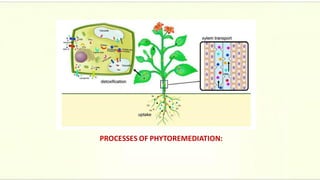
PROCESSES OF PHYTOREMEDIATION:
• Phytoremediation is based on certain natural processes carried out by
plants, such as:The uptake of metals and certain organic compounds
from soil and water; the photosynthesis of organic compounds; and the
transpiration of carbon dioxide.
• Accumulation or processing of these compounds through lignification,
volatilization, metabolism, and mineralization (transformation into
carbon dioxide and water.
• Utilization of enzymes to convert complex organic molecules to simpler
molecules.
• Utilization of enzymes to convert complex organic molecules to simpler
molecules.
• Through the release of chemicals (exudates) and decomposition of root
tissue, increasing the carbon and oxygen content of soil near roots
(therefore boosting microbial/fungal activity).
• Utilization of groundwater (even contaminated groundwater) for plant
activities.
PROCESSES OF PHYTOREMEDIATION:
PHYTOREMEDIATION OF HEAVY METALS IN SOIL:
• The contamination of soils with heavy metals and its associated
hazardous effects are a thrust area of today’s research.
• Rapid industrialization, emissions from automobiles, agricultural
inputs, improper disposal of waste, etc., are the major causes of soil
contamination with heavy metals.
• These contaminants not only contaminate soil but also groundwater,
reducing agricultural land and hence food quality.
• These contaminants enter the food chain and have a severe effect on
human health. It is important to remove these contaminants from the
soil.
• Various economic and ecological strategies are required to restore
the soils contaminated with heavy metals.
• Phytoremediation is an emerging technology that is non-invasive,
cost-effective, and aesthetically pleasing.
• Many metal-binding proteins (MBPs) of the plants are significantly
involved in the phytoremediation of heavy metals; the MBPs include
metallothioneins; phytochelatins; metalloenzymes; metal-activated
enzymes; and many metal storage proteins, carrier proteins, and
channel proteins.
• Plants are genetically modified to enhance their phytoremediation
capacity.
• In Arabidopsis, the expression of the mercuric ion-binding protein
in Bacillus megaterium improves the metal accumulation capacity.
• The phytoremediation efficiency of plants is also enhanced when
assisted with microorganisms, biochar, and/or chemicals.
• Removing heavy metals from agricultural land without challenging
food security is almost impossible.
• As a result, crop selections with the ability to sequester heavy
metals and provide food security are in high demand.
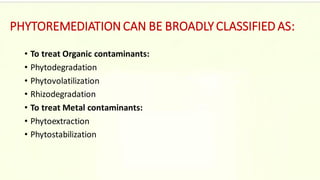
PHYTOREMEDIATION CAN BE BROADLY CLASSIFIED AS:
• To treat Organic contaminants:
• Phytodegradation
• Phytovolatilization
• Rhizodegradation
• To treat Metal contaminants:
• Phytoextraction
• Phytostabilization
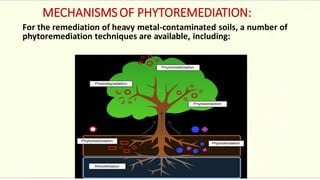
MECHANISMSOF PHYTOREMEDIATION:
For the remediation of heavy metal-contaminated soils, a number of
phytoremediation techniques are available, including:
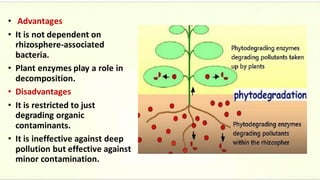
1.PHYTODEGRADATION:
• The word phytodegradation refers to the enzymatic breakdown of
pollutants into more simple or less harmful compounds by plants,
either in the rhizosphere before to their absorption or sometimes in
the root after their uptake and subsequent synthesis.
• It is a significant detoxification method that is also known as
phytotransformation. If photodegradation happens in the
rhizosphere, plant roots will release the necessary enzymes.
• Several root-associated bacteria also contribute to this process.
Continue >>>
• Alternatively, if degradation occurs within the plant, it is essential that
the plant be able to absorb the pollutants and translocate them to the
site of transformation in their original state, without causing cell death.
• Numerous toxins, including herbicides, insecticides, pesticides,
chlorinated solvents, munitions, and inorganic contaminants, can be
metabolised.
• The plant enzymes utilised in this process are also recognised;
dehalogenase, nitrilase, phosphatase, nitroreductase, and
oxidoreductase are notable examples.
• These produce the best outcomes for lowly polluted soils.
• Advantages
• It is not dependent on
rhizosphere-associated
bacteria.
• Plant enzymes play a role in
decomposition.
• Disadvantages
• It is restricted to just
degrading organic
contaminants.
• It is ineffective against deep
pollution but effective against
minor contamination.
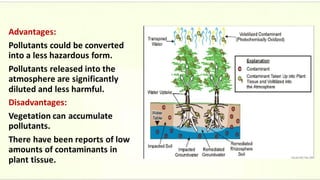
2.PHYTOVOLATILIZATION:
• Phytovolatilization is the process by which plants collect toxins from
contaminated places via their roots, transform the more harmful elements
into less dangerous ones within the plant, and release them into the
atmosphere via their leaves.
• This technique, which is based on the evapotranspiration process, is mostly
employed for mercury, selenium, and organic solvent pollution.
• Tritium (3H), a radioactive isotope, has also been reported to be remedied
using this technique with woody plants.
Continue >>>
• The efficacy of phytovolatilization is affected by the environment of
remediation locations and the genetic capability of the utilised plant
species.
• Moreover, the absorption, transport, and chemical fate of these
pollutants are highly reliant on their concentration at polluted
areas.
• According to the United States Environmental Protection Agency,
Alfalfa, Black locust, Canola, and Indian mustard are effective
phytovolatilizing plants.
Continue >>>
• Despite reports that this procedure eliminates a number of
dangerous pollutants, it does not resolve the issue entirely.
• It simply extracts pollutants from the soil, water, and/or sediments
and releases them into the atmosphere. We are aware that the
concentration of the emitted substance is low and frequently less
harmful, but this does not prevent it from upsetting the natural
equilibrium of the atmosphere.
Advantages:
Pollutants could be converted
into a less hazardous form.
Pollutants released into the
atmosphere are significantly
diluted and less harmful.
Disadvantages:
Vegetation can accumulate
pollutants.
There have been reports of low
amounts of contaminants in
plant tissue.
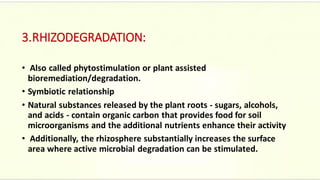
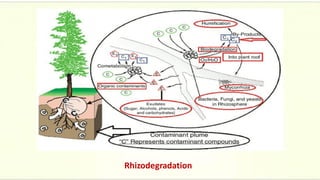
3.RHIZODEGRADATION:
• Also called phytostimulation or plant assisted
bioremediation/degradation.
• Symbiotic relationship
• Natural substances released by the plant roots - sugars, alcohols,
and acids - contain organic carbon that provides food for soil
microorganisms and the additional nutrients enhance their activity
• Additionally, the rhizosphere substantially increases the surface
area where active microbial degradation can be stimulated.
Rhizodegradation
TO TREAT METAL CONTAMINTANTS
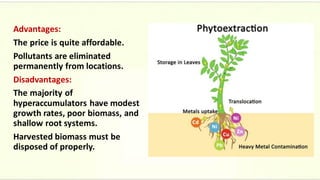
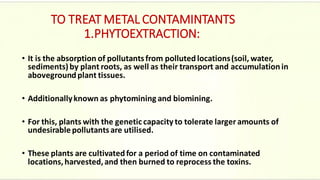
1.PHYTOEXTRACTION:
• It is the absorption of pollutantsfrom pollutedlocations(soil, water,
sediments)by plant roots, as well as their transport and accumulationin
abovegroundplant tissues.
• Additionallyknown as phytomining and biomining.
• For this, plants with the genetic capacity to tolerate larger amounts of
undesirable pollutantsare utilised.
• These plants are cultivatedfor a period of time on contaminated
locations,harvested,and then burned to reprocess the toxins.
Continue >>>
• To reduce the concentration of these contaminants in contaminated
soil to an acceptable level, many cycles of cultivation, harvesting,
and combustion have been utilised.
• Following requirements for the disposal of hazardous waste, the ash
from incineration is used in landfills.
• Using plants to translocate metal pollutants from contaminated
places is a time-tested and effective method.
Continue >>>
• The plant species that will be used for phytoextraction must possess
certain essential characteristics, such as a high translocation factor,
a high bioconcentration factor, a high tolerance to contaminants,
rapid growth, high biomass production, a good root system, a high
assimilation rate, and an easy harvesting process.
• The Asteraceae, Brassicaceae, Lamiaceae, Euphorbiaceae, and
Scrophulariaceae plant families are better appropriate for
phytoextraction.
• As phytoextraction is a biological process done by plants, it
eliminates toxins from contaminated places without affecting the
soil, water, or sediment qualities.
TYPES OF PHYTOEXTRACTION:
A.Chelate-Assisted Phytoextraction:
• Chelate-assisted phytoextraction entails the employment of metal
chelating agents in conjunction with non-accumulator plants with a
high biomass potential so as to increase the soluble metal fraction.
• Transport of metals to the harvestable shoot during discharge of soil
solution constitutes the additive function of two fundamental
processes.
• It has been noted that the adoption of fast-growing tree species
satisfies the necessity for chemically assisted high biomass production
in order to obtain high metal accumulation.
• Chelates such as ethylenediaminetetraacetic acid (EDTA) are credited with the
ability to promote the production of soluble metal-EDTA in plants, so
facilitating the transfer of metals from the root system to the shoot, where
they accumulate as metal–EDTA complexes.
• Transport of metal–chelate complexes from the xylem to the shoots seems to
play a significant role in the accumulation of chelate-assisted metal complexes
in plants.
• In addition to an efficient capillary plumbing system, the movement of metal–
chelate complexes within plants is dependent on a high-surface-area
collection system given by the roots.
• Movement of metals as a metal–chelate complex to shoots is followed by
retention of the metal–chelate complex when transpiration stream water
evaporates.
B.Continuous Phytoextraction:
• It has been discovered that chemical additives (such as EDTA) are
not only phytotoxic, but also exert their toxic effects on
beneficial soil microorganisms known to play crucial roles in plant
growth and development.
• In an alternative method, metal buildup can be accomplished by
utilising the unique physiological processes that occur during the
entire plant growth cycle.
• Continuous phytoextraction, unlike forced metal uptake, is done by
the genetic and physiological aptitude of plants designed to
accumulate, translocate, and tolerate high metal concentrations.
Continue >>>
• There have been reports of continuous phytoextraction removing
metals such as zinc, cadmium, and nickel as well as arsenic and
chromium from soils rich in heavy metals by hyperaccumulating
plants.
• Understanding the biological mechanisms by which plants become
superior for the remediation of soils can be achieved by dissecting
the method that is used to create metal hyperaccumulation.
• As a form of management technique for metal-contaminated
sediment, phytoextraction is believed to address efficiency,
duration, leaching, contamination of the food chain, and economic
benefits.
Advantages:
The price is quite affordable.
Pollutants are eliminated
permanently from locations.
Disadvantages:
The majority of
hyperaccumulators have modest
growth rates, poor biomass, and
shallow root systems.
Harvested biomass must be
disposed of properly.
2.Phytostabilization:
• Phytostabilizationis the absorption and precipitationof pollutants,
primarily metals, by plants, which reduces their mobility and prevents
their migration to groundwater(leaching)or air (wind transport) or entry
into the food chain.
• There are a variety of mechanisms that come within this category,which
is also known as phytostabilization.
• They may involve absorptionby roots, adsorption to the surface of roots,
or the creationof biochemicalsby a plant that are releasedinto the soil
or groundwaterin the immediate area of the roots and can sequester,
precipitate,or immobilise adjacentpollutantsin other ways.
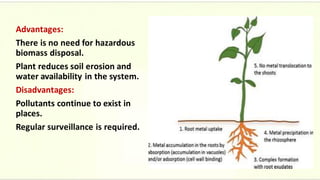
• Phytostabilization is the application of metal-tolerant plant species to
immobilise heavy metals belowground and reduce their bioavailability,
hence preventing their migration into the environment and decreasing
the risk of metals entering the food chain.
• Phytostabilization can take place by precipitation of heavy metals or
reduction in metal valence in the rhizosphere, absorption and
sequestration within root tissues, or adsorption onto root cell walls.
• In places affected by heavy metals, plant development aids in the
preservation of soil health. In addition to stabilising heavy metals
underground and minimising their leaching into groundwater, the
developed plant cover limits the wind-borne dispersion of soil particles
containing heavy metals.
• In contrast to phytoextraction, phytostabilization does not necessitate
the removal of potentially hazardous material.
Advantages:
There is no need for hazardous
biomass disposal.
Plant reduces soil erosion and
water availability in the system.
Disadvantages:
Pollutants continue to exist in
places.
Regular surveillance is required.
Examples of Best Plants for Photo remediation:
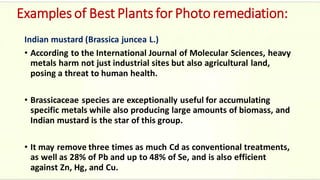
Indian mustard (Brassica juncea L.)
• According to the International Journal of Molecular Sciences, heavy
metals harm not just industrial sites but also agricultural land,
posing a threat to human health.
• Brassicaceae species are exceptionally useful for accumulating
specific metals while also producing large amounts of biomass, and
Indian mustard is the star of this group.
• It may remove three times as much Cd as conventional treatments,
as well as 28% of Pb and up to 48% of Se, and is also efficient
against Zn, Hg, and Cu.
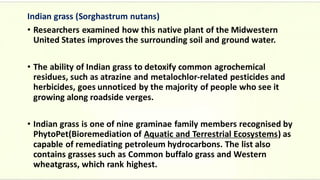
Indian grass (Sorghastrum nutans)
• Researchers examined how this native plant of the Midwestern
United States improves the surrounding soil and ground water.
• The ability of Indian grass to detoxify common agrochemical
residues, such as atrazine and metalochlor-related pesticides and
herbicides, goes unnoticed by the majority of people who see it
growing along roadside verges.
• Indian grass is one of nine graminae family members recognised by
PhytoPet(Bioremediation of Aquatic and Terrestrial Ecosystems) as
capable of remediating petroleum hydrocarbons. The list also
contains grasses such as Common buffalo grass and Western
wheatgrass, which rank highest.
Advantages of Phytoremediation:
• In theory, plants that engage in phytoremediation of harmful
components may be collected, eliminating the toxins from the
contaminated location.
• The plants are plainly observable.
• Possibility of recovering and reusing precious metals (by firms
specialising in “phytomining”).
• Because it uses naturally occurring organisms and retains the
ecosystem in a more natural state, it is perhaps the least destructive
option.
• It maintains the soil’s fertility by preserving the topsoil.
• It improves soil health, crop yield, and phytochemicals in plants.
Disadvantages of Phytoremediation:
• Phytoremediation merely relocates hazardous heavy metals; it does
not eliminate them from the site.
• The extent of phytoremediation is restricted to the root surface area
and depth.
• Slow growth and low biomass demand a commitment over the long
term.
• It is not possible to totally avoid the leaching of toxins into the
groundwater using plant-based remediation techniques. The
viability of plants is influenced by the toxicity of the contaminated
land and the general state of the soil.
• Sometimes, when plants absorb heavy metals, the metal is linked to
the organic matter of the soil, making it inaccessible for absorption.
THANK YOU

Phytoremediation-2 and its types classification

  • 1.
    VIVEKANANDHA ARTS ANDSCIENCE COLLEGE FOR WOMEN Veerachipalayam– 637 303, Sankagiri,Salem Dt., Tamil Nadu India. Affiliatedtoperiyar university,Salem;Recognizedunder section2(f) &12(B) of the UGC act , 1956 Prepared by N. SOWNTHARYA I-Msc-MICROBIOLOGY PHYTOREMEDIATION DEPARTMENT OF MICROBIOLOGY SUBJECT : BIOREMEDIATION PaperIncharge Dr. R. DINESHKUMAR ASSISTANT PROFESSOR DEPARTMENT OF MICROBIOLOGY.
  • 2.
    CONTENTS: • Introduction • Typesof Phytoremediation • Process of Phytoremediation • Phytoremediation of Heavy Metals in Soil • Classification of Photo remediation • Mechanisms of Phytoremediation • Advantages • Disadvantages
  • 3.
    INTRODUCTION: • Phytoremediation refersto the technologies that utilise plants to clean up chemically contaminated land, air, and water. • In addition to being a cost-effective technology for environmental remediation, phytoremediation has proven to be a fantastic solution for all type of environmental problems. • Phytoremediation is a cost-effective plant-based method that capitalises on plants’ ability to concentrate environmental components and chemicals and metabolise diverse substances in their tissues. • It refers to the natural ability of certain plants to bioaccumulate, decompose, or render pollutants in soil, water, or air harmless. Heavy metal toxins and organic contaminants are the focus of phytoremediation.
  • 4.
    TYPES OF PHYTOREMEDIATION: •In situ phytoremediation • In-vivo phytoremediationwith relocated contaminants • In vitro phytoremediation
  • 5.
    IN SITU PHYTOREMEDIATION: •For the aim of remediation, in situ phytoremediation involves the placing of living plants in contaminated surface water, contaminated soil or sediment, or contaminated soil or sediment in contact with contaminated ground water. • The contamination must be physically accessible to the plant’s roots for the in-situ method to be applicable. • Typically, this is the least expensive phytoremediation method.
  • 6.
    IN-VIVO PHYTOREMEDIATION WITHRELOCATED CONTAMINANTS: • In this method, the pollutant is mechanically removed, then transferred to a temporary treatment area where it can be exposed to plants selected for effective phytoremediation. • The treated water or soil can be restored to its original place, and if necessary, the plants can be harvested for disposal. • In general, this approach would be more expensive than the more passive method outlined above. • Treatment could take place either at the site of contamination or elsewhere.
  • 7.
    IN VITRO PHYTOREMEDIATION: •Theoretically, this method might be implemented in situ in certain circumstances, such as the application of plant extracts to a contaminated pond or wetland or the employment of an enzyme- impregnated porous barrier in a contaminated ground water plume. • Probably, this strategy might also be applied to contaminated materials that have been moved to a temporary treatment area. • Theoretically, this approach would be the most expensive method of phytoremediation due to the costs of preparing/extracting the plant enzymes; however, in some plants, such as tarragon,exudates are released in response to stress, which could reduce production costs.
  • 8.
    PROCESSES OF PHYTOREMEDIATION: •Phytoremediation is based on certain natural processes carried out by plants, such as:The uptake of metals and certain organic compounds from soil and water; the photosynthesis of organic compounds; and the transpiration of carbon dioxide. • Accumulation or processing of these compounds through lignification, volatilization, metabolism, and mineralization (transformation into carbon dioxide and water. • Utilization of enzymes to convert complex organic molecules to simpler molecules.
  • 9.
    • Utilization ofenzymes to convert complex organic molecules to simpler molecules. • Through the release of chemicals (exudates) and decomposition of root tissue, increasing the carbon and oxygen content of soil near roots (therefore boosting microbial/fungal activity). • Utilization of groundwater (even contaminated groundwater) for plant activities.
  • 10.
  • 11.
    PHYTOREMEDIATION OF HEAVYMETALS IN SOIL: • The contamination of soils with heavy metals and its associated hazardous effects are a thrust area of today’s research. • Rapid industrialization, emissions from automobiles, agricultural inputs, improper disposal of waste, etc., are the major causes of soil contamination with heavy metals. • These contaminants not only contaminate soil but also groundwater, reducing agricultural land and hence food quality. • These contaminants enter the food chain and have a severe effect on human health. It is important to remove these contaminants from the soil.
  • 12.
    • Various economicand ecological strategies are required to restore the soils contaminated with heavy metals. • Phytoremediation is an emerging technology that is non-invasive, cost-effective, and aesthetically pleasing. • Many metal-binding proteins (MBPs) of the plants are significantly involved in the phytoremediation of heavy metals; the MBPs include metallothioneins; phytochelatins; metalloenzymes; metal-activated enzymes; and many metal storage proteins, carrier proteins, and channel proteins. • Plants are genetically modified to enhance their phytoremediation capacity.
  • 13.
    • In Arabidopsis,the expression of the mercuric ion-binding protein in Bacillus megaterium improves the metal accumulation capacity. • The phytoremediation efficiency of plants is also enhanced when assisted with microorganisms, biochar, and/or chemicals. • Removing heavy metals from agricultural land without challenging food security is almost impossible. • As a result, crop selections with the ability to sequester heavy metals and provide food security are in high demand.
  • 14.
    PHYTOREMEDIATION CAN BEBROADLY CLASSIFIED AS: • To treat Organic contaminants: • Phytodegradation • Phytovolatilization • Rhizodegradation • To treat Metal contaminants: • Phytoextraction • Phytostabilization
  • 15.
    MECHANISMSOF PHYTOREMEDIATION: For theremediation of heavy metal-contaminated soils, a number of phytoremediation techniques are available, including:
  • 16.
    1.PHYTODEGRADATION: • The wordphytodegradation refers to the enzymatic breakdown of pollutants into more simple or less harmful compounds by plants, either in the rhizosphere before to their absorption or sometimes in the root after their uptake and subsequent synthesis. • It is a significant detoxification method that is also known as phytotransformation. If photodegradation happens in the rhizosphere, plant roots will release the necessary enzymes. • Several root-associated bacteria also contribute to this process.
  • 17.
    Continue >>> • Alternatively,if degradation occurs within the plant, it is essential that the plant be able to absorb the pollutants and translocate them to the site of transformation in their original state, without causing cell death. • Numerous toxins, including herbicides, insecticides, pesticides, chlorinated solvents, munitions, and inorganic contaminants, can be metabolised. • The plant enzymes utilised in this process are also recognised; dehalogenase, nitrilase, phosphatase, nitroreductase, and oxidoreductase are notable examples. • These produce the best outcomes for lowly polluted soils.
  • 18.
    • Advantages • Itis not dependent on rhizosphere-associated bacteria. • Plant enzymes play a role in decomposition. • Disadvantages • It is restricted to just degrading organic contaminants. • It is ineffective against deep pollution but effective against minor contamination.
  • 19.
    2.PHYTOVOLATILIZATION: • Phytovolatilization isthe process by which plants collect toxins from contaminated places via their roots, transform the more harmful elements into less dangerous ones within the plant, and release them into the atmosphere via their leaves. • This technique, which is based on the evapotranspiration process, is mostly employed for mercury, selenium, and organic solvent pollution. • Tritium (3H), a radioactive isotope, has also been reported to be remedied using this technique with woody plants.
  • 20.
    Continue >>> • Theefficacy of phytovolatilization is affected by the environment of remediation locations and the genetic capability of the utilised plant species. • Moreover, the absorption, transport, and chemical fate of these pollutants are highly reliant on their concentration at polluted areas. • According to the United States Environmental Protection Agency, Alfalfa, Black locust, Canola, and Indian mustard are effective phytovolatilizing plants.
  • 21.
    Continue >>> • Despitereports that this procedure eliminates a number of dangerous pollutants, it does not resolve the issue entirely. • It simply extracts pollutants from the soil, water, and/or sediments and releases them into the atmosphere. We are aware that the concentration of the emitted substance is low and frequently less harmful, but this does not prevent it from upsetting the natural equilibrium of the atmosphere.
  • 22.
    Advantages: Pollutants could beconverted into a less hazardous form. Pollutants released into the atmosphere are significantly diluted and less harmful. Disadvantages: Vegetation can accumulate pollutants. There have been reports of low amounts of contaminants in plant tissue.
  • 23.
    3.RHIZODEGRADATION: • Also calledphytostimulation or plant assisted bioremediation/degradation. • Symbiotic relationship • Natural substances released by the plant roots - sugars, alcohols, and acids - contain organic carbon that provides food for soil microorganisms and the additional nutrients enhance their activity • Additionally, the rhizosphere substantially increases the surface area where active microbial degradation can be stimulated.
  • 24.
  • 25.
    TO TREAT METALCONTAMINTANTS 1.PHYTOEXTRACTION: • It is the absorption of pollutantsfrom pollutedlocations(soil, water, sediments)by plant roots, as well as their transport and accumulationin abovegroundplant tissues. • Additionallyknown as phytomining and biomining. • For this, plants with the genetic capacity to tolerate larger amounts of undesirable pollutantsare utilised. • These plants are cultivatedfor a period of time on contaminated locations,harvested,and then burned to reprocess the toxins.
  • 26.
    Continue >>> • Toreduce the concentration of these contaminants in contaminated soil to an acceptable level, many cycles of cultivation, harvesting, and combustion have been utilised. • Following requirements for the disposal of hazardous waste, the ash from incineration is used in landfills. • Using plants to translocate metal pollutants from contaminated places is a time-tested and effective method.
  • 27.
    Continue >>> • Theplant species that will be used for phytoextraction must possess certain essential characteristics, such as a high translocation factor, a high bioconcentration factor, a high tolerance to contaminants, rapid growth, high biomass production, a good root system, a high assimilation rate, and an easy harvesting process. • The Asteraceae, Brassicaceae, Lamiaceae, Euphorbiaceae, and Scrophulariaceae plant families are better appropriate for phytoextraction. • As phytoextraction is a biological process done by plants, it eliminates toxins from contaminated places without affecting the soil, water, or sediment qualities.
  • 28.
    TYPES OF PHYTOEXTRACTION: A.Chelate-AssistedPhytoextraction: • Chelate-assisted phytoextraction entails the employment of metal chelating agents in conjunction with non-accumulator plants with a high biomass potential so as to increase the soluble metal fraction. • Transport of metals to the harvestable shoot during discharge of soil solution constitutes the additive function of two fundamental processes. • It has been noted that the adoption of fast-growing tree species satisfies the necessity for chemically assisted high biomass production in order to obtain high metal accumulation.
  • 29.
    • Chelates suchas ethylenediaminetetraacetic acid (EDTA) are credited with the ability to promote the production of soluble metal-EDTA in plants, so facilitating the transfer of metals from the root system to the shoot, where they accumulate as metal–EDTA complexes. • Transport of metal–chelate complexes from the xylem to the shoots seems to play a significant role in the accumulation of chelate-assisted metal complexes in plants. • In addition to an efficient capillary plumbing system, the movement of metal– chelate complexes within plants is dependent on a high-surface-area collection system given by the roots. • Movement of metals as a metal–chelate complex to shoots is followed by retention of the metal–chelate complex when transpiration stream water evaporates.
  • 30.
    B.Continuous Phytoextraction: • Ithas been discovered that chemical additives (such as EDTA) are not only phytotoxic, but also exert their toxic effects on beneficial soil microorganisms known to play crucial roles in plant growth and development. • In an alternative method, metal buildup can be accomplished by utilising the unique physiological processes that occur during the entire plant growth cycle. • Continuous phytoextraction, unlike forced metal uptake, is done by the genetic and physiological aptitude of plants designed to accumulate, translocate, and tolerate high metal concentrations.
  • 31.
    Continue >>> • Therehave been reports of continuous phytoextraction removing metals such as zinc, cadmium, and nickel as well as arsenic and chromium from soils rich in heavy metals by hyperaccumulating plants. • Understanding the biological mechanisms by which plants become superior for the remediation of soils can be achieved by dissecting the method that is used to create metal hyperaccumulation. • As a form of management technique for metal-contaminated sediment, phytoextraction is believed to address efficiency, duration, leaching, contamination of the food chain, and economic benefits.
  • 32.
    Advantages: The price isquite affordable. Pollutants are eliminated permanently from locations. Disadvantages: The majority of hyperaccumulators have modest growth rates, poor biomass, and shallow root systems. Harvested biomass must be disposed of properly.
  • 33.
    2.Phytostabilization: • Phytostabilizationis theabsorption and precipitationof pollutants, primarily metals, by plants, which reduces their mobility and prevents their migration to groundwater(leaching)or air (wind transport) or entry into the food chain. • There are a variety of mechanisms that come within this category,which is also known as phytostabilization. • They may involve absorptionby roots, adsorption to the surface of roots, or the creationof biochemicalsby a plant that are releasedinto the soil or groundwaterin the immediate area of the roots and can sequester, precipitate,or immobilise adjacentpollutantsin other ways.
  • 34.
    • Phytostabilization isthe application of metal-tolerant plant species to immobilise heavy metals belowground and reduce their bioavailability, hence preventing their migration into the environment and decreasing the risk of metals entering the food chain. • Phytostabilization can take place by precipitation of heavy metals or reduction in metal valence in the rhizosphere, absorption and sequestration within root tissues, or adsorption onto root cell walls. • In places affected by heavy metals, plant development aids in the preservation of soil health. In addition to stabilising heavy metals underground and minimising their leaching into groundwater, the developed plant cover limits the wind-borne dispersion of soil particles containing heavy metals. • In contrast to phytoextraction, phytostabilization does not necessitate the removal of potentially hazardous material.
  • 35.
    Advantages: There is noneed for hazardous biomass disposal. Plant reduces soil erosion and water availability in the system. Disadvantages: Pollutants continue to exist in places. Regular surveillance is required.
  • 36.
    Examples of BestPlants for Photo remediation: Indian mustard (Brassica juncea L.) • According to the International Journal of Molecular Sciences, heavy metals harm not just industrial sites but also agricultural land, posing a threat to human health. • Brassicaceae species are exceptionally useful for accumulating specific metals while also producing large amounts of biomass, and Indian mustard is the star of this group. • It may remove three times as much Cd as conventional treatments, as well as 28% of Pb and up to 48% of Se, and is also efficient against Zn, Hg, and Cu.
  • 37.
    Indian grass (Sorghastrumnutans) • Researchers examined how this native plant of the Midwestern United States improves the surrounding soil and ground water. • The ability of Indian grass to detoxify common agrochemical residues, such as atrazine and metalochlor-related pesticides and herbicides, goes unnoticed by the majority of people who see it growing along roadside verges. • Indian grass is one of nine graminae family members recognised by PhytoPet(Bioremediation of Aquatic and Terrestrial Ecosystems) as capable of remediating petroleum hydrocarbons. The list also contains grasses such as Common buffalo grass and Western wheatgrass, which rank highest.
  • 38.
    Advantages of Phytoremediation: •In theory, plants that engage in phytoremediation of harmful components may be collected, eliminating the toxins from the contaminated location. • The plants are plainly observable. • Possibility of recovering and reusing precious metals (by firms specialising in “phytomining”). • Because it uses naturally occurring organisms and retains the ecosystem in a more natural state, it is perhaps the least destructive option. • It maintains the soil’s fertility by preserving the topsoil. • It improves soil health, crop yield, and phytochemicals in plants.
  • 39.
    Disadvantages of Phytoremediation: •Phytoremediation merely relocates hazardous heavy metals; it does not eliminate them from the site. • The extent of phytoremediation is restricted to the root surface area and depth. • Slow growth and low biomass demand a commitment over the long term. • It is not possible to totally avoid the leaching of toxins into the groundwater using plant-based remediation techniques. The viability of plants is influenced by the toxicity of the contaminated land and the general state of the soil. • Sometimes, when plants absorb heavy metals, the metal is linked to the organic matter of the soil, making it inaccessible for absorption.
  • 40.