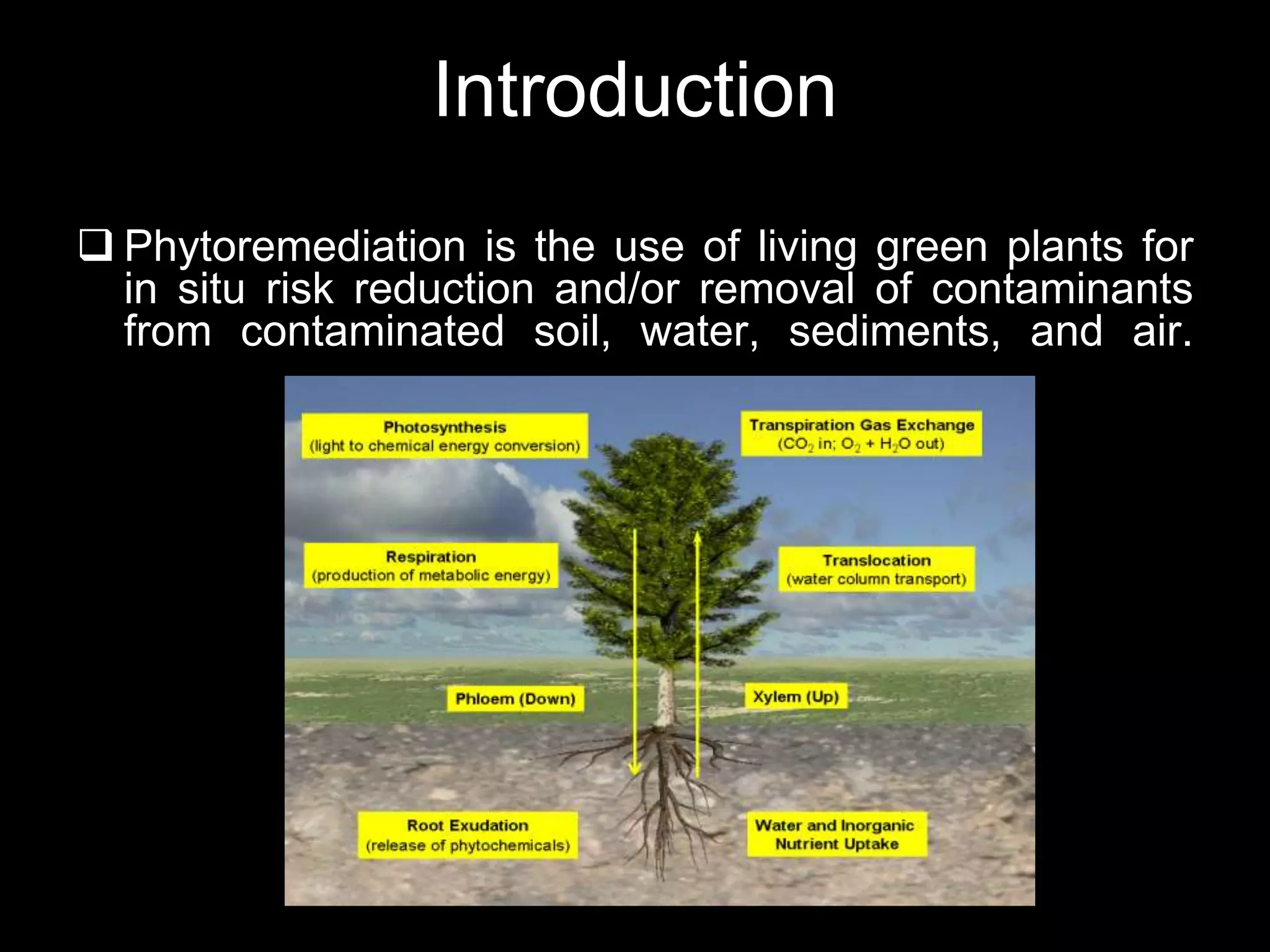
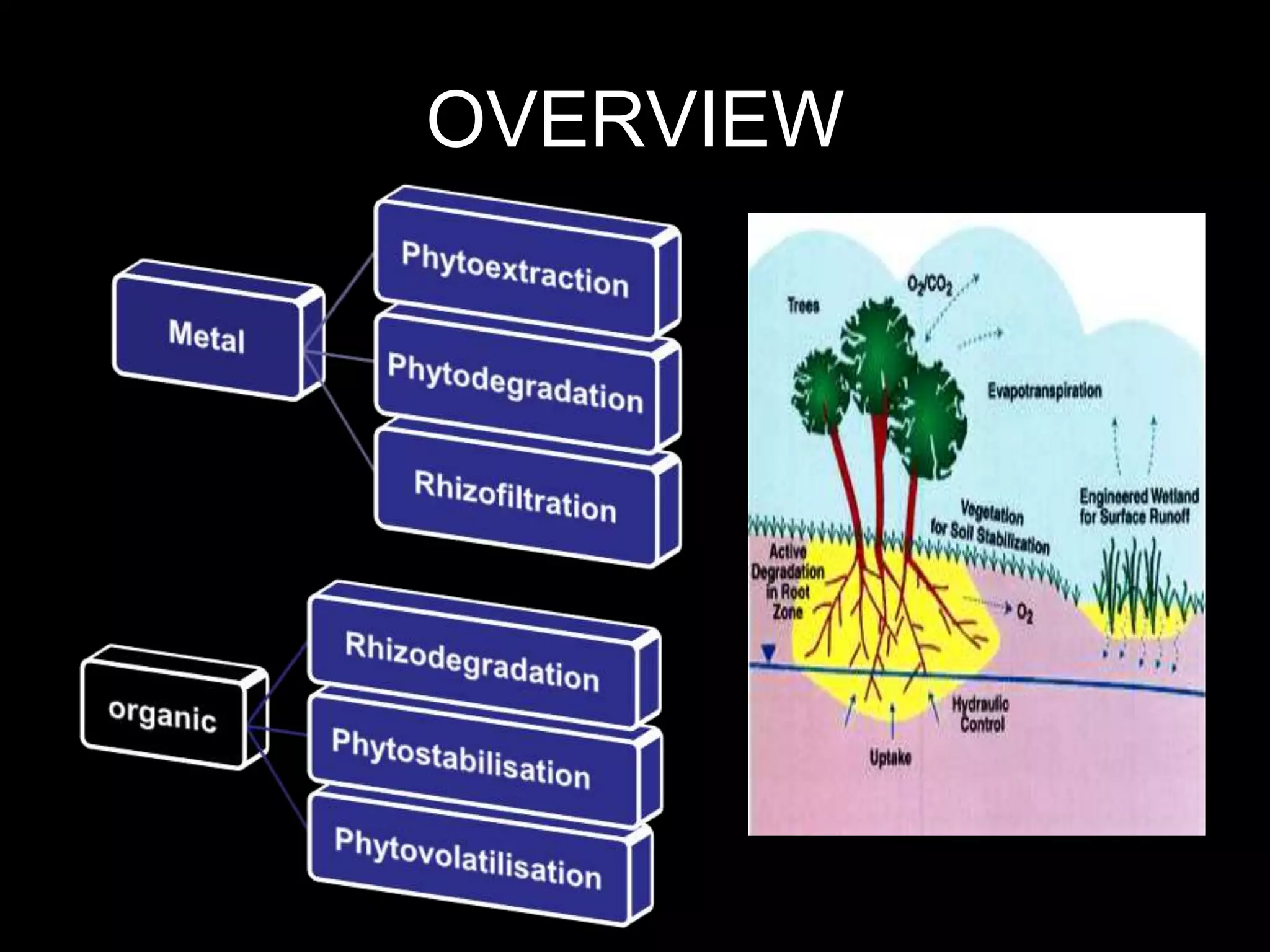
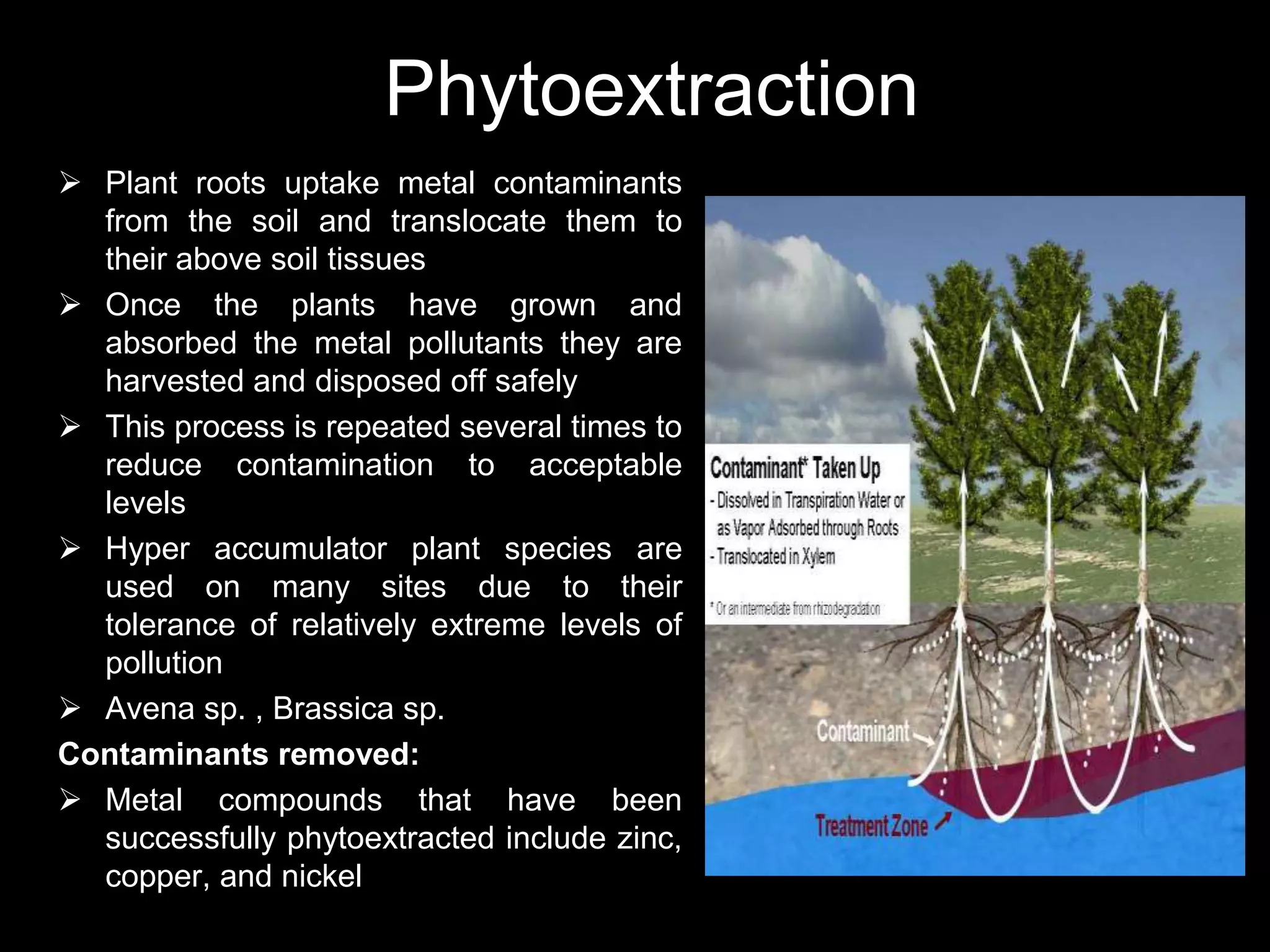
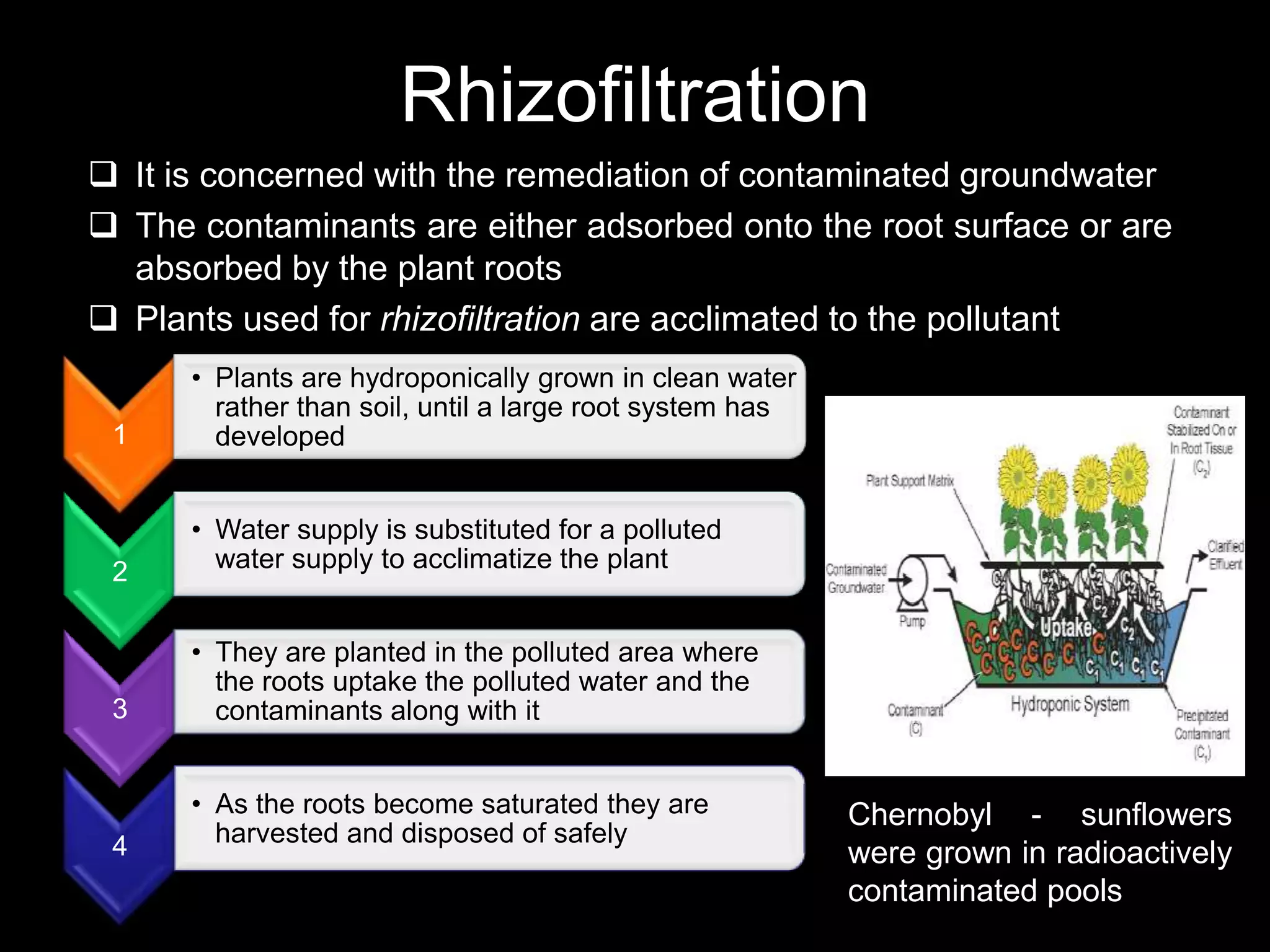
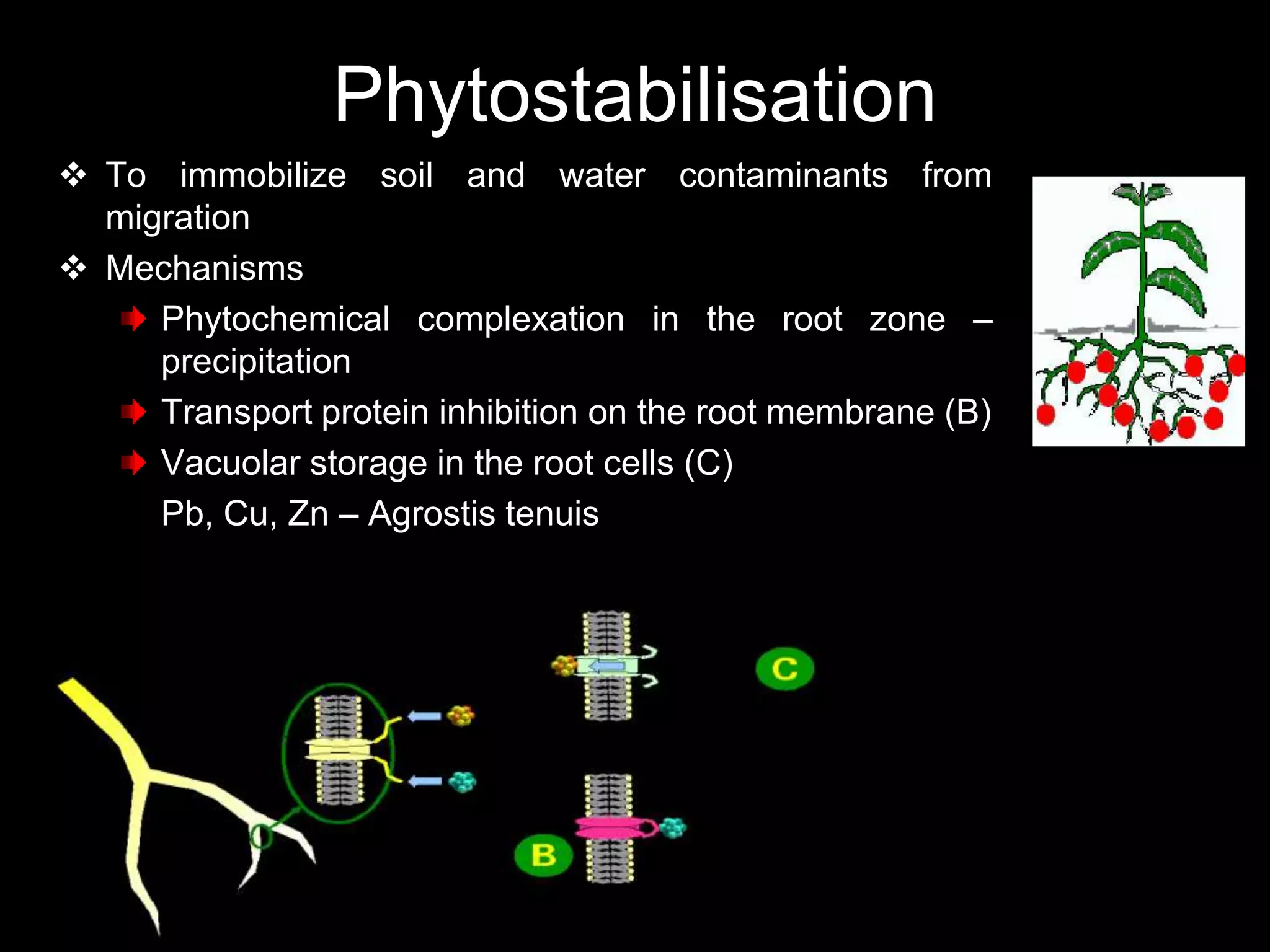
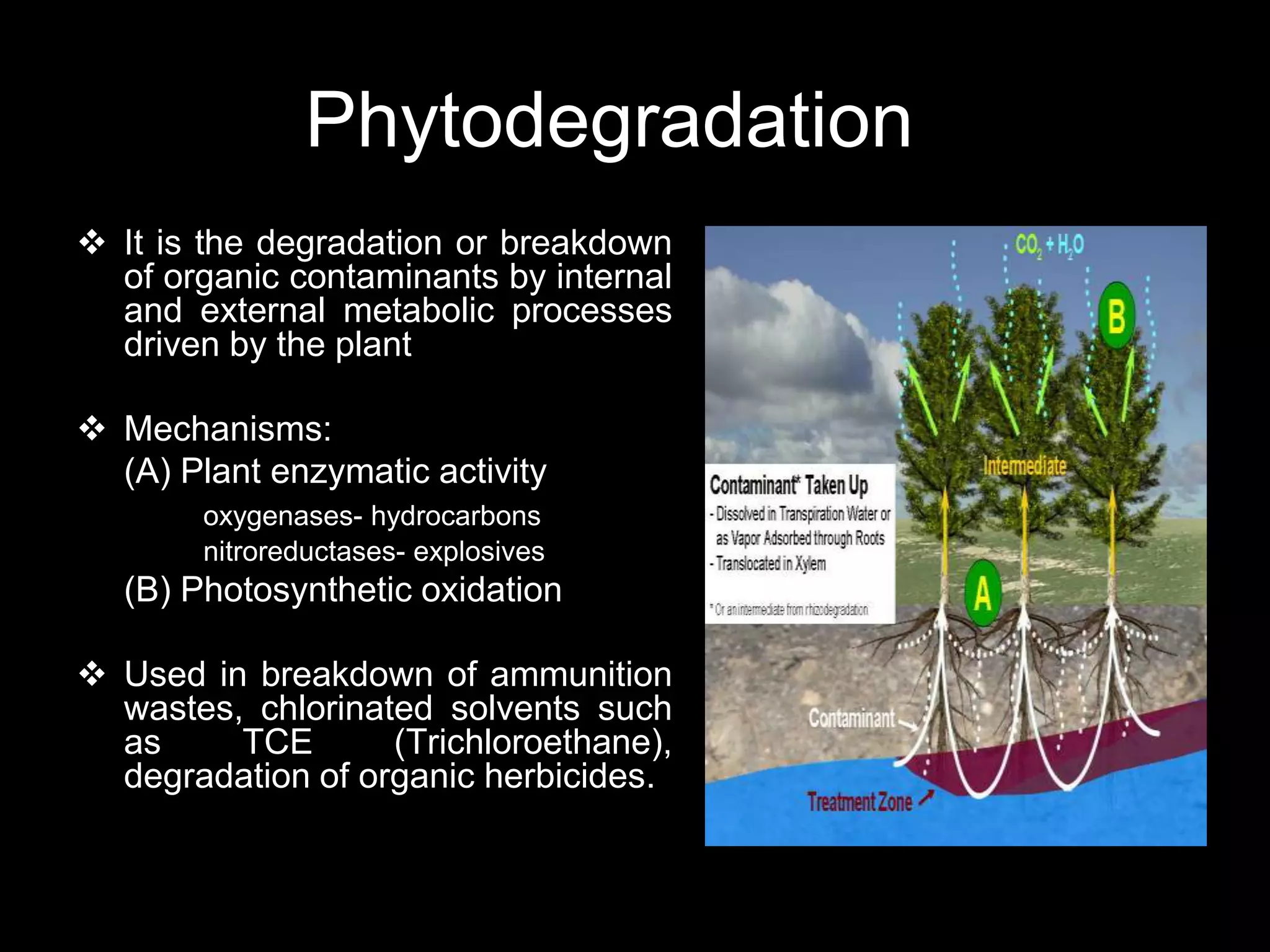
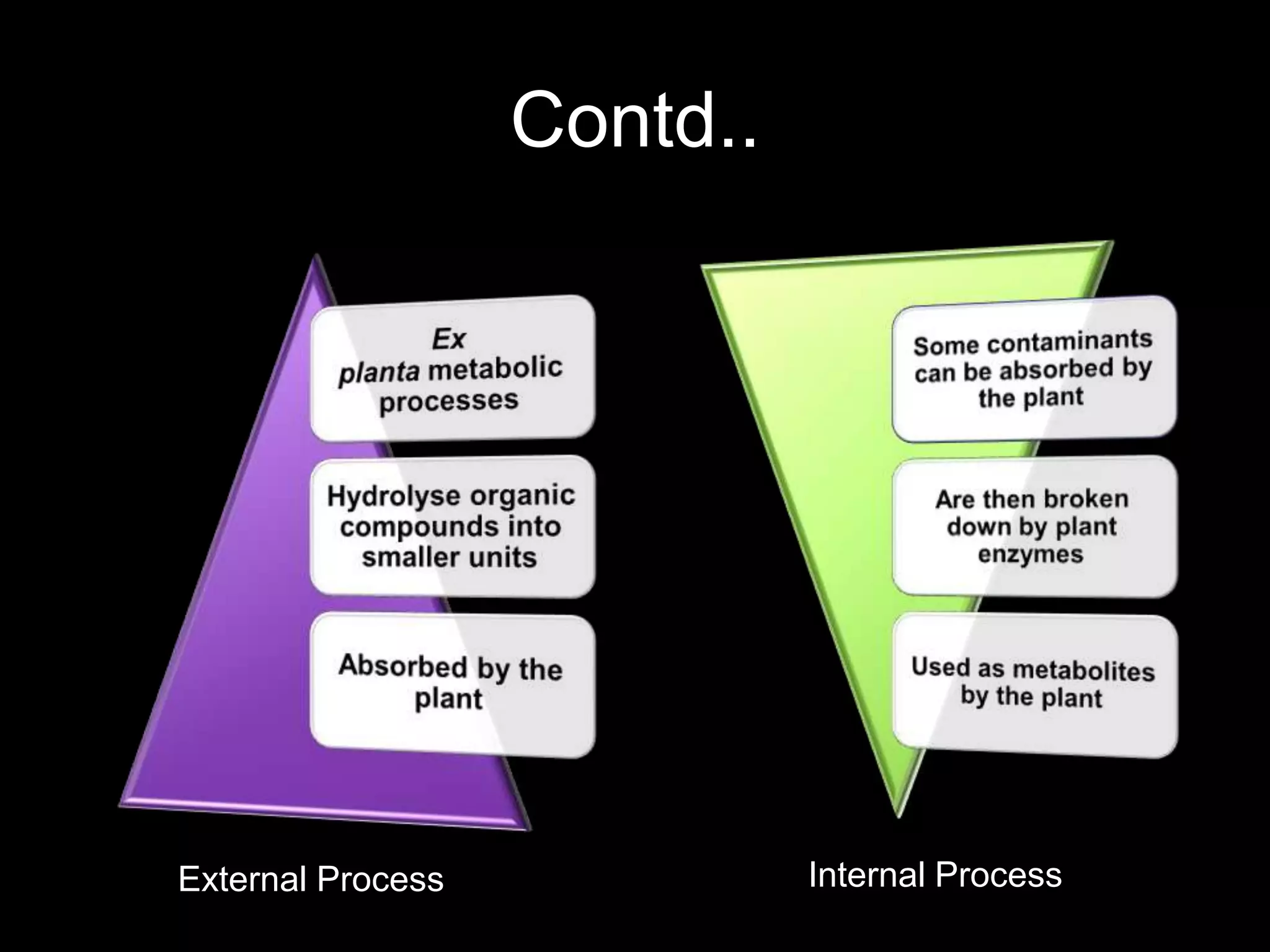
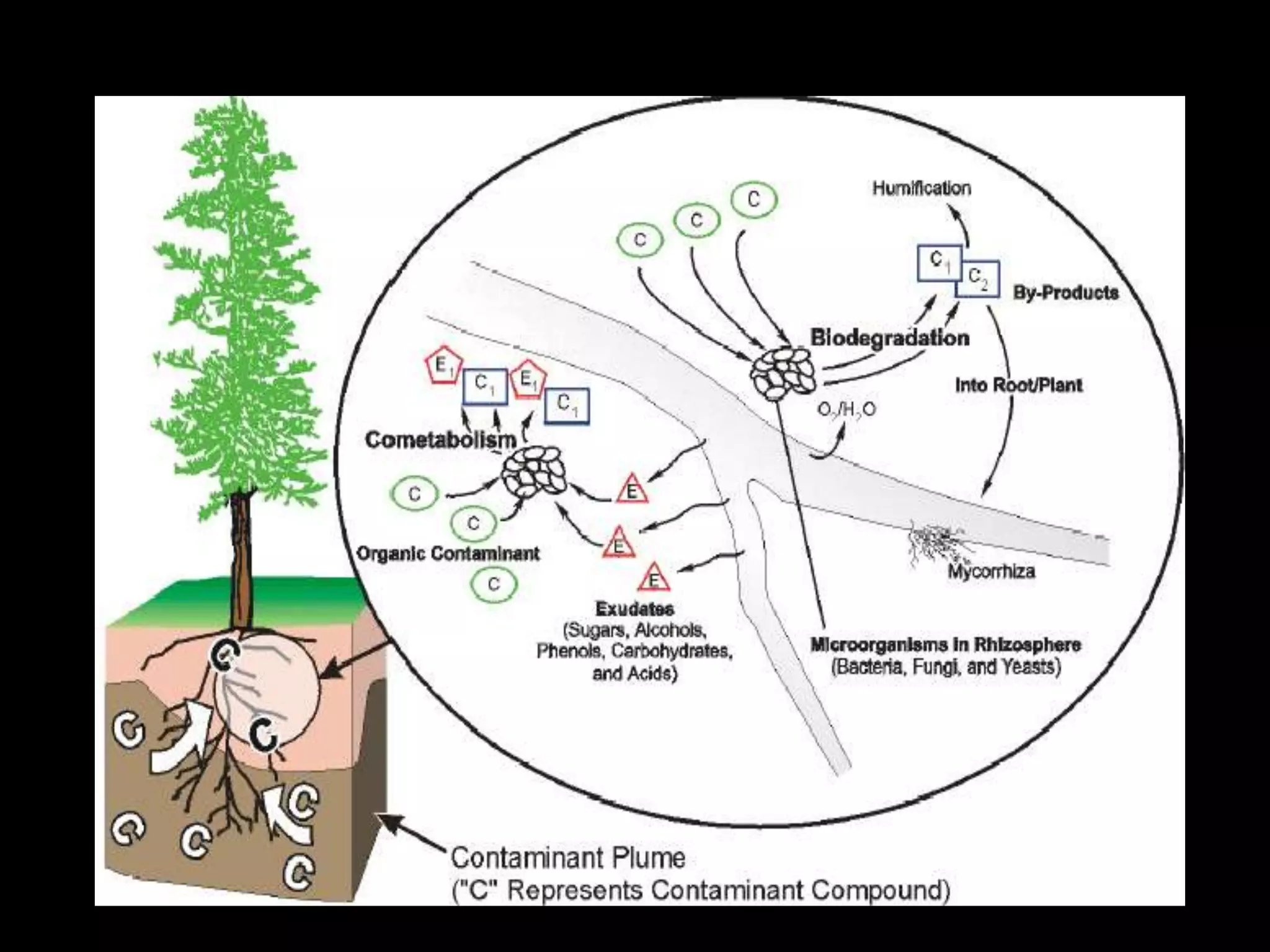
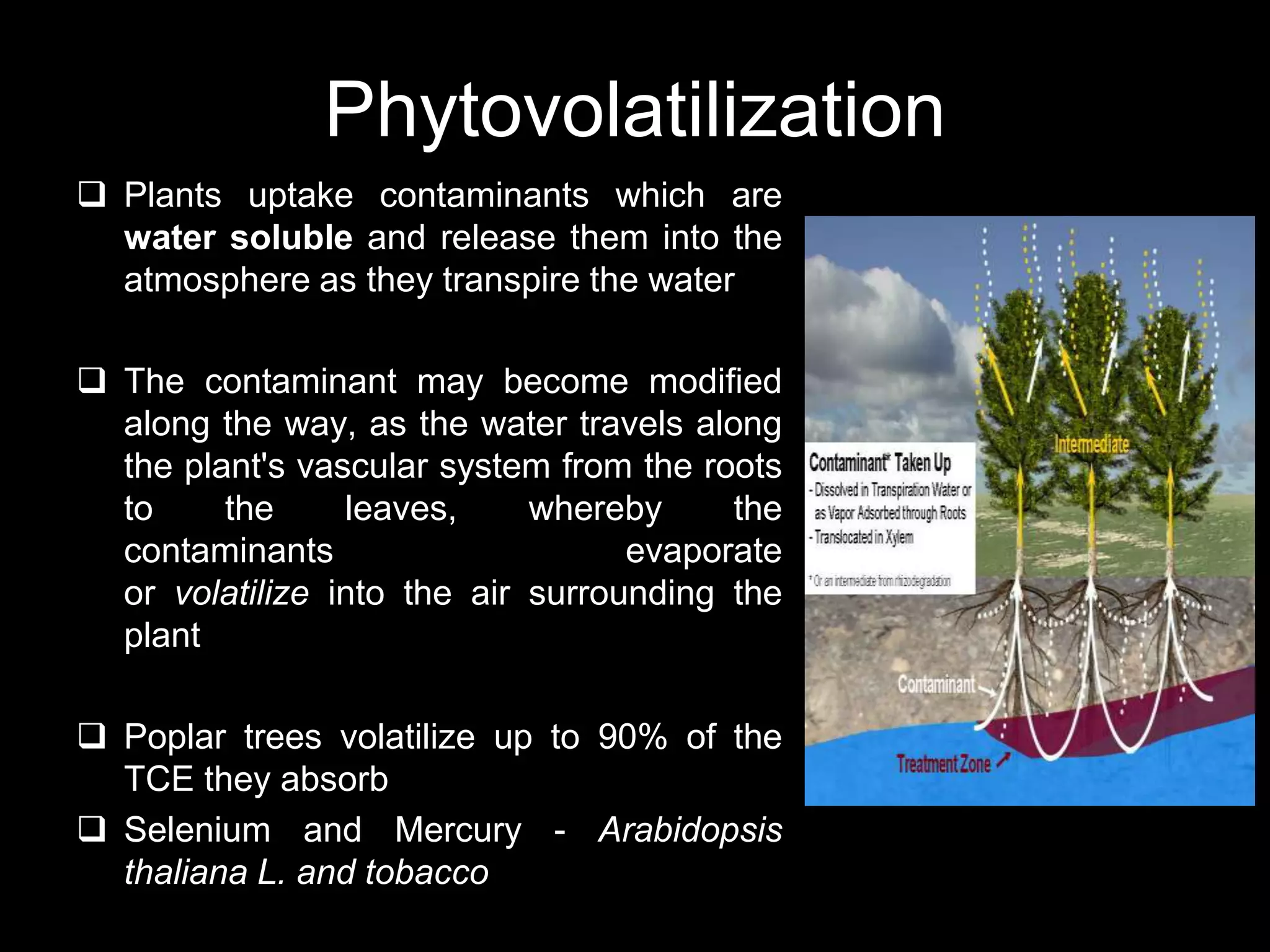
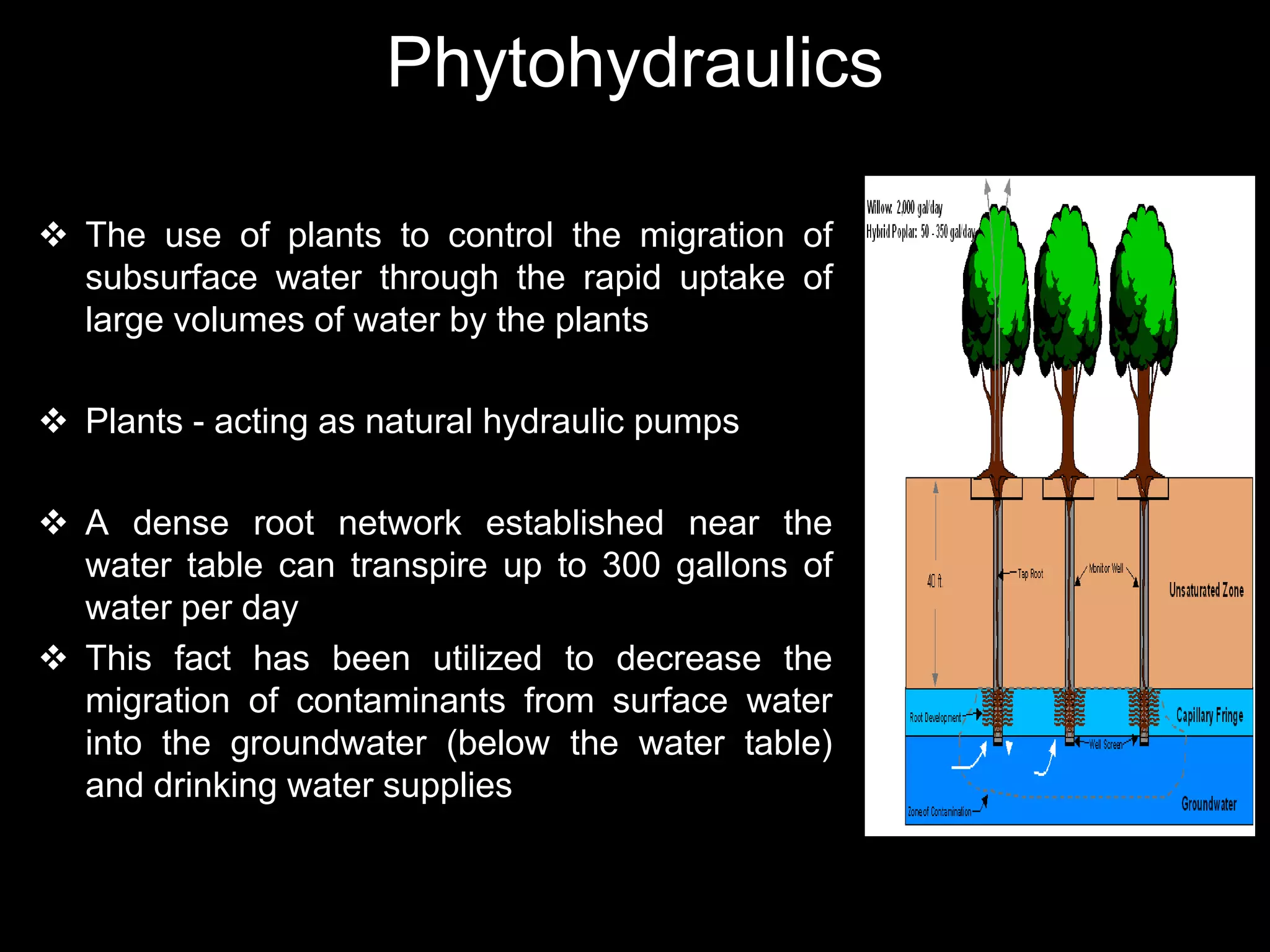
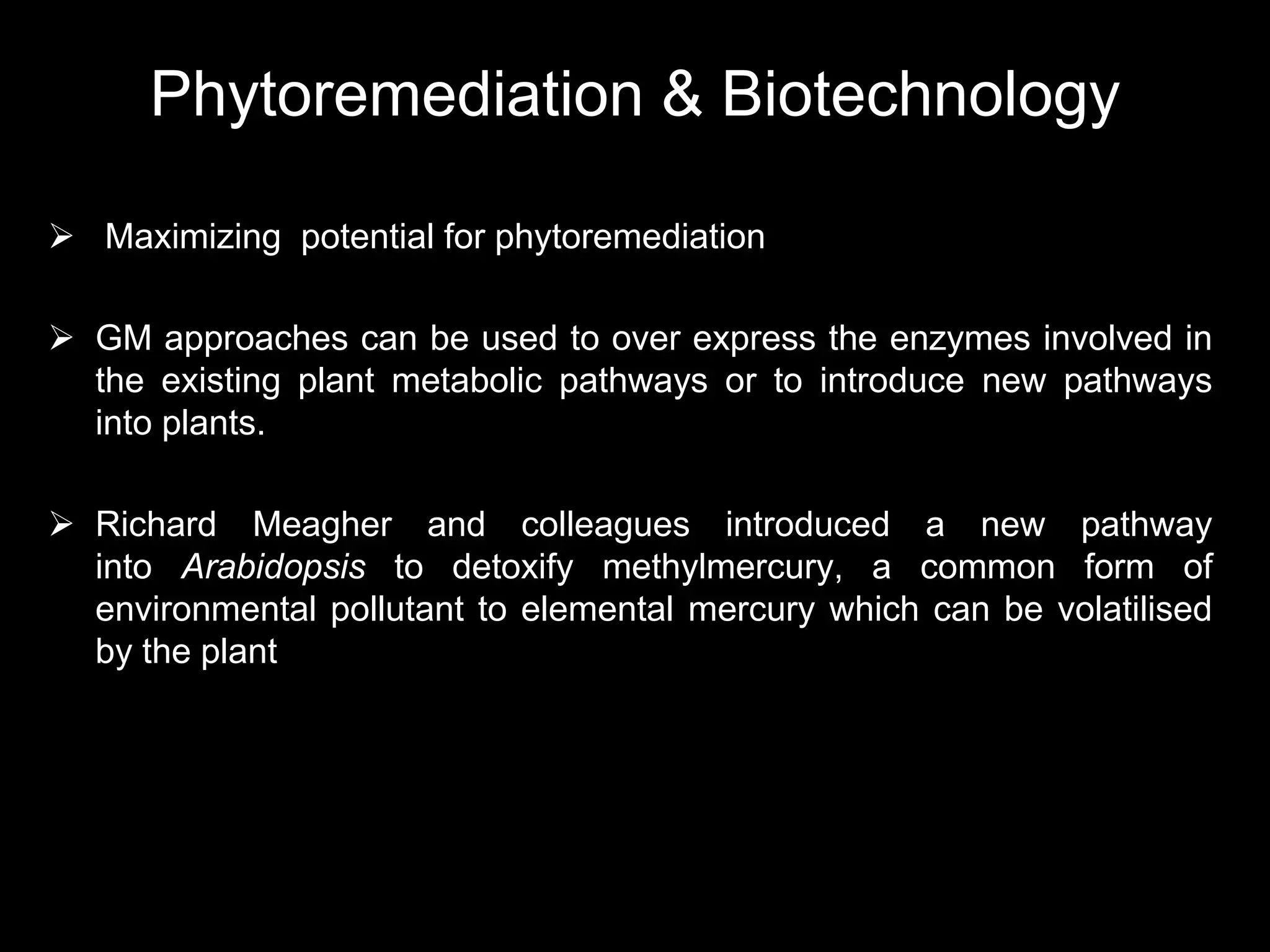
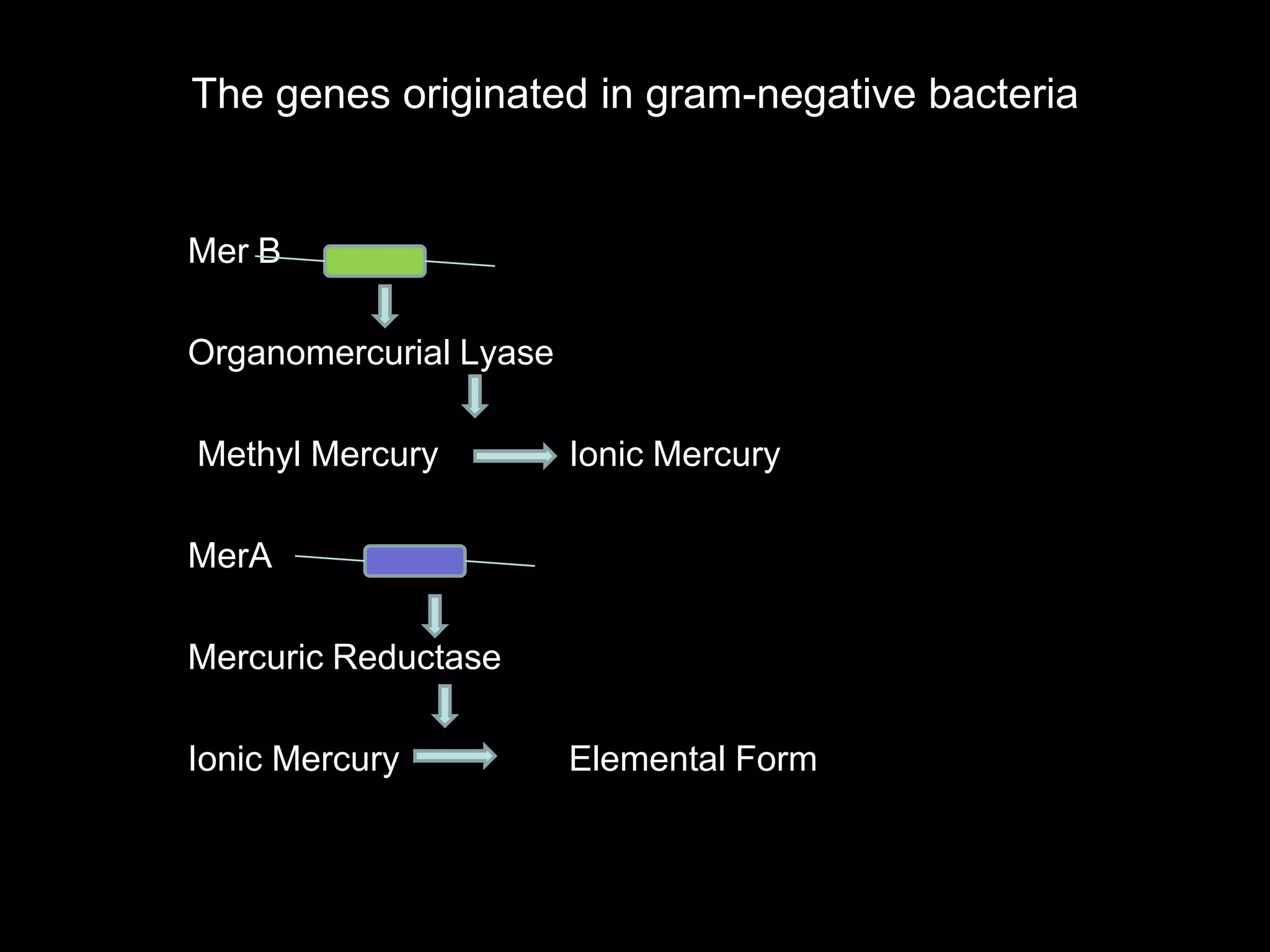
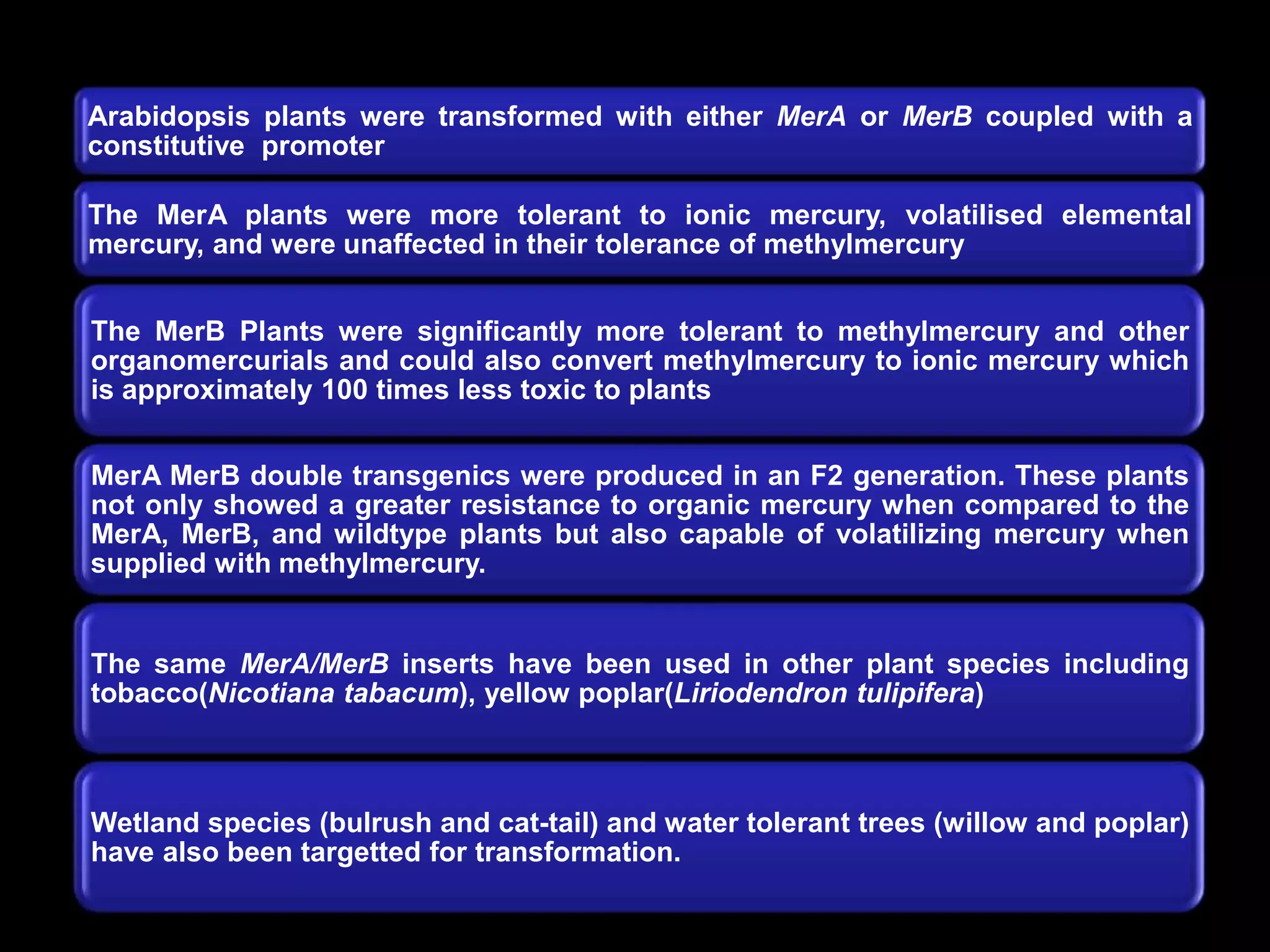
Phytoremediation uses plants to remove, transfer, stabilize, or destroy contaminants in soil, sediment, surface water and groundwater. It involves processes such as phytoextraction, rhizofiltration, phytostabilization, phytodegradation, rhizodegradation, phytovolatilization, and phytohydraulics. Genetic engineering approaches can be used to enhance plants' natural abilities to remediate contamination. While phytoremediation is more environmentally friendly than traditional methods, it also has disadvantages such as being a slower process and potential risks if contaminants are released back into the environment.