Presented By

Jehanzeb khan
PhD 1st Semester
Department of Botany

KUST
jehan8botany@gmail.com

Course Advisor
Dr Aziz Ullah
Assistant Professor
Department of Botany

KUST
SYNTHETIC POLLUTANTS

PHYTOREMEDIATION
OVERVIEW
 Introduction of Phytoremediation
1. Application
2. Various phytoremediation processes
3. Role of genetics
4. Hyperaccumulators
5. Phytoscreening
6. Advantages and limitations
PHYTOREMEDIATION
The use of plants which lessen the
environmental problem without the need to dig
up the contaminant material and dispose of it
elsewhere.
 phyto = plant
remedium = restoring balance
Application
 Phytoremediation may be applied
wherever the soil or stagnant water
environment has become polluted or
is
suffering
ongoing
constant pollution.
 Examples where phytoremediation
has been used successfully include
the restoration of abandoned metalmine workings, reducing the impact
of contaminants in soils, water, or air.
How does Phytoremediation work?
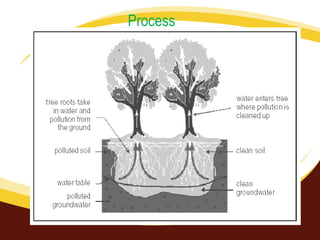
 First process is Phytodegradation, which is when a plant
takes in TCE(Trichloroethylene) and degrades it into CO2
and chlorine before released into the atmosphere.
 Another process is phytovolatilization which is when some
chemicals are taken in through the xylem and converted
into a gas through the stomata of the plant.
 When plants go through these processes they leave
chemicals in stem for easy collection.
Process
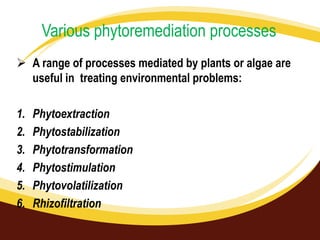
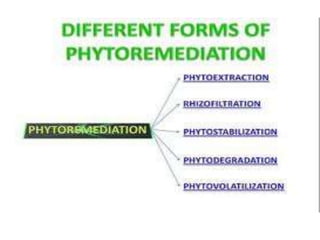
Various phytoremediation processes
 A range of processes mediated by plants or algae are
useful in treating environmental problems:
1.
2.
3.
4.
5.
6.

Phytoextraction
Phytostabilization
Phytotransformation
Phytostimulation
Phytovolatilization
Rhizofiltration
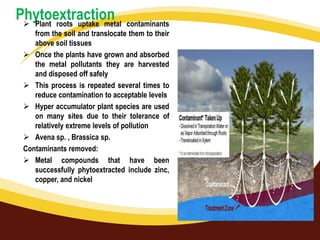
Phytoextraction
 Plant roots uptake metal

contaminants
from the soil and translocate them to their
above soil tissues
 Once the plants have grown and absorbed
the metal pollutants they are harvested
and disposed off safely
 This process is repeated several times to
reduce contamination to acceptable levels
 Hyper accumulator plant species are used
on many sites due to their tolerance of
relatively extreme levels of pollution
 Avena sp. , Brassica sp.
Contaminants removed:
 Metal compounds that have been
successfully phytoextracted include zinc,
copper, and nickel
Phytostabilisation
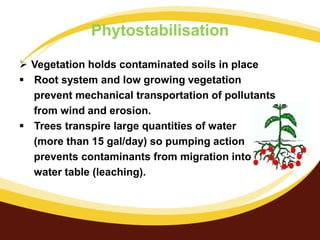
 Vegetation holds contaminated soils in place
 Root system and low growing vegetation
prevent mechanical transportation of pollutants
from wind and erosion.
 Trees transpire large quantities of water
(more than 15 gal/day) so pumping action
prevents contaminants from migration into the
water table (leaching).
Phytotransformation
 chemical modification of environmental substances as a
result of plant metabolism resulting in their inactivation,
degradation (phytodegradation), or immobilization
(phytostabilization).
 Trichloroethylene (TCE), a widespread ground
water contaminant, transformed to less toxic
metabolites by using hybrid poplar tree.
 Air Force facility in Texas using cottonwoods to
treat a large ground water cloud of TCE.
 EPA research lab using parrot feather (a
common aquatic weed) for TNT treatment.
Phytostimulation
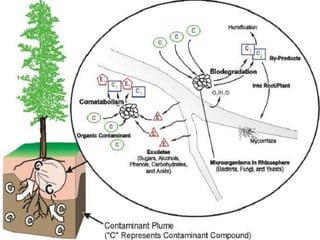
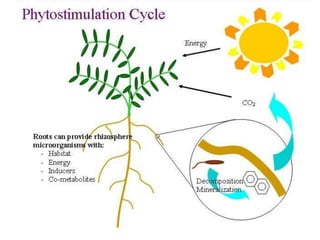
 Phytostimulation is the process where root released
compounds enhance microbial activity in
the rhizosphere.
 Rhizosphere = soil + root + microbes
 Symbiotic relation
 Enhanced rhizosphere biodegradation
 Phytostimulation
 Plant assisted bioremediation
Continued…..
 Sugars, alcohols, and organic acids act as carbohydrate
sources for the soil microflora and enhance microbial
growth and activity.
 Act as chemotactic signals for certain microbes.
 The roots also loosen the soil and transport water to the
rhizosphere thus enhancing microbial activity
 Digest organic pollutants such as fuels and solvents,
producing harmless products
Phytovolatilization
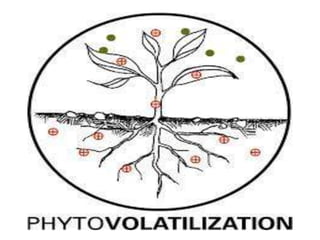
 Plants uptake contaminants which are water soluble and
release them into the atmosphere as they transpire the
water
 The contaminant may become modified along the way,
as the water travels along the plant's vascular system
from the roots to the leaves, whereby the contaminants
evaporate into the air surrounding the plant

 Poplar trees volatilize up to 90% of the TCE they absorb
Rhizofiltration
 filtering water through a mass of roots to

remove toxic substances or excess
 The contaminants are either adsorbed onto the
root surface or are absorbed by the plant roots
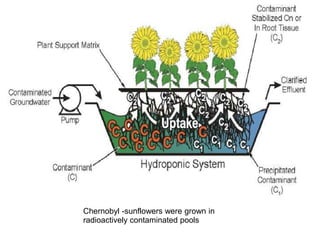
 1995, Sunflowers were used in a pond near
Chernobyl
 Plants used for
Chernobyl -sunflowers were grown in
radioactively contaminated pools
Role of genetics
 Genetic engineering is a powerful method for
enhancing natural Phytoremediation
capabilities, or for introducing new capabilities
into plants.
 Example, genes encoding a
nitroreductase from a bacterium were inserted
into tobacco and showed faster removal of TNT
and enhanced resistance to the toxic effects of
TNT
Hyperaccumulators
 A plant that absorbs toxins, such as heavy
metals, to a greater concentration than that in
the soil in which it is growing
 A number of interactions may be affected by
metal hyperaccumulation:
 mutualism (including mycorrhizae)
Phytoscreening
 Plants are able to translocate and accumulate
particular types of contaminants:
 plants can be used as biosensors of subsurface
contamination
 Phytoscreening may lead to more optimized site
investigations and reduce contaminated site
cleanup costs
Advantages
 Cost effective when compared to other more
conventional methods.
 “natural” method, more aesthetically pleasing.
 minimal land disturbance.
 reduces potential for transport of
contaminants by wind, reduces soil erosion
 hyper-accumulators of contaminants mean a
much smaller volume of toxic waste.
 multiple contaminants can be removed with the
same plant.
Disadvantages
 Slow rate and difficult to achieve acceptable
levels of decontamination.
 Possibility of contaminated plants entering
the food chain.
 Possible spread of contaminant through
falling leaves.
 Trees and plants require care.
 Contaminant might kill the tree.
 Degradation product could be worse than
original contaminant.
 Only surface soil (root zone) can be treated
 Cleanup takes several years
Conclusion
 Although much remains to be studied,
Phytoremediation will clearly play some role in the
stabilization and remediation of many contaminated
sites.
 The main factor driving the implementation of
Phytoremediation projects are low costs with significant
improvements in site aesthetics and the potential for
ecosystem restoration.
Phytoremediation kust

Phytoremediation kust

  • 2.
    Presented By Jehanzeb khan PhD1st Semester Department of Botany KUST jehan8botany@gmail.com Course Advisor Dr Aziz Ullah Assistant Professor Department of Botany KUST
  • 3.
  • 4.
    OVERVIEW  Introduction ofPhytoremediation 1. Application 2. Various phytoremediation processes 3. Role of genetics 4. Hyperaccumulators 5. Phytoscreening 6. Advantages and limitations
  • 5.
    PHYTOREMEDIATION The use ofplants which lessen the environmental problem without the need to dig up the contaminant material and dispose of it elsewhere.  phyto = plant remedium = restoring balance
  • 6.
    Application  Phytoremediation maybe applied wherever the soil or stagnant water environment has become polluted or is suffering ongoing constant pollution.  Examples where phytoremediation has been used successfully include the restoration of abandoned metalmine workings, reducing the impact of contaminants in soils, water, or air.
  • 7.
    How does Phytoremediationwork?  First process is Phytodegradation, which is when a plant takes in TCE(Trichloroethylene) and degrades it into CO2 and chlorine before released into the atmosphere.  Another process is phytovolatilization which is when some chemicals are taken in through the xylem and converted into a gas through the stomata of the plant.  When plants go through these processes they leave chemicals in stem for easy collection.
  • 8.
  • 9.
    Various phytoremediation processes A range of processes mediated by plants or algae are useful in treating environmental problems: 1. 2. 3. 4. 5. 6. Phytoextraction Phytostabilization Phytotransformation Phytostimulation Phytovolatilization Rhizofiltration
  • 11.
    Phytoextraction  Plant rootsuptake metal contaminants from the soil and translocate them to their above soil tissues  Once the plants have grown and absorbed the metal pollutants they are harvested and disposed off safely  This process is repeated several times to reduce contamination to acceptable levels  Hyper accumulator plant species are used on many sites due to their tolerance of relatively extreme levels of pollution  Avena sp. , Brassica sp. Contaminants removed:  Metal compounds that have been successfully phytoextracted include zinc, copper, and nickel
  • 12.
    Phytostabilisation  Vegetation holdscontaminated soils in place  Root system and low growing vegetation prevent mechanical transportation of pollutants from wind and erosion.  Trees transpire large quantities of water (more than 15 gal/day) so pumping action prevents contaminants from migration into the water table (leaching).
  • 13.
    Phytotransformation  chemical modificationof environmental substances as a result of plant metabolism resulting in their inactivation, degradation (phytodegradation), or immobilization (phytostabilization).  Trichloroethylene (TCE), a widespread ground water contaminant, transformed to less toxic metabolites by using hybrid poplar tree.  Air Force facility in Texas using cottonwoods to treat a large ground water cloud of TCE.  EPA research lab using parrot feather (a common aquatic weed) for TNT treatment.
  • 14.
    Phytostimulation  Phytostimulation isthe process where root released compounds enhance microbial activity in the rhizosphere.  Rhizosphere = soil + root + microbes  Symbiotic relation  Enhanced rhizosphere biodegradation  Phytostimulation  Plant assisted bioremediation
  • 15.
    Continued…..  Sugars, alcohols,and organic acids act as carbohydrate sources for the soil microflora and enhance microbial growth and activity.  Act as chemotactic signals for certain microbes.  The roots also loosen the soil and transport water to the rhizosphere thus enhancing microbial activity  Digest organic pollutants such as fuels and solvents, producing harmless products
  • 18.
    Phytovolatilization  Plants uptakecontaminants which are water soluble and release them into the atmosphere as they transpire the water  The contaminant may become modified along the way, as the water travels along the plant's vascular system from the roots to the leaves, whereby the contaminants evaporate into the air surrounding the plant  Poplar trees volatilize up to 90% of the TCE they absorb
  • 20.
    Rhizofiltration  filtering waterthrough a mass of roots to remove toxic substances or excess  The contaminants are either adsorbed onto the root surface or are absorbed by the plant roots  1995, Sunflowers were used in a pond near Chernobyl  Plants used for
  • 21.
    Chernobyl -sunflowers weregrown in radioactively contaminated pools
  • 22.
    Role of genetics Genetic engineering is a powerful method for enhancing natural Phytoremediation capabilities, or for introducing new capabilities into plants.  Example, genes encoding a nitroreductase from a bacterium were inserted into tobacco and showed faster removal of TNT and enhanced resistance to the toxic effects of TNT
  • 23.
    Hyperaccumulators  A plantthat absorbs toxins, such as heavy metals, to a greater concentration than that in the soil in which it is growing  A number of interactions may be affected by metal hyperaccumulation:  mutualism (including mycorrhizae)
  • 24.
    Phytoscreening  Plants areable to translocate and accumulate particular types of contaminants:  plants can be used as biosensors of subsurface contamination  Phytoscreening may lead to more optimized site investigations and reduce contaminated site cleanup costs
  • 25.
    Advantages  Cost effectivewhen compared to other more conventional methods.  “natural” method, more aesthetically pleasing.  minimal land disturbance.  reduces potential for transport of contaminants by wind, reduces soil erosion  hyper-accumulators of contaminants mean a much smaller volume of toxic waste.  multiple contaminants can be removed with the same plant.
  • 26.
    Disadvantages  Slow rateand difficult to achieve acceptable levels of decontamination.  Possibility of contaminated plants entering the food chain.  Possible spread of contaminant through falling leaves.  Trees and plants require care.  Contaminant might kill the tree.  Degradation product could be worse than original contaminant.  Only surface soil (root zone) can be treated  Cleanup takes several years
  • 27.
    Conclusion  Although muchremains to be studied, Phytoremediation will clearly play some role in the stabilization and remediation of many contaminated sites.  The main factor driving the implementation of Phytoremediation projects are low costs with significant improvements in site aesthetics and the potential for ecosystem restoration.